

Director, GW Regulatory Studies Center & Distinguished Professor of Practice, Trachtenberg School of Public Policy & Public Administration, The George Washington University
Susan Dudley is the Founder and Director of the George Washington University Regulatory Studies Center, established in 2009 to raise awareness of regulations’ effects and improve regulatory policy through research, education, and outreach. She is also a distinguished professor of practice in the Trachtenberg School of Public Policy and Public Administration. She is past-president of the Society for Benefit Cost Analysis, a senior fellow of the Administrative Conference of the United States, and on the Regulatory Transparency Project Regulatory Practice Working Group. Her book, Regulation: A Primer, with Jerry Brito, is available on Amazon.com.
From April 2007 through January 2009, Professor Dudley served as the Presidentially-appointed Administrator of the Office of Information and Regulatory Affairs in the U.S. Office of Management and Budget and was responsible for the review of draft executive branch regulations under Executive Order 12866, the collection of federal-government-wide information under the Paperwork Reduction Act, the development and implementation of government-wide policies in the areas of information policy, privacy, and statistical policy, and international regulatory cooperation efforts.
Prior to OIRA, she directed the Regulatory Studies Program at the Mercatus Center at George Mason University, and taught courses on regulation at the George Mason University School of Law. Earlier in her career, Professor Dudley served as an economist at OIRA, as well as the Environmental Protection Agency and the Commodity Futures Trading Commission. She was also a consultant to government and private clients at Economists Incorporated. She holds a Master of Science degree from the Sloan School of Management at MIT and a Bachelor of Science degree (summa cum laude) in Resource Economics from the University of Massachusetts, Amherst.
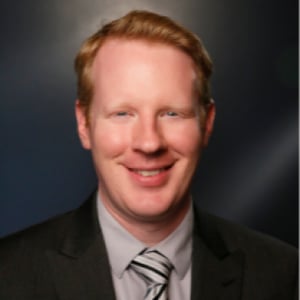
Executive Director, Center for Law, Science and Innovation, Sandra Day O'Connor College of Law
Josh Abbott serves as Executive Director of the Center for Law, Science & Innovation at Arizona State University’s Sandra Day O’Connor College of Law. His research interests focus on the ethical, legal, and social issues surrounding new and emerging digital technologies. He is currently collaborating on a grant project on “Soft Law” Governance of AI technologies. He also organizes ASU’s annual conference on Governance of Emerging Technologies and Science (GETS) as well as the ASU-Arkfeld eDiscovery, Law and Technology Conference. Prior to joining the College of Law, Josh worked as an attorney in Washington, D.C., where his practice focused on international telecom regulation and antitrust litigation.
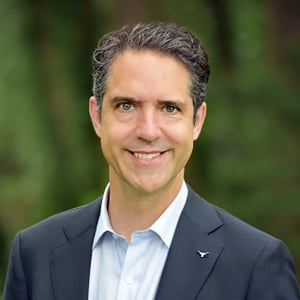
James A. Baker III Chair in the Rule of Law and World Affairs and Associate Dean for Academic Affairs, The University of Texas at Austin School of Law
Bobby Chesney holds the James Baker Chair and also serves as the Associate Dean for Academic Affairs at the University of Texas School of Law. In addition, he is the Director of the Robert S. Strauss Center for International Security and Law, a University-wide research unit bridging across disciplines to improve understanding of international security issues.
In 2009, Professor Chesney served in the Justice Department in connection with the Detention Policy Task Force created by Executive Order 13493. He also previously served the Intelligence Community as an associate member of the Intelligence Science Board and as a member of the Advanced Technology Board. In addition to his current positions at the University of Texas, he is a member of the American Law Institute, and a senior editor for the Journal of National Security Law & Policy, and a former non-resident Senior Fellow of the Brookings Institution.
Professor Chesney is a co-founder and contributor to www.lawfareblog.com, the leading source for analysis, commentary, and news relating to law and national security. In addition to his blogging at Lawfare, those interested in national security law should consider following Professor Chesney on Twitter (@bobbychesney) as well as subscribing to the National Security Law Podcast (which he co-hosts with his colleague Steve Vladeck). Professor Chesney's scholarship focuses on U.S. national security policies and institutions, encompassing both domestic and international law issues. His articles may be downloaded from SSRN here.
Professor Chesney is a magna cum laude graduate of both Texas Christian University and Harvard Law School. After law school he clerked for the Honorable Lewis A. Kaplan of the United States District Court for the Southern District of New York and the Honorable Robert D. Sack of the United States Court of Appeals for the Second Circuit. He then practiced with the firm Davis Polk & Wardwell in New York (litigation), before beginning his academic career with Wake Forest University School of Law. There he received a teacher of the year award from the student body in one year, and from the school's dean in another. In 2008 he came to the University of Texas School of Law as a visiting professor, and then joined UT on a permanent basis in 2009. He became the Associate Dean for Academic Affairs in 2011.
Professor Chesney teaches a variety of courses, including: Constitutional Law, National Security Law, Foundations of Cybersecurity: Law, Institutions, and Policy; Law of the Intelligence Community; History of U.S. Counterterrorism Law & Policy: 1970 to Present; Evidence, Civil Procedure, and an array of seminars. He is from San Antonio.

Adjunct Professor of Law, Scalia Law; Google, Corporate Counsel
Kathryn Ciano Mauler currently serves as a Corporate Counsel at Google. Prior to Google, Kathryn was Senior Regulatory Counsel at Uber Technologies, and also spent three years at i360, LLC as General Counsel. Before this, she also worked at a boutique law firm in Washington, D.C. and at the Institute for Justice.
She received her B.A. from the University of Florida. She also received her business degree from the University of Florida - Warrington College of Business, studying at the Ecole supérieure de Commerce de Toulouse in France. Kathryn's J.D. is from the George Mason University School of Law.
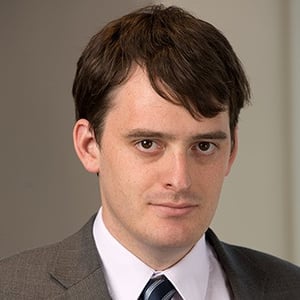
Head of Tech & Innovation, Centre for Policy Studies
Matthew Feeney is Head of Tech & Innovation at Centre for Policy Studies. Before joining CPS, Matthew was the director of Cato Institute’s Project on Emerging Technologies. His writing has appeared in The New York Times, The Washington Post, City A.M., and others. He received both his BA and MA in philosophy from the University of Reading.
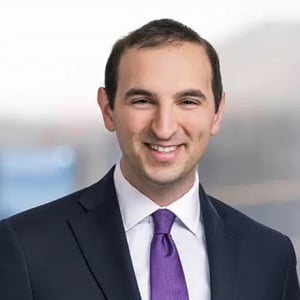
Associate, Covington & Burling LLP
Eli Nachmany is an associate at Covington & Burling LLP in the Washington, DC, office. He clerked for Judge Steven J. Menashi of the U.S. Court of Appeals for the Second Circuit. Eli graduated magna cum laude from Harvard Law School, where he was Editor-in-Chief of the Harvard Journal of Law & Public Policy. Prior to law school, Eli served as the speechwriter to the U.S. Secretary of the Interior and as a domestic policy aide in the White House Office of American Innovation. He graduated summa cum laude from New York University with a B.S. in Sports Management. Eli’s scholarship on administrative law and executive power has appeared in the BYU Law Review, George Mason Law Review, Wake Forest Law Review, and Yale Law Journal Forum.

Senior Fellow, R Street Institute
Prior to R Street, Adam spent 12 years as a senior fellow at the Mercatus Center at George Mason University. Before the Mercatus Center, he served as the president of the Progress and Freedom Foundation. Adam has also worked for the Adam Smith Institute, the Heritage Foundation and the Cato Institute.
Adam has published 10 books on a wide range of topics, including online child safety, internet governance, intellectual property, telecommunications policy, media regulation and federalism.
In 2008, Adam received the Family Online Safety Institute’s “Award for Outstanding Achievement.”
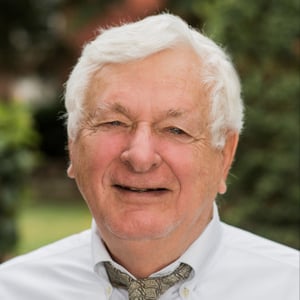
Lyle T. Alverson Professor of Law, George Washington University Law School
Professor Pierce is author of over twenty books and 130 articles on administrative law, government regulation, and the effects of various forms of government intervention on the performance of markets. His books and articles have been cited in hundreds of judicial opinions, including over a dozen opinions of the U.S. Supreme Court.
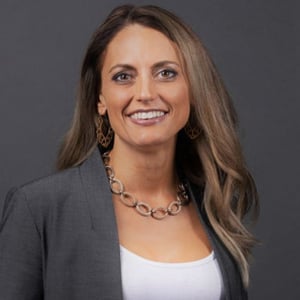
Judge, U.S. Court of Appeals for the Third Circuit
Hon. Jennifer Mascott served as Associate Professor of Law and Director of the Separation of Powers Institute at The Catholic University of America’s Columbus School of Law before her appointment to the federal bench. On July 16, 2025, President Donald J. Trump nominated her to the U.S. Court of Appeals for the Third Circuit (Delaware), and she was confirmed on October 9, 2025.
Prior to her confirmation, Judge Mascott wrote extensively in administrative and constitutional law, statutory interpretation, and the separation of powers. Her scholarship—published in leading journals including the Stanford Law Review, Notre Dame Law Review, and Supreme Court Review—was cited by the U.S. Supreme Court and multiple federal courts. She also contributed Supreme Court commentary for NBC Universal.
Before joining Catholic Law, she was an Assistant Professor and Co-Director of The C. Boyden Gray Center at George Mason University’s Antonin Scalia Law School. In 2022 she became co-author of Beermann, Cass & Diver’s Administrative Law: Cases and Materials (9th ed.). In 2023 she received the Justice Joseph Story Award for excellence in scholarship, teaching, and advancing the rule of law.
Judge Mascott also served as a Council Member of the ABA’s Administrative Law Section and as a Public Member of the Administrative Conference of the United States. She frequently testified before Congress on executive power, regulatory reform, and judicial jurisdiction, and participated in multiple Supreme Court confirmation hearings.
From 2019 to 2021, she took leave from academia to serve as Deputy Assistant Attorney General in the Department of Justice’s Office of Legal Counsel and later as Associate Deputy Attorney General, where she argued federal cases and assisted with Justice Amy Coney Barrett’s confirmation. Earlier in her career, she clerked for Justice Clarence Thomas and for then-Judge Brett M. Kavanaugh on the D.C. Circuit.
Judge Mascott earned her J.D. summa cum laude from the George Washington University Law School and her B.A. from the same institution.

Professor of Law, University of Baltimore School of Law (on leave); Senior Counsel, U.S. Department of Justice
Professor Dolin’s scholarship centers on patent law with a specific focus on how the patent regime affects innovation, especially in bio-pharmaceutical areas. His work in these areas includes a number of scholarly articles, presentations, amicus briefs, and congressional testimony.
Dr. Dolin is currently on leave from his academic duties while he serves as Senior Counsel in the Civil Rights Division of the United States Department of Justice.
From January 2020 to January 2022, Professor Dolin served as a resident Associate Justice of the Supreme Court of the Republic of Palau. In this role, he (together with other members of the Court) heard appeals in civil, criminal, administrative, and constitutional law matters.
Prior to joining the University of Baltimore School of Law, Professor Dolin held visiting appointments in other law schools. He also served as a law clerk to the Hon. Pauline Newman, of the U.S. Court of Appeals for the Federal Circuit and the late Hon. H. Emory Widener Jr., of the U.S. Court of Appeals for the Fourth Circuit.
Rumors that he has a real Russian bear in his office are entirely true.
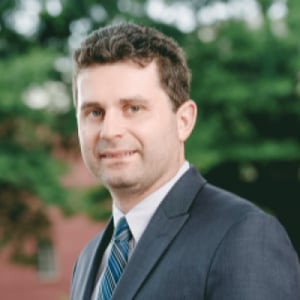
Associate Professor of Law, George Washington University Law School
Dmitry Karshtedt's primary research interest is in patent law. His legal scholarship has been published in the Vanderbilt Law Review, Washington University Law Review, and Iowa Law Review, among other outlets, and cited in three of the leading patent law casebooks, a casebook on intellectual property, and three treatises. Professor Karshtedt's academic work has won several awards, including the Samsung-Stanford Patent Prize and the scholarship grant for judicial clerks sponsored by the University of Houston Law Center Institute for Intellectual Property and Information Law.

Associate Dean for Academic Affairs, Austin E. Owen Research Scholar & Professor of Law, The University of Richmond School of Law
Dean Kristen Jakobsen Osenga teaches and writes in the areas of patent law, antitrust, and legislation and regulation. Some of her recent scholarship focuses on standard development organizations, patent eligible subject matter, patent licensing firms, litigation and remedies for patent infringement, and patent law reform. She has written numerous law review articles on these and other topics, as well as book chapters and op eds on various aspects of patent law. Additionally, she has spoken on these issues at many academic conferences and bar events. Dean Osenga is Chief Policy Counselor for the Inventors Defense Alliance, as well as an active member of the Federal Circuit Bar Association and the American Intellectual Property Law Association.
Dean Osenga received a B.S. degree in Biomedical Engineering from the University of Iowa, an M.S. degree in Electrical Engineering from Southern Illinois University – Carbondale, and a J.D. from the University of Illinois College of Law, where she graduated magna cum laude. After law school, she practiced at the law firm of Finnegan, Henderson, Farabow, Garrett, & Dunner LLP, (now Finnegan) where she did patent prosecution and litigation. She then clerked for the Judge Richard Linn of the U.S. Court of Appeals for the Federal Circuit. After clerking, she entered academia, teaching first at Chicago-Kent College of Law and then at the University of Richmond, where she has been since 2006. She has also been a Visiting Professor at Emory University School of Law and at William & Mary School of Law.

Deep Dive Episode 169 – Courthouse Steps Oral Argument: Cedar Point Nursery v. Hassid
Regulatory Transparency Project's Fourth Branch Podcast
In Cedar Point Nursery v. Hassid, the Supreme Court will decide whether a California “Access...
Courthouse Steps Oral Argument: Cedar Point Nursery v. Hassid
In Cedar Point Nursery v. Hassid, the Supreme Court will decide whether a California “Access...
Topics
Kisor on Remand: Raising the Bar to “Genuinely Ambiguous” at Auer Step Zero
A recent decision from the Federal Circuit may provide a roadmap for the future of...
How Do Regulatory Agencies Implement Laws?
Susan E. Dudley
A Regulatory Transparency Project Fourth Branch Video
After a law is passed by Congress, how is it put into effect? Most laws...
Topics
An Interview with Makan Delrahim, Former Assistant Attorney General for the Department of Justice Antitrust Division
Svetlana S. Gans, a member of the Federalist Society’s Corporations, Securities, & Antitrust Practice Group...
Deep Dive Episode 168 – Deepfakes: What, If Anything, Should Policymakers Do?
Joshua Abbott, Robert Chesney, Kathryn Ciano Mauler, Matthew Feeney
Regulatory Transparency Project's Fourth Branch Podcast
“Deepfakes” are one of the latest technologies to prompt debate about online media. Using Deepfake...
Empowering the “Honest Broker”: Lessons Learned from the National Security Council Under President Donald J. Trump
Eli Nachmany
Federalist Society Review, Volume 22
On September 18, 2019, Robert O’Brien took over as President Donald J. Trump’s National Security...
Regulating Big Tech: Lessons from the “Hall of Fallen Giants”
Adam Thierer
A Regulatory Transparency Project Fourth Branch Video
In recent years, concerns about "Big Tech" have sparked debate about competition and monopolies. Are...
Carr v. Saul - Post-Argument SCOTUScast
Richard J. Pierce, Jenn L. Mascott
featuring Richard Pierce and Jennifer Mascott
On March 3, 2021, the Supreme Court will hear oral arguments in Carr v. Saul. The...
Deep Dive Episode 167 – Courthouse Steps Oral Argument: United States v. Arthrex Inc.
Gregory Dolin, Dmitry Karshtedt, Kristen Osenga
Regulatory Transparency Project's Fourth Branch Podcast
The U.S. Supreme Court heard oral arguments in United States v. Arthrex Inc. on March 1,...