
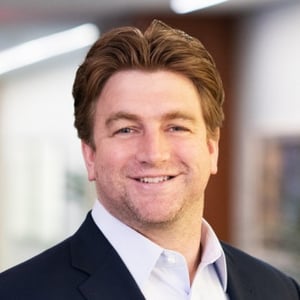
Founding Partner, Lodestar Law and Economics PLLC
Josh is the founder of Lodestar Law and Economics, PLLC. On January 1, 2013, the U.S. Senate unanimously confirmed Wright as a Commissioner of the Federal Trade Commission (FTC). He is a leading scholar in antitrust law, economics, intellectual property, regulation, and consumer protection, and has published more than 100 articles and book chapters, co-authored a leading antitrust casebook, and edited several book volumes focusing on these issues. Commentators have recognized Wright as “widely considered his generation’s greatest mind on antitrust law,” and his academic work ranks him as one of the most cited antitrust academics in the world. Wright was also awarded the Paul M. Bator Award by the Federalist Society in 2014 to “an academic who demonstrated excellence in legal scholarship, a commitment to teaching, a concern for students, and who has made a significant public impact.” Wright also served as the Executive Director of the Global Antitrust Institute, the world’s premiere academic institute focused upon antitrust education for judges and regulators and has taught hundreds of judges and thousands of regulators from dozens of countries.
Wright’s practice focuses upon helping clients solve complex competition, consumer protection, and regulatory problems by providing legal and economic analysis, strategic advice and counseling, and economic expert testimony.
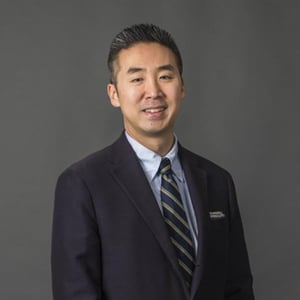
Associate Professor of Law and Director of Economic Education at the Global Antitrust Institute, George Mason University Antonin Scalia Law School
John M. Yun is an Associate Professor of Law at the Antonin Scalia Law School, George Mason University, and the Director of Economic Education at the Global Antitrust Institute (GAI). Prior to joining Scalia Law, he was an Acting Deputy Assistant Director in the Bureau of Economics, Antitrust Division, at the U.S. Federal Trade Commission (FTC). He has also taught economics at Georgetown University, Emory University, and Georgia Tech. He received his BA in economics at UCLA and his PhD in economics at Emory University.

Former Deputy Attorney General for Virginia
Kennerly Davis has over forty years of experience in corporate management, public service, and the private practice of law. He has held senior executive positions in a Fortune 500 electric and gas company. He has served as Deputy Attorney General for the Commonwealth of Virginia, and as a legislative aide to a U.S. Senator and a U.S. Congressman. He practiced law for 25 years with Hunton Andrews Kurth LLP.
Davis is active in the Federalist Society as a member of the Regulatory Process Working Group of the Regulatory Transparency Project, and as a member of the Execuitve Committee of the Administrative Law and Regulation Practice Group. He is active in the national Alumni Free Speech Alliance, and involved in AFSA-chapter initiatives, including litigation, to publicize and correct the serious legal problems created by university Diversity, Equity, and Inclusion programs and the anonymous bias reporting systems used to enforce those DEI programs.
Davis writes and speaks on a wide variety of topics, including those related to the Founding of America, the natural rights foundation of our Republic, the constitutional rule of law, equal protection and free speech, DEI programs and bias reporting systems, capitalism, regulation and regulatory reform, and economic development. His articles have appeared in The Wall Street Journal, the Washington Examiner, the Richmond Times-Dispatch, The Federalist Society Review, the FedSoc Blog, Real Clear Energy, Townhall, the Daily Caller, reports of the Center for Strategic & International Studies, and other publications. He appears frequently on radio, podcasts, and television.
Davis graduated with honors from Cornell University with an A.B. degree in Government. He earned an M.A. degree from Pembroke College, Oxford, in Philosophy, Politics, and Economics. He was awarded a J.D. degree from Harvard Law School, and an M.B.A. degree from Virginia Commonwealth University.
Davis lives in Richmond, Virginia. He can be contacted by email: j.kendavis@verizon.net, and by phone: (804) 624-8525.

Partner, Pillsbury Winthrop Shaw Pittman LLP
Richard Blaylock’s practice covers financing, M&A, licensing, collaboration and partnering arrangements, and intellectual property counseling for start-up and established companies whose value derives from innovative technology.
Richard is well-versed in a wide array of technologies, including those germane to both life sciences (pharmaceuticals, biologics, and diagnostics) as well as high technology (software, robotics, wireless, novel materials, and pollution control). He has counseled companies across a wide range of technologies with respect to company formation, licensing, partnering and collaborations, financing and intellectual property strategy, as well as patent, license, trademark, trade secrets and unfair competition disputes.
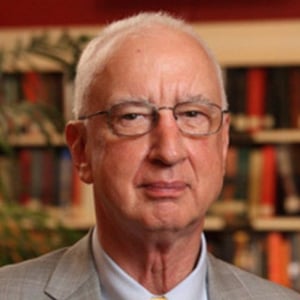
Former Chief Judge, United States Court of Appeals for the Federal Circuit
Judge Michel served for more than 22 years on the Federal Circuit, retiring on May 31, 2010. From December 25, 2004 until his retirement, he also discharged the duties of Chief Judge of this national court, serving simultaneously on the U.S. Judicial Conference -- the Judiciary's governing body -- and by appointment of the Chief Justice on its seven-judge Executive Committee.
He judged several thousand appeals and authored more than 800 opinions, one third concerning intellectual property law. Intellectual Asset Management magazine inducted him into its Hall of Fame and he was designated one of the 50 most influential leaders in intellectual property law in the world. His contributions were also recognized by lifetime achievement and similar awards by the American Intellectual Property Law Association (AIPLA); Intellectual Property Owners Education Foundation (IPO); the American Bar Association's Intellectual Property Section; Managing Intellectual Property magazine; the Sedona Conference; the Patent and Trademark Office Society (PTOS); the New York, Chicago, Philadelphia, and Los Angeles Intellectual Property Law Associations; and the William C. Connor, the Giles S. Rich, and the Richard Linn Intellectual Property American Inns of Court. In 2010 the Los Angeles IP Inn was renamed in his honor as the Paul R. Michel IP Inn.
Judge Michel received the Jefferson Medal, the Eli Whitney Award, and the Katz-Kiley Prize as well as Honorary Doctor of Law degrees from the Catholic University of America and the John Marshall Law School. He is a lifetime Member of Honore of FICPI, the international association of private practitioners of intellectual property law. Williams College granted him the Kellogg Award for "outstanding leadership in law and public service."
Judge Michel has written numerous articles on patent law and advocacy, taught related courses and master classes at George Washington University, the University of Akron, and John Marshall law schools, serving as well on their IP advisory boards and on counterpart boards at the universities of California (Berkley), Washington, and Maryland. He co-authored a casebook, Patent Litigation and Strategy (West, 1999) and an August 2010 editorial in the New York Times on strengthening the patent system to promote prosperity and create new jobs.
A frequent speaker at conferences and law schools during his judicial tenure and since, he retired from a lifetime appointment to be free to speak out on the national need for better patent policy and protection of intellectual property and the vital, unmet resource needs of the courts, the PTO, the International Trade Commission, and other IP-related agencies. He was appointed Distinguished Scholar in Residence by IPO, following his retirement. Judge Michel also consults for law firms and their clients in intellectual property litigations, conducting moot courts, mock trials, case evaluations, editing briefs, advising on strategy and providing mediation and arbitration services.
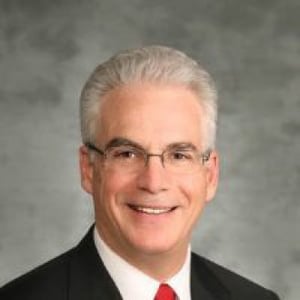
Dinsmore & Shohl LLP, Partner
Brian is chair of Dinsmore’s IP Transactions and Licensing Group. He is a past president of the Licensing Executives Society (USA and Canada), Inc. (LES), the leading professional society devoted to commercial transactions and licensing of intangible property. He continues to serve LES as senior vice president for public policy. He has extensive experience in a wide variety of commercial transactions involving intangible property, and is known for creative licensing strategies to promote collaboration and resolve IP-related disputes.
He is a registered patent attorney with more than 30 years of experience before the U.S. Patent and Trademark Office and in structuring global IP portfolios and strategies. He has extensive experience in contested proceedings before the USPTO Patent Trial and Appeal Board (interferences, Inter Partes Reviews and Post Grant Reviews), as well as contested matters in federal courts and the International Trade Commission. His wide-ranging experience affords a broad, informed perspective and facilitates creative approaches to intellectual property management, licensing, and enforcement.
In addition to his leadership of LES, Brian served on the LES Board of Directors 2007 – 2018. In his ongoing role as senior vice president for public policy he is responsible for coordinating the society’s public policy positions, amicus briefs, and congressional outreach. He works with legislators, the executive branch, and the courts toward consistent, reliable, and prudent IP laws and policies that advance innovation and economic development. He has also served LES as trustee for education, and has long served as an author, editor, and faculty member of LES educational programs focusing on best practices in IP licensing.
He is also active in the global society, LES International (LESI). Among his various roles in LESI, he has served as co-chair of the External Relations Committee, coordinating public policy and advocacy for effective IP laws and policies among the 33 regional LES societies, and with various non-governmental organizations such as WIPO and EPO. In 2019, he received the LES International President’s Service Recognition Award.
Brian also serves as Chair of the Board of Directors of the Bayh Dole Coalition, a 501(c)(4) corporation dedicated to promoting and preserving the Bayh Dole Act. He is a member of the Founding Board of Directors of the United States Intellectual Property Alliance (USIPA), an organization dedicated to raising public awareness of, and appreciation for, the role of IP in fostering innovation for the public good; and he has served on the DC Bar Intellectual Property Section Steering Committee (2013 – 2016).
In 2016, Brian testified before the U.S. Senate Committee on Small Business and Entrepreneurship on the effects of the America Invents Act on small business and entrepreneurs in a hearing entitled “An Examination of Changes to the U.S. Patent System & Impacts on America's Small Businesses.”
With his longstanding and diverse patent practice, in both private practice and in-house, Brian advises corporate leaders and entrepreneurs in effective IP procurement practices, and in maximizing value from IP assets. He has been retained as a testifying witness in IP and licensing disputes by the U.S. Department of Justice, the U.S. Department of the Treasury, and by various private enterprises.
Brian has been acknowledged by IAM magazine as among its “IAM Strategy 300”, the world’s leading IP strategists, and among “The World's Leading Patent and Technology Licensing Lawyers.”
He earned B.S. and M.S. degrees from the Department of Chemistry, Rochester Institute of Technology, Rochester, NY; and Juris Doctor from Syracuse University, College of Law, Syracuse, NY (1986).
Brian has served his alma mater as president of the RIT Alumni Association 2005 – 2009; and now serves on the RIT Board of Trustees as a member of its Executive Committee, chair of its Student Life Committee, and vice-chair of its Committee on Trustees. In 2013, Brian was awarded RIT’s Outstanding Alumnus Award, and in 2005 he was awarded the Distinguished Alumnus Award by RIT’s College of Science.

Deputy General Counsel and Vice President for Intellectual Property, Biotechnology Industry Organization
Hans Sauer is Deputy General Counsel for Intellectual Property for the Biotechnology Industry Organization, a major trade association representing over 1,100 biotechnology companies from the medical, agricultural, environmental and industrial sectors in the United States and 31 other countries. At BIO, Dr. Sauer advises the organization’s board of directors, amicus committee, and various staff committees on patent and other intellectual property-related matters. Prior to taking his current position at BIO in 2006, he was Chief Patent Counsel for MGI Pharma, Inc. in Bloomington MN, and Senior Patent Counsel for Guilford Pharmaceuticals Inc. in Baltimore, MD. Hans has 18 years of in-house experience in the biotechnology industry, first as a research scientist and later as a lawyer. His scientific work was in the area of age-related neurological disorders; after becoming a lawyer he worked on several drug development programs, being responsible for patent prosecution and portfolio oversight, clinical trial health information privacy, and sales and marketing legal compliance. He did his postdoc at Genentech in South San Francisco, and holds a M.S. degree from the University of Ulm in his native Germany; a Ph.D. in Neuroscience from the University of Lund, Sweden; and a J.D. degree from Georgetown University, where he serves as adjunct professor.
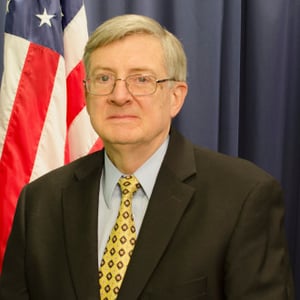
Senior Research Fellow, Mercatus Center, George Mason University; Former General Counsel at the Federal Trade Commission (FTC)
Alden Abbott is a Senior Research Fellow at the Mercatus Center. Prior to joining Mercatus, he served as the General Counsel of the Federal Trade Commission (FTC). As the Commission’s chief legal officer and adviser, he represented the agency in court and provides legal counsel to the Commission and its bureaus and offices.
Prior to rejoining the FTC in April 2018, Mr. Abbott served in executive positions at the Heritage Foundation (2014-2018) and BlackBerry (2012-2014). He also held a variety of senior positions in the U.S. federal government (in the FTC, the Commerce Department, and the Justice Department's Office of Legal Counsel and the Antitrust Division).
He speaks French, Spanish, and Italian.
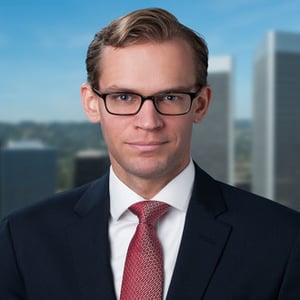
Internet Policy Counsel and Director of Appellate Litigation, TechFreedom
Corbin Barthold is TechFreedom's Internet Policy Counsel and Director of Appellate Litigation.
Corbin clerked for the Hon. Steven D. Merryday (M.D. Fla.) and the Hon. Robert H. Cleland (E.D. Mich.). After his clerkships, he became an associate, and later a partner, in the Los Angeles office of Browne George Ross LLP, where he engaged in high-stakes complex litigation. He then served as Senior Litigation Counsel at Washington Legal Foundation, a D.C. public-interest firm, where his practice focused on appeals involving administrative law, the separation of powers, antitrust, and tech policy.
Corbin received his J.D. from the University of California, Berkeley, School of Law. He also holds a B.A., magna cum laude and Phi Beta Kappa, from the University of California, San Diego, and an Msc., with distinction, from the London School of Economics.
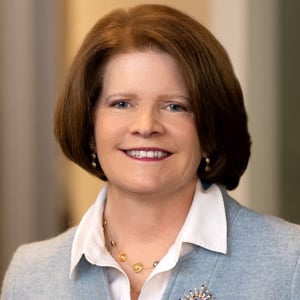
Partner, Antitrust and Competition, Wilson Sonsini Goodrich & Rosati
Maureen Ohlhausen is a partner in the Washington, D.C., office of Wilson Sonsini Goodrich & Rosati, where she advises industry-leading clients on complex antitrust and litigation matters, with a focus on high-profile cases. Sought after for her depth of experience on antitrust and Federal Trade Commission (FTC)-related issues, Maureen is known for her relationships with officials in the U.S. and abroad.
After finishing law school and clerking at the U.S. Court of Appeals for the D.C. Circuit, Maureen joined the FTC in 1997. She held a series of roles at the agency over the next 12 years, rising to the position of Director of the FTC Office of Policy Planning, where she led the agency’s work on e-commerce and headed the FTC’s Internet Access Task Force, which produced an influential report analyzing competition and consumer protection legal issues in the broadband and internet sectors. She then went into private practice at a leading telecommunications law firm, where she headed the FTC practice group.
In 2012, Maureen was confirmed by the Senate as a Commissioner of the FTC and was appointed Acting Chairman in January 2017, a role she held until May 2018. As Acting Chairman, Maureen directed all aspects of the agency’s antitrust work, including merger review, conduct enforcement, and all consumer protection enforcement, with an emphasis on privacy and technology issues. Under her leadership, the FTC won several influential merger challenges in court and reached a number of key digital privacy settlements.
To date, Maureen is the only FTC Commissioner to have received the Robert Pitofsky Lifetime Achievement Award in recognition of her contributions to the FTC.
Following the end of her term at the FTC, and immediately prior to joining Wilson Sonsini, Maureen was chair of the global antitrust and competition practice at Baker Botts, based in that firm’s Washington, D.C., office.
A recognized thought leader, Maureen is a frequent author and speaker, and is often quoted by leading print and broadcast media on antitrust, FTC, and privacy and data security matters. She has published dozens of articles on antitrust, privacy, intellectual property, regulation, FTC litigation, telecommunications, and international law issues in prestigious publications. During her tenure at the FTC and in private practice, she testified more than two dozen times before Congress, including before the Senate Commerce Committee and the House Energy and Commerce Antitrust Sub-Committee. She also testified before the Antitrust Modernization Commission.
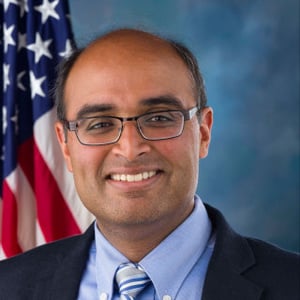
Consultant, American Edge Project and U.S. Chamber of Commerce
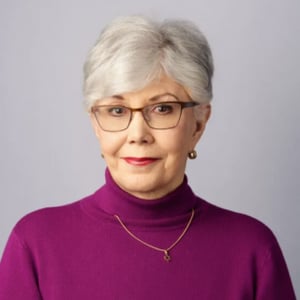
Chairman, Center for Equal Opportunity
Linda Chavez is Chairman of the Center for Equal Opportunity. She has published opinions and columns in newspapers across the country and appears regularly on cable news. Chavez is the author of the three books: Out of the Barrio: Toward a New Politics of Hispanic Assimilation, An Unlikely Conservative: The Transformation of an Ex-Liberal, and Betrayal: How Union Bosses Shake Down Their Members and Corrupt American Politics. She has been honored by the Library of Congress as a "Living Legend" and as nominee for Secretary of Labor by President George W. Bush.
Chavez has held many appointed positions and has served on numerous corporate and nonprofit boards. Among her appointed positions has been Chairman, National Commission on Migrant Education (1988-1992); White House Director of Public Liaison (1985); Staff Director of the U.S. Commission on Civil Rights (1983-1985); and member of the Administrative Conference of the United States (1984-1986). Chavez was also the Republican nominee for U.S. Senator from Maryland in 1986 and was elected by the United Nations' Human Rights Commission to serve a four-year term as U.S. Expert to the U.N. Sub-commission on the Prevention of Discrimination and Protection of Minorities.
Chavez earned her BA from the University of Colorado.
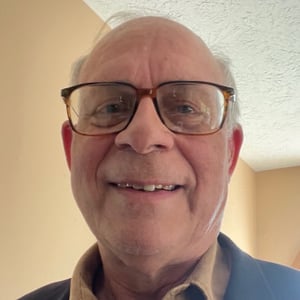
President, SAVE
Edward E. Bartlett is President of SAVE, an organization focused on fairness and due process on college campuses. Over the course of his career, he has worked as an Army medical corpsman, community health educator, professor, journal editor, author, risk management consultant, government regulator, and in the non-profit sector.
Consultant, American Edge Project and U.S. Chamber of Commerce
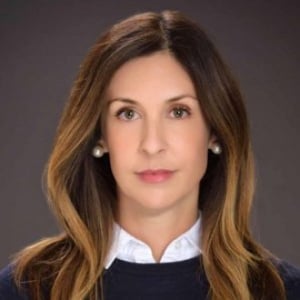
Director, Center for Technology and Innovation, Competitive Enterprise Institute
Jessica Melugin is director of the Center for Technology & Innovation at the Competitive Enterprise Institute. Her research focuses on technology issues including antitrust, online privacy, artificial intelligence, telecommunications, social media content regulation, and Federal Trade Commission oversight. Her writings have appeared in The New York Times, Financial Times, The Wall Street Journal, USA Today, Bloomberg Law, National Review, and Los Angeles Times. She has been cited in The Washington Post, Politico, U.S. News and World Report and Variety, among other publications. Ms. Melugin has appeared on Bloomberg Television, CSPAN’s Washington Journal, CNBC’s Power Lunch, Fox News, and Fox Business Network. She’s been featured on NPR’s Marketplace, The David Webb Show on SiriusXM, and is regularly interviewed on terrestrial radio programs.
Ms. Melugin graduated magna cum laude from Claremont McKenna College where her honors thesis explored the development of American antitrust law as it pertains to the Microsoft trial. She lives in Virginia’s horse country with her family.

Managing Director, Econ One
Hal Singer is an expert in antitrust, consumer protection, and regulation. He has researched, published, and testified on competition-related issues in a wide variety of industries, including media, pharmaceuticals, sports, and finance. He has extensive experience providing expert economic and policy advice to regulatory agencies in the United States and Canada, as well as before congressional committees.
Dr. Singer is also a Senior Fellow at the George Washington Institute of Public Policy and an Adjunct Professor at Georgetown University, McDonough School of Business, where he teaches advanced pricing to MBA candidates. In 2018, the American Antitrust Institute honored Dr. Singer with an antitrust enforcement award for his work in the Lidoderm antitrust litigation.

Laurence A. Tisch Professor of Law and Director, Classical Liberal Institute, New York University School of Law; Director, Classical Liberal Institute, Civitas Institute University of Texas at Austin
Richard A. Epstein is the inaugural Laurence A. Tisch Professor of Law at NYU School of Law. Prior to his joining the faculty, he was a visiting law professor at NYU from 2007 through 2009. He served as the Peter and Kirstin Bedford Senior Fellow at the Hoover Institution from 2000 to 2024. Since 2024 to the present he is a senior lecturer at the Civitas Institute at the University of Texas—Austin. Epstein is also the James Parker Hall Distinguished Service Professor of Law Emeritus and a senior lecturer at the University of Chicago. His initial law school appointment was at the University of Southern California from 1968 to 1972. Epstein received an LL.D., h.c. from the University of Ghent, 2003. He has been a member of the American Academy of Arts and Sciences since 1985 and was a Senior Fellow of the Center for Clinical Medical Ethics at the University of Chicago Division of Biological Sciences, also from 1983. to 2022 He served as editor of the Journal of Legal Studies from 1981 to 1991, and of the Journal of Law and Economics from 1991-2001. From 2001 to 2010 he was a director of the John M. Olin Program in Law and Economics at the University of Chicago.
His newest book, The Myth of Birthright Citizenship: What the Fourteenth Amendment Really Says was published in 2026 (Encounter Books). Prior to that he has published many books including, The Dubious Morality of the Modern Administrative State (Roman & Littlefield 2020).Earlier he published th Classical Liberal Constitution: The Uncertain Quest for Limited Government (Harvard 2014) iHis previous books include Design for Liberty: Private Property, Public Administration and the Rule of Law (Harvard 2011); The Case Against the Employee Free Choice Act (Hoover 2009); Supreme Neglect: How to Revive the Constitutional Protection of Property Rights (Oxford 2008); Antitrust Decrees in Theory and Practice: Why Less is More (AEI 2007); Overdose: How Excessive Government Regulation Stifles Pharmaceutical Innovation (Yale University Press. 2006); How Progressives Rewrote the Constitution (Cato 2006); Cases and Materials on Torts (Aspen Law & Business; 8th ed. 2004); Skepticism and Freedom: A Modern Case for Classical Liberalism (University of Chicago, 2003); Torts (Aspen Law & Business 1999); Principles for a Free Society: Reconciling Individual Liberty with the Common Good (Perseus Books, 1998): Mortal Peril: Our Inalienable Rights to Health Care (Addison-Wesley, 1997); Simple Rules for a Complex World (Harvard, 1995); Bargaining With the State (Princeton, 1993); Forbidden Grounds: The Case Against Employment Discrimination Laws (Harvard , 1992); Takings: Private Property and the Power of Eminent Domain (Harvard, 1985); and Modern Products Liability Law (Greenwood Press, 1980). He has also edited(with Catherine M. Sharkey) Cases and Materials on the Law of Torts (10th edition 2012).
Professor Epstein has written numerous articles on a wide range of legal and interdisciplinary subjects. He has taught courses in administrative law, antitrust law, civil procedure, communications, constitutional law, contracts, corporations, criminal law, employment discrimination law, environmental law, food and drug law health law and policy, legal history, labor law, property, real estate development and finance, jurisprudence, labor law; land use planning, patents, individual, estate and corporate taxation, Roman Law; torts, and workers' compensation.
Professor Epstein also writes a regular column for Civitas Institute, which also sponsors his podcast, The Libertarian with Charles C.W. Cooke, and Law Talk, with Cooke and John Yoo. He also does a podcast with John Batchelor. And appears regularly on the Freedom File with Judge Andrew Napolitano.
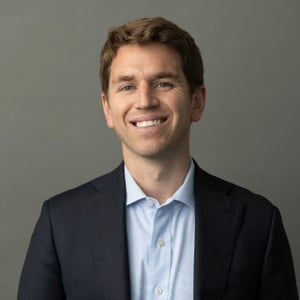
Deputy Associate Attorney General, Office of the Associate Attorney General, U.S. Department of Justice

Topics
Don’t Fear Volatility in Cryptocurrency Prices; Fear Regulations that Will Harm America’s Crypto Lead
After a massive runup since the beginning of the year, the cryptocurrency market finally experienced...
Deep Dive Episode 178 – (Un)Civil War: The Future of Conservative Antitrust
Joshua D. Wright, John Yun
Regulatory Transparency Project's Fourth Branch Podcast
On April 22, 2021, the Federalist Society’s George Mason Student Chapter, the Regulatory Transparency Project,...
Explainer Episode 25 – President Biden's Memo on "Modernizing Regulatory Review"
John Kennerly Davis
Regulatory Transparency Project's Fourth Branch Podcast
Ken Davis joined the podcast to discuss why and how President Biden's memo on Modernizing Regulatory...
Topics
Assessing the Nondelegation Challenge in Texas’s Keystone XL Pipeline Lawsuit Against the Biden Administration
Justice Alito’s concurrence in the recent case of Gundy v. United States signaled that the...
Deep Dive Episode 177 – Patents and Pandemics: Innovation Policy and the Patent Waiver Petition at the WTO
Richard Blaylock, Paul Redmond Michel, Brian O'Shaughnessy, Hans Sauer
A Regulatory Transparency Project Teleforum
India and South Africa have submitted a petition to the World Trade Organization seeking a...
Deep Dive Episode 176 – Courthouse Steps Decision: AMG Capital Management v. FTC
Alden F. Abbott, Corbin K. Barthold, Maureen K. Ohlhausen, Asheesh Agarwal
Regulatory Transparency Project's Fourth Branch Podcast
On April 22, 2021, the Supreme Court decided AMG Capital Management, LLC v. Federal Trade...
Topics
A Foundation for Rethinking Administrative Law
New casebooks can be hard to justify. Many legal doctrines and their canonical cases are...
Explainer Episode 24 – The Future of Title IX Implementation
Linda L. Chavez, Edward E. Bartlett
Regulatory Transparency Project's Fourth Branch Podcast
Edward E. Bartlett and Linda Chavez join the podcast to discuss the future of Title...
Topics
Regulation By Enforcement Is Stifling Cryptocurrency
One of the few things that can make an industry demand more regulation is the...
Deep Dive Episode 175 – Big Tech and Antitrust
Asheesh Agarwal, Jessica Melugin, Hal Singer, Richard A. Epstein, John Adams
Regulatory Transparency Project's Fourth Branch Podcast
The debate over “Big Tech” and antitrust has intensified. On one side are those who...