
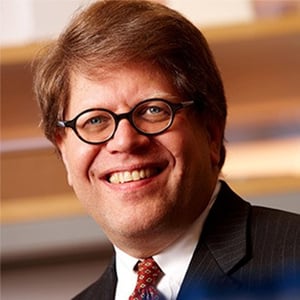
Faculty Fellow, Center for Law, Science & Innovation, Sandra Day O'Connor College of Law, Arizona State University
Dr. Klein is a Faculty Fellow at the Center for Law, Science & Innovation at the Sandra Day O'Connor College of Law at Arizona State University. He is also Principal at Roger D. Klein, MD JD Consulting and Klein & Klein Co., L.P.A. He was formerly Chief Medical Officer at OmniSeq, an oncology focused genomic profiling company that was recently acquired by LabCorp. Previously, Roger was the Medical Director at the Molecular Oncology division at the Cleveland Clinic. He was also the Chair of the Professional Relations Committee at the Association for Molecular Pathology. Prior to joining the Cleveland Clinic, he served as Medical Director of Molecular Oncology at the BloodCenter of Wisconsin where he led the center’s Diagnostic Laboratories’ initiative focused on DNA- and RNA-based testing for evaluation of cancer patients.
Dr. Klein has been an advisor to the Department of Health and Human Services (HHS), the Food and Drug Administration (FDA), the Centers for Medicare and Medicaid Services (CMS), and the Centers for Disease Control and Prevention (CDC). He has participated in and assumed leadership roles in many professional society committees and corporate advisory boards and is a policy advisor to the Heartland Institute.
Dr. Klein is licensed to practice medicine in Ohio, Florida, and Wisconsin. Additionally, he is licensed to practice law in the District of Columbia and Ohio. Roger obtained his Molecular Genetic Pathology certification at Mayo Medical School following completion of his M.D. Yale University School of Medicine. He obtained his J.D. from Yale Law School.

Senior Counsel, Miller Johnson
Brett Swearingen is a Senior Counsel in Miller Johnson’s Employment and Labor practice. A native of Southwest Michigan, Brett’s practice focuses on employment and ERISA litigation, as well as counseling clients on employment matters and dealing with the government.
Mr. Swearingen litigates on behalf of clients in complex matters of employment and ERISA law, including FLSA collective actions, multiemployer pension withdrawal liability disputes, and government investigations. In addition, Brett regularly advises clients—especially state and federal contractors and grantees—on compliance with civil rights laws, as well as religious non-profits on matters regarding employment law and religious liberty. Brett is also experienced in the statistical analysis of workplace issues, such as using “disparate impact analysis” to help employers test for (and root out) potential discriminatory effects of workplace policies and practices.
Brett previously served as Counselor to the Deputy Secretary at the United States Department of Labor. At the DOL, he advised the Deputy Secretary and Secretary on employee benefits and civil rights matters and was a key advisor on several important rulemakings within the Employee Benefits Security Administration (EBSA) and the Office of Federal Contract Compliance Programs (OFCCP), including regulations concerning ESG investing, proxy voting, and fiduciary investment advice, and reforms to OFCCP’s enforcement procedures and religious exemption.
Prior to his time at DOL, Brett was a litigator in the employee benefits practice of a global law firm, where he defended clients in several multi-million dollar ERISA withdrawal liability cases against multiemployer pension funds concerning alleged evade or avoid liability, successor liability, and employer challenges to pension funds’ discount rates.
Mr. Swearingen is currently licensed in Michigan and Washington, D.C.
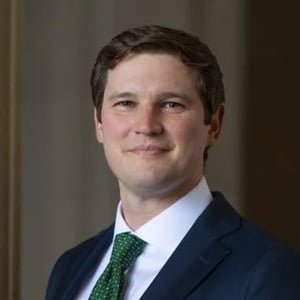
Partner, Boyden Gray PLLC
Jared Kelson is a partner at Boyden Gray PLLC. He worked previously as an attorney-adviser in the Office of Legal Counsel at the U.S. Department of Justice, where he received the Attorney General’s Award for Distinguished Service and developed significant expertise in administrative law, regulatory process, executive authority, and the constitutional separation of powers.
Mr. Kelson was a law clerk to Judge Thomas B. Griffith of the U.S. Court of Appeals for the District of Columbia Circuit and to Judge J. Harvie Wilkinson III of the U.S. Court of Appeals for the Fourth Circuit. He graduated from the University of Virginia School of Law, where he received the Faculty Award for Academic Excellence after achieving the highest overall academic record in his graduating class. He also served as an Articles Editor of the Virginia Law Review. Previously, he graduated summa cum laude from Brigham Young University with a B.S. in Biology.
Senior Counsel, Miller Johnson
Brett Swearingen is a Senior Counsel in Miller Johnson’s Employment and Labor practice. A native of Southwest Michigan, Brett’s practice focuses on employment and ERISA litigation, as well as counseling clients on employment matters and dealing with the government.
Mr. Swearingen litigates on behalf of clients in complex matters of employment and ERISA law, including FLSA collective actions, multiemployer pension withdrawal liability disputes, and government investigations. In addition, Brett regularly advises clients—especially state and federal contractors and grantees—on compliance with civil rights laws, as well as religious non-profits on matters regarding employment law and religious liberty. Brett is also experienced in the statistical analysis of workplace issues, such as using “disparate impact analysis” to help employers test for (and root out) potential discriminatory effects of workplace policies and practices.
Brett previously served as Counselor to the Deputy Secretary at the United States Department of Labor. At the DOL, he advised the Deputy Secretary and Secretary on employee benefits and civil rights matters and was a key advisor on several important rulemakings within the Employee Benefits Security Administration (EBSA) and the Office of Federal Contract Compliance Programs (OFCCP), including regulations concerning ESG investing, proxy voting, and fiduciary investment advice, and reforms to OFCCP’s enforcement procedures and religious exemption.
Prior to his time at DOL, Brett was a litigator in the employee benefits practice of a global law firm, where he defended clients in several multi-million dollar ERISA withdrawal liability cases against multiemployer pension funds concerning alleged evade or avoid liability, successor liability, and employer challenges to pension funds’ discount rates.
Mr. Swearingen is currently licensed in Michigan and Washington, D.C.
Partner, Boyden Gray PLLC
Jared Kelson is a partner at Boyden Gray PLLC. He worked previously as an attorney-adviser in the Office of Legal Counsel at the U.S. Department of Justice, where he received the Attorney General’s Award for Distinguished Service and developed significant expertise in administrative law, regulatory process, executive authority, and the constitutional separation of powers.
Mr. Kelson was a law clerk to Judge Thomas B. Griffith of the U.S. Court of Appeals for the District of Columbia Circuit and to Judge J. Harvie Wilkinson III of the U.S. Court of Appeals for the Fourth Circuit. He graduated from the University of Virginia School of Law, where he received the Faculty Award for Academic Excellence after achieving the highest overall academic record in his graduating class. He also served as an Articles Editor of the Virginia Law Review. Previously, he graduated summa cum laude from Brigham Young University with a B.S. in Biology.

Professor of Law, University of Michigan Law School
Professor Nicholas Bagley teaches and writes in the areas of administrative law, regulatory theory, and health law. Prior to joining the Law School faculty, he was an attorney with the appellate staff in the Civil Division at the U.S. Department of Justice, where he argued a dozen cases before the U.S. Courts of Appeals and acted as lead counsel in many more. Professor Bagley also served as a law clerk to Justice John Paul Stevens of the U.S. Supreme Court and to the Hon. David S. Tatel of the U.S. Court of Appeals, District of Columbia Circuit. Professor Bagley holds a BA in English from Yale University and received his JD, summa cum laude, from New York University School of Law. Before entering law school, he joined Teach For America and taught eighth-grade English at a public school in South Bronx. Professor Bagley's work has appeared in the Harvard Law Review, the Columbia Law Review, the Georgetown Law Journal, the New England Journal of Medicine, and the Journal of Health Politics, Policy, and Law. In 2012, he was the recipient of the Law School's L. Hart Wright Award for Excellence in Teaching. He is a frequent contributor to The Incidental Economist, a prominent health policy blog.

Harry Kalven, Jr. Professor of Law & Faculty Director, Constitutional Law Institute, University of Chicago Law School
William Baude is a Professor of Law and the Faculty Director of the Constitutional Law Institute at the University of Chicago Law School, where he teaches federal courts, constitutional law, and conflict of laws. His current research interests include different aspects of the Fourteenth Amendment (particularly both Section One and Section Three) and the nature of judicial discretion.
Among his other activities Baude is: the co-editor of two textbooks, The Constitution of the United States and Hart & Wechsler's Federal Courts in the Federal System; an Affiliated Scholar at the Center for the Study of Constitutional Originalism; a founding member of the Academic Freedom Alliance; a member of the American Law Institute; an occasional blogger at The Volokh Conspiracy; and a podcaster on Divided Argument. He also recently served on the Presidential Commission on the Supreme Court of the United States.
Professor Baude received his BS in Mathematics from the University of Chicago and his JD from Yale Law School. He then clerked for then-Judge Michael McConnell on the United States Court of Appeals, and Chief Justice John Roberts on the United States Supreme Court. Before joining the Chicago faculty, he was a fellow at the Stanford Constitutional Law Center, and a lawyer in Washington, DC.
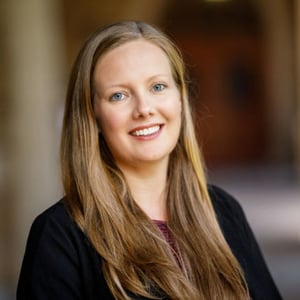
Professor of Law, University of Notre Dame Law School
Emily Bremer teaches and writes in the areas of administrative law, regulatory process, and civil procedure. Her scholarship focuses primarily on matters of procedural design, with a recent focus on the history and interpretation of the Administrative Procedure Act (APA). She is a recipient of the AALS’s award for the year’s best administrative law scholarship by a junior scholar and the AALL’s Joseph L. Andrew’s Legal Literature Award for her contribution to the Bremer-Kovacs Collection of Historical Documents Related to the APA (HeinOnline). Bremer’s articles include a defense forthcoming in the Virginia Law Review of the constitutionality of the APA’s regime for ensuring the competence and impartiality of Administrative Law Judges; a plea in the Yale Journal on Regulation for administrative law to take greater account of the on-the-ground reality of administration; twin articles uncovering the intellectual foundation and meaning of the APA’s adjudication and rulemaking provisions; and three separate studies that served as the basis of recommendations of the Administrative Conference of the United States (ACUS) on the subjects of agency declaratory orders, incorporation by reference, and statutory limitations on the jurisdiction of the Court of Federal Claims. Bremer serves as a Senior Fellow of ACUS, a co-editor of the administrative law section of Jotwell, and a regular contributor to the Yale Journal on Regulation’s Notice & Comment blog.
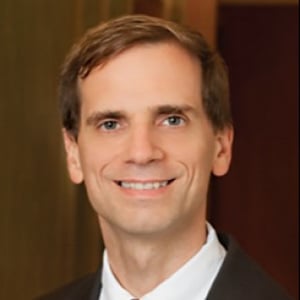
Judge, United States Court of Appeals, District of Columbia Circuit
Judge Katsas was appointed to the D.C. Circuit in December 2017. He graduated from Princeton University and Harvard Law School, where he was an executive editor on the Harvard Law Review. Between 1989 and 1992, he served as a law clerk to Judge Edward Becker on the Third Circuit, to then-Judge Clarence Thomas on the D.C. Circuit, and to Justice Thomas on the Supreme Court. Between 1992 and 2001, he was an associate and then partner in the Washington office of Jones Day, where he specialized in appellate and complex civil litigation. Between 2001 and 2009, he served in many senior positions in the Department of Justice, including as Assistant Attorney General for the Civil Division and as Acting Associate Attorney General. In 2009, he returned to Jones Day. From January to December 2017, he served as Deputy Assistant to the President and Deputy Counsel to the President.
Before joining the bench, Judge Katsas argued more than 75 appeals, including three cases in the Supreme Court, 13 cases in the D.C. Circuit, and cases in every other federal court of appeals. By appointment of the Chief Justice, he served on the Advisory Committee on Appellate Rules from 2013 to 2017. In 2016, he was elected to membership in the American Academy of Appellate Lawyers.

Professor of Law, University of Michigan Law School
Christopher J. Walker is a Professor of Law at the University of Michigan. Prior to joining Michigan law faculty in 2022, he spent a decade teaching at The Ohio State University Moritz College of Law. He previously clerked for Justice Anthony Kennedy of the U.S. Supreme Court, worked on the Civil Appellate Staff at the U.S. Department of Justice, and served on the Senate Judiciary Committee staff for the Gorsuch Supreme Court confirmation. Professor Walker’s research focuses on administrative law, regulation, and law and policy at the agency level. Outside the law school, he chaired the American Bar Association’s Section of Administrative Law and Regulatory Practice in 2020-21 and served as one of forty Public Members of the Administrative Conference of the United States from 2016-2022, and he continues to serve in both organizations in various capacities. He also works of counsel at the U.S. Chamber Litigation Center. In 2022, he received the Federalist Society’s Joseph Story Award.
Professor of Law, University of Michigan Law School
Professor Nicholas Bagley teaches and writes in the areas of administrative law, regulatory theory, and health law. Prior to joining the Law School faculty, he was an attorney with the appellate staff in the Civil Division at the U.S. Department of Justice, where he argued a dozen cases before the U.S. Courts of Appeals and acted as lead counsel in many more. Professor Bagley also served as a law clerk to Justice John Paul Stevens of the U.S. Supreme Court and to the Hon. David S. Tatel of the U.S. Court of Appeals, District of Columbia Circuit. Professor Bagley holds a BA in English from Yale University and received his JD, summa cum laude, from New York University School of Law. Before entering law school, he joined Teach For America and taught eighth-grade English at a public school in South Bronx. Professor Bagley's work has appeared in the Harvard Law Review, the Columbia Law Review, the Georgetown Law Journal, the New England Journal of Medicine, and the Journal of Health Politics, Policy, and Law. In 2012, he was the recipient of the Law School's L. Hart Wright Award for Excellence in Teaching. He is a frequent contributor to The Incidental Economist, a prominent health policy blog.
Harry Kalven, Jr. Professor of Law & Faculty Director, Constitutional Law Institute, University of Chicago Law School
William Baude is a Professor of Law and the Faculty Director of the Constitutional Law Institute at the University of Chicago Law School, where he teaches federal courts, constitutional law, and conflict of laws. His current research interests include different aspects of the Fourteenth Amendment (particularly both Section One and Section Three) and the nature of judicial discretion.
Among his other activities Baude is: the co-editor of two textbooks, The Constitution of the United States and Hart & Wechsler's Federal Courts in the Federal System; an Affiliated Scholar at the Center for the Study of Constitutional Originalism; a founding member of the Academic Freedom Alliance; a member of the American Law Institute; an occasional blogger at The Volokh Conspiracy; and a podcaster on Divided Argument. He also recently served on the Presidential Commission on the Supreme Court of the United States.
Professor Baude received his BS in Mathematics from the University of Chicago and his JD from Yale Law School. He then clerked for then-Judge Michael McConnell on the United States Court of Appeals, and Chief Justice John Roberts on the United States Supreme Court. Before joining the Chicago faculty, he was a fellow at the Stanford Constitutional Law Center, and a lawyer in Washington, DC.
Professor of Law, University of Notre Dame Law School
Emily Bremer teaches and writes in the areas of administrative law, regulatory process, and civil procedure. Her scholarship focuses primarily on matters of procedural design, with a recent focus on the history and interpretation of the Administrative Procedure Act (APA). She is a recipient of the AALS’s award for the year’s best administrative law scholarship by a junior scholar and the AALL’s Joseph L. Andrew’s Legal Literature Award for her contribution to the Bremer-Kovacs Collection of Historical Documents Related to the APA (HeinOnline). Bremer’s articles include a defense forthcoming in the Virginia Law Review of the constitutionality of the APA’s regime for ensuring the competence and impartiality of Administrative Law Judges; a plea in the Yale Journal on Regulation for administrative law to take greater account of the on-the-ground reality of administration; twin articles uncovering the intellectual foundation and meaning of the APA’s adjudication and rulemaking provisions; and three separate studies that served as the basis of recommendations of the Administrative Conference of the United States (ACUS) on the subjects of agency declaratory orders, incorporation by reference, and statutory limitations on the jurisdiction of the Court of Federal Claims. Bremer serves as a Senior Fellow of ACUS, a co-editor of the administrative law section of Jotwell, and a regular contributor to the Yale Journal on Regulation’s Notice & Comment blog.
Judge, United States Court of Appeals, District of Columbia Circuit
Judge Katsas was appointed to the D.C. Circuit in December 2017. He graduated from Princeton University and Harvard Law School, where he was an executive editor on the Harvard Law Review. Between 1989 and 1992, he served as a law clerk to Judge Edward Becker on the Third Circuit, to then-Judge Clarence Thomas on the D.C. Circuit, and to Justice Thomas on the Supreme Court. Between 1992 and 2001, he was an associate and then partner in the Washington office of Jones Day, where he specialized in appellate and complex civil litigation. Between 2001 and 2009, he served in many senior positions in the Department of Justice, including as Assistant Attorney General for the Civil Division and as Acting Associate Attorney General. In 2009, he returned to Jones Day. From January to December 2017, he served as Deputy Assistant to the President and Deputy Counsel to the President.
Before joining the bench, Judge Katsas argued more than 75 appeals, including three cases in the Supreme Court, 13 cases in the D.C. Circuit, and cases in every other federal court of appeals. By appointment of the Chief Justice, he served on the Advisory Committee on Appellate Rules from 2013 to 2017. In 2016, he was elected to membership in the American Academy of Appellate Lawyers.
Professor of Law, University of Michigan Law School
Christopher J. Walker is a Professor of Law at the University of Michigan. Prior to joining Michigan law faculty in 2022, he spent a decade teaching at The Ohio State University Moritz College of Law. He previously clerked for Justice Anthony Kennedy of the U.S. Supreme Court, worked on the Civil Appellate Staff at the U.S. Department of Justice, and served on the Senate Judiciary Committee staff for the Gorsuch Supreme Court confirmation. Professor Walker’s research focuses on administrative law, regulation, and law and policy at the agency level. Outside the law school, he chaired the American Bar Association’s Section of Administrative Law and Regulatory Practice in 2020-21 and served as one of forty Public Members of the Administrative Conference of the United States from 2016-2022, and he continues to serve in both organizations in various capacities. He also works of counsel at the U.S. Chamber Litigation Center. In 2022, he received the Federalist Society’s Joseph Story Award.
Head of AI Policy, Abundance Institute
Neil Chilson is the Head of AI Policy at the Abundance Institute. Prior to this position, he served as a Senior Research Fellow at the Center for Growth and Opportunity. Chilson is a lawyer, computer scientist, and author of the book “Getting Out of Control: Emergent Leadership in a Complex World.”
Chilson was previously the senior research fellow for Technology and Innovation at Stand Together, where he guided efforts to understand and promote the legal and cultural paradigms that best enable people to discover, innovate, and improve all our lives.
Before Stand Together, Chilson was the Chief Technologist at the Federal Trade Commission, where he focused on the economics of privacy and blockchain-related issues. Previously, he was an attorney advisor to Acting FTC Chairman Maureen K. Ohlhausen. In both roles he advised Chairman Ohlhausen and worked with staff on nearly every major technology-related case, report, workshop, or other FTC proceeding since January 2014. Neil joined the FTC from telecom firm Wilkinson Barker Knauer. Neil is frequently quoted by the press and his work has appeared in numerous news outlets, including The Wall Street Journal, The Washington Post, USAToday, and Newsweek. Neil has a J.D. from The George Washington Law School, a M.S. in computer science from University of Illinois, Urbana-Champaign, and a B.S. in computer science from Harding University.

Senior Fellow, R Street Institute
Prior to R Street, Adam spent 12 years as a senior fellow at the Mercatus Center at George Mason University. Before the Mercatus Center, he served as the president of the Progress and Freedom Foundation. Adam has also worked for the Adam Smith Institute, the Heritage Foundation and the Cato Institute.
Adam has published 10 books on a wide range of topics, including online child safety, internet governance, intellectual property, telecommunications policy, media regulation and federalism.
In 2008, Adam received the Family Online Safety Institute’s “Award for Outstanding Achievement.”
Deputy Counsel, the President
Gary currently is the Deputy Counsel to the President. He was previously a partner at the Dhillon Law Group and worked at the Department of the Interior and Federal Election Commission. He is a native of Virginia, and earned his B.A. and J.D. from the University of Virginia.

Director, Office of Government Information Services, United States National Archives and Records Administration
In December 2016, Alina M. Semo became the Director of the Office of Government Information Services (OGIS), the Federal Freedom of Information Act (FOIA) ombudsman’s office, which is part of the National Archives and Records Administration (NARA).
Prior to joining OGIS, Ms. Semo served as the Director of Litigation in NARA's Office of General Counsel for two and a half years. Before coming to NARA, Ms. Semo led the FOIA Litigation Unit in the Office of the General Counsel at the Federal Bureau of Investigation (FBI) for over ten years, and also served as an Assistant General Counsel in the Litigation Branch for nearly five years. Ms. Semo began her federal government career as a Department of Justice trial attorney and later senior counsel in the Federal Programs Branch, Civil Division, from 1991 to 1999, and from 1988 to 1991 worked as an associate at Hopkins & Sutter in Washington, D.C.
Ms. Semo holds a Bachelor of Arts degree in Government and Politics from the University of Maryland, College Park, and a Juris Doctor degree from Georgetown University Law School; she is licensed in the District of Columbia and Maryland.

Deputy Executive Director and Legal Director, Reporters Committee for Freedom of the Press
Katie Townsend (@katie_rcfp) is Deputy Executive Director and Legal Director at the Reporters Committee for Freedom of the Press (www.rcfp.org), a nonprofit organization based in Washington, D.C. She oversees the litigation, amicus, and other legal work of Reporters Committee attorneys, and represents the Reporters Committee, news organizations, and individual journalists, including documentary filmmakers, in court access, freedom of information, and other First Amendment and press freedom matters.
Prior to joining the Reporters Committee as its first Litigation Director in 2014, Ms. Townsend was an associate in the Los Angeles office of Gibson Dunn & Crutcher LLP, where her practice focused on media and entertainment litigation. She was recognized in 2015 as a Washington, D.C. “Rising Star” by The National Law Journal and, in 2015, was named one of the “Next Gen – Hollywood’s Up-and-Coming Execs 35 and Under” by the Hollywood Reporter. She is a Fellow of the American Bar Foundation and serves on the International Documentary Association’s Enterprise Documentary Fund Advisory Committee.
Ms. Townsend is a 2007 graduate of the University of Virginia School of Law, where she was a member of the editorial board of the Virginia Law Review. She graduated summa cum laude from the University of Florida in 2004 with a B.A. in English and a B.S. in broadcast journalism.
Deputy Secretary of Agriculture, U.S. Department of Agriculture
Judge Stephen Alexander Vaden was appointed as the Deputy Secretary of the U.S. Department of Agriculture on July 7, 2025. Alongside Secretary Brooke L. Rollins, Deputy Secretary Vaden leads the Department’s operations and implements policies that support America’s food and farm systems. A native of Union City, Tennessee, Deputy Secretary Vaden brings expertise in agricultural policy, law, and rural development. Previously, he served as a judge on the U.S. Court of International Trade and as General Counsel of USDA. Throughout Deputy Secretary Vaden’s time as General Counsel, he led successful Supreme Court litigation, advanced regulatory reform, and supported the implementation of the 2018 Farm Bill. He is a graduate of Yale Law School and Vanderbilt University. A public servant with strong agricultural roots, Deputy Secretary Vaden is committed to revitalizing rural America and ensuring an abundant, affordable, and safe U.S. food supply.

Counsel, Cause of Action Institute
Ryan P. Mulvey has worked as policy counsel at Americans for Prosperity Foundation since December 2019. He previously worked as Counsel as Cause of Action Institute (2013-2019) and continues to volunteer in that position. Ryan’s practice touches on various aspects of government oversight, civic engagement, and administrative and constitutional law. He regularly lectures on government transparency matters and litigates cases under the Freedom of Information Act and Administrative Procedure Act. Ryan has helped to prosecute state public records requests, too, and provided amicus support at various levels of state and federal courts, including the Supreme Court, on various matters. As a policy expert, he regularly advises congressional staff about FOIA reform and cutting-edge transparency issues.
Ryan was graduated from the University of San Diego (2010) summa cum laude with an honors degree in history and political science. He earned his JD and MA in philosophy from Boston University (2013). While a law student, Ryan completed internships at the Cato Institute’s Center for Constitutional Studies, as well as the Office of the General Counsel of the Roman Catholic Archdiocese of Boston. He served as Executive Editor for Notes and Comments at the Review of Banking & Financial Law and worked as a research assistant for the second revised edition of the Heritage Foundation’s Guide to the Constitution (2014).
Ryan is admitted to the practice of law in New York State, the District of Columbia, and the Commonwealth of Virginia. In addition to his work at AFPF, Ryan is the president of the American Society of Access Professionals and a contributor at FOIA Advisor.

Explainer Episode 55 - 10 Years On: The Impact and Effects of AMP vs. Myriad
Roger D. Klein
Regulatory Transparency Project's Fourth Branch Podcast
On June 13, 2013, the Supreme Court issued its unanimous decision in Association for Molecular...
Utah v. Walsh: Latest Developments in the Challenges to the DOL's ESG Rule
Brett Swearingen, Jared Kelson
A Regulatory Transparency Project Webinar
The plaintiffs in Utah v. Walsh filed a motion to halt implementation of the Department of Labor’s...
Utah v. Walsh: Latest Developments in the Challenges to the DOL's ESG Rule
Brett Swearingen, Jared Kelson
A Regulatory Transparency Project Webinar
The plaintiffs in Utah v. Walsh filed a motion to halt implementation of the Department of Labor’s...
Topics
Must the NLRB Follow Rule 56 In Its Summary Judgment Opinions?
In a recent article, published in the Mississippi Law Journal, I argue that the NLRB...
Topics
Is Glacier Northwest the Tip of the Iceberg?
Nowadays, labor-law cases are a rare sight at the Supreme Court. The Court usually takes...
Topics
The Problem with AI Licensing & an “FDA for Algorithms”
Last year, we released a study for the Federalist Society predicting “The Coming Onslaught of...
What is the Future of Textualism?
Nicholas Bagley, William Baude, Emily Bremer, Gregory G. Katsas, Christopher J. Walker
Recently, the application of Textualism by the Supreme Court of the United States--the predominant method...
What is the Future of Textualism?
Nicholas Bagley, William Baude, Emily Bremer, Gregory G. Katsas, Christopher J. Walker
Recently, the application of Textualism by the Supreme Court of the United States--the predominant method...
Tech Roundup Episode 18 – The Future of AI Regulation: Examining Risks and Rewards
Neil Chilson, Adam Thierer
Regulatory Transparency Project's Fourth Branch Podcast
In this Tech Roundup episode, we delve into the discussions raised by the U.S. Senate...
$64,000 Questions — Obtaining Information from the Executive Branch
Gary Lawkowski, Alina M. Semo, Katie Townsend, Stephen Alexander Vaden, Ryan Patrick Mulvey
EBRXI
We’ve grown accustomed to learning about government actions only because an enterprising person or group...