
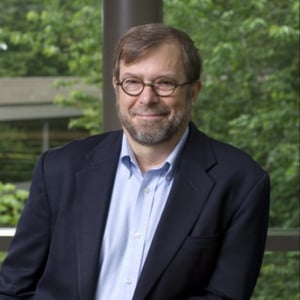
Lewis & Clark Distinguished Professor of Law Emeritus, Lewis & Clark Law School
Professor Funk is the author of American Constitutional Structure and a co-author of one of the leading administrative law casebooks, Administrative Procedure and Practice: Problems and Cases, as well as Administrative Law: Examples & Explanations and the Federal Administrative Procedure Sourcebook. Together with Professor Craig Johnston, Professor Funk is also a co-author of Legal Protection of the Environment, an environmental law casebook. In 2004-05, Funk was a Senior Fulbright Scholar at the University of Heidelberg, where he taught both American constitutional law and environmental law. Funk has published numerous articles on administrative and environmental issues, including in such publications as the Duke Law Journal, the Harvard Journal on Legislation, the Yale Journal on Regulation, the Administrative Law Review, and the U.C.L.A Journal of Environmental Law and Policy. He has chaired both the Administrative Law and Natural Resources Law Sections of the American Association of Law Schools. Funk is also active in the American Bar Association, where he recently served on the ABA’s President’s Task Force on Preemption of State Tort Law and where he is a Fellow of the Administrative Law and Regulatory Practice Section, which he formerly chaired and on whose Council he served. Professor Funk is also a Center for Progressive Reform Scholar, a member of the American Law Institute, and a Fellow of the American Bar Foundation. He has been admitted to practice in New York, the District of Columbia, and before the U.S. Supreme Court.
Before coming to the law school to teach, Professor Funk was an assistant general counsel at the U.S. Department of Energy and earned a special citation for exceptional performance from the Secretary of Energy. Prior to that Funk served as the principal staff member of the Legislation Subcommittee of the U.S. House of Representatives Permanent Select Committee on Intelligence, where he was instrumental in the drafting of the Foreign Intelligence Surveillance Act. Before joining the House Committee, Funk was a staff attorney in the Office of Legal Counsel of the U.S. Department of Justice, where he received a special commendation for outstanding service. Immediately after law school he clerked for Judge James Oakes of the U.S. Court of Appeals, Second Circuit.
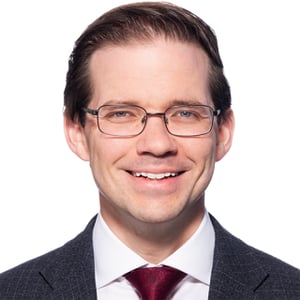
Of Counsel, Covington & Burling LLP
The Honorable Paul J. Ray is currently Of Counsel at Covington & Burling LLP where he advises clients on regulatory opportunities and challenges and helps them formulate and execute advocacy strategies for their regulatory policy priorities before the executive branch and Congress.
During the first Trump Administration, Paul held various senior positions at the Office of Information and Regulatory Affairs (OIRA) within the White House’s Office of Management and Budget, including as acting, and then Senate-confirmed, head of the office. As OIRA Administrator (the "regulations czar"), Paul supervised the review of hundreds of regulations from across the government, drafted numerous executive orders governing the regulatory process, and led the Administration’s regulatory reform effort. As a result of this experience, Paul is well-positioned to help clients understand and achieve regulatory policy priorities in the context of the government’s regulatory agenda and ongoing reform efforts.
Most recently, Paul was also the Director of the Roe Institute for Economic Policy Studies at The Heritage Foundation. In that role, he supervised the formulation of the Foundation’s economic and regulatory policy recommendations and provided technical assistance to congressional committees and staff regarding legislative changes to the regulatory process. In addition to his role at The Heritage Foundation, Paul also served as a Senior Advisor at a strategic advisory firm. Before his time in government, Paul practiced law at a law firm in Washington, specializing in administrative law matters.
Prior to his role at the White House, Paul was Counselor to the Secretary at the U.S. Department of Labor. There he led departmental efforts in high-profile rulemakings and helped formulate the Department’s legal positions and strategy.
Paul served as a law clerk to Supreme Court Justice Samuel Alito and as a law clerk to the Honorable Debra Livingston of the U.S. Court of Appeals for the Second Circuit.
Paul is a thought leader in the conservative legal movement and is a frequent commentator and speaker on regulatory policy and reform matters, including at law schools, professional gatherings, and other venues. He is the Chairman of Innovations in Peacebuilding International and the Regulatory Process Working Group of the Federalist Society’s Regulatory Transparency Project and a public member of the Administrative Conference of the United States. Paul is also an adjunct lecturer at the Hillsdale College School of Government.
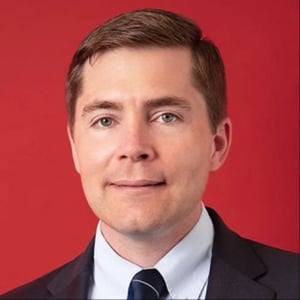
Senior Attorney, Pacific Legal Foundation
Damien Schiff is a senior attorney at Pacific Legal Foundation. He leads its environmental practice group, a unique initiative that draws broadly from PLF’s expertise and success in property rights and separation of powers litigation. Over the years, Damien has represented hundreds of landowners and property rights advocates to defend their liberties against heavy-handed and unwarranted environmental and land-use regulation. His litigation experience includes Sackett v. U.S. Environmental Protection Agency, a groundbreaking decision in which the U.S. Supreme Court upheld the right of landowners to challenge Clean Water Act compliance orders issued by EPA, and Contoski v. Norton, PLF’s successful effort to force the federal government to make good on its promise to delist the bald eagle from the Endangered Species Act.
Besides litigation, Damien has written academic articles on a variety of subjects, including the Endangered Species Act, the Clean Water Act, greenhouse gas torts, the duty to rescue, and international water law. He has appeared on a variety of television and radio programs and has been quoted in The New York Times, The Wall Street Journal, Harper’s Magazine, and The Economist, among other publications.
He obtained his law degree magna cum laude from the University of San Diego School of Law, and his undergraduate degree magna cum laude from Georgetown University. While at USD, he was a research assistant for Professor Bernard Siegan, a leading constitutional theorist and advocate for property rights and economic liberty. Immediately prior to joining PLF, Damien clerked for Judge (and former PLF attorney) Victor Wolski of the United States Court of Federal Claims. Damien credits the mentoring and examples of Professor Siegan and Judge Wolski for his decision to pursue a career in liberty-based public interest litigation.
Damien lives in Sacramento with his wife, two young sons, four chickens, and a cat named Princess. In his off hours he enjoys stamp collecting, Gregorian chant, and martinis—preferably at the same time.
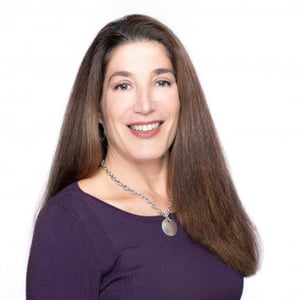
Director, Independent Women's Law Center, Independent Women's
Jennifer C. Braceras, a member of the Federalist Society Board of Visitors, is the director of Independent Women’s Law Center and a former member of the U.S. Commission on Civil Rights.
Ms. Braceras is a graduate of the Harvard Law School, where she served as an editor of the Law Review. After law school, she clerked for two federal judges and practiced labor and employment law with the Boston law firm Ropes & Gray.
A long time political columnist and editor, Ms. Braceras's writing has appeared in a variety of publications, including the Wall Street Journal, the Boston Globe, the Hill, and National Review Online. She co-hosts At the Bar, a bimonthly virtual happy hour discussion about issues at the intersection of law, politics, and culture.
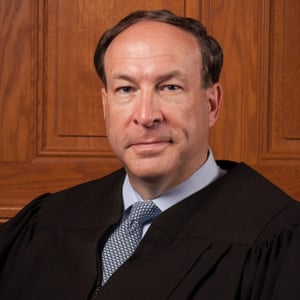
Judge, United States Court of Appeals, Seventh Circuit
Michael B. Brennan was confirmed and sworn in as a Circuit Judge for the U.S. Court of Appeals for the Seventh Circuit in May 2018.
He previously worked as a partner in the Milwaukee law firm of Gass Weber Mullins LLC, where he tried cases and handled appeals in federal and state courts, as a judge on the Milwaukee County Circuit, where he presided over a variety of criminal and civil calendars, and as an assistant district attorney in the Milwaukee County District Attorney’s office.
Brennan’s undergraduate degree is from the University of Notre Dame, and his law degree from Northwestern University School of Law, where he was an editor on the law review and the moot court champion. He served as a law clerk on the U.S. District Court for the Eastern District of Wisconsin and the U.S. Court of Appeals for the Seventh Circuit.
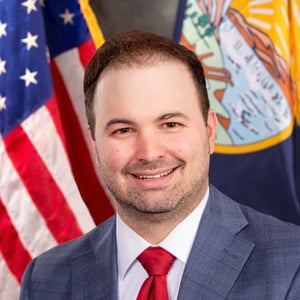
Solicitor General, Montana Attorney General's Office
Christian is currently Solicitor General of Montana, where he serves as the chief litigator and principal legal advisor to Montana Attorney General Austin Knudsen. In that capacity, he manages litigation before the federal district courts, courts of appeal, and the United States Supreme Court, as well as the Montana Supreme Court. He previously served in the Trump Administration as Senior Counsel to the Assistant Secretary for Civil Rights at the U.S. Department of Education. Prior to government service, he was a public interest constitutional litigator at Mountain States Legal Foundation and a fellow at the Institute for Justice. He clerked for Justice Caleb Stegall on the Kansas Supreme Court. He also served as Director of Publications for the Federalist Society's national headquarters.
Christian earned his B.A. in Political Science in 2009 from the University of Pennsylvania before attending the University of Kansas School of Law. Christian is admitted to practice law in Kansas and Montana. A Kansas native, he is a die-hard fan of the Kansas Jayhawks, Kansas City Chiefs, and Kansas City Royals.
Christian is a member of the Federalism & Separation of Powers Practice Group's Executive Committee.
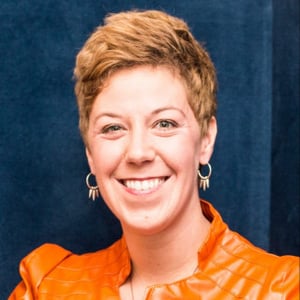
Senior Vice President for Social Policy, Education, & Politics, Third Way
Lanae Erickson is the Senior Vice President for Social Policy, Education, and Politics at Thirdway, where she aims to help policymakers and advocates better understand the complexities of how voters in the middle approach topics that are often perceived politically as black and white, including immigration, crime, abortion, and guns, as well as driving crucial policy conversations like how we can ensure our higher education system is delivering for students and taxpayers. Working closely with leaders in the LGBT movement, she led Third Way’s Commitment Campaign, which mobilized moderate Americans to support marriage for gay couples by changing the conversation from legal rights and benefits to the importance of making a lifetime commitment in front of family and friends.
Lanae served as a member of President Obama's third Advisory Council on Faith-Based and Neighborhood Partnerships. Before coming to Third Way, she was Legislative Counsel at Alliance for Justice, where she investigated the backgrounds of federal judicial nominees on civil and human rights and advocated for progress on issues from detention and interrogation policy to equal pay. Her analysis has been featured in a variety of news outlets, including The Washington Post, The New York Times, USA Today, Politico, The New Yorker, and PBS News Hour. She has also appeared on MSNBC, NPR, Fox News, CSPAN’s Washington Journal, CNN, and her home state’s Minnesota Public Radio. She earned her J.D. magna cum laude from the University of Minnesota, and her Bachelor's degree as a first generation college student and Pell grant recipient at Mount Holyoke College.
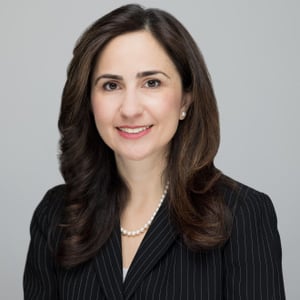
Partner, McGuireWoods LLP
Farnaz is a skilled litigator with extensive experience in representing employers and institutions of higher education, including academic medical centers, in breach of contract, constitutional, discrimination, and tort litigation. She has conducted investigations, advised clients on employment and education laws, and represented them before federal agencies, including the U.S. Department of Labor and U.S. Department of Education.
Farnaz successfully has defended employers, state agencies, government officials, and institutions of higher education in over 30 civil actions as first chair before federal and state courts as well as trial and appellate courts. Farnaz also has advised clients on investigations under civil rights laws such as Title VI of the Civil Rights Act of 1964 (discrimination based on race, color, or national origin), Title VII of the Civil Rights Act of 1964 (discrimination based on race, color, religion, sex, and national origin), and Title IX of the Education Amendments of 1972 (discrimination based on sex). Her deep knowledge of education laws and regulations includes the Higher Education Act of 1965, as amended; accreditation; borrower defense to repayment; gainful employment; financial responsibility standards; FERPA and other privacy laws; the Clery Act; and the Violence Against Women Act (VAWA).
Farnaz is experienced with student and employee disciplinary issues, including under Title IX, and has represented institutions in such matters in several of her previous roles. Representing institutions in Title IX cases requires a nuanced approach, as the institution must balance legal compliance with compassion and care, supporting victims while providing a fair process for both parties, including the accused. Farnaz strikes this balance and is a trusted resource for her clients.
Prior to joining McGuireWoods, Farnaz served as the Deputy General Counsel for Postsecondary Education at the U.S. Department of Education and also as in-house counsel at the University of Virginia. She advised the U.S. Department of Education on litigation strategy and worked closely with the U.S. Department of Justice in cases arising under federal antidiscrimination laws and the Administrative Procedure Act. Government officials also relied on her close counsel in preparation for congressional investigations and hearings. At the University of Virginia, she advised University officials on federal education and employment laws and represented the University and its academic medical center in litigation. She also drafted the University’s antidiscrimination and conduct policies, including free speech policies.
She began her legal career as a law clerk to the Honorable Eric G. Bruggink, Senior Judge, U.S. Court of Federal Claims, and later as a law clerk to the Honorable Leroy Rountree Hassell, Sr., the former Chief Justice, Supreme Court of Virginia.
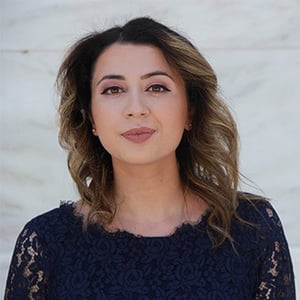
Senior Legal Fellow, The Future of Free Speech, Vanderbilt University
Ashkhen Kazaryan is a renowned expert in First Amendment law and technology policy, specializing in digital free speech, artificial intelligence, and the intersection of constitutional rights with emerging technologies. As a Senior Legal Fellow at the Future of Free Speech at Vanderbilt University, she leads initiatives to protect free expression and shape policies that uphold the First Amendment in the digital age.
Previously, Ashkhen was the lead for North and Latin America on the content regulation team at Meta, where she also served as the company’s policy lead on Section 230. She has also been a Senior Fellow at Stand Together and the Director of Civil Liberties at TechFreedom, where she worked extensively on platform liability, free speech, and internet governance. She is currently Fellow for the First Amendment at the Freedom Forum.
Ashkhen earned her specialist in law degree summa cum laude from Lomonosov Moscow State University in 2012 and later received a master of law degree from Yale Law School in 2016. During her time at Yale, she contributed as an articles editor for the Yale Journal of Law and Feminism, a senior editor for the Yale Law and Policy Review, and an editor for the Yale Journal of Law and Technology, while also serving as co-chair of the Public Interest Fellowship.

Fellow, Ethics and Public Policy Center
Clare Morell is a fellow at the Ethics and Public Policy Center, where she directs EPPC’s Technology and Human Flourishing Project. Prior to joining EPPC, Ms. Morell worked in both the White House Counsel’s Office and the Department of Justice, as well as in the private and non-profit sectors. She is also the author of the forthcoming book, The Tech Exit: A Practical Guide to Freeing Kids and Teens from Smartphones, which will be published by Penguin Random House.
At the Department of Justice, Ms. Morell worked as an Advisor to Attorney General Bill Barr. As part of her work for the Attorney General, she helped oversee the President’s Commission on Law Enforcement and the Administration of Justice and served as Editor of the Commission’s final report. A major focus of the Commission’s report was the challenges that Big Tech’s end-to-end encryption presents to law enforcement for gaining lawful access to crucial intelligence in criminal investigations, like domestic terrorism, as well as human and drug trafficking crimes. Ms. Morell also supported the Attorney General’s work on Section 230 reform as one of his main priorities.
Prior to her role with the Office of the Attorney General, Ms. Morell worked on judicial nominations for the White House Counsel’s office and monitored all nominations data to create high-level presentations for briefing White House leadership. From her experience, Ms. Morell brings an intimate knowledge and understanding of how policy is advanced within the Executive Branch of the federal government, particularly in the Department of Justice and the White House.
Ms. Morell has had opinion pieces published in the Wall Street Journal, Fox News, Newsweek, the Washington Examiner, National Review, American Affairs Journal, Deseret News, The Federalist, Public Discourse, WORLD Magazine, the Washington Times, and the Daily Signal.
Ms. Morell received a B.S.F.S. from Georgetown University’s Walsh School of Foreign Service, where she majored in Science, Technology, and International Affairs. She graduated summa cum laude and received the Edmund A. Walsh Award for academic achievement in international law. She also is proficient in Spanish.
Ms. Morell lives with her husband and three children in Washington, D.C.
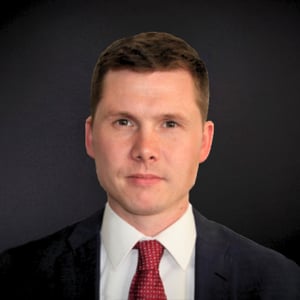
Senior Scholar, Innovation Policy, International Center for Law & Economics
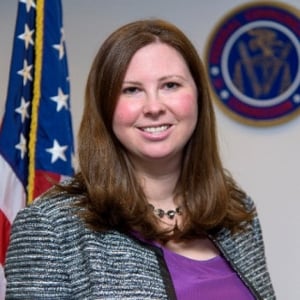
Legislative Director for Senator Marsha Blackburn, U.S. Senate
Jamie Susskind is the Legislative Director for Senator Marsha Blackburn (R-TN). Prior to becoming Legislative Director, she served for two years as the Senator’s Technology Policy Advisor. In that role, she advised on issues such as data privacy, cybersecurity, broadband, spectrum, content moderation, and antitrust, in addition to staffing the Senator on the Senate Commerce Subcommittee on Consumer Protection, Product Safety, and Data Security. Susskind previously worked on the Hill as Chief Counsel to Senator Deb Fischer (R-NE) and as an FCC Detailee for the Senate Committee on Commerce, Science, and Transportation. She also served as Chief of Staff to FCC Commissioner Brendan Carr and as Vice President of Policy and Regulatory Affairs at the Consumer Technology Association. A native Michigander, Susskind earned a Juris Doctor from the Antonin Scalia Law School and a Bachelor of Arts degree from the University of Michigan (Go Blue!).
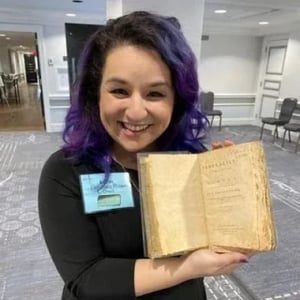
Director, Digital Media, Communications and Fellow, R Street Institute
Shoshana Weissmann manages R Street’s social media, email marketing and other digital assets. She also works on occupational licensing reform, social media regulatory policy, Section 230 and other issues, and has written for various publications, including The Wall Street Journal and USA Today.
Shoshana most recently managed digital communications for Opportunity Lives, a group that highlighted positive stories and policy solutions. Before that, she managed social media and wrote for The Weekly Standard. Earlier in her career, she managed digital communications for the America Rising PAC, where her strategy was highlighted in a piece that appeared in The New York Times.
She is on the board of The Conservation Coalition and a member of the Federalist Society’s Regulatory Transparency Project’s state and local and emerging technology working groups.
She lives in Washington, D.C. and has a stuffed sloth named James Madisloth, and she enjoys the Snapchat hot dog.

Legislature v. Palm [The FedSoc Films Podcast]
In this episode of the FedSoc Films Podcast, Rick Esenberg, Founder & President of the...
Topics
Burgers with a Side of Bias: Why a New Fast-Food Law in California Likely Violates the Private-Nondelegation Doctrine
Last week, California lawmakers announced a grand bargain between labor unions and the fast-food industry....
Topics
The Major Questions Doctrine Is Not About Delegation, but Usurpation—And That Matters
This post was originally published at the Yale Journal on Regulation’s Notice & Comment blog....
Topics
Is It Lawful to Use Regulatory Impact Analysis to Achieve Equity?
Circular A-4, issued by the Office of Management and Budget (OMB), provides detailed guidance to...
Regulation and Red Tape: Sackett v. EPA: A Tale of Wetland Regulations
William Funk, Paul J. Ray, Damien Michael Schiff
A Regulatory Transparency Project Fourth Branch Video
At what point can Americans go to court to defend themselves against agency enforcement action?...
Topics
Spotlighting the FCC’s Key Digital Discrimination Rulemaking
The Federal Communications Commission is fast approaching a November 15 statutory deadline to adopt rules...
Topics
EEOC Proposes Expansive Pregnant Workers Fairness Act Regulations
On August 7, 2023, the Equal Employment Opportunity Commission (EEOC) issued proposed regulations implementing the...
Plenary Session #3 U.S. Department of Education Rulemaking: Hiding Regulatory Elephants in Statutory Mouseholes?
Jennifer C. Braceras, Michael B. Brennan, Christian Corrigan, Lanae Erickson, Farnaz F. Thompson, Jed Shugerman
2023 Education Law & Policy Conference
The Supreme Court’s recent decision in Biden v. Nebraska has not ended questions about regulatory...
Topics
New Guidance Documents from the Department of Education and Department of Justice Address Race-Based Decision-Making by Schools
In June 2023, the U.S. Supreme Court announced its decisions in SFFA v. Harvard and...
Minor Matters in Cyberspace: Examining Internet Age-Verification Regulations
Ashkhen Kazaryan, Clare Morell, Ben Sperry, Jamie Susskind, Shoshana Weissmann
A Regulatory Transparency Project Webinar
As children's lives become increasingly digital, how can we protect their safety online while weighing...