Regulation and Red Tape: Mergers, Monopolies, and the FTC
A Regulatory Transparency Project Fourth Branch Video
Since the 19th century, the United States government has intervened to combat the growth of monopolies in our economy. The stakes in these interventions are high. Without government oversight, monopolies can stifle competition, and raise prices for Americans. But with excessive intervention, the government can also damage the economy by preventing companies from growing and innovating. This has led to an ongoing debate on the best strategy for regulating mergers. When should the government stop two companies from joining forces to prevent economic domination and the suppression of competition? When should the government step back and allow companies to join together to promote growth and innovation?
In this first episode of the “Regulation and Red Tape” series, antitrust experts address these questions and consider the impact of the FTC’s proposed merger guidelines.
Featuring:
*******
As always, the Federalist Society takes no position on particular legal or public policy issues; all expressions of opinion are those of the speaker.

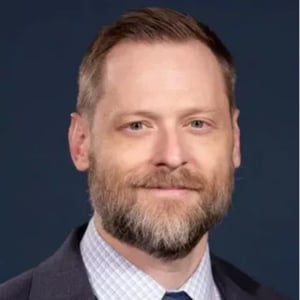
Litigation Director, Center for Individual Rights
Caleb Kruckenberg is CIR’s Litigation Director.
Caleb previously worked as a prosecutor, a public defender, a lobbyist for a national advocacy organization and, most recently, an impact litigator protecting the separation of powers at both the Pacific Legal Foundation and the New Civil Liberties Alliance. He has won major victories against numerous federal agencies, including the U.S. Department of Justice, Department of Labor, Bureau of Alcohol Tobacco and Firearms, and the Securities and Exchange Commission. He is also proud to have sued every U.S. attorney general, eight so far, since he has been litigating against the government on behalf of liberty-minded clients. Caleb has also argued more than 20 times in the U.S. Courts of Appeals, winning cases in 8 of the 12 regional circuit courts.
He graduated cum laude from Temple University Beasley School of Law in Philadelphia, where he was the lead articles editor for the Temple Law Review. Caleb also attended the Pennsylvania Academy of the Fine Arts, where he studied figurative painting.
Venable Professor of Law, University of Baltimore School of Law
Robert H. Lande is the Secretary of the American Antitrust Institute’s Board of Directors. He was the AAI’s first Senior Fellow and a co-founding Director of the AAI and has served the AAI on a full-time basis during three different periods. He is the Venable Professor of Law at the University of Baltimore. Professor Lande is the author of numerous law review articles relating to antitrust, is a frequent speaker at antitrust events, and is often quoted in the trade press. A graduate of Harvard University (J.D., M.P.P.) and Northwestern University (B.A.), he has served in the FTC’s Bureau of Competition and was associated with Jones, Day, Reavis & Pogue.
Of Counsel, Covington & Burling LLP
The Honorable Paul J. Ray is currently Of Counsel at Covington & Burling LLP where he advises clients on regulatory opportunities and challenges and helps them formulate and execute advocacy strategies for their regulatory policy priorities before the executive branch and Congress.
During the first Trump Administration, Paul held various senior positions at the Office of Information and Regulatory Affairs (OIRA) within the White House’s Office of Management and Budget, including as acting, and then Senate-confirmed, head of the office. As OIRA Administrator (the "regulations czar"), Paul supervised the review of hundreds of regulations from across the government, drafted numerous executive orders governing the regulatory process, and led the Administration’s regulatory reform effort. As a result of this experience, Paul is well-positioned to help clients understand and achieve regulatory policy priorities in the context of the government’s regulatory agenda and ongoing reform efforts.
Most recently, Paul was also the Director of the Roe Institute for Economic Policy Studies at The Heritage Foundation. In that role, he supervised the formulation of the Foundation’s economic and regulatory policy recommendations and provided technical assistance to congressional committees and staff regarding legislative changes to the regulatory process. In addition to his role at The Heritage Foundation, Paul also served as a Senior Advisor at a strategic advisory firm. Before his time in government, Paul practiced law at a law firm in Washington, specializing in administrative law matters.
Prior to his role at the White House, Paul was Counselor to the Secretary at the U.S. Department of Labor. There he led departmental efforts in high-profile rulemakings and helped formulate the Department’s legal positions and strategy.
Paul served as a law clerk to Supreme Court Justice Samuel Alito and as a law clerk to the Honorable Debra Livingston of the U.S. Court of Appeals for the Second Circuit.
Paul is a thought leader in the conservative legal movement and is a frequent commentator and speaker on regulatory policy and reform matters, including at law schools, professional gatherings, and other venues. He is the Chairman of Innovations in Peacebuilding International and the Regulatory Process Working Group of the Federalist Society’s Regulatory Transparency Project and a public member of the Administrative Conference of the United States. Paul is also an adjunct lecturer at the Hillsdale College School of Government.