
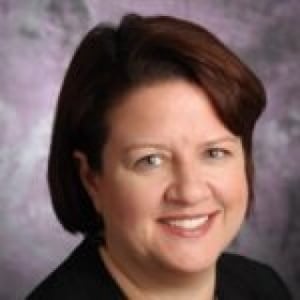
Government Affairs Director, National Employment Law Project
Judy Conti, National Employment Law Project's government affairs director, joined NELP in 2007, after spending seven years as the co-founder and executive director of the D.C. Employment Justice Center, a legal service provider devoted to workplace justice in the D.C. metro.
Judy has years of experience lobbying on issues including raising the minimum wage, fair chance hiring, unemployment insurance, wage theft, immigration reform, and other issues involving turning low-wage work into good jobs with a pathway to the middle-class. In her time with NELP, Judy has made significant achievements in developing the organization’s presence in the Capitol, where she is committed to bringing the expertise and experience of NELP’s staff and allies to the halls of Congress and relevant Cabinet and Executive agencies. In early 2017, Judy played an instrumental role in guiding the coalition of workers’ rights and other advocates who ensured that fast-food CEO Andy Puzder would not become the next secretary of labor.
She has been widely recognized for her work, with awards from the American Bar Association, the Washington Area Women’s Foundation, the Hispanic Bar Association of D.C., William and Mary Law School, and DC Jobs with Justice.
In addition to her advocacy, Judy is a widely-respected media resource. She has appeared on C-Span’s Washington Journal, CNBC, MSNBC, Fox Business News, CBS News, the BBC, and many other television outlets, she has been widely quoted in the print media, and has written for The Hill, Fortune, and other outlets. Judy has also testified before Congress on numerous occasions, particularly regarding unemployment insurance, and regularly speaks at conferences and on panels addressing hot topics in labor and employment law.
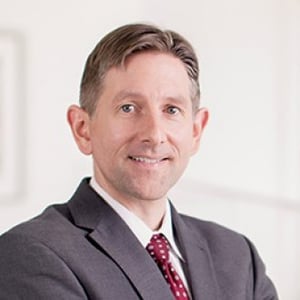
Partner, O'Melveny & Myers LLP
Gregory Jacob is a partner in O’Melveny’s Washington, D.C. office. Greg Jacob represents financial services companies including banks, investment managers, health care payors, and insurers, as well as other employers, in class action and other litigation concerning ERISA and other labor and employment matters. A former Solicitor of Labor, Greg has extensive knowledge on a wide variety of labor and employment issues including ERISA, FLSA, OFCCP, and whistleblower law. He regularly litigates in federal courts throughout the country, defends clients against Department of Labor investigations, and provides counseling to plans and plan sponsors.
Prior to rejoining O’Melveny in 2021, Greg served as Counsel to Vice President Pence and Deputy Assistant to the President. He directly advised the Vice President on all legal issues relating to the Office of the Vice President, and advised the White House Coronavirus Task Force concerning the Defense Production Act and other legal issues related to bolstering the domestic supply chain.
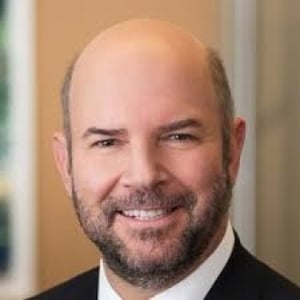
Partner, Morgan, Lewis & Bockius LLP
Philip A. Miscimarra is the former Chairman of the National Labor Relations Board (NLRB). Phil leads the firm’s NLRB special appeals practice and is co-leader of Morgan Lewis Workforce Change, which manages all employment, labor, benefits, and related issues arising from mergers, acquisitions, startups, workforce reductions, and other types of business restructuring. He represents clients on a wide range of labor and employment issues, with a focus on labor-management relations, business acquisitions and restructuring, and employment litigation. Phil is also a Senior Fellow at the University of Pennsylvania's Wharton School and the Wharton Center for Human Resources. He is admitted in Illinois only, and his practice is supervised by DC Bar members.
Phil was named Chairman of the NLRB by President Donald J. Trump on April 24, 2017, after previously serving as Acting Chairman and a Board Member. He was appointed to the NLRB by President Barack Obama on April 9, 2013, and was approved unanimously by the Senate Committee on Health, Education, Labor, and Pensions on May 22, 2013. He was confirmed by voice vote in the US Senate on July 30, 2013, and served from August 7, 2013, to December 16, 2017. Upon the completion of his term, Phil served on the NLRB longer than 26 other board members over the past 30 years.
Phil is the author or co-author of several books involving labor law issues, including The NLRB and Managerial Discretion: Subcontracting, Relocations, Closings, Sales, Layoffs, and Technological Change (2d ed. 2010) (by Miscimarra, Turner, Friedman, Callahan, Conrad, Lignowski and Scroggins); The NLRB and Secondary Boycotts (3d ed. 2002) (by Miscimarra, Berkowitz, Wiener and Ditelberg); and Government Protection of Employees Involved in Mergers and Acquisitions (1989 and 1997 supp.) (by Northrup and Miscimarra); and other publications. He has also testified on labor and employment law issues in the United States Congress.
Chambers USA named Phil one of the leading lawyers for employment law in the United States from 2004 to 2012, based on the views of clients, peers, and other industry professionals. He has been described as a "fantastic lawyer" and "prolific writer," with clients admiring his "multilayered abilities and business savvy" and his "high level of integrity."
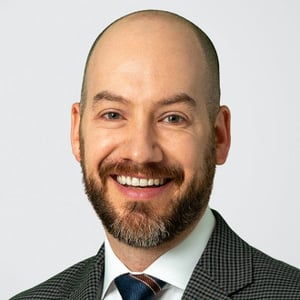
Partner, Holland & Knight LLP
Timothy Taylor is an employment and litigation partner with Holland & Knight LLP, where he was also previously an associate. He represents clients in federal courts and before federal agencies in a variety of disputes. He has special expertise in employment law, the Administrative Procedure Act, the False Claims Act, and appeals. Before rejoining Holland & Knight, Mr. Taylor served as the Deputy Solicitor of Labor. In that position, he oversaw a wide portfolio of litigation, enforcement, rulemaking, and legal counseling for the agency’s more than 450 attorneys. He previously served as the Department of Labor’s Chief of Staff, and in other senior policy positions in the Department. He also served as the employment counsel and as an investigative attorney for the Department of the Treasury’s Office of the Special Inspector General for Pandemic Recovery.
Mr. Taylor clerked for the Honorable Harris Hartz of the U.S. Court of Appeals for the Tenth Circuit and the Honorable Charles Lettow of the U.S. Court of Federal Claims. He graduated summa cum laude with a B.A. from Brigham Young University and cum laude with a J.D. from Harvard Law School, where he was an editor of the Harvard Law Review and the Harvard Journal of Law and Public Policy. He lives in Virginia with his wife and two children.
Government Affairs Director, National Employment Law Project
Judy Conti, National Employment Law Project's government affairs director, joined NELP in 2007, after spending seven years as the co-founder and executive director of the D.C. Employment Justice Center, a legal service provider devoted to workplace justice in the D.C. metro.
Judy has years of experience lobbying on issues including raising the minimum wage, fair chance hiring, unemployment insurance, wage theft, immigration reform, and other issues involving turning low-wage work into good jobs with a pathway to the middle-class. In her time with NELP, Judy has made significant achievements in developing the organization’s presence in the Capitol, where she is committed to bringing the expertise and experience of NELP’s staff and allies to the halls of Congress and relevant Cabinet and Executive agencies. In early 2017, Judy played an instrumental role in guiding the coalition of workers’ rights and other advocates who ensured that fast-food CEO Andy Puzder would not become the next secretary of labor.
She has been widely recognized for her work, with awards from the American Bar Association, the Washington Area Women’s Foundation, the Hispanic Bar Association of D.C., William and Mary Law School, and DC Jobs with Justice.
In addition to her advocacy, Judy is a widely-respected media resource. She has appeared on C-Span’s Washington Journal, CNBC, MSNBC, Fox Business News, CBS News, the BBC, and many other television outlets, she has been widely quoted in the print media, and has written for The Hill, Fortune, and other outlets. Judy has also testified before Congress on numerous occasions, particularly regarding unemployment insurance, and regularly speaks at conferences and on panels addressing hot topics in labor and employment law.
Partner, O'Melveny & Myers LLP
Gregory Jacob is a partner in O’Melveny’s Washington, D.C. office. Greg Jacob represents financial services companies including banks, investment managers, health care payors, and insurers, as well as other employers, in class action and other litigation concerning ERISA and other labor and employment matters. A former Solicitor of Labor, Greg has extensive knowledge on a wide variety of labor and employment issues including ERISA, FLSA, OFCCP, and whistleblower law. He regularly litigates in federal courts throughout the country, defends clients against Department of Labor investigations, and provides counseling to plans and plan sponsors.
Prior to rejoining O’Melveny in 2021, Greg served as Counsel to Vice President Pence and Deputy Assistant to the President. He directly advised the Vice President on all legal issues relating to the Office of the Vice President, and advised the White House Coronavirus Task Force concerning the Defense Production Act and other legal issues related to bolstering the domestic supply chain.
Partner, Morgan, Lewis & Bockius LLP
Philip A. Miscimarra is the former Chairman of the National Labor Relations Board (NLRB). Phil leads the firm’s NLRB special appeals practice and is co-leader of Morgan Lewis Workforce Change, which manages all employment, labor, benefits, and related issues arising from mergers, acquisitions, startups, workforce reductions, and other types of business restructuring. He represents clients on a wide range of labor and employment issues, with a focus on labor-management relations, business acquisitions and restructuring, and employment litigation. Phil is also a Senior Fellow at the University of Pennsylvania's Wharton School and the Wharton Center for Human Resources. He is admitted in Illinois only, and his practice is supervised by DC Bar members.
Phil was named Chairman of the NLRB by President Donald J. Trump on April 24, 2017, after previously serving as Acting Chairman and a Board Member. He was appointed to the NLRB by President Barack Obama on April 9, 2013, and was approved unanimously by the Senate Committee on Health, Education, Labor, and Pensions on May 22, 2013. He was confirmed by voice vote in the US Senate on July 30, 2013, and served from August 7, 2013, to December 16, 2017. Upon the completion of his term, Phil served on the NLRB longer than 26 other board members over the past 30 years.
Phil is the author or co-author of several books involving labor law issues, including The NLRB and Managerial Discretion: Subcontracting, Relocations, Closings, Sales, Layoffs, and Technological Change (2d ed. 2010) (by Miscimarra, Turner, Friedman, Callahan, Conrad, Lignowski and Scroggins); The NLRB and Secondary Boycotts (3d ed. 2002) (by Miscimarra, Berkowitz, Wiener and Ditelberg); and Government Protection of Employees Involved in Mergers and Acquisitions (1989 and 1997 supp.) (by Northrup and Miscimarra); and other publications. He has also testified on labor and employment law issues in the United States Congress.
Chambers USA named Phil one of the leading lawyers for employment law in the United States from 2004 to 2012, based on the views of clients, peers, and other industry professionals. He has been described as a "fantastic lawyer" and "prolific writer," with clients admiring his "multilayered abilities and business savvy" and his "high level of integrity."
Partner, Holland & Knight LLP
Timothy Taylor is an employment and litigation partner with Holland & Knight LLP, where he was also previously an associate. He represents clients in federal courts and before federal agencies in a variety of disputes. He has special expertise in employment law, the Administrative Procedure Act, the False Claims Act, and appeals. Before rejoining Holland & Knight, Mr. Taylor served as the Deputy Solicitor of Labor. In that position, he oversaw a wide portfolio of litigation, enforcement, rulemaking, and legal counseling for the agency’s more than 450 attorneys. He previously served as the Department of Labor’s Chief of Staff, and in other senior policy positions in the Department. He also served as the employment counsel and as an investigative attorney for the Department of the Treasury’s Office of the Special Inspector General for Pandemic Recovery.
Mr. Taylor clerked for the Honorable Harris Hartz of the U.S. Court of Appeals for the Tenth Circuit and the Honorable Charles Lettow of the U.S. Court of Federal Claims. He graduated summa cum laude with a B.A. from Brigham Young University and cum laude with a J.D. from Harvard Law School, where he was an editor of the Harvard Law Review and the Harvard Journal of Law and Public Policy. He lives in Virginia with his wife and two children.

Partner, Morgan, Lewis & Bockius LLP
Michael Edney defends executives and corporations in criminal prosecutions and agency enforcement actions, successfully challenging numerous regulatory agencies—from the Justice Department to the US Securities and Exchange Commission and the US Commodity Futures Trading Commission, among others—against federal government overreach. Many of the regulations Mike has convinced the courts to reverse would have arbitrarily ended hundreds of businesses absent the courts’ intervention. He has also successfully challenged government decisions to break contracts and end projects in cooperation with private industry.
In addition to his criminal defense practice, Mike regularly brings actions challenging government agency regulations as illegal and unconstitutional before they are enforced. He has sued government agencies and reversed their attempted regulations seeking to upend the energy, financial, and tobacco industries.
His civil litigation practice spans beyond anti-regulatory suits. He has brought some of the leading First Amendment cases in the country. On behalf of The Washington Free Beacon, he vindicated the publication’s First Amendment right to access sealed court records before the Arizona Supreme Court. He has defended corporations in bet-the-company litigation concerning securities, environmental, employment, and fair housing. He has represented states at the request of their governors. He has repeatedly served as counsel for former Attorneys General of the United States when they appear as amici curiae before the Supreme Court.
Mike also represents clients on numerous national security matters, including the Classified Information Procedures Act, the Foreign Agent Registration Act, matters before the Committee on Foreign Investment in the United States, government cybersecurity investigations into companies regarded as critical national infrastructure, the handling of classified information by government contractors, and prepublication review of books authored by former government officials for sensitive and classified information.
His private practice draws from a half decade of prior government service. During the administration of former President George W. Bush, he served as deputy legal advisor to the National Security Council at the White House and in the Office of Legal Counsel at the United States Department of Justice, where he helped the administration address many legal issues pertaining to the United States' post-9/11 campaign against terrorism.
Before joining Morgan Lewis, Mike was a litigation partner at another global law firm.
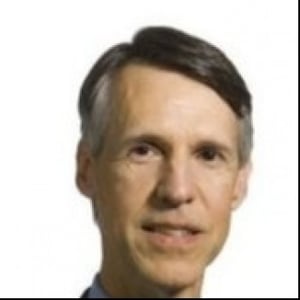
General Counsel and Chief Compliance Officer, Aristotle International
The Honorable David M. Mason is General Counsel and Chief Compliance Officer at Aristotle. He assists campaigns, PACs, and political parties in maximizing their effectiveness while complying with federal and state regulatory requirements.
Mr. Mason served as Commissioner and Chairman (2002 and 2008) of the Federal Election Commission from 1998 until 2008, a presidentially appointed, Senate-confirmed position.
President Reagan appointed Mason as Deputy Assistant Secretary of Defense (Legislative Affairs) where he was instrumental in working with Defense Secretary Frank Carlucci and Representative Dick Armey in securing passage of base closing legislation.
Commissioner Mason has testified before Congress over 20 times, addressed international conferences on elections and appeared in or wrote for scores of American print and broadcast media outlets. He is an honors graduate of Claremont McKenna College in Government, graduated with highest honors from Concord Law School and is a member of the California Bar.
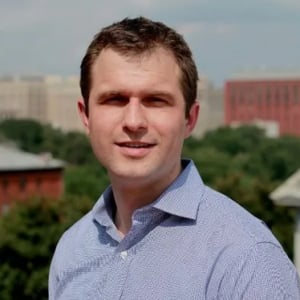
Deputy General Counsel, Public Company Accounting Oversight Board
Connor Raso serves as acting deputy general counsel at the Public Company Accounting Oversight Board. He is a contributor to the Brookings' Series on Regulatory Process and Perspective as part of the Brookings Center on Regulation and Markets.
From 2014-2022 Mr. Raso Served as Special Senior Counsel at the U.S. Securities and Exchange Commission.
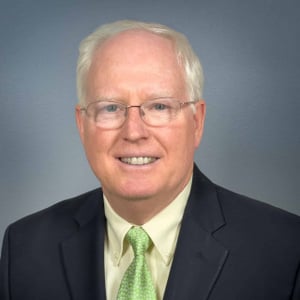
Senior Litigation Counsel, New Civil Liberties Alliance
Russell G. Ryan, a former assistant director of enforcement at the SEC, is now Senior Litigation Counsel at the New Civil Liberties Alliance.
Partner, Morgan, Lewis & Bockius LLP
Michael Edney defends executives and corporations in criminal prosecutions and agency enforcement actions, successfully challenging numerous regulatory agencies—from the Justice Department to the US Securities and Exchange Commission and the US Commodity Futures Trading Commission, among others—against federal government overreach. Many of the regulations Mike has convinced the courts to reverse would have arbitrarily ended hundreds of businesses absent the courts’ intervention. He has also successfully challenged government decisions to break contracts and end projects in cooperation with private industry.
In addition to his criminal defense practice, Mike regularly brings actions challenging government agency regulations as illegal and unconstitutional before they are enforced. He has sued government agencies and reversed their attempted regulations seeking to upend the energy, financial, and tobacco industries.
His civil litigation practice spans beyond anti-regulatory suits. He has brought some of the leading First Amendment cases in the country. On behalf of The Washington Free Beacon, he vindicated the publication’s First Amendment right to access sealed court records before the Arizona Supreme Court. He has defended corporations in bet-the-company litigation concerning securities, environmental, employment, and fair housing. He has represented states at the request of their governors. He has repeatedly served as counsel for former Attorneys General of the United States when they appear as amici curiae before the Supreme Court.
Mike also represents clients on numerous national security matters, including the Classified Information Procedures Act, the Foreign Agent Registration Act, matters before the Committee on Foreign Investment in the United States, government cybersecurity investigations into companies regarded as critical national infrastructure, the handling of classified information by government contractors, and prepublication review of books authored by former government officials for sensitive and classified information.
His private practice draws from a half decade of prior government service. During the administration of former President George W. Bush, he served as deputy legal advisor to the National Security Council at the White House and in the Office of Legal Counsel at the United States Department of Justice, where he helped the administration address many legal issues pertaining to the United States' post-9/11 campaign against terrorism.
Before joining Morgan Lewis, Mike was a litigation partner at another global law firm.
General Counsel and Chief Compliance Officer, Aristotle International
The Honorable David M. Mason is General Counsel and Chief Compliance Officer at Aristotle. He assists campaigns, PACs, and political parties in maximizing their effectiveness while complying with federal and state regulatory requirements.
Mr. Mason served as Commissioner and Chairman (2002 and 2008) of the Federal Election Commission from 1998 until 2008, a presidentially appointed, Senate-confirmed position.
President Reagan appointed Mason as Deputy Assistant Secretary of Defense (Legislative Affairs) where he was instrumental in working with Defense Secretary Frank Carlucci and Representative Dick Armey in securing passage of base closing legislation.
Commissioner Mason has testified before Congress over 20 times, addressed international conferences on elections and appeared in or wrote for scores of American print and broadcast media outlets. He is an honors graduate of Claremont McKenna College in Government, graduated with highest honors from Concord Law School and is a member of the California Bar.
Deputy General Counsel, Public Company Accounting Oversight Board
Connor Raso serves as acting deputy general counsel at the Public Company Accounting Oversight Board. He is a contributor to the Brookings' Series on Regulatory Process and Perspective as part of the Brookings Center on Regulation and Markets.
From 2014-2022 Mr. Raso Served as Special Senior Counsel at the U.S. Securities and Exchange Commission.
Senior Litigation Counsel, New Civil Liberties Alliance
Russell G. Ryan, a former assistant director of enforcement at the SEC, is now Senior Litigation Counsel at the New Civil Liberties Alliance.
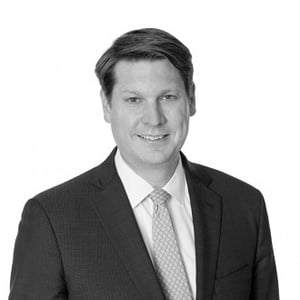
Former Acting Assistant Attorney General, United States Department of Justice; Partner, Winston & Strawn LLP
Jonathan “Jon” Brightbill is a trial and appellate lawyer in Winston’s Washington, D.C. office, and a partner in the firm’s Litigation and White Collar, Regulatory Defense, and Investigations Practices. He represents public and private companies, corporate officers, and other individuals across white collar, regulatory defense, and government and internal investigation matters and rulemaking challenges, as well as complex commercial disputes, citizen suits, and class actions. His commercial litigation experience encompasses business disputes, false advertising, consumer protection and fraud, FCA, and extensive class action defense work; antitrust and unfair competition matters; and intellectual property litigation, such as trademarks, patents, and trade secrets.
Jon served as the Nation’s lead environmental civil and criminal enforcement official and litigator, as Acting Assistant Attorney General for the Environment & Natural Resources Division (“ENRD”) of the U.S. Department of Justice (DOJ). Jon led ENRD’s 425 lawyers, overseeing 6,500 active matters and managing an annual budget of more than $150 million. Jon brings highly experienced executive leadership from among the most senior level of DOJ on white collar and regulatory enforcement, as well as on federal policymaking and rulemaking development and challenges. He speaks with authority on government decision-making processes, and the arguments and perspectives that move regulators and enforcers, best advising and positioning clients to deal with challenges.
Jon argued many of the government’s most significant cases during his time with the DOJ. This included the Navigable Waters Protection Rule and Clean Water Rule Repeal (10th Cir., district courts), the Affordable Clean Energy Rule and Clean Power Plan Repeal (D.C. Cir), defense of EPA actions on pesticide tolerances under FIFRA and the FDCA (9th Cir. en banc), among numerous others. Jon represented the United States in trial courts in both enforcement and defensive cases, including federal enforcement action against Jeffrey Lowe and the Tiger King Park, of Netflix fame, securing a first-of-its-kind injunction for violations of the Endangered Species Act and Animal Welfare Act. Jon directed the litigation and briefing of scores of additional federal cases nationwide, covering all of the major environmental and natural resources statutes, such as the Clean Air Act, the Clean Water Act, FIFRA (pesticides), FDCA (food safety), TSCA (toxics), CERCLA (land remediation), RCRA (waste), National Environmental Policy Act, Federal Land Policy and Management Act, and numerous other land- and resource-management statutes.
Jon has unmatched experience litigating legal and technical issues relating to climate change. He argued in the courts of appeals, including the D.C. Circuit, regarding the most significant climate change regulations by EPA, as well as the preemptive scope of the Clean Air Act. Jon also litigated climate change-related credit and trading schemes and international agreements in district court. During Jon’s time in leadership at ENRD, it successfully defeated one of the most wide-ranging lawsuits regarding climate change to date—obtaining a stay pending interlocutory appeal and dismissal just weeks before a scheduled three-month trial on federal government liability for climate change.
An accomplished trial lawyer, prior to working at DOJ, Jon was a partner in the Washington, D.C. office of another global law firm. He not only represents clients in court, but creatively counsels corporations on balancing business needs and realities with a broad range of litigation risks and compliance obligations. Jon is also an Adjunct Professor at Georgetown University Law Center. He served on the American Bar Association’s E-Discovery Working Group for Bankruptcy Practice, and was a frequent lecturer for District of Columbia Bar Association Continuing Legal Education Programs.
Jon served as an appellate clerk for the Honorable D. Brooks Smith, U.S. Court of Appeals for the Third Circuit, after graduating magna cum laude from the Georgetown University Law Center. He worked in state government as an Executive Policy Specialist for air, waste, land remediation, and radiation matters at the Pennsylvania Department of Environmental Protection.
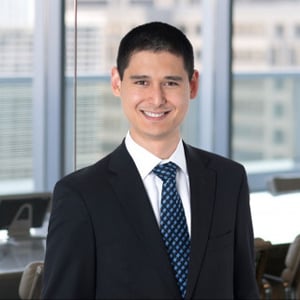
Associate, Winston & Strawn LLP
Spencer draws on his experience as a former trial and appellate clerk to litigate white collar, commercial, administrative law, and constitutional matters at every stage.
Michael J. Woodrum is an Associate at Winston & Strawn LLP.
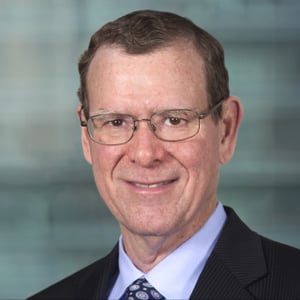
Executive in Residence, Wake Forest University School of Business
John Allison is an Executive in Residence at the Wake Forest School of Business. He is a member of the Cato Institute’s Board of Directors and Chairman of the Executive Advisory Council of the Cato Institute’s Center for Monetary and Financial Alternatives. Allison was president and CEO of the Cato Institute from October 2012 to April 2015. Prior to joining Cato, Allison was chairman and CEO of BB&T Corporation, the 10th-largest financial services holding company headquartered in the United States. During his tenure as CEO from 1989 to 2008, BB&T grew from $4.5 billion to $152 billion in assets. He was recognized by theHarvard Business Reviewas one of the top 100 most successful CEOs in the world over the last decade.
Allison has received the Corning Award for Distinguished Leadership, been inducted into the North Carolina Business Hall of Fame, and received the Lifetime Achievement Award from theAmerican Banker. He is the author of The Financial Crisis and the Free Market Cure: Why Pure Capitalism Is the World Economy’s Only Hope and The Leadership Crisis and the Free Market Cure: Why the Future of Business Depends on the Return to Life, Liberty, and the Pursuit of Happiness. In addition, he is a former Distinguished Professor of Practice at Wake Forest University School of Business, and serves on the Board of Visitors at the business schools at Wake Forest, Duke, and the University of North Carolina–Chapel Hill.
Allison is a Phi Beta Kappa graduate of the University of North Carolina–Chapel Hill. He received his master’s degree in management from Duke University and is also a graduate of the Stonier Graduate School of Banking. Allison is the recipient of six honorary doctorate degrees.
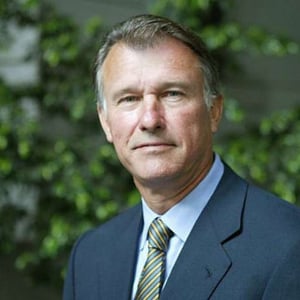
Former CEO, Wells Fargo
Mr. Richard M. Kovacevich, also known as Dick, serves as Vice President at San Francisco Symphony. Mr. Kovacevich serves as the Chief Executive Officer at Hudson Executive Capital LP. He served as the Chief Executive Officer at Wells Fargo & Company from November 1998 to June 2007 and also served as its President from November 1998 to August 1, 2005. Mr. Kovacevich served as the Chief Executive Officer of Norwest Corp. from January 1993 to November 1998 and as its Chief Operating Officer since 1989. He joined Norwest in March 1986, as Vice Chairman, Chief Operating Officer and Head of Norwest Banking Group. Mr. Kovacevich served as the President of Norwest Corporation from January 1993 to January 1997. Prior to Norwest, he served as a Group Executive of the Policy Committee of CitiCorp. and Division General Manager at General Mills. Mr. Kovacevich served as the President of The Financial Services Roundtable and serves as its Co-Chairman of Commission to Enhance Competitiveness. He served as the Chairman of the Board at Wells Fargo Bank Minnesota, National Association. Mr. Kovacevich served as the Chairman of Wells Fargo Bank, National Association. He served as the Chairman of the Board of Wells Fargo & Company from August 2005 to December 30, 2009. Mr. Kovacevich served as the Chairman of Norwest Corp. from May 1995 to November 1998. He serves as Vice Chairman of the San Francisco Museum of Modern Art. Mr. Kovacevich served as the Vice Chairman of the American Bankers Council. He has been a Director of Norwest Corporation since 1986. He has been Director of Theranos, Inc. since May 12, 2016 and previously served as Director of Theranos, Inc. since July 29, 2013. He serves as an Independent Director of Cargill, Incorporated. Mr. Kovacevich serves as a Director of The Clearing House LLC. He served as a Director at Cisco Systems, Inc. since January 19, 2005 until November 19, 2013. Mr. Kovacevich served as a Director of Wells Fargo & Company from 1986 to December 30, 2009. He served as an Independent Director of Target Corp. from 1996 to December 31, 2010. Mr. Kovacevich serves as a Member of The Federal Reserve's Federal Advisory Council, California Business Roundtable and Governor Arnold Schwarzenegger's California Commission for Jobs and Economic Growth. He graduated from Stanford University where he earned his MBA and his Bachelors and Masters degrees in Industrial Engineering.
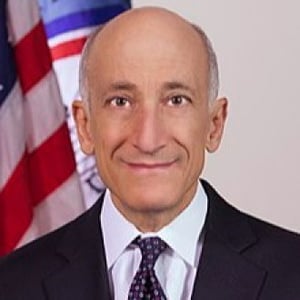
Research Fellow, Harvard Kennedy School
Timothy Massad is currently a Research Fellow at the Kennedy School of Government at Harvard University, an Adjunct Professor of Law at Georgetown Law School and a consultant on financial regulatory and fintech issues.
Mr. Massad served as Chairman of the U.S. Commodity Futures Trading Commission from 2014-2017. Under his leadership, the agency implemented the Dodd Frank reforms of the over-the-counter swaps market and harmonized many aspects of cross-border regulation, including reaching a landmark agreement with the European Union on clearinghouse oversight. The agency also declared virtual currencies to be commodities, introduced reforms to address automated trading and strengthened cybersecurity protections.
Previously, Mr. Massad served as the Assistant Secretary for Financial Stability of the U.S. Department of the Treasury. In that capacity, he oversaw the Troubled Asset Relief Program (TARP), the principal U.S. governmental response to the 2008 financial crisis. During his tenure, Treasury recovered more on all the crisis investments than was disbursed. Mr. Massad was with the Treasury from 2009 to 2014 and also served as a counselor to the Treasury Secretary.
Prior to his government service, Mr. Massad was a partner in the law firm of Cravath, Swaine & Moore, LLP. His practice included corporate finance, derivatives and advising boards of directors. He managed the firm’s Hong Kong office from 1998 to 2002 and represented governments and corporations on transactions throughout Asia. Mr. Massad was also one of a small group of lawyers who drafted the original ISDA standard agreements for swaps.
Of Counsel, Covington & Burling LLP
The Honorable Paul J. Ray is currently Of Counsel at Covington & Burling LLP where he advises clients on regulatory opportunities and challenges and helps them formulate and execute advocacy strategies for their regulatory policy priorities before the executive branch and Congress.
During the first Trump Administration, Paul held various senior positions at the Office of Information and Regulatory Affairs (OIRA) within the White House’s Office of Management and Budget, including as acting, and then Senate-confirmed, head of the office. As OIRA Administrator (the "regulations czar"), Paul supervised the review of hundreds of regulations from across the government, drafted numerous executive orders governing the regulatory process, and led the Administration’s regulatory reform effort. As a result of this experience, Paul is well-positioned to help clients understand and achieve regulatory policy priorities in the context of the government’s regulatory agenda and ongoing reform efforts.
Most recently, Paul was also the Director of the Roe Institute for Economic Policy Studies at The Heritage Foundation. In that role, he supervised the formulation of the Foundation’s economic and regulatory policy recommendations and provided technical assistance to congressional committees and staff regarding legislative changes to the regulatory process. In addition to his role at The Heritage Foundation, Paul also served as a Senior Advisor at a strategic advisory firm. Before his time in government, Paul practiced law at a law firm in Washington, specializing in administrative law matters.
Prior to his role at the White House, Paul was Counselor to the Secretary at the U.S. Department of Labor. There he led departmental efforts in high-profile rulemakings and helped formulate the Department’s legal positions and strategy.
Paul served as a law clerk to Supreme Court Justice Samuel Alito and as a law clerk to the Honorable Debra Livingston of the U.S. Court of Appeals for the Second Circuit.
Paul is a thought leader in the conservative legal movement and is a frequent commentator and speaker on regulatory policy and reform matters, including at law schools, professional gatherings, and other venues. He is the Chairman of Innovations in Peacebuilding International and the Regulatory Process Working Group of the Federalist Society’s Regulatory Transparency Project and a public member of the Administrative Conference of the United States. Paul is also an adjunct lecturer at the Hillsdale College School of Government.

Grading the Biden DOL and NLRB’s Use of Regulatory Authorities
Judy Conti, Gregory Frederick Jacob, Philip A. Miscimarra, Timothy Taylor
Regulatory Transparency Project Webinar
The Regulatory Transparency Project (RTP) is pleased to host a stellar panel of top...
Grading the Biden DOL and NLRB’s Use of Regulatory Authorities
Judy Conti, Gregory Frederick Jacob, Philip A. Miscimarra, Timothy Taylor
Regulatory Transparency Project Webinar
The Regulatory Transparency Project (RTP) is pleased to host a stellar panel of top...
Topics
Whither Expertise? The Decline and Fall of Nonpartisan Policy at the National Labor Relations Board
Last week, the National Labor Relations Board decided Chemtrade West US LLC, a case about...
Discussing Clarke v. CFTC: The Case of PredictIt & the CFTC's No-Action Letter
Michael J. Edney, David M. Mason, Connor Raso, Russell G. Ryan
In July of 2023, the Fifth Circuit reversed the district court's decision in Clarke v....
Discussing Clarke v. CFTC: The Case of PredictIt & the CFTC's No-Action Letter
Michael J. Edney, David M. Mason, Connor Raso, Russell G. Ryan
In July of 2023, the Fifth Circuit reversed the district court's decision in Clarke v....
Topics
Presidential Signature Requirements as a Tool for Enforcing Democratic Accountability
In a world with an ever more powerful administrative state, how can we prevent civil...
Topics
Simple Rules for Jarkesy v. SEC in a Complex Administrative World
“Administrative law is not for sissies,” Justice Scalia famously quipped. It’s complex. And that’s no...
Pushing Pause on Liquified Natural Gas Exports: Can the Department of Energy Halt LNG Exports to Save the Planet?
Jonathan Brightbill, Spencer Churchill, Michael Woodrum
Federalist Society Review, Volume 25
The Biden-Harris Administration recently interrupted the normal, export-friendly operation of the Natural Gas Act, triggering...
Topics
Oral Arguments in Murthy v. Missouri
The Supreme Court looked unlikely to uphold a sweeping Fifth Circuit injunction on Monday, as...
Regulation and Red Tape: Tax Inversions: Unpacking the Pfizer Case
John A. Allison, Richard M. Kovacevich, Timothy G. Massad, Paul J. Ray
A Regulatory Transparency Project Fourth Branch Video
In 2014, the pharmaceutical company Pfizer initiated a restructuring, only to encounter impediments from the...