Deputy Secretary of Transportation, US Department of Transportation
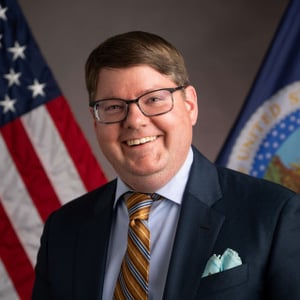
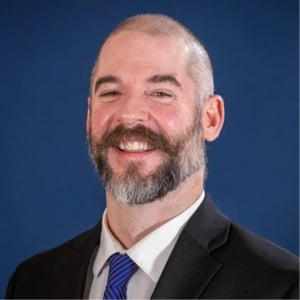
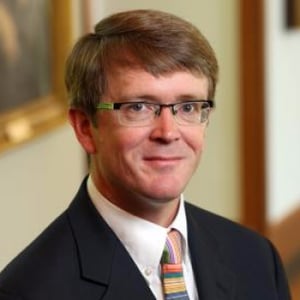
Steven G. Bradbury was sworn in as the Deputy Secretary of Transportation on March 13, 2025, following his confirmation by the U.S. Senate on March 11, 2025. In this role, he oversees the Department’s operating administrations and spearheads initiatives to ensure a safe, efficient, and modern transportation system that strengthens economic productivity and global competitiveness. Deputy Secretary Bradbury also assists Secretary Duffy in managing the Department’s activities, including its workforce of over 58,000 employees and an annual budget exceeding $109 billion.
Bradbury previously served as the 23rd General Counsel of the Department of Transportation from 2017 to 2021, as the Acting Deputy Secretary from 2019, and as Acting Secretary of Transportation in 2021. As General Counsel, he was the chief legal officer, advising on all legal matters and ensuring the integrity and compliance of the Department’s policies and programs.
Before rejoining DOT, Bradbury was a Distinguished Fellow at The Heritage Foundation from December 2022 to March 2025. He has extensive experience in the public and private sector, having served as Principal Deputy and Acting Assistant Attorney General at the U.S. Department of Justice and as a partner at Kirkland & Ellis LLP and Dechert LLP. Earlier in his career, he clerked for Justice Clarence Thomas and Judge James L. Buckley.
Bradbury holds a J.D., magna cum laude, from the University of Michigan Law School and a B.A. in English from Stanford University.
Professor of Law, University of Notre Dame Law School
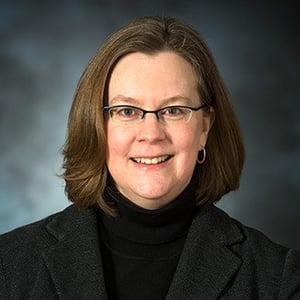
Emily Bremer teaches and writes in the areas of administrative law, regulatory process, and civil procedure. Her scholarship focuses primarily on matters of procedural design, with a recent focus on the history and interpretation of the Administrative Procedure Act (APA). She is a recipient of the AALS’s award for the year’s best administrative law scholarship by a junior scholar and the AALL’s Joseph L. Andrew’s Legal Literature Award for her contribution to the Bremer-Kovacs Collection of Historical Documents Related to the APA (HeinOnline). Bremer’s articles include a defense forthcoming in the Virginia Law Review of the constitutionality of the APA’s regime for ensuring the competence and impartiality of Administrative Law Judges; a plea in the Yale Journal on Regulation for administrative law to take greater account of the on-the-ground reality of administration; twin articles uncovering the intellectual foundation and meaning of the APA’s adjudication and rulemaking provisions; and three separate studies that served as the basis of recommendations of the Administrative Conference of the United States (ACUS) on the subjects of agency declaratory orders, incorporation by reference, and statutory limitations on the jurisdiction of the Court of Federal Claims. Bremer serves as a Senior Fellow of ACUS, a co-editor of the administrative law section of Jotwell, and a regular contributor to the Yale Journal on Regulation’s Notice & Comment blog.
William R. Orthwein Distinguished Professor of Law, Washington University in St. Louis School of Law
Professor Ronald M. Levin is a nationally known scholar who specializes in administrative law and related public law issues. He is the co-author of a casebook on state and federal administrative law, now in its third edition, as well as a nutshell on administrative law and process, now in its fifth edition. Formerly the law school's associate dean, he has published numerous articles and book chapters on administrative law topics, including judicial review, rulemaking, and legislative reform of the regulatory process. He also has written about the law of legislation, lobbying, and legislative ethics. Among his professional affiliations, Professor Levin has chaired the ABA Section of Administrative Law and Regulatory Practice and served as the ABA's advisor to the drafting committee to revise the Model State Administrative Procedure Act. He also has chaired the Section on Administrative Law and the Section on Legislation of the Association of American Law Schools (AALS). Currently a public member of the Administrative Conference of the United States (ACUS), he previously served as a consultant to ACUS and to the Supreme Court of Indonesia. Before joining the law faculty, Professor Levin clerked for the Hon. John C. Godbold, U.S. Court of Appeals for the Fifth Circuit, and practiced for three years in Washington, D.C., with the firm of Sutherland, Asbill & Brennan.
Judge, United States Court of Appeals, Second Circuit
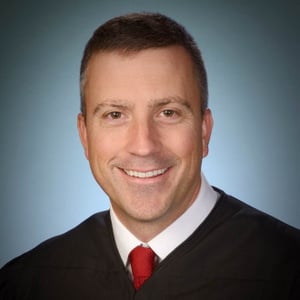
Judge Menashi was appointed to the U.S. Court of Appeals for the Second Circuit on November 14, 2019. Previously, he served as special assistant and associate counsel to the President in the White House and as acting general counsel at the U.S. Department of Education. He was assistant professor of law at Scalia Law School, George Mason University, where he taught administrative law and civil procedure, and a research fellow at New York University School of Law and Georgetown University Law Center. He was also a partner at Kirkland & Ellis LLP in New York, where he practiced appellate and commercial litigation, and served as a law clerk to Justice Samuel Alito on the Supreme Court of the United States and to Judge Douglas Ginsburg on the U.S. Court of Appeals for the District of Columbia Circuit. He graduated from Stanford Law School, where he was elected to Order of the Coif and served as senior articles editor of the Stanford Law Review, and from Dartmouth College, where he was elected to Phi Beta Kappa.
Andrew Tutt focuses on Supreme Court, appellate, and complex litigation. He has won cases in federal courts across a broad cross-section of subjects, with particular experience in administrative law, intellectual property law, and civil rights law. He has argued and won three cases in the United States Supreme Court, led appeals in the First, Second, Third, Fourth, Fifth, Sixth, Seventh, Ninth, Tenth, and D.C. Circuits and led the strategy, briefing, and argument in complex cases in federal district courts nationwide.
Recently, Andrew argued and won a significant victory in the United States Supreme Court establishing an important structural constitutional principle and safeguarding the reemployment rights of thousands of veterans and servicemembers. The Court took the rare step of granting certiorari to a state intermediate court of appeals, without a circuit conflict, over the Solicitor Generals recommendation that the Court deny the case.
In another recent matter before the United States Supreme Court, Andrew identified a meritorious pro se petition for certiorari. Representing the petitioner pro bono, Andrew and a team of Arnold & Porter attorneys persuaded the United States Supreme Court to grant the petition, securing reversal and his clients release from federal custody.
In a recent case, Andrew persuaded the Fourth Circuit to recognize that livestreaming police officers in the discharge of their duties is First Amendment protected activity.
In another recent case, Andrew convinced the Tenth Circuit to join six other federal courts of appeals in recognizing that individuals have a clearly established First Amendment right to record police officers in the discharge of their duties in public subject only to reasonable time, place, and manner restrictions.
In another case, Andrew persuaded the Fourth Circuit that a federal district court fundamentally misapprehended the evidence and arguments in a high-stakes bench trial, winning, on clear error review, a reversal and remand with instructions to enter judgment in favor of his client.
In another case in the Fourth Circuit, Andrew won a preliminary injunction and summary judgment for the City of Baltimore against changes to grant criteria used to award nearly US$300 million annually. On appeal, the Fourth Circuit granted initial hearing en banc, split with the en banc Ninth Circuit, and affirmed the district court's grant of summary judgment on four independent grounds.
In the Ninth Circuit, Andrew successfully represented three federal grantees in a high-profile challenge to the criteria used to award US$100 million in annual federal grants. Andrew persuaded the court of appeals to reverse the district court's dismissal for lack of jurisdiction and exercise its discretion to reach the merits and strike down the unlawful award criteria in light of the case's "national impact."
Deputy Secretary of Transportation, US Department of Transportation
Steven G. Bradbury was sworn in as the Deputy Secretary of Transportation on March 13, 2025, following his confirmation by the U.S. Senate on March 11, 2025. In this role, he oversees the Department’s operating administrations and spearheads initiatives to ensure a safe, efficient, and modern transportation system that strengthens economic productivity and global competitiveness. Deputy Secretary Bradbury also assists Secretary Duffy in managing the Department’s activities, including its workforce of over 58,000 employees and an annual budget exceeding $109 billion.
Bradbury previously served as the 23rd General Counsel of the Department of Transportation from 2017 to 2021, as the Acting Deputy Secretary from 2019, and as Acting Secretary of Transportation in 2021. As General Counsel, he was the chief legal officer, advising on all legal matters and ensuring the integrity and compliance of the Department’s policies and programs.
Before rejoining DOT, Bradbury was a Distinguished Fellow at The Heritage Foundation from December 2022 to March 2025. He has extensive experience in the public and private sector, having served as Principal Deputy and Acting Assistant Attorney General at the U.S. Department of Justice and as a partner at Kirkland & Ellis LLP and Dechert LLP. Earlier in his career, he clerked for Justice Clarence Thomas and Judge James L. Buckley.
Bradbury holds a J.D., magna cum laude, from the University of Michigan Law School and a B.A. in English from Stanford University.
Professor of Law, University of Notre Dame Law School
Emily Bremer teaches and writes in the areas of administrative law, regulatory process, and civil procedure. Her scholarship focuses primarily on matters of procedural design, with a recent focus on the history and interpretation of the Administrative Procedure Act (APA). She is a recipient of the AALS’s award for the year’s best administrative law scholarship by a junior scholar and the AALL’s Joseph L. Andrew’s Legal Literature Award for her contribution to the Bremer-Kovacs Collection of Historical Documents Related to the APA (HeinOnline). Bremer’s articles include a defense forthcoming in the Virginia Law Review of the constitutionality of the APA’s regime for ensuring the competence and impartiality of Administrative Law Judges; a plea in the Yale Journal on Regulation for administrative law to take greater account of the on-the-ground reality of administration; twin articles uncovering the intellectual foundation and meaning of the APA’s adjudication and rulemaking provisions; and three separate studies that served as the basis of recommendations of the Administrative Conference of the United States (ACUS) on the subjects of agency declaratory orders, incorporation by reference, and statutory limitations on the jurisdiction of the Court of Federal Claims. Bremer serves as a Senior Fellow of ACUS, a co-editor of the administrative law section of Jotwell, and a regular contributor to the Yale Journal on Regulation’s Notice & Comment blog.
William R. Orthwein Distinguished Professor of Law, Washington University in St. Louis School of Law
Professor Ronald M. Levin is a nationally known scholar who specializes in administrative law and related public law issues. He is the co-author of a casebook on state and federal administrative law, now in its third edition, as well as a nutshell on administrative law and process, now in its fifth edition. Formerly the law school's associate dean, he has published numerous articles and book chapters on administrative law topics, including judicial review, rulemaking, and legislative reform of the regulatory process. He also has written about the law of legislation, lobbying, and legislative ethics. Among his professional affiliations, Professor Levin has chaired the ABA Section of Administrative Law and Regulatory Practice and served as the ABA's advisor to the drafting committee to revise the Model State Administrative Procedure Act. He also has chaired the Section on Administrative Law and the Section on Legislation of the Association of American Law Schools (AALS). Currently a public member of the Administrative Conference of the United States (ACUS), he previously served as a consultant to ACUS and to the Supreme Court of Indonesia. Before joining the law faculty, Professor Levin clerked for the Hon. John C. Godbold, U.S. Court of Appeals for the Fifth Circuit, and practiced for three years in Washington, D.C., with the firm of Sutherland, Asbill & Brennan.
Judge, United States Court of Appeals, Second Circuit
Judge Menashi was appointed to the U.S. Court of Appeals for the Second Circuit on November 14, 2019. Previously, he served as special assistant and associate counsel to the President in the White House and as acting general counsel at the U.S. Department of Education. He was assistant professor of law at Scalia Law School, George Mason University, where he taught administrative law and civil procedure, and a research fellow at New York University School of Law and Georgetown University Law Center. He was also a partner at Kirkland & Ellis LLP in New York, where he practiced appellate and commercial litigation, and served as a law clerk to Justice Samuel Alito on the Supreme Court of the United States and to Judge Douglas Ginsburg on the U.S. Court of Appeals for the District of Columbia Circuit. He graduated from Stanford Law School, where he was elected to Order of the Coif and served as senior articles editor of the Stanford Law Review, and from Dartmouth College, where he was elected to Phi Beta Kappa.
Andrew Tutt focuses on Supreme Court, appellate, and complex litigation. He has won cases in federal courts across a broad cross-section of subjects, with particular experience in administrative law, intellectual property law, and civil rights law. He has argued and won three cases in the United States Supreme Court, led appeals in the First, Second, Third, Fourth, Fifth, Sixth, Seventh, Ninth, Tenth, and D.C. Circuits and led the strategy, briefing, and argument in complex cases in federal district courts nationwide.
Recently, Andrew argued and won a significant victory in the United States Supreme Court establishing an important structural constitutional principle and safeguarding the reemployment rights of thousands of veterans and servicemembers. The Court took the rare step of granting certiorari to a state intermediate court of appeals, without a circuit conflict, over the Solicitor Generals recommendation that the Court deny the case.
In another recent matter before the United States Supreme Court, Andrew identified a meritorious pro se petition for certiorari. Representing the petitioner pro bono, Andrew and a team of Arnold & Porter attorneys persuaded the United States Supreme Court to grant the petition, securing reversal and his clients release from federal custody.
In a recent case, Andrew persuaded the Fourth Circuit to recognize that livestreaming police officers in the discharge of their duties is First Amendment protected activity.
In another recent case, Andrew convinced the Tenth Circuit to join six other federal courts of appeals in recognizing that individuals have a clearly established First Amendment right to record police officers in the discharge of their duties in public subject only to reasonable time, place, and manner restrictions.
In another case, Andrew persuaded the Fourth Circuit that a federal district court fundamentally misapprehended the evidence and arguments in a high-stakes bench trial, winning, on clear error review, a reversal and remand with instructions to enter judgment in favor of his client.
In another case in the Fourth Circuit, Andrew won a preliminary injunction and summary judgment for the City of Baltimore against changes to grant criteria used to award nearly US$300 million annually. On appeal, the Fourth Circuit granted initial hearing en banc, split with the en banc Ninth Circuit, and affirmed the district court's grant of summary judgment on four independent grounds.
In the Ninth Circuit, Andrew successfully represented three federal grantees in a high-profile challenge to the criteria used to award US$100 million in annual federal grants. Andrew persuaded the court of appeals to reverse the district court's dismissal for lack of jurisdiction and exercise its discretion to reach the merits and strike down the unlawful award criteria in light of the case's "national impact."
Associate Professor of Law, Columbia Law School
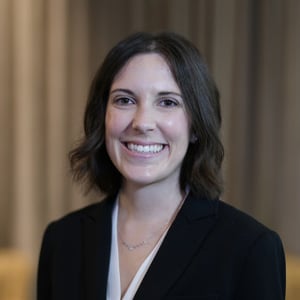
Lina Khan teaches and writes about antitrust law, infrastructure industries law, the antimonopoly tradition, and law and political economy. Several of her writings have focused on the ways that dominant digital platforms freshly reveal the shortcomings of the current approach to antitrust. In June 2021, Khan began serving a seven-year term as chair of the Federal Trade Commission.
Khan’s work has been published by the Columbia Law Review, Harvard Law Review, The University of Chicago Law Review, and The Yale Law Journal. The New York Times has described Khan’s scholarship as having “reframed decades of monopoly law,” and Politico has called her “a leader of a new school of antitrust thought.” Her article “Amazon’s Antitrust Paradox” was awarded the 2018 Antitrust Writing Award for Best Academic Unilateral Conduct Article, her article “The Separation of Platforms and Commerce” won the 2019 Jerry S. Cohen Memorial Fund’s Best Antitrust Article on Remedies, and her co-authored article “The Case for ‘Unfair Methods of Competition’ Rulemaking” received the 2020 Antitrust Writing Award for Best General Antitrust Academic Article.
Khan’s scholarship has also been profiled or discussed by The Atlantic, Bloomberg, The Economist, Financial Times, The New Yorker, The Wall Street Journal, and The Washington Post. She has been named to the Politico 50, Foreign Policy magazine’s Global Thinkers, Prospect magazine’s Top 50 Thinkers, WIRED25, National Journal 50, and Time magazine’s Next Generation Leaders.
Prior to joining Columbia Law in 2020, Khan served as counsel to the U.S. House Judiciary Committee’s Subcommittee on Antitrust, Commercial, and Administrative Law, where she helped lead the Committee’s investigation into digital markets and the publication of its landmark report. She has also served as legal adviser to Commissioner Rohit Chopra at the Federal Trade Commission and legal director at the Open Markets Institute.
George Mason University Foundation Professor of Law, Antonin Scalia Law School, George Mason University
TODD J. ZYWICKI is George Mason University Foundation Professor of Law at Antonin Scalia Law School at George Mason University and Research Fellow of the George Mason Law and Economics Center. During the Fall 2023 semester he served as the Visiting Scholar in Conservative Thought and Policy for the Bruce Benson Center for the Study of Western Civilization at the University of Colorado-Boulder. From 2020-2021 he was Chair of the Consumer Financial Protection Bureau Taskforce on Federal Consumer Financial Law. In 2021 he was inducted to the American College of Consumer Financial Services Lawyers. He is also a Senior Fellow of the F.A. Hayek Program for the Advanced Study of Politics, Philosophy, and Economics at George Mason University and a former Senior Fellow of the Cato Institute. From 2015-2017 he was Executive Director of the George Mason Law and Economics Center. He served as Co-Editor of the Supreme Court Economic Review from 2006-2017. From 2003-2004, Professor Zywicki served as the Director of the Office of Policy Planning at the Federal Trade Commission. He has also taught at Vanderbilt University Law School, Georgetown University Law Center, Boston College Law School, Mississippi College School of Law, and China University of Political Science and Law.
Professor Zywicki clerked for Judge Jerry E. Smith of the U.S. Court of Appeals for the Fifth Circuit and worked as an associate at Alston & Bird in Atlanta, Georgia, where he practiced bankruptcy and commercial law. He received his J.D. from the University of Virginia, where he was executive editor of the Virginia Tax Review and John M. Olin Scholar in Law and Economics. Professor Zywicki also received an M.A. in Economics from Clemson University and an A.B. cum Laude with high honors in his major from Dartmouth College.
Professor Zywicki is also a Lone Mountain Fellow of the Property and Environment Research Center, a Fellow of the International Centre for Economic Research in Turin, Italy, and a former Senior Fellow of the Goldwater Institute. During the Fall 2008 Semester Professor Zywicki was the Searle Fellow of the George Mason University School of Law and was a 2008-09 W. Glenn Campbell and Rita Ricardo-Campbell National Fellow and the Arch W. Shaw National Fellow at the Hoover Institution on War, Revolution and Peace. He has lectured and consulted with government officials around the world, including Iceland, Italy, Japan, and Guatemala. In 2006 Professor Zywicki served as a Member of the United States Department of Justice Study Group on “Identifying Fraud, Abuse and Errors in the United States Bankruptcy System.”
Professor Zywicki is the author of more than 130 articles in leading law reviews and peer-reviewed economics journals. He is one of the Top 10 most-cited law professors in the field of Commercial Law and one of the Top 25 law professors on Twitter as measured by engagement levels. He is one of the Top 50 Most Downloaded Law Authors at the Social Science Research Network. He has testified multiple times before Congress on issues of consumer bankruptcy law and consumer credit and is a frequent commentator on legal issues in the print and broadcast media, including the Wall Street Journal, New York Times, The Washington Post, The Washington Times, Nightline, The Newshour with Jim Lehrer, Neil Cavuto Show, Fox & Friends, Smerconish, Fox News @ Night with Shannon Bream, Fox Business, CNN, CNBC, Bloomberg News, BBC, The Diane Rehm Show, Lou Dobbs Show, Jerry Doyle Show, and The Laura Ingraham Show.
Professor Zywicki is former Chairman and a current member of the Board of Directors of the Competitive Enterprise Institute, and is a member of the Board of Directors of the Institute for Humane Studies, Bill of Rights Institute, the Executive Committee for the Federalist Society's Financial Institutions and E-Commerce Practice Group, the Board of Trustees of the Foundation for Research on Economics and the Environment. He formerly served on the Governing Board and the Advisory Council for the Financial Services Research Program at George Washington University School of Business. He is currently the Chair of the Academic Advisory Council for the following organizations: The Bill of Rights Institute, the film “We the People in IMAX,” and the McCormick-Tribune Foundation “Freedom Museum” in Chicago, Illinois. He is a member of the Board of Visitors of Ralston College and was a member of the Board of Trustees of Yorktown University. From 2005-2009 he served as an elected Alumni Trustee of the Dartmouth College Board of Trustees.
Associate Professor of Law, Columbia Law School
Lina Khan teaches and writes about antitrust law, infrastructure industries law, the antimonopoly tradition, and law and political economy. Several of her writings have focused on the ways that dominant digital platforms freshly reveal the shortcomings of the current approach to antitrust. In June 2021, Khan began serving a seven-year term as chair of the Federal Trade Commission.
Khan’s work has been published by the Columbia Law Review, Harvard Law Review, The University of Chicago Law Review, and The Yale Law Journal. The New York Times has described Khan’s scholarship as having “reframed decades of monopoly law,” and Politico has called her “a leader of a new school of antitrust thought.” Her article “Amazon’s Antitrust Paradox” was awarded the 2018 Antitrust Writing Award for Best Academic Unilateral Conduct Article, her article “The Separation of Platforms and Commerce” won the 2019 Jerry S. Cohen Memorial Fund’s Best Antitrust Article on Remedies, and her co-authored article “The Case for ‘Unfair Methods of Competition’ Rulemaking” received the 2020 Antitrust Writing Award for Best General Antitrust Academic Article.
Khan’s scholarship has also been profiled or discussed by The Atlantic, Bloomberg, The Economist, Financial Times, The New Yorker, The Wall Street Journal, and The Washington Post. She has been named to the Politico 50, Foreign Policy magazine’s Global Thinkers, Prospect magazine’s Top 50 Thinkers, WIRED25, National Journal 50, and Time magazine’s Next Generation Leaders.
Prior to joining Columbia Law in 2020, Khan served as counsel to the U.S. House Judiciary Committee’s Subcommittee on Antitrust, Commercial, and Administrative Law, where she helped lead the Committee’s investigation into digital markets and the publication of its landmark report. She has also served as legal adviser to Commissioner Rohit Chopra at the Federal Trade Commission and legal director at the Open Markets Institute.
George Mason University Foundation Professor of Law, Antonin Scalia Law School, George Mason University
TODD J. ZYWICKI is George Mason University Foundation Professor of Law at Antonin Scalia Law School at George Mason University and Research Fellow of the George Mason Law and Economics Center. During the Fall 2023 semester he served as the Visiting Scholar in Conservative Thought and Policy for the Bruce Benson Center for the Study of Western Civilization at the University of Colorado-Boulder. From 2020-2021 he was Chair of the Consumer Financial Protection Bureau Taskforce on Federal Consumer Financial Law. In 2021 he was inducted to the American College of Consumer Financial Services Lawyers. He is also a Senior Fellow of the F.A. Hayek Program for the Advanced Study of Politics, Philosophy, and Economics at George Mason University and a former Senior Fellow of the Cato Institute. From 2015-2017 he was Executive Director of the George Mason Law and Economics Center. He served as Co-Editor of the Supreme Court Economic Review from 2006-2017. From 2003-2004, Professor Zywicki served as the Director of the Office of Policy Planning at the Federal Trade Commission. He has also taught at Vanderbilt University Law School, Georgetown University Law Center, Boston College Law School, Mississippi College School of Law, and China University of Political Science and Law.
Professor Zywicki clerked for Judge Jerry E. Smith of the U.S. Court of Appeals for the Fifth Circuit and worked as an associate at Alston & Bird in Atlanta, Georgia, where he practiced bankruptcy and commercial law. He received his J.D. from the University of Virginia, where he was executive editor of the Virginia Tax Review and John M. Olin Scholar in Law and Economics. Professor Zywicki also received an M.A. in Economics from Clemson University and an A.B. cum Laude with high honors in his major from Dartmouth College.
Professor Zywicki is also a Lone Mountain Fellow of the Property and Environment Research Center, a Fellow of the International Centre for Economic Research in Turin, Italy, and a former Senior Fellow of the Goldwater Institute. During the Fall 2008 Semester Professor Zywicki was the Searle Fellow of the George Mason University School of Law and was a 2008-09 W. Glenn Campbell and Rita Ricardo-Campbell National Fellow and the Arch W. Shaw National Fellow at the Hoover Institution on War, Revolution and Peace. He has lectured and consulted with government officials around the world, including Iceland, Italy, Japan, and Guatemala. In 2006 Professor Zywicki served as a Member of the United States Department of Justice Study Group on “Identifying Fraud, Abuse and Errors in the United States Bankruptcy System.”
Professor Zywicki is the author of more than 130 articles in leading law reviews and peer-reviewed economics journals. He is one of the Top 10 most-cited law professors in the field of Commercial Law and one of the Top 25 law professors on Twitter as measured by engagement levels. He is one of the Top 50 Most Downloaded Law Authors at the Social Science Research Network. He has testified multiple times before Congress on issues of consumer bankruptcy law and consumer credit and is a frequent commentator on legal issues in the print and broadcast media, including the Wall Street Journal, New York Times, The Washington Post, The Washington Times, Nightline, The Newshour with Jim Lehrer, Neil Cavuto Show, Fox & Friends, Smerconish, Fox News @ Night with Shannon Bream, Fox Business, CNN, CNBC, Bloomberg News, BBC, The Diane Rehm Show, Lou Dobbs Show, Jerry Doyle Show, and The Laura Ingraham Show.
Professor Zywicki is former Chairman and a current member of the Board of Directors of the Competitive Enterprise Institute, and is a member of the Board of Directors of the Institute for Humane Studies, Bill of Rights Institute, the Executive Committee for the Federalist Society's Financial Institutions and E-Commerce Practice Group, the Board of Trustees of the Foundation for Research on Economics and the Environment. He formerly served on the Governing Board and the Advisory Council for the Financial Services Research Program at George Washington University School of Business. He is currently the Chair of the Academic Advisory Council for the following organizations: The Bill of Rights Institute, the film “We the People in IMAX,” and the McCormick-Tribune Foundation “Freedom Museum” in Chicago, Illinois. He is a member of the Board of Visitors of Ralston College and was a member of the Board of Trustees of Yorktown University. From 2005-2009 he served as an elected Alumni Trustee of the Dartmouth College Board of Trustees.
Senior Fellow, American Enterprise Institute
Philip Wallach is a senior fellow at the American Enterprise Institute (AEI), where he studies America’s separation of powers, with a focus on regulatory policy issues and the relationship between Congress and the administrative state.
In his latest book Why Congress (Oxford University Press, 2023), Dr. Wallach defends the centrality of Congress in America’s constitutional system, traces the roots of current dysfunction, and suggests how the institution might be restored.
Before joining AEI, Dr. Wallach was a senior fellow in governance studies at the Brookings Institution, where he authored To the Edge: Legality, Legitimacy, and the Responses to the 2008 Financial Crisis (Brookings Institution Press, 2015). He was later affiliated with the R Street Institute and served as a fellow with the House Select Committee on the Modernization of Congress in 2019.
Dr. Wallach’s scholarly and popular work has been published widely, including in the publications of the Brookings Center on Regulation and Markets, Studies in American Political Development, Fortune, National Affairs, National Review, Law & Liberty, Los Angeles Times, RealClearPolicy, the Bulwark, the Hill, the Wall Street Journal, and the Washington Post. A frequent conference participant, he has lectured at William & Mary, the University of Oregon, Northwestern University’s Medill School of Journalism, and the University of Michigan, among others.
Dr. Wallach received a master’s and doctorate in politics from Princeton University and a bachelor’s degree from Wesleyan University’s College of Social Studies.
Professor of Law, University of Cincinnati College of Law
Professor Stephanie Hunter McMahon has taught courses in tax law and legal history at the University of Cincinnati College of Law since 2008, and while doing so has won two of the law school’s teaching awards, its faculty excellence award, and its award for scholarship.
To date, much of her scholarship explores the relationship between taxation and the public’s perception of taxation with respect to families and the application of administrative law to tax. Her interest in the development of tax policy led her to write Principles of Tax Policy for West’s Concise Hornbook Series. In the last two years, she has begun scholarship focusing on the tax treatment of disadvantaged groups, both women seeking abortions in states that do not provide access to care and the discriminatory tax treatment of inmate labor.
Her writings have been published in peer-reviewed journals, The Tax Lawyer (ABA journal), Florida Tax Review, and the Virginia Tax Review, as well as student-reviewed journals, such as Northwestern Law Review, Washington Law Review, and Michigan State Law Review. Professor McMahon received her J.D. from Harvard Law School and PhD in American history from the University of Virginia. Following law school, Professor McMahon practiced in the New York offices of Cravath, Swaine & Moore and Skadden, Arps, Slate, Meagher & Flom.
Partner, Jones Day
Ray Wiacek is one of the world’s leading international tax lawyers. He represents multinational corporations on cross-border financings, international acquisitions and reorganizations, and transfer pricing. He is particularly skilled at global planning involving intellectual property. Ray also defends his advice, favorably resolving tax disputes ranging from the proper pricing of foreign autos to the effectiveness of an agreement to share R&D costs worldwide. He is currently challenging the IRS’ anti-inversion regulations in court.
Ray negotiated and closed billions of dollars of cross-border financings for Bank of America against many of the leading banks in Europe. He led the worldwide team integrating Warner-Lambert and Pharmacia with Pfizer after Pfizer’s overhaul of those companies. This included the disposition of nonstrategic assets, such as Schick and Wilkinson Sword to Energizer and Chiclets and Dentyne to Cadbury. Ray also led the team that implemented a worldwide business and tax plan for Halliburton.
In addition to Bank of America, Pfizer, and Halliburton, representative clients have included Bridgestone/Firestone, Celgene, Dow Corning, H.J. Heinz, Isuzu Motors, JP Morgan, Transworld Oil, and United Coal.
Ray has testified many times on international tax matters before Congress and the Internal Revenue Service. He has been listed every year in the Chambers guide to best lawyers, with clients describing him as “pragmatic and deal oriented,” “an excellent negotiator,” with “superb technical skills and analytic ability.”
Of Counsel, Covington & Burling LLP
The Honorable Paul J. Ray is currently Of Counsel at Covington & Burling LLP where he advises clients on regulatory opportunities and challenges and helps them formulate and execute advocacy strategies for their regulatory policy priorities before the executive branch and Congress.
During the first Trump Administration, Paul held various senior positions at the Office of Information and Regulatory Affairs (OIRA) within the White House’s Office of Management and Budget, including as acting, and then Senate-confirmed, head of the office. As OIRA Administrator (the "regulations czar"), Paul supervised the review of hundreds of regulations from across the government, drafted numerous executive orders governing the regulatory process, and led the Administration’s regulatory reform effort. As a result of this experience, Paul is well-positioned to help clients understand and achieve regulatory policy priorities in the context of the government’s regulatory agenda and ongoing reform efforts.
Most recently, Paul was also the Director of the Roe Institute for Economic Policy Studies at The Heritage Foundation. In that role, he supervised the formulation of the Foundation’s economic and regulatory policy recommendations and provided technical assistance to congressional committees and staff regarding legislative changes to the regulatory process. In addition to his role at The Heritage Foundation, Paul also served as a Senior Advisor at a strategic advisory firm. Before his time in government, Paul practiced law at a law firm in Washington, specializing in administrative law matters.
Prior to his role at the White House, Paul was Counselor to the Secretary at the U.S. Department of Labor. There he led departmental efforts in high-profile rulemakings and helped formulate the Department’s legal positions and strategy.
Paul served as a law clerk to Supreme Court Justice Samuel Alito and as a law clerk to the Honorable Debra Livingston of the U.S. Court of Appeals for the Second Circuit.
Paul is a thought leader in the conservative legal movement and is a frequent commentator and speaker on regulatory policy and reform matters, including at law schools, professional gatherings, and other venues. He is the Chairman of Innovations in Peacebuilding International and the Regulatory Process Working Group of the Federalist Society’s Regulatory Transparency Project and a public member of the Administrative Conference of the United States. Paul is also an adjunct lecturer at the Hillsdale College School of Government.
Director of the Center for Energy and Environment and Senior Fellow, Competitive Enterprise Institute
Daren Bakst is Director of the Competitive Enterprise Institute’s Center for Energy and Environment and a Senior Fellow. In this role, he manages, develops, and leads the coalition, advocacy, and research activities of the Center, which is one of the most effective advocates for Free Market Environmentalism.
Before joining CEI as Deputy Director in March, 2023, Daren was a Senior Research Fellow in Environmental Policy and Regulation at the Heritage Foundation, where he played a leading role in the launch of the organization’s new energy and environment center, and created and hosted the Heritage Foundation’s energy and environment podcast the “PowerCast.” During his decade at Heritage, Daren wrote about energy and environmental policy, food and agricultural policy (including editing and co-authoring the book Farms and Free Enterprise), regulation, and trade among other topics.
Daren also worked on environmental policy and regulation at the U.S. Chamber of Commerce, where he was a policy counsel and served as the executive to the association’s Government Oversight, Operations & Consumer Affairs committee, which was responsible for issues such as regulatory process reform. Daren has significant state level experience, working for seven years at the Raleigh, N.C.-based John Locke Foundation, one of the largest state-based, free-market think tanks. As director of legal and regulatory studies, his broad portfolio included energy and environmental policy, regulatory reform, and property rights.
Daren has testified numerous times before Congress, regularly submits comments to federal agencies and has appeared in or been quoted by a wide range of media outlets such as The Wall Street Journal, USA Today, The Washington Times, CNN, Fox Business News, Al-Jazeera America, and U.S. News and World Report. He is a member of the Federalist Society’s Environmental Law and Property Rights Executive Committee and serves on the College Level Advisory Board for Constituting America, an organization that informs and educates about the importance of the U.S. Constitution.
Daren, who hails from Florida, received his bachelor’s and master’s degrees from George Washington University. A licensed attorney, he holds a law degree from the University of Miami and a master of laws degree from American University.
Government Affairs Director, American Conservation Coalition
Morgan Brummund is the Government Affairs Director for ACC. In this role, she leads ACC’s efforts to advance common-sense environmental and climate solutions on Capitol Hill. Morgan joined ACC from the energy policy world and has spent most of her professional career supporting the U.S. Department of Energy. Morgan was also selected for the 2022-2023 cohort of the Women Leaders in Energy and Climate Fellowship through the Atlantic Council.
Before joining DOE, Morgan worked as an energy policy analyst at the Idaho Governor’s Office of Energy and Mineral Resources. Morgan graduated summa cum laude from Boise State University, where her studies and co-curricular activities focused on the environment, the energy transition, and public policy. While at Boise State, she was selected as the Inaugural Cecil D. Andrus Center Scholar and given the opportunity to support the Idaho Bureau of Land Management’s public lands and NEPA portfolio.
Professor of Law, Georgetown Law
William W. Buzbee is a professor of law at Georgetown University Law Center. In his teaching and scholarship, he specializes in environmental law, legislation and regulation, and administrative law. Recent publications focus on climate regulation, deregulation and law governing agency policy change, and federalism. He also offers seminars on advanced environmental, regulatory, and constitutional law subjects, with his most recent seminar focused on “The Art of Regulatory War.”
Professor Buzbee’s books include the recently published Fighting Westway: Environmental Law, Citizen Activism, and the Regulatory War that Transformed New York City (Cornell University Press 2014) and Preemption Choice: The Theory, Law and Reality of Federalism’s Core Question(Cambridge University Press, hardcover 2009, paperback 2011) (William W. Buzbee editor and contributor). He has been a co-author of the 5th , 6th, 7th and forthcoming 8th editions of Environmental Protection: Law and Policy (Aspen/Wolters Kluwer). Law review scholarship includes publications in New York University Law Review, University of Pennsylvania Law Review, Michigan Law Review, Stanford Law Review (co-authored), Cornell Law Review (co-authored), Duke Law Journal (forthcoming), George Washington Law Review, Iowa Law Review, The Journal of Law and Politics and in an array of other journals, books, news outlets, and blogs. Three of his articles have been named among the 10 best environmental or land use law articles of that year and republished in the Land Use and Environment Law Review. He regularly assists with appellate and Supreme Court environmental, federalism, and regulatory litigation, and also has testified before congressional committees on environmental and regulatory matters. He has published op-eds on regulatory and environmental issues with The New York Times, The Hill, CNN, and been quoted and interviewed by numerous press and media outlets.
Professor Buzbee joined Georgetown from Emory Law School, where he was a professor of law and directed its Environmental and Natural Resources Law Program. He also co-directed Emory’s Center on Federalism and Intersystemic Governance. He has been a visiting professor of law at Columbia, Cornell and Illinois law schools. He has also served as a professor for the Leiden-Amsterdam-Columbia Law School Summer Program in American Law. Professor Buzbee is a founding Member Scholar of the Center for Progressive Reform, a Washington D.C.-based regulatory think tank. Professor Buzbee was awarded the 2007-2008 Emory Williams Teaching Award for excellence in teaching. Professor Buzbee clerked for United States Judge Jose A. Cabranes, and before becoming a professor was an attorney-fellow at the Natural Resources Defense Council, and did environmental, land use and litigation work for the New York City law firm, Patterson, Belknap, Webb & Tyler. JD, Columbia Law School, 1986; BA, Amherst College, magna cum laude, 1983.
The Administrative State, Its Supporters and Its Discontents
Steven Gill Bradbury, Emily Bremer, Ronald M. Levin, Steven J. Menashi, Andrew Tutt
2023 National Lawyers Convention
The administrative state - the agencies comprising the Executive Branch of the U.S. federal government...
The Administrative State, Its Supporters and Its Discontents
Steven Gill Bradbury, Emily Bremer, Ronald M. Levin, Steven J. Menashi, Andrew Tutt
2023 National Lawyers Convention
The administrative state - the agencies comprising the Executive Branch of the U.S. federal government...
Fireside Chat with FTC Chair Lina Khan
Lina M. Khan, Todd J. Zywicki
2023 National Lawyers Convention
Featuring: Hon. Lina M. Khan, Chair, Federal Trade Commission Prof. Todd J. Zywicki, George Mason University Foundation...
Fireside Chat with FTC Chair Lina Khan
Lina M. Khan, Todd J. Zywicki
2023 National Lawyers Convention
Featuring: Hon. Lina M. Khan, Chair, Federal Trade Commission Prof. Todd J. Zywicki, George Mason University Foundation...
Topics
Biden's EO on AI Regulation Could Birth Monopolists
In the wake of President Biden’s October 30, 2023, Executive Order on “Safe, Secure, and...
Budget Process Pandemonium [The FedSoc Films Podcast]
Philip A. Wallach
In this episode of the FedSoc Films Podcast, Philip Wallach, a senior fellow at the...
Topics
Eighth Circuit “Beets” Back EPA Effort on Pesticides: What are the Implications for Administrative Law?
On November 2, a three-judge panel of the Eighth Circuit issued a unanimous opinion in...
Topics
Is the NLRB Unconstitutional? The Courts May Finally Decide.
This term, the U.S. Supreme Court is set to hear three major cases involving the...
Regulation and Red Tape: Tax Inversions: Unpacking the Pfizer Case
Stephanie McMahon, Raymond Wiacek, Paul J. Ray
A Regulatory Transparency Project Fourth Branch Video
In 2014, the pharmaceutical company Pfizer initiated a restructuring, only to encounter impediments from the...
[Film Screening & Discussion] Sackett v. EPA: A Tale of Wetland Regulations
Daren Bakst, Morgan Brummund, William W. Buzbee
A Regulatory Transparency Project Event
Join the Federalist Society and the American Conservation Coalition for a film screening and discussion...