

This event has concluded.
To Tweet or Not to Tweet? The Brave New World of the Judiciary and Social Media
City Club1901 Sixth Avenue North
Birmingham, AL 35203

Here are the latest events.




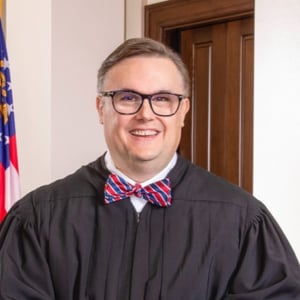
Presiding Judge, Georgia Court of Appeals
Presiding Judge Stephen Louis A. Dillard was appointed as the 73rd judge of the Court of Appeals of the State of Georgia on November 1, 2010 by Governor Sonny Perdue. Prior to his appointment, Judge Dillard was in private practice with James, Bates, Pope & Spivey in Macon, serving as chairman of the firm’s appellate practice group. Judge Dillard was elected and then reelected by his fellow Georgians in 2012, 2018, and 2024. On July 1, 2017, Judge Dillard was sworn in as the 30th Chief Judge of the Court of Appeals of Georgia for a two-year term that ended on June 30, 2019. He currently serves as the presiding judge of the Court’s Fourth Division, and will begin serving as the presiding judge of the Court’s Third Division in 2026.
Judge Dillard was born in Nashville, Tennessee on November 13, 1969. He attended and graduated from Hillwood High School in Nashville, Tennessee; Samford University (B.A. 1992); Mississippi College School of Law (J.D., cum laude, 1996); and Duke University School of Law (LL.M., Judicial Studies, 2025). In college, Judge Dillard was a member of The Sigma Chi Fraternity and Omicron Delta Kappa. He was also given the Evelyn Meadows Historical Essay Award, as well as the William McMillian Rogers Colonial Dames Overall Essay Award, for “The Tempting of America to be America: Alexander Hamilton and the Federalist Papers.” During law school, Judge Dillard was a member of the Moot Court Board and received the Judge Robert G. Gillespie Outstanding Achievement in Appellate Advocacy Award, as well as the American Jurisprudence Award in Appellate Advocacy. He also served as president of the Mississippi College Chapter of the Federalist Society for Law and Public Policy Studies.
After graduating from law school, Judge Dillard joined the Macon law firm of Stone and Baxter, where he practiced from 1996 until 2001. In September 2001, he left private practice for a two-year period to serve as a law clerk at the U.S. Court of Appeals for the Seventh Circuit for Judge Daniel A. Manion (who was appointed by President Ronald W. Reagan in 1986 and served until 2022). In September 2003, Judge Dillard joined James Bates as of counsel, specialized in appellate practice and complex litigation, and served as chairperson of the firm’s appellate practice group. While in practice, he received an AV® Preeminent™ Peer-Review Rating from Martindale-Hubbell and was named by Super Lawyers as one of Georgia’s “rising stars.”
Additionally, Judge Dillard was appointed by Governor Sonny Perdue to the Judicial Nominating Commission and the Public Defender Selection Panel for the Macon Judicial Circuit. He has published scholarly essays in the Encyclopedia of Civil Liberties, the Encyclopedia of Great American Judges, the Encyclopedia of Great American Lawyers, Judicature, the Green Bag Almanac & Reader, the Journal of Appellate Practice & Process, as well as two articles in the Mercer Law Review regarding the inner workings and culture of the Court of Appeals of the State of Georgia. He was also a participating lawyer with the Criminal Justice Act Appellate Panel for the U.S. Court of Appeals for the Eleventh Circuit, handling pro bono publico appeals for indigent individuals. Judge Dillard is a member of the State Bar of Georgia’s Appellate Practice and Judicial Sections, the Macon Bar Association, the Atlanta Bar Association, the Lawyers Club of Atlanta, the Saint Thomas More Society, the Judge Clarence Cooper American Inn of Court, the Logan E. Bleckley American Inn of Court, the William Augustus Bootle American Inn of Court, the Federalist Society for Law and Public Policy Studies, the Palaver Club of Macon, and the Samford Bulldog Club. He also has served as a mentor for The Appellate Project, which is “focused on empowering law students of color to pursue appellate work.”
Since joining the Court of Appeals, Judge Dillard has spoken to numerous organizations, participated in countless state and national seminars, held a wide variety of leadership positions, and received many awards. In 2025, one of Judge Dillard’s opinions—his concurrence in Board of Commissioners of Brantley County v. Brantley County Development Partners LLC et al.—was selected by The Green Bag Almanac and Reader as one of its works of “exemplary writing.” Judge Dillard was also named as the Milvain Chair in Advocacy by the University of Calgary Law Faculty that year, and he is the first American jurist and 43rd person to ever receive this honor. In 2024, Judge Dillard was appointed by Chief Justice Michael P. Boggs as co-chair of the Supreme Court of Georgia’s Study Committee on Legal Regulatory Reform, joined The Legal Accountability Project’s Advisory Board, and also gave the “Last Senior Lecture” to the Samford University Class of 2024. In 2023, Judge Dillard began serving his second term on Samford University’s Board of Overseers, and started the L.L.M. program for Judicial Studies at the Duke University School of Law. In 2022, he began serving on the Communications Committee of the Council of Chief Judges of the State Courts of Appeal. In 2021, Judge Dillard was given the “Significant Sig” award by The Sigma Chi Fraternity (one of its highest honors), which “recognizes those alumni members whose exemplary achievements in their fields of endeavor have brought great honor and prestige to the name of Sigma Chi.” He also began serving that year on the Dean Search Committee for Samford University’s Cumberland School of Law, and completed his work on that committee in April 2022. In 2020, Judge Dillard began serving his second two-year term as the president of the Samford University Alumni Association, a three-year term on Samford University’s Board of Overseers, as an advisor to the Pi Chapter of The Sigma Chi Fraternity at Samford University, and as a member of the Samford University Presidential Search Committee and the Samford University Task Force on Racial Justice. He was also given the Distinguished Judicial Service Award that year by the Young Lawyers Division of the State Bar of Georgia for the second time in his career. In 2019, Judge Dillard began teaching Appellate Practice and Procedure at Mercer University Law School and joined the National Advisory Board for The Constitutional Sources Project (“ConSource”), an organization dedicated to increasing access to and understanding of the United States Constitution and its history and creation. He was also named that year as the “Tweeter Laureate” of Georgia by the Georgia House of Representatives, as one of Atlanta’s 500 most powerful leaders by Atlanta Magazine, and as “Best Social Mediator” by the Fulton County Daily Report. In 2018, Judge Dillard began serving his first two-year term as president of the Samford University Alumni Association, as well as a member of the Samford University Athletic Director’s Cabinet. He also began his service that year as a member of the Supreme Court of Georgia’s Justice for Children Committee. In 2017, Judge Dillard was named Samford University’s “Alumnus of the Year,” which is the highest honor the university bestows on its graduates. In 2016, Judge Dillard began serving a two-year term as president of Samford University’s Atlanta Alumni chapter. He was also appointed that year as the co-chairperson of the Georgia Judicial Council’s Strategic Plan Standing Committee, and as a member of the Council’s Standing Committee on Technology. Finally, he was also named Samford University’s 2016 “Featured Alumnus” for the Howard College of Arts and Sciences. In 2015, Judge Dillard was appointed by Governor Nathan Deal to the Georgia Appellate Jurisdiction Review Commission. He was also appointed that year to serve on the Georgia Judicial Council, and as the chairperson of the Court Reporting Matters Committee. In 2014, Judge Dillard was named the “State Judge of the Year” by his alma mater, the Mississippi College School of Law, for his outstanding judicial service; and he also received the “Fastcase 50” award, which honors leaders in the world of law, scholarship, and legal technology. In 2013, Judge Dillard was awarded the Distinguished Judicial Service Award by the Young Lawyers Division of the State Bar of Georgia, recognizing his outstanding service on the bench and commitment to improving the practice of law. In 2012, Judge Dillard was appointed to the Code of Judicial Conduct Review Committee by Chief Judge John J. Ellington, and he also began serving as the special consultant to the Georgia High School Mock Trial Committee.
Among his many accomplishments in leadership at the Court of Appeals, Judge Dillard restructured the Court’s Central Staff Attorney Office, advocated for and implemented livestreaming and archiving of the Court’s oral arguments, helped design and shepherd a complete overhaul of the Court’s operational structure, had the primary responsibility for overseeing the Court’s move to the Nathan Deal Judicial Center (during his time as chief judge), drafted numerous Court rules (including the rule abolishing “physical precedent”) and IOM revisions, and lead the implementation of the Court’s transition to its first typography change in twenty years (i.e., the “Equity” font). Finally, he created, designed, and continues to oversee the Judge Herbert E. Phipps Fellowship program in partnership with Morehouse College.
Judge Dillard is married to the former Krista McDaniel, and they have three children. He is a parishioner of Saint Joseph Catholic Church and the former president of the School Board for Saint Joseph’s Catholic School.
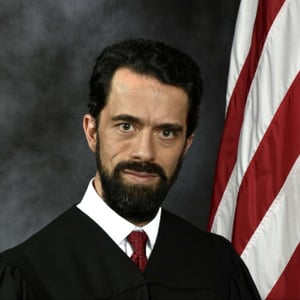
Judge, United States Court of Appeals, Third Circuit
Stephanos Bibas is a judge on the U.S. Court of Appeals for the Third Circuit. Judge Bibas was previously a professor of law and criminology at the University of Pennsylvania Law School. As director of the Penn Law Supreme Court Clinic, he argued six cases before the Supreme Court of the United States and filed briefs in dozens of others. He graduated summa cum laude and Phi Beta Kappa from Columbia University in 1989 with a B.A. in political theory and from Oxford University in 1991 with a B.A. in jurisprudence. He then earned his J.D. from Yale Law School in 1994.
After graduating from Yale Law, Judge Bibas clerked for Judge Patrick Higginbotham of the U.S. Court of Appeals for the Fifth Circuit and Justice Anthony Kennedy on the Supreme Court and was a litigation associate at Covington & Burling LLP in Washington, D.C. Thereafter, Judge Bibas served as an Assistant U.S. Attorney in the Southern District of New York, where he successfully prosecuted the world’s leading expert in Tiffany stained glass for hiring a grave robber to steal priceless Tiffany windows from cemeteries. Before his tenure at Penn Law, Judge Bibas taught at the University of Chicago Law School and the University of Iowa College of Law and was a research fellow at Yale Law School. He has published two books and seventy scholarly articles.
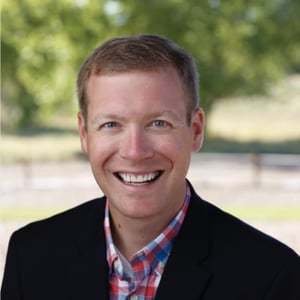
President, Center for American Rights
Daniel Suhr serves as president of the Center for American Rights, where he spends every day on the front lines of the fight to preserve our rights and liberties. The Center's mission is to advance free speech, free enterprise, and parental freedom in education through strategic, precedent-setting litigation.
Daniel formerly worked as policy director for Wisconsin Governor Scott Walker, as chief of staff for Wisconsin Lieutenant Governor Rebecca Kleefisch, and as a law clerk for Judge Diane Sykes of the U.S. Court of Appeals for the Seventh Circuit. He holds a B.A. and J.D. from Marquette University, and master’s degrees from Georgetown and the University of Missouri.
Professor, St. Louis University School of Law
Since arriving at SLU, Flanders has published more than 20 articles or essays in journals such as the Florida Law Review, the California Law Review, the Missouri Law Review and the Alaska Law Review, and his work on Bush v. Gore has been cited by state and federal courts. He has also written numerous opinion pieces for national and local newspapers, including the Chicago Tribune, the St. Louis Post-Dispatch and Politico.
After law school, Flanders served as a law clerk to the Hon. Warren Matthews on the Alaska Supreme Court and the Hon. Michael McConnell on the Tenth Circuit Court of Appeals.
In the 2012-2013 academic year, Flanders was a Fulbright Lecturer at Nanjing University, China. During the 2013-2014 academic year, he was a visiting professor at DePaul University School of Law.

Donald Phillip Rothschild Research Professor, George Washington University Law School
Renée Lettow Lerner is Donald Phillip Rothschild Research Professor of Law at George Washington University Law School.
Professor Lerner works in the fields of U.S. and English legal history, civil and criminal procedure, and comparative law. She advises judges, lawyers, and government officials from the United States and countries in Europe, Latin America, and Asia about the differences between adversarial and nonadversarial legal systems.
She writes extensively about the history of American juries. Her work includes not only scholarly articles, but also online publications intended for a broader audience of legal professionals and the public. In many different settings, she has debated the role of juries with other academics and with lawyers. She has a book forthcoming with Oxford University Press in the Very Short Introduction Series entitled “The Jury.” She is also working on a book about the American civil jury, from the colonial period to the present.
She is the author, with John Langbein and Bruce Smith, of the book History of the Common Law: The Development of Anglo-American Legal Institutions (2009).
Her recent writings include a book review of Amalia D. Kessler’s Inventing American Exceptionalism: The Origins of American Adversarial Legal Culture, 1800-1877, 67 J. Legal Ed. 888 (2018); “How the Creation of Appellate Courts in England and the United States Limited Judicial Comment on Evidence to the Jury,” 40 Journal of the Legal Profession 215 (2016); “The Troublesome Inheritance of Americans in Magna Carta and Trial by Jury,” in Magna Carta and its Modern Legacy 77-98 (Robert Hazell and James Melton eds., Cambridge University Press 2015); and “The Failure of Originalism in Preserving Constitutional Rights to Civil Jury Trial,” 22 William & Mary Bill of Rights Journal 811 (2014).
Professor Lerner received an A.B. summa cum laude in history from Princeton University. She was a Rhodes Scholar at Oxford University, where she studied English legal history. At Yale Law School, she was Articles Editor of the Yale Law Journal. She served as a law clerk to Justice Anthony M. Kennedy of the U.S. Supreme Court and to Judge Stephen F. Williams of the U.S. Court of Appeals for the District of Columbia Circuit. From 2003 to 2005, she served as Deputy Assistant Attorney General in the Office of Legal Counsel at the U.S. Department of Justice.
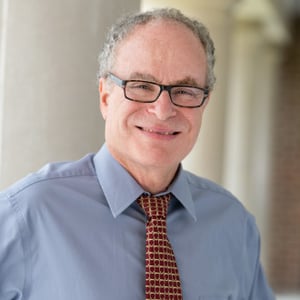
William Rand Kenan, Jr. Distinguished Professor of Law, University of North Carolina School of Law
William (Bill) Marshall joined the Carolina Law faculty in 2001 and serves as the William R. Kenan Jr. Distinguished Professor of Law. His teaching and research interests include the first amendment, presidential power, election law, federal jurisdiction, federal judicial selection, civil procedure, and media law. Marshall is the author of numerous book chapters, articles, and essays on free speech, separation of powers, the Establishment Clause, and the Free Exercise Clause. His work has appeared in the Harvard Law Review, the Yale Law Journal, the Supreme Court Review, and the University of Chicago Law Review, among others.
Marshall received his law degree from the University of Chicago and his undergraduate degree from the University of Pennsylvania. Marshall was Deputy Counsel to the President and Deputy Assistant to the President during the Clinton Administration and also served as the Solicitor General for the State of Ohio. He has taught at the Northwestern, Boston University, Vanderbilt, Ohio State, DePaul, Case Western Reserve, William and Mary, and the University Connecticut law schools. Prior to beginning his teaching career, Marshall was a Special Assistant Attorney General for the State of Minnesota.
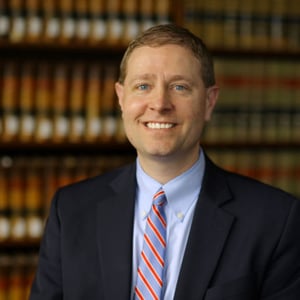
Executive Director, Salmon P. Chase Center for Civics, Culture, and Society, The Ohio State University
Professor Lee J. Strang serves as the inaugural executive director of the Salmon P. Chase Center for Civics, Culture, and Society at The Ohio State University.
Initiated in 2023 by the state of Ohio, the Chase Center will be an academic home at Ohio State for teaching, research, and programing on the foundations of the American constitutional order and its impact on society. As executive director, Professor Strang is responsible for organizing the center, overseeing the hiring and appointment of the center’s faculty, developing curriculum, and delivering student and academic programming. He also holds a faculty appointment in the Moritz College of Law at Ohio State.
Professor Strang is a nationally recognized legal scholar who has published dozens of articles in leading journals in the fields of constitutional law and interpretation, property law, and religion and the First Amendment. He co-edits the textbook Federal Constitutional Law, and his most recent book, Originalism’s Promise: A Natural Law Account of the American Constitution is the first book-length, natural law justification for originalism. He currently is writing on civic thought and leadership, and he is finalizing a book on the history of American Catholic legal education (with John M. Breen).
Before joining Ohio State, Professor Strang served as the inaugural director of the University of Toledo’s Institute of American Constitutional Thought & Leadership. He joined the Toledo College of Law faculty in 2008, was granted tenure in 2010, and was named John W. Stoepler Professor of Law & Values in 2015. The University of Toledo awarded Professor Strang its Outstanding Faculty Research and Scholarship Award in 2017. Before that, he was a visiting professor at Michigan State University College of Law. A graduate of the University of Iowa, where he was articles editor of the Iowa Law Review and Order of the Coif, Professor Strang holds an LL.M. degree from Harvard Law School.
Professor Strang has been a visiting scholar at the Georgetown Center for the Constitution and a visiting fellow at the James Madison Program at Princeton University. In 2016, he was appointed to the Ohio Advisory Committee of the U.S. Commission on Civil Rights and reappointed as chair in 2023.
Prior to teaching, Professor Strang served as a judicial clerk for Judge Alice M. Batchelder of the U.S. Court of Appeals for the Sixth Circuit. He was also an associate for Jenner & Block LLP in Chicago, where he practiced in general and appellate litigation.
Professor Strang is a frequent presenter at scholarly conferences. He is the president of the Board of Trustees of Northwest Ohio Classical Academy, Ohio’s first classical charter school. He is also a regular participant in debates at law schools across the country, a contributor to the media, and a speaker to political, civic, and religious groups.
Professor of Law and Co-Director, Ordered Liberty Program, University of Louisville
Luke Milligan is a Professor of Law and criminal defense lawyer who works from the U.S. and Hungary.
He was previously with Williams & Connolly in Washington, D.C., where he practiced white-collar criminal defense. Published widely on the law of criminal procedure, his scholarship on the Fourth Amendment inspired the establishment of a litigation and public relations center at one of the world’s top public interest firms, the Institute for Justice, in Arlington, Virginia. He is a co-founder of the Ordered Liberty Program (with Prof. Justin Walker, now Judge of the U.S. Court of Appeals for the D.C. Circuit). He sits on the Board of Advisors of the Cato Supreme Court Review in Washington, D.C.
He’s been a visiting professor at Emory University School of Law, as well as on the law faculties of the University of Lisbon and the University of Milan. In Hungary, he is the founder and co-director of the Ordered Liberty School in Central Europe, based at Ludovika University in Budapest.
Of Counsel to a U.S.-based law firm, he’s represented individuals in a wide array of state and federal prosecutions. In 2020 and 2021, he fought the COVID-19 mandates in the U.S. He was lead counsel to U.S. Senator Rand Paul in landmark separation-of-powers litigation, stripping the Governor of Kentucky of “inherent authority” under the constitution, and, in turn, bringing an end to all statewide COVID-19 orders (notably, curfews, capacity limits, and masking requirements). He holds a tenured faculty position at the University of Louisville, where he teaches Criminal Law, Criminal Procedure, Jurisprudence, and Natural Law & Natural Rights. He’s been named Professor of the Year by alumni and hooding professor by five graduating classes.
He began his career as law clerk to the Hon. Edith Brown Clement of the U.S. Court of Appeals for the Fifth Circuit and the Hon. Martin L.C. Feldman of the U.S. District Court for the Eastern District of Louisiana. He received a J.D., with honors, from Emory University, where he was Articles Editor of the Emory Law Journal.
He and his wife, Sarah Peterson, have three sons, John, Mark, and Luke, Jr.
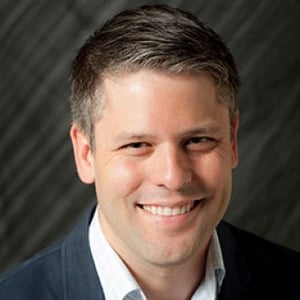
Judge, U.S. Court of Appeals, District of Columbia Circuit
Justin R. Walker is a judge on the U.S. Court of Appeals for the D.C. Circuit. He was nominated to the court by President Donald Trump on May 4, 2020, and confirmed by the United States Senate on June 18, 2020. He is a former United States District Judge of the Western District of Kentucky.

Professor Emeritus, Paul M. Hebert Law Center, Louisiana State University
In memoriam
Dr. John Baker is Professor Emeritus of Law, and previously the Dale E. Bennett Professor of Law, at Louisiana State University Law School. He is currently Visiting Professor at Peking University School of Transnational Law (via Zoom) and has been Visiting Professor at The Center for the Constitution, Georgetown Law School (2013-2020). He has also been a Visiting Fellow at Oriel College, the University of Oxford (2012-2014) and taught at Blackfriars Hall, Oxford in 2014. Dr. Baker has also been an adjunct Fellow at the Heritage Foundation (Spring, 2008) and a Distinguished Scholar at the Catholic University of America Law School (2011-12). He has taught at Tulane Law School, George Mason Law School, Pepperdine Law School, New York Law School, Hong Kong University, and the University of Dallas, School of Management and also taught and/or lectured in 17 foreign countries. Notable among his foreign visits are the
following: Visiting Professor at the University of Lyon III (France) (1999-2011); Visiting Professor at the Universidad de los Andes, Chile (2012), as a Fulbright Specialist (2006); and a Fulbright Scholar at various universities in the Philippines. Dr. Baker received his J.D., with honors, from the University of Michigan Law School and his B.A., magna cum laude, from the University of Dallas. He also earned a Ph.D. in Political Thought from the University of London. Baker has taught over a dozen different subjects, mostly courses in public law. His main areas of interest are Constitutional Law (particularly federalism and separation of powers), Criminal Law, Anti-Terrorism Law, International Law, Health Care Law, Mediation, and Comparative Law.
In addition to law review articles and book chapters, Dr. Baker’s academic publications include Hall's Criminal Law: Cases and Materials (with Benson, Force and George; 5th ed. Michie, 1993); An Introduction to the Law of the United States (ed. with Levasseur; University Press of America, 1992). He has also published on Forbes.com, FoxNews.com, in The Washington Times, and a number of times in The Wall Street Journal. He argues in federal court, including two oral arguments in the U.S. Supreme Court. For many years, he co-taught courses for the Federalist Society on separation of powers with the late Supreme Court Justice Antonin Scalia. In September 2016, he co-taught a Supreme Court seminar in China with Justice Samuel Alito. Following law school, he served as a law clerk in federal district court and as an assistant district attorney in New Orleans before joining LSU in 1975. While a professor, he has been as a consultant to USAID, USIA (since rolled into the State Department), the Justice Department, the U.S. Senate Judiciary Subcommittee on Separation of Powers, and the Office of Planning in the White House. He served on an ABA Task Force which issued the report, The Federalization of Crime (1998) and later as a consultant to the “Bi-Partisan Task Force on the Over- federalization of Crime” (2012-2014) created by the U.S. House Judiciary Subcommittee on Crime. Dr. Baker was a co-founder of the first iteration (1995) of Stratfor Inc., a global intelligence agency. He co-authored its first book: The Intelligence Edge (with Friedman, Friedman and Chapman; Crown Books/Random House 1997). In 2022, he began a short, weekly video podcast available on YouTube and Rumble, The Baker Brief.
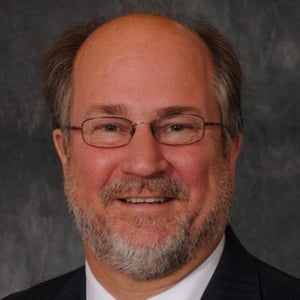
Alaska Attorney General
Kevin G. Clarkson had a distinguished legal career spanning 34 years in private practice before his appointment as the Attorney General for the State of Alaska. He graduated with honors from Oregon State University with a bachelor’s degree in political science in 1981 and then graduated cum laude, in the top 10 percent of his class, from Willamette University College of Law in 1985.
Following law school, Perkins Coie offered him a position as a civil litigator in the firm’s Anchorage branch office. Mr. Clarkson then left his home state of Oregon to make a new home in Alaska. He worked at Perkins Coie for 10 years doing a wide range of work before joining the firm Brena, Bell & Clarkson, P.C. in 1995 where he continued to hone his skills as the firm’s Senior Litigation Attorney. He ended his practice with the law firm upon his appointment as Attorney General in December of 2018.
Over the course of his long legal career, Mr. Clarkson has represented a myriad of clients—from individuals, to Fortune 500 companies, to Native corporations, to municipalities, to Electrical Utilities, to small businesses, to the Alaska Legislature, and the State of Alaska. Because of the general nature of his practice, he has covered a wide range of topics and issues. He has litigated disputes involving personal injury, wrongful death, employment, contract disputes, business dissolutions, construction disputes, professional liability, medical malpractice, and oil and gas related matters. He has defended constitutional amendments and statutes passed by the people of Alaska. He has appeared before the Ninth Circuit Court of Appeals including the en banc panel of the Court and before the Alaska Supreme Court on a number of occasions.
His many years of experience and his professional demeanor has been recognized by his peers. He has received the highest rating, AV Preeminent, with Martindale-Hubbell and has been admitted to Super Lawyers every year since 2014.
When he’s not working, Mr. Clarkson enjoys spending time with his family. He has four grown children, two of whom have settled down in Alaska. One of his sons is serving in the United States Navy, and one of his daughters is currently living in Ohio. Mr. Clarkson also has a five-year-old step-son with his wife Johanna. And, he speaks Spanish.
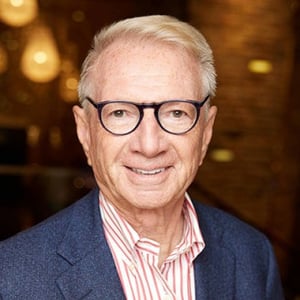
Senior Labor and Employment Counsel, CHRO Association
Roger King is a highly regarded labor relations attorney, whose career spans more than 40 years. Roger recently retired as a partner with Jones Day law firm. He now serves as Senior Labor and Employment counsel for the Association.
Roger specializes in labor and employment, healthcare, collective bargaining, contract administration and representation campaigns. Roger represented the winning side as co-counsel in the landmark U.S. Supreme Court case known as Noel Canning, which successfully challenged President Obama’s authority to make recess appointments to the National Labor Relations Board.
After graduating from Cornell University Law School, he was a Captain and Legal Services Officer in the United States Air Force, on the Staff of United States Senator Robert Taft, Jr. and, subsequently, was appointed as Professional Staff Counsel to the United States Senate Labor Committee.
Roger has testified before both the U.S. Senate and House Labor Committees, is a fellow of the College of Labor and Employment Lawyers, and serves on the Advocacy Committee of the American Society for Healthcare Human Resources Association (ASHHRA) and on the Executive Committee of the Ohio State Bar Association Labor and Employment Law Section Council.
He is a nationally recognized author/speaker on employment matters and has represented employers regarding labor and employment issues both before administrative agencies and in federal and state courts. He has represented the U.S. Chamber of Commerce, the Society for Human Resource Management (SHRM), the HR Policy Association (HRPA), the National Manufactures Association (NAM), the American Hospital Association (AHA), and the Coalition for a Democratic Workplace (CDW) in federal courts regarding numerous labor law issues.
Other clients Roger has represented include the Cleveland Clinic Foundation, Catholic Health Partners, MedStar Health, HCA, Texas Health Resources, Unity Point Health, UHS, Trinity Health, National Beef, General Cable, Orlando Health, ProMedica, Premier Health, Cedars-Sinai, Yale New Haven Health System, McLaren Health Care Corporation, Ohio, California and American Hospital Associations, Bon Secoure Health System, Kaleida Health, Sisters of Levenworth Health System, Lakeland Regional Medical Center, Clarion Clinic, Fisher-Titus Medical Center, Saint Joseph Health System, Benefis Healthcare, Community Health Systems, American Water Works, Macy’s Inc., Verizon and General Motors.

Shareholder, Littler Mendelson P.C.
James A. Paretti, Jr. is an experienced management-side employment and labor relations attorney with in-depth political and policy knowledge of labor, pension, healthcare and employment law, regulations and legislation. Jim is well versed in all aspects of legislative and political processes with demonstrated knowledge in the substance of federal labor and employment policy. He has over two decades of experience working with federal legislators and policymakers, including former Speaker of the U.S. House of Representatives, Chairmen of the U.S. House Committee on Education and the Workforce, and senior level administration officials.
Prior to joining Littler, Jim was chief of staff and senior counsel to the acting chair of the Equal Employment Opportunity Commission. He provided legal and political counsel with respect to all aspects of agency business, administered and managed the Office of the Chair where he was responsible for over 2,200 employees and a 375 million dollar annual budget, and served as primary liaison to regulated stakeholders and Capitol Hill.
His extensive experience includes developing policy and providing legal counsel on the Committee on Education and Labor in the U.S. House of Representatives as well as coordinating external communications and media relations for a senior member of Congress. Jim represented corporate and nonprofit clients in employment litigation in federal and state court, before administrative agencies and in private arbitration while with two Boston firms.
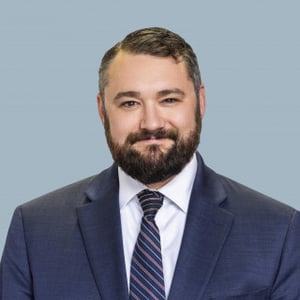
Partner, Ashbrook Byrne Kresge Flowers LLC
Ben Flowers, a partner at Ashbrook Byrne Kresge Flowers LLC, is an accomplished litigator with experience briefing, arguing, and winning high-stakes cases in courts throughout the country.
Before joining the law firm, Ben served as Ohio's 10th Solicitor General. In that role he regularly represented the State of Ohio before the Supreme Court of the United States, the United States Court of Appeals for the Sixth Circuit, and the Supreme Court of Ohio. Most prominently, in National Federation of Independent Business v. Department of Labor, Ben led a multi-state challenge to OSHA's vaccine mandate, ultimately prevailing before the Supreme Court.
Ben is a graduate of The Ohio State University and the University of Chicago Law School. Following law school, Ben clerked for Judge Sandra Ikuta of the U.S. Court of Appeals for the Ninth Circuit and for Justice Antonin Scalia of the Supreme Court of this United States. Ben lives in Upper Arlington, Ohio with his wife Denise and their three very active children.