Assistant Professor of Law, Emory University School of Law
Biography
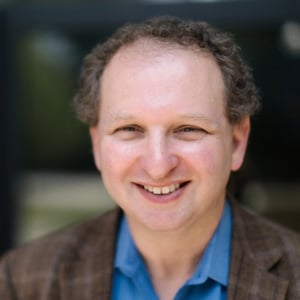
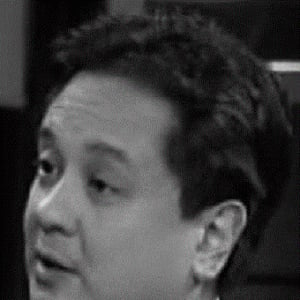
Alexander "Sasha" Volokh is an assistant professor of law, joining the Emory Law faculty in Fall 2009.
Professor Volokh earned his B.S. from UCLA and his J.D. and Ph.D. in economics from Harvard University. He clerked for Judge Alex Kozinski of the Ninth Circuit and for Supreme Court Justices Sandra Day O'Connor and Samuel Alito. Before coming to Emory, he was a visiting associate professor at Georgetown University Law Center and a visiting assistant professor at University of Houston Law Center.
His interests include law and economics, administrative law and the regulatory process, environmental law and policy, and legal history. His current research topics include the private management of government services, medieval law, judicial decisionmaking and statutory interpretation.
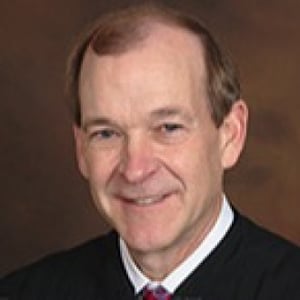
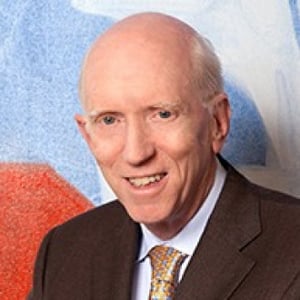
James C. Dever III serves as a United States District Judge for the Eastern District of North Carolina. President George W. Bush nominated Judge Dever (then age 39) in May 2002, and the United States Senate unanimously confirmed him. Before serving as a United States District Judge, Judge Dever served as a United States Magistrate Judge for fifteen months. He served as Chief Judge from October 2011 through October 2018.
Judge Dever received his B.B.A., with high honors, from the University of Notre Dame in 1984. He attended Notre Dame on a four-year ROTC scholarship. He was a Distinguished Military Graduate, was elected to Beta Gamma Sigma, and received the Raymond P. Kent Award (which is awarded to the graduating senior with the highest average in finance/economics classes). He received his J.D., with high honors, from Duke University School of Law in 1987. At Duke, he served as editor-in-chief of the Duke Law Journal, was elected to the Order of the Coif, and received numerous academic awards.
After graduating from law school, he served for one year as a law clerk for Judge J. Clifford Wallace of the U.S. Court of Appeals for the Ninth Circuit. Following his clerkship, Judge Dever was the sole attorney entering active duty in the Air Force selected to serve in the Air Force General Counsel’s Honors Program at the Pentagon. While on active duty, he provided legal advice to and conducted litigation for the Secretary of the Air Force. He served on active duty in the Air Force at the Pentagon from October 1988 until September 1992. At the conclusion of his service, he received the Meritorious Service Medal.
Judge Dever then returned to North Carolina and joined Maupin Taylor & Ellis, P.A. in Raleigh. While in private practice, he engaged in a wide variety of complex civil litigation and served on the law firm’s management committee. He was repeatedly listed in the Best Lawyers in America and in Business North Carolina’s Legal Elite for Employment Law. Since 1997, Judge Dever has taught employment law and criminal procedure as an adjunct law professor at Campbell University’s Norman Adrian Wiggins School of Law. Since 2008, Judge Dever has co-taught a seminar on sentencing and punishment as a senior lecturing fellow at Duke University School of Law. Since 2009, he has taught criminal procedure as a senior lecturing fellow at Duke University School of Law. In 2014, Chief Justice John Roberts appointed Judge Dever to serve on the Advisory Committee on Criminal Rules, where Judge Dever served until 2021. Judge Dever also serves as a member of Duke Law School's Board of Visitors.
Judge Dever’s chambers are in Raleigh, North Carolina.
University Professor of Law and Executive Director, Liberty & Law Center, Antonin Scalia Law School, George Mason University
Biography
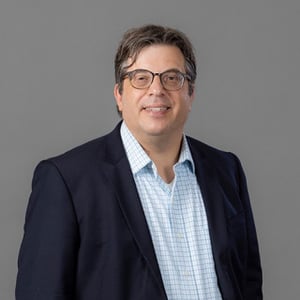
David Bernstein holds a University Professorship chair at the Antonin Scalia Law School, where he has been teaching since 1995. He has also been a visiting professor at the University of Michigan, Georgetown University, William & Mary, Brooklyn Law School, the University of Turin, and Hebrew University. Professor Bernstein teaches Constitutional Law, Evidence, and Products Liability.
A prolific author, Professor Bernstein often challenges the conventional wisdom with prodigious research and sharp, original analysis. He is the author of five books, and coauthor of two more. Professor Bernstein’s book Rehabilitating Lochner was praised across the political spectrum as “intellectual history in its highest form,” a “fresh perspective and a cogent analysis,” “delightful and informative,” “sharp and iconoclastic,” and “a terrific work of historical revisionism.” Columnist George Will praised Bernstein’s most recent book, Classified, The Untold Story of Racial Classification in America, as “perhaps the most consequential American book of 2022.”
Professor Bernstein has also written dozens of articles and essays published in major law reviews, including the California Law Review, Columbia Law Review, Michigan Law Review, and Yale Law Journal. An article he coauthored, Defending Daubert: It’s Time to Amend Federal Rule of Evidence 702, directly inspired a pending amendment to Rule 702.
Professor Bernstein blogs at the Instapundit.com, the Times of Israel, and the Volokh Conspiracy. He is a graduate of the Yale Law School, where he was senior editor of the Yale Law Journal and a John M. Olin Fellow in Law, Economics, and Public Policy.
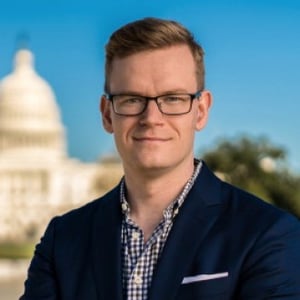
Will Chamberlain serves as Senior Counsel to the Internet Accountability Project. He is also the owner and editor-in-chief of Human Events.
Prior to relaunching Human Events, Will worked as an attorney at the Competitive Enterprise Institute in Washington, DC, focusing on class action litigation. Before that, he was an associate at Quinn, Emanuel, Urquhart & Sullivan LLP in Los Angeles, where he practiced complex commercial litigation. Will graduated from University of the Pacific in 2010 with a B.A. in Economics, and received his J.D., magna cum laude, from Georgetown University Law Center in 2015. Will is an active member of the State Bar of California and the District of Columbia Bar.
George T. Conway III has been a partner in the Litigation Department of Wachtell, Lipton, Rosen & Katz since January 1994. He joined the firm in September 1988. His litigation experience has included a variety of high-profile matters spanning many areas of law in federal and state courts throughout the country. He has extensive experience in securities litigation, mergers and acquisitions litigation, contract litigation, antitrust litigation, and other litigation, both at the trial and appellate levels.
In the area of securities litigation, he recently briefed and argued the case for respondents in Morrison v. National Australia Bank, in which the Supreme Court of the United States held that Section 10(b) of the Securities Exchange Act of 1934 does not apply extraterritorially to claims of so-called "foreign-cubed" plaintiffs -- foreign investors who purchased securities of foreign issuers on foreign exchanges. He also recently argued and won a precedent-setting motion to dismiss so-called "foreign-squared" claims against European Aeronautic Defence & Space Co. brought by American plaintiffs who purchased that foreign company's shares on foreign exchanges.
Mr. Conway also recently argued and won an important appeal under the Visual Artists Rights Act of 1990 on behalf of the Swiss installation artist Christoph Büchel in the artist’s highly publicized dispute with the Massachusetts Museum of Contemporary Art. He also successfully represented the Chief Judge of the State of New York and the New York Unified Court System in historic constitutional litigation over the State of New York’s extended failure to adjust judicial salaries. Mr. Conway also played a substantial role in the successful defense of Kenneth Langone’s Invemed Associates in a disciplinary proceeding before the NASD (now FINRA) that resulted in what the New York Times called a "withering," "high-profile defeat" for the regulators.
Mr. Conway’s work in mergers and acquisitions litigation includes the representation of Rohm and Haas Co. and ADVO, Inc., in, respectively, Rohm and Haas v. Dow Chemical Co., and Valassis Communications v. ADVO, two Delaware Chancery Court cases involving claims to enforce merger agreements, as well as two historic cases in the development of Delaware corporate law governing mergers and acquisitions, QVC v. Paramount Communications and Paramount Communications v. Time Inc. and Warner Communications, in addition to many other cases involving contests for corporate control in the Delaware courts and elsewhere over the past two decades.
In addition, Mr. Conway played a substantial role in prosecuting one of the most prominent defamation cases in recent memory (Philip Morris v. American Broadcasting Cos.). He has extensive experience in merger-related private antitrust litigation and government antitrust investigations, including the defense of Cardinal Health in the preliminary injunction proceedings before the United States District Court for the District of Columbia in FTC v. Cardinal Health. He also represented the National Football League in trademark and antitrust litigation against the Dallas Cowboys in NFL Properties v. Dallas Cowboys Football Club. His pro bono work includes his successful representation in the Second Circuit of crime victims and public-interest groups as amici curiae in opposing claims that federal law requires the State of New York to allow felons to vote while still incarcerated.
Mr. Conway is a graduate of Harvard College, where in 1984 he received an A.B. magna cum laude in biochemical sciences. He received his J.D. in 1987 from Yale Law School, where he was an editor of the Yale Law Journal. In 1987 and 1988, he served as a law clerk to Circuit Judge Ralph K. Winter, Jr. of the United States Court of Appeals for the Second Circuit.
The Honorable Robert S. Smith (Ret.) is head of the firm’s appellate practice, and focuses on trials and appeals. Judge Smith joined Friedman Kaplan following his retirement as Associate Judge of the New York State Court of Appeals, New York’s highest court, where he served for more than a decade. During his time on the bench, he wrote scores of opinions and became well known for his judicial scholarship, insight, and intellectual rigor.
Prior to his time on the Court of Appeals, Judge Smith practiced law in New York City, and was a partner with Paul, Weiss, Rifkind, Wharton & Garrison for over 25 years. He has argued dozens of appeals before the federal and New York appellate courts, and two appeals before the United States Supreme Court. His trial experience in complex commercial cases is also extensive. He is a Fellow of the American College of Trial Lawyers.
Since joining Friedman Kaplan, Judge Smith has been active primarily in appeals, trial-level commercial litigation, expert witness testimony, and alternative dispute resolution.
Former United States Ambassador to NATO, Former United States Senator, Texas
Biography
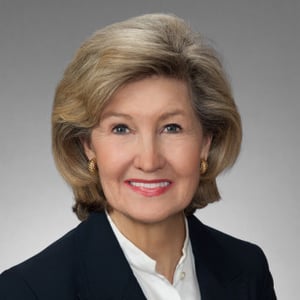
Kay Bailey Hutchison is a public servant and businesswoman who has served in roles from bank executive to U.S. Senator to most recently, U.S. Ambassador to NATO. She served as U.S. Senator from Texas from 1993 to 2013. In January 2021, she stepped down from a more than 3-year term as U.S. Ambassador to The North Atlantic Treaty Organization (NATO) in Brussels, Belgium where she worked to maintain U.S. leadership in the 30 Ally Alliance.
Kay Bailey Hutchison is a public servant and businesswoman who has served in roles from bank executive to U.S. Senator to most recently, U.S. Ambassador to NATO. She served as U.S. Senator from Texas from 1993 to 2013. In January 2021, she stepped down from a more than 3-year term as U.S. Ambassador to The North Atlantic Treaty Organization (NATO) in Brussels, Belgium where she worked to maintain U.S. leadership in the 30 Ally Alliance.
Kay has authored three books, including the bestselling American Heroines: The Spirited Women Who Shaped Our Country (2004), Leading Ladies: American Trailblazers (2007) and Unflinching Courage: Pioneering Women Who Shaped Texas (2013).
In 2013, the Dallas City Council honored her by naming the city’s convention center the Kay Bailey Hutchison Convention Center. Also in 2013, The Kay Bailey Hutchison Center for Energy, Law and Business (KBH Energy Center) was created by the University of Texas to provide unique opportunities for business and law school students to learn the energy industry. The Center sponsors an annual symposium for leaders in the energy field to discuss current issues in the industry.
Kay serves on the Dallas Mayor’s International Advisory Council, UT Southwestern Medical Foundation Board of Trustees, and the Board of Directors of the Atlantic Council. She is a Senior Adviser at CSIS (Center for Strategic and International Studies) and the NASA Advisory Council, in Washington DC. She also serves on the Bank of America Global Advisory Board.
Judicial Law Clerk, U.S. District Court for the Southern District of Florida
Biography
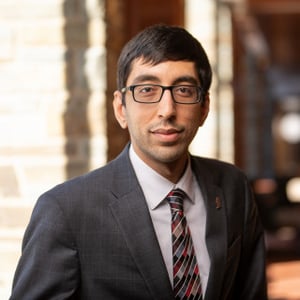
Nitin is a recent graduate of Cornell Law School. Before his time in Ithaca, he majored in International Studies and Political Science at Johns Hopkins University and focused on power competition in South Asia during his graduate studies at the University of Oxford.
Speaker Information
Donald J. Kochan
Professor of Law and Executive Director, Law and Economics Center, Antonin Scalia Law School, George Mason University
Biography
Donald Kochan is Professor of Law and Executive Director of the Law & Economics Center (LEC). Professor Kochan is an elected member of the American Law Institute (ALI) and serves as an Adviser to ALI's Restatement of the Law Fourth, Property project. Professor Kochan is a Nonresident Scholar at the Center for the Constitution at Georgetown University Law Center, where he was a Visiting Scholar in residence during Fall 2018. Before joining the Antonin Scalia Law School faculty, he was the Parker S. Kennedy Professor in Law at Chapman University’s Dale E. Fowler School of Law from 2004 to 2020. From 2003 to 2004, Professor Kochan was an Olin Fellow at the University of Virginia School of Law. During 2002-2003, he was a Visiting Assistant Professor of Law at George Mason’s Scalia Law School.
Professor Kochan’s scholarship focuses on areas of property law, constitutional law, administrative law, local government law, natural resources and environmental law, and law & economics. He has published several books and more than 50 scholarly articles and essays in well-regarded law journals. His work has been cited in more than a dozen state and federal court opinions, in more than 75 briefs filed in state and federal courts including more than 25 filed in the U.S. Supreme Court, in dozens of books and treatises, and in more than 800 scholarly articles.
Professor Kochan received his JD from Cornell Law School, where he was a John M. Olin Scholar in Law and Economics and managing editor of the Cornell International Law Journal. During law school, he also served as editor and executive editor of the Harvard Journal of Law & Public Policy symposium issues in 1997 and 1998. He received his BA from Western Michigan University, magna cum laude, with majors in both political science and philosophy, where he studied as the John W. Gill Medallion Scholar and was honored as the Presidential Scholar (awarded to the top graduate in the political science department).
After graduating from law school, Professor Kochan was a law clerk to The Honorable Richard F. Suhrheinrich of the United States Court of Appeals for the Sixth Circuit. Following his clerkship, Professor Kochan was an associate with the firm of Crowell & Moring LLP in Washington, D.C., where he specialized in natural resources & environmental law as well as tort, products, and consumer civil litigation & legislative affairs.
William A. Jacobson is a Clinical Professor of Law and Director of the Securities Law Clinic.
He is a 1981 graduate of Hamilton College and a 1984 graduate of Harvard Law School. At Harvard he was Senior Editor of the Harvard International Law Journal and Director of Litigation for the Harvard Prison Legal Assistance Project.
Prior to joining the Cornell law faculty in 2007, Professor Jacobson had a highly successful civil litigation and arbitration practice in Providence, Rhode Island, concentrating in investment, employment, and business disputes in the securities industry, including many high profile cases reported in leading newspapers and magazines.
Professor Jacobson has argued cases in numerous federal and state courts, including the Courts of Appeal for the First, Fifth and Sixth Circuits, and the Rhode Island Supreme Court.
Professor Jacobson has a national reputation as a leading practitioner in securities arbitration. He was Treasurer, and is a former member of the Executive Committee and Board of Directors of the Public Investors Arbitration Bar Association, a professional organization of attorneys dedicated to protecting public investors. He frequently is quoted in national media on issues related to investment fraud and investor protection, and in the past has served as one of a small number of private practice attorneys who trained new arbitrators for the Financial Industry Regulatory Authority.
Professor Jacobson is co-author of the Securities Arbitration Desk Reference (Thomson-Reuters), updated annually.
Professor Jacobson also is the founder and publisher of Legal Insurrection, a popular politics and law website. He is frequently quoted in the media on political and legal topics, has authored many Op-Eds in major publications, and appears on television and radio to discuss politics and the law.
Co-Founder and President, Defense of Freedom Institute
Biography
Bob is a co-founder and President of DFI. He previously served as Senior Counselor to the Secretary of Education from 2017 through 2020 and Deputy General Counsel of the U.S. Department of Education from 2005 until 2009.
During his most recent tenure at the Department, Bob served on the Secretary’s Leadership Team as a strategic and legal adviser on higher education, civil rights, and congressional oversight matters. As the Department’s Regulatory Reform Officer, he also supervised the implementation of the Secretary’s regulatory agenda and was an architect of the Secretary’s reforms concerning Title IX and the Higher Education Act. As Deputy General Counsel, Bob advised on a wide variety of regulatory, legislative, and oversight matters.
Prior to joining the Department in 2017, Bob was vice president for regulatory compliance matters for several postsecondary institutions and practiced education and employment law in Washington, D.C. Before coming to the Department in 2005, he practiced law in New Orleans, litigating commercial, employment, and bankruptcy cases in Louisiana, Texas, and Mississippi.
Bob earned his A.B. in History from Georgetown University, studied British government and international politics at the London School of Economics and Political Science, and received his law degree from Tulane University Law School. His articles have been published by National Review, Real Clear Education, Washington Examiner, and other media outlets. Fox News has featured his work.
Bob is a member of the District of Columbia and Louisiana Bars and the Federalist Society for Law and Public Policy Studies.
Vice President & Senior Legal Fellow, Defending Education
Biography
Sarah Parshall Perry is vice president and senior legal fellow at Defending Education.
Before coming to Defending Education, Sarah served as a Senior Legal Fellow for the Edwin Meese III Center for Legal and Judicial Studies, part of the Institute for Constitutional Government at Heritage, where her work centered on civil rights and the proper role of the courts.
Sarah joined Heritage after serving as Senior Counsel to the Assistant Secretary for Civil Rights at the U.S. Department of Education where she focused on policy reform, technical guidance, and the Office for Civil Rights’ (OCR) annual report to Congress. While at OCR, she was appointed by the Acting Assistant Secretary to co-chair the Employment Engagement, Diversity, & Inclusion Council and, in coordination with the Deputy Assistant Secretary for Enforcement oversee the hiring of dozens of attorneys for OCR’s 12 regional offices nationwide. Prior to her tenure at the Department of Education, she spent six years at the Family Research Council in Washington, D.C. where she was Senior Fellow for Education Reform and later, became the regular substitute host for the “Washington Watch” radio show. Her work at the Family Research Council also included the building and oversight of multiple policy coalitions geared toward the fight against antisemitism in academia, curbing tech censorship, and protecting religious liberty.
Before joining FRC, Sarah was in-house counsel and director of development for a Baltimore advertising agency, providing management of all new business transactions from pitch to contract execution for the multi-million-dollar enterprise. She began her practice at the litigation firm of Simms Showers, LLP where her work included Title VII employment discrimination, maritime/admiralty, and False Claims Act (“Qui Tam”) law. Sarah has a law degree from the University of Virginia School of Law, where she was an editor of the Virginia Journal of International Law, a recipient of the American Jurisprudence award, a Phi Delta Phi honor society member, and a student practitioner in the appellate litigation clinic where she argued before the 4th Circuit Court of Appeals. She holds a B.S. in Journalism with honors from Liberty University.
Her commentary and analysis have appeared in media outlets across the country, including the AP, BBC, Fox News, NPR, The Hill, Washington Post, Washington Times, and the New York Times. She is the mother of three children, and the author of just as many books on the trials and triumphs of parenting children on the autism spectrum. Sarah is a member of the Kirkpatrick Society at the American Enterprise Institute, and makes her home north of Baltimore, Maryland.
Vice President of Domestic and Economic Policy, The Heritage Foundation
Biography
Roger Severino is Vice President of Economic and Domestic Policy, and the Joseph C. and Elizabeth A. Anderlik Fellow at The Heritage Foundation.
Severino is a national authority on civil rights, conscience and religious freedom, the administrative state, and information privacy, particularly as applied to health care law and policy. Find his tweets at @RogerSeverino_.
Severino spearheaded the HHS Accountability Project while a Senior Fellow at EPPC from 2021 to 2023. Previously, Severino was Director of HHS’ Office for Civil Rights, where he led a team of over 250 staff enforcing our nation’s civil rights, conscience and religious freedom, and health information privacy laws. He served from 2017 to 2021 and was the longest-serving OCR director of the past three decades.
Prior to joining HHS, Severino served for two years as Director of the DeVos Center for Religion and Civil Society at Heritage, advocating for life, family, and religious-freedom policies. Before that, he was a trial attorney for seven years at the U.S. Department of Justice’s Civil Rights Division where he enforced the Fair Housing Act and the Civil Rights Act of 1964. Severino started his legal career at the Becket Fund for Religious Liberty, where he was Legal Counsel and Chief Operations Officer and defended the rights of people of all faiths under federal and international law.
Severino has been profiled in The New York Times, The Atlantic, The Wall Street Journal, and The Hill and has appeared on Fox News, CNN, MSNBC, NPR, and PBS, among others. In 2020, The New York Times dubbed him and his wife Carrie, “a conservative power couple” to be reckoned with.
Severino holds a JD from Harvard Law School, a master’s degree in public policy, with highest distinction, from Carnegie Mellon University, and a bachelor’s degree in business from the University of Southern California. He was appointed by President Trump to the Administrative Conference of the United States and is a member of the District of Columbia and the Commonwealth of Virginia bars.
As OCR director, Severino founded the federal government’s first division dedicated exclusively to conscience and religious freedom compliance and enforcement. He enforced the Weldon Amendment for the first time against a state (California) after it coerced families and religious organizations into paying for abortion insurance coverage, leading to a $200 million federal funding disallowance. He also enforced laws protecting pro-life pregnancy resource centers from discrimination by states hostile to their message and enforced laws prohibiting forced participation in abortions by medical professionals.
With respect to civil rights, Severino protected older persons and people with disabilities from being denied life-saving care due to discriminatory “quality of life” judgments, especially during the COVID-19 pandemic. He also achieved a landmark sexual harassment resolution with Michigan State University in the wake of the Larry Nassar sexual assault scandal and protected the rights of non-English speakers to have equal access to health and human services.
In the area of health privacy, he secured the largest HIPAA monetary settlement in history and achieved the largest number of enforcement resolutions both in a single year and across four years. He also facilitated the transformational use of Skype, Zoom, and Facetime for delivery of telehealth during the COVID-19 pandemic and beyond.
His regulatory reform activities resulted in a comprehensive conscience protection regulation and proposed a life-affirming disability rights regulation. He achieved regulatory savings of $3.6 billion in health care industry costs over five years and identified and proposed an additional $3.2 billion in cost savings from the repeal of ineffective and unnecessary regulatory burdens.
Severino is a Spanish speaker who teaches salsa and west coast swing in his spare time.
Professor of Law, South Texas College of Law Houston
Biography
Josh Blackman is a national thought leader on constitutional law and the United States Supreme Court. Josh’s work was quoted during two presidential impeachment trials. He has testified before Congress and advises federal and state lawmakers. Josh regularly appears on TV, including NBC, CBS, ABC, Fox, and the BBC. Josh is also a frequent guest on NPR and other syndicated radio programs. He has published commentaries in the New York Times, Wall Street Journal, Washington Post, and leading national publications.
Since 2012, Josh has served as a professor at the South Texas College of Law Houston. He holds the Centennial Chair of Constitutional Law. Josh is an Adjunct Fellow at the Manhattan Institute. Josh has written more than seven dozen law review articles that have been cited more than a thousand times. Josh was selected as the Jurist of the Year by the Texas Journal of Law & Public Policy, received the inaugural Meese III Originalism Award, and was awarded the Inaugural Joseph Story Award. Josh was selected by Forbes Magazine for the “30 Under 30” in Law and Policy. Josh is the President of the Harlan Institute, and founded FantasySCOTUS, the Internet’s Premier Supreme Court Fantasy League. He blogs at the Volokh Conspiracyand posts@JoshMBlackman.