Clinical Professor of Law, University of Arizona, James E. Rogers College of Law
Biography
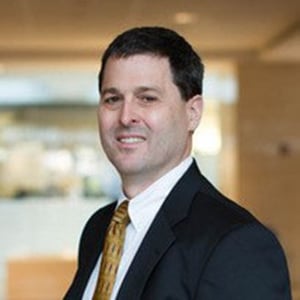
Tessa L. Dysart is the Assistant Director of Legal Writing and Associate Clinical Professor of Law at the University of Arizona, James E. Rogers College of Law. With the Hon. Leslie H. Southwick of the United States Court of Appeals for the Fifth Circuit, she co-authored the third edition of Winning on Appeal: Better Briefs and Oral Arguments. She manages the Appellate Advocacy Blog, writes on human trafficking and constitutional law, and lectures nationally on developing effective state anti-trafficking laws.
Professor Dysart is a graduate of Willamette University and Harvard Law School. She clerked for the Hon. Dennis W. Shedd of the United States Court of Appeals for the Fourth Circuit. Her practice experience includes working for the United States Department of Justice Office of Legal Policy and the Senate Judiciary Committee. Prior to joining the College of Law faculty she taught appellate advocacy and constitutional law courses at Regent University School of Law, where she coached award-winning moot court teams and advised the program to a national ranking.
Scott K. Ginsburg Professor of Health Law & Policy, Georgetown University
Biography
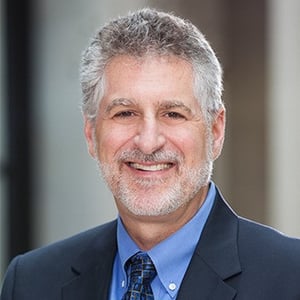
David A. Hyman, M.D., J.D., is the Scott K. Ginsburg Professor of Health Law & Policy at Georgetown University. Professor Hyman focuses his research and writing on the regulation and financing of health care. He teaches or has taught health care regulation, civil procedure, insurance, medical malpractice, law & economics, professional responsibility, and tax policy.
While serving as Special Counsel to the Federal Trade Commission, Professor Hyman was principal author and project leader for the first joint report ever issued by the Federal Trade Commission and Department of Justice, “Improving Health Care: A Dose of Competition” (2004). He is also the author of Medicare Meets Mephistopheles, which was selected by the U.S. Chamber of Commerce/National Chamber Foundation as one of the top ten books of 2007, and the co-author (with Charles Silver) of Overcharged: Why Americans Pay Too Much for Health Care (2018). He has published widely in student-edited law reviews and peer-reviewed medical, health policy, law, and economics journals.
Roy W. and Eugenia C. McDonald Endowed Chair in Civil Procedure & Professor of Government, The University of Texas at Austin School of Law
Biography
Charles Silver holds the Roy W. and Eugenia C. McDonald Endowed Chair in Civil Procedure at the School of Law at the University of Texas at Austin. He has published widely in law reviews and peer-reviewed journals. His articles use economic theory, philosophical and doctrinal reasoning, and empirical methodologies to shed light on issues arising in the areas of civil procedure, liability insurance, and the professional regulation of attorneys. He has written about group lawsuits (including class actions and other mass proceedings), attorneys’ fees (including contractual compensation arrangements, common fund fee awards, and statutory fee awards), and professional responsibility (focusing on lawyers involved in civil litigation on behalf of plaintiffs and defendants). In recent years, as Co-Director of the Center on Lawyers, Civil Justice and the Media at the University of Texas, he has worked with a group of empirical researchers on a series of studies of medical malpractice litigation in Texas.
Professor Silver served as Associate Reporter on the Principles of the Law of Aggregate Litigation, published by the American Law Institute in 2010. He taught as a Visiting Professor at the Harvard Law School, the University of Michigan Law School, and the Vanderbilt University Law School.
Professor Silver has given many presentations at academic conferences, including programs sponsored by the American Law and Economics Association, the Conference on Empirical Legal Studies, the Law & Society Association, RAND, and the Searle Center on Law, Regulation and Economic Growth. He has also spoken at faculty colloquia at law schools across the U.S.
Professor Silver often consults with attorneys and serves as an expert witness. He has strong ties with all segments of the litigating bar. On the plaintiffs’ side, he submitted an expert report on attorneys’ fees in the massive Enron settlement and served as professional responsibility advisor to the private attorneys who handled the State of Texas’ lawsuit against the tobacco industry. On the defense side, he advises on the responsibilities of lawyers retained by insurance carriers to defend liability suits against policyholders. Professor Silver has also testified to legislative committees and submitted amicus curiae briefs to courts on topics ranging from class certification to lawyers’ fiduciary duties to medical malpractice litigation.
In 2009, the Tort Trial & Insurance Practice Section (TIPS) of the ABA awarded Professor Silver the Robert B. McKay Law Professor Award for outstanding scholarship on tort and insurance law.
Senior Litigation Counsel, New Civil Liberties Alliance
Biography
Throughout his 40-year career in private law practice in Washington, D.C., Richard Samp has specialized in appellate litigation with a focus on constitutional law. He served as Chief Counsel of the Washington Legal Foundation for more than 30 years. He has participated directly in more than 200 cases before the U.S. Supreme Court. Mr. Samp is a graduate of Harvard College and the University of Michigan Law School and clerked for a federal judge in Detroit.
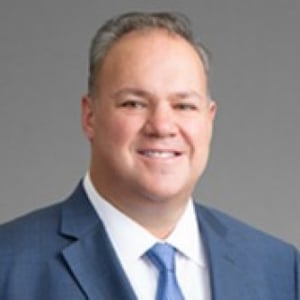
Costa is a partner in Gibson Dunn’s Houston office and co-chair of the firm’s Trials Practice Group. Mr. Costa offers clients a unique perspective as the only former federal trial and appellate judge trying cases and leading investigations. His broad experience—having handled complex civil and criminal matters, at trial and on appeal, as advocate and judge—allows him to offer invaluable skills and strategic insights.
Before joining Gibson Dunn, Mr. Costa served for more than ten years as a federal trial and appellate judge. He served on the U.S. Court of Appeals for the Fifth Circuit from 2014 to 2022. After his nomination by President Obama, the Senate confirmed him by a vote of 97-0. No federal appellate judge nominated since has received more votes. Mr. Costa first served as a district judge for the Southern District of Texas from 2012 to 2014. When appointed to the bench, he was the youngest-sitting federal judge at age 39. Mr. Costa presided over thirty federal trials in four different venues (he continued handling district court matters while serving on the court of appeals). He wrote precedential opinions in almost every area of the law, including antitrust, intellectual property, class actions, international arbitration, securities fraud, bankruptcy, conflicts of law, labor and employment, oil and gas, False Claims Act, administrative law, constitutional law, and criminal law. In press accounts of his tenure, he was described as an “exceptionally gifted jurist” with a “towering intellect” who was “respected by all sides.” The Federal Judicial Center invited Mr. Costa on multiple occasions to teach new federal district judges.
Before taking the bench, Mr. Costa was an Assistant U.S. Attorney in Houston from 2005 to 2012. As a prosecutor, he tried more than 15 jury trials, including serving as a lead prosecutor of Allen Stanford, the head of Stanford Financial Group, for orchestrating a multibillion-dollar international fraud scheme. Mr. Costa is featured in a documentary about the case, The Man Who Bought Cricket. A Reuters article about the trial quotes a victim who said that Mr. Costa’s closing argument “brought her to tears.” For his work on the Stanford case, Mr. Costa received the John Marshall Award for Trial of Litigation and the Assistant Attorney General’s Award for Exceptional Service. He also prosecuted cases involving kickbacks in the energy industry, public corruption, the Foreign Corrupt Practices Act, securities fraud, internet fraud, and counterfeit technology products. During his time as a federal prosecutor, Mr. Costa served as the Southern District of Texas’s Deputy International Affairs Coordinator, during which he assisted with investigations in more than a dozen countries.
Mr. Costa is a frequent speaker and author on legal topis, including writing for the ABA’s Litigation Journal on various trial-related issues. He also taught Federal Jurisdiction at the University of Houston Law Center, where he was named an Honorary Alumnus.
After college, Mr. Costa taught elementary school for two years in the Mississippi Delta through Teach for America. He has remained involved in the Delta and in education, launching a nonprofit in Mississippi, serving on the board of the Houston Urban Debate League, and helping teach Government at a Houston‑area charter school.