Ronald Reagan Distinguished Fellow, The Heritage Foundation
Biography
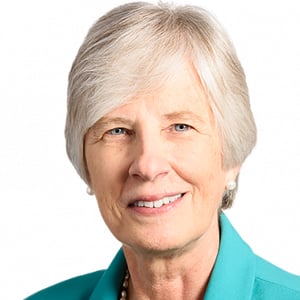
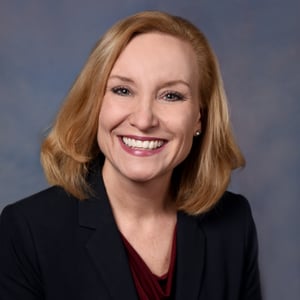
Becky Norton Dunlop, a prominent leader, strategist, and counselor in the conservative movement, is The Heritage Foundation’s Ronald Reagan Distinguished Fellow.
Dunlop, who joined the leading think tank in 1998, holds the only policy chair in the country to be officially named for the 40th president. She succeeds Ed Meese, the U.S. attorney general under Reagan, who assumed emeritus status.
Dunlop oversees special projects, travels as an ambassador for Heritage, and works tirelessly to assure that the legacy of principles, policies, and practices represented by the life and service of Ronald Reagan remain in the hearts and minds of Americans.
Previously, Dunlop was Heritage’s vice president for external relations from 1998 until May 2016. She served on the Trump Transition team.
Dunlop was a senior official in the Reagan administration from 1981-1989 inside the White House, at the Justice Department, and at the Interior Department.
She served from 1994-1998 as Secretary of Natural Resources for the Commonwealth of Virginia in the Cabinet of then-Virginia Gov. George Allen.
As political director for the American Conservative Union from 1973- 1977, she was instrumental in organizing grass-roots activists for Reagan’s unsuccessful 1976 race for the Republican nomination and advised his successful 1980 nomination and general election campaigns.
From Reagan’s first inauguration in 1981 to 1985, her White House posts included Deputy Assistant to the President for Presidential Personnel and Special Assistant to the President and Director of his Cabinet office. During Reagan’s second term, Dunlop served as senior special assistant to Meese, then attorney general, in charge of managing Cabinet-level domestic policy issues. She oversaw major policy reports on the environment, the family, federalism, tort reform, privatization, and welfare reform.
She completed her service in the Reagan administration as deputy undersecretary of the Interior Department and as assistant interior secretary for fish, wildlife, and parks.
Dunlop is one of the few of the insiders from the beginnings of the Reagan era who remain active in public policy leadership.
As Virginia’s natural resources chief, Dunlop worked to streamline, decentralize, and down-size agencies while protecting and improving the environment. She is one of the few “free-market environmentalists” to have headed a state agency and put ideas into action. Her book, “Clearing the Air” (Alexis de Tocqueville Institute, 2000), chronicles some of her experiences in advancing those principles.
In 2002, President George W. Bush appointed her to a part-time post as chairwoman of the Federal Service Impasses Panel. The seven-member panel resolves disputes between federal agencies management and labor unions. Under her leadership, it took on several hundred cases and eliminated backlogs.
Other current leadership roles include the boards of the Virginia Institute for Public Policy, the Reagan Ranch Board of Governors, the Reagan Alumni Association, the Association for American Educators and the AAE Foundation, the Council for National Policy and the American Conservative Union.
In addition to topics addressing conservative principles and their roots in the nation’s founding, Dunlop is a sought-after public speaker on the idea that personnel is policy; on energy, natural resources and the environment (including free market environmentalism); on federalism as a former member of a governor’s Cabinet; Capitalism and the Rule of Law, and on the Reagan administration (including the 40th president’s effective leadership style).
A graduate of Miami University in Ohio, she currently resides in Arlington, Virginia, with her husband, George S. Dunlop. The Dunlops are members of Oakland Baptist Church in Alexandria, Virginia.
Assistant Attorney General for Civil Rights, U.S. Department of Justice
Biography
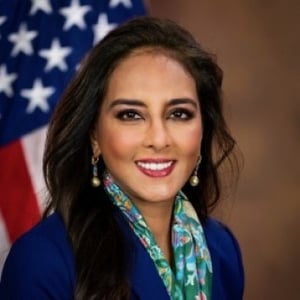
Harmeet K. Dhillon is the Assistant Attorney General for Civil Rights at the U.S. Department of Justice. She was nominated by President Donald Trump in December 2024. She was confirmed by the U.S. Senate on April 3, 2025, and sworn in as AAG by Attorney General Pam Bondi on April 7, 2025.
Prior to joining the Division, Ms. Dhillon founded both the Dhillon Law Group, Inc., a successful legal practice with offices in California, Florida, Virginia, and New Jersey; and the Center for American Liberty, a nonprofit organization dedicated to pursuing civil liberties legal claims. Her law practice focused on First Amendment / free speech, civil rights, and campaign and election law issues. Among her many notable cases, Ms. Dhillon brought legal challenges against the University of California, Berkeley over its free speech policy, against an Antifa organization for an assault on a conservative journalist, against several states for their restrictive responses to Covid-19, and against various large tech companies for a host of civil rights issues.
Assistant Attorney General Dhillon was born in Chandigarh, India, and lived in London before moving to The Bronx, New York. Her family ultimately settled in rural Smithfield, North Carolina. After graduating high school at age 16, Ms. Dhillon attended Dartmouth College where she became editor-in-chief of The Dartmouth Review. After earning her bachelor’s degree in Classical Studies, she attended the University of Virginia School of Law and served on the editorial board of the Virginia Law Review. She later clerked for the Honorable Paul V. Niemeyer of the United States Court of Appeals for the Fourth Circuit in Baltimore, Maryland.
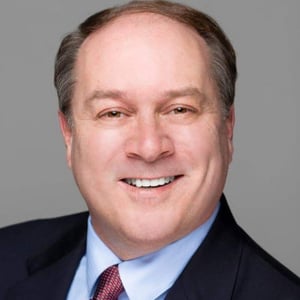
Greg Grisham has over 25 years of successful experience counseling and representing employers in all aspects of workplace law in Tennessee and across the United States.
He has helped employers avoid claims, charges and lawsuits with a focus on preventative practices. Preventative practices include counseling in situations involving discipline, termination, demotion, promotion and other workplace changes in the terms and conditions of employment, harassment investigations, wage and hour compliance, FMLA Compliance, Reasonable Accommodation assessment, supervisor training and the review of employment policies and procedures. In addition, Greg's practice includes the representation of business entities subject to Title III of the Americans with Disabilities Act in Public Accommodation cases.
Greg has successfully litigated hundreds of administrative charges, employment lawsuits, and arbitration demands on behalf of employers, including federal and state law claims alleging discrimination, harassment, retaliation, wrongful termination, defamation, invasion of privacy, breach of contract, wage and hour violations and ERISA violations, among others. He also represents employers before the National Labor Relations Board in unfair labor practice proceedings. He represents employers in the enforcement of post-employment restrictive covenants such as non-compete, non-solicitation and non-disclosure agreements and related trade secret litigation. Greg's practice also includes the defense of property owners and property management companies in federal and state Housing Discrimination charges and litigation. He also advises Tennessee Public Charter Schools on education law and workplace compliance matters.
Greg has extensive experience working with insurance carriers and their insureds in the defense of EPLI claims. He is a regular speaker at public seminars on workplace law issues and has authored numerous articles on a variety of labor and employment law related topics.
Greg holds an AV Preeminent Peer Review rating from Martindale-Hubbell and has been selected for inclusion in Mid-South Super Lawyers and Best Lawyers in America for Employment Litigation-Management side. Greg was elected as a 2016 Fellow to the College of Labor and Employment Lawyers and has been selected to the “Top 20 Lawyers in Traditional Labor & Employment Law” list in conjunction with Human Resource Executive Magazine and LawDragon’s 2017 and 2018 “Most Powerful Employment Attorneys” lists and specialty guides. Greg was also named a Fellow in the American Bar Foundation in 2017.
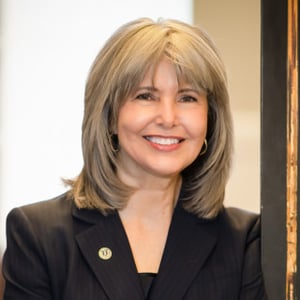
Sworn in by Governor Bill Haslam in September 2014, Tennessee Supreme Court Justice Holly Kirby is the first graduate of the University of Memphis ever to sit on Tennessee’s highest court. A career jurist, Justice Kirby has authored well over a thousand opinions from appeals all across the state.
Prior to her appointment to the Supreme Court, Justice Kirby served for almost 19 years on the Tennessee Court of Appeals, Tennessee’s intermediate appellate court for civil cases. She represented a gender milestone on the Court of Appeals—when she was appointed in 1995, she became the first woman ever to sit on that Court.
A lifelong Tennessean, Justice Kirby was born in Memphis and graduated from high school in Columbia, Tennessee. As an undergraduate at the University of Memphis, she held a number of student leadership positions and graduated in 1979 with high honors, with a B.S. in mechanical engineering.
In 1982, Justice Kirby graduated from the University of Memphis School of Law with high honors. Upon graduation, she served as a judicial law clerk on the U.S. Court of Appeals for the Sixth Circuit.
After her clerkship, Justice Kirby joined the Memphis law firm of Burch, Porter & Johnson, where she was active in politics and community service. When she was selected as partner in 1990, she became the firm’s first female partner.
From the time of her appointment to the Court of Appeals in 1995 to the present, Justice Kirby has won 5 statewide elections, in 1996, 1998, 2006, 2014, and 2016.
Justice Kirby was chosen as Outstanding Young Alumna for the University of Memphis in 1996, Outstanding Alumna for the University of Memphis College of Engineering in 2002, and Special Distinguished Alumna for the School of Law in 2016. She is married to Memphis businessman Russell Ingram and has two grown children. The family belongs to Idlewild Presbyterian Church.
Judge, United States Court of Appeals, Sixth Circuit
Biography
The Honorable Joan L. Larsen is a judge of the United States Court of Appeals for the Sixth Circuit. She was nominated by the President on May 8, 2017 and confirmed by the Senate on November 1, 2017. Before her appointment to the federal bench, Judge Larsen served two terms as a Justice of the Michigan Supreme Court, where she was the court’s liaison to Michigan’s drug, sobriety, mental health and veteran’s courts.
Before becoming a judge, Judge Larsen was a faculty member at the University of Michigan Law School, where she was also Special Counsel to the Dean and received the L. Hart Wright Award for Excellence in Teaching. Judge Larsen's research and teaching interests included constitutional law, criminal procedure, statutory interpretation, and presidential power. Judge Larsen continues to assist the law school as the adviser to the Henry M. Campbell Moot Court Competition.
Judge Larsen began her legal career as a law clerk to the Hon. David B. Sentelle of the United States Court of Appeals for the D.C. Circuit and to Justice Antonin Scalia of the Supreme Court of the United States. Following her clerkships, she joined the law firm of Sidley Austin, where she was a member of the Constitutional, Criminal, and Civil Litigation Section. She later served as Deputy Assistant Attorney General in the United States Department of Justice, Office of Legal Counsel.
Judge Larsen graduated first in her class from Northwestern University School of Law, where she served as articles editor of the Northwestern University Law Review and earned the John Paul Stevens Award for Academic Excellence. She received her B.A., with highest honors, from the University of Northern Iowa.
Class of 1940 Research Professor of Law, Northwestern University School of Law
Biography
Jim Speta has been a member of the faculty since 1999. His research interests include telecommunications and Internet policy, antitrust, administrative law, and market organization. He teaches in the Law School and in the Joint Program in Law and Business operated by the Law School and the Kellogg School. A 1991 graduate of the University of Michigan Law School, Speta joined the Northwestern faculty following a one-year visit. He had previously clerked for Judge Harry T. Edwards on the United States Court of Appeals for the D.C. Circuit and practiced appellate, telecommunications, and antitrust law with the Chicago firm of Sidley & Austin.
As the daughter of a first-generation Mexican immigrant who has practiced as a pioneering cardiovascular surgeon in the United States for over thirty years, Heidi Maynard has witnessed firsthand the generational impact of education. This experience motivates her on a daily basis as she assists school districts in navigating the highly regulated field of K-12 school law.
Heidi earned her Juris Doctorate from The Florida State University School of Law. While doing so, she studied the history of the common law at Oxford University, England, competed nationally as a member of the FSU Mock Trial team, and tried cases for the State Attorney’s Office in Tallahassee Florida. She practiced civil litigation at a private firm in Tallahassee, Florida, prior to joining the Florida Department of Education’s General Counsel’s Office as an Assistant General Counsel. After that she served as an Assistant General Counsel for the Florida Department of Health and then as a hearing officer for the Florida Department of Agriculture & Consumer Services.
After moving to Washington State with her family, she served as Policy & Legal Services Director for the Washington State School Directors’ Association (WSSDA) for five years, writing model policy for the state’s 295 school districts and providing legal guidance for board directors and superintendents statewide. While at WSSDA, she founded the WSSDA Law Conference to provide school board members with legal insight to support their vision and goals for the Districts they served. She also served on multiple statewide committees and workgroups contributing to statewide policy implementation, presented at the National School Board Association’s (NSBA) School Law Conference and for Western Washington University’s Principal Certification Program.
Following WSSDA, she served as Deputy General Counsel for one of the largest school districts in the state prior to joining Vandeberg Johnson & Gandara, LLP.
Heidi is a member of the Washington State Bar Association, the Florida Bar, the District of Columbia Court of Appeals, the Western District of Washington Bar, the Tacoma Pierce County Bar Association, and the Washington Council of School Attorneys. She is currently engaged in mentoring a candidate in the Washington State Bar Association’s Rule 6 program and is enjoying every minute of it.
Outside of the practice of law, Heidi spends her time gardening, trying to keep up with her husband and three teenage daughters and all their sports and music activities, as well as exploring the beauty and scenery of the Pacific Northwest.
Judge, United States District Court for the Western District of Kentucky
Biography
Prior to joining the bench, Judge Beaton was a Partner at Squire Patton Boggs LLP, where he co-chaired the firm’s Appellate & Supreme Court practice group. Judge Beaton’s represented clients engaged in complex commercial litigation in Federal and State courts, and before administrative agencies. Judge Beaton also served as an adjunct professor at the University of Louisville Brandeis School of Law, where he taught constitutional interpretation. Before joining Squire Patton Boggs, Judge Beaton practiced in the Washington, D.C. office of Sidley Austin, LLP, and also served as a legal fellow with the International Justice Mission in Kampala, Uganda. Upon graduation from law school, Judge Beaton served as a law clerk to Justice Ruth Bader Ginsburg of the United States Supreme Court, and to Judge A. Raymond Randolph of the United States Court of Appeals for the D.C. Circuit. Judge Beaton earned his B.A., summa cum laude, from Centre College, and his J.D. from Columbia Law School, where he served as an Articles Editor on the Columbia Law Review.
Judge, U.S. Court of Appeals, District of Columbia Circuit
Biography
Justin R. Walker is a judge on the U.S. Court of Appeals for the D.C. Circuit. He was nominated to the court by President Donald Trump on May 4, 2020, and confirmed by the United States Senate on June 18, 2020. He is a former United States District Judge of the Western District of Kentucky.
Speaker Information
Jennifer C. Braceras
Director, Independent Women's Law Center, Independent Women's
Biography
Jennifer C. Braceras, a member of the Federalist Society Board of Visitors, is the director of Independent Women’s Law Center and a former member of the U.S. Commission on Civil Rights.
Ms. Braceras is a graduate of the Harvard Law School, where she served as an editor of the Law Review. After law school, she clerked for two federal judges and practiced labor and employment law with the Boston law firm Ropes & Gray.
A long time political columnist and editor, Ms. Braceras's writing has appeared in a variety of publications, including the Wall Street Journal, the Boston Globe, the Hill, and National Review Online. She co-hosts At the Bar, a bimonthly virtual happy hour discussion about issues at the intersection of law, politics, and culture.
Anthony J. “A.J.” Ferate has built a multi-faceted background in the areas of the law, policy, energy, campaigns and elections, and defense over the last 20 years.
Through recent representation as Vice President of Regulatory Affairs for the Oklahoma Independent Petroleum Association (“OIPA”), A.J. held responsibilities over government efforts outside of the legislative branch on matters as broad as water, electric generation, commodity marketing, land matters, and seismicity. A.J. also maintained responsibility for legal matters at OIPA, including amicus briefing in appellate matters. A.J.’s extensive experience also includes management of public policy strategy for a Fortune 500 company.
For the past eleven years, A.J. has volunteered as General Counsel and spokesman for the Oklahoma Republican Party and has represented a number of elected officials, including U.S. Senator James Lankford, former statewide elected officials, a number of state legislators, and members of Congress.
Additionally, A.J. has assisted elected officials serve their constituents in all branches of government. Early in his career, A.J. held legislative aide duties in the Nebraska Legislature, then went on to work for former Nebraska Treasurer David Heineman. A.J. gained experience in the judiciary while serving Judge Gary L. Lumpkin at the Oklahoma Court of Criminal Appeals, the highest criminal appellate court in Oklahoma. Following this service, A.J. began work with Denise A. Bode of the Oklahoma Corporation Commission, assisting her in her duties regulating 70 percent of Oklahoma’s economy, including oil and gas and electric utilities.
A.J. honorably served ten years as an intelligence analyst for the United States Naval Reserve, including time at the Office of Naval Intelligence in the greater Washington DC area.
Opinion pieces authored or ghostwritten by A.J. have been published in the Seattle Times, Politico, Law360, The Oklahoman, Tulsa World and The Journal Record. A.J. has also been interviewed by national and international newspapers, and has also appeared on national radio programs including NPR’s The Diane Rehm Show and On Point with Tom Ashbrook.
Catherine Donnelly undertook her LL.B. in Trinity College Dublin and is a former scholar of the College. She then completed a B.C.L. in Oxford, at Magdalen College, followed by an LL.M. and Fellowship in Harvard. She practised as a litigation attorney at Davis Polk & Wardwell in New York from 1999-2001 and was admitted to both the New York State and Federal Bars (Eastern and Southern Districts). During this time, she also taught an asylum law workshop at Columbia Law School and worked on pro bono projects for the Yale Law Clinic and Human Rights Watch.
From 2001-2004, she completed a D.Phil. in Oxford, again at Magdalen College, during part of which time she held a college lectureship shared between Corpus Christi College and St John's College, Oxford.
She joined the Law Faculty of the University of Oxford in 2005 as a University Lecturer and Fellow in Law at Wadham College, teaching Administrative, Constitutional and European Community Law. She joined the Law School in Trinity College in January 2007. She was elected to Fellowship of the College in 2011 and is an Associate Professor.
She has published and presented conference papers in the areas of human rights law, European Union law, administrative law, election law, constitutional law, comparative law, procurement law and public-private partnerships and is an author of De Smiths’ Judicial Review.
Catherine combines her academic work with practice as a barrister. She was called to the Bar of England and Wales in 2003 (Gray's Inn) and from 2004-2005, she undertook pupillage at Blackstone Chambers, and became a member of Blackstone Chambers in 2008.
She began practice at the Bar of Ireland in 2008, and was called to the Inner Bar and became a Senior Counsel in 2021. She has appeared in cases before the Court of Justice and General Court of the European Union, the European Court of Human Rights, and the national courts, including acting for the Data Protection Commissioner in the Schrems II litigation on EU-US data transfers and for Ireland in the Apple State Aid appeal. She practises in the areas of EU, Constitutional, Administrative and Commercial Law.
Laurence H. Silberman Chair in Constitutional Governance, American Enterprise Institute; Executive Director, Antonin Scalia Law School’s C. Boyden Gray Center for the Study of the Administrative State
Biography
Adam J. White is the Laurence H. Silberman Chair in Constitutional Governance and senior fellow at the American Enterprise Institute, where he focuses on the Supreme Court and the administrative state. He also directs the Antonin Scalia Law School’s C. Boyden Gray Center for the Study of the Administrative State.
He writes on regulation and constitutional government for a variety of publications. He practiced law in Washington, D.C., after clerking for the D.C. Circuit's Judge David Sentelle. He also has been chairman of the ABA's Administrative Law Section.
In 2021, he served on the Presidential Commission on the Supreme Court of the United States, where he criticized “Court packing” and other efforts to restructure the Supreme Court.