United States Attorney for the Eastern District of Missouri
Speaker Information
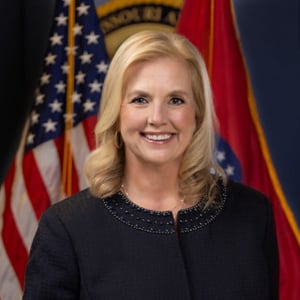
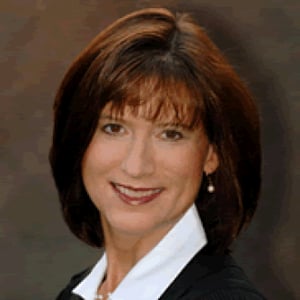
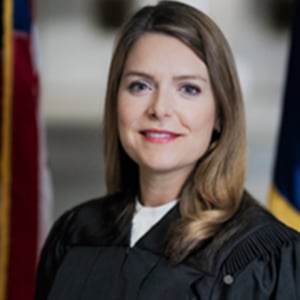
Catherine L. Hanaway
Attorney General, Missouri
Biography
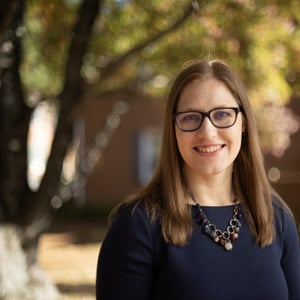
Catherine L. Hanaway was sworn in as Missouri’s 45th Attorney General on September 8, 2025. A seasoned trial lawyer and proven public servant, she has built her career around one guiding principle: protecting Missouri families.
As Attorney General, she is committed to making the Office a force for safety and accountability. Her bold agenda focuses on fighting crime, protecting consumers, ensuring the vulnerable are safeguarded from fraud and abuse, and defending both the U.S. and Missouri Constitution. She has pledged to pursue justice for victims of violence, root out corruption, and stand against schemes that threaten Missourians’ livelihoods. For Attorney General Hanaway, the mission of the Office is simple: uphold the laws as written and protect the people of Missouri.
Before taking office, Attorney General Hanaway led Husch Blackwell LLP, a national law firm with more than 1,000 lawyers headquartered in Kansas City, as the first woman to become Chair of the firm. She built a reputation for excellence in handling high-stakes litigation, including cases involving fraud, financial misconduct, and regulatory compliance. Her leadership helped guide the firm through record growth.
Attorney General Hanaway previously served as the U.S. Attorney for the Eastern District of Missouri. She personally tried cases to jury verdicts and led the development of new prosecution strategies in complex healthcare, fraud, and white-collar crime cases. As the chief federal law enforcement officer for the region, she supervised more than 4,000 criminal and civil cases, along with a staff of more than 100 attorneys and investigators.
Attorney General Hanaway first entered public service as a member of the Missouri House of Representatives, where she made history as the first and only woman elected Speaker of the House. In that role, she advanced legislation to strengthen public safety, protect Second Amendment rights, and promote government accountability, establishing her reputation as a strong defender of Missourians’ freedoms.
Attorney General Hanaway earned a Bachelor of Arts from Creighton University and received a Juris Doctor from The Catholic University of America, Columbus School of Law.
Attorney General Hanaway resides in St. Louis with her husband, Chris, and is a devoted mother to two children, Lucy and John. She has been deeply involved in her community through service on civic and professional boards, including serving as the Chair of the Regional Business Council and as a member of the St. Louis Regional Crime Commission Board.
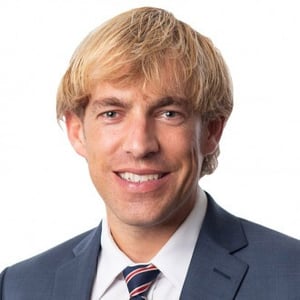
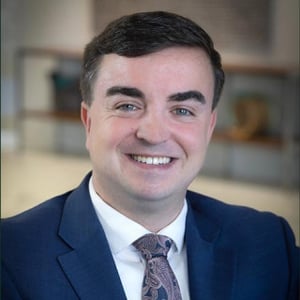
On August 1st, Attorney General Pamela Bondi announced the appointment of R. Matthew Price as United States Attorney for the Western District of Missouri and he was sworn into office by Chief Judge Phillips that same day.
Price served as an Assistant Prosecuting Attorney in Jefferson County Missouri and later as an Assistant Circuit Attorney in the St. Louis Circuit Attorney's Office. In 2008, Price joined the United States Attorney's Office for the Western District of Tennessee as a Criminal AUSA. After several years with DOJ, Price left to become a Senior Attorney for a Fortune 100 Company, later serving as the Lead Counsel for Compliance, Investigations & Government Litigation, overseeing internal investigations and managing global compliance projects.
In 2014, Price joined the City of Germantown, Tennessee as the Chief Prosecuting Attorney. Later, he worked at another Fortune 100 Company as a Senior Counsel, later promoted to Managing Counsel, where he directed complex investigations and led workstreams related to government inquiries. Most recently, Price has served as the Chief Legal Officer for a large Missouri corporation.
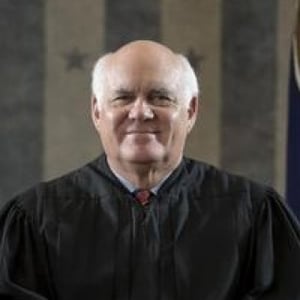
District Judge W. Keith Watkins was appointed by President George W. Bush to a vacancy in the Middle District of Alabama on December 27, 2005. Judge Watkins was elevated to Chief District Judge on May 18, 2011, and he served as Chief Judge until January 31, 2019. He assumed senior status in 2019 and is still active with the court. A native of Troy, Alabama, Judge Watkins practiced law in Tuscaloosa for two years and in Troy for 28 years, with a broad general practice. He is a graduate of Auburn University and The University of Alabama School of Law. Among other positions in the bar, Judge Watkins is a Fellow in the Alabama Law Foundation and served as the Bar Commissioner for the Twelfth Judicial Circuit and as a member of the Alabama State Bar Task Force for Alternative Dispute Resolution. He served as the mediator in over 200 civil cases in state and federal courts in Alabama and Georgia prior to taking the bench. Judge Watkins serves on the board of the Rosa Parks Museum and is chair of the board of The American Village. He is a former board member of the Federal Judges Association and The Frank M. Johnson, Jr. Institute. He also served on the Federal-State Jurisdiction Committee, a national committee of the Administrative Office of Courts, and on three panels of the Eleventh Circuit Court of Appeals. Judge Watkins and his wife Teresa have two grown children and seven grandchildren. Known for his various and sometimes cryptic sayings (shared liberally with his children, grandchildren, and law clerks), two favorites are: “Live your life so that opportunities seek you”; and “Don’t leave this earth without anyone knowing you were ever here.” Education
Auburn University, B.S., 1973 The University of Alabama School of Law, J.D., 1976
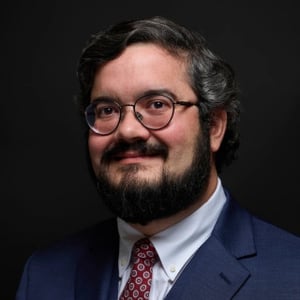
Christopher Mills is the founder of Spero Law LLC. He was previously a partner at a national law firm and a Constitutional Law Fellow at the Becket Fund for Religious Liberty. He served as a law clerk to Justice Clarence Thomas on the U.S. Supreme Court during October Term 2018. He also clerked for the Honorable David B. Sentelle, then-Chief Judge of the U.S. Court of Appeals for the D.C. Circuit. He has authored briefs and motions in the Supreme Court, courts of appeals, and trial courts, and successfully argued before the D.C. Circuit. He has served as special counsel to South Carolina Governor Henry McMaster, and is an Adjunct Professor at the Charleston School of Law.
A 2012 magna cum laude graduate of Harvard Law School, Christopher was a senior editor of the Harvard Law Review, an editor of the Harvard Journal of Law and Public Policy, and served on the Executive Board of the Harvard Federalist Society. In 2009, he graduated Phi Beta Kappa and summa cum laude with a degree in economics from Furman University.
Christopher lives in Charleston, South Carolina with his wife, children, and golden retriever.
Rachel N. Morrison is an attorney and Fellow at the Ethics and Public Policy Center, where she directs EPPC’s Administrative State Accountability Project. Her legal and policy work focuses on religious liberty, health care rights of conscience, the right to life, nondiscrimination, and civil rights.
Before joining EPPC, Ms. Morrison served as an Attorney Advisor and Special Assistant to General Counsel Sharon Fast Gustafson at the Equal Employment Opportunity Commission (EEOC), where she focused on religious discrimination issues and was a member of the General Counsel’s Religious Discrimination Work Group. Before that, she served as Litigation Counsel for Americans United for Life and as a Constitutional Law Fellow at the Becket Fund for Religious Liberty, defending the right to life and religious freedom for all. She also clerked on the U.S. Court of Federal Claims.
Ms. Morrison’s legal analysis has been published in the Seton Hall Law Review, the Pepperdine Law Review, and the Ave Maria Law Review, as well as various other print media outlets.
Ms. Morrison earned her J.D., magna cum laude, from the Pepperdine University School of Law, where she was elected to the Order of the Coif and served as an editor for the Pepperdine Law Review and the Harvard Journal of Law & Public Policy. She received her B.A. in Mathematics and Speech Communication, summa cum laude, from Whitworth University (Spokane, WA). She is a member of the District of Columbia and the Washington State bars.
Ms. Morrison lives with her husband and daughter in Virginia.
Justin Braga lives in New Hampshire and focuses his practice on complex commercial litigation. Justin served as a law clerk to the Honorable Edith Jones of the United States Court of Appeals for the Fifth Circuit, the Honorable Drew Tipton of the United States District Court for the Southern District of Texas, and the Honorable Eliot Prescott of the Connecticut Appellate Court. He is a graduate of Georgetown University Law Center and Brown University.
Clayton J. and Henry R. Barber Professor of Law, Northwestern University Pritzker School of Law and Co-Chairman, Board of Directors, The Federalist Society
Biography
STEVEN GOW CALABRESI is the Clayton J. & Henry R. Barber Professor at Northwestern Pritzker School of Law. He has also co-taught in the Fall semester at Yale Law School from 2013 to the present. Calabresi clerked for Justice Antonin Scalia and Judges Robert H. Bork and Ralph K. Winter. He was a Special Assistant to Attorney General Meese from 1985 to 1987 and worked with Ken Cribb as his deputy in 1987 on the second floor of the West Wing of the Reagan White House. Calabresi has written books on presidential power and comparative constitutional law and the origins of judicial review. He and Gary Lawson are the co-editors of a casebook on U.S. Constitutional Law, and Calabresi is also the co-editor of a casebook on comparative constitutional law. He has written over seventy law review articles since 1990.
Mike Fragoso is an experienced legal and policy strategist who represents clients before all three branches of the federal government. Most recently he served as chief counsel to the Senate Republican Leader, Mitch McConnell (R-KY). He has negotiated consequential legislation, managed successful congressional oversight, and prepared individuals for the most contentious Senate hearings.
As chief counsel to Leader McConnell, Mike was the Leader’s primary legal advisor and managed the “last mile” of any legislation touching on the Senate Judiciary Committee. He ran the 2024 reauthorization of FISA Section 702 and was involved at the highest levels of the appropriations and budget-reconciliation processes. Mike also repeatedly represented Leader McConnell as counsel of record at the Supreme Court. Leader McConnell said of Mike that he’s “equally at home in the high-minded philosophical discourse of the legal community and the urgent pragmatism of congressional dealmaking,” and that he “maintains a firm grasp on the realm of the possible” but “knows which screws to twist.” He observed that Mike “is so exceptionally competent that he often produces from his desk the work that would normally require, literally, teams of outside counsel.”
Judge, United States Court of Appeals, Seventh Circuit
Biography
Judge Sykes was nominated to the Seventh Circuit by President George W. Bush and confirmed by the Senate in 2004. Prior to her appointment to the federal bench, Judge Sykes served as a justice on the Wisconsin Supreme Court. Governor Tommy G. Thompson appointed her in September 1999 to fill a mid-term vacancy on the state supreme court, and she was elected to a full ten-year term in April 2000. From 1992-1999, Judge Sykes served on the state trial bench in Milwaukee County (elected in 1992 and re-elected in 1998). From 1985-1992, Judge Sykes practiced law with the Milwaukee firm of Whyte & Hirschboeck, S.C., and from 1984-1985, was a law clerk to Federal Judge Terence T. Evans.
Born and raised in the Milwaukee area, Judge Sykes earned a bachelor’s degree in journalism from Northwestern University in 1980 and a law degree from Marquette University Law School in 1984. Between college and law school, Judge Sykes worked as a reporter for The Milwaukee Journal.
Emanuel S. Heller Professor of Law, University of California at Berkeley; Thomas Smith Senior Research Fellow, Civitas Institute, University of Texas at Austin
Biography
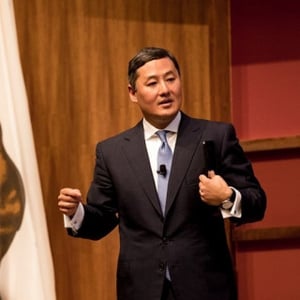
John Yoo is the Emanuel Heller Professor of Law at the University of California at Berkeley. He is also the Thomas Smith Senior Research Fellow, Civitas Institute, at the University of Texas at Austin. He is also a Nonresident Senior Fellow at the American Enterprise Institute.
His most recent book, The Politically Incorrect Guide to the Supreme Court, co-authored with Robert Delahunty, was published in 2023. Professor Yoo’s other books include Defender-in-Chief: Trump’s Fight for Presidential Power; Striking Power: How Cyber, Robots, and Space Weapons Change the Rules for War; Point of Attack: Preventive War, International Law, and Global Welfare; and Crisis and Command: A History of Executive Power from George Washington to George Bush. He is a co-author of volumes 1 and 2 of R. Rossum, G. Tarr, V. Munoz & J. Yoo American Constitution Law (Routledge, 2026), and a co-editor of the eight-volume series on the 250th anniversary of the American Revolution, We Hold These Truths, with Yuval Levin and Adam White of the American Enterprise Institute.
Professor Yoo has published more than 100 articles in academic journals on subjects including national security, constitutional law, international law, and the Supreme Court. He also regularly contributes to the editorial pages of the Wall Street Journal, New York Times, Washington Post, Los Angeles Times, and National Review, among others.
Professor Yoo has served in all three branches of government. He was an official in the U.S. Department of Justice, where he worked on national security and terrorism issues after the 9/11 attacks. He served as general counsel of the U.S. Senate Judiciary Committee. He has been a law clerk for Supreme Court Justice Clarence Thomas and federal appeals Judge Laurence Silberman. He has been a visiting professor at the University of Texas at Austin’s School of Civic Leadership, Seoul National University, the Interdisciplinary Center Herzliya, Keio University, Trento University, the University of Chicago, and the Free University of Amsterdam.
Professor Yoo supervises the Public Law and Policy Program and the California Constitution Center. He also serves on the boards of Founding Forward, the Washington Legal Foundation, the Pacific Legal Foundation, the Ulysses Grant Institute, the Federalist Society’s Separation of Powers and Federalism Division, the Universidad Cientifica del Sur Law School, and the Asia-Pacific Law Institute at Seoul National University. He is a winner of the Federalist Society’s Paul Bator award and the Heritage Foundation’s Edwin Meese III Originalism Lectureship.
Professor Yoo graduated from Yale Law School and summa cum laude from Harvard College.
James L. Oberstar Professor of Law and Public Policy, University of St. Thomas School of Law
Biography
Thomas C. Berg is the James L. Oberstar Professor of Law and Public Policy at the University of St. Thomas School of Law (Minnesota), where he teaches religious liberty, constitutional law, intellectual property, and the religious liberty appellate clinic. He is the author or co-author of five books, including The State and Religion in a Nutshell (West); Religion and the Constitution (Wolters Kluwer, with McConnell and Lund); Patents on Life (Cambridge U. Press, with Cholij and Ravenscroft);. and a forthcoming book, Religious Liberty in a Polarized Age (under contract, Eerdmans). He has written or co-written more than 150 book chapters and scholarly and popular articles, and approximately 70 briefs in the Supreme Court and lower courts on freedom of religion and expression. He contributes regularly to SCOTUS Blog, Christianity Today, Mirror of Justice, and other venues. He has degrees from the University of Chicago (law, religious studies), Oxford University (Rhodes Scholar), and Northwestern University (journalism). He practiced law in Chicago and was a law clerk on the U.S. Court of Appeals for the Fifth Circuit.
Senior Litigation Counsel, Washington Legal Foundation
Biography
Zac joined WLF in 2025 as Senior Litigation Counsel. In that role, he regularly represents WLF and other clients as counsel of record in cases before the U.S. Supreme Court and the federal appellate courts. Before arriving at WLF, Zac served as counsel to Commissioner Allen Dickerson of the Federal Election Commission. Zac also spent eight years litigating First Amendment cases as a staff attorney for the Institute for Free Speech, where he represented clients in federal and state cases across the country. He received his J.D. from George Mason University’s School of Law, where he participated in GMU’s Wiley Rein Supreme Court clinic.
Associate Professor of Law, Temple University Beasley School of Law
Biography
Jacob Schuman is an Associate Professor at Temple University Beasley School of Law, where he teaches Constitutional Law, Evidence, and the Law of the Police. His scholarship focuses on the law of community supervision and has been published or is forthcoming in the Stanford Law Review, New York University Law Review, Michigan Law Review, Virginia Law Review, American Criminal Law Review, Philadelphia Inquirer, and New Republic.
Professor Schuman’s scholarship is regularly cited by courts, scholars, journalists, and advocates, including by federal judges on the Second, Fourth, and Seventh Circuit U.S. Courts of Appeals. It has also won plaudits across the ideological spectrum, from the American Constitution Society to the Federalist Society. He has filed amicus briefs based on his work on behalf of clients such as the National Association of Federal Defenders and the National Association of Criminal Defense Lawyers.
Prior to joining Temple Law, Professor Schuman served in the appellate unit of the Federal Community Defender Office in Philadelphia, where he represented indigent criminal defendants before the U.S. Court of Appeals for the Third Circuit. He also worked as a white-collar criminal defense lawyer in Washington, D.C. After graduating magna cum laude from Harvard Law School, he clerked for the Honorable Michael Boudin on the U.S. Court of Appeals for the First Circuit and the Honorable James Boasberg on the U.S. District Court for the District of Columbia.
Legal Counsel, Center for Free Speech, Alliance Defending Freedom
Biography
Logan Spena serves as legal counsel for the Center for Free Speech at Alliance Defending Freedom, where he works to defend free speech and combat global censorship and coercion.
Before joining ADF, Spena served as Deputy Policy Director in the Missouri governor’s office where he oversaw the state’s regulatory reform efforts and worked to approve legislation on many issues including education, foster care, and protecting the unborn.
Spena graduated from the University of Virginia School of Law in 2016, where he served on the Editorial Board of the Virginia Law Review. Spena earned his B.A. in Government: Political Theory from Patrick Henry College in 2012. Spena is a member of the bars of Virginia and Missouri.
Director of Clinical and Experiential Learning, Clinical Professor of Law & Director of the Criminal and Juvenile Justice Clinic, University of Chicago Law School
Biography
Erica Zunkel is a Clinical Professor of Law and directs the Criminal and Juvenile Justice Clinic. Under Professor Zunkel’s supervision, law students represent indigent individuals in criminal trial courts, on appeal, and in post-conviction proceedings, and pursue policy and impact projects to effect system change. Professor Zunkel’s Excessive Sentences Project is an initiative that aims to free prisoners serving lengthy sentences through the use of second look mechanisms such as compassionate release, parole, and clemency. Zunkel and her clinic students have secured the early release of 17 individuals, resulting in hundreds of years in prison saved for their clients. In recognition of her post-conviction work, Zunkel received the 2024 Excellence in Pro Bono Service Award from the United States Northern District of Illinois District Court and the Federal Bar Association.
Zunkel’s case and research interests include post-conviction remedies for excessive sentences in the federal and state systems, mandatory minimums, and sentencing. In 2022, Illinois Governor J.B. Pritzker appointed Professor Zunkel to be a Commissioner on the Illinois Torture Inquiry and Relief Commission, which examines claims of police torture.
Before coming to the Law School in 2012, Professor Zunkel was a federal public defender in San Diego, California and a law clerk for U.S. District Court Judge Martha Vázquez in Santa Fe, New Mexico. She received her B.A. from Cornell University and her J.D. from the University of California-Berkeley School of Law.
Logan Beirne is an American entrepreneur, attorney, businessman, and writer. He currently serves as Chief Legal Officer of Strive Asset Management and teaches at Yale Law School. His debut book, Blood of Tyrants: George Washington and the Forging of the Presidency, was a national bestseller and won the Colby Award for best military history.
Beirne founded the multinational legal technology company Matterhorn Transactions, Inc. in 2011, providing data analytics to thousands of law firms across the U.S., Canada, and the U.K. He successfully led the company to its acquisition by DealPulse, Inc. in 2023. In addition to Matterhorn, Beirne has co-founded and invested in several other businesses, including the museum systems company Collection Harbor and the music software firm Artusi Music, Inc.
A Fulbright Scholar at Queen's University in Belfast, Beirne studied economics before earning his J.D. from Yale Law School. At Yale, he received the Edgar M. Cullen Prize for constitutional scholarship and an Olin Fellowship for his work on presidential power.
Before founding Matterhorn, Beirne worked at GE Capital's private equity arm, Sullivan & Cromwell LLP, and J.P. Morgan & Co.