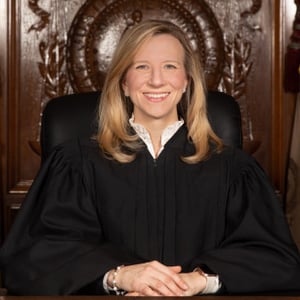
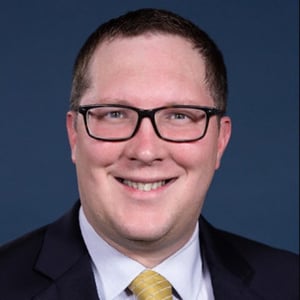
United States District Judge, United States District Court for the Middle District of Florida
Biography
In November 2020, the Senate confirmed Kathryn Kimball Mizelle as a United States District Judge for the Middle District of Florida. At age 33, she became the youngest Article III judge in the country. Prior to her confirmation, Judge Mizelle was in private practice at Jones Day, where she focused on complex civil and criminal litigation and appeals. Judge Mizelle previously served at the United States Department of Justice in the Office of the Associate Attorney General, in the Southern Criminal Enforcement Section of the Tax Division, and in the United States Attorney’s Office for the Eastern District of Virginia. Judge Mizelle has also taught as an adjunct professor of law at the University of Florida Levin College of Law and at George Mason University’s Antonin Scalia Law School.
Judge Mizelle earned her B.A., summa cum laude, from Covenant College, and her J.D., summa cum laude, from the University of Florida Levin College of Law. After graduation, Judge Mizelle served as a law clerk at every level of the federal judiciary: at the Supreme Court for Justice Clarence Thomas, at the D.C. Circuit for Judge Gregory G. Katsas, at the Eleventh Circuit for Chief Judge William H. Pryor Jr., and at the Middle District of Florida for Judge James S. Moody Jr.
Director, International Legal Studies Program, Vanderbilt Law School
Biography
Michael Newton is an expert on terrorism, accountability, transnational justice, and conduct of hostilities issues. Over the course of his career, he has published more than 90 books, articles, op-eds and book chapters. He has been an expert witness in terrorism related trials and is admitted to the counsel list of the International Criminal Court, where, in 2018, he helped prepare the appeal of Jean-Pierre Bemba and participated in oral arguments in the Appeals Chamber. At Vanderbilt, he developed and teaches the innovative International Law Practice Lab, which provides expert assistance to judges, lawyers, legislatures, governments, and policy makers around the world. Professor Newton is most recently the editor of The United States Department of Defense Law of War Manual: Commentary and Critique, forthcoming from Cambridge University Press.
An authority on the law of armed conflict, Professor Newton served as the senior adviser to the Ambassador-at-Large for War Crimes Issues in the U.S. State Department from January 1999 to August 2002, during which he implemented a wide range of policy positions, including U.S. support to accountability mechanisms worldwide. He negotiated the “Elements of Crimes” for the International Criminal Court, and was the senior member of the team teaching international law to the first group of Iraqis who began to think about accountability mechanisms and a constitutional structure in November 2000. He shuttled to Baghdad repeatedly to aid international and Iraqi lawyers and jurists in drafting the Statute of the Iraqi High Tribunal while serving as the International Law Adviser to the Judicial Chambers from 2006 to 2008. He began assisting Iraqi officials, victims and civil society groups on legal issues associated with documentation and investigation of crimes committed by Da’esh on Iraqi soil days after Yazidi victims fled towards Mount Sinjar. He was the U.S. representative on the U.N. Planning Mission for the Sierra Leone Special Court and a founding member of its academic consortium. He is an elected member of the International Institute of Humanitarian Law and on the expert roster of Justice Rapid Response. In addition to teaching the Practice Lab, he develops and coordinates externships and educational opportunities for students interested in international legal issues, having supervised more than 150 such opportunities.
Professor Newton has served on the executive council of the American Society of International Law and as an invited expert for the Genocide Prevention Task Force established by the U.S. Holocaust Memorial Museum and the U.S. Institute of Peace. He is currently on the Advisory Board of the ABA International Criminal Court Project.
Professor Newton served in the U.S. Army more than 21 years, beginning with his commission from the U.S. Military Academy in May 1984 as an armor officer in the 4th Battalion, 68th Armor at Fort Carson, Colorado. After his selection for the Funded Legal Education Program, Newton served as chief of operational law with the Army Special Forces Command (Airborne) during Operation Desert Storm, and as the group judge advocate for the 7th Special Forces Group (Airborne). His deployments include Northern Iraq on Operation Provide Comfort to assist Kurdish civilians, and Haiti with 194th Armored Brigade (Separate), where he organized and led human rights and rules of engagement education for multinational forces, including police. He has taught international and operational law at the Judge Advocate General's School and Center in Charlottesville, Virginia, and taught international law at the United States Military Academy at West Point.
Justice Sarah Campbell was confirmed to the Tennessee Supreme Court in 2022. She previously served as an Associate Solicitor General in the Tennessee Attorney General’s Office and as an associate at the law firm of Williams & Connolly LLP in Washington, DC. Justice Campbell earned her law degree from Duke University School of Law, a Master of Public Policy degree from Duke University, and her undergraduate degree from the University of Tennessee, where she received the Torchbearer Award. She served as a law clerk for Justice Samuel A. Alito, Jr. on the United States Supreme Court and Judge William H. Pryor Jr. on the U.S. Court of Appeals for the Eleventh Circuit.
Senior Fellow and Director of Finance Policy, Competitive Enterprise Institute
Biography
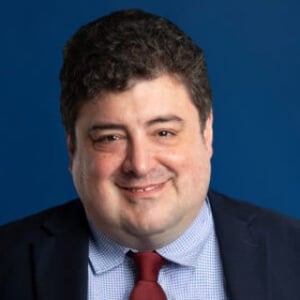
John Berlau is a senior fellow and Director of Finance Policy at the Competitive Enterprise Institute. His work focuses on how public policy affects access to capital, entrepreneurship, and investments made by the public and business community alike. In recent years, he has studied the consequences of financial reform efforts passed by Congress like the Sarbanes-Oxley Act, the government’s response to the 2008 financial crisis including the Dodd-Frank Act, the placement of Fannie Mae and Freddie Mac into conservatorship, and the rise of cryptocurrency.
He is also the author of the book George Washington: Entrepreneur: How Our Founding Father’s Private Business Pursuits Changed America and the World. The book received rave reviews in the Wall Street Journal and other forums, and was endorsed by eminent historians and scholars such as Richard Brookhiser, Amity Shlaes, and Craig Shirley.
Berlau is a contributing writer for Forbes. His work has been published and cited in The Wall Street Journal, The New York Times, The Washington Post, Financial Times, Bloomberg News, The Atlantic, Politico, Daily Caller, Washington Examiner, Investor’s Business Daily, National Journal, National Review, American Spectator, Reason Magazine, and more. He is a frequent guest on radio and television programs, including CNBC’s “The Call,” “Power Lunch” and “Closing Bell,” Fox News’ “Fox & Friends” and “Your World with Neil Cavuto,” and Fox Business’ “Cavuto.”
He has testified on the impact of financial regulation before the House Committee on Financial Services and the House Committee on Energy and Commerce. A recognized expert on the phenomenon of crowdfunding, Berlau has spoken at prominent conferences such as South by Southwest Interactive in Austin, Money 20/20 in Las Vegas, the FinTech Global Expo in San Diego, the CFGE Crowdfund Banking and Lending Summit in San Francisco and the Crowdfund Intermediary Regulatory Advocates (CFIRA) Summit in Washington, D.C. He is also author of the widely cited paper “Declaration of Crowdfunding Independence: Finance of the People, by the People, and for the People.”
Berlau is an award-winning financial and political journalist. He served as Washington correspondent for Investor’s Business Daily and as a staff writer for Insight magazine, published by The Washington Times. In 2002, he received the Sandy Hume Memorial Award for Excellence in Political Journalism from Washington’s National Press Club. He was a media fellow at the Hoover Institution in 2003. He graduated from the University of Missouri-Columbia in 1994 with degrees in journalism and economics.
Paul H. Jossey is principal attorney at Jossey PLLC. He has practiced law for six years representing clients in both state and federal court in Florida, Georgia, Virginia, and Washington, DC.
His wide-ranging practice has included everything from simple contract disputes to First Amendment litigation to international terrorism. Paul has specialized in campaign finance and election law for the past three years. He has now expanded into business startup and capitalization focusing on the crowdfunding provisions of Title III of the JOBS Act of 2012, whose regulations went live on May 16, 2016.
In addition to managing his own firm, Paul is an Adjunct Fellow at the Center for Competitive Politics where he researches and writes commentary about campaign finance issues. His work has been published in the New York Post, The Hill, The Federalist, The Daily Caller among others.
Prior to starting his own firm, he worked for law firms in Washington, DC and Alexandria, Virginia. After graduating law school he litigated cases for a nonprofit in Atlanta, Georgia.
He is licensed to practice in Georgia, Virginia, and Washington, DC. He holds a Juris Doctor from Case Western Reserve University School of Law and a Bachelor of Science from the University of Southern Mississippi.
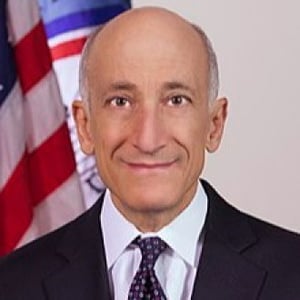
Timothy Massad is currently a Research Fellow at the Kennedy School of Government at Harvard University, an Adjunct Professor of Law at Georgetown Law School and a consultant on financial regulatory and fintech issues.
Mr. Massad served as Chairman of the U.S. Commodity Futures Trading Commission from 2014-2017. Under his leadership, the agency implemented the Dodd Frank reforms of the over-the-counter swaps market and harmonized many aspects of cross-border regulation, including reaching a landmark agreement with the European Union on clearinghouse oversight. The agency also declared virtual currencies to be commodities, introduced reforms to address automated trading and strengthened cybersecurity protections.
Previously, Mr. Massad served as the Assistant Secretary for Financial Stability of the U.S. Department of the Treasury. In that capacity, he oversaw the Troubled Asset Relief Program (TARP), the principal U.S. governmental response to the 2008 financial crisis. During his tenure, Treasury recovered more on all the crisis investments than was disbursed. Mr. Massad was with the Treasury from 2009 to 2014 and also served as a counselor to the Treasury Secretary.
Prior to his government service, Mr. Massad was a partner in the law firm of Cravath, Swaine & Moore, LLP. His practice included corporate finance, derivatives and advising boards of directors. He managed the firm’s Hong Kong office from 1998 to 2002 and represented governments and corporations on transactions throughout Asia. Mr. Massad was also one of a small group of lawyers who drafted the original ISDA standard agreements for swaps.
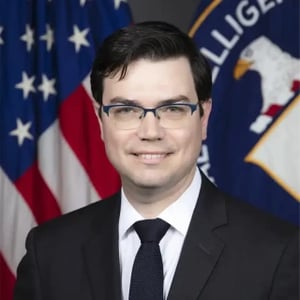
Michael Ellis was sworn in as Deputy Director of the Central Intelligence Agency on February 10, 2025. Deputy Director Ellis has held a variety of senior national security positions, including General Counsel of the National Security Agency and Senior Director for Intelligence Programs at the National Security Council.
Deputy Director Ellis previously served in the White House Counsel's Office, providing legal advice on national security and foreign relations. Prior to the White House, he was General Counsel of the U.S. House of Representatives Permanent Select Committee on Intelligence and served as an intelligence officer in the U.S. Navy Reserve.
Before returning to government, Deputy Director Ellis was the General Counsel of Rumble, a publicly traded video sharing platform and cloud services provider.
Deputy Director Ellis is a graduate of Yale Law School and Dartmouth College. Following law school, he served as a clerk to two federal judges. He is a "Jeopardy!" champion.
Senior Lecturer; Director, The Robert S. Strauss Center for International Security and Law, The University of Texas at Austin School of Law
Biography
Adam Klein is Director of the Strauss Center and Director of Strauss’ Program on Technology, Security, and Global Affairs. Adam also serves as a Senior Lecturer at the School of Law. Before joining the Strauss Center, Adam served as Chairman of the United States Privacy and Civil Liberties Oversight Board, the independent, bipartisan federal agency responsible for overseeing counterterrorism programs at the NSA, FBI, CIA, Department of Homeland Security, and other federal agencies. As the Board’s Senate-confirmed Chairman, he oversaw its oversight and advice engagements with other federal agencies, while also serving as the Board’s chief executive officer.
Before entering government, Adam was the Robert M. Gates Senior Fellow at the Center for a New American Security, a bipartisan national-security research institution in Washington, DC. There, his research focused on government surveillance, intelligence powers, and national security law. Previously, Adam practiced law at Wilmer Cutler Pickering Hale & Dorr, LLP and served as a law clerk to Justice Antonin Scalia of the U.S. Supreme Court and Judge Brett Kavanaugh of the U.S. Court of Appeals for the D.C. Circuit. He has also worked on national-security policy at the RAND Corporation, the 9/11 Public Discourse Project (the non-profit successor to the 9/11 Commission), and in the U.S. Congress. He received his BA from Northwestern University and his JD from Columbia Law School.
Adam is a former Council on Foreign Relations International Affairs Fellow and Robert Bosch Foundation Fellow in Berlin. He speaks German and French.
Senior Fellow and Director of Constitutional Studies, Manhattan Institute
Biography
Ilya Shapiro is a senior fellow and director of constitutional studies at the Manhattan Institute and a contributing editor of City Journal. Previously he was executive director and senior lecturer at the Georgetown Center for the Constitution, and before that a vice president of the Cato Institute.
Shapiro has testified many times before Congress and state legislatures and has filed more than 500 amicus curiae “friend of the court” briefs in the Supreme Court. He lectures regularly on behalf of the Federalist Society, is a member of the board of fellows of the Jewish Policy Center, was an inaugural Washington Fellow at the National Review Institute, and has been an adjunct law professor at the George Washington University and University of Mississippi. He is also the chairman of the board of advisers of the Mississippi Justice Institute, a barrister in the Edward Coke Appellate Inn of Court, and a former member of the Virginia Advisory Committee to the U.S. Commission on Civil Rights.
Earlier in his career, Shapiro was a special assistant/adviser to the Multi-National Force in Iraq on rule-of-law issues and practiced at Patton Boggs and Cleary Gottlieb. Before entering private practice, he clerked for Judge E. Grady Jolly of the U.S. Court of Appeals for the Fifth Circuit. He holds an AB from Princeton University, an MSc from the London School of Economics, and a JD from the University of Chicago Law School.
Judge, U.S. District Court, Eastern and Western Districts of Missouri
Biography
Josh Divine was most recently the Solicitor General of Missouri, where he oversaw the office's appellate and special litigation divisions. As Solicitor General, Mr. Divine led Missouri's trial and appellate teams to some of its most significant victories. Mr. Divine was lead counsel in blocking $700 billion in student loan bailouts attempted by the federal government. He was lead counsel in obtaining a $25 billion judgment against China for antitrust violations. And he was lead counsel in successfully defending the Missouri law that prohibits gender transition interventions in minors, making Missouri the only state in the nation to prevail at trial against an equal protection challenge to one of these laws. In addition, Mr. Divine's work at the trial court in Missouri v. Biden (restyled Murthy v. Missouri) helped expose systemic violations of the First Amendment by the federal government, which the trial court found was unconstitutionally pressuring social media companies to suppress millions of free speech posts.
Before serving as Solicitor General, Mr. Divine was Chief Counsel to U.S. Senator Josh Hawley, where he oversaw all legal issues, managed matters related to the Judiciary Committee, and developed tech policy. Mr. Divine clerked on the Supreme Court for Justice Thomas and on the Eleventh Circuit for Judge William Pryor. He received a J.D. from Yale Law School and a Bachelor of Science degree in mathematics from the University of Northern Colorado. His recent legal scholarship has appeared in the Virginia Law Review and the Hastings Law Journal.
U.S. Attorney, Middle District of Tennessee, U.S. Department of Justice
Biography
Braden Boucek was sworn in on December 24, 2025, as the United States Attorney for the Middle District of Tennessee. Prior to becoming United States Attorney, Mr. Boucek served as the senior vice president of litigation at the Southeastern Legal Foundation having previously served as the vice president of legal affairs at the Beacon Center. Mr. Boucek has extensive experience as a prosecutor, starting his career at the Tennessee Attorney General’s Office before serving for two years as an Assistant District Attorney General in Williamson County. He was a federal prosecutor for ten years, first serving as an Assistant United States Attorney in the Western District of Tennessee from 2005 to 2011. From 2011 to 2015, Mr. Boucek was an Assistant United States Attorney in the Middle District of Tennessee, the district he now leads as the United States Attorney.
Lecturer in Residence and Executive Director, California Constitution Center, University of California, Berkeley, School of Law
Biography
David A. Carrillo received his doctorate from Berkeley Law before joining the faculty as a lecturer in residence and the founding executive director of the California Constitution Center in 2012. The center is devoted to developing scholarship concerning the California constitution and the California Supreme Court. Dr. Carrillo coauthored a casebook on California constitutional law, teaches courses on the California constitution and the California Supreme Court, publishes articles on those subjects, and is editor-in-chief of SCOCAblog.com, a blog about the state high court.
Before starting his academic career Dr. Carrillo was in active practice for 16 years, as a Deputy Attorney General with the California Department of Justice, as a Deputy City Attorney in San Francisco, as a Deputy District Attorney in Contra Costa County, and as a commercial litigation associate in private practice. A member of the California bar since 1995, Dr. Carrillo is admitted to practice before the Supreme Court of the United States, the Ninth Circuit Court of Appeals, and the Northern, Southern, Central, and Eastern District Courts of California.
In October 2019, California Governor Gavin Newsom appointed Dr. Carrillo to a four-year term on the California Law Revision Commission, where he is serving as the 2021-22 vice-chair. He also serves on the board of the Constitutional Rights Foundation and chairs the Citrin Center advisory board. His past charitable and professional board service includes: the Bar Association of San Francisco; the California Bar Foundation; the National Advisory Council of the Institute of Governmental Studies; the Foundation for Democracy and Justice; the State Bar Committee on Appellate Courts; the Justice and Diversity Center of the Bar Association of San Francisco; the Volunteer Legal Services Corporation in Alameda County; and the Berkeley Law Alumni Association. Dr. Carrillo chaired the judicial appointments committee of the Alameda County Bar Association, and served on the State Bar Commission on Judicial Nominees Evaluation and the Committee of Bar Examiners, as well as San Francisco and Alameda bar association committees on judicial appointments. He is a life member of the La Raza Lawyers Association (San Francisco and East Bay) and the Hispanic National Bar Association.
Luke A. Wake is an attorney at the Pacific Legal Foundation. Prior to joining PLF, he was a senior staff attorney at the NFIB Small Business Legal Center.
Wake has particular expertise on environmental and land use issues, and has worked on numerous other constitutional issues and matters of importance to small business owners. He is an ardent defender of private property rights, which he believes are essential to the free enterprise system and the foundation of American liberty. As a strong advocate of individual rights and economic liberties, he has built his career defending small business interests.
Wake has focused on a whole host of issues, from employment law matters to regulatory compliance. In addition to serving as a resource for small business owners, Wake is committed to ensuring that the voice of small business is heard in the nation’s courts. As an appellate practitioner, Wake has focused particularly on informing the courts on matters of administrative law and on issues under the Fifth Amendment’s Takings Clause. He is also working to advance small business interests in law review articles, and was recently published in the Berkeley Journal of Law & Ecology. See R.S. Radford & Luke A. Wake, Deciphering and Extrapolating: Searching for Sense in Penn Central, 38 Ecology L.Q. 731, 746-747 (2011).
Before joining the Legal Center’s team, Wake completed a prestigious two-year fellowship as an attorney in the Pacific Legal Foundation’s College of Public Interest Law. Wake is a graduate of Case Western Reserve University School of Law in Cleveland Ohio, and is a member of the California Bar. He completed his undergraduate studies at Elon University in North Carolina in 2006 where he focused on political theory and corporate communications.
Emanuel S. Heller Professor of Law, University of California at Berkeley; Senior Research Fellow, School of Civic Leadership, Civitas Institute, University of Texas at Austin; Nonresident Senior Fellow, American Enterprise Institute
Biography
John Yoo is the Emanuel Heller Professor of Law. He is also Distinguished Visiting Scholar, School of Civic Leadership and Senior Research Fellow, Civitas Institute, at the University of Texas at Austin. He is also a Nonresident Senior Fellow at the American Enterprise Institute.
His most recent book, The Politically Incorrect Guide to the Supreme Court, co-authored with Robert Delahunty, was published in 2023. Professor Yoo’s other books include Defender-in-Chief: Trump’s Fight for Presidential Power;Striking Power: How Cyber, Robots, and Space Weapons Change the Rules for War, Point of Attack: Preventive War, International Law, and Global Welfare, and Crisis and Command: A History of Executive Power from George Washington to George Bush.
Professor Yoo has published more than 100 articles in academic journals on subjects including national security, constitutional law, international law, and the Supreme Court. He also regularly contributes to the editorial pages of the Wall Street Journal, New York Times, Washington Post, Los Angeles Times, and National Review, among others.
Professor Yoo has served in all three branches of government. He was an official in the U.S. Department of Justice, where he worked on national security and terrorism issues after the 9/11 attacks. He served as general counsel of the U.S. Senate Judiciary Committee. He has been a law clerk for Supreme Court Justice Clarence Thomas and federal appeals Judge Laurence Silberman. He has been a visiting professor at Seoul National University in South Korea, the Interdisciplinary Center in Israel, Keio University in Japan, Trento University in Italy, the University of Chicago, and the Free University of Amsterdam.
Professor Yoo supervises the Public Law and Policy Program and the California Constitution Center. He also serves on the boards of the Pacific Legal Foundation, the Federalist Society’s Separation of Powers and Federalism Division, the Universidad Cientifica del Sur Law School, and the Asia-Pacific Law Institute at Seoul National University. He is a winner of the Federalist Society’s Paul Bator award and been the Edwin Meese III Originalism Lecturer at the Heritage Foundation.
Professor Yoo graduated from Yale Law School and summa cum laude from Harvard College.