Arizona State Student Chapter / Article I Initiative / Center for Constitutional Design at Arizona State University’s Sandra Day O’Connor College of Law
Arizona State University 111 E Taylor Steet Phoenix, AZ 85014
Associate Professor of Law, University of Notre Dame Law School
Biography
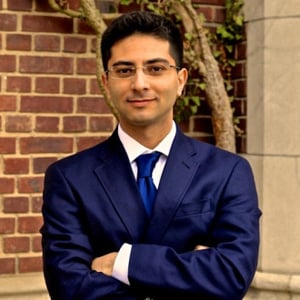
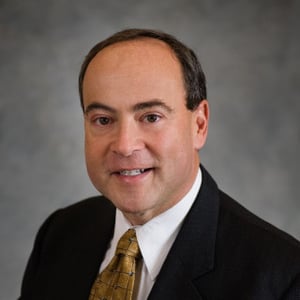
Sherif Girgis joined Notre Dame Law School in 2021. Prior to joining Notre Dame Law, Sherif practiced law at Jones Day in Washington, D.C., where he focused on appellate and complex civil litigation. Before that, Girgis served as a law clerk to Justice Samuel Alito, Jr., of the U.S. Supreme Court and Judge Thomas B. Griffith of the U.S. Court of Appeals for the D.C. Circuit. Now completing his Ph.D. in philosophy at Princeton, Girgis earned his J.D. at Yale Law School, where he served as an editor of the Yale Law Journal and won the Felix S. Cohen Prize for best paper in legal philosophy. Before law school, he earned a master's degree (B.Phil.) in philosophy from the University of Oxford as a Rhodes Scholar, and his bachelor's degree in philosophy from Princeton, Phi Beta Kappa and summa cum laude. Girgis is coauthor of What Is Marriage? Man and Woman: A Defense, cited in a dissent in United States v. Windsor, and Debating Religious Liberty and Discrimination, released by Oxford University Press in 2017. His work at the intersection of philosophy and law--including criminal law, constitutional liberties, and jurisprudence--has appeared in academic and popular venues including the Yale Law Journal, the Virginia Law Review, the University of Pennsylvania Law Review, the Harvard Journal of Law and Public Policy, the American Journal of Jurisprudence, the Cambridge Companion to Philosophy of Law, The New York Times, and The Wall Street Journal.
Judge, United States Court of Appeals, Eighth Circuit
Biography
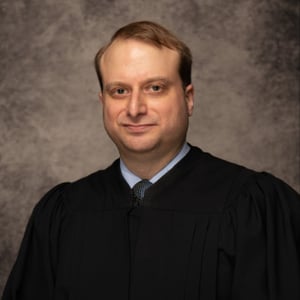
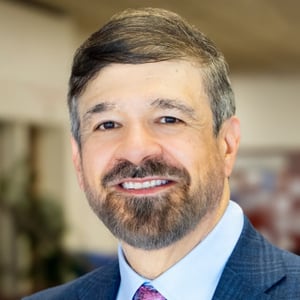
David Stras became a judge on the United States Court of Appeals for the Eighth Circuit on January 31, 2018. Before serving on the Eighth Circuit, Judge Stras was an Associate Justice of the Minnesota Supreme Court, a position he occupied from July 1, 2010 until his appointment to the Eighth Circuit.
Prior to becoming a judge, Stras was a member of the faculty of the University of Minnesota Law School from 2004 through 2010. He taught and wrote in the areas of federal courts and jurisdiction, constitutional law, criminal law, and law and politics.
Judge Stras received his Bachelor of Arts degree, with highest distinction, in 1995 and his Master of Business Administration in 1999, both from the University of Kansas. He also received his law degree from the University of Kansas School of Law in 1999, where he served as Editor-in-Chief of the Criminal Procedure Edition of the Kansas Law Review.
Following law school, Stras clerked for The Honorable Melvin Brunetti of the United States Court of Appeals for the Ninth Circuit and then for The Honorable J. Michael Luttig of the United States Court of Appeals for the Fourth Circuit.
From 2001 to 2002, he practiced white-collar criminal and appellate litigation with the Washington, D.C., office of Sidley Austin Brown & Wood. Following his year in practice, he clerked for The Honorable Clarence Thomas of the Supreme Court of the United States.
Judge, United States Court of Appeals, Second Circuit
Biography
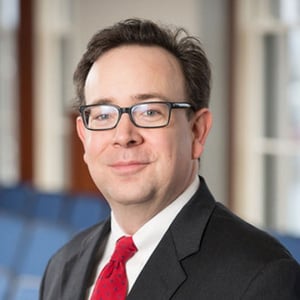
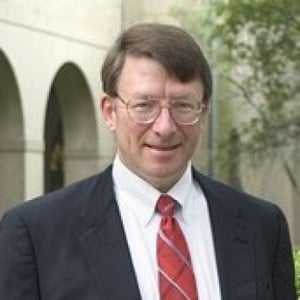
Judge Menashi was appointed to the U.S. Court of Appeals for the Second Circuit on November 14, 2019. Previously, he served as special assistant and associate counsel to the President in the White House and as acting general counsel at the U.S. Department of Education. He was assistant professor of law at Scalia Law School, George Mason University, where he taught administrative law and civil procedure, and a research fellow at New York University School of Law and Georgetown University Law Center. He was also a partner at Kirkland & Ellis LLP in New York, where he practiced appellate and commercial litigation, and served as a law clerk to Justice Samuel Alito on the Supreme Court of the United States and to Judge Douglas Ginsburg on the U.S. Court of Appeals for the District of Columbia Circuit. He graduated from Stanford Law School, where he was elected to Order of the Coif and served as senior articles editor of the Stanford Law Review, and from Dartmouth College, where he was elected to Phi Beta Kappa.
Deputy Secretary of Agriculture, U.S. Department of Agriculture
Biography
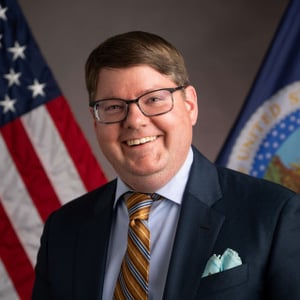
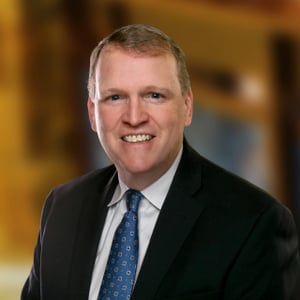
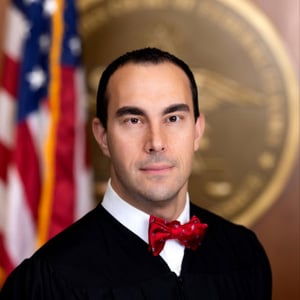
Judge Stephen Alexander Vaden was appointed as the Deputy Secretary of the U.S. Department of Agriculture on July 7, 2025. Alongside Secretary Brooke L. Rollins, Deputy Secretary Vaden leads the Department’s operations and implements policies that support America’s food and farm systems. A native of Union City, Tennessee, Deputy Secretary Vaden brings expertise in agricultural policy, law, and rural development. Previously, he served as a judge on the U.S. Court of International Trade and as General Counsel of USDA. Throughout Deputy Secretary Vaden’s time as General Counsel, he led successful Supreme Court litigation, advanced regulatory reform, and supported the implementation of the 2018 Farm Bill. He is a graduate of Yale Law School and Vanderbilt University. A public servant with strong agricultural roots, Deputy Secretary Vaden is committed to revitalizing rural America and ensuring an abundant, affordable, and safe U.S. food supply.
Professor of Law, Oklahoma City University School of Law
Biography
Professor O’Shea is a nationally recognized expert on firearms law and the Second Amendment. He is a co-author of the first law school casebook on the subject, Firearms Law and the Second Amendment: Regulation, Rights, and Policy, published in 2012. He serves as the Associate Director of OCU Law’s Center for State Constitutional Law and Government.
Professor O’Shea is an honors graduate of Harvard College and Harvard Law School. He also holds a master’s degree in philosophy from the University of Pittsburgh. Before coming to Oklahoma City University School of Law in 2006, he practiced commercial litigation in Chicago and in his hometown of Kansas City, Missouri. He also served as a law clerk to Chief Judge Danny J. Boggs of the U.S. Court of Appeals for the Sixth Circuit and to Judge John R. Gibson of the U.S. Court of Appeals for the Eighth Circuit.
Robert S. Kerr, Sr. Professor of Constitutional Law, Oklahoma City University School of Law
Biography
From 2005-2006 Professor Spiropoulos was the Senior Counselor to the Speaker of the Oklahoma House of Representatives, where his duties included serving as chief policy advisor and negotiator. Professor Spiropoulos clerked for Judge Danny Boggs of the United States Court of Appeals for the Sixth Circuit and practiced law with the Chicago firm of Gardner, Carton & Douglas before joining the faculty. He has been a Heritage Foundation Salvatori Fellow and, from 2011 to 2023, was the Milton Friedman Fellow at the the Oklahoma Council of Public Affairs. He was the reporter for the Uniform Interstate Enforcement of Domestic-Violence Protection Orders Act.
Professor Spiropoulos received his B.A. degree from Carleton College and his M.A. and J.D. degrees from the University of Chicago (Phi Beta Kappa). He teaches Constitutional Law, Legislation & Regulation, State and Local Government, and Constitutional Theory.
State Representative, Ohio House of Representatives, District 56
Biography
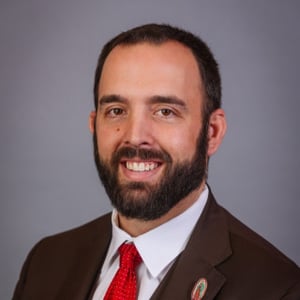
State Representative Adam Mathews is serving his second term in the Ohio House of Representatives. He represents the 56th Ohio House District, which encompasses southwest and central Warren County including Lebanon, South Lebanon, and Mason.
Rep. Mathews worked as a civilian engineer for the Naval Nuclear Propulsion Program before returning to Notre Dame to become an intellectual property attorney. He continues to practice and represents inventors, small businesses, and entrepreneurs. He formerly served as the Vice Mayor of Lebanon. The representative is also an intellectual property and corporate attorney, and that he is licensed and has appeared before the 9th Circuit Court of Appeals and the Supreme Court of the United States
Mathews is also very involved in his community. He has served as the Chairman of the Board of Directors for Elizabeth’s New Life Center, a network of pro-life women’s centers throughout Southwest Ohio. He also serves on the Board of Directors for the Cincinnati Federalist Society, St. Thomas More Society of Cincinnati, the Warren County Republican Party, and Kiwanis of Lebanon.
Mathews was formerly Chairman of the Intellectual Property Section of the Ohio State Bar Association, President of the Notre Dame Club of Dayton, and a member of the St. Francis de Sales Parish Council and Knights of Columbus. He currently serves on the Board of Directors for the Lebanon Area Chamber of Commerce.
He married his wife Amanda in 2011, and they live with their five children in Lebanon.
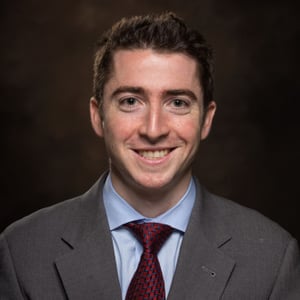
Evan Bernick joined the NIU Law faculty in 2021. He teaches courses in constitutional law, criminal law, criminal procedure, administrative law and legislation.
From 2020 to 2021, Professor Bernick was a visiting professor at the Georgetown University Law Center and the executive director of the Georgetown Center for the Constitution. Before that, he served as a clerk to Judge Diane S. Sykes of the United States Court of Appeals for the Seventh Circuit. From April 2017 to April 2019, he was a visiting lecturer at Georgetown and a resident fellow of the Center for the Constitution.
His scholarship covers a range of topics, from constitutional law, to philosophy of law, to social movements, to law enforcement. He has published with the Georgetown Law Journal, the Notre Dame Law Review, the William and Mary Law Review and the George Mason Law Review, among other journals. His book, The Original Meaning of the Fourteenth Amendment: Its Letter and Spirit (2021), with Randy E. Barnett, was published by Harvard University Press under its Belknap imprint "for books of long-lasting importance, superior in scholarship and physical production, chosen whether or not they might be profitable."
Professor Bernick received his bachelor's degree in 2008 from the University of Chicago, where he studied philosophy and graduated with honors. He received his juris doctorate in 2011 from the University of Chicago Law School.
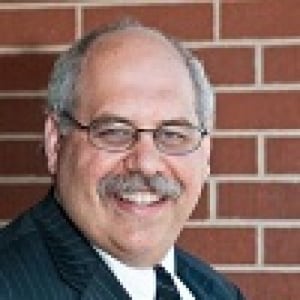
Donald P. Klekamp Professor of Law, Cincinnati College of Law
Speaker Information
Clint Bolick
Justice, Supreme Court of Arizona
Biography
Clint Bolick was appointed by Governor Doug Ducey in January 2016 to serve on the Arizona Supreme Court and was retained by the voters in 2018 and 2024.
Prior to joining the Court, Justice Bolick litigated constitutional cases in state and federal courts from coast to coast, including the U.S. Supreme Court. Among other positions, he served as Vice President for Litigation at the Goldwater Institute and as Co-founder and Vice President for Litigation at the Institute for Justice. He has litigated in support of school choice, freedom of enterprise, private property rights, freedom of speech, and federalism, and against racial classifications and government subsidies.
Justice Bolick received his Juris Doctor degree from the University of California at Davis, where he has been recognized as a distinguished alumnus, and his Bachelor of Arts degree magna cum laude from Drew University. He serves as a research fellow with the Hoover Institution. Among other honors, he was named one of the 90 Greatest DC Lawyers in the Last 30 Years by Legal Times in 2008, received a Bradley Prize in 2006, and was recognized as one of the nation’s three lawyers of the year by American Lawyer in 2002 for his successful defense of school vouchers in Zelman v. Simmons-Harris.
Justice Bolick is a prolific author of a dozen books and hundreds of articles. Among his most recent books are Unshackled: Freeing America’s K-12 Education System: Immigration Wars: Forging an American Solution, co-authored with former Florida Governor Jeb Bush; and David’s Hammer: The Case for an Activist Judiciary. Bolick serves as an adjunct professor of constitutional law at Arizona State University’s Sandra Day O’Connor School of Law and has served as a lecturer at Harvard University’s John F. Kennedy School of Government.
Hugh and Hazel Darling Foundation Professor of Law; Director, Center for the Study of Constitutional Originalism, University of San Diego School of Law
Biography
Michael Rappaport is the Hugh & Hazel Darling Professor of Law at the University of San Diego School of Law, where he is also the Director of the Center for the Study of Constitutional Originalism. Rappaport teaches Constitutional Law and Administrative Law. His research interests include originalism, administrative law, the separation of powers, federalism, the constitutional amendment process, and supermajority rules. He is the author (with John McGinnis) of Originalism and the Good Constitution (Harvard 2013) as well as of numerous law review articles. He also blogs at The Originalism Blog. He has taught at the Sorbonne and at Paris 2 Law School in Paris, France, at Bocconi University, Milan, Italy, and at Bar Ilan University, Ramat Gan, Israel. Before joining the academy, Rappaport worked in the Office of Legal Counsel in the U.S. Department of Justice and practiced appellate law with Gibson, Dunn & Crutcher in Washington, D.C. He received a JD and a DCL (political theory) from the Yale Law School, and served as a senior editor of the Yale Law Journal.
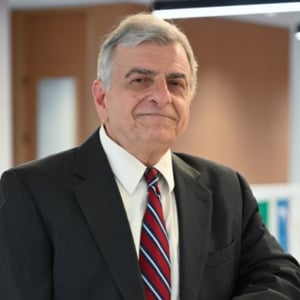
Hermann Moyse, Jr., Professor and Director of the Eric Voegelin Institute in the Department of Political Science, Louisiana State University
Biography
Professor James R. Stoner, Jr. (Ph.D., Harvard University, 1987) has teaching and research interests in political theory, English common law, and American constitutionalism. He is the author of Common-Law Liberty: Rethinking American Constitutionalism (Kansas, 2003) and Common Law and Liberal Theory: Coke, Hobbes, and the Origins of American Constitutionalism (Kansas, 1992), as well as a number of articles and essays. In 2009 he was named a Senior Fellow of the Witherspoon Institute of Princeton, New Jersey; he has co-edited two books published by Witherspoon, The Social Costs of Pornography: A Collection of Papers (with Donna M. Hughes, 2010), and Rethinking Business Management: Examining the Foundations of Business Education (with Samuel Gregg, 2007). He was the 2010 recipient of the Honors College Sternberg Professorship at LSU.
He has taught at LSU since 1988, chaired the Department of Political Science from 2007 to 2013, and served as Acting Dean of the Honors College in fall 2010. He was a member of the National Council on the Humanities from 2002 to 2006. In 2002-03 he was a visiting fellow in the James Madison Program in American Ideals and Institutions at Princeton University, where he will return in the 2013-14 academic year as Garwood Visiting Professor in the fall and Visiting Fellow in the spring.
Jeff Mateer is the Chief Operating Officer and Chief Legal Officer of First Liberty Institute, where he serves as a member of the executive leadership team and oversees First Liberty’s operations, including its legal, media/communications, external affairs, marketing, and administrative teams, and First Liberty’s Center for Religion, Culture and Democracy.
Jeff rejoined First Liberty Institute in October 2020 after serving as First Assistant Attorney General of Texas. As First Assistant Attorney General from March 2016 through October 2020, Jeff oversaw all operations of the Texas Attorney’s General Office, which included over 30,000 active cases, almost 800 attorneys and 4,200 employees, and a bi-annual budget of over $1.1 billion.
Prior to joining the Texas Attorney General’s office, Jeff served as General Counsel of First Liberty Institute from February 2010 to March 2016. Jeff was in private litigation practice from 1990 to 2010 at a large Dallas law firm and litigation boutique firms.
During his thirty-year legal career, Jeff has represented clients ranging from large international organizations to local businesses, schools, ministries, churches and individuals in complex federal and state court actions involving religious liberty, civil rights, employment, intellectual property and business matters. In private practice, his clients included the National Collegiate Athletic Association (NCAA), Citigroup, CNA, ConAgra Foods, former officers and directors of EDS, Ford Motor Company, Pilgrim’s Pride and PNC Bank. He has tried numerous jury and bench trials in both federal and state courts, and has successfully argued before the 5th U.S. Circuit Court of Appeals and Texas appellate courts.
In addition to having received an A-V rating by Martindale-Hubbell, Jeff has been honored as a Texas Rising Star and Texas Super Lawyer. He received his undergraduate education at Dickinson College, where he graduated with honors in 1987, and his legal education at Southern Methodist University, where he graduated with honors in 1990. While in law school, he served as an editor of the law review. He is licensed to practice law by the state of Texas and is admitted to practice before all Texas State and Federal District Courts, the 2nd, 4th, 5th, 7th, 9th and 11th U.S. Circuit Court of Appeals, and the United States Supreme Court.
U.S. Court of Federal Claims and Jurist-In-Residence Professor of Law, The University of Akron School of Law
Biography
Judge Ryan T. Holte was sworn in as a judge on the United States Court of Federal Claims in July 2019. Prior to confirmation he served as the David L. Brennan Professor of Law and Director of the Center for Intellectual Property Law and Technology at The University of Akron School of Law (2017-2019) and an assistant professor of law at Southern Illinois University School of Law (2013-2017). Judge Holte has written and presented widely on patent law subjects and empirical legal studies of Federal Circuit and district court patent law cases. His most recent articles were published in the Iowa Law Review (2019), George Mason Law Review (2018), and Washington Law Review (2017).
In practice, Judge Holte served for six years as general counsel and partner of an electrical engineering technology company and is co-inventor of multiple patents related to Systems and Methods for Countering Satellite-Navigated Munitions. Prior to entering academia, Judge Holte practiced as a litigation attorney at the Federal Trade Commission and an associate in the Intellectual Property Practice Group at Jones Day. Prior to practice, he served as a law clerk to Judge Stanley F. Birch, Jr. on the United States Court of Appeals for the Eleventh Circuit and as a law clerk to Judge Loren A. Smith on the United States Court of Federal Claims.
Judge Holte received his JD from the University of California Davis School of Law and his BS, magna cum laude, in engineering from the California Maritime Academy where he was a First Class graduate of the Corps of Cadets Third Engineering Division and sailed as a U.S. Merchant Marine oiler.