
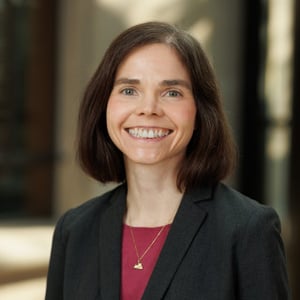
Mike Berry serves as Chief Counsel for United States Senator Ted Cruz. As Chief Counsel for Senator Cruz, Mike provides advice and counsel to the Senator with special emphasis on the Senate’s advice and consent role pertaining to judicial nominations.
Prior to working on the Hill, Mike spent many years in public interest litigation with various non-profits. Mike served for seven years as an attorney with the U.S. Marine Corps, leaving active duty in 2013. Among his numerous positions within the Marine Corps, Mike deployed to Afghanistan in 2008 and he served as an Adjunct Professor of Law at the United States Naval Academy. Mr. Berry continues to proudly serve our nation as a member of the Marine Corps Reserve.
Mr. Berry earned his bachelor’s degree from Texas A&M University, and he earned his law degree from The Ohio State University.
Chief Judge, United States Court of Appeals, Eleventh Circuit
Biography
William H. Pryor Jr. serves as Chief Circuit Judge on the United States Court of Appeals for the Eleventh Circuit.
In 2013–18, he served on the United States Sentencing Commission and, in 2017–18, served as Acting Chair.
He has taught as a visiting professor at the University of Alabama School of Law and previously taught as an adjunct professor at the Cumberland School of Law of Samford University.
He served as the 45th Attorney General of Alabama from 1997 to 2004. When he took office, he was the youngest attorney general in the nation. In his reelection, he received the highest percentage of votes of any statewide candidate.
He graduated magna cum laude from Tulane Law School where he finished first in the common-law curriculum and was editor in chief of the Tulane Law Review. He then served as a law clerk for Judge John Minor Wisdom of the U.S. Court of Appeals for the Fifth Circuit.
He is a member of The American Law Institute and an Adviser for the RESTATEMENT OF THE LAW THIRD, CONFLICT OF LAWS. He is a coauthor with Bryan Garner, Justices Gorsuch and Kavanaugh, and several other judges of a treatise, THE LAW OF JUDICIAL PRECEDENT. He has published in the Yale Law Journal, Columbia Law Review, Virginia Law Review, Notre Dame Law Review, Harvard Journal of Law & Public Policy, Yale Law & Policy Review, George Mason Law Review, Florida Law Review, Alabama Law Review, Case Western Reserve Law Review, and Tulane Law Review. He has published op-eds in The Wall Street Journal, The New York Times, National Review, and USA Today. He has debated at National Lawyers’ Conventions of the Federalist Society (including on National Public Radio) and at the Oxford Union in the United Kingdom. And he is listed among several “widely admired judicial writers” in Bryan Garner’s The Redbook: A Manual on Legal Style.
He is a member of the Tulane Law School Hall of Fame and has received the Defender of the Constitution Award from the Heritage Foundation, the Jurist of the Year Award from the Texas Review of Law & Politics, and the St. Thomas More Award from the St. Thomas More Society of Atlanta. Judge Pryor is also a proud member of the National Society of the Sons of the American Revolution.
Clinical Professor and Director of the First Amendment Clinic, Florida State University College of Law
Biography
Denise Mayo Harle is a clinical professor and director of the First Amendment Clinic at FSU College of Law, where she leads student advocacy and litigation on free speech, religious liberty, and press freedom issues. Her teaching and scholarship focus on constitutional law, appellate practice, and First Amendment rights. Before entering academia, Professor Harle was a partner at Shutts & Bowen LLP in Tallahassee, where she was a member of the firm’s Appellate Practice Group and Constitutional Law Practice Area. Prior to that, she served as Deputy Solicitor General in the Office of the Florida Attorney General. Professor Harle has briefed and argued high-profile cases involving significant constitutional issues and questions of statutory interpretation in both state and federal courts, including the U.S. Supreme Court.
Professor Harle’s early career includes clerking for Justice Ricky L. Polston on the Florida Supreme Court and practicing appellate law in California. In 2022, she was selected as a finalist for a seat on the Florida Supreme Court. She was appointed by Governor Ron DeSantis to Florida’s Faith and Community Advisory Council and currently serves on the Judicial Nominating Commission for Florida’s Second Circuit. She was also selected for the prestigious U.S. Supreme Court Fellowship through the National Association of Attorneys General in 2017. She earned her J.D. cum laude from Duke University Law School and her B.A. and B.S. summa cum laude from Florida State University.
Professor Harle is active in the legal and academic communities. She is a member of the American Enterprise Institute’s Leadership Network and the Federalist Society’s Speakers Bureau. She has served on the board of Tallahassee Women Lawyers, the Florida Bar’s Client Security Fund Committee, and the First District Appellate American Inn of Court.
Before practicing law, Professor Harle completed doctoral coursework in Political Science at Stanford University as a Stanford Graduate Fellow, where she taught undergraduate courses on public policy, law, and American politics, and earned a Master’s degree. She continues to serve as a dissertation faculty advisor for Concordia University–St. Paul mentors doctoral students in research and writing.
A frequent speaker and media commentator on constitutional law, Professor Harle has been quoted in The Wall Street Journal, The Washington Post, and The New York Times, and has appeared on national outlets including C-SPAN and Fox News. She has also testified before the U.S. Senate on matters of constitutional significance.
Professor of Law, University of Michigan Law School
Biography
Christopher J. Walker is a Professor of Law at the University of Michigan. Prior to joining Michigan law faculty in 2022, he spent a decade teaching at The Ohio State University Moritz College of Law. He previously clerked for Justice Anthony Kennedy of the U.S. Supreme Court, worked on the Civil Appellate Staff at the U.S. Department of Justice, and served on the Senate Judiciary Committee staff for the Gorsuch Supreme Court confirmation. Professor Walker’s research focuses on administrative law, regulation, and law and policy at the agency level. Outside the law school, he chaired the American Bar Association’s Section of Administrative Law and Regulatory Practice in 2020-21 and served as one of forty Public Members of the Administrative Conference of the United States from 2016-2022, and he continues to serve in both organizations in various capacities. He also works of counsel at the U.S. Chamber Litigation Center. In 2022, he received the Federalist Society’s Joseph Story Award.
Chief Legal Officer and Policy Director, Cicero Institute
Biography
Jonathan Wolfson is the Chief Legal Officer and Policy Director at the Cicero Institute. Before joining Cicero, he led the Policy Office at the U.S. Department of Labor where he managed DOL's deregulatory efforts and oversaw DOL's internal policy development think tank. He previously was a litigator and regulatory attorney at an international law firm representing clients before state and federal courts across the country. Following law school he served as a law clerk to The Honorable Edith Brown Clement of the U.S. Court of Appeals for the Fifth Circuit. Before law school, Jonathan was a policy analyst at the White House Council of Economic Advisers.
Jonathan received an A.B. in Economics from Washington University in St. Louis and a J.D. from the University of Virginia School of Law, where he was an Olin Law and Economic Fellow and won the John M. Olin Prize for best original law and economics research.
Doug Bandow is a senior fellow at the Cato Institute, specializing in foreign policy and civil liberties. He worked as special assistant to President Reagan and editor of the political magazine Inquiry. He writes regularly for leading publications such as Fortune magazine, National Interest, Wall Street Journal, and Washington Times. Bandow speaks frequently at academic conferences, on college campuses, and to business groups. Bandow has been a regular commentator on ABC, CBS, NBC, CNN, Fox News Channel, and MSNBC. He holds a J.D. from Stanford University.
EPPC Fellow Erika Bachiochi is a legal scholar specializing in Equal Protection jurisprudence, feminist legal theory, Catholic social teaching, and sexual ethics. A 2018 visiting scholar at Harvard Law School, she is also a Senior Fellow at the Abigail Adams Institute in Cambridge, MA, where she founded and directs the Wollstonecraft Project. Her newest book, The Rights of Women: Reclaiming a Lost Vision, was published by Notre Dame University Press in 2021, and was named a finalist for the Intercollegiate Studies Institute’s 2022 Conservative Book of the Year award.
Ms. Bachiochi’s essays have appeared in publications such as the Harvard Journal of Law and Public Policy, Christian Bioethics (Oxford University), The New York Times, The Atlantic, First Things, CNN.com, National Review Online, National Affairs, Claremont Review of Books, SCOTUSblog, and Public Discourse. Particularly noteworthy are law review articles, “Embodied Equality: Debunking Equality Protection Arguments for Abortion Rights” (2011) and “A Putative Right in Search of a Constitutional Justification: Understanding Planned Parenthood v Casey’s Equality Rationale and How It Undermines Women’s Equality” (2017). She is the editor of two books, Women, Sex & the Church: A Case for Catholic Teaching (Pauline Books & Media, 2010) and The Cost of “Choice”: Women Evaluate the Impact of Abortion (Encounter Books, 2004).
Ms. Bachiochi is an occasional contributor to Mirror of Justice and serves on the Advisory Boards of the Common Good Project, the Catholic Women’s Forum, the Susan B. Anthony Birthplace Museum, St. Thomas More Academy (South Bend), and EthicsFinder. She is a co-founder of St. Benedict Classical Academy in Natick, Massachusetts where she served as President of the Board from 2013-2015.
Distinguished University Chair and Professor of Law, University of St. Thomas School of Law
Biography
Michael Stokes Paulsen is Distinguished University Chair & Professor of Law at the University of St. Thomas, where he has taught since 2007. Professor Paulsen was previously the McKnight Presidential Professor of Law & Public Policy and Associate Dean at the University of Minnesota Law School, where he taught from 1991-2007. He is a graduate of Northwestern University, Yale Law School, and Yale Divinity School. He has served as a federal prosecutor, as Attorney-Advisor in the Office of Legal Counsel of the U.S. Department of Justice, and as counsel for the Center for Law & Religious Freedom.
Paulsen has taught as a visiting professor at Princeton University, Pepperdine University, Georgetown University, Bethel University, Uppsala University (Sweden), Daystar University (Kenya), and University of the Andes (Chile). He has been a guest lecturer at universities around the nation, including Harvard, Yale, Columbia, Princeton, Penn, NYU, Georgetown, Virginia, Stanford, Berkeley, Michigan, University of Chicago, and Northwestern.
Professor Paulsen is the author of more than ninety scholarly articles and book chapters on a wide variety of constitutional law topics, published in law journals including the Harvard Law Review, the Yale Law Journal, the Stanford Law Review, the University of Chicago Law Review, the Michigan Law Review, the Georgetown Law Journal, and the Northwestern University Law Review. He is the author or co-author of three books, including The Constitution: An Introduction (Basic Books, 2015) (co-authored with Luke Paulsen) and the casebook The Constitution of the United States, now in its fifth edition with Foundation Press, co-authored with Michael McConnell, Samuel Bray, and Will Baude.
Professor of History; Director of the Clemson Cyberinstitute, Clemson University
Biography
Orville Vernon Burton is the inaugural Judge Matthew J. Perry Distinguished Chair of History and Professor of Pan-African Studies, Sociology and Anthropology, and Computer Science at Clemson University. He directed the Clemson CyberInstitute from 2010 to 2016. In 2022 Burton received the Clemson University Alumni Award for Outstanding Achievements in Research; in 2018, he was part of the initial University Research, Scholarship and Artistic Achievement Award group of scholars. In 2016 Burton received the College of Architecture, Art, and Humanities Dean’s Award for “Excellence in Research” and in 2019 the College’s award for “Outstanding Achievement in Service.” From 2008-2010, he was the Burroughs Distinguished Professor of Southern History and Culture at Coastal Carolina University. He was the founding Director of the Institute for Computing in Humanities, Arts, and Social Science at the University of Illinois, where he is emeritus University Distinguished Teacher/Scholar, and Professor of History, African American Studies, and Sociology. At the University of Illinois, he continues as a Senior Research Scientist at the National Center for Supercomputing Applications where he served as Associate Director for Humanities and Social Sciences from 2002-2010. He serves as Executive Director of the College of Charleston’s Low Country and Atlantic World Program; in 2022 the program honored Burton by designating the best conference paper given annually, the Vernon Burton Research Award. Burton served as interim chair, and then vice-chair of the Board of Directors of the Congressional National Abraham Lincoln Bicentennial Foundation, 2009-2017. In 2007 the Illinois State legislature honored him with a special resolution for his contributions as a scholar, teacher, and citizen of Illinois. A recognized authority on race relations, Burton is often called upon as an expert witness in discrimination and voting rights cases throughout the United States.
Burton is a prolific author and scholar (more than twenty authored or edited books and nearly three hundred articles) and author or director of numerous digital humanities projects. The Age of Lincoln (2007) won the Chicago Tribune Heartland Literary Award for Nonfiction and was selected for Book of the Month Club, History Book Club, and Military Book Club. One reviewer proclaimed, “If the Civil War era was America's ‘Iliad,’ then historian Orville Vernon Burton is our latest Homer.” The book was featured at sessions of the annual meetings of the Association for the Study of African American Life and History, the Social Science History Association, and the Southern Intellectual History Circle; the latter was the basis for a forum published in The Journal of the Historical Society. His most recent book, Justice Deferred: Race and the Supreme Court (Belknap Press of Harvard University, 2021), co-authored with Armand Derfner, was deemed “authoritative and highly readable” by reviewer Randall Kennedy of Harvard University Law School in The Nation. The book has been featured at sessions of the 2021 Social Science History Association and the 2022 Midwestern Political Science Association, and is scheduled for the upcoming meetings of the Association for the Study of African American Life and History, the American Historical Association, and the Organization of American Historians. In My Father’s House Are Many Mansions: Family and Community in Edgefield, South Carolina (1985) was featured at sessions of the Southern Historical Association and the Social Science History Association annual meetings. C. Vann Woodward in the New York Review of Books pronounced In My Father’s House “A highly quantified, computerized, and methodologically sophisticated study. For thoroughness and comprehensiveness, it rivals, if it does not exceed, any historical investigation of an American community.” Justice Deferred, The Age of Lincoln, and In My Father’s House were nominated for Pulitzers.
Recognized for his teaching, Burton was selected nationwide as the 1999 U.S. Research and Doctoral University Professor of the Year (presented by the Carnegie Foundation for the Advancement of Teaching and the Council for Advancement and Support of Education). In 2004 he received the American Historical Association’s Eugene Asher Distinguished Teaching Prize. At the University of Illinois, he won teaching awards at the department, school, college, and campus levels. He was the recipient of the 2001-2002 Graduate College Outstanding Mentor Award and received the 2006 Campus Award for Excellence in Public Engagement. He was initially appointed an Organization of American Historians Distinguished Lecturer in 2004, and has been reappointed every term, now till 2027.
He has served as president of the Southern Historical Association and of the Agricultural History Society. He was elected to honorary life membership in BrANCH (British American Nineteenth-Century Historians). Among his honors are fellowships and grants from the Rockefeller Foundation, the National Endowment for the Humanities, the Pew Foundation, the National Science Foundation, the American Council of Learned Societies, the Woodrow Wilson International Center for Scholars, the National Humanities Center, the U.S. Department of Education, National Park Service, and the Carnegie Foundation. He was a Pew National Fellow Carnegie Scholar for 2000-2001. He was elected to the Society of American Historians and was one of ten historians selected to contribute to the Presidential Inaugural Portfolio (January 21, 2013) by the Joint Congressional Committee on Inaugural Ceremonies. Burton was elected into the S.C. Academy of Authors in 2015, and in 2017 he received the Governor’s Award for Lifetime Achievement in the Humanities from the South Carolina Humanities Council, and in 2021 he was awarded the Benjamin E. Mays Legacy Award. In 2022 he was appointed to the South Carolina African American Heritage Commission and inducted into the Martin Luther King Jr. Collegium of Scholars at Morehouse College.
Devon Westhill is the Assistant Secretary for Civil Rights at the U.S. Department of Agriculture. The U.S. Senate confirmed President Donald Trump’s nomination of Westhill on October 7, 2025.
Westhill returns to the USDA where he previously headed the civil rights office as Deputy Assistant Secretary in President Trump’s first term. His previous government appointments also include service at the U.S. Department of Labor, liaison to the Administrative Conference of the U.S., and liaison to the White House Initiative on Historically Black Colleges and Universities. Prior to returning to government service, Westhill was President and General Counsel of a nonprofit civil rights organization.
Westhill has testified on civil rights matters before Congress, federal agencies, and as an expert witness in federal court. He has spoken hundreds of times at college campuses, conferences, and on radio and TV programs, and he is frequently quoted in print publications, and his writing has appeared in numerous national outlets. A U.S. Navy veteran, Westhill earned his BA from the University of North Carolina at Chapel Hill and his JD from the University of Florida.