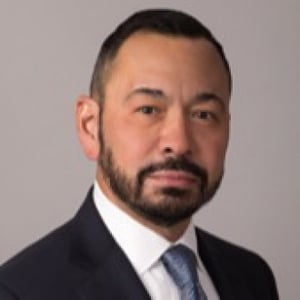
Miguel A. Estrada is a partner in the Washington, D.C. office of Gibson, Dunn & Crutcher.
Mr. Estrada has represented clients before federal and state courts throughout the country in a broad range of matters. He has argued 24 cases before the United States Supreme Court, and briefed many others. He has also argued dozens of appeals in the lower federal courts.
Best Lawyers® recognized Mr. Estrada as a 2020 Lawyer of the Year in Intellectual Property Litigation and as a Lawyer of the Year in Appellate Practice. He has been recognized by Benchmark Litigation as a 2020 U.S. Appellate Litigation “Star”. In 2014, The American Lawyer named Mr. Estrada a “Litigator of the Year,” praising his “brains and tenacity” and noting he is the lawyer to call for “a tough, potentially unwinnable case.” From 2014-2021, Chambers & Partners has named him as one of a handful of attorneys that it ranked in the top tier among the nation’s leading appellate lawyers. Chambers & Partners noted that “clients are impressed by his intellect and ability, with one saying, ‘His papers are just blindingly clear in what they say and devastating in how they marshal the arguments.’” The Atlantic described his oral argument in a 2014 high-profile separation-of-powers case as “one of the most dazzling arguments the marble chamber has heard in many years.”
Mr. Estrada was selected by his peers for inclusion in the 2020 edition of The Best Lawyers in America® in the area of Appellate Law, in addition to previous recognition by the publication in the specialties of Bet-the-Company Litigation, Commercial Litigation and Criminal Defense: White Collar, Intellectual Property Litigation, and Regulatory Enforcement Litigation in the areas of SEC, Telecom, and Energy. In 2017, he was elected as a member of the American Law Institute. In 2021, Mr. Estrada was named among the Lawdragon 500 Leading Lawyers in America. In 2004, Legal Times named him one of the top 12 appellate litigators in the D.C. area, noting that “people who follow appellate practice in Washington have known for several years that Estrada . . . is one of the best around.” Also in 2004, Washingtonian Magazine named him one of the top constitutional law lawyers “who could become one of the legends of the Supreme Court bar.”
Mr. Estrada joined Gibson Dunn in 1997, after serving for five years as Assistant to the Solicitor General of the United States. He previously served as Assistant U.S. Attorney and Deputy Chief of the Appellate Section, U.S. Attorney’s Office, Southern District of New York. In those capacities, Mr. Estrada represented the government in numerous jury trials and in many appeals before the U.S. Court of Appeals for the Second Circuit. Before joining the U.S. Attorney’s Office, Mr. Estrada practiced corporate law in New York with Wachtell, Lipton, Rosen & Katz.
Mr. Estrada is a Trustee of the Supreme Court Historical Society. He was formerly a member of the Board of Visitors of Harvard Law School.
Mr. Estrada served as a law clerk to the Honorable Anthony M. Kennedy in the U.S. Supreme Court from 1988 to 1989 and to the Honorable Amalya L. Kearse in the U.S. Court of Appeals for the Second Circuit from 1986 to 1987. He received a J.D. degree magna cum laude in 1986 from Harvard Law School, where he was editor of the Harvard Law Review. Mr. Estrada graduated with an A.B. degree magna cum laude and Phi Beta Kappa in 1983 from Columbia College, New York. He is fluent in Spanish and proficient in French.
Representative Supreme Court matters include:
In National Labor Relations Board v. Noel Canning (2014), he represented the Republican caucus of the United States Senate in successfully urging the invalidation of the President’s recess appointments to the National Labor Relation Board.
In Comcast Corp. v. Behrend (2013), he persuaded the Court to grant review of, and then reverse by a 5-4 vote, a certified antitrust class seeking $2.6 billion in damages.
In Black v. United States (2010), he represented media magnate Conrad M. Black in securing Court review and reversal of multiple convictions under the “honest services” provisions of the federal mail and wire fraud statutes.Based on his arguments, the Supreme Court significantly narrowed the scope of conduct that can be prosecuted as “honest services” fraud.
In Laboratory Corporation of America Holdings v. Metabolite Laboratories, Inc. (2006), he persuaded the Court to leave undisturbed a Federal Circuit ruling upholding the validity of a two-step process patent setting forth a method for diagnosing vitamin deficiencies.
In Northern Insurance Co. of New York v. Chatham County (2006), he persuaded the Court to rule unanimously that counties are not entitled to invoke sovereign immunity in admiralty actions.
In Aetna v. Davila Health (2004), he persuaded the Court to rule unanimously that federal law preempts state laws that give patients the right to sue managed care organizations.
In Strickler v. Greene (1999), he argued on behalf of a death row inmate pro bono in a challenge to his conviction and sentence.
In 2011, the Supreme Court appointed Mr. Estrada to brief and argue two criminal cases –Dorsey v. United States and Hill v. United States – in which the Solicitor General declined to defend the judgments of the court of appeals. Mr. Estrada was appointed to argue the position that the Solicitor General had declined to defend.
Mr. Estrada was also part of the team that successfully presented then Governor Bush’s position to the Supreme Court in Bush v. Gore (2000). Other cases that Mr. Estrada handled in the Supreme Court include Granholm v. Heald (2005) (dormant Commerce Clause and Twenty-First Amendment), Vermont Agency of Natural Resources v. United States ex rel. Stevens (2000) (False Claims Act, Article III standing and Eleventh Amendment immunity), Old Chief v. United States (1997) (rules of evidence), United States v. Mezzanatto (1995) (evidence and plea bargaining), United States v. Robertson (1995) (constitutional limits on Congress’s Commerce Clause powers), Citizens Bank of Maryland v. Strumpf (1995) (bankruptcy law), and NOW, Inc. v. Scheidler (1994) (RICO).
Recent Court of Appeals matters include:
In re Engle Cases, 767 F.3d 1082 (11th Cir. 2014): upholding dismissal of over 700 individual cases for pervasive pleading deficiencies.
Coquina Invs. V. TD Bank, N.A., 760 F.3d 1300 (11th Cir. 2014): upholding jury verdict and sanctions in fraud case arising out of a Ponzi scheme.
FERC v. JPMorgan Ventures Energy Corp. (D.C. Cir. 2013): argued two appeals on discovery issues arising out of FERC’s investigation of alleged market manipulation; the investigation was closed by settlement before decisions were issued.
Espenscheid v. DirectSat USA, LLC, 705 F.3d 770 (2013): rejecting class certification and collective-action treatment for overtime claims.
Comcast Cable Communications, LLC v. FCC, 717 F.3d 982 (D.C. Cir. 2013): reversing FCC decision in program-carriage case.
Georgia Pacific Consumer Prods. v. von Drehle, 710 F.3d 527 (4th Cir. 2013): reversing JNOV in trademark infringement case.
Fox v. FCC, 613 F.3d 317 (2d Cir. 2010): invalidating FCC’s indecency policy under vagueness doctrine.
In addition, Mr. Estrada is lead appellate counsel to Vivendi S.A. in two securities-fraud appeals from jury verdicts that are currently pending in the Second Circuit, and to the National Association of Broadcasters in a challenge to certain procedures promulgated by the FCC in connection with the upcoming Spectrum Auction. Mr. Estrada also recently presented argument before the D.C. Circuit on behalf of the tobacco industry in a first amendment challenge to certain compelled disclosures that were imposed as part of the government’s long-running civil RICO case against the industry.
Other matters:
In 2014, Mr. Estrada represented a large financial institution in a tax dispute with the Commonwealth of Puerto Rico, and was part of a team that prevailed in a bench trial.
In 2013, Mr. Estrada represented the CEO of PokerStars, the largest online poker card-room in the world, in settling civil-forfeiture claims by the U.S. Attorney for the Southern District of New York.
From 2004 to 2009, Mr. Estrada defended Cessna in federal court litigation arising out of the largest airline disaster in Italian history, ultimately securing dismissal of most of the claims.
From 1999 to 2005, Mr. Estrada was a lead attorney for Aetna in dozens of class actions against the managed care industry that the Judicial Panel for Multidistrict Litigation consolidated in the United States District Court for the Southern District of Florida (MDL No. 1334).
Assistant Secretary for Civil Rights, U.S. Department of Agriculture
Biography
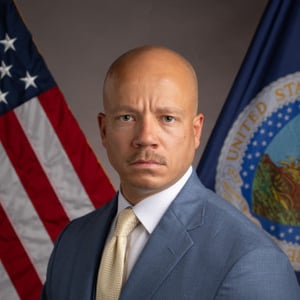
Devon Westhill is the Assistant Secretary for Civil Rights at the U.S. Department of Agriculture. The U.S. Senate confirmed President Donald Trump’s nomination of Westhill on October 7, 2025.
Westhill returns to the USDA where he previously headed the civil rights office as Deputy Assistant Secretary in President Trump’s first term. His previous government appointments also include service at the U.S. Department of Labor, liaison to the Administrative Conference of the U.S., and liaison to the White House Initiative on Historically Black Colleges and Universities. Prior to returning to government service, Westhill was President and General Counsel of a nonprofit civil rights organization.
Westhill has testified on civil rights matters before Congress, federal agencies, and as an expert witness in federal court. He has spoken hundreds of times at college campuses, conferences, and on radio and TV programs, and he is frequently quoted in print publications, and his writing has appeared in numerous national outlets. A U.S. Navy veteran, Westhill earned his BA from the University of North Carolina at Chapel Hill and his JD from the University of Florida.
Laurence H. Silberman Chair in Constitutional Governance, American Enterprise Institute; Executive Director, Antonin Scalia Law School’s C. Boyden Gray Center for the Study of the Administrative State
Biography
Adam J. White is the Laurence H. Silberman Chair in Constitutional Governance and senior fellow at the American Enterprise Institute, where he focuses on the Supreme Court and the administrative state. He also directs the Antonin Scalia Law School’s C. Boyden Gray Center for the Study of the Administrative State.
He writes on regulation and constitutional government for a variety of publications. He practiced law in Washington, D.C., after clerking for the D.C. Circuit's Judge David Sentelle. He also has been chairman of the ABA's Administrative Law Section.
In 2021, he served on the Presidential Commission on the Supreme Court of the United States, where he criticized “Court packing” and other efforts to restructure the Supreme Court.
Professor of Law, South Texas College of Law Houston
Biography
Josh Blackman is a national thought leader on constitutional law and the United States Supreme Court. Josh’s work was quoted during two presidential impeachment trials. He has testified before Congress and advises federal and state lawmakers. Josh regularly appears on TV, including NBC, CBS, ABC, Fox, and the BBC. Josh is also a frequent guest on NPR and other syndicated radio programs. He has published commentaries in the New York Times, Wall Street Journal, Washington Post, and leading national publications.
Since 2012, Josh has served as a professor at the South Texas College of Law Houston. He holds the Centennial Chair of Constitutional Law. Josh is an Adjunct Fellow at the Manhattan Institute. Josh has written more than seven dozen law review articles that have been cited more than a thousand times. Josh was selected as the Jurist of the Year by the Texas Journal of Law & Public Policy, received the inaugural Meese III Originalism Award, and was awarded the Inaugural Joseph Story Award. Josh was selected by Forbes Magazine for the “30 Under 30” in Law and Policy. Josh is the President of the Harlan Institute, and founded FantasySCOTUS, the Internet’s Premier Supreme Court Fantasy League. He blogs at the Volokh Conspiracyand posts@JoshMBlackman.
Gregory Jacob is a partner in O’Melveny’s Washington, D.C. office. Greg Jacob represents financial services companies including banks, investment managers, health care payors, and insurers, as well as other employers, in class action and other litigation concerning ERISA and other labor and employment matters. A former Solicitor of Labor, Greg has extensive knowledge on a wide variety of labor and employment issues including ERISA, FLSA, OFCCP, and whistleblower law. He regularly litigates in federal courts throughout the country, defends clients against Department of Labor investigations, and provides counseling to plans and plan sponsors.
Prior to rejoining O’Melveny in 2021, Greg served as Counsel to Vice President Pence and Deputy Assistant to the President. He directly advised the Vice President on all legal issues relating to the Office of the Vice President, and advised the White House Coronavirus Task Force concerning the Defense Production Act and other legal issues related to bolstering the domestic supply chain.
Judge, U.S. Court of Appeals, District of Columbia Circuit
Biography
Justin R. Walker is a judge on the U.S. Court of Appeals for the D.C. Circuit. He was nominated to the court by President Donald Trump on May 4, 2020, and confirmed by the United States Senate on June 18, 2020. He is a former United States District Judge of the Western District of Kentucky.
Speaker Information
Ryan L. Bangert
Senior Vice President, Strategic Initiatives & Special Counsel to the President, Alliance Defending Freedom
Biography
Ryan Bangert serves as senior vice president for strategic initiatives and special counsel to the president at Alliance Defending Freedom. He oversees ADF’s regulatory practice, government relations, and corporate engagement teams. He also advises executive leadership with strategic initiatives and appears as counsel for ADF clients.
Before joining ADF, Bangert served as deputy first assistant attorney general and deputy for legal counsel in the office of the Texas attorney general. In those roles, he oversaw the state’s Special Litigation Unit, which handled critical litigation against the federal government, and oversaw multiple divisions within the office. Prior to that, he served as deputy for civil litigation for Missouri Attorney General Josh Hawley, overseeing the state’s civil litigation divisions, including the consumer protection and antitrust divisions, with over 200 attorneys and staff. During his time in government service, Bangert handled a diverse array of matters involving Big Tech, election law, civil rights, multistate antitrust and consumer protection investigations, and many other issues.
Prior to his government service, Bangert was a litigation partner at Baker Botts L.L.P., where he was a member of the firm’s commercial litigation and appellate practice sections. A seasoned trial attorney, The Texas Lawyer ranked the verdict Bangert achieved in the Janvey v. Maldonado case as the #1 verdict in the securities category for 2015-2019, and The National Law Journal ranked it in its “Top 100 Verdicts of 2015.” He was named a “Texas Rising Star” for multiple years by Texas Lawyer and Law and Politics magazines. While at Baker Botts, he was a volunteer attorney for ADF and served as amicus counsel in numerous cases, including Trinity Lutheran v. Comer and Salazar v. Buono, receiving the firm’s Opus Justitae Award in recognition of his outstanding commitment to pro bono service.
Bangert earned his J.D. from Southern Methodist University, where he was a Hatton Sumner’s scholar and graduated first in his class. He also participated in ADF’s Blackstone program and is a Blackstone Fellow. Following law school, he clerked for the Honorable Patrick E. Higginbotham on the Fifth Circuit Court of Appeals.
Bangert is a member of the Philadelphia Society and Federalist Society. He is admitted to practice law in Texas, California (inactive), Missouri (inactive), the U.S. Supreme Court and numerous federal district and appellate courts. A frequent op-ed contributor, his work has appeared in National Review, Daily Wire, The Hill, Washington Examiner, The Federalist, Fox News, and RealClear Religion. He speaks nationally on constitutional, cultural, and religious liberty issues.
Alice Jane Drysdale Sheffield Regents Chair, University of Texas School of Law
Biography
Lawrence Sager is one of the nation's preeminent constitutional theorists and scholars. Professor Sager came to Texas from New York University School of Law, where he was the Robert B. McKay Professor and Co-Founder of the Program in Law, Philosophy & Social Theory. He has also taught at Harvard, Princeton, Boston University, UCLA, and the University of Michigan. Professor Sager is the author or co-author of dozens of articles, many now classics in the canon of legal scholarship. Sager is the author of two books: Justice in Plainclothes: a Theory of American Constitutional Practice (Yale Univ. Press), and Religious Freedom and the Constitution (co-authored with Christopher Eisgruber) (Harvard Univ. Press).
Attorney General, Office of the Iowa Attorney General
Biography
In November 2022, Brenna Bird was elected as Iowa Attorney General – the first Republican to hold the office since 1979.
Before taking office as Iowa Attorney General, Brenna served as a prosecutor for six years, first as the Fremont County Attorney and then since 2018 as the Guthrie County Attorney. She was elected by her fellow county attorneys to leadership roles with the Iowa County Attorney Association, and served as the Association's President.
Brenna has also engaged in the private practice of law, worked in the Iowa Governor’s Office and the U.S. House of Representatives, and taught as an adjunct professor at the University of Iowa College of Law.
Born and raised on an Iowa farm, where she was homeschooled. Brenna graduated from Drake University and went on to receive her J.D. from the University of Chicago Law School, where she served as symposium editor of the school’s law journal. In addition to her law studies, Brenna also helped entrepreneurs on Chicago’s South Side start their own businesses.
Solicitor General, Iowa Office of the Attorney General
Biography
Eric Wessan serves as Iowa’s Solicitor General in the Iowa Attorney General’s Office. In that role, Wessan leads Iowa’s litigation before State and federal appellate courts, including the Iowa and U.S. Supreme Courts. Before that role, Wessan worked on complex commercial litigation at two large law firms in Chicago. Wessan also served as a law clerk for the Honorable James C. Ho on the U.S. Court of Appeals for the Fifth Circuit and for the Honorable John F. Kness on the U.S. District Court for the Northern District of Illinois. Wessan is a graduate of the University of Chicago Law School, with honors, and of the University of Chicago.
Newton D. Baker/Baker and Hostetler Chair of Law, Capital University Law School
Biography
Mark R. Brown was born in Louisville, Kentucky and graduated from the University of Louisville School of Law (1984). He has a B.S. from the University of Dayton (1981). Following graduation from the University of Louisville, Professor Brown earned his LL.M. at the University of Illinois (1988). He clerked for the Honorable Harry W. Wellford, Judge of the United States Court of Appeals for the Sixth Circuit (1984-1985). Also, he served as a Judicial Fellow at the Supreme Court of the United States (October Term 1993) under the Chief Justice of the United States. Professor Brown currently holds the Newton D. Baker/Baker & Hostetler Chair at Capital University. He has also taught at Stetson University, the University of Illinois, the Ohio State University, and Florida State University.
Charles “Chip” Miller joined the Institute for Free Speech as a Senior Attorney in May 2023, where he has handled cases in the 1st, 5th, and 10th Circuits, District Courts in Maine, Iowa, Kansas, Ohio, Texas and Utah, and State Supreme Courts in Alaska and Connecticut, as well as amicus briefs in SCOTUS and the First Circuit. At IFS, Miller's work focuses on Campaign Finance, Donor Privacy, Political Speech and Freedom of the Press. Miller previously served as Ohio’s Deputy Attorney General, where he directed major litigation. Before joining the state AG’s office as General Counsel, he served as a judge for the First Appellate District of Ohio and had also served as a “visiting judge” on the Ohio Supreme Court. Prior to entering public service, Miller spent over 10 years at Keating, Muething & Klekamp, PLL as a litigation partner arguing cases before the Sixth Circuit and the Ohio Supreme Court.
Miller has extensive litigation and appellate experience and has spearheaded important regulatory matters. His previous work includes advancing innovative protections of free expression and competition in the digital sphere.
Miller is a graduate of Boston University College of Law and clerked for Justice Maureen O’Connor at the Ohio Supreme Court. Among other honors, Miller was selected to represent Boston University at the National First Amendment Moot Court.
George Mason University Foundation Professor of Law, Antonin Scalia Law School, George Mason University
Biography
TODD J. ZYWICKI is George Mason University Foundation Professor of Law at Antonin Scalia Law School at George Mason University and Research Fellow of the George Mason Law and Economics Center. During the Fall 2023 semester he served as the Visiting Scholar in Conservative Thought and Policy for the Bruce Benson Center for the Study of Western Civilization at the University of Colorado-Boulder. From 2020-2021 he was Chair of the Consumer Financial Protection Bureau Taskforce on Federal Consumer Financial Law. In 2021 he was inducted to the American College of Consumer Financial Services Lawyers. He is also a Senior Fellow of the F.A. Hayek Program for the Advanced Study of Politics, Philosophy, and Economics at George Mason University and a former Senior Fellow of the Cato Institute. From 2015-2017 he was Executive Director of the George Mason Law and Economics Center. He served as Co-Editor of the Supreme Court Economic Review from 2006-2017. From 2003-2004, Professor Zywicki served as the Director of the Office of Policy Planning at the Federal Trade Commission. He has also taught at Vanderbilt University Law School, Georgetown University Law Center, Boston College Law School, Mississippi College School of Law, and China University of Political Science and Law.
Professor Zywicki clerked for Judge Jerry E. Smith of the U.S. Court of Appeals for the Fifth Circuit and worked as an associate at Alston & Bird in Atlanta, Georgia, where he practiced bankruptcy and commercial law. He received his J.D. from the University of Virginia, where he was executive editor of the Virginia Tax Review and John M. Olin Scholar in Law and Economics. Professor Zywicki also received an M.A. in Economics from Clemson University and an A.B. cum Laude with high honors in his major from Dartmouth College.
Professor Zywicki is also a Lone Mountain Fellow of the Property and Environment Research Center, a Fellow of the International Centre for Economic Research in Turin, Italy, and a former Senior Fellow of the Goldwater Institute. During the Fall 2008 Semester Professor Zywicki was the Searle Fellow of the George Mason University School of Law and was a 2008-09 W. Glenn Campbell and Rita Ricardo-Campbell National Fellow and the Arch W. Shaw National Fellow at the Hoover Institution on War, Revolution and Peace. He has lectured and consulted with government officials around the world, including Iceland, Italy, Japan, and Guatemala. In 2006 Professor Zywicki served as a Member of the United States Department of Justice Study Group on “Identifying Fraud, Abuse and Errors in the United States Bankruptcy System.”
Professor Zywicki is the author of more than 130 articles in leading law reviews and peer-reviewed economics journals. He is one of the Top 10 most-cited law professors in the field of Commercial Law and one of the Top 25 law professors on Twitter as measured by engagement levels. He is one of the Top 50 Most Downloaded Law Authors at the Social Science Research Network. He has testified multiple times before Congress on issues of consumer bankruptcy law and consumer credit and is a frequent commentator on legal issues in the print and broadcast media, including the Wall Street Journal, New York Times, The Washington Post, The Washington Times, Nightline, The Newshour with Jim Lehrer, Neil Cavuto Show, Fox & Friends, Smerconish, Fox News @ Night with Shannon Bream, Fox Business, CNN, CNBC, Bloomberg News, BBC, TheDiane Rehm Show, Lou Dobbs Show, Jerry Doyle Show, and The Laura Ingraham Show.
Assistant Professor of Law, Columbus School of Law, Catholic University of America
Biography
Chad Squitieri is an Assistant Professor of Law at Catholic University of America’s Columbus School of Law. There he serves as the Director of the Separation of Powers Institute, and as a Managing Director of the Center for the Constitution and the Catholic Intellectual Tradition. Professor Squitieri’s scholarship addresses administrative law and constitutional law topics, including separation-of-powers principles. His scholarship has appeared in the Administrative Law Review, the Harvard Journal of Law and Public Policy, and the Baylor Law Review, among other publications.
Prior to joining the faculty at the Catholic University of America, Prof. Squitieri practiced law at Gibson, Dunn & Crutcher LLP as a member of the Appellate and Constitutional Law and Administrative Law and Regulatory practice groups. He also served as a Special Assistant to former United States Secretary of Labor Eugene Scalia, and as a law clerk to then-Chief Judge D. Brooks Smith of the United States Court of Appeals for the Third Circuit.