








Deference to Whom? A Discussion on Chevron Doctrine after West Virginia v. EPA
Belmont Student Chapter
Randall and Sadie Baskin Center1901 15th Avenue South Room 144
Nashville, TN 37212
Here are the latest events.
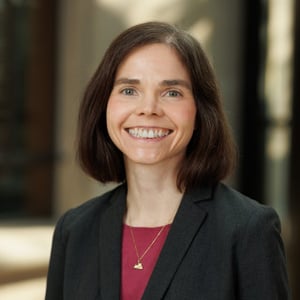
Professor of Law, Belmont University College of Law
Prior to joining Belmont University College of Law, Amy Moore taught at Faulkner University’s Thomas Goode Jones School of Law as an Assistant Professor. She taught classes in Administrative Law, Criminal Law, Education Law, Immigration Law, and International Law. She was also active in the moot court program, including coaching the National Moot Court Competition Team and the National Appellate Advocacy Competition teams.
Before teaching law school, Professor Moore worked as a litigation associate at Kirkland & Ellis LLP in Chicago, Illinois. While at Kirkland, she practiced in securities fraud and credit card privacy cases. She is a member of both the Missouri and Illinois bar associations. She is also a member of the American Bar Association.
Professor Moore received her Bachelor of Arts degree from Harding University and received her Juris Doctor degree from the University of Chicago Law School. While at the University of Chicago, Professor Moore worked as a research assistant for Professor Lisa Bernstein and Judge Richard Posner. During her last year of law school, she was active in the appellate advocacy clinic and represented a client before the Seventh Circuit Court of Appeals.
For Belmont’s charter year, Professor Moore will teach Torts and Civil Procedure. Her research interests include the study of how process affects rights in varied areas.
Partner, Holtzman Vogel Baran Torchinsky & Josefiak PLLC
Brandon Smith is a partner at Holtzman Vogel, based in Tennessee, where he focuses on government investigations, white collar matters, and specialty litigation. A seasoned government leader and legal strategist, Brandon has played a central role in shaping conservative policy and litigation at the highest levels of state government.
Before joining the firm, Brandon served as Chief of Staff and Assistant Solicitor General in the Tennessee Attorney General’s Office. In that role, he led multi-state litigation, high-profile constitutional challenges, and efforts to counter federal overreach and ESG-related corporate activism. He worked closely with nearly every Republican Attorney General’s Office in the country, coordinating litigation, strategy, and multi-state policy efforts.
Earlier in his career, Brandon served as Executive Director of Legislative and Regulatory Affairs for Kentucky Governor Matt Bevin and as Policy Director to Kansas Governor Sam Brownback, where he helped drive key legislative and budget initiatives. He also held roles as Deputy Director of the Federalist Society and as an adjunct professor at American University.
Brandon’s career has been defined by a commitment to defending federalism, advancing conservative governance, and shaping legal and policy fights that matter.
Dean, Delaware Law School
Dean Todd Clark is Dean of Delaware Law School. He joins Delaware Law School after serving as Associate Dean of Academic Affairs & Professor of Law at St. Thomas University Benjamin L. Crump College of Law. Before St. Thomas, Dean Clark was Professor of Law at North Carolina Central University School of Law where he taught Business Associations, Contracts, Corporate Justice, Employment Discrimination, and Hip Hop, Law & Justice. At NCCU, he also served on the ABA Compliance team and was the Director of the Justice in the Practice of Law Certificate Program and the Director of New Initiatives. Before that, Dean Clark was a Lecturer in Law at West Virginia University College of Law, where he taught Legal Writing and Appellate Advocacy.
Dean Clark earned his B.A. in Political Science from Wittenberg University, his M.B.A. from West Virginia University College of Business and Economics, and his J.D. from University of Pittsburgh School of Law. Following his graduation from law school, he practiced law at the law firm of Steptoe & Johnson.
His scholarship includes a book, CORPORATE JUSTICE (Carolina Academic Press), as well as numerous law review articles and other scholarship on social justice, corporate discretion, and sexual harassment. He is currently working on a casebook on Sports Law.
Founder, Chairman, and CEO, Louis D. Brandeis Center for Human Rights Under Law
Hon. Kenneth L. Marcus is an internationally recognized expert in civil and human rights, as well as a leader in the fight against anti-Semitism on and off university campuses. He is the Founder, Chairman, and CEO of The Louis D. Brandeis Center for Human Rights Under Law, the leading civil rights legal organization fighting against anti-Semitism. The New York Times has called him “The Man Who Helped Redefine Campus Anti-Semitism.” He been described, in that paper, as “the single most effective and respected force” to combat anti-Semitism.
During his public service career, Marcus served as Assistant U.S. Secretary of Education for Civil Rights; Staff Director at the U.S. Commission on Civil Rights; and General Deputy Assistant U.S. Secretary of Housing and Urban Development for Fair Housing and Equal Opportunity.
In academia, he serves as Professorial Lecturer in Law at George Washington University. He formerly held the Lillie and Nathan Ackerman Chair in Equality and Justice in America at the City University of New York’s Bernard M. Baruch College, served as Visiting Research Professor of Political Science at Yeshiva University, and was a Board of Visitors member George Mason University and Distinguished Senior Fellow at that university’s law school. He is a member of the editorial board of the Journal of Contemporary Antisemitism and previously served as Associate Editor of the Journal for the Study of Anti-Semitism.
Marcus is also author of The Definition of Anti-Semitism (Oxford University Press) and Jewish Identity and Civil Rights in America (Cambridge University Press). He has published widely in academic journals as well as in more popular venues such as The Wall Street Journal, Washington Post, Newsweek, USA Today, and Politico. He is a graduate of Williams College and the University of California at Berkeley School of Law.
Earlier in his career, he was a litigation partner in two major law firms, where he conducted complex commercial and constitutional litigation. He also serves as Chairman emeritus of the Executive Committee of the Federalist Society for Law & Public Policy Civil Rights Practice Group.
Deputy Officer for Civil Rights and Civil Liberties & Director of Equal Employment Opportunity and Diversity, Department of Homeland Security (DHS)
Veronica Venture is the Deputy Officer for Civil Rights and Civil Liberties and the Director of Equal Employment Opportunity and Diversity at the Department of Homeland Security (DHS). In this role, Ms. Venture leads the Department's EEO and diversity programs and initiatives. She also served as the Acting Officer for Civil Rights and Civil Liberties from January 2017 to September 2017.
Ms. Venture has brought significant expertise and experience with the federal EEO process and diversity management to DHS—particularly as it relates to law enforcement, having served at the Federal Bureau of Investigation for nine years before joining the Department. Prior to that, she began her career as a law clerk with the Equal Employment Opportunity Commission, and subsequently held positions as a Trial Attorney, Administrative Judge, Acting Area Director of the San Diego Field Office, Special Assistant to the Chair, and finally, as EEO Director. Ms. Venture received her BA from Connecticut College, and her JD from the Washington College of Law at American University in Washington, DC.
Senior Legal Fellow, Edwin Meese III Institute for the Rule of Law, Advancing American Freedom
Devon Westhill is the Assistant Secretary for Civil Rights at the U.S. Department of Agriculture. The U.S. Senate confirmed President Donald Trump’s nomination of Westhill on October 7, 2025.
Westhill returns to the USDA where he previously headed the civil rights office as Deputy Assistant Secretary in President Trump’s first term. His previous government appointments also include service at the U.S. Department of Labor, liaison to the Administrative Conference of the U.S., and liaison to the White House Initiative on Historically Black Colleges and Universities. Prior to returning to government service, Westhill was President and General Counsel of a nonprofit civil rights organization.
Westhill has testified on civil rights matters before Congress, federal agencies, and as an expert witness in federal court. He has spoken hundreds of times at college campuses, conferences, and on radio and TV programs, and he is frequently quoted in print publications, and his writing has appeared in numerous national outlets. A U.S. Navy veteran, Westhill earned his BA from the University of North Carolina at Chapel Hill and his JD from the University of Florida.
Judge, United States Court of Appeals, Sixth Circuit
Amul R. Thapar serves as a judge on the United States Court of Appeals for the Sixth Circuit. His judicial career began in 2007 when President George W. Bush nominated him to serve on the Eastern District of Kentucky, making him the first South Asian Article III judge in American history. In 2017, he became President Donald J. Trump’s first appellate court nominee.
Before joining the bench, Judge Thapar served as the United States Attorney for the Eastern District of Kentucky. While United States Attorney, Judge Thapar worked on the Attorney General’s Advisory Committee (“AGAC”) and chaired the AGAC’s Controlled Substances and Asset Forfeiture subcommittee. He also served on the Terrorism and National Security subcommittee, the Violent Crime subcommittee, and the Child Exploitation working group.
Judge Thapar has worked in private practice, at Williams & Connolly in Washington, D.C., and Squire, Sanders & Dempsey in Cincinnati, Ohio. He also served as an Assistant United States Attorney in both the Southern District of Ohio and the District of Columbia.
Judge Thapar received his undergraduate degree from Boston College and his law degree from the University of California, Berkeley. After graduating, Judge Thapar worked as a law clerk to the Honorable S. Arthur Spiegel of the United States District Court for the Southern District of Ohio, and the Honorable Nathaniel R. Jones of the United States Court of Appeals for the Sixth Circuit.
Judge Thapar has also published in the Yale Law Journal, Michigan Law Review, and Catholic University Law Review. He teaches courses on originalism, the Federalists and Anti-Federalists, and legal writing at Notre Dame Law School, the University of Virginia School of Law, and Vanderbilt Law School.
Executive Director, Salmon P. Chase Center for Civics, Culture, and Society, The Ohio State University
Professor Lee J. Strang serves as the inaugural executive director of the Salmon P. Chase Center for Civics, Culture, and Society at The Ohio State University.
Initiated in 2023 by the state of Ohio, the Chase Center will be an academic home at Ohio State for teaching, research, and programing on the foundations of the American constitutional order and its impact on society. As executive director, Professor Strang is responsible for organizing the center, overseeing the hiring and appointment of the center’s faculty, developing curriculum, and delivering student and academic programming. He also holds a faculty appointment in the Moritz College of Law at Ohio State.
Professor Strang is a nationally recognized legal scholar who has published dozens of articles in leading journals in the fields of constitutional law and interpretation, property law, and religion and the First Amendment. He co-edits the textbook Federal Constitutional Law, and his most recent book, Originalism’s Promise: A Natural Law Account of the American Constitution is the first book-length, natural law justification for originalism. He currently is writing on civic thought and leadership, and he is finalizing a book on the history of American Catholic legal education (with John M. Breen).
Before joining Ohio State, Professor Strang served as the inaugural director of the University of Toledo’s Institute of American Constitutional Thought & Leadership. He joined the Toledo College of Law faculty in 2008, was granted tenure in 2010, and was named John W. Stoepler Professor of Law & Values in 2015. The University of Toledo awarded Professor Strang its Outstanding Faculty Research and Scholarship Award in 2017. Before that, he was a visiting professor at Michigan State University College of Law. A graduate of the University of Iowa, where he was articles editor of the Iowa Law Review and Order of the Coif, Professor Strang holds an LL.M. degree from Harvard Law School.
Professor Strang has been a visiting scholar at the Georgetown Center for the Constitution and a visiting fellow at the James Madison Program at Princeton University. In 2016, he was appointed to the Ohio Advisory Committee of the U.S. Commission on Civil Rights and reappointed as chair in 2023.
Prior to teaching, Professor Strang served as a judicial clerk for Judge Alice M. Batchelder of the U.S. Court of Appeals for the Sixth Circuit. He was also an associate for Jenner & Block LLP in Chicago, where he practiced in general and appellate litigation.
Professor Strang is a frequent presenter at scholarly conferences. He is the president of the Board of Trustees of Northwest Ohio Classical Academy, Ohio’s first classical charter school. He is also a regular participant in debates at law schools across the country, a contributor to the media, and a speaker to political, civic, and religious groups.
Florida Fourth District Court of Appeal
ALAN ORANTES FORST was appointed to a judge position on the Fourth District Court of Appeal by Governor Rick Scott on March 7, 2013; he was administered the oath of office on April 8, 2013. Prior to this appointment, Judge Forst served as Chairman of the Florida Reemployment Assistance Appeals Commission/Unemployment Appeals Commission commencing in July 2001, having been appointed to two terms by Governor Jeb Bush and a third term by Governor Charlie Crist. The Commission is an independent commission that conducts appellate review of contested unemployment compensation claims, issues final orders and, if necessary, defends those orders before the district courts of appeal. Prior to the 2001 appointment, Judge Forst was an associate and partner at the Stuart, Florida law firm Crary Buchanan. Earlier in his career, Judge Forst spent over two decades in Washington, D.C. A graduate of the Georgetown University School of Foreign Service and the Columbus School of Law of the Catholic University of America, Judge Forst served under Presidents Reagan, Bush, and Clinton in front office positions at the Departments of Justice and Labor (special assistant to the Administrators of OFCCP and the Wage and Hour Division), as counsel to the Vice Chair/Member of the Merit Systems Protection Board, and as special assistant/counsel to Chairman Clarence Thomas at the Equal Employment Opportunity Commission. Other stops included the Department of Commerce, two Senate offices, the National Legal Center for the Public Interest, the Commission on Civil Rights, the Legal Services Corporation, and Northern Virginia Law School. Judge Forst was President of the Martin County Bar Association in 2007-08 and Chair of the Florida Bar’s Labor and Employment Law Section in 2008-09. He resides in Martin County.
Justice of the Supreme Court, Michigan Supreme Court
Justice Brian K. Zahra was appointed by Governor Rick Snyder to the Michigan Supreme Court on January 14, 2011. The people of Michigan subsequently elected him in November 2012 to a partial term and then re-elected him in November 2014 to a full term.
Justice Zahra received his undergraduate degree in 1984 from Wayne State University. To finance his education, he opened and operated a small health and personal care retail store in downtown Detroit. Justice Zahra later opened a grocery outlet, also in Detroit, with two partners. In 1987, he graduated with honors from the University Of Detroit School Of Law, where he served as a member of the Law Review and as Articles Editor of the State Bar of Michigan’s Corporation and Finance Business Law Journal. Upon graduation he served as law clerk to Judge Lawrence P. Zatkoff of the U.S. District Court for the Eastern District of Michigan before joining and eventually becoming a partner in the law firm of Dickinson, Wright, Moon, Van Dusen & Freeman. In 1994, Governor John Engler appointed him to the Wayne County Circuit Court where in 1996 he was elected to a six-year term. In December of 1998, he was appointed to the Michigan Court of Appeals by Governor Engler. He was elected to six-year terms in 2000 and 2006. From December 2005 to January 2007, he served as the Court of Appeals’ Chief Judge Pro Tem.
Justice Zahra has been active in many civic and charitable organizations, including Boys and Girls Clubs of Southeastern Michigan, Kiwanis Club International, Leadership Detroit, the Knights of Columbus, the Maltese American Community Club, and the Maltese American Benevolent Society, of which he is a past officer. He is a former board member and officer of the Catholic Lawyers Society, and past officer of the Federalist Society, where he currently serves as a member of the Advisory Board to the Michigan chapter. He also serves as the judicial advisor to the Hillsdale College Federalist Society Chapter.
Judge, United States Court of Appeals for the Eleventh Circuit
Andrew Brasher served as a United States District Judge for the Middle District of Alabama. Before taking the bench in May 2019, Judge Brasher was the Solicitor General of the State of Alabama, where he argued cases before the United States Supreme Court, the United States Court of Appeals for the Eleventh Circuit, and the Alabama Supreme Court. He previously served for several years as the Deputy Solicitor General and practiced in the litigation and white-collar criminal defense practice groups in the Birmingham, Alabama office of Bradley Arant Boult Cummings LLP. Upon graduation from law school, Judge Brasher served as a law clerk to Judge William H. Pryor Jr. of the United States Court of Appeals for the Eleventh Circuit. Judge Brasher earned his B.A., summa cum laude, from Samford University and his J.D., cum laude, from Harvard Law School, where he was a member of the Harvard Law Review.
Ralph S. Tyler, Jr. Professor of Constitutional Law, Harvard Law School
Antonin Scalia Professor of Law, Harvard Law School
Stephen E. Sachs is the Antonin Scalia Professor of Law at Harvard Law School, where he teaches civil procedure, conflict of laws, and seminars on constitutional law. His research focuses on the law and theory of constitutional interpretation, the jurisdiction of state and federal courts, the history of procedure and private law, and the role of the general common law in the U.S. legal system.
Sachs has authored numerous articles, essays, and book chapters. He is an elected member of the American Law Institute, an adviser to the ALI’s project on the Restatement of the Law (Third), Conflict of Laws, a former member of the Judicial Conference’s Advisory Committee on Appellate Rules, and a founding member of the Academic Freedom Alliance.
In 2020, Sachs received the Federalist Society’s Joseph Story Award, which recognizes a young academic who has demonstrated excellence in legal scholarship, a commitment to teaching, a concern for students, and who has made a significant public impact in a manner that advances the rule of law in a free society.
Sachs previously taught at Duke University School of Law and as a visiting professor at the University of Chicago Law School. Before entering academia, he practiced in the Washington, D.C., litigation group of Mayer Brown LLP, and he clerked for Chief Justice John G. Roberts Jr. as well as for Judge Stephen F. Williams of the U.S. Court of Appeals for the D.C. Circuit.
Sachs received his J.D. from Yale Law School, where he was executive editor of the Yale Law Journal and served both as executive editor and articles editor of the Yale Law & Policy Review. A Rhodes Scholar, he graduated from Oxford University with a first-class BA (Hons) degree in philosophy, politics, and economics. He received his A.B. degree summa cum laude in history from Harvard University, earning the Sophia Freund Prize.
Sachs is a licensed attorney in Massachusetts and the District of Columbia, and he is authorized to practice before the D.C. Circuit, the Second Circuit, the Seventh Circuit, and the Supreme Court of the United States.
Partner, Williams & Connolly
Sarah Harris is a partner in Williams & Connolly’s Supreme Court and Appellate practice, where she represents clients in high-stakes appeals in the U.S. Supreme Court and federal and state appellate courts across the country. She has argued five cases before the U.S. Supreme Court, and she has presented many arguments in federal courts of appeals and state appellate courts. Her cases have run the gamut of substantive areas, including constitutional law—especially First Amendment and separation-of-powers issues—as well as administrative law, arbitration, class actions, antitrust, False Claims Act litigation, commercial litigation, and federal civil procedure.
Sarah is widely recognized for her appellate advocacy. Chambers USA has recognized her as “Up and Coming” in Appellate Law. She has been named to Bloomberg Law’s 40 Under 40 list of top lawyers nationwide and to Benchmark Litigation’s “40 & Under Hot List,” as well as a an appellate “Rising Star” by The National Law Journal and Law360, a “Next Generation Lawyer” by The Legal 500, and as one of Bloomberg Law’s “Five Fresh Faces to Know in Appellate.”
Sarah clerked for Justice Clarence Thomas on the Supreme Court of the United States, Judge Laurence Silberman on the United States Court of Appeals for the D.C. Circuit, and Judge Sandra Lynch on the United States Court of Appeals for the First Circuit. Before joining Williams & Connolly, she served as a Deputy Assistant Attorney General in the Department of Justice’s Office of Legal Counsel.
Sarah received her undergraduate degree summa cum laude from Princeton University, and her J.D. magna cum laude from Harvard Law School. She also holds a Ph.D. and M. Phil. from the University of Cambridge.