L. Q. C. Lamar Professor of Law, Emory University School of Law
Biography
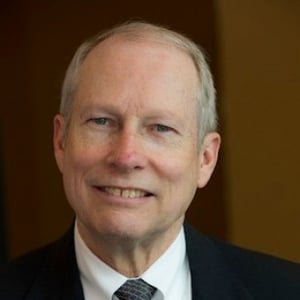
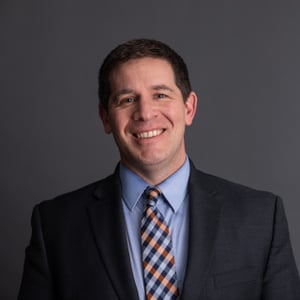
Thomas C. Arthur holds degrees from Yale Law School and Duke University, where he was an Angier B. Duke Scholar and a member of Phi Beta Kappa. Before coming to Emory, he practiced law for eleven years with the Washington, DC office of Kirkland & Ellis. In 1982, he left his law firm partnership to join the Emory Law faculty.
Arthur teaches antitrust, civil procedure, and administrative law, and he has been active on the executive committee of the Antitrust Section of the Association of American Law Schools. His articles in the California and Tulane law reviews have been credited with the founding of a new, "statutory" school of antitrust analysis. His 1991 Emory Law Journal article (co-authored with Professor Richard D. Freer) provoked a nationally noted debate over an important new statute governing the jurisdiction of federal courts. A major antitrust article, "The Costly Quest for Perfect Competition: Kodak and Nonstructural Market Power," was published in the New York University Law Review (vol. 69, April 1994).
Judge, United States District Court, Eastern District of Arkansas
Biography
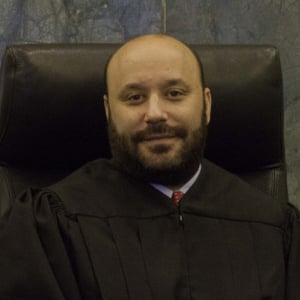
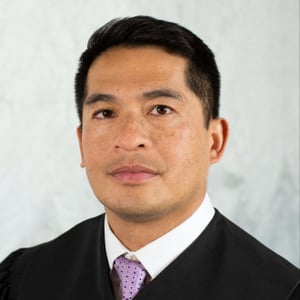
Lee Philip Rudofsky is a judge on the United States District Court for the Eastern District of Arkansas. Prior to his 2019 appointment by President Trump, Judge Rudofsky served as the Solicitor General of Arkansas, an Assistant General Counsel at Walmart, a Senior Litigation Associate at Kirkland & Ellis, and counsel to several Republican political campaigns. Today, in addition to his judicial service, Judge Rudofsky teaches law school classes on founding-era constitutional history and, separately, speaks to students across the country about the October 7th Massacre and the subsequent Israeli response. In 2024, Judge Rudofsky helped establish an annual judicial education mission to Israel that offers American judges the opportunity to learn first-hand about the Israeli legal system, Israeli society, and legal issues related to the Israel-Hamas war.
Professor of Law, University of Michigan Law School
Biography
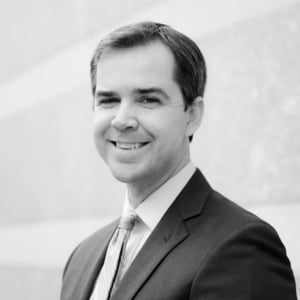
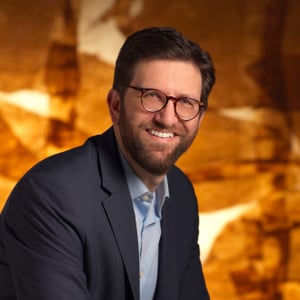
Christopher J. Walker is a Professor of Law at the University of Michigan. Prior to joining Michigan law faculty in 2022, he spent a decade teaching at The Ohio State University Moritz College of Law. He previously clerked for Justice Anthony Kennedy of the U.S. Supreme Court, worked on the Civil Appellate Staff at the U.S. Department of Justice, and served on the Senate Judiciary Committee staff for the Gorsuch Supreme Court confirmation. Professor Walker’s research focuses on administrative law, regulation, and law and policy at the agency level. Outside the law school, he chaired the American Bar Association’s Section of Administrative Law and Regulatory Practice in 2020-21 and served as one of forty Public Members of the Administrative Conference of the United States from 2016-2022, and he continues to serve in both organizations in various capacities. He also works of counsel at the U.S. Chamber Litigation Center. In 2022, he received the Federalist Society’s Joseph Story Award.
Perry Golkin Professor of Law; Co-Director, Institute for Law an, University of Pennsylvania Law School
Biography
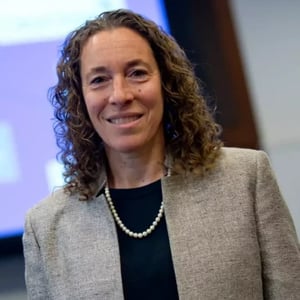
Jill E. Fisch is the Saul A. Fox Distinguished Professor of Business Law and co-director of the Institute for Law and Economics at the University of Pennsylvania Law School where she teaches and writes on corporate law, corporate governance and securities regulation. Prior to joining Penn Law, Professor Fisch was the T.J. Maloney Professor of Business Law at Fordham Law School and Founding Director of the Fordham Corporate Law Center. Professor Fisch has also served as a visiting professor at Harvard, Columbia, Berkeley and Georgetown.
Fisch is the recipient of various awards including the Penn LLM Prize for Excellence in Teaching and the Robert A. Gorman Award for Excellence in Teaching (twice). She is an associate reporter for the American Law Institute’s Restatement of Corporate Governance and a director of the European Corporate Governance Institute. Before entering academia, Professor Fisch practiced law as a trial attorney with the United States Department of Justice, Criminal Division, and as an associate at the law firm of Cleary, Gottlieb, Steen & Hamilton. She received her B.A. from Cornell University and her J.D. from Yale Law School.
Daniel has been featured on CNN, Huffington Post Live, Fox News, EWTN Nightly News, and CBS Evening News.
He earned his J.D. from the University of South Carolina School of Law, graduating magna cum laude. While in law school, Daniel clerked for the South Carolina Attorney General’s Office, served on a South Carolina Supreme Court task force, and interned with Judge J. Michelle Childs of the Circuit Court for the Fifth Judicial Circuit as a part of the Judicial Observation and Education program. He is a Blackstone Fellow. Daniel received his undergraduate degree from Columbia International University. He and his wife have five children and too many animals.
Casey Mattox is Vice President for Legal Strategy at Stand Together and Senior Advisor at Americans for Prosperity. In these roles he advocates for and creates strategies and partnerships to ensure a constitutionally limited government that protects the civil liberties of all Americans. Prior to joining Stand Together and AFP Casey’s legal career focused on defending the First Amendment rights of students, faculty, healthcare workers and religious organizations. Casey has a J.D. from Boston College School of Law and an undergraduate degree from the University of Virginia. You can find him on Twitter at @CaseyMattox_ and on LinkedIn at @Casey-Mattox-ST.
Elisabeth H. and Granville S. Ridley Jr. Chair in Law, Vanderbilt University Law School
Biography
Christopher Serkin teaches and writes about land use and property law. His provocative scholarship addresses local governments, property theory, the Takings Clause, land use regulations and eminent domain. His articles have appeared in the Chicago, Columbia, Michigan, New York University, Notre Dame and Northwestern University law reviews, among others. He is the author of The Law of Property, a Concept and Insights book published in 2013, and a co-editor of a leading casebook, Land Use Controls (5th edition, 2020) with Robert Ellickson, Vicki Been and Roderick Hills. Professor Serkin was the law school's associate dean for academic affairs from 2019 to 2021 and its associate dean for research from 2015 to 2017. Before joining Vanderbilt’s law faculty, Serkin taught at Brooklyn Law School from 2005-13. He has been a visiting professor at the University of Pennsylvania, the University of Chicago, and New York University. He began his academic career at New York University School of Law, where he taught for two years as an acting assistant professor in its Lawyering Program. After earning his J.D. at the University of Michigan School of Law, where he was a Clarence Darrow Scholar, Dean Serkin was a law clerk for Judge John M. Walker Jr. of the U.S. Court of Appeals for the Second Circuit and for Judge J. Garvan Murtha of the U.S. District Court for the District of Vermont. Before joining the legal academy, he practiced law as an associate with Davis Polk & Wardwell.
Somin’s work has appeared in numerous scholarly journals, including the Yale Law Journal, Stanford Law Review, Northwestern University Law Review, Georgetown Law Journal, Critical Review, and others. Somin has also published articles in a variety of popular press outlets, including the New York Times, Washington Post, Wall Street Journal, Los Angeles Times, CNN, NBC, The Atlantic, USA Today, Boston Globe, US News and World Report, South China Morning Post, National Law Journal and Reason. He has been quoted or interviewed by the New York Times, Washington Post, Wall Street Journal, Time, Newsweek, The Economist, the Christian Science Monitor, the Financial Times, The Guardian, the Associated Press, CBS, MSNBC, NPR, BBC, Reuters, the Canadian Broadcasting Corporation, the Australian Broadcasting Corporation, Radio Free Europe/Radio Liberty, Al Jazeera, and the Voice of America, among other media.
Somin’s writings have been cited in decisions by the United States Supreme Court, multiple state supreme courts and lower federal courts, and the Supreme Court of Israel. He is co-counsel for the plaintiffs in VOS Selections, Inc. v. Trump, a case challenging the constitutionality of President Trump’s “Liberation Day” tariffs. Somin has testified on the use of drones for targeted killing in the War on Terror before the US Senate Judiciary Subcommittee on the Constitution, Civil Rights, and Human Rights. In 2009, he testified on property rights issues at the United States Senate Judiciary Committee confirmation hearings for Supreme Court Justice Sonia Sotomayor. Somin writes regularly for the popularVolokh Conspiracylaw and politics blog, now affiliated with Reason magazine (previously affiliated with the Washington Post from 2014 to 2017). From 2006 to 2013, he served as Co-Editor of the Supreme Court Economic Review, one of the country’s top-rated law and economics journals.
Somin has served as a visiting professor at the University of Pennsylvania Law School. He has also been a visiting professor or scholar at the Georgetown University Law Center, the University of Hamburg, Germany, the University of Torcuato Di Tella in Buenos Aires, Argentina, Uriel Reichman University in Israel, and Zhengzhou University in China. He is a University Affiliate of the Schar School of Policy and Government at George Mason University, and an affiliated faculty member of the George Mason University Institute for Immigration Research. Before joining the faculty at George Mason, Somin was the John M. Olin Fellow in Law at Northwestern University Law School in 2002-2003. In 2001-2002, he clerked for the Hon. Judge Jerry E. Smith of the U.S. Court of Appeals for the Fifth Circuit. Professor Somin earned his B.A., Summa Cum Laude, at Amherst College, M.A. in Political Science from Harvard University, and J.D. from Yale Law School.
Judge, United States Court of Appeals, Ninth Circuit
Biography
Patrick J. Bumatay was confirmed as a U.S. Circuit Judge for the U.S. Court of Appeals for the Ninth Circuit in December 2019. He is based in San Diego, California.
Prior to his appointment, Judge Bumatay served as an Assistant United States Attorney in the U.S. Attorney’s Office for the Southern District of California, where he was a member of the Appellate and Narcotics Sections. He also served as a Counselor to the Attorney General on criminal law issues, including on national opioid strategy and combating transnational organized crime. Judge Bumatay has also worked in the Office of the Deputy Attorney General, the Office of the Associate Attorney General, and the Office of Legal Policy at the U.S. Department of Justice. Judge Bumatay has twice received the Attorney General’s Distinguished Service Award.
Judge Bumatay previously worked as an associate at Morvillo, Abramowitz, Grand, Iason, and Bohrer in New York, New York. Judge Bumatay clerked for the Honorable Timothy M. Tymkovich of the U.S. Court of Appeals for the Tenth Circuit and the Honorable Sandra L. Townes of the U.S. District Court for the Eastern District of New York. Judge Bumatay earned his B.A., cum laude, from Yale University and his J.D. from Harvard Law School.