Professor of Law and Executive Director, Law and Economics Center, Antonin Scalia Law School, George Mason University
Biography
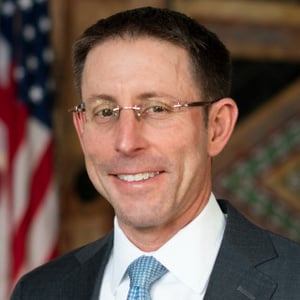
Donald Kochan is Professor of Law and Executive Director of the Law & Economics Center (LEC). Professor Kochan is an elected member of the American Law Institute (ALI) and serves as an Adviser to ALI's Restatement of the Law Fourth, Property project. Professor Kochan is a Nonresident Scholar at the Center for the Constitution at Georgetown University Law Center, where he was a Visiting Scholar in residence during Fall 2018. Before joining the Antonin Scalia Law School faculty, he was the Parker S. Kennedy Professor in Law at Chapman University’s Dale E. Fowler School of Law from 2004 to 2020. From 2003 to 2004, Professor Kochan was an Olin Fellow at the University of Virginia School of Law. During 2002-2003, he was a Visiting Assistant Professor of Law at George Mason’s Scalia Law School.
Professor Kochan’s scholarship focuses on areas of property law, constitutional law, administrative law, local government law, natural resources and environmental law, and law & economics. He has published several books and more than 50 scholarly articles and essays in well-regarded law journals. His work has been cited in more than a dozen state and federal court opinions, in more than 75 briefs filed in state and federal courts including more than 25 filed in the U.S. Supreme Court, in dozens of books and treatises, and in more than 800 scholarly articles.
Professor Kochan received his JD from Cornell Law School, where he was a John M. Olin Scholar in Law and Economics and managing editor of the Cornell International Law Journal. During law school, he also served as editor and executive editor of the Harvard Journal of Law & Public Policy symposium issues in 1997 and 1998. He received his BA from Western Michigan University, magna cum laude, with majors in both political science and philosophy, where he studied as the John W. Gill Medallion Scholar and was honored as the Presidential Scholar (awarded to the top graduate in the political science department).
After graduating from law school, Professor Kochan was a law clerk to The Honorable Richard F. Suhrheinrich of the United States Court of Appeals for the Sixth Circuit. Following his clerkship, Professor Kochan was an associate with the firm of Crowell & Moring LLP in Washington, D.C., where he specialized in natural resources & environmental law as well as tort, products, and consumer civil litigation & legislative affairs.
Director, Independent Women's Law Center; Owner, MPL Strategies
Biography
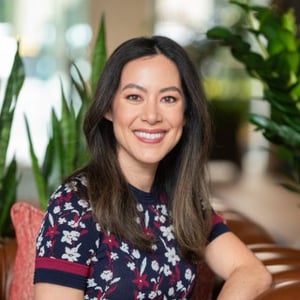
May Mailman is the director of Independent Women’s Law Center and the owner of MPL Strategies, a government consulting firm. May served as a senior White House official in both of President Trump’s administrations. She was most recently Senior Policy Strategist in the White House, and in the first Trump administration, May was a White House legal advisor for a wide range of policies including healthcare, immigration, and social issues. While in the first Trump White House, she also worked in the office of the Chief of Staff and the Staff Secretary’s office. Between her stints in the White House, May was Deputy Solicitor General for the State of Ohio and Vice President at Restoring Integrity and Trust in Elections (RITE). Prior to entering public service, May practiced litigation in Denver. Earlier in her career, she taught sixth grade in Kansas City through Teach for America. May received a B.S. in Journalism from the University of Kansas. She also earned her J.D. from Harvard Law School, where she served as President of the Federalist Society.
Somin’s work has appeared in numerous scholarly journals, including the Yale Law Journal, Stanford Law Review, Northwestern University Law Review, Georgetown Law Journal, Critical Review, and others. Somin has also published articles in a variety of popular press outlets, including the New York Times, Washington Post, Wall Street Journal, Los Angeles Times, CNN, NBC, The Atlantic, USA Today, Boston Globe, US News and World Report, South China Morning Post, National Law Journal and Reason. He has been quoted or interviewed by the New York Times, Washington Post, Wall Street Journal, Time, Newsweek, The Economist, the Christian Science Monitor, the Financial Times, The Guardian, the Associated Press, CBS, MSNBC, NPR, BBC, Reuters, the Canadian Broadcasting Corporation, the Australian Broadcasting Corporation, Radio Free Europe/Radio Liberty, Al Jazeera, and the Voice of America, among other media.
Somin’s writings have been cited in decisions by the United States Supreme Court, multiple state supreme courts and lower federal courts, and the Supreme Court of Israel. He is co-counsel for the plaintiffs in VOS Selections, Inc. v. Trump, a case challenging the constitutionality of President Trump’s “Liberation Day” tariffs. Somin has testified on the use of drones for targeted killing in the War on Terror before the US Senate Judiciary Subcommittee on the Constitution, Civil Rights, and Human Rights. In 2009, he testified on property rights issues at the United States Senate Judiciary Committee confirmation hearings for Supreme Court Justice Sonia Sotomayor. Somin writes regularly for the popularVolokh Conspiracylaw and politics blog, now affiliated with Reason magazine (previously affiliated with the Washington Post from 2014 to 2017). From 2006 to 2013, he served as Co-Editor of the Supreme Court Economic Review, one of the country’s top-rated law and economics journals.
Somin has served as a visiting professor at the University of Pennsylvania Law School. He has also been a visiting professor or scholar at the Georgetown University Law Center, the University of Hamburg, Germany, the University of Torcuato Di Tella in Buenos Aires, Argentina, Uriel Reichman University in Israel, and Zhengzhou University in China. He is a University Affiliate of the Schar School of Policy and Government at George Mason University, and an affiliated faculty member of the George Mason University Institute for Immigration Research. Before joining the faculty at George Mason, Somin was the John M. Olin Fellow in Law at Northwestern University Law School in 2002-2003. In 2001-2002, he clerked for the Hon. Judge Jerry E. Smith of the U.S. Court of Appeals for the Fifth Circuit. Professor Somin earned his B.A., Summa Cum Laude, at Amherst College, M.A. in Political Science from Harvard University, and J.D. from Yale Law School.
Sterling Professor of Law and Political Science, Yale Law School
Biography
Akhil Reed Amar is Sterling Professor of Law and Political Science at Yale University, where he teaches constitutional law in both Yale College and Yale Law School. After graduating from Yale College, summa cum laude, in 1980 and from Yale Law School in 1984, and clerking for Judge (later Justice) Stephen Breyer, Amar joined the Yale faculty in 1985 at the age of 26. He is Yale’s only living professor to have won the University’s unofficial triple crown — the Sterling Chair for scholarship, the DeVane Medal for teaching, and the Lamar Award for alumni service.
Amar’s work has won awards from both the American Bar Association and the Federalist Society, and he has been cited by Supreme Court justices across the spectrum in more than 50 cases — tops among scholars under age 70. According to both Fred Shapiro’s landmark 2021 study of lifetime scholarly citations and Heinonline’s most recent tabulation of lifetime law-review citations, Amar is America’s second most-cited legal scholar still under age 70. He is a member of the American Academy of Arts and Sciences and has written widely for popular publications, including The New York Times, The Washington Post, The Wall Street Journal, Time, and The Atlantic. He was an informal consultant to the popular TV show The West Wing and his scholarship has been showcased on many broadcasts, including The Colbert Report, Morning Joe, AC360, Velshi, Fox News @ Night with Shannon Bream, Fareed Zakaria GPS, Erin Burnett Outfront, and Constitution USA with Peter Sagal.
He is the author of more than a hundred law review articles and several books, including The Bill of Rights (1998 — winner of the Yale University Press Governors’ Award), America’s Constitution (2005 — winner of the ABA’s Silver Gavel Award), America’s Unwritten Constitution (2012 — named one of the year’s 100 best nonfiction books by The Washington Post), and The Constitution Today (2016 — named one of the year’s top ten nonfiction books by Time magazine). The first volume of his ambitious trilogy on American constitutional history from the Founding to the present, The Words That Made Us: America’s Constitutional Conversation, 1760-1840, came out in May 2021. The second volume, Born Equal: Remaking America’s Constitution, 1840-1920, will be published in September 2025 and is already available for pre-order. All together, his nonfiction books have won two starred reviews from Publishers Weekly and three starred reviews from Kirkus—tops, it is believed, among legal scholars under age 70. Together with Vikram David Amar (YLS ’88), he has a bi-weekly column on the Supreme Court on the distinguished website SCOTUSblog. Along with Andy Lipka, he co-hosts a popular and free weekly podcast, Amarica’s Constitution, whose listeners are eligible for CLE credit in most American jurisdictions. A wide assortment of his articles and op-eds and video links to many of his public lectures and free online courses may be found at akhilamar.com.
Professor of Law, University of Michigan Law School
Biography
Christopher J. Walker is a Professor of Law at the University of Michigan. Prior to joining Michigan law faculty in 2022, he spent a decade teaching at The Ohio State University Moritz College of Law. He previously clerked for Justice Anthony Kennedy of the U.S. Supreme Court, worked on the Civil Appellate Staff at the U.S. Department of Justice, and served on the Senate Judiciary Committee staff for the Gorsuch Supreme Court confirmation. Professor Walker’s research focuses on administrative law, regulation, and law and policy at the agency level. Outside the law school, he chaired the American Bar Association’s Section of Administrative Law and Regulatory Practice in 2020-21 and served as one of forty Public Members of the Administrative Conference of the United States from 2016-2022, and he continues to serve in both organizations in various capacities. He also works of counsel at the U.S. Chamber Litigation Center. In 2022, he received the Federalist Society’s Joseph Story Award.
Judge, United States Court of Appeals, Ninth Circuit
Biography
Judge Daniel A. Bress is a Circuit Judge on the United States Court of Appeals for the Ninth Circuit, with chambers in San Francisco. A native of Gilroy, California, Judge Bress graduated magna cum laude from Harvard College and received his J.D. degree from the University of Virginia School of Law, where he served as Editor-in-Chief of the Virginia Law Review. Following law school, Judge Bress clerked for the Honorable J. Harvie Wilkinson III of the United States Court of Appeals for the Fourth Circuit, and the Honorable Antonin Scalia of the Supreme Court of the United States. Judge Bress was then a lawyer private practice, first at Munger Tolles & Olson and later at Kirkland & Ellis LLP, where he was a litigation partner. Judge Bress has also taught law school courses at the University of Virginia School of Law and the Columbus School of Law at Catholic University. Judge Bress was nominated and confirmed to the Ninth Circuit in 2019.
Judge, United States District Court, District of Columbia
Biography
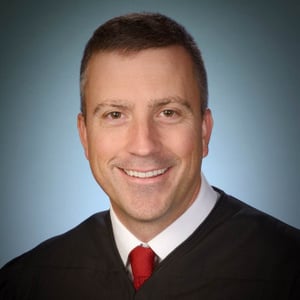
Judge Trevor N. McFadden was appointed to the United States District Court for the District of Columbia in 2017. He received his B.A. in 2001 from Wheaton College, IL, magna cum laude. In 2006, he received his J.D. from the University of Virginia School of Law, where he graduated Order of the Coif and was an editor for the Virginia Law Review.
Following graduation from law school, Judge McFadden clerked for Judge Steven Colloton, U.S. Court of Appeals for the Eighth Circuit. He then joined the U.S. Department of Justice, where he served as Counsel to the Deputy Attorney General and as Assistant U.S. Attorney in the District of Columbia. Judge McFadden subsequently became a partner at Baker & McKenzie LLP in Washington, DC, where he focused on white collar investigations. He is also co-author of a treatise, Corporate Settlement Tools: DPAs, NPAs, and Cooperation Agreements.
After four years in private practice, Judge McFadden returned to the U.S. Department of Justice, where he was Deputy Assistant Attorney General and acted as the second-in-command of the Department's Criminal Division. As Deputy Assistant Attorney General, he managed the Division's Fraud and Appellate Sections.
Judge McFadden also has extensive experience in law enforcement. He served as an officer with the Fairfax County, VA, Police Department and as a deputy sheriff in Madison County, VA.
Senior Legal Fellow and Manager, National Security Law Program, The Heritage Foundation
Biography
Charles “Cully” Stimson is a widely recognized expert in national security, homeland security, crime control, drug policy and immigration. A senior legal fellow at The Heritage Foundation since 2007, Stimson became Manager of the National Security Law Program in Heritage’s Institute for Constitutional Government in April 2013 after serving as Heritage’s chief of staff for a year.
Stimson writes and lectures on policy issues such as the law of armed conflict, terrorist detainee policy and interrogations, the Geneva Conventions, military commissions, the Patriot Act and FISA, criminal law and the death penalty, immigration and the war on drugs. As chief of staff to then-Heritage President Edwin J. Feulner, he was a key adviser on public policy matters as well as manager of Feulner’s office staff and Heritage’s day-to-day operations.
Stimson’s many research papers, op-eds and articles include special reports such as “Adult Time for Adult Crime,” a comprehensive study on the constitutionality of life sentences for teen-age murderers, and Sexual Assault in the Military: Understanding the Problem and How to Fix It, a ground-breaking paper detailing the inner workings of the military justice system compared to its civilian counterpart. His work on criminal and immigration law has been cited in briefs before the U.S. Supreme Court.
He testifies before the U.S. Senate and House on national security issues, and recently testified before the Senate Armed Services Committee on the Law of Armed Conflict, Law of War, and the 2001 Authorization for Use of Military Force.
Before joining the think tank in 2007, Stimson served as Deputy Assistant Secretary of Defense for Detainee Affairs. He advised then-Secretaries of Defense Donald Rumsfeld and Robert Gates and coordinated the Pentagon’s global detention policy and operations, including at Guantanamo Bay and in Iraq and Afghanistan. He was chairman of detainee-related panels such as the Defense Senior Leadership Oversight Committee, and the Special Detainee Follow Up Group. He represented the United States before the U.N. in Geneva, Switzerland in May 2006 where he led the DOD delegation in defense of the United States’ Second Period Report on the Convention Against Torture.
An accomplished trial lawyer, Stimson worked as a prosecutor at the local, state and federal levels, where he concentrated on violent crimes such as homicide, sexual assault and domestic violence. A third generation naval officer, Cully also served as a military prosecutor, defense counsel, and recently served as Deputy Chief Judge of the Navy-Marine Corps Trial Judiciary. He continues to serve, with the rank of Captain, as the Commanding Officer of the Preliminary Hearing Unit.
Stimson’s thousands of media interviews and appearances include Fox News Channel, MSNBC, CNN, BBC, NPR and C-SPAN. He has been quoted by most major newspapers, including The Washington Post, Wall Street Journal, New York Times, Los Angeles Times, and London Times.
A businessman and educator by training, Stimson is Vice Chairman of his family’s commercial real estate company in Seattle. Before 9/11, he was a Vice President at a New York-based global financial services and insurance brokerage firm where ran the private equity mergers and acquisitions D.C. operation.
Stimson holds a law degree from the George Mason University School of Law, where he later taught as an Adjunct Professor of Law. He is a graduate of Kenyon College, where he was Captain of the men’s varsity soccer team and an All-Conference player. He also studied at Harvard and Exeter universities. An avid soccer player and triathlete, he serves as Chairman of the Board of the United States Soccer Foundation, the charitable giving arm of U.S. Soccer.
William M. (Bill) McSwain practices in the area of litigation with a focus on white-collar criminal matters, internal investigations and complex business litigation. Bill is the immediate past U.S. Attorney for the Eastern District of Pennsylvania (EDPA), which is one of the nation’s most populous districts, with nearly six million people residing within Philadelphia and its eight surrounding counties. As U.S. Attorney, he served as the chief federal law enforcement officer in the EDPA, responsible for all federal criminal prosecutions, investigations and civil litigation involving the United States. He supervised a staff of approximately 300, including more than 140 Assistant U.S. Attorneys, at offices in Philadelphia and Allentown, PA.
Most importantly, Bill is a fighter who knows how to win. For example, as U.S. Attorney, he personally served as lead counsel in United States v Safehouse, in which he challenged Philadelphia’s plan to be the first city in the country to open supervised heroin injection sites. He argued and won the case in the U.S. Court of Appeals for the Third Circuit, which ruled that such sites would violate the federal Controlled Substances Act.
A former U.S. Marine Corps infantry officer and scout/sniper platoon commander, Bill brings an aggressive and creative approach to private practice, representing clients involved in government investigations and high stakes litigation. In particular, he enjoys taking on the challenge of winning seemingly “impossible” cases. He has lived that mindset from the very outset of his legal career.
For example, prior to his service as U.S. Attorney, Bill took on the case of an Iranian immigrant, Ken Hamidi, who was locked in a battle with Intel over emails that Mr. Hamidi has sent to Intel employees. After Mr. Hamidi had lost his case in the trial and intermediate appellate courts with other counsel, Bill took over and argued the case in front of the Supreme Court of California. In Intel Corp. v. Hamidi, 30 Cal.4th 1342 (2003), he won a 4-3 decision that established the legal rules for trespass liability on the Internet, one of the most significant cyberlaw rulings in the United States. Soon thereafter, Bill represented Chester County, Pennsylvania in its dispute regarding the attempted removal of an historic Ten Commandments plaque hanging on the façade of the County Courthouse. After the County lost at trial with other counsel, Bill stepped in and argued the case in front of the U.S. Court of Appeals for the Third Circuit. In Chester County, PA v. Freethought Society, et al., 334 F.3d 247 (3d Cir. 2003), he won a 3-0 decision that preserved the plaque, which is hanging on the Courthouse to this day. In one of his most challenging assignments, Bill began representing the Boy Scouts in 2008 in its dispute with the City of Philadelphia. Facing eviction from its historic headquarters building, the Scouts sued the City, alleging a violation of their First Amendment rights. In Cradle of Liberty Council, Boy Scouts of America v. City of Philadelphia, No. 2:08-cv-02429-RB (E.D. Pa.), Bill won a nationally publicized, three-week jury trial, and even secured a court ruling that the City had to pay the Scouts’ attorney’s fees.
Bill understands that, in a very real sense, anybody or any organization squaring off against the government – especially against the federal government – is an underdog. Bill has a long record of success advocating for clients in those situations. For example, in United States v. Bruno, No. 2:13-cr-00039-LS-6 (E.D. Pa.), he represented a Pennsylvania judge against federal conspiracy, wire fraud and mail fraud charges and won a full acquittal after a two-month jury trial. In United States. v. Brown, No. 2:12-cr-00367-RBS-1 (E.D. Pa.), Bill represented a nationally renowned charter school educator who faced a massive 67-count indictment alleging conspiracy, wire fraud, obstruction of justice and witness tampering. After a two-month trial, the jury acquitted Bill’s client on several counts and deadlocked on the others. The government eventually withdrew all of the deadlocked charges.
His record in the courtroom notwithstanding, Bill is also a thoughtful, intellectually curious strategist who has resolved numerous contentious matters out of court on terms his clients found favorable. He is a graduate of Yale University (B.A., cum laude, 1991) and the Harvard Law School (J.D., 2000), where he was an editor of the Harvard Law Review, won the Ames Moot Court Competition and received the George Leisure Award as the Best Oralist in the Ames Competition. He is an adjunct lecturer in law at the University of Pennsylvania Law School. He began his legal career by clerking for the Hon. Marjorie O. Rendell, U.S. Circuit Judge of the U.S. Court of Appeals for the Third Circuit.