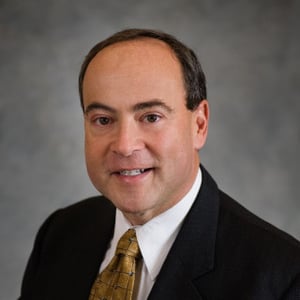
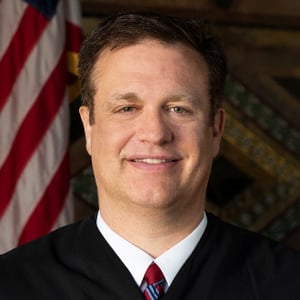
Solicitor General, Montana Attorney General's Office
Biography
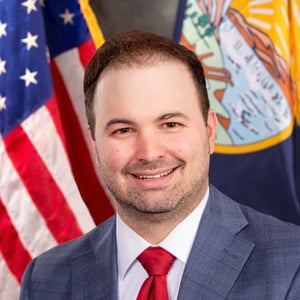
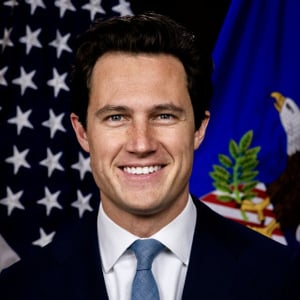
Christian is currently Solicitor General of Montana, where he serves as the chief litigator and principal legal advisor to Montana Attorney General Austin Knudsen. In that capacity, he manages litigation before the federal district courts, courts of appeal, and the United States Supreme Court, as well as the Montana Supreme Court. He previously served in the Trump Administration as Senior Counsel to the Assistant Secretary for Civil Rights at the U.S. Department of Education. Prior to government service, he was a public interest constitutional litigator at Mountain States Legal Foundation and a fellow at the Institute for Justice. He clerked for Justice Caleb Stegall on the Kansas Supreme Court. He also served as Director of Publications for the Federalist Society's national headquarters.
Christian earned his B.A. in Political Science in 2009 from the University of Pennsylvania before attending the University of Kansas School of Law. Christian is admitted to practice law in Kansas and Montana. A Kansas native, he is a die-hard fan of the Kansas Jayhawks, Kansas City Chiefs, and Kansas City Royals.
Christian is a member of the Federalism & Separation of Powers Practice Group's Executive Committee.
Solicitor General, Iowa Office of the Attorney General
Biography
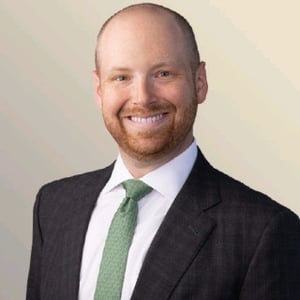
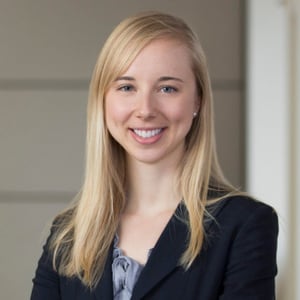
Eric Wessan serves as Iowa’s Solicitor General in the Iowa Attorney General’s Office. In that role, Wessan leads Iowa’s litigation before State and federal appellate courts, including the Iowa and U.S. Supreme Courts. Before that role, Wessan worked on complex commercial litigation at two large law firms in Chicago. Wessan also served as a law clerk for the Honorable James C. Ho on the U.S. Court of Appeals for the Fifth Circuit and for the Honorable John F. Kness on the U.S. District Court for the Northern District of Illinois. Wessan is a graduate of the University of Chicago Law School, with honors, and of the University of Chicago.
Judge, United States Court of Appeals, Third Circuit
Biography
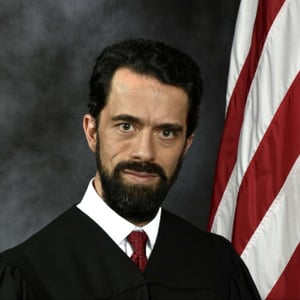
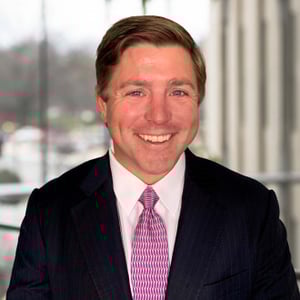
Stephanos Bibas is a judge on the U.S. Court of Appeals for the Third Circuit. Judge Bibas was previously a professor of law and criminology at the University of Pennsylvania Law School. As director of the Penn Law Supreme Court Clinic, he argued six cases before the Supreme Court of the United States and filed briefs in dozens of others. He graduated summa cum laude and Phi Beta Kappa from Columbia University in 1989 with a B.A. in political theory and from Oxford University in 1991 with a B.A. in jurisprudence. He then earned his J.D. from Yale Law School in 1994.
After graduating from Yale Law, Judge Bibas clerked for Judge Patrick Higginbotham of the U.S. Court of Appeals for the Fifth Circuit and Justice Anthony Kennedy on the Supreme Court and was a litigation associate at Covington & Burling LLP in Washington, D.C. Thereafter, Judge Bibas served as an Assistant U.S. Attorney in the Southern District of New York, where he successfully prosecuted the world’s leading expert in Tiffany stained glass for hiring a grave robber to steal priceless Tiffany windows from cemeteries. Before his tenure at Penn Law, Judge Bibas taught at the University of Chicago Law School and the University of Iowa College of Law and was a research fellow at Yale Law School. He has published two books and seventy scholarly articles.
Laurence A. Tisch Professor of Law and Director, Classical Liberal Institute, New York University School of Law; Director, Classical Liberal Institute, Civitas Institute University of Texas at Austin
Biography
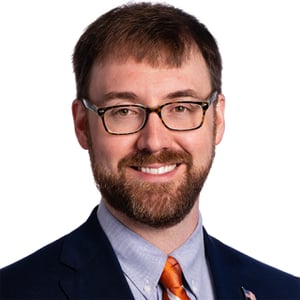
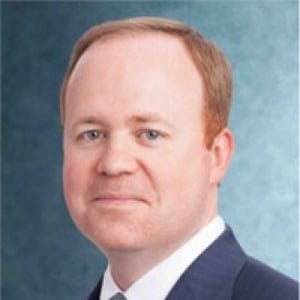
Richard A. Epstein is the Laurence A. Tisch Professor of Law, at New York University, a senior research fellow at the Civitas Institute at the University of Texas Austin, and a senior Lecturer, the University of Chicago. He received an LL.D., h.c . from the University of Ghent, 2003 , and an LLD h.c . from the University of Siegen in 2018 and the Bradley Prize in 2011. He has been a member of the American Academy of Arts and Sciences since 1985. He has edited both the Journal of Legal Studies (1981-1991) and the Journal of Law and Economics (1991-2001). He is also a founder and director of the Classical Liberal Institute at NYU Law School. His most recent book is The Classical Liberal Constitution: The Uncertain Quest for Limited Government (2014). His other books include Takings: Private Property and the Power of Eminent Domain ( 1985); Bargaining with the State (1993); Simple Rules for a Complex World (1995); Principles for a Free Society: Reconciling Individual Liberty and the Common Good (1998); Skepticism and Freedom: A Modern Theory of Classical Liberalism (2003); Design for Liberty: Private Property, Public Administration and the Rule of Law (2011), and most recently, The Myth of Birthright citizenship—and Beyond (2026). He has taught courses in , administrative law, antitrust, constitutional, contracts, environmental law, land use planning; real property, torts and water law. He has written and spoken extensively on a wide range of topics, and is writes a regular column for Defining Ideas.
Legal Fellow and Manager, Supreme Court and Appellate Advocacy Program, The Heritage Foundation
Biography
Zack is a Legal Fellow and Manager of the Supreme Court and Appellate Advocacy Program in the Edwin Meese III Center for Legal and Judicial Studies at The Heritage Foundation.
He previously served for several years as an Assistant United States Attorney in the Northern District of Florida. Prior to that, he spent two years as an associate in the Washington, D.C. office of Cleary Gottlieb Steen & Hamilton, which he joined after clerking for the Hon. Emmett R. Cox on the United States Court of Appeals for the Eleventh Circuit.
Smith received his undergraduate, master’s, and law degrees from the University of Florida. During law school, Smith served as the Editor in Chief of the Florida Law Review and served on the executive boards of several student organizations, including the UF Chapter of the Federalist Society.
Deputy Assistant Attorney General, Office of Legal Counsel, U.S. Department of Justice
Biography
Josh Craddock is Deputy Assistant Attorney General in the Office of Legal Counsel at the U.S. Department of Justice. He is a graduate of the Harvard Law School, where he served as editor-in-chief of the Harvard Journal of Law & Public Policy. He later clerked for the Honorable Chief Judge Timothy Tymkovich of the U.S. Court of Appeals for the Tenth Circuit. Before law school, Mr. Craddock managed advocacy teams for several non-profit organizations at the United Nations. His writing has appeared in the Notre Dame Law Review, Harvard Journal on Legislation, Washington Post, Newsweek, and National Review.
Corinne principally practices in environmental law, with an emphasis on litigation, regulatory compliance, internal investigations, and defense against government investigations and enforcement actions.
Corinne draws on wide experience at the U.S. Department of Justice, including serving as Senior Counsel in the Office of the Associate Attorney General, which oversees all civil litigation on behalf of the United States, and as Counselor in the Office of the Attorney General.
Corinne most recently served as Counsel and Chief of Staff in the Environment and Natural Resources Division of the U.S. Department of Justice, where she assisted in managing a 600-person division that included 400 lawyers. In this role she helped manage the Division’s civil and criminal litigation arising under more than 150 environmental and natural resources laws.
She also worked closely with the General Counsel’s Offices for multiple federal agencies, including the EPA, Departments of Interior, Defense, Energy, Commerce, and Agriculture, as well as the White House and Counsel on Environmental Quality to advise high-ranking officials on policy and litigation risks associated with the environmental and natural resource laws.
She has personally argued cases in three U.S. Courts of Appeals, and multiple district courts, and served as the lead or co-lead counsel in district court litigation defending agency regulations, approvals, and permits related to oil and gas operations and other energy extraction projects.
Her roles in government have given her a unique perspective into the decision-making processes in the federal government.
In the private sector, Corinne counsels clients on environmental compliance across a variety of industries, including energy, chemical, manufacturing, and mining sectors. In the transactional context, she assists in the drafting and negotiating of the environmental terms in purchase and sale agreements, lease agreements, credit agreements, and disclosures for debt and equity offerings and public filings. She has also drafted comments on behalf of clients to agencies on proposed rules with significant implications for the oil and gas industry.
James Burnham is the General Counsel of xAi and X. Before his current role, James served as Managing Partner of King Street Legal, PLLC (which he founded), and recently served for six months as the General Counsel for the Department of Government Efficiency. In his role at DOGE, James designed the legal structure of DOGE, advised DOGE personnel on policy initiatives across the Executive Branch, and supervised dozens of DOGE-related lawsuits against the Executive Branch – many of which DOGE won at the United States Supreme Court. Before founding King Street Legal, James was a litigation partner at Jones Day, a senior official in the Department of Justice's Civil Division and Office of the Attorney General, and a Senior Associate Counsel to the President. James also clerked for Justice Neil Gorsuch on the Supreme Court and Judge Alex Kozinski on the U.S. Court of Appeals for the Ninth Circuit. He graduated with high honors from the University of Chicago Law School and earned his bachelor's degree at the University of Texas at Austin. James is also the President of Vallecito Capital, LLC, a mission-driven litigation fund that ensures meritorious litigation does not falter due to lack of resources.
Jeff Wall is Co-Chair of the Appellate and Constitutional Law Practice Group at Gibson Dunn and a former Acting Solicitor General of the United States. He has argued more than 30 cases before the U.S. Supreme Court and is widely regarded as one of the nation’s leading appellate advocates. Last year, he was named Appellate Attorney of the Year by The National Law Journal. He has been honored as The American Lawyer’s “Litigator of the Week” three times since 2024, for securing the elimination of a $650 million award against several national pharmacy chains; persuading the Delaware Supreme Court to reinstate Tesla CEO Elon Musk’s $60 billion incentive-compensation plan; and delivering what was described as a “knockout blow” to the Federal Communications Commission’s net neutrality rules in the Sixth Circuit after more than a decade of regulatory uncertainty.
A Fellow of the American Academy of Appellate Lawyers, Jeff is widely regarded for his ability to distill complex legal issues into clear, persuasive arguments. He is ranked Band 1 by Chambers USA, which has praised his “formidable reputation,” describing him as a “sophisticated” and “brilliant advocate” with an “impressive track record before the Supreme Court.” He is also a three-time Law360 Appellate MVP, most recently earning back-to-back honors in 2024 and 2025.
Jeff is a member of the American Law Institute, President of the Edward Coke Appellate Inn of Court, trustee of the Supreme Court Historical Society, and former member of the Advisory Committee on Procedures for the U.S. Court of Appeals for the D.C. Circuit. Before his service in the Solicitor General’s Office and time in private practice, Jeff clerked for Justice Clarence Thomas of the U.S. Supreme Court and Judge J. Harvie Wilkinson III of the U.S. Court of Appeals for the Fourth Circuit. Jeff has a robust pro bono practice and role in his community, serving on the board of the St. Albans School and its School of Public Service.
Clint Bolick was appointed by Governor Doug Ducey in January 2016 to serve on the Arizona Supreme Court and was retained by the voters in 2018 and 2024.
Prior to joining the Court, Justice Bolick litigated constitutional cases in state and federal courts from coast to coast, including the U.S. Supreme Court. Among other positions, he served as Vice President for Litigation at the Goldwater Institute and as Co-founder and Vice President for Litigation at the Institute for Justice. He has litigated in support of school choice, freedom of enterprise, private property rights, freedom of speech, and federalism, and against racial classifications and government subsidies.
Justice Bolick received his Juris Doctor degree from the University of California at Davis, where he has been recognized as a distinguished alumnus, and his Bachelor of Arts degree magna cum laude from Drew University. He serves as a research fellow with the Hoover Institution. Among other honors, he was named one of the 90 Greatest DC Lawyers in the Last 30 Years by Legal Times in 2008, received a Bradley Prize in 2006, and was recognized as one of the nation’s three lawyers of the year by American Lawyer in 2002 for his successful defense of school vouchers in Zelman v. Simmons-Harris.
Justice Bolick is a prolific author of a dozen books and hundreds of articles. Among his most recent books are Unshackled: Freeing America’s K-12 Education System: Immigration Wars: Forging an American Solution, co-authored with former Florida Governor Jeb Bush; and David’s Hammer: The Case for an Activist Judiciary. Bolick serves as an adjunct professor of constitutional law at Arizona State University’s Sandra Day O’Connor School of Law and has served as a lecturer at Harvard University’s John F. Kennedy School of Government.
Judge, United States Court of Appeals, Ninth Circuit
Biography
Judge Nelson was confirmed to the Ninth Circuit in October 2018,as the youngest Circuit Judge to serve from Idaho and he has chambers in his hometown of Idaho Falls.Prior to his confirmation, Judge Nelson served for nine years as General Counsel of Idaho Falls-based Melaleuca, Inc., a consumer goods company. He previously worked in Washington, DC, where he served in all three branches of the federal government, including as Special Counsel for Supreme Court nominations to the Ranking Member of the Senate Judiciary Committee; Deputy General Counsel to the White House Office of Management and Budget; Deputy Assistant Attorney General in the Environment and Natural Resources Division of the United States Department of Justice; and a law clerk to Judge Henderson of the United States Court of Appeals for the D.C. Circuit. He has argued in most of the federal courts of appeals and worked on dozens of Supreme Court briefs. He started in the Washington, DC office of Sidley Austin as an appellate lawyer, after clerking for Judges Mosk and Brower of the Iran-U.S. Claims Tribunal at The Hague, and fornow-Judge Tom Griffith, then-Senate Legal Counsel, during the impeachment trial of President Clinton. Judge Nelson earned his B.A. from Brigham Young University and his J.D., with honors, from BYU Law School. Judge Nelson has been a member of the Federalist Society since 1998.