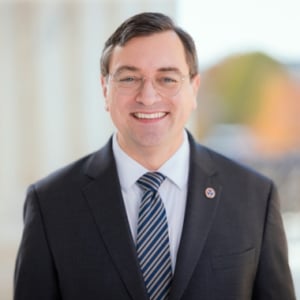
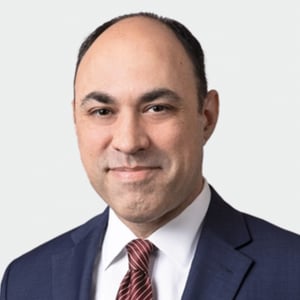
Jonathan Skrmetti was sworn in to an eight-year term as Tennessee’s Attorney General and Reporter on September 1, 2022.
Prior to his current role, General Skrmetti served as Chief Counsel to Governor Bill Lee and as Chief Deputy Attorney General to his predecessor, Tennessee Attorney General Herbert Slatery.
Before working for the State of Tennessee, General Skrmetti was a partner at Butler Snow LLP in Memphis. His legal career began with nearly a decade as a federal prosecutor. He worked at the Civil Rights Division at Main Justice and then at the Memphis U.S. Attorney’s Office and prosecuted sex traffickers, corrupt government officials, and violent white supremacists. In addition, General Skrmetti taught cyberlaw as an adjunct professor at the University of Memphis.
General Skrmetti earned honors degrees from George Washington University, the University of Oxford, and Harvard Law School, where he was editor-in-chief of the Harvard Journal of Law & Public Policy. Following law school, Jonathan clerked for Judge Steven Colloton on the U.S. Court of Appeals for the Eighth Circuit. He lives in Franklin, Tennessee, with his wife and four children.
Patrick Hotung Professor of Constitutional Law, Georgetown University Law Center; Faculty Director, Georgetown Center for the Constitution
Biography
Randy E. Barnett is the Patrick Hotung Professor of Constitutional Law at the Georgetown University Law Center and is the Faculty Director of the Georgetown Center for the Constitution. After graduating from Northwestern University and Harvard Law School, he tried many felony cases as a prosecutor in the Cook County States’ Attorney’s Office in Chicago. A recipient of a Guggenheim Fellowship in Constitutional Studies and the Bradley Prize, Professor Barnett has been a visiting professor at Penn, Northwestern and Harvard Law School.
Professor Barnett’s publications includes thirteen books, more than one hundred articles and reviews, as well as numerous op-eds. His most recent book is Felony Review: Tales of True Crime and Corruption in Chicago (2026). His other books on the Constitution include: A Life for Liberty: The Making of an American Originalist (2024); The Original Meaning of the Fourteenth Amendment: Its Letter and Spirit (2021) (with Evan Bernick); An Introduction to Constitutional Law: 100 Supreme Court Cases Everyone Should Know (2019) (with Josh Blackman); Restoring the Lost Constitution: The Presumption of Liberty (2nd ed. 2013); Our Republican Constitution: Securing the Liberty and Sovereignty of We the People (2016); and Constitutional Law: Cases in Context (5th ed. forthcoming 2027) (with Josh Blackman). His books on contracts are The Oxford Introductions to U.S. Law: Contracts (2010) and Contracts: Cases and Doctrine (7th ed. 2021) (with Nate Oman). And he is the author of The Structure of Liberty: Justice and the Rule of Law (2nd ed. 2014).
In 2004, he argued the medical marijuana case of Gonzalez v. Raich before the U.S. Supreme Court. In 2012, he was one of the lawyers representing the National Federation of Independent Business in its constitutional challenge to the Affordable Care Act in NFIB v. Sebelius. He’s appeared in numerous documentaries and portrayed a prosecutor in the 2010 science-fiction feature film, InAlienable: The Movie. On X he is @RandyEBarnett
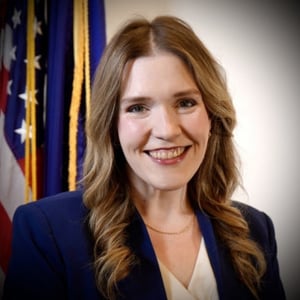
Jenna Lorence currently serves as Alaska’s State Solicitor General. Prior to this role, she served as Deputy Solicitor General in the Indiana Attorney General’s Office, where she represented the State in constitutional and appellate matters. Lorence previously served as Assistant Solicitor General for the Commonwealth of Kentucky, Special Counsel to the U.S. Senate Committee on the Judiciary, and practiced appellate and complex litigation at Baker & Hostetler LLP. A graduate of the Washington and Lee University School of Law, she also clerked for Judge Allison Jones Rushing of the U.S. Court of Appeals for the Fourth Circuit. In her current role, Lorence oversees Alaska’s appellate strategy and works with state attorneys general across the country on significant constitutional and public policy issues.
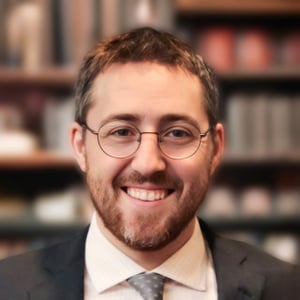
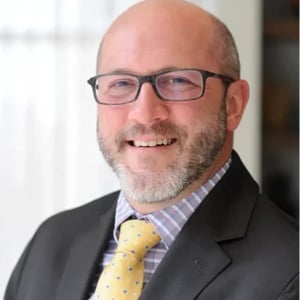
Brett Nolan is a Senior Attorney at the Institute for Free Speech, a public interest law firm that defends the First Amendment rights of those engaged in political speech and advocacy around the country.
Before joining the Institute, Brett served as the Principal Deputy Solicitor General of Kentucky, where he represented the Commonwealth in a wide variety of high-stakes litigation at every level of state and federal court. In that role, Brett led a successful challenge against the Department of Treasury over the constitutionality of a federal law limiting the ability of states to modify their tax codes, and he helped secure a U.S. Supreme Court victory that upheld a state’s constitutional right to defend its interests in federal court.
Prior to that, Brett served as the Deputy General Counsel to the former Governor of Kentucky, where he advised the governor and other executive branch officials on legal and policy issues and represented them in litigation. Brett clerked for Judge John Nalbandian of the U.S. Court of Appeals for the Sixth Circuit and Judge Karen K. Caldwell of the U.S. District Court for the Eastern District of Kentucky. Between clerkships, he worked in private practice. Brett received his law degree from the University of Chicago Law School, where he graduated with High Honors and was an editor of The University of Chicago Law Review.
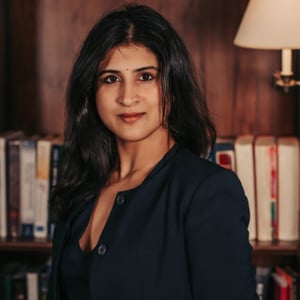
Mathura Sridharan serves as the 12th Solicitor General of Ohio. She previously served as Deputy Solicitor General and as Director of Ohio’s Tenth Amendment Center, where she initiated and directed suits to defend Ohioans against unlawful federal policies and to preserve the separation of powers between the federal and state governments. Across these roles, she has briefed and argued numerous appeals before the Ohio Supreme Court, the Supreme Court of the United States, and the U.S. Courts of Appeals for the Sixth and other Circuits. In 2024, Mathura argued before the Supreme Court of the United States in Ohio v. EPA, representing several States in a challenge to the Environmental Protection Agency’s Good Neighbor Rule regulating the interstate transport of air pollution.
Before joining the Ohio Attorney General’s Office, Mathura clerked for Judge Steven J. Menashi of the U.S. Court of Appeals for the Second Circuit and Judge Deborah A. Batts of the U.S. District Court for the Southern District of New York. She holds a Juris Doctor from New York University School of Law, a Master of Science in Electrical Engineering and Computer Science from the Massachusetts Institute of Technology, and Bachelor of Science degrees in Economics and in Electrical Engineering and Computer Science from the Massachusetts Institute of Technology.
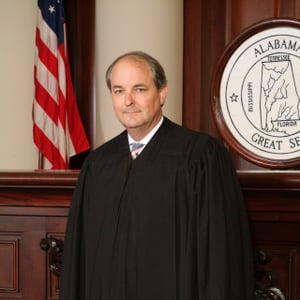
Justice William B. Sellers was appointed by Governor Kay Ivey in May 2017. He was elected to a full term in 2018 and re-elected in 2024. His current term expires in 2031.
Justice Sellers received a Bachelor of Arts degree from Hillsdale College in 1985, a Juris Doctorate from the University of Alabama in 1988, and a Masters of Laws in Taxation from New York University in 1989. Justice Sellers practiced law in Montgomery for 28 years. He maintained a general business practice with emphasis on taxation, business organizations and finance. A major part of Justice Sellers's practice involved tax litigation.
Justice Sellers is a member of numerous civic organizations and professional associations. In 2012, he received the President's Award for service to the Alabama Bar Association. In 2013, Governor Robert Bentley appointed Justice Sellers to the Alabama State Council on the Arts. In August 2014, Justice Sellers was elected chairman of the Fair Ballot Commission. He is past president of the Rotary Club of Montgomery, past chairman of the Montgomery Area Business Committee for the Arts, chairman of the River Region United Way Campaign in 2008, and past chairman of the YMCA of Greater Montgomery. Justice Sellers was a member of the Electoral College in 2004, 2008, 2012, and 2016.
Justice Sellers is admitted to practice before the United States Supreme Court, the Supreme Court of Alabama, the District of Columbia Court of Appeals, the United States District Courts for the Middle and Northern Districts of Alabama, the United States Court of Appeals for the Eleventh Circuit, and the United States Tax Court. He is a member of the Alabama State Bar, the Montgomery County Bar Association, and the District of Columbia Bar. Since 2014, he has served as the community liaison with the International Officers School at Maxwell Air Force Base.
Justice Sellers and his wife, Lee, have been married for 37 years. They are members of Trinity Presbyterian Church and have three adult children and two grandchildren.
John Eidsmoe is a retired Air Force Lt. Colonel and Alabama State Defense Force Colonel, and a graduate of the Air Command & Staff College and the Air War College. He is Professor of Law at the Oak Brook College of Law and Government Policy and, in his various teaching assignments, his students have given him the Outstanding Professor Award or Professor of the Year Award five times. He has served as Senior Staff Attorney with the Alabama Supreme Court and is currently Legal Counsel for the Foundation for Moral Law. Eidsmoe also serves on the boards of Lutherans for Life, The Plymouth Rock Foundation, and the Gospel Martial Arts Union, and is a constitutional attorney who has defended homeschools, Christian schools, the right of students to study the Bible in public schools, and the right to display the Ten Commandments in the public arena. He has authored numerous books, including Historical & Theological Foundations of Law, Christianity & the Constitution, God & Caesar, and Columbus & Cortez, and has produced a variety of audio and video lecture albums including The Institute on the Constitution and Here I Stand: A Biblical Worldview for a New Millennium. He holds seven academic degrees in law, theology, history, and political science. He and his wife, Marlene, have been married since 1970, have three children, and live in rural Pike Road, Alabama.
Prior to joining BakerHostetler, Allen spent 15 years at the center of the national debate over political regulation. At the FEC, he worked across party lines to restore a key regulatory player to functioning order after years of neglect and partisan gridlock. Those efforts led to the first adoption of a new regulation in over a decade, reform of the commission’s investigations and interagency practices, and more than 150 Statements of Reasons interpreting the Federal Election Campaign Act (FECA). Substantively, Allen prioritized developments at the edges of the FEC’s jurisdiction, particularly those cases where federal election rules conflict with broader principles of corporate, administrative, and constitutional law.
Previously, Allen spent nearly a decade representing organizations across the political spectrum in First Amendment challenges to state and federal laws governing civil society. His practice emphasized motions and appeals, including a dozen arguments before federal appellate and state supreme courts, and appearances before regulatory agencies. In addition to purely campaign finance matters, Allen's cases included the first federal lawsuit in decades addressing the constitutional scope of lobbying laws, litigation establishing the standard for constitutional challenges to FECA under that statute’s specialized review procedures and the successful defense of a state attorney general leading to the invalidation of an FEC regulation.
Michael Williams is the Solicitor General for the State of West Virginia. In that role, Michael represents the State in appeals before state and federal courts, including the U.S. Supreme Court. Michael also coordinates strategic affirmative litigation on the State’s behalf, including litigation against the federal government.
Before joining the Attorney General’s Office, Michael co-led the complex briefing and appeals group at a Michigan boutique firm, representing Fortune 50 companies and others in actions across the country. He also practiced in the litigation groups of two Washington, D.C. firms and clerked with the Appellate Division of the U.S. Attorney’s Office for the District of Maine.
Michael’s work has been honored with a Best Brief Award from the National Associationof Attorneys General and a Leader in the Law Award from Michigan Lawyers Weekly. He often speaks and writes on appellate-related issues.
Michael clerked twice in the Fourth Circuit: once with then-Chief Judge Deborah Chasanow of the U.S. District Court for the District of Maryland and later with Judge G. Steven Agee of the U.S. Court of Appeals for the Fourth Circuit. He attended George Washington University Law School and Bates College.
George C. Dix Professor in Constitutional Law, Northwestern University Pritzker School of Law
Biography
John O. McGinnis is a graduate of Harvard College and Harvard Law School where he was an editor of the Harvard Law Review. He also has an MA degree from Balliol College, Oxford, in philosophy and theology. Professor McGinnis clerked on the U.S. Court of Appeals for the District of Columbia. From 1987 to 1991, he was deputy assistant attorney general in the Office of Legal Counsel at the Department of Justice. He is the author of Accelerating Democracy: Transforming Government Through Technology (Princeton 2013) and Originalism and the Good Constitution (Harvard 2013) (with M. Rappaport). He is a past winner of the Paul Bator award given by the Federalist Society to an outstanding academic under 40. He has been listed by the United States on the roster of panelists who may be called upon to decide World Trade Organization Disputes.
Erin Morrow Hawley serves as Chair of Lex Politica's Supreme Court and Appellate Practice overseeing the firm’s strategic appellate litigation and critical motions practice in the trial courts. Erin is an experienced litigator who represents clients in constitutional, regulatory, and appellate matters in federal and state courts throughout the country.
Erin has represented dozens of clients before the Supreme Court of the United States, served as lead counsel in high-profile cases raising novel constitutional and statutory issues, and authored numerous successful petitions for certiorari and briefs in opposition. She has argued in state and federal appellate and trial courts throughout the country, including the Supreme Court of the United States. Erin represents diverse clients in high-stakes litigation from state governments to faith-based nonprofits to Fortune 100 companies. She possesses expertise on a wide range of subject matters including administrative law, the First Amendment, religious liberty, federal jurisdiction, federal preemption, equitable jurisdiction, tax law, the Affordable Care Act, and Title IX.
Erin represents clients in cases where public communications strategy is paramount. She is a sought-after speaker and writer, has testified multiple times before Congress, and is a frequent presenter on constitutional and administrative law issues, including at the Oxford Union, the National Federalist Society Convention, and university campuses across the country. She is a frequent commentator to media outlets, including Fox News, MSNBC, the Wall Street Journal, WORLD, USA Today, the Federalist, and the Hill.
Erin previously oversaw Alliance Defending Freedom’s--where she still serves as Of Counsel--litigation strategies to empower women and protect the dignity of life, defend pregnancy centers’ First Amendment rights from government overreach, and safeguard Americans’ freedoms from the ever-encroaching administrative state.
Laurence H. Silberman Chair in Constitutional Governance, American Enterprise Institute; Executive Director, Antonin Scalia Law School’s C. Boyden Gray Center for the Study of the Administrative State
Biography
Adam J. White is the Laurence H. Silberman Chair in Constitutional Governance and senior fellow at the American Enterprise Institute, where he focuses on the Supreme Court and the administrative state. He also directs the Antonin Scalia Law School’s C. Boyden Gray Center for the Study of the Administrative State.
He writes on regulation and constitutional government for a variety of publications. He practiced law in Washington, D.C., after clerking for the D.C. Circuit's Judge David Sentelle. He also has been chairman of the ABA's Administrative Law Section.
In 2021, he served on the Presidential Commission on the Supreme Court of the United States, where he criticized “Court packing” and other efforts to restructure the Supreme Court.