The Effort to Replace Equality with Equity: Is it (Un)Equal Protection?
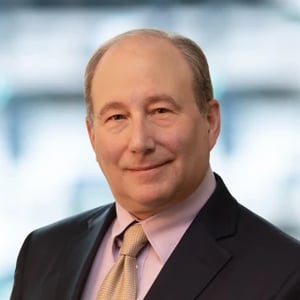
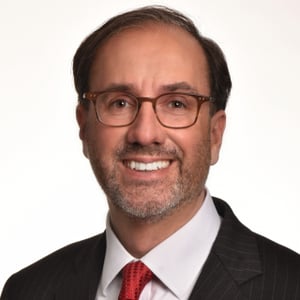
with Braden Boucek
Conrad Indianapolis50 West Washington Street
Indianapolis, IN 46204
Here are the latest events.
Partner, Sullivan & Cromwell LLP
Andrei Iancu is a partner at Sullivan & Cromwell and one of the leading voices in intellectual property law and innovation policy. He is a former Undersecretary of Commerce for Intellectual Property and Director of the U.S. Patent and Trademark Office (USPTO), a position to which he was confirmed unanimously by the Senate. Andrei has decades of experience representing plaintiffs and defendants in IP matters across the technical and scientific spectra, including medical devices, genetic testing, therapeutics, the Internet, telephony, TV broadcasting, video game systems and computer peripherals. He represents clients in litigation and trials before the district courts, the U.S. International Trade Commission and the USPTO, the Federal Circuit and U.S. Supreme Court, and also counsels clients on obtaining, licensing, enforcing and defending against IP rights globally.
Partner, Cravath Swaine & Moore LLP
David J. Kappos is a partner at Cravath. He is widely recognized as one of the world’s foremost leaders in the field of intellectual property, including intellectual property management and strategy, the development of global intellectual property norms, laws and practices as well as commercialization and enforcement of innovation-based assets. Mr. Kappos supports the Firm’s clients with a wide range of their most complex intellectual property issues, including those pertaining to blockchain and financial technology (FinTech).
From August 2009 to January 2013, Mr. Kappos served as Under Secretary of Commerce and Director of the United States Patent and Trademark Office (USPTO). In that role, he advised the President, the Secretary of Commerce and the Administration on intellectual property policy matters. As Director of the USPTO, he led the Agency in dramatically re-engineering its entire management and operational systems as well as its engagement with the global innovation community. He was instrumental in achieving the greatest legislative reform of the U.S. patent system in generations through passage and implementation of the Leahy‑Smith America Invents Act, signed into law by President Obama in September 2011.
Prior to leading the USPTO, Mr. Kappos held several executive posts in the legal department of IBM, the world’s largest patent holder. From 2003 to 2009, he served as the company’s chief intellectual property lawyer. In that capacity, he managed global intellectual property activities for IBM, including all aspects of patent, trademark, copyright and trade secret protection. Mr. Kappos joined IBM as a development engineer. During his more than 25 years at IBM, he served in a variety of roles including litigation counsel and Asia Pacific IP counsel, based in Tokyo, Japan, where he led all aspects of intellectual property protection, including licensing, transactions support and mergers and acquisitions activity for the Asia/Pacific region.
Mr. Kappos has received numerous accolades for his contributions to the field of intellectual property, including, among others, the 2014 Global Agenda Council Vision Award for the Intellectual Property Council’s pro bono initiative from the World Economic Forum, the 2014 Jefferson Medal from the New Jersey Intellectual Property Law Association (NJIPLA), the 2013 Board of Director’s Excellence Award from the American Intellectual Property Law Association (AIPLA), the 2013 Champion of Intellectual Property Award from the District of Columbia Bar Association and the 2013 North America Government Leadership Award from Semiconductor Equipment and Materials International (SEMI). He was named one of the “Top 25 Icons of IP” by Law360, one of the “50 Most Influential People in Intellectual Property” and the “Outstanding Practitioner of the Year in IP Transactions” by Managing IP, one of the “Top 50 Intellectual Property Trailblazers & Pioneers” and one of the “100 Most Influential Lawyers in America” by The National Law Journal, “Intellectual Property Professional of the Year” by the Intellectual Property Owners Association and inducted into the Intellectual Property Hall of Fame by Intellectual Asset Management Magazine in 2012. Mr. Kappos was also recognized as a leading lawyer by IAM Strategy 300, IAM Patent 1000, World IP Review, The Legal 500 US, Who’s Who Legal: Patents, Lawdragon, Super Lawyers and The Best Lawyers in America. He is a frequent speaker and has authored many published articles on various intellectual property, innovation and leadership topics.
Mr. Kappos serves on the Boards of Directors of the Partnership for Public Service, the Center for Global Enterprise and the Intellectual Property Owners Education Foundation. He is the Chair of the Advisory Council of the Naples Roundtable, and the U.S. Chair of the U.S.-China IP Cooperation Dialogue. He is also an Adjunct Professor at Columbia Law School, where he teaches copyright litigation, and Cornell Law School, where he teaches legal advising for the start-up general counsel.
Mr. Kappos was born in Palos Verdes, California. He received a B.S. summa cum laude in Electrical and Computer Engineering from the University of California, Davis in 1983 and a J.D. from the University of California, Berkeley in 1990.
Elvin R. Latty Professor of Law, Duke University School of Law
Arti Rai, Elvin R. Latty Professor of Law and co-Director, Duke Law Center for Innovation Policy, is an internationally recognized expert in intellectual property (IP) law, administrative law, and health policy. Rai has also taught at Harvard, Yale, and the University of Pennsylvania law schools. Rai's research on IP law and policy in biotechnology, pharmaceuticals, and software has been funded by NIH, the Kauffman Foundation, and the Woodrow Wilson Center. She has published over 50 articles, essays, and book chapters on IP law, administrative law, and health policy. Her publications have appeared in both peer-reviewed journals and law reviews, including Science, the New England Journal of Medicine, the Journal of Legal Studies, Nature Biotechnology, and the Columbia, Georgetown, and Northwestern law reviews. She is the editor of Intellectual Property Law and Biotechnology: Critical Concepts (Edward Elgar, 2011) and the co-author of a 2012 Kauffman Foundation monograph on cost-effective health care innovation.
From 2009-2010, Rai served as the Administrator of the Office of External Affairs at the U.S. Patent and Trademark Office (USPTO). As External Affairs Administrator, Rai led policy analysis of the patent reform legislation that ultimately became the America Invents Act and worked to establish the USPTO’s Office of the Chief Economist. Prior to that time, she had served on President-Elect Obama’s transition team reviewing the USPTO. Prior to entering academia, Rai clerked for the Honorable Marilyn Hall Patel of the U.S. District Court for the Northern District of California; was a litigation associate at Jenner & Block (doing patent litigation as well as other litigation); and was a litigator at the Federal Programs Branch of the U.S. Department of Justice's Civil Division.
Rai regularly testifies before Congress and relevant administrative bodies on IP law and policy issues and regularly advises federal agencies on IP policy issues raised by the research that they fund. She is a member of the National Advisory Council for Human Genome Research and of an Expert Advisory Council to the Defense Advanced Projects Research Agency (DARPA). Rai is a public member of the Administrative Conference of the United States, a member of the American Law Institute, and co-chair of the IP Committee of the Administrative Law Section of the ABA. Rai is currently a member of the Institute of Medicine Committee on Strategies for Responsible Sharing of Clinical Trial Data and has served on, or as a reviewer for, numerous National Academies of Science committees. In 2011, Rai won the World Technology Network Award for Law.
Rai graduated from Harvard College, magna cum laude, with a degree in biochemistry and history (history and science), attended Harvard Medical School for the 1987-1988 academic year, and received her J.D., cum laude, from Harvard Law School in 1991. Rai's moot court team at Harvard Law School won Best Brief and Team honors at the school's prestigious Ames Moot Court Competition.
Professor of Law and Director, Intellectual Property and Information Law Program, Benjamin N. Cardozo School of Law, Yeshiva University
Saurabh Vishnubhakat is a Professor of Law and Director of the Intellectual Property and Information Law Program at Cardozo Law. He is also a Research Fellow at the Duke Law Center for Innovation Policy and a Senior Scholar at the George Mason University Center for IP and Innovation Policy. Previously, he held joint appointments as a Professor of Law and Professor of Engineering at Texas A&M University.
Professor Vishnubhakat’s expertise is in intellectual property, administrative law and federal litigation, especially from an empirical perspective. His legal writings have been cited in federal judicial opinions, agency regulations and over two dozen Supreme Court briefs. His latest work is published or forthcoming in the Indiana Law Journal, the Washington and Lee Law Review and the Iowa Law Review as well as the peer-reviewed Journal of the Copyright Society of the USA and the Journal of Economic Perspectives.
His research explores the interaction of the U.S. intellectual property system with federal courts and agencies, among other topics. With a background in the natural sciences, Professor Vishnubhakat brings a scientific mindset to legal thinking and is dedicated to teaching students how to build arguments with analytical rigor.
Prior to his appointment at Texas A&M, Professor Vishnubhakat served in the United States Patent and Trademark Office as principal legal advisor to that agency’s first two chief economists. He was also a faculty fellow at Duke Law School, where he co-taught patent law and was a postdoctoral associate at the Duke Center for Public Genomics, where he researched law and policy issues surrounding innovation in genetics and biomedicine.
Professor Vishnubhakat holds both a J.D. and LL.M. in intellectual property from the University of New Hampshire Franklin Pierce School of Law, where he was an editor of the Law Review. He also holds a B.S. in chemistry from the Georgia Institute of Technology. He is admitted to the bars of Texas, Illinois, the U.S. Court of Appeals for the Federal Circuit and the Supreme Court of the United States.
Vice President of Litigation, Southeastern Legal Foundation
Braden H. Boucek serves as Director of Litigation at the Southeastern Legal Foundation (SLF). His cases at SLF focus on restoring constitutional balance, equal protection, the First Amendment, and property rights. He is an avid defender of America's Founding and a constitutional law professor. He has also actively litigated school choice cases.
Prior to joining SLF, he served as Vice President of Legal Affairs at the Beacon Center of Tennessee, where he worked on economic liberty, dedicated himself to Tennessee's unique constitutional rights, and protecting the free speech rights of professionals.
Braden has been a litigator since 2001. Previously, Braden was an Assistant U.S. Attorney in both Nashville and Memphis for over nine years. During that time, he handled hundreds of cases ranging from Organized Crime, Drug Trafficking, Fraud, Counterfeiting, Terrorism and Immigration offenses. Braden has been recognized by his office for performance, winning both the Special Achievement award and Distinguished Service award. Two of his investigations were recognized as the district’s “Case of the Year” by the Department of Justice’s Organized Crime and Drug Enforcement Task Force. For nearly five years before joining the Department of Justice, Braden served as a prosecutor for the State of Tennessee, first as an Assistant Attorney General and later as an Assistant District Attorney. He has been lead counsel in many jury trials at both the state and federal level. He has also argued dozens of cases before state and federal appellate courts, including the Tennessee Supreme Court and Sixth Circuit Court of Appeals. Braden also served as an extern for the Florida Supreme Court. He obtained his J.D. at Florida State University College of Law, and his B.A. at the University of Richmond.
Former Acting Assistant Attorney General, United States Department of Justice; Partner, Winston & Strawn LLP
Jonathan “Jon” Brightbill is a trial and appellate lawyer in Winston’s Washington, D.C. office, and a partner in the firm’s Litigation and White Collar, Regulatory Defense, and Investigations Practices. He represents public and private companies, corporate officers, and other individuals across white collar, regulatory defense, and government and internal investigation matters and rulemaking challenges, as well as complex commercial disputes, citizen suits, and class actions. His commercial litigation experience encompasses business disputes, false advertising, consumer protection and fraud, FCA, and extensive class action defense work; antitrust and unfair competition matters; and intellectual property litigation, such as trademarks, patents, and trade secrets.
Jon served as the Nation’s lead environmental civil and criminal enforcement official and litigator, as Acting Assistant Attorney General for the Environment & Natural Resources Division (“ENRD”) of the U.S. Department of Justice (DOJ). Jon led ENRD’s 425 lawyers, overseeing 6,500 active matters and managing an annual budget of more than $150 million. Jon brings highly experienced executive leadership from among the most senior level of DOJ on white collar and regulatory enforcement, as well as on federal policymaking and rulemaking development and challenges. He speaks with authority on government decision-making processes, and the arguments and perspectives that move regulators and enforcers, best advising and positioning clients to deal with challenges.
Jon argued many of the government’s most significant cases during his time with the DOJ. This included the Navigable Waters Protection Rule and Clean Water Rule Repeal (10th Cir., district courts), the Affordable Clean Energy Rule and Clean Power Plan Repeal (D.C. Cir), defense of EPA actions on pesticide tolerances under FIFRA and the FDCA (9th Cir. en banc), among numerous others. Jon represented the United States in trial courts in both enforcement and defensive cases, including federal enforcement action against Jeffrey Lowe and the Tiger King Park, of Netflix fame, securing a first-of-its-kind injunction for violations of the Endangered Species Act and Animal Welfare Act. Jon directed the litigation and briefing of scores of additional federal cases nationwide, covering all of the major environmental and natural resources statutes, such as the Clean Air Act, the Clean Water Act, FIFRA (pesticides), FDCA (food safety), TSCA (toxics), CERCLA (land remediation), RCRA (waste), National Environmental Policy Act, Federal Land Policy and Management Act, and numerous other land- and resource-management statutes.
Jon has unmatched experience litigating legal and technical issues relating to climate change. He argued in the courts of appeals, including the D.C. Circuit, regarding the most significant climate change regulations by EPA, as well as the preemptive scope of the Clean Air Act. Jon also litigated climate change-related credit and trading schemes and international agreements in district court. During Jon’s time in leadership at ENRD, it successfully defeated one of the most wide-ranging lawsuits regarding climate change to date—obtaining a stay pending interlocutory appeal and dismissal just weeks before a scheduled three-month trial on federal government liability for climate change.
An accomplished trial lawyer, prior to working at DOJ, Jon was a partner in the Washington, D.C. office of another global law firm. He not only represents clients in court, but creatively counsels corporations on balancing business needs and realities with a broad range of litigation risks and compliance obligations. Jon is also an Adjunct Professor at Georgetown University Law Center. He served on the American Bar Association’s E-Discovery Working Group for Bankruptcy Practice, and was a frequent lecturer for District of Columbia Bar Association Continuing Legal Education Programs.
Jon served as an appellate clerk for the Honorable D. Brooks Smith, U.S. Court of Appeals for the Third Circuit, after graduating magna cum laude from the Georgetown University Law Center. He worked in state government as an Executive Policy Specialist for air, waste, land remediation, and radiation matters at the Pennsylvania Department of Environmental Protection.
Professor of Law, University of Minnesota Law School
Professor James W. Coleman is a scholar of energy law. He specializes in North American energy infrastructure, transport, and trade. He is also a nonresident senior fellow at the American Enterprise Institute focused on energy policy.
Professor Coleman has testified before Congress on steps to speed up energy infrastructure permits. He also worked with a team of experts as part of Alberta's Royalty Review to revise the Canadian province's management of its vast oil and gas resources.
Before joining Minnesota, Professor Coleman taught at Southern Methodist University's Dedman School of Law, the University of Calgary’s law and business schools, and Harvard Law School. Earlier, he practiced environmental and appellate law at Sidley Austin in Washington, D.C., and clerked for the Honorable Steven M. Colloton of the U.S. Court of Appeals for the Eighth Circuit.
Professor Coleman received two degrees from Harvard University—a J.D. (cum laude) and B.A. in biology (magna cum laude with highest honors in the field). As a result of his undergraduate thesis on butterfly genetics, which required fieldwork in Central Asia, a species of lycaenid butterfly was named after him—Agrodiaetus ripartii colemani.
Partner, Covington & Burling LLP
Kevin Poloncarz co-chairs the Environmental and Energy Practice Group, Energy Industry Group and ESG Practice at Covington & Burling LLP.
Kevin is ranked by Chambers USA among the nation’s leading climate change attorneys and California’s leading environmental lawyers, with sources describing him as “a phenomenal” and “tremendous lawyer.”
He represents electric utilities, financial institutions, investors and companies in policy, litigation and transactional matters concerning power and carbon markets, carbon capture, utilization and storage (CCUS), sustainable aviation fuel, green and blue hydrogen and carbon offsets projects.
He also helps clients establish and communicate their ESG commitments and decarbonization objectives to investors, customers and other stakeholders.
Founding Partner, Lally & Misir, LLP
Deborah Misir is a founding partner of Lally & Misir, LLP. She specializes in complex civil and white collar trial and appellate litigation before federal, state and administrative courts. In addition, she provides advice on regulatory compliance, and public policy issues. In addition to her practice with the firm, Ms. Misir is a professor at Touro Law School, where she has taught constitutional and administrative law, and directs the Veterans Clinic.
Ms. Misir’s clients have included employers, unions, trade associations, local governments, and companies in the finance, hospitality, technology and energy sectors. She has also represented many individuals, including other lawyers, in white collar criminal, ethics and employment matters.
A leading federal litigator and expert on constitutional and government regulatory law, Ms. Misir has over twenty years of experience in both government and private practice, including briefing over seventy federal Circuit Courts of Appeals cases up to and including writs of certiorari and amicus briefs before the U.S. Supreme Court, making numerous federal appellate oral arguments, and serving as lead counsel on many federal civil and criminal district court matters. She has won several cases with published decisions in the federal courts.
Before entering private practice, Ms. Misir served in the Administration of President George W. Bush as U.S. Deputy Assistant Secretary of Policy at the U.S. Department of Labor, ethics attorney at the White House Counsel’s Office, and Chief of Staff of the Occupational Safety and Health Administration. Ms. Misir started her career at the U.S. Department of Justice, serving in the Executive Office for Immigration Review, headquarters of the former U.S. Immigration and Naturalization Service (INS), and the Civil Division. At the Justice Department, among other things, she was specially assigned as counsel to the U.S. Foreign Terrorist Tracking Task Force, the counter-terrorism and intelligence task force created in the immediate wake of 9/11 to prevent future attacks, and as counsel to the U.S. delegation to the United Nation’s International Maritime Organization (IMO).
Ms. Misir graduated with a B.A. with honors in political science from the University of Chicago, and an M.A. from the University of Chicago’s Masters of Arts Program in the Social Sciences. She earned her law degree from the University of Minnesota Law School. After law school, Ms. Misir served honorably in the U.S. Marine Corps until an injury cut short her service.
Ms. Misir is President of the Indian American Bar Association of Long Island and Queens. She serves on the National Alumni Board of the University of Chicago’s Master of Arts Program in the Social Sciences (MAPSS), and previously served on the National Board of Governors of the Republican National Lawyers Association. She is a member of the American Bar Association, the Federal Bar Council, and the Nassau County Bar Association.
Attorney General of Kentucky
On November 7, 2023, Russell Coleman was elected the 52nd Attorney General of Kentucky, winning 117 out of 120 counties.
Prior to that, Coleman spent most of the past two decades in public service. In 2017, he was nominated by President Trump and unanimously confirmed by the Senate to be the United States Attorney for the Western District of Kentucky. In that capacity, he was the chief federal law enforcement officer for Kentucky's 53 western counties ranging from Louisville to the Jackson Purchase Region.
Coleman previously served as a Partner in the law firm of Frost, Brown, Todd; as a prosecutor in the Oldham Commonwealth's Attorney's Office; and as Legal Counsel to U.S. Senator Mitch McConnell.
A former FBI Special Agent, he was assigned to multiple field offices and served a temporary assignment in Iraq in support of the Global War on Terror. A significant spinal cord injury cut short his career with the FBI. After substantial therapy at Louisville’s Frazier Rehab Institute, Coleman learned to walk again.
Coleman was raised in Graves, Daviess, and Logan Counties, graduating from Logan County High School. He received both his undergraduate and law degrees from the University of Kentucky.
Russell lives in Oldham County with his wife, Ashley, and their three children.
Judge, United States Court of Appeals, Sixth Circuit
Judge Readler earned his undergraduate and law degrees from the University of Michigan. After graduating, he served as a law clerk to Judge Alan Norris of the United States Court of Appeals for the Sixth Circuit. Judge Readler then began practicing law in the Columbus office of the international law firm Jones Day, eventually spending ten years as a partner in the firm’s Issues and Appeals Practice Group. While at Jones Day, Judge Readler appeared in state and federal trial and appellate courts around the country, most frequently the Supreme Court of Ohio and the Sixth Circuit. Judge Readler also successfully argued before the United States Supreme Court in McQuiggin v. Perkins on behalf of an inmate claiming actual innocence. His other pro bono representations include representing capital defendants before the Tenth Circuit and the Supreme Court of Ohio, as well as representing defendants sentenced to life in prison before the Sixth Circuit. While at Jones Day, Judge Readler traveled to Nairobi with Lawyers Without Borders to train Kenyan lawyers in prosecuting domestic violence cases, and he was also a recipient of the American Marshall Memorial Fellowship awarded by the German Marshall Fund of the United States. Following his career in private practice, Judge Readler served as Acting Assistant Attorney General for the Civil Division of the United States Department of Justice from 2017 to 2019. In that role, Judge Readler led and supervised over 1,000 lawyers in the Department’s largest litigating division, briefing and arguing several cases on behalf of the United States in federal courts across the country, including high-profile cases significant to the Administration and the Department. In March 2019, Judge Readler was confirmed to serve as a Circuit Judge on the Sixth Circuit. He resides in Columbus.
Partner, King & Spalding LLP
Rod J. Rosenstein is a partner in King & Spalding’s Special Matters & Government Investigations practice. Drawing upon three decades of experience as a federal prosecutor and a senior government official, Rod helps clients resolve complex regulatory and litigation challenges, including government investigations, crisis management, internal investigations, national security, compliance and monitoring.
Rod served in senior leadership positions at the U.S. Department of Justice during the administrations of Presidents George W. Bush, Barack Obama and Donald Trump, including as Deputy Attorney General (2017 to 2019) and United States Attorney for Maryland (2005 to 2017).
As the second-highest ranking official at the Department of Justice, Rod was responsible for overseeing 115,000 employees in the Department’s litigating divisions, law enforcement agencies and United States Attorney’s Offices, and for formulating and implementing federal enforcement policies. He led the revision of policies concerning corporate criminal prosecutions and parallel domestic and foreign investigations, Foreign Corrupt Practices Act matters, and health care fraud cases. He also reviewed significant proposed criminal and civil enforcement actions, proposed False Claims Act settlements and related matters, and proposals to appoint corporate monitors. Rod also acted on national security matters subject to review by the Committee on Foreign Investment in the United States (CFIUS). Additionally, Rod led the interagency Task Force on Market Integrity and Consumer Fraud and developed a strategy to combat cybercrime as head of the Department’s Cyber-Digital Task Force.
United States Attorney, Northern District of Texas
District Judge, United States District Court for the Northern District of Texas
Judge Brantley Starr was appointed to United States District Court for the Northern District of Texas in August 2019. Before his appointment, Judge Starr was the Deputy First Assistant Attorney General of Texas. Prior to that appointment, he served as Deputy Attorney General for Legal Counsel. From 2011 to 2015, Judge Starr served as career staff attorney to Texas Supreme Court Justice Eva Guzman. From 2008 to 2011, he practiced at King & Spalding, LLP. He served in the Office of the Solicitor General from 2006 to 2008. Prior to that, Judge Starr clerked for then-Justice Don Willett on the Texas Supreme Court after serving at the Office of the Attorney General. Judge Starr received his law degree from the University of Texas School of Law and his bachelor of arts degree from Abilene Christian University in 2001. Judge Starr has taught the Origins of the Constitution Class at the University of Texas law, Texas A&M law, and SMU law.
Legal Fellow, Center for Constitutional Studies, Cato Institute
Brent Skorup is a legal fellow in the Cato Institute’s Robert A. Levy Center for Constitutional Studies.
Before joining Cato, he was a senior research fellow at the Mercatus Center at the George Mason University. His research areas include free speech, technology law, Fourth Amendment protections, regulation, and property law. Skorup has published pieces in economics and law journals and in popular media, including The Wall Street Journal, The New York Times, Bloomberg Law, Reuters, and Wired. He’s appeared as a TV and radio interview guest for news outlets like C‑SPAN, NPR, CBS News, ABC News, and CNBC Asia.
The Pennsylvania Supreme Court, a dissenting opinion at the Illinois Supreme Court, and the ALI's Restatement of the Law of Property have cited his legal research and he has testified as a technology and legal expert in legislative hearings in several states. Skorup has been appointed to several federal and state advisory bodies and he is currently a member of the Texas Advanced Air Mobility Advisory Committee.
Skorup has a BA in economics from Wheaton College and a law degree from the George Mason University School of Law, where he was articles editor for the Civil Rights Law Journal. He was a legal clerk at the FCC’s wireless bureau and Office of General Counsel and at the Energy and Commerce Committee in the U.S. House of Representatives.
Founder, President and CEO, LabMD
Mike Daugherty is the CEO of LabMD, a cancer testing laboratory. He has spent most of the last decade defending his company against charges that it had deficient cybersecurity practices. The early years of his entering and fighting Washington, DC, are recorded in his book, “The Devil Inside the Beltway”. In so doing, he has become the only litigant to challenge the basic authority that underlies more than 200 enforcement actions relating to cybersecurity and online privacy that the FTC has brought over the past 15 years. Every one of the 200+ litigants before him – including some of the largest companies in the world – have settled with the FTC, creating an unquestioned and untested belief that the FTC has broad authority to regulate in these areas. Following oral arguments in June, 2017, before a panel of the 11th Circuit Court of Appeals, it seems entirely possible that he will prevail. In so doing, he may well topple key pillars of the FTC’s cybersecurity and online privacy edifice, successfully exposing and challenging The Administrative State.
Professor of Law, University of Wyoming College of Law
George Mocsary is an expert in corporate and small-business law, and the law of firearms.
Currently, he is Professor of Law, Founder & Director of Firearms Research Center, and Director of the Business Planning Practicum and at the University of Wyoming College of Law.
Professor Mocsary teaches and writes about Agency & Partnership, Contracts, Corporations, Securities Regulation, the Second Amendment, and Firearms Law, including the intersection of Firearms Law and private law. He is a co-author of Firearms Law and the Second Amendment: Regulation, Rights, and Policy (3rd ed. 2021), the first casebook on this topic.
Prior to his appointment at Wyoming, he served as an Associate Professor of Law at the Southern Illinois University School of Law and spent two years as a Visiting Assistant Professor at the University of Connecticut School of Law. He practiced corporate and bankruptcy law at Cravath, Swaine and Moore in New York, and clerked for the Honorable Harris L. Hartz of the U.S. Court of Appeals for the Tenth Circuit.
Professor Mocsary holds a J.D. from Fordham Law School and an M.B.A. from the University of Rochester Simon School of Business. At Fordham, he graduated first in his class, and served as Notes and Articles Editor of the Fordham Law Review. He has published in the George Washington Law Review, George Mason Law Review, Fordham Law Review, Duke Law Journal Online, and other journals. His work has been cited by the Supreme Court of the United States, several U.S. Courts of Appeals, the Supreme Court of Illinois, the Delaware Court of Chancery, and other courts.
Professor of Law and Associate Dean for Academic Administration and Strategic Initiatives, Chicago-Kent College of Law
Carolyn Shapiro is a Professor of Law and Associate Dean for Academic Administration and Strategic Initiatives at Chicago-Kent College of Law, where she is also the founder and co-director of Chicago-Kent's Institute on the Supreme Court of the United States (ISCOTUS), and the faculty director of the Constitutional Democracy Project, a civic education initiative. Professor Shapiro’s scholarship is largely focused on the Supreme Court, its relationship to other courts and institutions, and its role in our constitutional democracy, as well as on other structural constitutional matters. She teaches classes in constitutional law, legislation and statutory interpretation, and public interest law and policy, and she directs the Chicago-Kent Public Interest Certificate Program.
Professor Shapiro attended the University of Chicago Law School. After graduating, she served as a law clerk for Judge Richard A. Posner of the U.S. Court of Appeals for the Seventh Circuit and for Justice Stephen G. Breyer of the United States Supreme Court. Before joining the faculty at Chicago-Kent in 2003, she held a Skadden Fellowship at the Shriver National Center on Poverty Law and worked in private practice at a plaintiff’s side civil rights firm. From 2014 through mid-2016, she took a leave of absence from Chicago-Kent to serve as Illinois Solicitor General in the office of Illinois Attorney General Lisa Madigan. Professor Shapiro maintains a small appellate practice and is Of Counsel to Schnapper-Casteras PLLC.