Senior Vice President for Legal Studies, Cato Institute
Biography
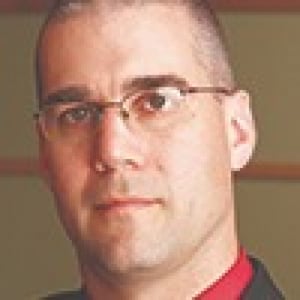
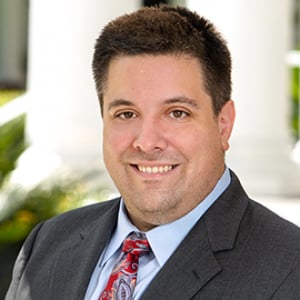
Clark Neily is senior vice president for legal studies at the Cato Institute. His areas of interest include constitutional law, overcriminalization, civil forfeiture, police accountability, and gun rights. Neily is the author of Terms of Engagement: How Our Courts Should Enforce the Constitution’s Promise of Limited Government. His writing has appeared in the Wall Street Journal, Forbes, and National Review Online, as well as various law reviews, including the Harvard Journal of Law and Public Policy, George Mason Law Review, Georgetown Journal of Law and Public Policy, NYU Journal of Law and Liberty, and Texas Review of Law and Politics. Neily is a frequent guest speaker and lecturer for the Federalist Society, Institute for Humane Studies, and American Constitution Society.
Before joining Cato in 2017, Neily was a senior attorney and constitutional litigator at the Institute for Justice and director of the Institute’s Center for Judicial Engagement. He is also an adjunct professor at the University of Texas School of Law, where he teaches constitutional litigation and public-interest law.
Neily served as co-counsel in District of Columbia v. Heller, the historic case in which the Supreme Court held for the first time that the Second Amendment protects an individual right to own a gun for self-defense.
Neily began his legal career as a law clerk to Judge Royce Lamberth on the U.S. District Court for the District of Columbia. After that he spent four years in the trial department of the Dallas-based firm Thompson & Knight. Neily received his undergraduate and law degrees from the University of Texas, where he was Chief Articles Editor of the Texas Law Review.
Professor Suja A. Thomas's research interests include the Fifth, Sixth, and Seventh Amendment jury provisions, civil procedure, employment law, theories of constitutional interpretation, and consumer issues. She is currently working on two books, one entitled The Missing American Jury: Restoring Its Fundamental Constitutional Role, which Cambridge University Press will publish, and the other, co-authored with Sandra Sperino, entitled Unequal Justice: Why Employment Discrimination Plaintiffs Lose, which Oxford University Press will publish. Her article "Why Summary Judgment is Unconstitutional," published by the Virginia Law Review, has been the basis of arguments in the federal courts and was featured in a piece in The New York Times where her argument was referred to as "perfectly plausible." A panel of the 6th Circuit referred to her historical analysis in that article as "interesting," and her article was the impetus for a symposium of the Iowa Law Review. Professor Thomas's other work has also been influential. Her article on remittitur was the basis of a petition for certiorari to the Supreme Court, and a federal judge has commented that "her caution [regarding the effective elimination of the jury trial right through remittitur] merits evaluation by the federal courts." Also, recently, theWall Street Journal ran an article based on her co-authored article "Employer Costs and Conflicts Under the Affordable Care Act," published by the Cornell Law Review Online.
Professor Thomas earned her bachelor of arts from Northwestern University in mathematics and received her law degree from New York University School of Law. At N.Y.U., she served as an articles editor on the N.Y.U. Law Review, and she received several awards including the Leonard M. Henkin Prize for her note on equal rights under the 14th Amendment, the Mendes Hershman Prize for excellence in writing in the field of property law and the William Miller Memorial Award for outstanding scholarship in the field of municipal law. After graduating from law school and a federal clerkship in Chicago, Professor Thomas practiced law in New York City with Cravath, Swaine & Moore, Vladeck, Waldman, Elias & Engelhard, P.C. and Weil, Gotshal & Manges, LLP.
Professor Thomas began her academic career as a professor at the University of Cincinnati College of Law in 2000 and was a visiting professor at Vanderbilt University Law School in the spring of 2008. She joined the University of Illinois College of Law faculty in the fall of 2008.
Back in the day, Professor Thomas ran several marathons, including Boston, with a personal best of 3:02. She lives in Urbana with her husband Scott and dog Javi.
Professor of Philosophy & Church-Studies at Baylor University
Biography
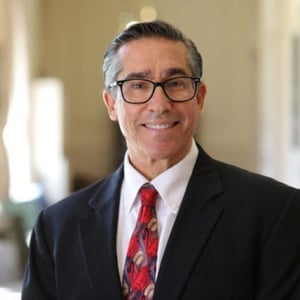
Francis J. Beckwith is Professor of Philosophy & Church-State Studies at Baylor University, where he also serves as Associate Director of Graduate Studies in Philosophy. Writing and teaching in the areas of law and religion, jurisprudence, and politics, his over one dozen books include Taking Rites Seriously: Law, Politics, and the Reasonableness of Faith (Cambridge University Press, 2015), A Second Look at First Things: A Case for Conservative Politics (St. Augustine Press, 2013), Politics for Christians: Statecraft as Soulcraft (InterVarsity Press, 2010), Defending Life: A Moral and Legal Case Against Abortion Choice (Cambridge University Press, 2007), and Relativism: Feet Firmly Planted in Mid-Air (Baker Books, 1998). His articles have appeared in a wide-range of journals including Harvard Journal of Law & Public Policy, American Journal of Jurisprudence, Journal of Law & Religion, Notre Dame Journal of Law, Ethics & Public Policy, Nevada Law Journal, International Philosophical Quarterly, Journal of Medicine & Philosophy, San Diego Law Review, Liberty University Law Review, Ratio Juris, Christian Bioethics, Journal of Law, Medicine & Ethics, Journal of Medical Ethics, Philosophia Christi, Catholic Social Science Review, Journal of Church & State, Hastings Constitutional Law Quarterly, Chapman Law Review, Journal of Social Philosophy, Human Life Review, and Social Theory and Practice.
M.J.S., School of Law, Washington University (St. Louis)
Ronald Reagan Distinguished Fellow, The Heritage Foundation
Biography
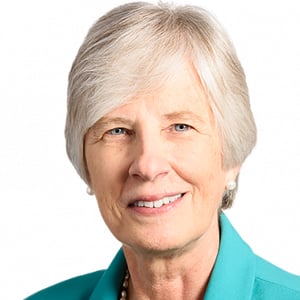
Becky Norton Dunlop, a prominent leader, strategist, and counselor in the conservative movement, is The Heritage Foundation’s Ronald Reagan Distinguished Fellow.
Dunlop, who joined the leading think tank in 1998, holds the only policy chair in the country to be officially named for the 40th president. She succeeds Ed Meese, the U.S. attorney general under Reagan, who assumed emeritus status.
Dunlop oversees special projects, travels as an ambassador for Heritage, and works tirelessly to assure that the legacy of principles, policies, and practices represented by the life and service of Ronald Reagan remain in the hearts and minds of Americans.
Previously, Dunlop was Heritage’s vice president for external relations from 1998 until May 2016. She served on the Trump Transition team.
Dunlop was a senior official in the Reagan administration from 1981-1989 inside the White House, at the Justice Department, and at the Interior Department.
She served from 1994-1998 as Secretary of Natural Resources for the Commonwealth of Virginia in the Cabinet of then-Virginia Gov. George Allen.
As political director for the American Conservative Union from 1973- 1977, she was instrumental in organizing grass-roots activists for Reagan’s unsuccessful 1976 race for the Republican nomination and advised his successful 1980 nomination and general election campaigns.
From Reagan’s first inauguration in 1981 to 1985, her White House posts included Deputy Assistant to the President for Presidential Personnel and Special Assistant to the President and Director of his Cabinet office. During Reagan’s second term, Dunlop served as senior special assistant to Meese, then attorney general, in charge of managing Cabinet-level domestic policy issues. She oversaw major policy reports on the environment, the family, federalism, tort reform, privatization, and welfare reform.
She completed her service in the Reagan administration as deputy undersecretary of the Interior Department and as assistant interior secretary for fish, wildlife, and parks.
Dunlop is one of the few of the insiders from the beginnings of the Reagan era who remain active in public policy leadership.
As Virginia’s natural resources chief, Dunlop worked to streamline, decentralize, and down-size agencies while protecting and improving the environment. She is one of the few “free-market environmentalists” to have headed a state agency and put ideas into action. Her book, “Clearing the Air” (Alexis de Tocqueville Institute, 2000), chronicles some of her experiences in advancing those principles.
In 2002, President George W. Bush appointed her to a part-time post as chairwoman of the Federal Service Impasses Panel. The seven-member panel resolves disputes between federal agencies management and labor unions. Under her leadership, it took on several hundred cases and eliminated backlogs.
Other current leadership roles include the boards of the Virginia Institute for Public Policy, the Reagan Ranch Board of Governors, the Reagan Alumni Association, the Association for American Educators and the AAE Foundation, the Council for National Policy and the American Conservative Union.
In addition to topics addressing conservative principles and their roots in the nation’s founding, Dunlop is a sought-after public speaker on the idea that personnel is policy; on energy, natural resources and the environment (including free market environmentalism); on federalism as a former member of a governor’s Cabinet; Capitalism and the Rule of Law, and on the Reagan administration (including the 40th president’s effective leadership style).
A graduate of Miami University in Ohio, she currently resides in Arlington, Virginia, with her husband, George S. Dunlop. The Dunlops are members of Oakland Baptist Church in Alexandria, Virginia.
Director of Clinic for Asylum, Refugee and Emigrant Services (CA, Villanova University School of Law
Biography
Professor Pistone is a Professor of Law and teaches the Clinic for Asylum, Refugee and Emigrant Services (CARES).
Prior to joining the Villanova faculty in 1999, Professor Pistone was a teaching fellow in the asylum clinic (Center for Applied Legal Studies) at Georgetown University Law Center. Professor Pistone received her B.S. cum laude New York University, her J.D. cum laude from St. John's University School of Law, and her LL.M. from the Georgetown University Law Center. At St. John's, she was a member of the St. John's Law Review. Before joining the Villanova faculty in 1999, she was an associate in the corporate and telecommunications departments at Willkie Farr & Gallagher in New York City and Washington, D.C., the Legal Director of Human Rights First in Washington, D.C., where she emerged as a leading advocate for justice in the immigration law system.
In 2006, Professor Pistone was granted a Fulbright Scholarship to lecture at the University of Malta.
Professor Pistone is Co-Chair of the ABA Committee on Clinical and Skills Education of ABA Section on Legal Education and Admissions to the Bar, and member of the Planning Committee for the Joint ABA, AALS and CLEA Celebration of the 40th Anniversary of the Council on Legal Education for Professional Responsibility (CLEPR), and on the Executive Committee of the International Human Rights Law Section. Professor Pistone also serves on the International Advisory Board for the Mediterranean Journal of Human Rights.
Professor Pistone's research and teaching interests focus on asylum and refugee law, immigration law, migration, clinical education, and Catholic social thought. She is co-author of a groundbreaking book entitled, Stepping Out of the Brain Drain: Applying Catholic Social Teaching in a New Era of Migration (Lexington Books 2007).
She has also written numerous articles and book chapters, including The Acceptance of Immigrants: Lessons from the Past and Questions for the Future (with John Hoeffner) in the Mediterranean Journal of Human Rights; “In All Things Love”: Immigration, Policy-Making, and the Development of Preferential Options for the Poor (with John Hoeffner) in the Journal of Catholic Social Thought; Rethinking Immigration of the Highly-Skilled and Educated in the Post-9/11 World (with John Hoeffner) in the Georgetown Journal of Law & Public Policy; Rules Are Made To Be Broken: How the Process of Expedited Removal Fails Asylum Seekers (with John Hoeffner) in Georgetown Immigration Law Journal; An Overview of United States Immigration Law, in Marriage of Undocumented Residents (Canon Law Society of America, ed. 2006); The Devil in the Details: How Specific Should Catholic Social Teaching Be? in the Journal of Catholic Social Thought; A Times Sensitive Response to Professor Aleinikoff’s Detaining Plenary Power, in Georgetown Immigration Law Journal; The New Asylum Rule: Improved but Still Unfair (with Philip G. Schrag), in Georgetown Immigration Law Journal; Assessing the Proposed Refugee Protection Act: One Step in the Right Direction in Georgetown Immigration Law Journal; and Justice Delayed is Justice Denied: A Proposal for Ending the Unnecessary Detention of Asylum Seekers in Harvard Human Rights Journal.
Faculty Associate, Contemporary History Institute, Ohio University
Biography
Richard K. Vedder is Senior Fellow at The Independent Institute and Edwin and Ruth Kennedy Distinguished Professor of Economics and Faculty Associate, Contemporary History Institute, Ohio University. Professor Vedder is co-author (with Lowell Gallaway) of The Independent Institute book, Out of Work, the recipient of both the Sir Antony Fisher International Memorial Award and Mencken Award Finalist for Best Book, and the Institute monograph, Can Teachers Own Their Own Schools?
Professor Vedder received his Ph.D. in economics from the University of Illinois, and he has been Senior Economist at the U.S. Joint Economic Committee and Visiting Fellow at the Center for the Study of American Business, Washington University, and he has taught at the University of Colorado, Claremont Men’s College, and MARA Institute of Technology. His other books include Going Broke by Degree: Why College Costs Too Much,The American Economy in Historical Perspective;Poverty, Income Distribution, the Family and Public Policy (with L. Gallaway); Essays in Nineteenth Century Economic History; Essays in the Economy of the Old Northwest;Economic Impact of Government Spending: A Fifty State Analysis, and Variations in Business and Economic History. His hundreds of articles and reviews have appeared in numerous scholarly journals as well as such publications as the Wall Street Journal, Christian Science Monitor, National Review, Washington Times, andInvestor’s Business Daily.
Dennis Jacobs is the Chief Judge of the United States Court of Appeals for the Second Circuit. He became Chief Judge on October 1, 2006. At the time of his appointment in 1992, he was a partner in the New York law firm of Simpson Thacher & Bartlett.
Judge Jacobs received his B.A. degree from Queens College of the City University of New York in 1964; his M.A. degree from New York University in 1965; and his J.D. degree from the New York University School of Law in 1973.
Judge Jacobs was a lecturer in the English Department of Queens College of the City University of New York from 1967 until 1969. He was in private practice from 1973 with the New York law firm of Simpson, Thacher & Bartlett, serving as a partner there from 1980 until his judicial appointment.
In 1997-2004, Judge Jacobs was a member of the Committee on Judicial Resources of the Judicial Conference of the United States; starting in 1999 he was chair of that committee.
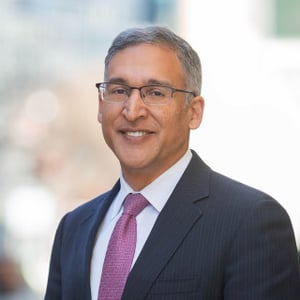
Mr. Katyal, the former Acting Solicitor General of the United States, focuses on appellate and complex litigation. He has argued 54 cases before the Supreme Court of the United States.
He has extensive experience in matters of antitrust, corporate, constitutional, securities, technology, criminal, patent, copyright, trademark, ERISA, products liability, labor, employment and tribal law. In the 2022-23 Supreme Court term, he argued five separate cases (nearly 10% of the docket), including winning the landmark voting case Moore v. Harper, which Judge Michael Luttig described as “the most important case for American democracy in the almost two and a half centuries since America’s founding.” Judge Luttig also said Mr. Katyal’s argument “was the single best oral argument I have ever heard made in the Supreme Court of the United States.” His cases include successfully striking down the Guantanamo military tribunals, successfully defending the constitutionality of the Voting Rights Act and successfully defending the Peace Cross in Maryland. His 2017 win in Bristol Myers Squibb v. Superior Court was a landmark victory for personal jurisdiction law and his 2006 win in Hamdan v. Rumsfeld was described by former Acting Solicitor General Walter Dellinger as “simply the most important decision on presidential power and the rule of law ever. Ever.”
From 2010 to 2011, Mr. Katyal served as Acting Solicitor General of the United States, where he argued several major Supreme Court cases involving a variety of issues, such as his successful defense of the constitutionality of the Voting Rights Act of 1965, his victorious defense of former Attorney General John Ashcroft for alleged abuses in the war on terror, his unanimous victory against eight states who sued the nation's leading power plants for contributing to global warming, and a variety of other matters. As Acting Solicitor General, he was responsible for representing the federal government of the United States in all appellate matters before the US Supreme Court and the Courts of Appeals throughout the nation. He served as Counsel of Record hundreds of times in the US Supreme Court. He was also the only head of the Solicitor General's office to argue a case in the US Court of Appeals for the Federal Circuit, on the important question of whether certain aspects of the human genome were patentable.
After graduating from Yale Law School, Mr. Katyal clerked for The Honorable Guido Calabresi of the US Court of Appeals for the Second Circuit as well as for The Honorable Justice Stephen G. Breyer of the US Supreme Court. He also served in the Deputy Attorney General's Office at the Justice Department as National Security Advisor and as Special Assistant to the Deputy Attorney General during 1998-1999.
Mr. Katyal is a best-selling New York Times author and has published dozens of scholarly articles in law journals (including several in the Harvard Law Review and Yale Law Journal), as well as many op-ed articles in publications such as the New York Times and the Washington Post. He has testified numerous times before various committees of both the US House of Representatives and the US Senate.
Sheila M. McDevitt Professor of Law and Faculty Director of the Election Law Center, Florida State University College of Law
Biography
Professor Morley joined FSU Law in 2018, and teaches and writes in the areas of election law, constitutional law, remedies, and the federal courts. He is best known for his work on election emergencies and post-election litigation, nationwide and other defendant-oriented injunctions, the jurisdiction of the federal courts and their equitable powers more generally. He has testified before congressional committees, made presentations to election officials for the U.S. Election Assistance Commission and participated in bipartisan blue-ribbon groups to develop election reforms. The governor of Florida also appointed Professor Morley to the Criminal Punishment Code Task Force, to propose potential revisions to the legislature.
The U.S. Supreme Court has cited several of his articles, and he was counsel of record for the successful Petitioner in a landmark campaign finance case. Professor Morley has appeared on C-SPAN, Court TV, Fox News and numerous local news programs, and has been quoted in the Washington Post, Los Angeles Times, Roll Call, Politico, U.S. News and World Report, and a wide range of other national publications. His work has been published in many of the nation’s top law reviews, including the Georgetown Law Journal, Northwestern University Law Review, Boston University Law Review and Emory Law Journal.
Before joining FSU Law, Professor Morley was a Climenko Fellow and Lecturer in Law at Harvard Law School. Prior to his experience in academia, he served in government as special assistant to the General Counsel of the Army at the Pentagon, as well as a law clerk for Judge Gerald B. Tjoflat of the U.S. Court of Appeals for the Eleventh Circuit. During his tenure with the Army General Counsel’s office, he was awarded the Meritorious Civilian Service Award and the Army Staff Lapel Pin. He also worked as an associate at Williams & Connolly LLP and the Supreme Court & Appellate group of Winston & Strawn, LLP, both in Washington, D.C.
Professor Morley earned his J.D. from Yale Law School in 2003, where he was a senior editor on the Yale Law Journal; served on the moot court board; and received the Thurman Arnold Prize for Best Oralist in the Morris Tyler Moot Court of Appeals.
Government Affairs Program Manager, Energy Northwest
Biography
Daniel Himebaugh is a lawyer working in government affairs.
Speaker Information
Reihan Salam
Executive Editor, National Review; Policy Fellow, National Review Institute
Biography
Reihan Salam is executive editor of National Review, a fellow at National Review Institute, and a lead writer for The Agenda on NationalReview.com. He is also a contributing editor of National Affairs and The Atlantic . With Ross Douthat, Mr. Salam is the co-author of Grand New Party: How Conservatives Can Win the Working Class and Save the American Dream (Doubleday, 2008).
Previously, Mr. Salam was a columnist for Slate, an associate editor at The Atlantic, a producer for NBC News, a junior editor and editorial researcher at the New York Times, a research associate at the Council on Foreign Relations, and a reporter-researcher at The New Republic.