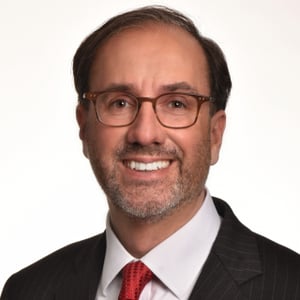
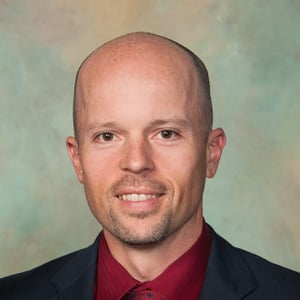
Dr. John Baker is Professor Emeritus of Law, and previously the Dale E. Bennett Professor of Law, at Louisiana State University Law School. He is currently Visiting Professor at Peking University School of Transnational Law (via Zoom) and has been Visiting Professor at The Center for the Constitution, Georgetown Law School (2013-2020). He has also been a Visiting Fellow at Oriel College, the University of Oxford (2012-2014) and taught at Blackfriars Hall, Oxford in 2014. Dr. Baker has also been an adjunct Fellow at the Heritage Foundation (Spring, 2008) and a Distinguished Scholar at the Catholic University of America Law School (2011-12). He has taught at Tulane Law School, George Mason Law School, Pepperdine Law School, New York Law School, Hong Kong University, and the University of Dallas, School of Management and also taught and/or lectured in 17 foreign countries. Notable among his foreign visits are the
following: Visiting Professor at the University of Lyon III (France) (1999-2011); Visiting Professor at the Universidad de los Andes, Chile (2012), as a Fulbright Specialist (2006); and a Fulbright Scholar at various universities in the Philippines. Dr. Baker received his J.D., with honors, from the University of Michigan Law School and his B.A., magna cum laude, from the University of Dallas. He also earned a Ph.D. in Political Thought from the University of London. Baker has taught over a dozen different subjects, mostly courses in public law. His main areas of interest are Constitutional Law (particularly federalism and separation of powers), Criminal Law, Anti-Terrorism Law, International Law, Health Care Law, Mediation, and Comparative Law.
In addition to law review articles and book chapters, Dr. Baker’s academic publications include Hall's Criminal Law: Cases and Materials (with Benson, Force and George; 5th ed. Michie, 1993); An Introduction to the Law of the United States (ed. with Levasseur; University Press of America, 1992). He has also published on Forbes.com, FoxNews.com, in The Washington Times, and a number of times in The Wall Street Journal. He argues in federal court, including two oral arguments in the U.S. Supreme Court. For many years, he co-taught courses for the Federalist Society on separation of powers with the late Supreme Court Justice Antonin Scalia. In September 2016, he co-taught a Supreme Court seminar in China with Justice Samuel Alito. Following law school, he served as a law clerk in federal district court and as an assistant district attorney in New Orleans before joining LSU in 1975. While a professor, he has been as a consultant to USAID, USIA (since rolled into the State Department), the Justice Department, the U.S. Senate Judiciary Subcommittee on Separation of Powers, and the Office of Planning in the White House. He served on an ABA Task Force which issued the report, The Federalization of Crime (1998) and later as a consultant to the “Bi-Partisan Task Force on the Over- federalization of Crime” (2012-2014) created by the U.S. House Judiciary Subcommittee on Crime. Dr. Baker was a co-founder of the first iteration (1995) of Stratfor Inc., a global intelligence agency. He co-authored its first book: The Intelligence Edge (with Friedman, Friedman and Chapman; Crown Books/Random House 1997). In 2022, he began a short, weekly video podcast available on YouTube and Rumble, The Baker Brief.
Director and Associate General Counsel, Cybersecurity & Investigations, Meta
Biography
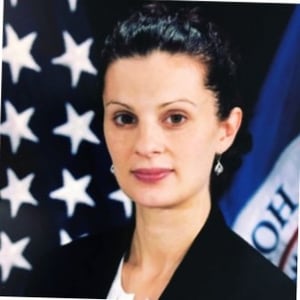
Hayley Chang serves as Director and Associate General Counsel for Cybersecurity and Investigations at Meta (formerly Facebook), where she leads the legal team focused on protecting the company and its 3.6 billion users from malicious activity in cyberspace.
Prior to transitioning to the tech industry, Ms. Chang held several senior roles in government – all focused on law enforcement, national security, and cybersecurity. Most recently, she served as Deputy General Counsel of the FBI, where she oversaw the 9/11 litigation and contributed significantly to the investigation of the 2019 Pensacola terrorist attack.
Ms. Chang previously served as Deputy General Counsel for Cyber and Technology at the U.S. Department of Homeland Security, where she led the Department’s successful effort to obtain passage of the Preventing Emerging Threats Act of 2018. Ms. Chang testified before Congress in support of the new law, which enables federal law enforcement to use advanced technology to counter emerging threats from drones. She also led the Department’s legal strategy to leverage new cyber authorities to mitigate a Russia-based cybersecurity threat. This initiative resulted in a complete ban of all Kaspersky products across the federal government. The Department prevailed against subsequent legal challenges at the district court and appellate levels. These and other cutting-edge efforts culminated in the successful creation of the Cybersecurity and Infrastructure Security Agency (CISA).
Ms. Chang’s government service also includes six years as a federal prosecutor, where she won the Distinguished Service Award and the Director’s Award for her successes in complex trials. Additionally, in two separate rounds of government service, Ms. Chang played critical roles in efforts to enhance CFIUS authorities, with the successful passage of the Foreign Investment and National Security Act (FINSA) in 2007 and the Foreign Investment Risk Review Modernization Act (FIRRMA) over a decade later.
Ms. Chang’s private practice experience includes litigation, appeals, and government investigations, and she was the General Counsel for a financial technology company designed to serve U.S. veterans.
Ms. Chang is a graduate of Cornell Law School, where she served as an editor of the Cornell Law Review. She received her bachelor’s degree from Hillsdale College. Following law school, she clerked for Chief Judge Timothy Tymkovich on the United States Court of Appeals for the Tenth Circuit.
Deputy General Counsel, U.S. Department of Homeland Security
Biography
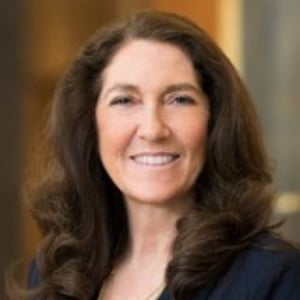
Giovanna M. Cinelli is the leader of the international trade and national security practice. As a practitioner for more than 25 years, she counsels clients in the defense and high-technology sectors on a broad range of issues affecting national security and export controls, including complex export compliance matters, audits, cross-border due diligence, and export enforcement, both classified and unclassified.
She handles complex civil and criminal export-related investigations and advises on transactional due diligence for regulatory requirements involving government contracts, export policy, and compliance, as well as settlement of export enforcement actions before the US departments of State, Commerce, Treasury, and Defense, and related agencies. Giovanna has conducted dozens of export investigations and has negotiated six consent agreements before the Department of State. She advises clients on matters before the Committee of Foreign Investment in the United States (CFIUS), and addresses mitigation requirements that may apply as part of CFIUS clearances for cross-border transactions. Giovanna is a member of the Morgan Lewis CFIUS working group.
Additionally, Giovanna has developed and assisted clients with the implementation of business-related strategies with adherence to strict requirements addressing US government national security and critical infrastructure concerns, as well as Foreign Agents Registration Act (FARA) requirements.
Giovanna serves as an expert witness on export issues affecting litigations and arbitrations, both in the US and abroad, involving controlled goods, technologies, data, and services. Her testimony has addressed complex licensing and compliance issues related to the conduct of trials and arbitration proceedings both in the United States and globally, and she has been called to testify as an expert witness on matters affecting compliance with the International Traffic in Arms Regulations and the Export Administration Regulations. She has addressed the challenging issues associated with the extraterritorial application of US export laws and regulations within litigations and arbitrations, and has assisted clients when navigating the conflicting requirements these may laws create.
Giovanna regularly speaks and writes on international arms trade, technology transfer, national security cross-border requirements, and export issues. She has participated in panel discussions related to CFIUS and technology transfer hosted by the Center for Strategic and International Studies and the Council on Foreign Relations. She has appeared on CNN's "Burden of Proof" and MSNBC's "Hardball with Chris Matthews" as an expert in international technology transfer, arms exports, and related national security issues. As a member of the Defense Trade Advisory Group for nearly two decades, Giovanna engages regularly with the Department of State on matters affecting defense trade. She was a member of the Regulations and Procedures Technical Advisory Committee and is in her third term as a member of the Department of Commerce's Virginia/DC District Export Council.
Concurrent with her private practice, Giovanna served as a Naval Reserve intelligence officer, where she specialized in Soviet-era submarine platforms, national security, and intelligence issues. She is fluent in French and Italian, and a violinist with the Washington Opera Society.
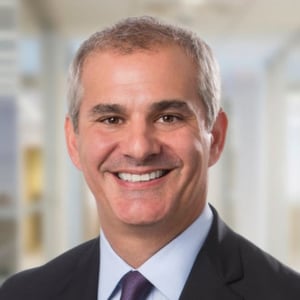
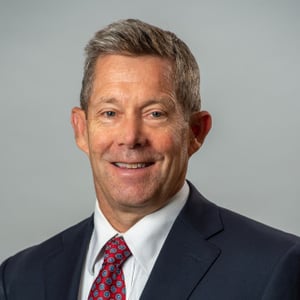
Most recently, Mr. Leiter was president of Leidos Defense, a $2.5 billion business unit of Leidos, which provides technology and solutions to the U.S. Department of Defense and allied nations globally. He joined Leidos in 2014 as chief strategy officer and executive vice president for business development, and negotiated, among other deals, its acquisition of Lockheed Martin's Information Systems and Global Solutions business - an approximately $5 billion transaction. Immediately after leaving the government in 2011, he served as head of global government and cyber solutions and senior counselor to the chief executive officer at Palantir Technologies, based in Palo Alto.
Mr. Leiter has served in a number of senior national security positions in the federal government. He was the director of the National Counterterrorism Center (NCTC) from 2007 until 2011 for both Presidents Bush and Obama, where he led the primary organization in the U.S. government for analysis and integration of all terrorism intelligence, both domestically and overseas. In addition, he reported directly to the president for strategic operational planning of all U.S. counterterrorism activities, to include the integration of military, intelligence, cyber, diplomatic, financial and homeland security programs and operations. In this role and in his private sector capacities, he worked extensively with senior government officials and corporations across Europe, the Middle East, Asia, Australasia and Africa, and also coordinated global intelligence and law enforcement investigations involving the U.S. and allies around the world.
Before NCTC, Mr. Leiter helped establish the Office of the Director of National Intelligence, serving as its deputy chief of staff responsible for oversight of the U.S. intelligence community, including the CFIUS process and all legislative affairs. He also served as the deputy general counsel and assistant director of the President's Commission on the Intelligence Capabilities of the United States Regarding Weapons of Mass Destruction.
Mr. Leiter continues to serve as an advisor to multiple organizations in and outside of government, to include being the vice chairman of the RAND Corporation's Board of Trustees, a member of the American Law Institute's Adviser's Group on Data Privacy, the Department of Defense's Threat Reduction Advisory Committee, the NCTC Director's Advisory Board, the Aspen Institute's Homeland Security Advisory Group and the Columbia University Data and Society Council. He also serves as NBC News' senior national security, cybersecurity and counterterrorism analyst and is a member of the Council on Foreign Relations.
He has previously served as a senior adviser to Monument Capital Group (a mid-market private equity firm focused on technology and security); a member of the Board of Directors of GardaWorld Government Services; a member of several National Security Agency (NSA) advisory panels (Cybersecurity, Commercial Technology and Strategic Communications); a member of the National Academies Committee on Responding to Presidential Policy Directive 28; The Feasibility of Software to Provide Alternatives to Bulk Signals Intelligence Collection ; a member of the Bipartisan Policy Center Homeland Security Project; a member of the Board of Trustees of the National Defense Industrial Association; and as the inaugural Scholar-in-Residence at New York University Law School's Center on Law and Security.
Prior to his work in national security positions, he was an Assistant United States Attorney for the Eastern District of Virginia, where he investigated and brought to trial a wide range of federal crimes to include racketeering, capital murder and money laundering. Immediately after graduating from law school, Mr. Leiter was a law clerk to Associate Justice Stephen G. Breyer of the Supreme Court of the United States and Chief Judge Michael Boudin of the U.S. Court of Appeals for the First Circuit.
Before attending law school, Mr. Leiter served as a naval flight officer aboard EA-6B Prowlers, an electronic warfare and signals intelligence carrier-based jet, during which time he participated in combat and peacekeeping operations in the former Yugoslavia and Iraq.
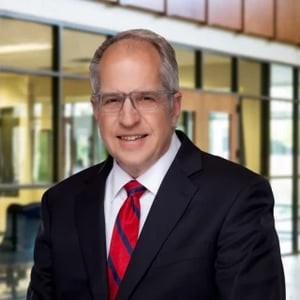
Jordan Lorence is Senior Counsel in FLI’s Washington, D.C. office, where he represents First Liberty in strategic efforts promoting religious liberty, and works on important First Amendment projects and litigation, including those at the U.S. Supreme Court.
Lorence has a long career of litigating religious liberty cases since 1984. He has worked for many public interest law firms, including Alliance Defending Freedom, Home School Legal Defense Association, the North Star Legal Center and Concerned Women for America.
He has worked on important religious liberty cases. Lorence worked on school choice cases at the Supreme Court, such as Witters v. Washington Department of Services for the Blind (1986), and Trinity Lutheran (2016), which laid the foundation for First Liberty’s crucial win in Carson v. Makin (2022), requiring Maine to include religious schools in its school choice program.
Lorence argued before the U.S. Supreme Court in Regents of the University of Wisconsin v. Southworth (2000). He represented prolife Christian law students from the University of Wisconsin Law School who objected to the University’s requirement that they pay a mandatory student fee that funded the advocacy of student pro-abortion groups. Other Supreme Court cases Lorence has worked on include NIFLA v. Becerra (2018), protecting prolife pregnancy centers from a California statute requiring them to post signs explaining how pregnant women could obtain state-funded abortions; Masterpiece Cakeshop (2017), involving a Christian cake artist sued by the State of Colorado for declining to design a case celebrating the wedding of a same-sex couple and other cases such as Christian Legal Society v. Martinez (2012), Rosenberger v. University of Virginia (1995), Hurley v. GLIB (1995) and Lamb’s Chapel v. Center Moriches Center Moriches School District (1993).
Churches and other religious groups in New York City obtained the right to rent vacant public schools on weekends to conduct worship services after Lorence’s tenacious 20 years of litigation in Bronx Household of Faith. Lorence won protection for churches facing eviction from discriminatory zoning ordinances in Minnesota in Cornerstone Bible Church v. City of Hastings, Minnesota (1991). He also argued at the New Mexico Supreme Court one of the first cases in the nation defending a Christian wedding photographer charged by the State of New Mexico with discrimination for declining to create photos celebrating the commitment ceremony of a lesbian couple in Elane Photography v. Willock (2013).
Lorence defended home schooling families from intrusive school officials during his time working at Home School Legal Defense Association (HSLDA) in the 1980s and 1990s. HSLDA also tasked Lorence with establishing a sister organization in Canada to protect home schooling families there. He traveled extensively in Canada from British Columbia to Prince Edward Island speaking to families how they could protect their right to home school under relevant Canadian law.
Lorence earned his undergraduate degree in journalism from Stanford University and his law degree from the University of Minnesota, his home state. Lorence was born and raised in Minnesota, where he worked one summer building Mighty Dump trucks at Tonka Toys in Mound, Minnesota. For two years immediately after he graduated from law school, Lorence served as the head administrator for a Minnesota Senate committee.
He speaks extensively on First Amendment and other legal issues. Lorence has spoken at least 75 law schools and many legal conferences. Prominent publications such as the Wall Street Journal, the Washington Post and others have printed his opinion pieces on key legal issues involving religious liberty and freedom of speech. He has appeared on such media outlets as Fox News, CNN, National Public Radio, NBC’s Today Show, BBC radio and many others.
Lorence and his wife Marilyn have been married 40 years. They live in the Washington, D.C. area where they raised their seven children.
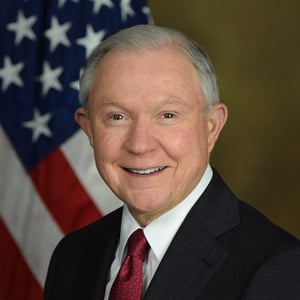
Jeff Sessions served as the 84th Attorney General of the United States from February 9, 2017 until November 7, 2018.
Prior to becoming Attorney General, Mr. Sessions served as a United States Senator for Alabama since 1996. As a United States Senator, he focused his energies on maintaining a strong military, upholding the rule of law, limiting the role of government, and providing tax relief to stimulate economic growth and to empower Americans to keep more of their hard-earned money.
Mr. Sessions was born in Selma, Alabama on December 24, 1946, and grew up in Hybart, the son of a country store owner. Growing up in the country, Sessions was instilled with certain core values – honesty, hard work, belief in God and parental respect – that define him today. In 1964, he became an Eagle Scout and thereafter received the Distinguished Eagle Scout Award. After attending school in nearby Camden, Sessions attended Huntingdon College in Montgomery, graduating with a Bachelor of Arts degree in 1969. He received a Juris Doctorate degree from the University of Alabama in 1973. Sessions served in the United States Army Reserve from 1973 to 1986, ultimately attaining the rank of Captain. He still considers that period to be one of the most rewarding chapters of his life.
Sessions’ interest in the law led to a distinguished legal career, first as a practicing attorney in Russellville, Alabama, and then in Mobile. Following a two-year stint as Assistant United States Attorney for the Southern District of Alabama (1975-1977), Sessions was nominated by President Reagan in 1981 and confirmed by the Senate to serve as the United States Attorney for the Southern District of Alabama, a position he held for 12 years. Sessions was elected Alabama Attorney General in 1995, serving as the State’s chief legal officer until 1996, when he entered the United States Senate.
Sessions and his wife, Mary Blackshear Sessions, originally of Gadsden, Alabama, have three children, Mary Abigail Reinhardt, Ruth Sessions Walk, and Sam. They have seven granddaughters, Jane Ritchie, Alexa, Gracie, Sophia, Hannah, Joanna, and Phoebe, and three grandsons, Jim Beau, Lewis, and Nicholas.
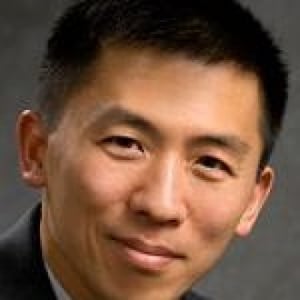
Justice Goodwin Liu is an Associate Justice of the California Supreme Court. He was confirmed to office by a unanimous vote of the California Commission on Judicial Appointments on August 31, 2011, following his appointment by Governor Edmund G. Brown, Jr. on July 26, 2011. The Governor administered the oath of office to Justice Liu in a public ceremony in Sacramento, California on September 1, 2011.
Before joining the state’s highest court, Justice Liu was Professor of Law at the UC Berkeley School of Law (Boalt Hall). His primary areas of expertise are constitutional law, education law and policy, and the U.S. Supreme Court. He has published widely on these subjects in books, law reviews, and the general media.
The son of Taiwanese immigrants, Justice Liu grew up in Sacramento, where he attended public schools. He went to Stanford University and earned a bachelor’s degree in biology in 1991. He attended Oxford University on a Rhodes Scholarship and earned a masters degree in philosophy and physiology. Upon returning to the United States, he went to Washington D.C. to help launch the AmeriCorps national service program and worked for two years as a senior program officer at the Corporation for National Service.
Justice Liu graduated from Yale Law School in 1998, becoming the first in his family to earn a law degree. He clerked for Judge David Tatel on the U.S. Court of Appeals for the D.C. Circuit and then worked as Special Assistant to the Deputy Secretary of the U.S. Department of Education, where he developed and coordinated K-12 education policy. He went on to clerk at the U.S. Supreme Court for Justice Ruth Bader Ginsburg during the October 2000 Term. In 2001, he joined the appellate litigation practice of O’Melveny & Myers in Washington, D.C., and worked on an array of antitrust, white collar, insurance, product liability, and pro bono matters.
Justice Liu is a prolific and influential scholar. He has published articles on constitutional law and education policy in the California Law Review, Michigan Law Review, NYU Law Review, Stanford Law Review, and Yale Law Journal, among others. His 2006 article, “Education, Equality, and National Citizenship,” won the Steven S. Goldberg Award for Distinguished Scholarship in Education Law, conferred by the Education Law Association. Justice Liu is also a popular and acclaimed teacher. In 2009, he received UC Berkeley’s Distinguished Teaching Award, the university’s most prestigious honor for individual excellence in teaching. He earned tenure at Boalt Hall in 2008 and was promoted to Associate Dean. The Boalt Hall Class of 2009 selected him as the faculty commencement speaker.
Justice Liu serves on the Council of the American Law Institute, on the Board of Directors of the James Irvine Foundation, and on the National Academy of Sciences Committee on Science, Technology, and Law. He has previously served on the Board of Trustees of Stanford University and the board of directors of the American Constitution Society, the National Women’s Law Center, and the Public Welfare Foundation. In 2008, he was elected to the American Law Institute. He has also served as a faculty advisor to the California College Prep Academy, a public charter school co-founded by UC Berkeley and Aspire Public Schools.
Chief Judge, United States Court of Appeals, Sixth Circuit
Biography
JEFFREY S. SUTTON is the Chief Judge of the United States Court of Appeals for the Sixth Circuit. He has served as Chair of the Federal Judicial Conference Committee on Rules of Practice and Procedure, Chair of the Advisory Committee on Appellate Rules, and Chair of the Supreme Court Fellows Commission. He currently serves as Chair of the Executive Committee of the Judicial Conference of the United States. Since 1993, Chief Judge Sutton has been an adjunct professor at The Ohio State University College of Law, where he teaches seminars on State Constitutional Law, the United States Supreme Court, and Appellate Advocacy. He also teaches a class on State Constitutional Law at Harvard Law School. Among other publications, he is the author of Who Decides? States as Laboratories of Constitutional Experimentation and 51 Imperfect Solutions: States and the Making of American Constitutional Law. He is the co-author of a casebook, State Constitutional Law: The Modern Experience, as well as The Law of Judicial Precedent. He is also the co-editor of The Essential Scalia: On the Constitution, the Courts, and the Rule of Law. In 2006, Chief Judge Sutton was elected to the American Law Institute, and in 2017 he was elected to its Council.
Robert Alt is the President and Chief Executive Officer of The Buckeye Institute where he has catalyzed exponential growth since he took the organization’s helm in 2012. He has since founded Buckeye’s renowned Economic Research Center and established its impactful Legal Center.
Alt is a distinguished scholar and attorney with particular expertise in legal policy, criminal justice, national security, and constitutional law. He previously worked for former U.S. Attorney General Edwin Meese III, regularly provides commentary on television and radio programs, and his writings have appeared in countless outlets.
In 2004, Alt spent five months in Iraq as an embedded war correspondent.
Alt has testified before Congress multiple times—including at the confirmation hearings for U.S. Supreme Court Justice Elena Kagan—the Federal Election Commission regarding matters of constitutional and administrative law, and numerous state legislatures.
Alt serves as an officer on the boards of The Philadelphia Society and the Federalist Society’s Columbus Lawyers Chapter. He taught national security law, criminal law, and legislation at Case Western Reserve University School of Law, as well as constitutional law and political parties and interest groups at Ashland University.
Alt earned his Doctor of Law degree from The University of Chicago Law School, where he was Symposium Editor and the winner of the Mulroy Prize for Excellence in Appellate Advocacy as well as research assistant to Professor Richard Epstein. Following law school, he clerked for Judge Alice Batchelder on the U.S. Court of Appeals for the Sixth Circuit. Alt graduated with his Bachelor of Arts in philosophy and political science magna cum laude from Azusa Pacific University where he also won the Outstanding Senior Award in Political Science.
Alt is an accomplished high-altitude alpinist and endurance athlete who has successfully climbed 6.75 of the famed Seven Summits of the World including Mount Everest. He is the creator of PROFOUND CLIMBING™ and a frequent speaker across the country and around the world on legal and public policy topics as well as effective leadership, management, decision-making, and teamwork in contexts ranging from extraordinary life/death situations to ordinary professional/business settings.