
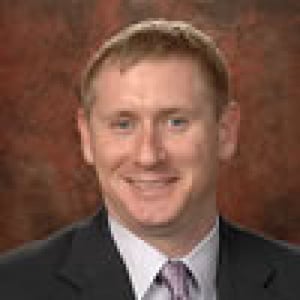
Professor of Law, Brigham Young University
Professor Paul Stancil joined the Brigham Young University law faculty in 2014. Prior to this, Professor Stancil was a professor at Illinois University College of Law and a shareholder at Godfrey & Kahn, S.C. (Milwaukee), where his practice focused on antitrust and trade regulation matters. Professor Stancil teaches Antitrust Law, Civil Procedure, Public Choice Theory, and Mergers & Acquisitions.
Professor Stancil has broad research interests in law and economics, antitrust law, civil procedure, and public choice theory. He specializes in analyzing the complex incentives that motivate individuals and groups in both the creation and application of law. Professor Stancil has written on the legitimacy of statutory interpretation by courts and the economic incentives facing parties in civil and criminal litigation; he has also written articles exploring the influence of interest groups in various aspects of the political process. Professor Stancil’s research strives to connect a rich theoretical account of law and lawmaking with the complex and often messy dynamics of the real world. He is particularly interested in the role transaction costs play in motivating real-world individual and group behavior.
Professor Stancil’s articles have appeared in the Virginia Law Review, the William & Mary Law Review, the Cardozo Law Review, and the Baylor Law Review, among others.
Professor Stancil earned his B.A. in economics and Spanish from the University of Virginia and graduated Order of the Coif from the University of Virginia School of Law. After law school graduation, Professor Stancil worked for Baker Botts (Houston) and another small Texas firm as an antitrust and litigation associate before leaving to help start an antitrust practice group at Godfrey & Kahn.
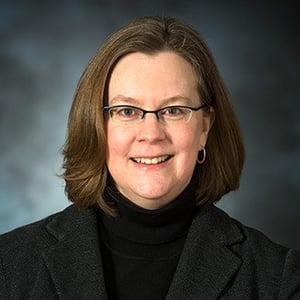
Associate Dean for Research and Intellectual Life, McKnight Presidential Professor in Law, Distinguished McKnight University Professor, Harlan Albert Rogers Professor in Law, Associate Director, Corporate Institute, University of Minnesota Law School
Professor Kristin E. Hickman is the McKnight Presidential Professor in Law, a Distinguished McKnight University Professor, and Harlan Albert Rogers Professor in Law at the University of Minnesota Law School. She also has taught at Harvard Law School and Northwestern University School of Law. Professor Hickman teaches and writes primarily in the areas of administrative law, tax administration, and statutory interpretation. Her articles on these topics have appeared in the Columbia Law Review, Cornell Law Review, Virginia Law Review, Duke Law Journal, and other publications. She also co-authors the Administrative Law Treatise with Richard J. Pierce, Jr., and a casebook on federal administrative law with Pierce and Christopher J. Walker. Her scholarly work has been cited several times in opinions of the United States Supreme Court as well as regularly in lower court judicial opinions and court briefs.
In 2018-19, Professor Hickman served as Special Adviser to the Administrator of the Office of Information and Regulatory Affairs in Washington, D.C. She presently serves as a Senior Fellow, and previously served as a public member and chair of the judicial review committee, for the Administrative Conference of the United States. She also is a Fellow of the American College of Tax Counsel.
Professor Hickman received her B.S. degree in business administration with a concentration in accounting and a secondary major in history from Trinity University in San Antonio, Texas. After practicing for several years as a certified public accountant, Professor Hickman earned her J.D. degree, magna cum laude, from Northwestern University School of Law, where she was awarded the Raoul Berger Prize and the Lowden Wigmore Prize for her scholarly writings. Following law school, Professor Hickman clerked for The Honorable David B. Sentelle of the United States Court of Appeals for the District of Columbia Circuit and practiced law as an associate with the Chicago office of Skadden, Arps, Slate, Meagher & Flom, concentrating on corporate and international tax transactions and matters.
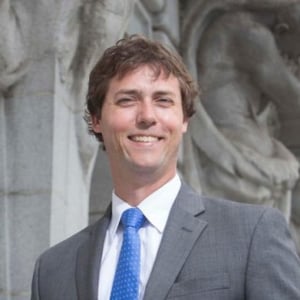
Professor of Law, The College of the Law, University of California San Francisco
Professor Zachary Price has taught at UC Law SF since 2013 and currently holds the Eucalyptus Foundation Endowed Chair. He joined UC Law SF following a fellowship at the Stanford Constitutional Law Center, and before entering academics, he served for three years as an attorney in the U.S. Justice Department’s Office of Legal Counsel. He has also worked as a litigator in private practice and clerked for Judge Catherine C. Blake of the U.S. District Court for the District of Maryland, Judge David S. Tatel of the U.S. Court of Appeals for the District of Columbia Circuit, and Justice Anthony M. Kennedy of the U.S. Supreme Court. He graduated from Harvard Law School magna cum laude and from Stanford University with honors and distinction.
Professor Zachary S. Price teaches and writes about constitutional law, administrative law, and criminal and civil law enforcement. His book Constitutional Symmetry: Judging in a Divided Republic is forthcoming with Cambridge University Press in summer 2024. His scholarly articles include “Faithful Execution in the Fifty States” in the Georgia Law Review, “Congress’s Power Over Military Offices” in the Texas Law Review, “Funding Restrictions and Separation of Powers” in the Vanderbilt Law Review, “Enforcement Discretion and Executive Duty” in the Vanderbilt Law Review, and “NAMUDNO’s Non-Existent Principle of State Equality” in the New York University Law Review Online. Professor Price has also contributed to publications including the Wall Street Journal, Washington Post, Scotusblog, Notice and Comment, Administrative and Regulatory News, Law and Liberty, Balkinization, the Supreme Court of California Blog, the State and Local Government Blog, and the Take Care Blog. In fall 2023, Professor Price was the Bruce Bromley Visiting Professor of Law at Harvard Law School.
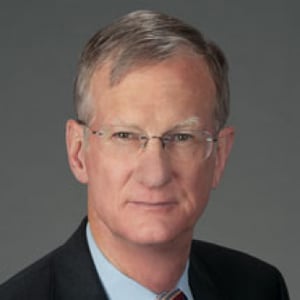
Legal Scholar and Solo Practitioner
Jack received his B.A. in History from the University of Virginia in 1977, graduating with Highest Distinction. After graduating Yale Law School in 1980, he served active duty in the U.S. Army's JAG Corps, rising to the rank of Major, where he represented the United States in more than 250 cases.
He practiced for a decade as an Associate for Bradley Arant in Birmingham, Alabama. He proudly served the State of Alabama in the Office of the Attorney General, both as Deputy and Assistant Attorney General, handling complex civil and criminal litigation cases for the people of Alabama. In 2000, he won the "Best Brief Award" from the National Association of Attorneys General for his brief in a case decided by the U.S. Supreme Court, James Alexander v. Martha Sandoval – a case he won. He was Special Assistant to the Inspector General for the Corporation for National and Community Service, Visiting Legal Fellow for the Center for Judicial and Legal Studies for the Heritage Foundation, Of Counsel at Strickland Brockington Lewis, a solo practitioner, and General Counsel for Indigo Energy.
Most recently, he "re-upped" for military service, volunteering his legal services to the Georgia State Defense Force where twice each month he provided legal services for National Guardsmen who were being deployed. He wore his military uniform for the last time in October 2024.
Jack Park passed away on March 16, 2026.
Author and Contributing Editor, National Affairs
James Poulos is one of America’s most original social theorists. A contributing editor of National Affairs, he has mapped the future of human freedom and equality at publications ranging from Foreign Policy to The Federalist and from Good to Vice. Holding degrees from Duke and the University of Southern California, he was a doctoral fellow of the Tocqueville Forum at Georgetown University. James is a columnist for The Week and the Southern California News Group, and fronts the band Night Years in Los Angeles, where he lives with his son.
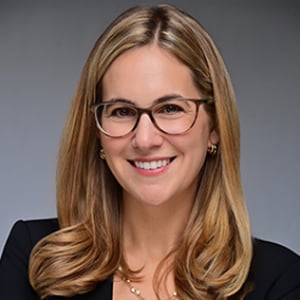
Partner, Clement & Murphy
A seasoned trial and appellate advocate, Danielle Sassoon represents individuals and corporations in high-stakes white-collar, appellate, and commercial matters. Danielle joined the firm after serving as interim United States Attorney for the Southern District of New York, following over eight years as an Assistant United States Attorney. During her time at the SDNY, Danielle handled some of the Office’s most sensitive and consequential cases. As Chief of Appeals for the Criminal Division, Danielle supervised and argued dozens of appeals before the U.S. Court of Appeals for the Second Circuit. As a leader in the SDNY, Danielle oversaw hundreds of cases, advised on complex legal and strategic issues, and managed over 200 lawyers across the SDNY’s civil and criminal divisions.
As a prosecutor, Danielle handled high-profile investigations and criminal trials, including against Samuel Bankman-Fried, for perpetrating a multi-billion-dollar cryptocurrency fraud, and against Lawrence Ray, for racketeering conspiracy, sex trafficking, and other offenses related to his abuse and exploitation of his daughter’s college roommates. As a prosecutor, Danielle was awarded the FBI Director’s Award for Outstanding Criminal Investigation and the Women in Federal Law Enforcement Top Prosecutor Award.
Following law school, Danielle clerked for Judge J. Harvie Wilkinson III of the U.S. Court of Appeals for the Fourth Circuit and for Associate Justice Antonin Scalia of the U.S. Supreme Court.
Danielle serves as a Senior Fellow at the Manhattan Institute.
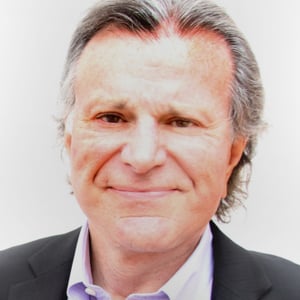
H.H. Macaulay Endowed Professor of Economics, Clemson College of Business
Thomas Hazlett is the Hugh H. Macaulay Endowed Professor of Economics at Clemson University. He has previously held faculty positions at George Mason University, the University of California, Davis, and the Wharton School, and served as Chief Economist of the Federal Communications Commission. A noted expert in regulatory economics and information markets, his research has appeared in academic forums such as the Journal of Law & Economics, RAND Journal of Economics, the Journal of Financial Economics, the University of Pennsylvania Law Review and the Columbia Law Review. He has also written for such popular periodicals as the Wall Street Journal, The Economist, Slate, the N.Y. Times, N.Y. Daily News, Reuters.com, Business Week, The New Republic and the Financial Times. His most recent book, The Political Spectrum: The Tumultuous Liberation of Wireless Technology, from Herbert Hoover to the Smartphone, (Yale, 2017), was featured as one of the top tech books of the year at CES 2018.

California Public Employees’ Retirement System v. ANZ Securities - Post-Argument SCOTUScast
Paul J. Stancil
SCOTUScast 5-17-17 featuring Paul Stancil
On April 17, 2017, the Supreme Court heard oral argument in California Public Employees’ Retirement...
The Unitary Executive through Presidents Bush, Obama, and Trump
- Mr. Neil Eggleston, Partner, Kirkland & Ellis, Lecturer on Law, Harvard Law School -...
National Labor Relations Board v. SW General, Inc. - Post-Decision SCOTUScast
Kristin E. Hickman
SCOTUScast 5-16-17 featuring Kristin Hickman
On March 21, 2017, the Supreme Court decided National Labor Relations Board v. SW General,...
Lewis v. Clarke - Post-Decision SCOTUScast
Zachary Price
SCOTUScast 5-15-17 featuring Zachary Price
On April 25, 2017, the Supreme Court decided Lewis v. Clarke. Petitioners Brian and Michelle...
Bethune-Hill v. Virginia State Board of Elections - Post-Decision SCOTUScast
John J. Park
SCOTUScast 5-15-17 featuring Jack Park
On March 1, 2017, the Supreme Court decided Bethune-Hill v. Virginia State Board of Elections....
President Trump's Religious Liberties Executive Order - Podcast
On May 4, President Trump signed a Religious Liberty Executive Order relaxing IRS enforcement of...
Why Read Tocqueville?
James Poulos
Short video featuring James Poulos
What can a nineteenth-century Frenchman teach us about modern America? Author James Poulos presents his...
The Decades of Our Discontent: Judge J. Harvie Wilkinson III Reflects on the Sixties and Today
Danielle Sassoon
Federalist Society Review, Volume 18
A Review of: All Falling Faiths: Reflections on the Promise & Failure of the 1960s,...
The Political Spectrum: The Tumultuous Liberation of Wireless Technology, from Herbert Hoover to the Smartphone - Podcast
Thomas Hazlett
Telecommunications & Electronic Media Practice Group Podcast
Popular legend has it that before the Federal Radio Commission was established in 1927, the...
Nelson v. Colorado - Post-Decision SCOTUScast
SCOTUScast 5-11-7 featuring Ethan Blevins
On April 19, 2017, the Supreme Court decided Nelson v. Colorado, along with Madden v....