
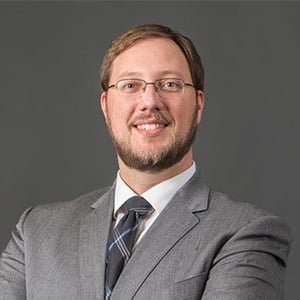
Laurence H. Silberman Chair in Constitutional Governance and Senior Fellow, American Enterprise Institute; Co-Director, Antonin Scalia Law School’s C. Boyden Gray Center for the Study of the Administrative State
Adam J. White is the Laurence H. Silberman Chair in Constitutional Governance and senior fellow at the American Enterprise Institute, where he focuses on the Supreme Court and the administrative state. Concurrently, he codirects the Antonin Scalia Law School’s C. Boyden Gray Center for the Study of the Administrative State.
Mr. White practiced constitutional and administrative law, particularly in the regulation of energy and financial markets. He started his legal career as a law clerk for Judge David B. Sentelle at the US Court of Appeals for the DC Circuit.
Mr. White has written for the Wall Street Journal, the New York Times, the Washington Post, National Affairs, Commentary, Harvard Journal of Law & Public Policy, and Notre Dame Law Review, among other publications. He is a regular contributor to the Yale Journal on Regulation’s Notice and Comment blog, and for many years, he was one of the Weekly Standard’s lead writers on constitutional law and the Supreme Court.
Mr. White has testified often before Congress, including before the Senate’s Committees on the Judiciary; Commerce, Science, and Transportation; and Homeland Security and Governmental Affairs and before the House’s Judiciary and Financial Services Committees. In 2018, the Senate Committee on the Judiciary called him to testify in Brett Kavanaugh’s Supreme Court confirmation hearings to advise senators on Kavanaugh’s approach to administrative law.
In 2021, he served on the Presidential Commission on the Supreme Court of the United States, where he criticized “Court packing” and other efforts to restructure the Supreme Court. In 2017, he was appointed to serve on the Administrative Conference of the United States. He also serves on the leadership council for the American Bar Association’s Administrative Law and Regulatory Practice Section, which he will chair in 2023–24. Before joining AEI, he was a research fellow at Stanford University’s Hoover Institution and an adjunct fellow at the Manhattan Institute.
Mr. White has a JD from Harvard Law School and a bachelor of business administration from the College of Business at the University of Iowa.
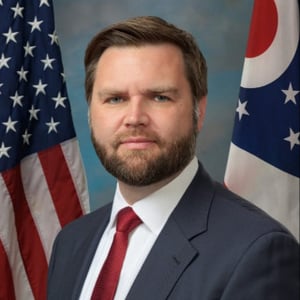
United States Senator, Ohio
JD Vance is a United States Senator for the great state of Ohio. He was elected to the U.S. Senate in 2022 and sworn into office on January 3rd, 2023.
JD was born and raised in Middletown, Ohio, a once flourishing American manufacturing town where Ohioans could live content, middle-class lives on single incomes. Over time, many of those good jobs disappeared, and JD’s family suffered the effects along with many others.
Turbulence was common at home and at school. His grandmother, called Mamaw, was his saving grace. Her tough love and discipline kept him on the straight and narrow. A “blue dog” Democrat, she owned 19 handguns and nurtured a deep Christian faith in herself and her family. She died in 2005, shortly after JD enlisted in the United States Marine Corps.
JD went on to serve our nation in the Iraq War, then graduated from The Ohio State University and Yale Law School. He wrote a bestselling book, Hillbilly Elegy, which was turned into a Netflix movie. He also started a business dedicated to growing jobs and opportunity in the American heartland.

Thomas M. Siebel Senior Fellow, The Hoover Institution, Stanford University; Gary T. Schwartz Distinguished Professor of Law Emeritus, UCLA School of Law
Eugene Volokh is the Thomas M. Siebel Senior Fellow at the Hoover Institution (Stanford), as well as the Gary T. Schwartz Distinguished Professor of Law Emeritus and Distinguished Research Professor at UCLA School of Law. He recently retired from teaching at UCLA, after 30 years there, and is now focusing on research.
Volokh is the author of the textbooks The First Amendment and Related Statutes (8th ed. 2023), and Academic Legal Writing (5th ed. 2016), as well as over 100 academic law journal articles, mostly on First Amendment law. He is a member of The American Law Institute; the editor-in-chief of the Journal of Free Speech Law; and the creator and coauthor of The Volokh Conspiracy, a leading legal blog founded in 2002 (hosted at the Washington Post from 2014 to 2017 and now at Reason Magazine).

Attorney
Maya M. Noronha is a civil rights attorney.
As special counsel for external affairs at First Liberty Institute, Maya worked for the largest legal organization in the United States dedicated exclusively to defending religious liberty for all Americans.
Previously, Maya worked at the U.S. Department of Health and Human Services, as acting chief of staff of the Administration for Children and Families; principal advisor to the Commissioner of the Administration on Children, Youth, and Families; and senior advisor to the Director of the Office for Civil Rights and regulatory reform officer. She provided advice on federal civil rights laws that prohibit discrimination on the basis of conscience, religion, race, color, national origin, limited English proficiency, sex, disability, age, and health information in both health care and human services.
In the area of election law, Maya has advised officials elected to or candidates for President, U.S. Senate, U.S. House of Representatives, Governor, state legislature, city council, and magisterial district judge. She practiced law at Baker Hostetler LLP, where she was on the Political Law and Federal Advocacy Teams, advising clients on voting rights, redistricting, election integrity, campaign finance, financial reporting, ethics compliance, as well as conducting trial and appellate litigation. She also has delivered legislative testimony, planned continuing legal education conferences on election law, and published about voting rights and election administration.
In addition to addressing the Federalist Society, she has delivered remarks to the White House Initiative on Asian American Pacific Islanders, United States Senate, Women in Government Relations, Georgetown University, George Mason University School of Law, the Columbus School of Law at the Catholic University of America, and Arizona State University Cronkite School of Journalism.
Maya is in Phi Beta Kappa, a member of the Alpha Sigma Nu Jesuit Honor Society, and a John Carroll Scholar. Forbes Magazine recognized Maya as one of its 30 under 30 in Law and Public Policy.
She serves concurrently on the Federalist Society’s Free Speech & Election Law Executive Committee and the American Bar Association’s Standing Committee on Election Law.
Education
· J.D., Georgetown University Law Center, 2011
· A.B., Georgetown University, 2005
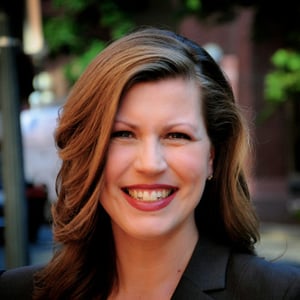
Senior Counsel, The Becket Fund for Religious Liberty
Senior Counsel Hannah Smith joined Becket in 2007 following two clerkships at the U.S. Supreme Court for Justices Clarence Thomas and Samuel A. Alito, Jr.
Ms. Smith was a member of the Becket legal team that secured victories in key U.S. Supreme Court religious liberty cases, including Holt v. Hobbs, 574 U.S. ___ (Jan. 20, 2015), where a unanimous Court held in an opinion authored by Justice Alito that the Religious Land Use and Institutionalized Persons Act requires prison officials to accommodate peaceful expressions of religious devotion; Burwell v. Hobby Lobby, 134 S. Ct. 2751 (June 30, 2014), where the Court held in a 5-4 opinion authored by Justice Alito that family-owned businesses enjoy religious liberty rights under the Religious Freedom Restoration Act and that the HHS mandate violated the Act; and Hosanna-Tabor Evangelical Lutheran Church and School v. EEOC, 132 S. Ct. 694 (2012), where a unanimous Court held in an opinion authored by Chief Justice Roberts that the “ministerial exception” under the First Amendment protects a church’s right to choose its own ministers.
Ms. Smith contributed to Becket's Supreme Court filings in Little Sisters of the Poor v. Burwell (2015); Houston Baptist University v. Burwell (2015); Stormans v. Wiesman (2015); Michigan Catholic Conference v. Burwell (2015); Obergefell v. Hodges (2015); University of Notre Dame v. Burwell (2014); Wheaton College v. Burwell, 134 S. Ct. 2806 (2014); Little Sisters of the Poor v. Sebelius, 134 S. Ct. 1022 (2014); Bronx Household of Faith v. New York City Board of Education (2014), Elmbrook School District v. Doe (2014), Big Sky Colony v. Montana Department of Labor and Industry (2013), Sossamon v. Texas (2011), Arizona Christian School Tuition Association v. Winn (2011), Bronx Household of Faith v. New York City Board of Education (2011), Utah Highway Patrol Association v. American Atheists (2011), Christian Legal Society v. Martinez (2010), and Salazar v. Buono (2010).
Ms. Smith has been featured on CNN, Fox News, The O'Reilly Factor, The Sean Hannity Show, C-Span, EWTN, Al Jazeera America, the Wall Street Journal, the Washington Post, the Los Angeles Times, U.S. News and World Report, the Associated Press, National Review Online, Bloomberg News, NPR, BBC, the Laura Ingraham Show, the Rush Limbaugh Show, the Hugh Hewitt Show, BYU Radio, and many other publications and radio shows. She has been invited to speak on religious liberty at Harvard Law School, Princeton University, Stanford Law School, University of Pennsylvania Law School, Southern Methodist University Law School, Brigham Young University Law School, American University Washington College of the Law, and Central European University. And she has given briefings on religious liberty issues at the U.S. Capitol, the State Department, the Heritage Foundation, the Ethics and Public Policy Center, the Federalist Society for Law and Public Policy Studies, the American Bar Association, and the National Constitution Center.
Ms. Smith received her B.A. from Princeton University, concentrating in the Woodrow Wilson School of Public and International Affairs. She graduated with honors from Brigham Young University Law School and was elected to the Order of the Coif. She served as Executive Editor of the BYU Law Review, as a research assistant for the BYU International Center for Law and Religion Studies, and as president of the BYU Federalist Society. BYU awarded her its Alumni Achievement Award for her work in the defense of religious freedom. Ms. Smith also received the J. Reuben Clark Law Society's Women-in-Law Leadership Award for her national leadership in defending religious liberty and advancing the contributions of Mormon women to the law.
Following law school and in between clerkships, she was an associate in private practice at Williams & Connolly and Sidley Austin in Washington D.C., representing clients before state and federal courts and the U.S. Supreme Court in civil, criminal, and constitutional cases. Her private practice religious liberty work included the U.S. Supreme Court petition for certiorari in Corporation of the Presiding Bishop of the Church of Jesus Christ of Latter-day Saints v. First Unitarian Church of Salt Lake City (2003), as well as matters on behalf of Brigham Young University, the Church of Jesus Christ of Latter-day Saints, and the Roman Catholic Archdiocese of Washington D.C.
Ms. Smith served as a full-time volunteer missionary for the Church of Jesus Christ of Latter-day Saints in France and Switzerland. She currently serves as a member of the J. Reuben Clark Law Society International Board and as a member of the Deseret News Editorial Advisory Board. She writes on religious liberty issues in the Deseret News. Hannah and her husband John are happily married with 4 wonderful children.

Former President & CEO, The Federalist Society for Law and Public Policy Studies
Eugene B. Meyer, former President and CEO of the Federalist Society, has served as Executive Director, CEO, and/or President of the organization for more than 40 years. He is responsible for shepherding the organization from a small group of law students to a community of 90,000 lawyers, law students, academics, judges, and others interested in the rule of law. The Society now includes a Student Chapter at nearly every ABA-accredited law school in the country and Lawyers Chapters in 220 major cities across the nation. Gene earned his B.A. in history at Yale in 1975 and his M.A. in political science from the London School of Economics in 1976. Gene currently serves on the boards of the U.S. Chess Center, the Holman Foundation, the Sarah Scaife Foundation, and the advisory board of the Adam Smith Society. He holds the title of International Chess Master.
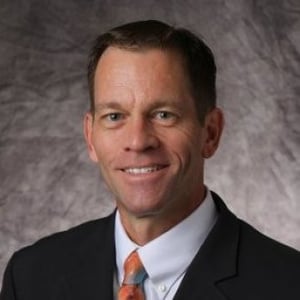
Andrew A. Hufford is an Intellectual Property attorney with Brinks Gilson & Lione. His practice emphasizes US and global patent prosecution in biopharma, chemistry, and plant genetics. He also has significant experience in patent and trade secret litigation, inter-partes review, and patent due diligence. Mr. Hufford is the Vice Chair of the Utah State Bar Intellectual Property Section; a founding member of the David K. Winder IP Inns of Court; and an active member of the American Bar Association’s IP Law Section.
Mr. Hufford was a Professor of Biology before practicing law. He holds a Bachelor of Science (Cum Laude, Phi Beta Kappa) and Master of Science in Biochemistry, and spent several years conducting clinical pharmacology research. He earned his J.D. from the University of Houston, where he was an Articles Editor with the Houston Journal of Health Law and Policy and a member of the Moot Court and Mock Trial teams.

Senior Fellow and Director of Constitutional Studies, Manhattan Institute
Ilya Shapiro is a senior fellow and director of constitutional studies at the Manhattan Institute and a contributing editor of City Journal. Previously he was executive director and senior lecturer at the Georgetown Center for the Constitution, and before that a vice president of the Cato Institute.
Shapiro is the author of Lawless: The Miseducation of America’s Elites (2025) and Supreme Disorder: Judicial Nominations and the Politics of America’s Highest Court (2020), coauthor of Religious Liberties for Corporations? (2014), and editor of 11 volumes of the Cato Supreme Court Review (2008-18). He has contributed to a variety of academic, popular, and professional publications, including the Wall Street Journal, Harvard Journal of Law & Public Policy, Washington Post, Los Angeles Times, USA Today, National Review, and Newsweek. He also regularly provides commentary for various media outlets, writes the Shapiro’s Gavel newsletter on Substack, and once appeared on the Colbert Report.
Shapiro has testified many times before Congress and state legislatures and has filed more than 500 amicus curiae “friend of the court” briefs in the Supreme Court. He lectures regularly on behalf of the Federalist Society, is a member of the board of fellows of the Jewish Policy Center, was an inaugural Washington Fellow at the National Review Institute, and has been an adjunct law professor at the George Washington University and University of Mississippi. He is also the chairman of the board of advisers of the Mississippi Justice Institute, a barrister in the Edward Coke Appellate Inn of Court, and a former member of the Virginia Advisory Committee to the U.S. Commission on Civil Rights.
Earlier in his career, Shapiro was a special assistant/adviser to the Multi-National Force in Iraq on rule-of-law issues and practiced at Patton Boggs and Cleary Gottlieb. Before entering private practice, he clerked for Judge E. Grady Jolly of the U.S. Court of Appeals for the Fifth Circuit. He holds an AB from Princeton University, an MSc from the London School of Economics, and a JD from the University of Chicago Law School.

Hillbilly Elegy - Podcast
Adam White, JD Vance
Practice Groups Podcast
Hillbilly Elegy is a passionate and personal analysis of a culture in crisis—that of white working-class...
A Nationwide Speech Code for Lawyers?
Eugene Volokh
Short video featuring Eugene Volokh
Is it a violation of the first amendment for the American Bar Association to impose...
Topics
The Rule of Lenity: A five-minute guide to navigating the intersection of administrative and criminal law
It is not often that you think of the terms “criminal defense” and “Chevron deference”...
New Applications of Section 2 of the Voting Rights Act to Vote Denial Cases
Maya Noronha
Federalist Society Review, Volume 18
Note from the Editor: This article discusses recent federal appellate court decisions with respect to...
Trinity Lutheran Church of Columbia v. Comer - Post-Argument SCOTUScast
Hannah C. Smith
SCOTUScast 4-28-17 featuring Hannah C. Smith
On April 19, 2017, the Supreme Court heard oral argument in Trinity Lutheran Church of...
Annual Report 2016
Eugene B. Meyer
The Federalist Society enjoyed great success in 2016. This past year has seen the expansion...
A New Direction For Regulation In President Trump's First 100 Days
Presidents since Franklin D. Roosevelt have set 100 days as a target for making early progress on...
Applying Heightened Scrutiny to Protectionist Alcohol Laws
Recently, the South Carolina Supreme Court issued a decision striking down a state law that...
Courthouse Steps: Amgen, Inc. v. Sandoz, Inc. - Podcast
Andrew A. Hufford
Intellectual Property Practice Group Podcast
The Biologics Price Competition and Innovation Act of 2010 (42 U.S.C. § 262) created an...
Title IX & Gender Identity: Gloucester County v. G.G.
Ilya Shapiro
Short video featuring Ilya Shapiro
Who has the authority to interpret statutes like Title IX? Ilya Shapiro, senior fellow in...