
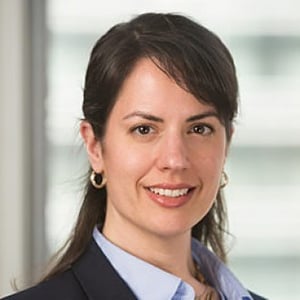
Counsel to Commissioner Hester M. Peirce, U.S. Securities and Exchange Commission
Thaya Brook Knight was associate director of financial regulation studies at the Cato Institute. She is an attorney with extensive experience in securities regulation, small business capital access, and capital markets. Before joining Cato, she co-founded and served as general counsel of CrowdCheck, a company providing due diligence and disclosure services in the online investing market. Following the recent financial crisis, she served as investigative counsel for the congressional oversight panel charged with overseeing the expenditure of Troubled Asset Relief Program funds. She also spent several years with the Washington office of the law firm WilmerHale, where her practice focused on securities litigation, securities enforcement defense, and corporate investigations.
She holds a BA from Middlebury College and a JD from the University of Michigan Law School.
Senior Fellow, Cato Institute
Doug Bandow is a senior fellow at the Cato Institute, specializing in foreign policy and civil liberties. He worked as special assistant to President Reagan and editor of the political magazine Inquiry. He writes regularly for leading publications such as Fortune magazine, National Interest, Wall Street Journal, and Washington Times. Bandow speaks frequently at academic conferences, on college campuses, and to business groups. Bandow has been a regular commentator on ABC, CBS, NBC, CNN, Fox News Channel, and MSNBC. He holds a J.D. from Stanford University.
Senior Judge, United States District Court for the Southern District of New York
Loretta A. Preska is a senior judge for the United States District Court for the Southern District of New York. She joined the court in 1992 after being nominated by President George H.W. Bush. Preska became the chief judge of the court in May of 2009 when Kimba Wood assumed senior status. She served as chief judge of the court for a seven-year term from 2009 to 2016, and took senior status in 2017.
Preska graduated from the College of St. Rose with her Bachelor's degree in 1970 and also graduated from Fordham Law with her Juris Doctor Degree in 1973. She graduated from NYU Law with her Master of Laws degree in 1978.
Legal Scholar and Solo Practitioner
Jack received his B.A. in History from the University of Virginia in 1977, graduating with Highest Distinction. After graduating Yale Law School in 1980, he served active duty in the U.S. Army's JAG Corps, rising to the rank of Major, where he represented the United States in more than 250 cases.
He practiced for a decade as an Associate for Bradley Arant in Birmingham, Alabama. He proudly served the State of Alabama in the Office of the Attorney General, both as Deputy and Assistant Attorney General, handling complex civil and criminal litigation cases for the people of Alabama. In 2000, he won the "Best Brief Award" from the National Association of Attorneys General for his brief in a case decided by the U.S. Supreme Court, James Alexander v. Martha Sandoval – a case he won. He was Special Assistant to the Inspector General for the Corporation for National and Community Service, Visiting Legal Fellow for the Center for Judicial and Legal Studies for the Heritage Foundation, Of Counsel at Strickland Brockington Lewis, a solo practitioner, and General Counsel for Indigo Energy.
Most recently, he "re-upped" for military service, volunteering his legal services to the Georgia State Defense Force where twice each month he provided legal services for National Guardsmen who were being deployed. He wore his military uniform for the last time in October 2024.
Jack Park passed away on March 16, 2026.
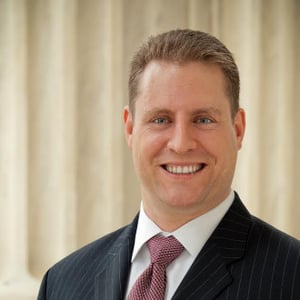
Senior Counsel, Schaerr Jaffe LLP
Ken Klukowski is senior counsel at the law firm Schaerr Jaffe, focusing on constitutional, administrative, and election law, and the federal courts. He has served in politically appointed positions in the U.S. government, including senior counsel in the Civil Division of the U.S. Department of Justice, and prior to that in the White House as special counsel in the Office of Management and Budget. He was also the constitutional rights advisor on the Presidential Transition Team of President Donald J. Trump. In the private sector, he has worked as a senior fellow of the American Constitutional Rights Union, senior counsel at First Liberty Institute, and a legal journalist. He litigates constitutional cases in the U.S. Supreme Court and lower federal courts, and contributes to media coverage of the nation’s highest court and legal issues. Earlier in his career, Klukowski served as special deputy attorney general of Indiana, and worked on faculty at Liberty University School of Law. His academic works have been published by journals such as the Federalist Society’s Harvard Journal of Law & Public Policy, and his columns have appeared in the Wall Street Journal and other national publications. His amicus briefs and nine law review articles have been cited by various federal courts and top legal journals. He has participated in numerous Supreme Court cases, and lectured and debated at 100 law school events nationwide. Klukowski received his bachelor’s degree from the University of Notre Dame, studied history at Arizona State University, earned his law degree from Scalia Law School at George Mason University, and served as a law clerk to Chief Judge Alice Batchelder on the U.S. Court of Appeals for the Sixth Circuit.
Counsel to Commissioner Hester M. Peirce, U.S. Securities and Exchange Commission
Thaya Brook Knight was associate director of financial regulation studies at the Cato Institute. She is an attorney with extensive experience in securities regulation, small business capital access, and capital markets. Before joining Cato, she co-founded and served as general counsel of CrowdCheck, a company providing due diligence and disclosure services in the online investing market. Following the recent financial crisis, she served as investigative counsel for the congressional oversight panel charged with overseeing the expenditure of Troubled Asset Relief Program funds. She also spent several years with the Washington office of the law firm WilmerHale, where her practice focused on securities litigation, securities enforcement defense, and corporate investigations.
She holds a BA from Middlebury College and a JD from the University of Michigan Law School.
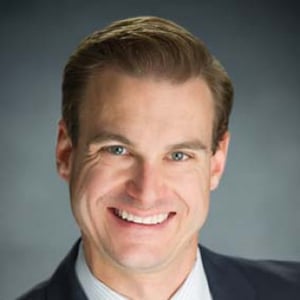
Partner, Quinn, Emmanuel, Urquhart & Sullivan LLP
Chris Michel is Co-Chair of the firm’s National Appellate Practice. His practice focuses on complex legal issues at all stages of litigation, with a particular emphasis on appellate and Supreme Court matters. He has handled significant matters in the areas of securities, antitrust, intellectual property and technology, health care, administrative law, the First Amendment, corporate governance, foreign affairs, energy and the environment, and criminal procedure—among others. He practices frequently in the U.S. Supreme Court, federal and state courts of appeals, and trial courts. In 2023, he was named an Appellate MVP by Law360 and one of America’s 500 Leading Litigators by Lawdragon.
Chris joined the firm from the Office of the Solicitor General at the U.S. Department of Justice. During his time there, he argued 10 cases before the Supreme Court, briefed roughly 200 Supreme Court cases at the certiorari and merits stages, and advised the Solicitor General on all aspects of federal litigation strategy. Among other recognition, he received a Civil Division Special Commendation Award for his work on high-stakes civil litigation.
Chris has a unique perspective on the workings of the federal government and key strategic issues facing business clients. In addition to his experience in the Solicitor General’s Office, he served as a counselor to the Attorney General on civil litigation matters and as a special adviser in the White House Counsel’s Office. He began his legal career as a law clerk to Chief Justice John G. Roberts, Jr., at the Supreme Court, and to Justice Brett M. Kavanaugh, who was then sitting on the U.S. Court of Appeals for the D.C. Circuit. Before attending law school, Chris worked at the White House under President George W. Bush, whom he served as Director of Speechwriting, drafting more than 500 presidential speeches including five State of the Union addresses. He also collaborated on President Bush’s memoir, Decision Points, assisting with the researching, drafting, and editing of the book.
A native of California and a graduate of Yale College and Yale Law School, Chris is a member of the Virginia and District of Columbia bars. He has represented and counseled clients in matters at all levels of the federal judiciary, in state trial and appellate courts, before administrative agencies, and in both civil and criminal investigations. He has also taught constitutional law and separation of powers at Georgetown University Law Center, and he is an appointed member of the D.C. Circuit’s Advisory Committee on Procedures.
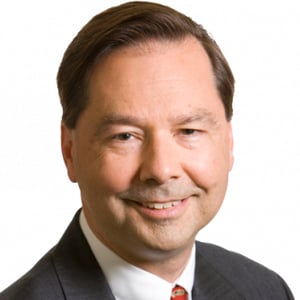
Senior Legal Fellow, Edwin Meese III Institute for the Rule of Law, Advancing American Freedom
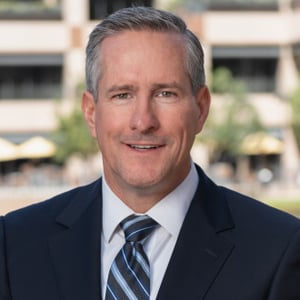
Managing Partner, Brown Wegner LLP
Mr. Brown leads a law firm in California focused on trials and appeals in intellectual property and other complex commercial disputes. Previously, he practiced for more than a decade in the Intellectual Property Group at Jones Day, was an Adjunct Professor at Chapman University School of Law, and served a judicial law clerk to a federal district judge in Los Angeles. Mr. Brown has been named a Southern California Super Lawyer for ten years, was listed among the Top 50 Lawyers in Orange County several years. He is a Master in the Howard T. Markey Intellectual Property American Inn of Court.
Education

George C. Dix Professor in Constitutional Law, Northwestern University Pritzker School of Law
John O. McGinnis is a graduate of Harvard College and Harvard Law School where he was an editor of the Harvard Law Review. He also has an MA degree from Balliol College, Oxford, in philosophy and theology. Professor McGinnis clerked on the U.S. Court of Appeals for the District of Columbia. From 1987 to 1991, he was deputy assistant attorney general in the Office of Legal Counsel at the Department of Justice. He is the author of Accelerating Democracy: Transforming Government Through Technology (Princeton 2013) and Originalism and the Good Constitution (Harvard 2013) (with M. Rappaport). He is a past winner of the Paul Bator award given by the Federalist Society to an outstanding academic under 40. He has been listed by the United States on the roster of panelists who may be called upon to decide World Trade Organization Disputes.
Partner, Kirkland & Ellis LLP
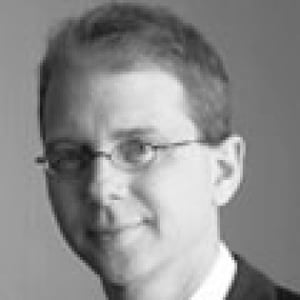
Mr. Jay Lefkowitz is a leading partner in Kirkland’s litigation practice and a member of the Firm’s Global Executive Management Committee. He is also an adjunct professor at Columbia Law School, where he teaches a seminar on Supreme Court advocacy. Mr. Lefkowitz has served as lead trial and appellate counsel in a wide variety of substantive areas, including shareholder disputes, antitrust, product liability, litigation against the FDA and False Claims Act matters. He has also conducted numerous internal investigations for public companies and audit committees.
In its 2013 release of “The 100 Most Influential Lawyers in America,” The National Law Journal describes Mr. Lefkowitz as “a leading voice on school choice issues” and “a no-nonsense appellate and antitrust lawyer for an array of blue-chip clients.” The Legal 500 U.S. noted that Mr. Lefkowitz “provides a depth of understanding and influence in some of the highest courts of our country,” and in Chambers USA, America’s Leading Lawyers for Business, clients say, “‘Jay is brilliant; there is no other way to put it.’” Mr. Lefkowitzwas also named a Law360 “MVP of the Year” in 2011 for his Appellate practice, and in 2012, 2013, 2014 and 2015 for his Life Sciences work. Mr. Lefkowitz is one of only three of the 189 MVPs named to the list five years in a row. The American Lawyer named him its “Lawyer of the Week” in December 2012 for his role in winning an antitrust lawsuit in the pharmaceutical industry.
Mr. Lefkowitz takes on groundbreaking work for high-profile clients, representing more than a dozen major pharmaceutical, medical device and health care companies in important and frequently precedent-setting matters. Mr. Lefkowitz has won two landmark 5-4 decisions at the U.S. Supreme Court in favor of the pharmaceutical industry overturning the decision of three Circuit Courts of Appeal. In Pliva v. Mensing in 2011, on behalf of Teva and Actavis, Mr. Lefkowitz convinced the Court to reject the views of the FDA and the Solicitor General and establish that generic drug companies may no longer be sued for “failure to warn claims,” finding that federal law preempts state law under the Constitution’s supremacy clause. His victory in Mutual v. Bartlett in 2013, overturned a $21 million verdict on behalf of Sun Pharmaceuticals, and extended the Mensing ruling to cover design defect claims.

Bank of America Corp. v. City of Miami - Post-Decision SCOTUScast
Thaya Brook Knight
SCOTUScast 6-2-17 featuring Thaya Brook Knight
On May 1, 2017, the Supreme Court decided Bank of America Corp. v. City of...
Constitutional War Power: The Founders' Framework
Doug Bandow
Short video featuring Doug Bandow
What kind of war power does the Constitution grant the President? Doug Bandow, Senior Fellow...
The Georgia Supreme Court Delivers a Victory for School Choice
Loretta Preska, John J. Park
On Monday, June 26, while the legal world was watching for decisions from the U.S....
Hively v. Ivy Tech Community College - Podcast
Kenneth A. Klukowski, Anthony Kreis
Religious Liberties Practice Group Podcast
On April 4, 2017, the Seventh Circuit handed down a divided en banc opinion in Hively v. Ivy Tech...
Courthouse Steps: D.C. Circuit En Banc Argument - Podcast
Thaya Brook Knight, Christopher G. Michel
Federalism & Separation of Powers Practice Group Podcast
The D.C. Circuit heard a rare doubleheader of en banc arguments on major structural separation...
Courthouse Steps: Cooper v. Harris Redistricting Update - Podcast
Hans A. Von Spakovsky
Free Speech and Election Law Practice Group Podcast
On May 22, the Supreme Court threw out two North Carolina congressional districts as discriminatory....
Topics
SCOTUS Opinions and Orders Update
OPINIONS (1) County of Los Angeles v. Mendez: By a vote of 8-0 the judgment...
Courthouse Steps Decision: TC Heartland LLC v. Kraft Foods Group Brands LLC - Podcast
William J. Brown, J Hartline
Intellectual Property Practice Group Podcast
On May 22, 2017, the Supreme Court handed down its unanimous opinion in the closely-watched...
Campaign Finance & Free Speech
John O. McGinnis
Short video featuring John O. McGinnis
What are the limits on campaign financing under the First Amendment? Professor John O. McGinnis...
Update: In re Fosamax (Alendronate Sodium) Products Liability Litigation - Podcast
Jay Lefkowitz
Litigation Practice Group Podcast
In a recent decision, the Third Circuit held that hundreds of state-law claims alleging that...