
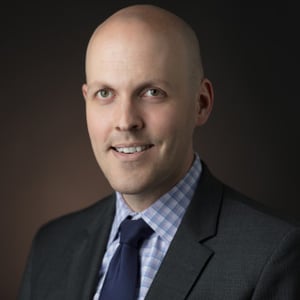
Partner, Barr & Klein PLLC
Steve Klein, a partner at Barr & Klein PLLC, is an experienced free speech attorney who has successfully fought for the First Amendment rights of his clients against local, state and federal regulators. As a lobbyist, Steve’s advocacy has led to the successful amendment of state laws to respect political engagement and prevented the enactment of laws that burden it. Steve has published articles in several legal journals, and his commentary has appeared in The Wall Street Journal, The Washington Times, The Detroit News, and other outlets. Steve earned a bachelors degree in politics at Hillsdale College and a law degree from Ave Maria School of Law, where he served as Managing Editor of the Ave Maria Law Review. He is licensed to practice law in the District of Columbia, Illinois and Michigan.

Partner, Arnold & Porter
John Elwood is the head of Arnold & Porter’s Appellate and Supreme Court practice. He has argued before the Supreme Court nine times, and appeared before most of the federal courts of appeals. He has successfully argued cases across a broad cross-section of subjects, with particular experience in environmental law, the False Claims Act, government contracting, and federal criminal law
Mr. Elwood’s work has earned him recognition as one of Washington’s top Supreme Court lawyers (Washingtonian, 2013), as one of “a small group of lawyers” with an “outsized influence at the U.S. Supreme Court” (Reuters, 2014), and as one of the country’s most innovative lawyers (Financial Times, 2014). Chambers USA reports that “[t]he much-admired John Elwood is praised for his advocacy skills” (2013), and describes Mr. Elwood as “phenomenal” (2014), “incredibly talented” (2012), and “a much-loved and widely respected lawyer who is quick on his feet” (2010).
Before joining the firm, Mr. Elwood served in senior-level positions in the U.S. Department of Justice. Beginning as an Assistant to the Solicitor General, and continuing with the firm, he has briefed more than 20 merits cases before the Supreme Court of the United States, and has briefed approximately 135 cases at the certiorari stage. As the senior Deputy in the Office of Legal Counsel, he advised the White House and federal agencies on a range of constitutional, statutory, and regulatory issues.

Laurence A. Tisch Professor of Law and Director, Classical Liberal Institute, New York University School of Law; Director, Classical Liberal Institute, Civitas Institute University of Texas at Austin
Richard A. Epstein is the Laurence A. Tisch Professor of Law, at New York University, a senior research fellow at the Civitas Institute at the University of Texas Austin, and a senior Lecturer, the University of Chicago. He received an LL.D., h.c . from the University of Ghent, 2003 , and an LLD h.c . from the University of Siegen in 2018 and the Bradley Prize in 2011. He has been a member of the American Academy of Arts and Sciences since 1985. He has edited both the Journal of Legal Studies (1981-1991) and the Journal of Law and Economics (1991-2001). He is also a founder and director of the Classical Liberal Institute at NYU Law School. His most recent book is The Classical Liberal Constitution: The Uncertain Quest for Limited Government (2014). His other books include Takings: Private Property and the Power of Eminent Domain ( 1985); Bargaining with the State (1993); Simple Rules for a Complex World (1995); Principles for a Free Society: Reconciling Individual Liberty and the Common Good (1998); Skepticism and Freedom: A Modern Theory of Classical Liberalism (2003); Design for Liberty: Private Property, Public Administration and the Rule of Law (2011), and most recently, The Myth of Birthright citizenship—and Beyond (2026). He has taught courses in , administrative law, antitrust, constitutional, contracts, environmental law, land use planning; real property, torts and water law. He has written and spoken extensively on a wide range of topics, and is writes a regular column for Defining Ideas.

Topics
Live Stream: The Free Speech Vernacular
Tara Smith, Professor of Philosophy at the University of Texas at Austin, will discuss several...
The Federalist Paper, Winter 2018
November’s National Lawyers Convention was one of our best ever. The theme was Administrative Agencies...
Topics
Renomination of NLRB Member Mark Gaston Pearce Would Be Bad for Independent Workers’ Rights
The current term of Mark Gaston Pearce as a Member of the National Labor Relations...
Courthouse Steps: Minnesota Voters Alliance v. Mansky
Stephen R. Klein
Free Speech & Election Law Practice Group Teleforum
Most states have laws that prohibit electioneering within polling places on election day, and the...
Topics
Hate Crimes and the Thirteenth Amendment
Hate crimes are abhorrent to all decent persons. But does Congress have the power to...
Courthouse Steps: U.S. v. Microsoft
John P. Elwood
Corporations, Securities, and Antitrust Practice Group Teleforum
The Stored Communications Act of 1986 authorizes federal, state, and local law enforcement officers to...
Topics
Reading Past The Headline In OMB's Report To Congress
As required by the Regulatory Right to Know Act, enacted in 2000, the Office of...
The Supreme Court Tackles Patent Reform: Further Reflections on the Oil States Case after Oral Argument Before the Supreme Court
Richard A. Epstein
Federalist Society Review, Volume 19
Note from the Editor: This article provides alternative answers to some of the questions posed...
Topics
DOJ’s New Cyber Task Force
The Department of Justice has announced the creation of a Cyber-Digital Task Force. Megan Brown,...
Topics
A Federal Evergreen
In Animal House, Dean Vernon Wormer complains that every Halloween the trees are filled with...