
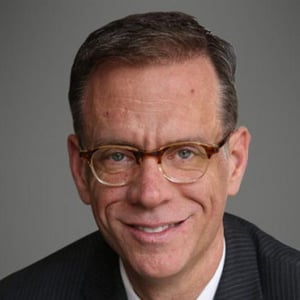
Judge William Hawley Atwell Chair of Constitutional Law, SMU Dedman School of Law
Professor Carpenter is the Judge William Hawley Atwell Chair of Constitutional Law. He previously served as the Charles J. and Inez Wright Murray Distinguished Visiting Professor of Law at SMU, teaching Constitutional Law I as well as LGBT Rights and the Law. This fall he will teach Constitutional Law II.
Prior to joining SMU, Professor Carpenter taught for 16 years at the University of Minnesota, where he served as a Distinguished University Teaching Professor and the Earl R. Larson Professor of Civil Rights and Civil Liberties Law. He won multiple teaching awards. He is also an editor of Constitutional Commentary.
The Texas native received his B.A. degree in history, magna cum laude, from Yale College and received his J.D., with honors, from the University of Chicago Law School, where he was editor-in-chief of the University of Chicago Law Review. After serving as a law clerk for Fifth Circuit Judge Edith Jones, he practiced at the firms Vinson & Elkins LLP in Houston, and at Howard, Rice, Nemerovski, Canady, Falk & Rabkin, P.C. in San Francisco.
As the author of numerous articles and an award-winning book —FLAGRANT CONDUCT: THE STORY OF LAWRENCE V. TEXAS (W.W. Norton & Co., 2012), about the landmark U.S. Supreme Court case that invalidated America's sodomy laws — he is often asked by the media to comment on constitutional law, the First Amendment, and LGBT Rights and the Law. Since 2005, he has been an active blogger on the popular legal blog, The Volokh Conspiracy, which is hosted by the Washington Post.
Of Counsel, Christian Legal Society's Center for Law & Religious Freedom
Kim Colby has worked for Christian Legal Society’s Center for Law and Religious Freedom since graduating from Harvard Law School in 1981. She has represented religious groups in several appellate cases, including two cases heard by the United States Supreme Court. She has filed numerous amicus briefs in federal and state courts. In 1984, she assisted in congressional passage of the Equal Access Act, 20 U.S.C. § 4071, et seq., which protects the right of secondary school students to meet for prayer and Bible study on campus. Ms. Colby has prepared several CLS publications addressing issues about religious expression in public schools, including released time programs, implementation of the Equal Access Act, and teachers’ religious expression.
Ms. Colby graduated summa cum laude from the University of Illinois with a major in American History and a particular interest in slavery in colonial North America.
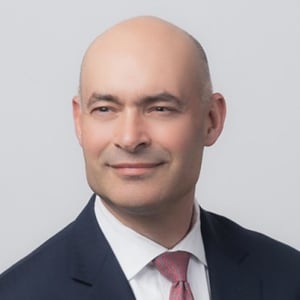
Senior Public Policy Advisor, Wiley Rein LLP
Nova Daly, an experienced international investment and trade policy professional, has held senior leadership positions at the U.S. Departments of the Treasury and Commerce, the White House, and the U.S. Senate. Drawing on his experience in the management, development, and implementation of the U.S. economic and national security policies and programs, he provides both high-level insight and deep operational experience to help clients navigate the policy and regulatory environment surrounding cross-border business activities, especially through the Committee on Foreign Investment in the United States (CFIUS).
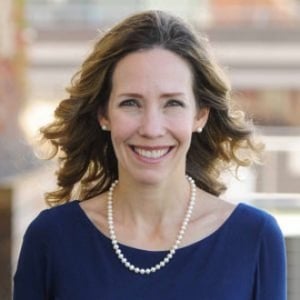
Global Public Policy, AT&T, Director
Ms. Geffroy is based in AT&T’s Washington, DC office. She represents AT&T in a wide range of cybersecurity and national security policy issues. Ms. Geffroy also serves as a Senior Fellow with the George Washington University Center for Cyber and Homeland Security.
Prior to assuming her current role, Ms. Geffroy’s experience included serving as Chief Counsel to the House Permanent Select Committee on Intelligence and as Counselor to Board Member Elisebeth Collins on the Privacy and Civil Liberties Oversight Board. As Chief Counsel, Ms. Geffroy led the Committee’s efforts to pass cyber threat information sharing legislation, developed and implemented the Committee’s legislative and parliamentary operations and managed the legal issues arising in the Committee’s regular oversight of the seventeen Intelligence Community elements. Ms. Geffroy also served as an attorney in the U.S. Department of Justice Office of Legislative Affairs where she represented the Department in legislative and oversight matters before Congress on various national security, criminal, and civil matters.
Ms. Geffroy began her career in private practice with a law firm in Washington, D.C. She holds an LL.M. in International and Comparative Law from Georgetown University Law School, a J.D. from Suffolk University Law School, and a BA in Business Administration from Michigan State University. She lives in Alexandria, VA with her husband and four children.
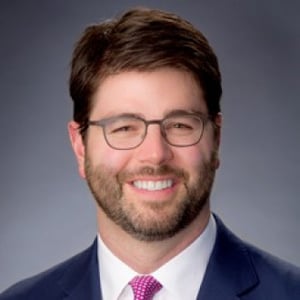
Partner, Wilkinson Barker Knauer LLP
Mr. Johnson provides advice and advocacy to clients navigating the complex terrain at the intersection of technology and security. Having served in a wide variety of national security and cybersecurity leadership roles on Capitol Hill, in the national security and intelligence communities, in the regulatory arena, and in the Executive Branch, Mr. Johnson focuses in particular on improving the effectiveness and efficiency of government-industry collaboration.
Mr. Johnson was Secretary Penny Pritzker’s Senior Adviser for Cybersecurity and Technology at the U.S. Department of Commerce, where he coordinated the Department’s cybersecurity initiatives and the Department’s support for the Commission on Enhancing National Cybersecurity. He was also the Department’s representative for National Security Council staff deliberations on cybersecurity, encryption, and other policy issues at the intersection of technology and security.
Previously, Mr. Johnson was appointed by Federal Communications Commission (FCC) Chairman Tom Wheeler as the FCC’s first Chief Counsel for Cybersecurity. In this position, he helped develop the FCC’s cybersecurity mission, focusing on creating new legal mechanisms for government collaboration with private sector stakeholders to improve the security and reliability of communications infrastructure. He was also the primary drafter of the charter for the Cybersecurity Forum for Independent and Executive Branch Regulators, a coordinating body of regulatory agencies which is presently chaired by the FCC.
Prior to his time at the FCC, Mr. Johnson was Senator John D. Rockefeller IV’s designated counsel on the Senate Intelligence Committee and counsel for defense, foreign policy, and international trade. In these roles, he was a leading staffer on bipartisan Senate cybersecurity initiatives and the primary staff drafter of the legislation that codified the National Institute of Standards and Technology’s collaborative process to work with industry to develop and update the widely-praised Cybersecurity Framework.
Before his government service, Mr. Johnson worked for a major Washington-based law firm, where he practiced in the areas of international trade, defense, and security. Earlier, he served as an Army officer in Germany, Korea, and the Balkans. He is a graduate of the University of Georgia School of Law, where he was the editor-in-chief of the Georgia Journal of International and Comparative Law, and he received a master of science degree in international relations from the London School of Economics and Political Science. He received his bachelor’s degree from Harvard, where he graduated cum laude, cross-enrolled at MIT for service as Executive Officer of its Army ROTC Paul Revere Battalion, and played varsity football.
Clete lives in Alexandria, Va. with his wife, Sheila, and their two children.
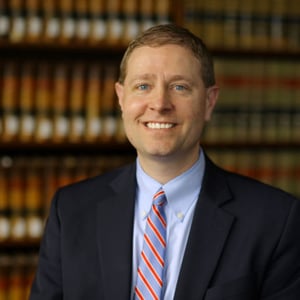
Executive Director, Salmon P. Chase Center for Civics, Culture, and Society, The Ohio State University
Professor Lee J. Strang serves as the inaugural executive director of the Salmon P. Chase Center for Civics, Culture, and Society at The Ohio State University.
Initiated in 2023 by the state of Ohio, the Chase Center will be an academic home at Ohio State for teaching, research, and programing on the foundations of the American constitutional order and its impact on society. As executive director, Professor Strang is responsible for organizing the center, overseeing the hiring and appointment of the center’s faculty, developing curriculum, and delivering student and academic programming. He also holds a faculty appointment in the Moritz College of Law at Ohio State.
Professor Strang is a nationally recognized legal scholar who has published dozens of articles in leading journals in the fields of constitutional law and interpretation, property law, and religion and the First Amendment. He co-edits the textbook Federal Constitutional Law, and his most recent book, Originalism’s Promise: A Natural Law Account of the American Constitution is the first book-length, natural law justification for originalism. He currently is writing on civic thought and leadership, and he is finalizing a book on the history of American Catholic legal education (with John M. Breen).
Before joining Ohio State, Professor Strang served as the inaugural director of the University of Toledo’s Institute of American Constitutional Thought & Leadership. He joined the Toledo College of Law faculty in 2008, was granted tenure in 2010, and was named John W. Stoepler Professor of Law & Values in 2015. The University of Toledo awarded Professor Strang its Outstanding Faculty Research and Scholarship Award in 2017. Before that, he was a visiting professor at Michigan State University College of Law. A graduate of the University of Iowa, where he was articles editor of the Iowa Law Review and Order of the Coif, Professor Strang holds an LL.M. degree from Harvard Law School.
Professor Strang has been a visiting scholar at the Georgetown Center for the Constitution and a visiting fellow at the James Madison Program at Princeton University. In 2016, he was appointed to the Ohio Advisory Committee of the U.S. Commission on Civil Rights and reappointed as chair in 2023.
Prior to teaching, Professor Strang served as a judicial clerk for Judge Alice M. Batchelder of the U.S. Court of Appeals for the Sixth Circuit. He was also an associate for Jenner & Block LLP in Chicago, where he practiced in general and appellate litigation.
Professor Strang is a frequent presenter at scholarly conferences. He is the president of the Board of Trustees of Northwest Ohio Classical Academy, Ohio’s first classical charter school. He is also a regular participant in debates at law schools across the country, a contributor to the media, and a speaker to political, civic, and religious groups.
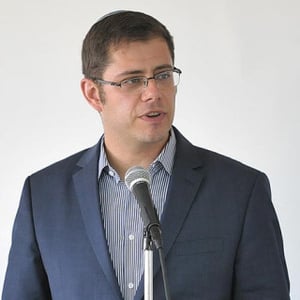
Professor of Law and Director, Center for the Middle East and International Law, George Mason University Antonin Scalia Law School
Professor of Law Eugene Kontorovich is one of the world’s preeminent experts on universal jurisdiction and maritime piracy, as well as international law and the Israel-Arab conflict. He is also the Director of Scalia Law School's Center for the Middle East and International Law. Professor Kontorovich joined the Scalia Law School from Northwestern University Pritzker School of Law where he was a Professor of Law from 2011 to 2018 and an Associate Professor from 2007 to 2011. Previously, he was a Visiting Professor at the University of Chicago from 2005 to 2007 and an Assistant Professor at George Mason School of Law from 2003 to 2007.
Professor Kontorovich has published over thirty major scholarly articles and book chapters in leading law reviews and peer-reviewed journals in the United States and Europe, including the American Journal of International Law, International Review of Law & Economics, Stanford Law Review, California Law Review, University of Pennsylvania Law Review, and Virginia Law Review. His scholarship has been cited in leading foreign relations and international law
His expertise is often sought out and quoted by major news organizations such the New York Times, Wall Street Journal, NPR News, The New Yorker, Los Angeles Times, and numerous television and radio programs. Prof. Kontorovich’s popular writings have appeared in the New York Times, Wall Street Journal, Los Angeles Times, POLITICO, Commentary, Haaretz, and numerous other leading publications. He is also a regular contributor to the Washington Post’s Volokh Conspiracy legal blog.
He attended the University of Chicago for college and law school. After law school, he clerked for Judge Richard Posner on the United States Court of Appeals for the Seventh Circuit. He has been honored with a fellowship at the Institute for Advanced Study in Princeton, in 2011-12, and with the Federalist Society’s prestigious Bator Award, given annually to a young scholar (under 40), for outstanding scholarship and teaching.

Topics
The President's Power to Keep Congress at Work
Nearly a year and a half in to his first term as president, the Senate...
Topics
The Lives of the Constitution - A Conversation with the Author
Below is a conversation with author Joseph Tartakovsky about his new book, The Lives of...
Topics
Management's Duty to Restore The Rule of Law
Springtime is the season when most American corporations hold their annual meeting of shareholders. In...
Courthouse Steps: Masterpiece Cakeshop v. Colorado CRC Decided
Dale A. Carpenter, Kim Colby
Religious Liberties Practice Group Teleforum
Masterpiece Cakeshop v. Colorado CRC, one of the most highly publicized of the term, was decided 7-2...
Topics
Common Sense and the Borrowers Defense Rule
In 1994, Congress passed an amendment to the Higher Education Act that delegated responsibility to...
Supply Chain: The Role of Chinese Equipment in U.S. Tech
Nova Daly, Sarah Roland Geffroy, Clete D. Johnson
International & National Security Law and Telecommunications & Electronic Media Practice Group Teleforum
“Supply chain security” has been a hot topic in Congress and federal agencies in recent...
The Declaration of Independence & the Constitution [NSS 2018]
Lee J. Strang
Short video featuring Lee Strang
Can the Declaration of Independence be used to support unconventional theories of constitutional interpretation? Professor...
Topics
Prominent Books by Prominent People: Professor Mary Ann Glendon
In our second post for the Prominent Books by Prominent People series, Learned Hand Professor of Law...
Jesner v. Arab Bank, PLC - Post-Decision SCOTUScast
Eugene Kontorovich
SCOTUScast featuring Eugene Kontorovich
On April 24, 2018, the Supreme Court decided Jesner v. Arab Bank, PLC, a case...
Topics
Lessons to be Learned from Europe's GDPR
The EU has grandstanded on their policy choices for privacy and net neutrality, saying that...