
Carol Matheis practices law business litigation and insurance law in Newport Beach, California. She earned her J.D. at Western University College of Law and is a graduate of George Mason University.

Patrick Hotung Professor of Constitutional Law, Georgetown University Law Center
Randy Barnett is the Patrick Hotung Professor of Constitutional Law at Georgetown University Law Center. He has argued before the United States Supreme Court, tried murder cases to juries as a prosecutor in Chicago, and appeared as a prosecutor in the feature film Inalienable. He is the author of numerous books, including Restoring the Lost Constitution, The Structure of Liberty, Our Republican Constitution, and The Original Meaning of the Fourteenth Amendment. He has published two memoirs, A Life for Liberty: The Making of an American Originalist, and Felony Review: Tales of True Crime and Corruption in Chicago. He is currently working on a new book, Freedom and Flourishing: Libertarianism for the Real World.
Executive Director, State and Local Legal Center
Lisa Soronen is the Executive Director of the SLLC. Prior to joining the SLLC, Lisa worked for the National School Boards Association, the Wisconsin Association of School Boards, and clerked for the Wisconsin Court of Appeals. She earned her J.D. at the University of Wisconsin Law School and is a graduate of Central Michigan University.

Senior Fellow and Director of Constitutional Studies, Manhattan Institute
Ilya Shapiro is a senior fellow and director of constitutional studies at the Manhattan Institute and a contributing editor of City Journal. Previously he was executive director and senior lecturer at the Georgetown Center for the Constitution, and before that a vice president of the Cato Institute.
Shapiro is the author of Lawless: The Miseducation of America’s Elites (2025) and Supreme Disorder: Judicial Nominations and the Politics of America’s Highest Court (2020), coauthor of Religious Liberties for Corporations? (2014), and editor of 11 volumes of the Cato Supreme Court Review (2008-18). He has contributed to a variety of academic, popular, and professional publications, including the Wall Street Journal, Harvard Journal of Law & Public Policy, Washington Post, Los Angeles Times, USA Today, National Review, and Newsweek. He also regularly provides commentary for various media outlets, writes the Shapiro’s Gavel newsletter on Substack, and once appeared on the Colbert Report.
Shapiro has testified many times before Congress and state legislatures and has filed more than 500 amicus curiae “friend of the court” briefs in the Supreme Court. He lectures regularly on behalf of the Federalist Society, is a member of the board of fellows of the Jewish Policy Center, was an inaugural Washington Fellow at the National Review Institute, and has been an adjunct law professor at the George Washington University and University of Mississippi. He is also the chairman of the board of advisers of the Mississippi Justice Institute, a barrister in the Edward Coke Appellate Inn of Court, and a former member of the Virginia Advisory Committee to the U.S. Commission on Civil Rights.
Earlier in his career, Shapiro was a special assistant/adviser to the Multi-National Force in Iraq on rule-of-law issues and practiced at Patton Boggs and Cleary Gottlieb. Before entering private practice, he clerked for Judge E. Grady Jolly of the U.S. Court of Appeals for the Fifth Circuit. He holds an AB from Princeton University, an MSc from the London School of Economics, and a JD from the University of Chicago Law School.
Enforcement Attorney, U.S. Securities and Exchange Commission
David Hirsch joined the SEC's Fort Worth office in 2015 as an enforcement attorney. Prior to his service with the SEC Dave was a litigator with the law firm of McDermott, Will & Emery, and later he co-founded and ran a private investigation firm focused on securities fraud investigations. Mr. Hirsch graduated from UCLA School of Law and clerked for Judge Edward J. Schwartz in the United States District Court for the Southern District of California. He serves as the Cyber Liaison for the SEC Fort Worth Regional Office and is a member of the SEC DLT Working Group and the Dark Web Working Group. Mr. Hirsch received the SEC Staff Excellence Award in 2018.
Partner, Jones Day
Mark Rasmussen is a seasoned litigator and investigator with more than a dozen years of experience representing clients in complex commercial litigation, securities litigation, regulatory and internal investigations, and bankruptcy litigation. He also advises clients on regulatory compliance related to cryptocurrencies, initial coin offerings (ICOs), and blockchain technology and was recently appointed by Chief Judge Barbara Lynn, of the Northern District of Texas, to be the first ever receiver in an SEC enforcement action involving an ICO promoter. In addition, he is co-editor and author of a forthcoming book entitled Blockchain for Business Lawyers and is a frequent speaker on legal issues related to blockchain technology.
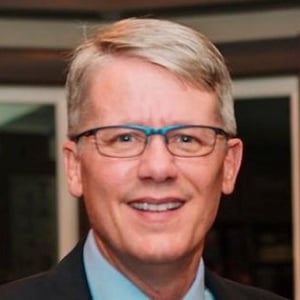
Professor, University of North Carolina at Wilmington
Mike Adams is a professor at the University of North Carolina at Wilmington (UNCW). He writes a weekly column for The Daily Wire and speaks frequently on First Amendment and pro-life issues. After graduating from Mississippi State University in 1993 with a PhD in Criminology, his research emphasized social psychological causes of crime and delinquency. He won the Faculty Member of the Year Award from the Office of the Dean of Students in 1998 and again in 2000. Later, after his involvement in a free speech controversy in the wake of the 9/11 attack his research emphasis shifted to threats to free speech, due process, and academic integrity in higher education. In 2006, he was denied a promotion full professor and filed suit in federal court alleging that UNCW retaliated against him for his criticism the diversity movement in general as well as his criticism of specific policies within his own university. The retaliation lawsuit set up a legal challenge concerning whether Garcetti v. Ceballos (2006), which denied First Amendment protection to public employees who were commenting about their “official duties,” applied to college professors. In Adams v. UNCW (2011), the 4th Circuit Court of Appeals unanimously ruled in his favor. The ruling set up a federal trial on the issue of retaliation, which he also won before a jury in federal district court in Greenville, North Carolina.
Professor of History, Brooklyn College and the CUNY Graduate Center
KC Johnson is professor of history at Brooklyn College and the CUNY Graduate Center, where he has taught since 1999. He has written 13 books on topics in U.S. political history, U.S. foreign policy, and legal and policy debates surrounding campus due process and civil liberties. His Duke lacrosse case blog, Durham-in-Wonderland, was named ABA Journal’s Best Ethics Blog in 2007; and he continues to blog on higher-ed matters at the blog Minding the Campus.
FIRE
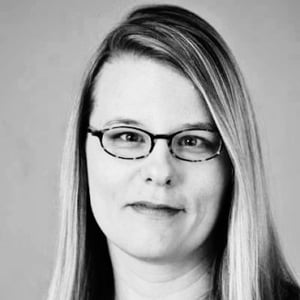
Columnist and Editorial Writer, Charleston Gazette-Mail
Laurie Lin is a columnist and editorial writer for the Daily Mail opinion page at West Virginia's Charleston Gazette-Mail, where her opinion writing has been honored by the West Virginia Press Association. A former corporate tax attorney, she was also a co-founder and panelist for the Front Porch Podcast, a project of West Virginia Public Broadcasting focusing on Appalachian politics and culture.
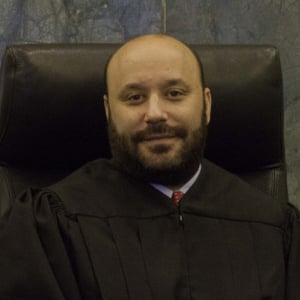
Judge, United States District Court, Eastern District of Arkansas
Lee Philip Rudofsky is a judge on the United States District Court for the Eastern District of Arkansas. Prior to his 2019 appointment by President Trump, Judge Rudofsky served as the Solicitor General of Arkansas, an Assistant General Counsel at Walmart, a Senior Litigation Associate at Kirkland & Ellis, and counsel to several Republican political campaigns. Today, in addition to his judicial service, Judge Rudofsky teaches law school classes on founding-era constitutional history and, separately, speaks to students across the country about the October 7th Massacre and the subsequent Israeli response. In 2024, Judge Rudofsky helped establish an annual judicial education mission to Israel that offers American judges the opportunity to learn first-hand about the Israeli legal system, Israeli society, and legal issues related to the Israel-Hamas war.

Pension Benefits and The California Rule: Time for It To Go?
Carol M. Matheis
The “California Rule” as it has come to be known, was set forth in the...
Wickard v. Filburn: The Aggregation Principle & Congressional Power [No. 86]
Randy E. Barnett
Short video featuring Randy Barnett
Where does Congress get the power to regulate activities like a farmer's wheat yield? While...
Pension Benefits and The California Rule: Time for It To Go?
The “California Rule” as it has come to be known, was set forth in the...
Lozman v. City of Riviera Beach, FL - Post-Decision SCOTUScast
Lisa Soronen
SCOTUScast featuring Lisa Soronen
On June 18, 2018, the Supreme Court decided Lozman v. City of Riviera Beach, FL,...
The People of the State of Illinois v. Walter Relerford
Ilya Shapiro
After interning, Walter Relerford interviewed for a position and continued sending emails and phone calls...
Regulating Cryptocurrency
David Hirsch, Mark W. Rasmussen
Litigation Practice Group Teleforum
Recently there has been much discussion over the proper regulation of cryptocurrencies and initial coin...
The Student Right to Counsel
Mike S. Adams, KC Johnson, Adam Kissell
Federalist Society Review, Volume 19
Note from the Editor: This article argues that a student right to counsel in quasi-criminal...
Topics
Docket Watch: The People of the State of Illinois v. Walter Relerford
After interning, Walter Relerford interviewed for a position and continued sending emails and phone calls...
West Virginia Supreme Court in Crisis
Laurie Barber Lin
A Teleforum co-sponsored by the Federalism & Separation of Powers Practice Group and the State Courts Project
The West Virginia Supreme Court of Appeals has been plagued for months with controversy over...
Board of Trustees of the University of Arkansas v. Matthew Andrews
Lee Rudofsky
Courageous Adherence to Originalism
Article 5, section 20 of the Arkansas Constitution declares that “[t]he State of Arkansas shall...