

President, Harned Strategies LLC
Karen Harned is President at Harned Strategies LLC. Previously, she served as Executive Director of the National Federation of Independent Business Small Business Legal Center, a post she held from 2002-2022. Prior to joining the Legal Center, Ms. Harned was an attorney at a Washington, D.C. law firm specializing in food and drug law, where she represented several small and large businesses and their respective trade associations before Congress and federal agencies. She also served as Assistant Press Secretary to U.S. Senator Don Nickles of Oklahoma from August of 1989 to March of 1993. Ms. Harned received her B.A. from the University of Oklahoma in 1989 and her J.D. from The George Washington University National Law Center in 1995. She is admitted to practice in the District of Columbia.
As Executive Director of the NFIB Small Business Legal Center, Ms. Harned commented regularly on small business cases before federal and state courts, as well as the U.S. Supreme Court. She has appeared on Fox News, Fox Business, NBC Nightly News, CNN, CNBC and MSNBC, as well as National Public Radio, CBS Radio, and radio outlets across the country. Her opinion editorials and articles regarding healthcare, lawsuit abuse, regulation, and other issues important to small business have been published in newspapers and other publications nationwide.
Ms. Harned has testified before Congress on the small business impact of regulation and the civil justice system. Additionally, she has conducted numerous webinars and legal compliance seminars for small business owners across the country on issues relating to employment law, including unionization and immigration.
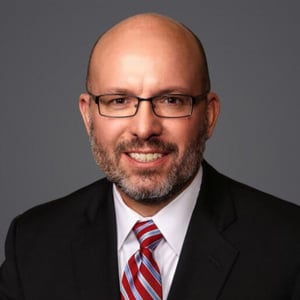
Shareholder, Ogletree, Deakins, Nash, Smoak & Stewart
Chris Murray is Co-Chair of the firm’s Arbitration and Alternative Dispute Resolution Practice Group. In this role, he assists attorneys throughout the firm and clients nationwide to create, roll out, and enforce effective employment arbitration agreements and other ADR programs. Mr. Murray has extensive experience with class/collective action waivers in employment arbitration. Mr. Murray was part of the Ogletree team that successfully defended the use of such waivers in the Fifth Circuit’s landmark decision in D.R. Horton, Inc. v. N.L.R.B. Since then, he has successfully defended the enforceability of class action waivers in numerous subsequent cases and submitted an amicus brief on the subject on behalf of several major employers’ associations in the Supreme Court’s Murphy Oil case. Mr. Murray assists clients and the Firm’s attorneys to draft or revise arbitration programs focused on a client’s specific needs and goals and in light of changing law and evolving best practices.
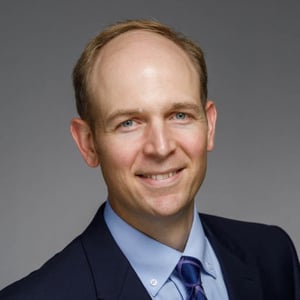
Professor of Law, Notre Dame Law School
Professor Samuel L. Bray joined the Notre Dame Law School faculty in 2018. Before coming to Notre Dame, he was an assistant professor of law at UCLA from 2011 to 2016, and a professor of law from 2016 to 2018. In addition, he was a Harrington Faculty Fellow at the University of Texas-Austin for the 2016-2017 academic year.
Bray is a graduate of the University of Chicago Law School, and he clerked for then-Judge Michael W. McConnell on the U.S. Court of Appeals for the Tenth Circuit. After clerking, he practiced law at Mayer Brown LLP, was an associate-in-law at Columbia Law School, and was executive director of the Constitutional Law Center at Stanford Law School.
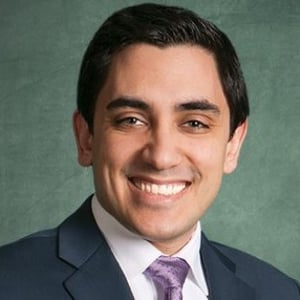
Litigation and Alternative Dispute Resolution Practice Group Member, Bodman
Mr. Asmar is a member of the Litigation and Alternative Dispute Resolution Practice Group. He represents clients involved in complex commercial litigation matters.
Before joining Bodman, Mr. Asmar clerked for Justice Mary Beth Kelly of the Michigan Supreme Court. He has also worked for a Detroit-area litigation defense firm where he participated in a variety of cases involving civil rights, employment issues, commercial disputes, municipal liability, contractual claims, and constitutional claims.
Mr. Asmar serves on the Board of Directors of the Notre Dame Club of Detroit. He is a member of Michigan State University's Michigan Political Leadership Program Class of 2015. During law school, he received the CALI Award for Torts at the University of Miami Law School, which he attended for one year before transferring to the University of Notre Dame Law School. As an undergraduate at the University of Michigan, he served as President of the Chaldean American Student Association.
Mr. Asmar is the 2016 recipient of the Detroit Bar Association Barristers' Pro Bono Award. The award is given annually to an outstanding attorney who has practiced for fewer than ten years and who has made extraordinary accomplishments through his or her participation in pro bono activities.
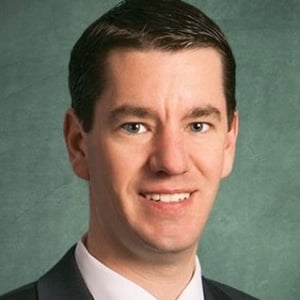
Litigation and Alternative Dispute Resolution Practice Group Member, Bodman PLC
Mr. Rheaume is a member of Bodman's Litigation and Alternative Dispute Resolution Practice Group. He represents clients involved in complex commercial litigation matters and serves as local counsel for national and international law firms.
Mr. Rheaume has been selected to the Michigan Super Lawyers® Rising Stars list since 2013 for business litigation. Prior to joining Bodman, he served as a law clerk to Justice Stephen J. Markman of the Michigan Supreme Court. Based on this experience, Mr. Rheaume is an integral team member of the firm's Appellate Law Practice Group. He has written appellate and amicus briefs in state and federal appellate courts, including the United States Supreme Court.
Mr. Rheaume is President of The Federalist Society-Michigan Chapter. He serves on the alumni board of the Sigma Chi Fraternity of Michigan State University. He is also a board member of the Detroit Economic Club's Young Leader Program.
Mr. Rheaume graduated from Michigan State University College of Law ranked first in his class. While there, he served as an associate editor on The Michigan State Law Review and received Jurisprudence Awards for outstanding achievement in Secured Transactions, Professional Responsibility, Insurance Law, Construction Law, Decedents Estates & Trusts, Bankruptcy, Negotiations, and Income Taxation.

Persuader Rule
Karen Harned, Christopher C. Murray
Labor and Employment Law and Regulatory Transparency Project Teleforum
On March 24, 2016 the DOL’s Office of Labor-Management Standards (OLMS) issued the so-called “persuader ...
Topics
Liberty Month Revisited: Campaign Finance Reform Can’t Punish Free Speech
This month we are sharing a selection of paired pieces from The Federalist Society's Liberty...
Topics
Liberty Month Revisited: It's Buckley Not Citizens United that Created Massive Spending
This month we are sharing a selection of paired pieces from The Federalist Society's Liberty...
Topics
Announcing the Second Annual Article I Initiative Writing Contest
The Federalist Society's Article I Initiative is focused on the critical issue of why the modern Congress...
National Injunctions: Judicial Authority in the Federal Courts [POLICYbrief]
Samuel L. Bray
Short video featuring Samuel Bray
Federal courts are issuing more national injunctions than ever before. Unlike regular injunctions, these injunctions...
Topics
Liberty Month Revisited: Regulation by Litigation
This month we are sharing a selection of paired pieces from The Federalist Society's Liberty...
Topics
Liberty Month Revisited: A Duty To Fight For Federalism
This month we are sharing a selection of paired pieces from The Federalist Society's Liberty...
Citizens Protecting Michigan’s Constitution v. Secretary of State
Donovan S. Asmar, Thomas J. Rheaume
Decided July 31, 2018
On July 30, 2018, the Michigan Supreme Court in Citizens Protecting Michigan’s Constitution v. Secretary of...
Topics
Liberty Month Revisited: Defining a Legitimate Scope for the Federalization of Business Crime
This month we are sharing a selection of paired pieces from The Federalist Society's Liberty...
Topics
Liberty Month Revisited: Federalism and Criminal Law
This month we are sharing a selection of paired pieces from The Federalist Society's Liberty...