

Professor Emeritus, Paul M. Hebert Law Center, Louisiana State University
In memoriam
Dr. John Baker is Professor Emeritus of Law, and previously the Dale E. Bennett Professor of Law, at Louisiana State University Law School. He is currently Visiting Professor at Peking University School of Transnational Law (via Zoom) and has been Visiting Professor at The Center for the Constitution, Georgetown Law School (2013-2020). He has also been a Visiting Fellow at Oriel College, the University of Oxford (2012-2014) and taught at Blackfriars Hall, Oxford in 2014. Dr. Baker has also been an adjunct Fellow at the Heritage Foundation (Spring, 2008) and a Distinguished Scholar at the Catholic University of America Law School (2011-12). He has taught at Tulane Law School, George Mason Law School, Pepperdine Law School, New York Law School, Hong Kong University, and the University of Dallas, School of Management and also taught and/or lectured in 17 foreign countries. Notable among his foreign visits are the
following: Visiting Professor at the University of Lyon III (France) (1999-2011); Visiting Professor at the Universidad de los Andes, Chile (2012), as a Fulbright Specialist (2006); and a Fulbright Scholar at various universities in the Philippines. Dr. Baker received his J.D., with honors, from the University of Michigan Law School and his B.A., magna cum laude, from the University of Dallas. He also earned a Ph.D. in Political Thought from the University of London. Baker has taught over a dozen different subjects, mostly courses in public law. His main areas of interest are Constitutional Law (particularly federalism and separation of powers), Criminal Law, Anti-Terrorism Law, International Law, Health Care Law, Mediation, and Comparative Law.
In addition to law review articles and book chapters, Dr. Baker’s academic publications include Hall's Criminal Law: Cases and Materials (with Benson, Force and George; 5th ed. Michie, 1993); An Introduction to the Law of the United States (ed. with Levasseur; University Press of America, 1992). He has also published on Forbes.com, FoxNews.com, in The Washington Times, and a number of times in The Wall Street Journal. He argues in federal court, including two oral arguments in the U.S. Supreme Court. For many years, he co-taught courses for the Federalist Society on separation of powers with the late Supreme Court Justice Antonin Scalia. In September 2016, he co-taught a Supreme Court seminar in China with Justice Samuel Alito. Following law school, he served as a law clerk in federal district court and as an assistant district attorney in New Orleans before joining LSU in 1975. While a professor, he has been as a consultant to USAID, USIA (since rolled into the State Department), the Justice Department, the U.S. Senate Judiciary Subcommittee on Separation of Powers, and the Office of Planning in the White House. He served on an ABA Task Force which issued the report, The Federalization of Crime (1998) and later as a consultant to the “Bi-Partisan Task Force on the Over- federalization of Crime” (2012-2014) created by the U.S. House Judiciary Subcommittee on Crime. Dr. Baker was a co-founder of the first iteration (1995) of Stratfor Inc., a global intelligence agency. He co-authored its first book: The Intelligence Edge (with Friedman, Friedman and Chapman; Crown Books/Random House 1997). In 2022, he began a short, weekly video podcast available on YouTube and Rumble, The Baker Brief.
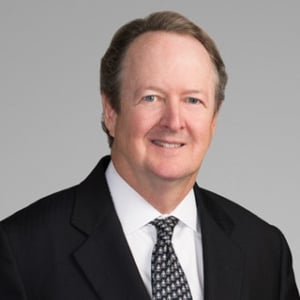
Of Counsel, Liskow & Lewis
Don Haycraft is of counsel at the firm of Liskow & Lewis in the New Orleans office. He has been a maritime attorney for almost 35 years. He is also an adjunct professor of maritime law at the Loyola Law School in New Orleans, teaching maritime personal injury and wrongful death. He is a 1983 Order of the Coif graduate of Virginia Law School where he served as an editor of the Law Review. He clerked for Judge James Michael, Western District of Virginia. Notably, he served as a trial counsel for BP in the multi-district litigation arising out of the Deepwater Horizon oil spill in 2010. He authored an amicus brief in the Batterton case and attended the oral argument on March 25, 2019.
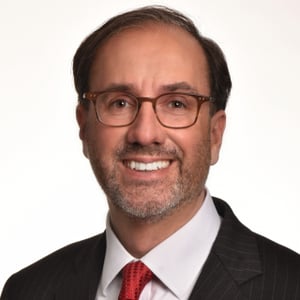
President and CEO, The Buckeye Institute
Robert Alt is the President and Chief Executive Officer of The Buckeye Institute where he has catalyzed exponential growth since he took the organization’s helm in 2012. He has since founded Buckeye’s renowned Economic Research Center and established its impactful Legal Center.
Alt is a distinguished scholar and attorney with particular expertise in legal policy, criminal justice, national security, and constitutional law. He previously worked for former U.S. Attorney General Edwin Meese III, regularly provides commentary on television and radio programs, and his writings have appeared in countless outlets.
In 2004, Alt spent five months in Iraq as an embedded war correspondent.
Alt has testified before Congress multiple times—including at the confirmation hearings for U.S. Supreme Court Justice Elena Kagan—the Federal Election Commission regarding matters of constitutional and administrative law, and numerous state legislatures.
Alt serves as an officer on the boards of The Philadelphia Society and the Federalist Society’s Columbus Lawyers Chapter. He taught national security law, criminal law, and legislation at Case Western Reserve University School of Law, as well as constitutional law and political parties and interest groups at Ashland University.
Alt earned his Doctor of Law degree from The University of Chicago Law School, where he was Symposium Editor and the winner of the Mulroy Prize for Excellence in Appellate Advocacy as well as research assistant to Professor Richard Epstein. Following law school, he clerked for Judge Alice Batchelder on the U.S. Court of Appeals for the Sixth Circuit. Alt graduated with his Bachelor of Arts in philosophy and political science magna cum laude from Azusa Pacific University where he also won the Outstanding Senior Award in Political Science.
Alt is an accomplished high-altitude alpinist and endurance athlete who has successfully climbed 6.75 of the famed Seven Summits of the World including Mount Everest. He is the creator of PROFOUND CLIMBING™ and a frequent speaker across the country and around the world on legal and public policy topics as well as effective leadership, management, decision-making, and teamwork in contexts ranging from extraordinary life/death situations to ordinary professional/business settings.
President and CEO, The Buckeye Institute
Robert Alt is the President and Chief Executive Officer of The Buckeye Institute where he has catalyzed exponential growth since he took the organization’s helm in 2012. He has since founded Buckeye’s renowned Economic Research Center and established its impactful Legal Center.
Alt is a distinguished scholar and attorney with particular expertise in legal policy, criminal justice, national security, and constitutional law. He previously worked for former U.S. Attorney General Edwin Meese III, regularly provides commentary on television and radio programs, and his writings have appeared in countless outlets.
In 2004, Alt spent five months in Iraq as an embedded war correspondent.
Alt has testified before Congress multiple times—including at the confirmation hearings for U.S. Supreme Court Justice Elena Kagan—the Federal Election Commission regarding matters of constitutional and administrative law, and numerous state legislatures.
Alt serves as an officer on the boards of The Philadelphia Society and the Federalist Society’s Columbus Lawyers Chapter. He taught national security law, criminal law, and legislation at Case Western Reserve University School of Law, as well as constitutional law and political parties and interest groups at Ashland University.
Alt earned his Doctor of Law degree from The University of Chicago Law School, where he was Symposium Editor and the winner of the Mulroy Prize for Excellence in Appellate Advocacy as well as research assistant to Professor Richard Epstein. Following law school, he clerked for Judge Alice Batchelder on the U.S. Court of Appeals for the Sixth Circuit. Alt graduated with his Bachelor of Arts in philosophy and political science magna cum laude from Azusa Pacific University where he also won the Outstanding Senior Award in Political Science.
Alt is an accomplished high-altitude alpinist and endurance athlete who has successfully climbed 6.75 of the famed Seven Summits of the World including Mount Everest. He is the creator of PROFOUND CLIMBING™ and a frequent speaker across the country and around the world on legal and public policy topics as well as effective leadership, management, decision-making, and teamwork in contexts ranging from extraordinary life/death situations to ordinary professional/business settings.
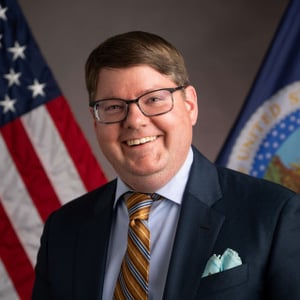
Deputy Secretary of Agriculture, U.S. Department of Agriculture
Judge Stephen Alexander Vaden was appointed as the Deputy Secretary of the U.S. Department of Agriculture on July 7, 2025. Alongside Secretary Brooke L. Rollins, Deputy Secretary Vaden leads the Department’s operations and implements policies that support America’s food and farm systems. A native of Union City, Tennessee, Deputy Secretary Vaden brings expertise in agricultural policy, law, and rural development. Previously, he served as a judge on the U.S. Court of International Trade and as General Counsel of USDA. Throughout Deputy Secretary Vaden’s time as General Counsel, he led successful Supreme Court litigation, advanced regulatory reform, and supported the implementation of the 2018 Farm Bill. He is a graduate of Yale Law School and Vanderbilt University. A public servant with strong agricultural roots, Deputy Secretary Vaden is committed to revitalizing rural America and ensuring an abundant, affordable, and safe U.S. food supply.

President, Harned Strategies LLC
Karen Harned is President at Harned Strategies LLC. Previously, she served as Executive Director of the National Federation of Independent Business Small Business Legal Center, a post she held from 2002-2022. Prior to joining the Legal Center, Ms. Harned was an attorney at a Washington, D.C. law firm specializing in food and drug law, where she represented several small and large businesses and their respective trade associations before Congress and federal agencies. She also served as Assistant Press Secretary to U.S. Senator Don Nickles of Oklahoma from August of 1989 to March of 1993. Ms. Harned received her B.A. from the University of Oklahoma in 1989 and her J.D. from The George Washington University National Law Center in 1995. She is admitted to practice in the District of Columbia.
As Executive Director of the NFIB Small Business Legal Center, Ms. Harned commented regularly on small business cases before federal and state courts, as well as the U.S. Supreme Court. She has appeared on Fox News, Fox Business, NBC Nightly News, CNN, CNBC and MSNBC, as well as National Public Radio, CBS Radio, and radio outlets across the country. Her opinion editorials and articles regarding healthcare, lawsuit abuse, regulation, and other issues important to small business have been published in newspapers and other publications nationwide.
Ms. Harned has testified before Congress on the small business impact of regulation and the civil justice system. Additionally, she has conducted numerous webinars and legal compliance seminars for small business owners across the country on issues relating to employment law, including unionization and immigration.
President, Harned Strategies LLC
Karen Harned is President at Harned Strategies LLC. Previously, she served as Executive Director of the National Federation of Independent Business Small Business Legal Center, a post she held from 2002-2022. Prior to joining the Legal Center, Ms. Harned was an attorney at a Washington, D.C. law firm specializing in food and drug law, where she represented several small and large businesses and their respective trade associations before Congress and federal agencies. She also served as Assistant Press Secretary to U.S. Senator Don Nickles of Oklahoma from August of 1989 to March of 1993. Ms. Harned received her B.A. from the University of Oklahoma in 1989 and her J.D. from The George Washington University National Law Center in 1995. She is admitted to practice in the District of Columbia.
As Executive Director of the NFIB Small Business Legal Center, Ms. Harned commented regularly on small business cases before federal and state courts, as well as the U.S. Supreme Court. She has appeared on Fox News, Fox Business, NBC Nightly News, CNN, CNBC and MSNBC, as well as National Public Radio, CBS Radio, and radio outlets across the country. Her opinion editorials and articles regarding healthcare, lawsuit abuse, regulation, and other issues important to small business have been published in newspapers and other publications nationwide.
Ms. Harned has testified before Congress on the small business impact of regulation and the civil justice system. Additionally, she has conducted numerous webinars and legal compliance seminars for small business owners across the country on issues relating to employment law, including unionization and immigration.
Deputy Secretary of Agriculture, U.S. Department of Agriculture
Judge Stephen Alexander Vaden was appointed as the Deputy Secretary of the U.S. Department of Agriculture on July 7, 2025. Alongside Secretary Brooke L. Rollins, Deputy Secretary Vaden leads the Department’s operations and implements policies that support America’s food and farm systems. A native of Union City, Tennessee, Deputy Secretary Vaden brings expertise in agricultural policy, law, and rural development. Previously, he served as a judge on the U.S. Court of International Trade and as General Counsel of USDA. Throughout Deputy Secretary Vaden’s time as General Counsel, he led successful Supreme Court litigation, advanced regulatory reform, and supported the implementation of the 2018 Farm Bill. He is a graduate of Yale Law School and Vanderbilt University. A public servant with strong agricultural roots, Deputy Secretary Vaden is committed to revitalizing rural America and ensuring an abundant, affordable, and safe U.S. food supply.

Professor of Law, University of Minnesota Law School
Professor James W. Coleman is a scholar of energy law. He specializes in North American energy infrastructure, transport, and trade. He is also a nonresident senior fellow at the American Enterprise Institute focused on energy policy.
Professor Coleman has testified before Congress on steps to speed up energy infrastructure permits. He also worked with a team of experts as part of Alberta's Royalty Review to revise the Canadian province's management of its vast oil and gas resources.
Before joining Minnesota, Professor Coleman taught at Southern Methodist University's Dedman School of Law, the University of Calgary’s law and business schools, and Harvard Law School. Earlier, he practiced environmental and appellate law at Sidley Austin in Washington, D.C., and clerked for the Honorable Steven M. Colloton of the U.S. Court of Appeals for the Eighth Circuit.
Professor Coleman received two degrees from Harvard University—a J.D. (cum laude) and B.A. in biology (magna cum laude with highest honors in the field). As a result of his undergraduate thesis on butterfly genetics, which required fieldwork in Central Asia, a species of lycaenid butterfly was named after him—Agrodiaetus ripartii colemani.
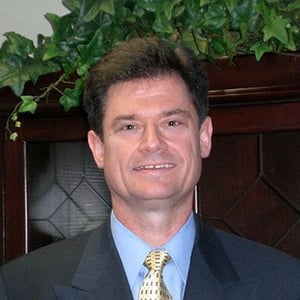
President and CEO, Frontiers of Freedom
Since 1998, George Landrith has served as the President and CEO of Frontiers of Freedom – a public policy think tank devoted to promoting a strong national defense, free markets, individual liberty, and constitutionally limited government. Frontiers of Freedom is recognized as a national leader on many of the most important issues facing America today – including: national security and defense, constitutional freedoms, market-based environmental solutions, energy, tax reform, property rights, and regulatory reform.
Previously, Landrith served as the Vice President and General Counsel to the National Legal Center for the Public Interest — now associated with the American Enterprise Institute. Landrith is a graduate of the University of Virginia School of Law, where he was the Business Editor of the Virginia Journal of Law and Politics. He also graduated, magna cum laude, from Brigham Young University studying political science and economics. Landrith is admitted to the bar in Virginia and California and is a member of the United States Supreme Court bar.
In 1994 and 1996, Landrith was the Republican candidate for the U.S. House of Representatives from Virginia’s Fifth Congressional District. He also served on the Albemarle County (Virginia) School Board from 1992 through 1995. He was appointed by then Governor George Allen and confirmed by the General Assembly to serve on the Virginia Workforce 2000 Advocacy Council. As an adjunct professor at the George Mason School of Law, Landrith has taught constitutional law, appellate advocacy, and legal writing. Landrith also teaches at the Leadership Institute’s candidate school.
Landrith appears frequently on television and radio news programs. He has been quoted or referenced in many of the nation’s leading newspapers, including: New York Times, Wall Street Journal, and Washington Post. Landrith’s work has been printed in over 100 newspapers across the nation, including: Washington Times, Chicago Tribune, LA Daily News, National Review, Sacramento Bee, Ft. Worth Star-Telegram, Providence Journal, Daily Caller, Washington Examiner, Townhall, and Human Events. In 2004, Landrith published a book, On Politics and Policy: Views on Freedom from an American Conservative.
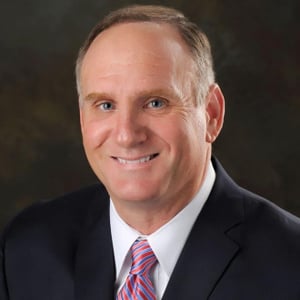
Representative, Mississippi House of Representatives
Representative Baker was born on May 13, 1962, and has been married for 29 years to the former Lady Collins, an English teacher at Brandon High School. They have one son, Chase, who is a public policy major in the Trent Lott Leadership Institute at the University of Mississippi. The Bakers are members of Lakeside Presbyterian Church.
Mark graduated from the University of Memphis in 1984 (B.A., Criminal Justice) and Mississippi College School of Law in 1987 (J.D., with distinction). He has been an active member of the Mississippi Bar since 1987 and currently engages in private practice in Brandon. He is admitted to practice law in all state and federal courts in the State of Mississippi, the United States Court of Appeals for the Fifth Circuit and the United States Supreme Court. Rep. Baker has practiced law for over 30 years and has decades of courtroom experience as an attorney in private practice, a prosecutor and judge. He has litigated cases in trial courts throughout the state and has represented numerous clients before Mississippi’s appellate courts.
In addition to practicing law, Representative Baker is a licensed property and casualty insurance agent. He is a former member of the Rankin County Republican Executive Committee and is a member and past president of the Rankin County Bar Association and the Rankin County Rotary Club.
Representative Baker was first elected to the Mississippi House of Representatives in 2004, representing District 74 which currently includes parts of Rankin County and which previously also included parts of Madison County. As Republican Leader from 2007-2011, he coordinated the recruitment, fundraising and campaign efforts which led to a Republican majority in the Mississippi House of Representatives in 2012 for the first time in modern history. Representative Baker is Chairman of the House Judiciary En Bancand Judiciary A Committees and is a member of the Ways and Means, Banking and Finance, Transportation and Investigate State Offices Committees.
Legislative awards and recognitions include the 2012 State Legislative Achievement Award from the U.S. Chamber Institute for Legal Reform, the 2012-2013 Champion for Children Award from Prevent Child Abuse Mississippi, Outstanding Legislator for 2013 by the Mississippi Association of Realtors, 2014 Legislator of the Year by the Mississippi Homebuilders Association, the 2015 Legislative Award from the Mississippi Municipal League, the 2019 MS Top 50 distinction as an elected official, and the 2019 Community Health Center Association of Mississippi’s Legacy Award.
During his time in the legislature, Representative Baker has been endorsed by interest groups such as Mississippi Right to Life and the National Rifle Association and has received highly favorable ratings from various conservative, agriculture, education and pro-business groups such as Americans for Prosperity, the American Conservative Union, the Mississippi Farm Bureau Federation, Empower Mississippi, the National Federation of Independent Business, and the Business and Industry Political Education Committee (BIPEC).

Executive Vice-President and Provost, William Carey University
Dr. Scott Hummel has been the Executive Vice President and Provost at William Carey University since 2013. From 2008-2013 he was the Vice President for Advancement and Church Relations as well as the Director of the Carey Scholars program. Before coming to Carey, he was Professor of Biblical Studies and Chair of the Department of Biblical Studies and Christian Ministries at LeTourneau University from 1998-2008. After completing a B.A. in Biblical Studies at William Carey College in 1987, Scott received a Rotary Ambassadorial Scholarship to study at the Hebrew University in Jerusalem, Israel for a year. He completed his M.Div. and Ph.D. in Biblical Backgrounds and Archaeology at Southwestern Baptist Theological Seminary in Fort Worth, Texas. Scott has published numerous articles in several publications. Scott has served churches and the community in numerous capacities. He has served as the interim pastor of several churches in Mississippi and Texas. As a Rotarian he has served as the past president of both the Longview-Greggton Rotary Club and the Hattiesburg Rotary Club. He has also served on the boards of the United Way of Southeast Mississippi and R3SM. His wife, Starr, teaches biology at Sumrall High School, and they have three daughters.
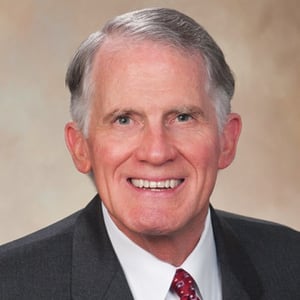
Member, Taggart Rimes & Graham, PLLC
Prior to the creation of Taggart, Rimes & Graham, Andy Taggart had maintained his own law practice for several years. He was previously a partner in the state’s largest law firm, and Chief of Staff to former Governor Kirk Fordice.
Andy’s practice is focused in the areas of business and corporate counsel, transactions and strategies; healthcare; selected litigated matters; and government, elections and political law.
He has held an “AV” rating from Martindale-Hubbell® for twenty years.
Andy has served as Chairman of the Greater Jackson (MS) Chamber Partnership, and was named by Governor Phil Bryant as Co-Chairman of the Mississippi Department of Corrections Task Force on Contract Review and Procurement, to provide advice and recommendations for restoring public confidence and trust in the operations of state government in the wake of public corruption charges. Andy is also a gubernatorial appointee to the Mississippi Judicial Appointments Advisory Committee.
Andy is the co-author of two popular books. Mississippi Politics: The Struggle for Power, 1976-2008, re-released in 2009, was first published by the University Press of Mississippi in November of 2006 and earned two literary awards in the first year of publication. His lighter book of political anecdotes, Mississippi Fried Politics: Tall Tales from the Back Rooms, was released in November of 2008. Andy has authored or co-authored works published by The University of Mississippi Law Journal, The Mississippi Lawyer, The Journal of the Mississippi Academy of Sciences, The Journal of Mississippi History, and is a frequent contributor to business and trade periodicals.
He was elected to a term of service on the Madison County, Mississippi, Board of Supervisors, beginning a four-year term in 2003. Andy was elected President of the Board in January 2007, where he served until the end of his term in early 2008.
He also served as president and CEO of the Mississippi Technology Alliance from August 2002 through October 2005. He led the company to both regional and national recognition.
Andy first commenced the practice of law in 1985. When asked to serve as chief of staff to Governor Kirk Fordice, he left his law practice in 1991 and served in that capacity until 1994 where he was instrumental in the ramp up of Mississippi’s first Republican administration in the twentieth century.
During the 1990s, Taggart taught as an adjunct professor of history and political science at Mississippi College, his undergraduate alma mater, and is often called on as a guest lecturer still.
A long-time presence in the governmental, policy, and political arenas, he served as a member of the Mississippi Advisory Committee to the United States Civil Rights Commission from 1988 to 1993; served as the executive director of the Mississippi Republican Party in 1984; and as the political director of the Mississippi Republican Party in 1980 and 1981.
Andy serves on the Board of Trustees of Mississippi College, where he is Chairman of the Academic Affairs Committee. Previously, he served as chairman of the Board of Directors of the Mississippi Center for Public Policy, and as a member of the Board of Trustees of FamilyNet, Inc., the television and radio broadcasting subsidiary of the North American Mission Board of the Southern Baptist Convention. He served four years as a gubernatorial appointee to the Mississippi Arts Commission.
A frequent speaker at major events, Andy has offered the Summer Commencement address at Mississippi College, and was named an Otho Smith Fellow by the University of Mississippi School of Business Administration. He has been named a Leading Edge Lecturer by the Mississippi Universities Center, and was selected as Spring Commencement speaker at Belhaven College.
Andy received his Juris Doctor cum laude from Tulane University in 1984, where he served on the Senior Editorial Board of the Tulane Law Review. To study at Tulane, Andy was awarded the Hale Boggs Scholarship, a full three year scholarship awarded to the entering student with the highest overall record. A 1979 graduate of Mississippi College, he holds a Bachelor of Arts in Political Science with High Honors and Distinction.
Representative, Mississippi House of Representatives
Representative Baker was born on May 13, 1962, and has been married for 29 years to the former Lady Collins, an English teacher at Brandon High School. They have one son, Chase, who is a public policy major in the Trent Lott Leadership Institute at the University of Mississippi. The Bakers are members of Lakeside Presbyterian Church.
Mark graduated from the University of Memphis in 1984 (B.A., Criminal Justice) and Mississippi College School of Law in 1987 (J.D., with distinction). He has been an active member of the Mississippi Bar since 1987 and currently engages in private practice in Brandon. He is admitted to practice law in all state and federal courts in the State of Mississippi, the United States Court of Appeals for the Fifth Circuit and the United States Supreme Court. Rep. Baker has practiced law for over 30 years and has decades of courtroom experience as an attorney in private practice, a prosecutor and judge. He has litigated cases in trial courts throughout the state and has represented numerous clients before Mississippi’s appellate courts.
In addition to practicing law, Representative Baker is a licensed property and casualty insurance agent. He is a former member of the Rankin County Republican Executive Committee and is a member and past president of the Rankin County Bar Association and the Rankin County Rotary Club.
Representative Baker was first elected to the Mississippi House of Representatives in 2004, representing District 74 which currently includes parts of Rankin County and which previously also included parts of Madison County. As Republican Leader from 2007-2011, he coordinated the recruitment, fundraising and campaign efforts which led to a Republican majority in the Mississippi House of Representatives in 2012 for the first time in modern history. Representative Baker is Chairman of the House Judiciary En Bancand Judiciary A Committees and is a member of the Ways and Means, Banking and Finance, Transportation and Investigate State Offices Committees.
Legislative awards and recognitions include the 2012 State Legislative Achievement Award from the U.S. Chamber Institute for Legal Reform, the 2012-2013 Champion for Children Award from Prevent Child Abuse Mississippi, Outstanding Legislator for 2013 by the Mississippi Association of Realtors, 2014 Legislator of the Year by the Mississippi Homebuilders Association, the 2015 Legislative Award from the Mississippi Municipal League, the 2019 MS Top 50 distinction as an elected official, and the 2019 Community Health Center Association of Mississippi’s Legacy Award.
During his time in the legislature, Representative Baker has been endorsed by interest groups such as Mississippi Right to Life and the National Rifle Association and has received highly favorable ratings from various conservative, agriculture, education and pro-business groups such as Americans for Prosperity, the American Conservative Union, the Mississippi Farm Bureau Federation, Empower Mississippi, the National Federation of Independent Business, and the Business and Industry Political Education Committee (BIPEC).
Executive Vice-President and Provost, William Carey University
Dr. Scott Hummel has been the Executive Vice President and Provost at William Carey University since 2013. From 2008-2013 he was the Vice President for Advancement and Church Relations as well as the Director of the Carey Scholars program. Before coming to Carey, he was Professor of Biblical Studies and Chair of the Department of Biblical Studies and Christian Ministries at LeTourneau University from 1998-2008. After completing a B.A. in Biblical Studies at William Carey College in 1987, Scott received a Rotary Ambassadorial Scholarship to study at the Hebrew University in Jerusalem, Israel for a year. He completed his M.Div. and Ph.D. in Biblical Backgrounds and Archaeology at Southwestern Baptist Theological Seminary in Fort Worth, Texas. Scott has published numerous articles in several publications. Scott has served churches and the community in numerous capacities. He has served as the interim pastor of several churches in Mississippi and Texas. As a Rotarian he has served as the past president of both the Longview-Greggton Rotary Club and the Hattiesburg Rotary Club. He has also served on the boards of the United Way of Southeast Mississippi and R3SM. His wife, Starr, teaches biology at Sumrall High School, and they have three daughters.
Member, Taggart Rimes & Graham, PLLC
Prior to the creation of Taggart, Rimes & Graham, Andy Taggart had maintained his own law practice for several years. He was previously a partner in the state’s largest law firm, and Chief of Staff to former Governor Kirk Fordice.
Andy’s practice is focused in the areas of business and corporate counsel, transactions and strategies; healthcare; selected litigated matters; and government, elections and political law.
He has held an “AV” rating from Martindale-Hubbell® for twenty years.
Andy has served as Chairman of the Greater Jackson (MS) Chamber Partnership, and was named by Governor Phil Bryant as Co-Chairman of the Mississippi Department of Corrections Task Force on Contract Review and Procurement, to provide advice and recommendations for restoring public confidence and trust in the operations of state government in the wake of public corruption charges. Andy is also a gubernatorial appointee to the Mississippi Judicial Appointments Advisory Committee.
Andy is the co-author of two popular books. Mississippi Politics: The Struggle for Power, 1976-2008, re-released in 2009, was first published by the University Press of Mississippi in November of 2006 and earned two literary awards in the first year of publication. His lighter book of political anecdotes, Mississippi Fried Politics: Tall Tales from the Back Rooms, was released in November of 2008. Andy has authored or co-authored works published by The University of Mississippi Law Journal, The Mississippi Lawyer, The Journal of the Mississippi Academy of Sciences, The Journal of Mississippi History, and is a frequent contributor to business and trade periodicals.
He was elected to a term of service on the Madison County, Mississippi, Board of Supervisors, beginning a four-year term in 2003. Andy was elected President of the Board in January 2007, where he served until the end of his term in early 2008.
He also served as president and CEO of the Mississippi Technology Alliance from August 2002 through October 2005. He led the company to both regional and national recognition.
Andy first commenced the practice of law in 1985. When asked to serve as chief of staff to Governor Kirk Fordice, he left his law practice in 1991 and served in that capacity until 1994 where he was instrumental in the ramp up of Mississippi’s first Republican administration in the twentieth century.
During the 1990s, Taggart taught as an adjunct professor of history and political science at Mississippi College, his undergraduate alma mater, and is often called on as a guest lecturer still.
A long-time presence in the governmental, policy, and political arenas, he served as a member of the Mississippi Advisory Committee to the United States Civil Rights Commission from 1988 to 1993; served as the executive director of the Mississippi Republican Party in 1984; and as the political director of the Mississippi Republican Party in 1980 and 1981.
Andy serves on the Board of Trustees of Mississippi College, where he is Chairman of the Academic Affairs Committee. Previously, he served as chairman of the Board of Directors of the Mississippi Center for Public Policy, and as a member of the Board of Trustees of FamilyNet, Inc., the television and radio broadcasting subsidiary of the North American Mission Board of the Southern Baptist Convention. He served four years as a gubernatorial appointee to the Mississippi Arts Commission.
A frequent speaker at major events, Andy has offered the Summer Commencement address at Mississippi College, and was named an Otho Smith Fellow by the University of Mississippi School of Business Administration. He has been named a Leading Edge Lecturer by the Mississippi Universities Center, and was selected as Spring Commencement speaker at Belhaven College.
Andy received his Juris Doctor cum laude from Tulane University in 1984, where he served on the Senior Editorial Board of the Tulane Law Review. To study at Tulane, Andy was awarded the Hale Boggs Scholarship, a full three year scholarship awarded to the entering student with the highest overall record. A 1979 graduate of Mississippi College, he holds a Bachelor of Arts in Political Science with High Honors and Distinction.

Courthouse Steps Decision: The Census Citizenship Question, Department of Commerce v. New York
John S. Baker
On June 27, the Supreme Court decided Department of Commerce v. New York, the legal challenge...
Courthouse Steps Decision Teleforum: The Dutra Group v. Batterton
Don Haycraft
On June 24, 2019, the Supreme Court, in an opinion written by Justice Alito, decided...
Criminal Justice Reform: A Survey of 2018 State Laws
Robert Alt
Criminal Justice Update
State legislatures across the country made significant strides in reforming their criminal justice regimes throughout...
Criminal Justice Reform: A Survey of 2018 State Laws
Robert Alt
Criminal Justice Update
State legislatures across the country made significant strides in reforming their criminal justice regimes throughout...
Deep Dive Episode 62 – An Update on Kisor v. Wilkie
Stephen Alexander Vaden, Karen Harned
Regulatory Transparency Project's Fourth Branch Podcast
Last week the Supreme Court decided the much-anticipated Kisor v. Wilkie case. The Court had...
Judicial Deference Determined: Kisor v. Wilkie
Karen Harned, Stephen Alexander Vaden
This morning the Supreme Court decided the much-anticipated Kisor v. Wilkie case. The Court had granted...
The Jones Act: Debating the Lingering Effects of a 100-Year-Old Law
James W. Coleman, George Landrith
Regulatory Transparency Project's Fourth Branch Video
Passed into law in 1920, the Jones Act is a ban on transport between two...
The Federalist Paper, Summer 2019
On March 15–16, the Federalist Society student chapter at Arizona State University’s Sandra Day O’Connor College...
Mississippi Attorney General Candidate Forum
Mark Baker, Scott Hummel, T. Russell Nobile, Andy Taggart
Mississippi Gulf Coast Lawyers Chapter
On June 5, 2019, the Federalist Society's Mississippi Gulf Coast Lawyers Chapter hosted a forum...
Mississippi Attorney General Candidate Forum
Mark Baker, Scott Hummel, T. Russell Nobile, Andy Taggart
Mississippi Gulf Coast Lawyers Chapter
On June 5, 2019, the Federalist Society's Mississippi Gulf Coast Lawyers Chapter hosted a forum...