

Senior Fellow, United States Studies Centre
Dr Charles Edel is Senior Fellow and Visiting Scholar at the United States Studies Centre at the University of Sydney. Prior to this appointment, he was Associate Professor of Strategy and Policy at the US Naval War College, and served on the US Secretary of State’s Policy Planning Staff from 2015-2017. In that role, he advised Secretary of State John Kerry on political and security issues in the Asia-Pacific region.
He worked at Peking University's Center for International and Strategic Studies as a Henry Luce Scholar and was also awarded the Council on Foreign Relations International Affairs Fellowship.
He is the co-author of The Lessons of Tragedy: Statecraft and World Order (2019) and author of Nation Builder: John Quincy Adams and the Grand Strategy of the Republic (2014).
In addition to his scholarly publications, his writings have appeared in The New York Times, Foreign Affairs, Foreign Policy, The American Interest, and various other outlets. He holds a PhD in History from Yale University, and received a BA in Classics from Yale College.
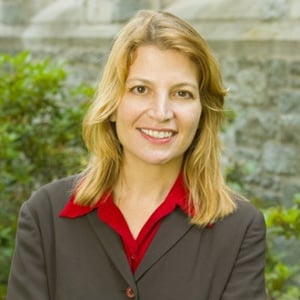
Wallace Stevens Professor of Law, University of Connecticut School of Law
Professor Bethany Berger is a widely read scholar of Property Law and Legal History and one of the leading federal Indian Law scholars in the country. She is a co-author and member of the Editorial Board of Felix S. Cohen's Handbook of Federal Indian Law, the foundational treatise in the field, and co-author of leading casebooks in both Property Law and American Indian Law. Her articles have appeared in the Michigan Law Review, California Law Review, UCLA Law Review, and the Duke Law Journal, among other publications, and have been excerpted and discussed in many casebooks and edited collections as well as in briefs to the Supreme Court and testimony before Congress.
Professor Berger graduated with honors from Wesleyan University, where she was elected to phi beta kappa, and from Yale Law School. After law school, Professor Berger went to the Navajo and Hopi Nations to serve as the Director of the Native American Youth Law Project of DNA-People's Legal Services. There, she conducted litigation challenging discrimination against Indian children, drafted and secured the passage of tribal laws affecting children, and helped to create a Navajo alternative to detention program. She then became Managing Attorney of Advocates for Children of New York, where she worked on impact litigation and policy reform concerning the rights of children in public education.
At the University of Connecticut School of Law, Professor Berger teaches American Indian Law, Property, Tribal Law, and Conflict of Laws. She is also the Wallace Stevens Professor of Law, a chair named for one of America’s greatest poets, a lawyer who lived and worked in Hartford for most of his life. She has served as a judge for the Southwest Intertribal Court of Appeals and as a visiting professor at Harvard Law School and the University of Michigan Law School.
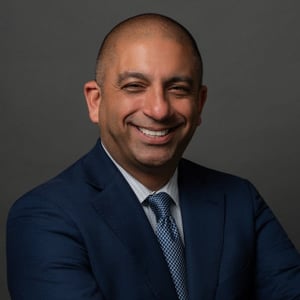
Founder and Executive Director, National Security Institute; Assistant Professor of Law, Antonin Scalia Law School, George Mason University
Jamil N. Jaffer is the Founder and Executive Director of the National Security Institute at the Antonin Scalia Law School at George Mason University where he also serves as an Assistant Professor of Law, Director of the National Security Law and Policy Program, and Director of the Cyber, Intelligence, and National Security LLM Program. Jamil also teaches classes on counterterrorism, intelligence, surveillance, cybersecurity, and other national security matters, as well as a summer course held abroad with U.S. Supreme Court Justice Neil M. Gorsuch. Jamil is also affiliated with Stanford University’s Center for International Security and Cooperation and previously served as a Visiting Fellow at the Hoover Institution from 2016 to 2019.
Jamil is also a Venture Partner with Paladin Capital Group, where he assists the firm with investments across the full range of its themes and theses, including a focus on dual-use national security technologies. Jamil also serves on the board of directors of RangeForce, a cybersecurity training and readiness platform startup and Tozny, a digital identity startup, and on the advisory boards of U.S. Strategic Metals, North America’s largest primary producer of cobalt, a critical mineral used in EV batteries, aerospace, and other national security applications; and Constella Intelligence, a deep and dark web intelligence startup. Jamil also serves as an advisor to Beacon Global Strategies, a strategic advisory firm and Duco, a technology platform startup that connects corporations with geopolitical and international business experts. Jamil is also the managing director of Trigraph Caveat Capital, a private investment vehicle.
Among other things, Jamil currently serves on the Board of Directors for the Greater Washington Board of Trade, the Board of Advisors for the Global Cyber Alliance, and the Advisory Board of the Foundation for the Defense of Democracies’ Center on Cyber and Tech Innovation, the Executive Committee of the Reagan Institute Strategy Group. Jamil is also a Fellow at the Academy for Judaic, Christian, and Islamic Studies, an advisor to the Concordia Summit, and is a member of the Board of Directors for the Center for Intelligence Policy, the Board of Directors of Speech First, and the Executive Committee of the International Law and National Security Practice Group of the Federalist Society.
Immediately prior to his current positions, from 2015-2021, Jamil served as a senior business leader at IronNet Cybersecurity, helping take the company from a bootstrapped first-year technology products startup through two rounds of venture capital fundraising, growing from 40 employees to over 300, and through its listing on New York Stock Exchange. In his role as IronNet's Senior Vice President for Strategy, Partnerships & Corporate Development, Jamil worked directly for the co-CEOs of the company, Gen (ret.) Keith B. Alexander, the former Director of the National Security Agency and Founding Commander of U.S. Cyber Command, and Bill Welch, the former COO of Zscaler and Duo; in that role, Jamil led all of the company’s strategic and technology partnership efforts, including developing go-to-market and technology integration plans with some of the largest cloud platforms and cybersecurity companies in the market, evaluating potential acquisition targets, and developing overall corporate strategy and thought leadership around collective security and collaborative defense in the cyber arena.
Prior to his time at IronNet, Jamil served on the leadership team of the Senate Foreign Relations Committee as Chief Counsel and Senior Advisor under Chairman Bob Corker (R-TN), where he worked on key national security and foreign policy issues, including leading the drafting of the proposed Authorization for the Use of Military Force against ISIS in 2014 and 2015, the AUMF against Syria in 2013, and revisions to the 9/11 AUMF against al Qaeda. Jamil was also the lead architect of the Iran Nuclear Agreement Review Act and two sanctions laws against Russia for its first intervention in Ukraine.
Prior to joining SFRC, Jamil served as Senior Counsel to the House Permanent Select Committee on Intelligence under Chairman Mike Rogers (R-MI) where he led the committee’s oversight of NSA surveillance, NRO intelligence issues, and NGA analytic and collection matters, as well as intelligence community-wide counterterrorism issues. Jamil was also the lead architect of the Cyber Intelligence Sharing and Protection Act, the nation’s first cyber threat intelligence sharing legislation that was signed into law in 2015.
In the Bush Administration, Jamil served in the White House as an Associate Counsel to the President, handling Defense Department, State Department, and intelligence community matters, and serving as one of the White House Counsel’s primary representatives to the National Security Council Deputies Committee.
Prior to the White House, Jamil served on the leadership team of the Justice Department’s National Security Division as Counsel to the Assistant Attorney General for National Security, where he focused on counterterrorism and intelligence matters. At NSD, Jamil helped lead the division’s work on In re: Directives, the first ever two-party litigated matter in the FISA Court and the second case before the FISA Court of Review in its 30-year history. Jamil also led NSD’s efforts on the President’s Comprehensive National Cybersecurity Initiative (CNCI), including the drafting of NSPD-54/HSPD-23, and related classified matters, and advised the National Security Agency (NSA) and U.S. Cyber Command’s predecessor organization, the Joint Function Component Command for Network Warfare (JFCC-NW), on matters related to cyber intelligence collection and offensive cyber activities. For his work on these matters, Jamil was awarded the Assistant Attorney General’s Award for Special Initiative and was among the group of lawyers awarded the Director of National Intelligence’s 2008 Legal Award (Team of the Year – Cyber Legal).
Jamil also served in other positions in the Justice Department, including in the Office of Legal Policy, where he worked on the confirmations of Chief Justice John G. Roberts, Jr. and Justice Samuel A. Alito, Jr. to the United States Supreme Court.
Jamil also served as a lawyer in private practice at Kellogg Huber, a Washington, DC-based litigation boutique, as a policy advisor to Congressman Bob Goodlatte (R-VA), and as a staff member or senior advisor on a number of political campaigns, including two presidential campaigns and a presidential transition team. While in law school, Jamil was a member of the University of Chicago Law Review, managing editor of the Chicago Journal of International Law, and National Symposium Editor of the Harvard Journal of Law & Public Policy. Following law school, Jamil served as a law clerk to Judge Edith H. Jones of the United States Court of Appeals for the Fifth Circuit and, later in his career, as a law clerk to then-Judge Neil M. Gorsuch when he first joined the United States Court of Appeals for the Tenth Circuit as well as a law clerk to Justice Neil Gorsuch when he joined the U.S. Supreme Court.
Jamil has published multiple op-eds and academic articles on national security, foreign policy, cybersecurity, counterterrorism, encryption, and intelligence matters, and is the co-author of a book chapter with former NSA Director Gen. (Ret.) Keith B. Alexander on national security and the press in National Security, Leaks, and the Freedom of the Press: The Pentagon Papers Fifty Years On (2021) and a book chapter with former CIA Director Gen. (ret.) Mike Hayden on ISIS, al Qaeda, and other international terrorist groups in Choosing to Lead: American Foreign Policy for a Disordered World (2015). Jamil has also written book chapters on cybersecurity and surveillance, as well as op-eds and policy papers with former Attorney General Michael B. Mukasey, former National Counterterrorism Center Director Matt Olsen, and Congressman Mike Waltz (R-FL), among others.
Jamil has previously taught graduate-level courses in intelligence law and policy at George Washington University’s Elliott School of International Affairs and the National Intelligence University, served an outside advisor to the Cyberspace Solarium Commission, and has recently testified before committees of the U.S. Senate and House of Representatives on China, cybersecurity, counterterrorism, and other national security matters. Jamil has also recently appeared on a range of national television and radio outlets including CNN, Fox News, Fox Business, MSNBC, Bloomberg, PBS, Voice of America, and National Public Radio, and in various print and online publications, including the Wall Street Journal, New York Times, and the Washington Post on a range of national security matters including cybersecurity, counterterrorism, surveillance, encryption, privacy, and foreign policy issues.
Jamil holds degrees from UCLA (BA, cum laude), the University of Chicago Law School (JD, with honors), and the United States Naval War College (MA, with distinction).
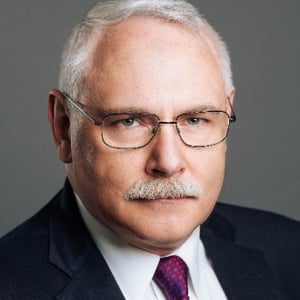
Visiting Fellow, The National Security Institute
Norman T. Roule served for 34-years in the Central Intelligence Agency, managing significant programs relating to the Middle East. Mr. Roule’s service in the CIA’s Directorate of Operations included roles as Division Chief, Deputy Division Chief and Chief of Station. He has held multiple senior assignments in Washington as well as during more than 15 years of overseas work. He served as the National Intelligence Manager for Iran (NIM-I) at the Office of the Director of National Intelligence from November 2008 until September 2017. As NIM-I, he was the principal Intelligence Community (IC) official responsible for overseeing national intelligence policy and activities related to Iran and Iran-related issues, to include IC engagement on these topics with senior policymakers in the National Security Council, the Department of State and Congress. Mr. Roule received multiple national security awards during his career.
Mr. Roule currently works as a business consultant on Middle East political, security, economic, and energy issues with an emphasis on the Gulf Cooperation Council states and Iran. He also serves as Senior Adviser to the Counter Extremism Project, United Against Nuclear Iran, the Nuclear Threat Initiative and as a member of the Advisory Board of the Arabia Foundation. Mr. Roule is currently also a non-resident Fellow at the Belfer Center for Science and International Affairs at the Harvard Kennedy School. He is frequently asked to speak on Middle East issues and has appeared on Al-Hurra Television, BBC, Bloomberg Radio and Television, CBS, CNBC, CNN, Fox, Israeli international television (I24), NPR, Saudi 24, Sky News, Sky News Arabia, and the podcast “Intelligence Matters.” He is a frequent contributor to The Cipher Brief and has written for U.S. and international print media.
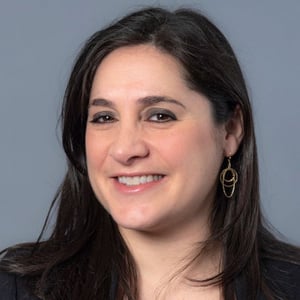
Senior Fellow, The Washington Institute
Dana Stroul is a senior fellow in The Washington Institute's Beth and David Geduld Program on Arab Politics.

Research Fellow, American Enterprise Institute (AEI)
Katherine Zimmerman is a research fellow at the American Enterprise Institute (AEI) and the research manager for AEI’s Critical Threats Project. As AEI’s senior analyst studying terrorist groups, she focuses on the global al Qaeda network and covers the Salafi-jihadi movement and related trends in the Middle East and Africa. She also specializes in al Qaeda in the Arabian Peninsula and Yemen, al Shabaab in Somalia, and al Qaeda in the Sahel.
Founder and Executive Director, National Security Institute; Assistant Professor of Law, Antonin Scalia Law School, George Mason University
Jamil N. Jaffer is the Founder and Executive Director of the National Security Institute at the Antonin Scalia Law School at George Mason University where he also serves as an Assistant Professor of Law, Director of the National Security Law and Policy Program, and Director of the Cyber, Intelligence, and National Security LLM Program. Jamil also teaches classes on counterterrorism, intelligence, surveillance, cybersecurity, and other national security matters, as well as a summer course held abroad with U.S. Supreme Court Justice Neil M. Gorsuch. Jamil is also affiliated with Stanford University’s Center for International Security and Cooperation and previously served as a Visiting Fellow at the Hoover Institution from 2016 to 2019.
Jamil is also a Venture Partner with Paladin Capital Group, where he assists the firm with investments across the full range of its themes and theses, including a focus on dual-use national security technologies. Jamil also serves on the board of directors of RangeForce, a cybersecurity training and readiness platform startup and Tozny, a digital identity startup, and on the advisory boards of U.S. Strategic Metals, North America’s largest primary producer of cobalt, a critical mineral used in EV batteries, aerospace, and other national security applications; and Constella Intelligence, a deep and dark web intelligence startup. Jamil also serves as an advisor to Beacon Global Strategies, a strategic advisory firm and Duco, a technology platform startup that connects corporations with geopolitical and international business experts. Jamil is also the managing director of Trigraph Caveat Capital, a private investment vehicle.
Among other things, Jamil currently serves on the Board of Directors for the Greater Washington Board of Trade, the Board of Advisors for the Global Cyber Alliance, and the Advisory Board of the Foundation for the Defense of Democracies’ Center on Cyber and Tech Innovation, the Executive Committee of the Reagan Institute Strategy Group. Jamil is also a Fellow at the Academy for Judaic, Christian, and Islamic Studies, an advisor to the Concordia Summit, and is a member of the Board of Directors for the Center for Intelligence Policy, the Board of Directors of Speech First, and the Executive Committee of the International Law and National Security Practice Group of the Federalist Society.
Immediately prior to his current positions, from 2015-2021, Jamil served as a senior business leader at IronNet Cybersecurity, helping take the company from a bootstrapped first-year technology products startup through two rounds of venture capital fundraising, growing from 40 employees to over 300, and through its listing on New York Stock Exchange. In his role as IronNet's Senior Vice President for Strategy, Partnerships & Corporate Development, Jamil worked directly for the co-CEOs of the company, Gen (ret.) Keith B. Alexander, the former Director of the National Security Agency and Founding Commander of U.S. Cyber Command, and Bill Welch, the former COO of Zscaler and Duo; in that role, Jamil led all of the company’s strategic and technology partnership efforts, including developing go-to-market and technology integration plans with some of the largest cloud platforms and cybersecurity companies in the market, evaluating potential acquisition targets, and developing overall corporate strategy and thought leadership around collective security and collaborative defense in the cyber arena.
Prior to his time at IronNet, Jamil served on the leadership team of the Senate Foreign Relations Committee as Chief Counsel and Senior Advisor under Chairman Bob Corker (R-TN), where he worked on key national security and foreign policy issues, including leading the drafting of the proposed Authorization for the Use of Military Force against ISIS in 2014 and 2015, the AUMF against Syria in 2013, and revisions to the 9/11 AUMF against al Qaeda. Jamil was also the lead architect of the Iran Nuclear Agreement Review Act and two sanctions laws against Russia for its first intervention in Ukraine.
Prior to joining SFRC, Jamil served as Senior Counsel to the House Permanent Select Committee on Intelligence under Chairman Mike Rogers (R-MI) where he led the committee’s oversight of NSA surveillance, NRO intelligence issues, and NGA analytic and collection matters, as well as intelligence community-wide counterterrorism issues. Jamil was also the lead architect of the Cyber Intelligence Sharing and Protection Act, the nation’s first cyber threat intelligence sharing legislation that was signed into law in 2015.
In the Bush Administration, Jamil served in the White House as an Associate Counsel to the President, handling Defense Department, State Department, and intelligence community matters, and serving as one of the White House Counsel’s primary representatives to the National Security Council Deputies Committee.
Prior to the White House, Jamil served on the leadership team of the Justice Department’s National Security Division as Counsel to the Assistant Attorney General for National Security, where he focused on counterterrorism and intelligence matters. At NSD, Jamil helped lead the division’s work on In re: Directives, the first ever two-party litigated matter in the FISA Court and the second case before the FISA Court of Review in its 30-year history. Jamil also led NSD’s efforts on the President’s Comprehensive National Cybersecurity Initiative (CNCI), including the drafting of NSPD-54/HSPD-23, and related classified matters, and advised the National Security Agency (NSA) and U.S. Cyber Command’s predecessor organization, the Joint Function Component Command for Network Warfare (JFCC-NW), on matters related to cyber intelligence collection and offensive cyber activities. For his work on these matters, Jamil was awarded the Assistant Attorney General’s Award for Special Initiative and was among the group of lawyers awarded the Director of National Intelligence’s 2008 Legal Award (Team of the Year – Cyber Legal).
Jamil also served in other positions in the Justice Department, including in the Office of Legal Policy, where he worked on the confirmations of Chief Justice John G. Roberts, Jr. and Justice Samuel A. Alito, Jr. to the United States Supreme Court.
Jamil also served as a lawyer in private practice at Kellogg Huber, a Washington, DC-based litigation boutique, as a policy advisor to Congressman Bob Goodlatte (R-VA), and as a staff member or senior advisor on a number of political campaigns, including two presidential campaigns and a presidential transition team. While in law school, Jamil was a member of the University of Chicago Law Review, managing editor of the Chicago Journal of International Law, and National Symposium Editor of the Harvard Journal of Law & Public Policy. Following law school, Jamil served as a law clerk to Judge Edith H. Jones of the United States Court of Appeals for the Fifth Circuit and, later in his career, as a law clerk to then-Judge Neil M. Gorsuch when he first joined the United States Court of Appeals for the Tenth Circuit as well as a law clerk to Justice Neil Gorsuch when he joined the U.S. Supreme Court.
Jamil has published multiple op-eds and academic articles on national security, foreign policy, cybersecurity, counterterrorism, encryption, and intelligence matters, and is the co-author of a book chapter with former NSA Director Gen. (Ret.) Keith B. Alexander on national security and the press in National Security, Leaks, and the Freedom of the Press: The Pentagon Papers Fifty Years On (2021) and a book chapter with former CIA Director Gen. (ret.) Mike Hayden on ISIS, al Qaeda, and other international terrorist groups in Choosing to Lead: American Foreign Policy for a Disordered World (2015). Jamil has also written book chapters on cybersecurity and surveillance, as well as op-eds and policy papers with former Attorney General Michael B. Mukasey, former National Counterterrorism Center Director Matt Olsen, and Congressman Mike Waltz (R-FL), among others.
Jamil has previously taught graduate-level courses in intelligence law and policy at George Washington University’s Elliott School of International Affairs and the National Intelligence University, served an outside advisor to the Cyberspace Solarium Commission, and has recently testified before committees of the U.S. Senate and House of Representatives on China, cybersecurity, counterterrorism, and other national security matters. Jamil has also recently appeared on a range of national television and radio outlets including CNN, Fox News, Fox Business, MSNBC, Bloomberg, PBS, Voice of America, and National Public Radio, and in various print and online publications, including the Wall Street Journal, New York Times, and the Washington Post on a range of national security matters including cybersecurity, counterterrorism, surveillance, encryption, privacy, and foreign policy issues.
Jamil holds degrees from UCLA (BA, cum laude), the University of Chicago Law School (JD, with honors), and the United States Naval War College (MA, with distinction).
Visiting Fellow, The National Security Institute
Norman T. Roule served for 34-years in the Central Intelligence Agency, managing significant programs relating to the Middle East. Mr. Roule’s service in the CIA’s Directorate of Operations included roles as Division Chief, Deputy Division Chief and Chief of Station. He has held multiple senior assignments in Washington as well as during more than 15 years of overseas work. He served as the National Intelligence Manager for Iran (NIM-I) at the Office of the Director of National Intelligence from November 2008 until September 2017. As NIM-I, he was the principal Intelligence Community (IC) official responsible for overseeing national intelligence policy and activities related to Iran and Iran-related issues, to include IC engagement on these topics with senior policymakers in the National Security Council, the Department of State and Congress. Mr. Roule received multiple national security awards during his career.
Mr. Roule currently works as a business consultant on Middle East political, security, economic, and energy issues with an emphasis on the Gulf Cooperation Council states and Iran. He also serves as Senior Adviser to the Counter Extremism Project, United Against Nuclear Iran, the Nuclear Threat Initiative and as a member of the Advisory Board of the Arabia Foundation. Mr. Roule is currently also a non-resident Fellow at the Belfer Center for Science and International Affairs at the Harvard Kennedy School. He is frequently asked to speak on Middle East issues and has appeared on Al-Hurra Television, BBC, Bloomberg Radio and Television, CBS, CNBC, CNN, Fox, Israeli international television (I24), NPR, Saudi 24, Sky News, Sky News Arabia, and the podcast “Intelligence Matters.” He is a frequent contributor to The Cipher Brief and has written for U.S. and international print media.
Senior Fellow, The Washington Institute
Dana Stroul is a senior fellow in The Washington Institute's Beth and David Geduld Program on Arab Politics.
Research Fellow, American Enterprise Institute (AEI)
Katherine Zimmerman is a research fellow at the American Enterprise Institute (AEI) and the research manager for AEI’s Critical Threats Project. As AEI’s senior analyst studying terrorist groups, she focuses on the global al Qaeda network and covers the Salafi-jihadi movement and related trends in the Middle East and Africa. She also specializes in al Qaeda in the Arabian Peninsula and Yemen, al Shabaab in Somalia, and al Qaeda in the Sahel.

Assistant Professor of Law, American University Washington College of Law
Jennifer Daskal joined American University Washington College of Law (WCL) in 2013 as an Assistant Professor of Law. She teaches and writes in the fields of criminal law, national security law, and constitutional law. From 2009-2011, Prof. Daskal was counsel to the Assistant Attorney General for National Security at the Department of Justice and, among other things, served on the Secretary of Defense and Attorney General-led Detention Policy Task Force. Prior to joining DOJ, she was the senior counterterrorism counsel at Human Rights Watch, worked as a staff attorney for the Public Defender Service for the District of Columbia, and clerked for the Honorable Jed S. Rakoff. She spent two years before joining WCL’s faculty as a national security law fellow and adjunct professor at Georgetown Law Center.
Prof. Daskal is a graduate of Brown University, Harvard Law School, and Cambridge University, where she was a Marshall Scholar. Recent publications include The Un-Territoriality of Data, 326 Yale L.J. 326 (2015); Pre-Crime Restraints: The Explosion of Targeted, Non-Custodial Prevention, 99 Cornell L. Rev. 327 (2014); After the AUMF, 5 Harvard Nat'l Sec. L. J. 115 (2014) (co-authored with Steve Vladeck); and The Geography of the Battlefield: A Framework for Detention and Targeting Outside the ‘Hot’ Conflict Zone, 171 Penn. L. Rev. 1165 (2013). Prof. Daskal has published op-eds in the New York Times, Washington Post, International Herald Tribune, L.A. Times, and Salon.com, and she has appeared on BBC, C-Span, CNN, MSNBC, and NPR, among other media outlets. She is an Executive Editor of and regular contributor to the Just Security blog.

Professor of the Practice of Law and Executive Director, Center on Law, Ethics and National Security, Duke University Law School
Charles J. Dunlap Jr. joined the Duke Law faculty in July 2010 where he is currently a professor of the practice of law and Executive Director of the Center on Law, Ethics and National Security. His teaching and scholarly writing focus on national security, law of armed conflict, the use of force under international law, civil-military relations, cyberwar, airpower, military justice, and ethical issues related to the practice of national security law.
Dunlap retired from the Air Force in June 2010, having attained the rank of major general during a 34-year career in the Judge Advocate General Corps. In his capacity as Deputy Judge Advocate General spanning from May 2006 to March 2010, he assisted the Judge Advocate General in the professional supervision of more than 2,200 judge advocates, 350 civilian lawyers, 1,400 enlisted paralegals, and 500 civilians around the world. In addition to overseeing an array of military justice, operational, international, and civil law functions, he provided legal advice to commanders and civilian leaders at all levels.
In the course of his career, Dunlap has been involved in various high-profile interagency and policy matters, including his testimony before the U.S. House of Representatives concerning the Military Commissions Act of 2006.
Dunlap previously served as the senior lawyer (staff judge advocate) at Air Combat Command Headquarters at Langley Air Force Base in Virginia, at Air Education and Training Command Headquarters at Randolph Air Force Base in Texas, and at U.S. Strategic Command, Omaha, Nebraska, among other leadership posts. Additionally, he served on the faculty of the Air Force Judge Advocate General School where he taught various civil and criminal law topics. An experienced trial lawyer, he also spent two years as a military trial judge for a 22-state circuit. He served tours in the United Kingdom and Korea, and deployed for operations in the Middle East and Africa. He also led military-to-military delegations to Colombia, Uruguay, South Africa, and the Czech Republic.
A prolific author and accomplished public speaker, Dunlap’s commentary on a wide variety of national security topics has been published in leading newspapers and military journals. His 2001 essay written for Harvard University’s Carr Center on “lawfare,” a concept he defines as “the use or misuse of law as a substitute for traditional military means to accomplish an operational objective,” has been highly influential among military scholars and in the broader legal academy.
Dunlap is also the author of the prize-winning essay, “The Origins of the Military Coup of 2012”, originally published in 1992, which was selected for the 40th Anniversary Edition of Parameters (Winter 2010-2011).
Dunlap’s legal scholarship has been published in the Stanford Law Review, the Yale Journal of International Affairs, the Harvard Law’s National Security Journal, the Wake Forest Law Review, the Fletcher Forum of World Affairs, the University of Nebraska Law Review, the Texas Tech Law Review, Temple Law’s Journal of International & Comparative Law, the University of North Carolina’s Journal of International Law, the Connecticut Law Review, the Tennessee Law Review, and the Vanderbilt Journal of Transnational Law, among others.
He’s also authored numerous articles and opinion pieces in a range of publications including The Atlantic, the New York Times, the Washington Post, the Washington Times, the Air Force Times, Strategic Studies Quarterly, the Georgetown Journal of International Affairs, Business Insider, the Journal of Genocide Research, The Hill, Small Wars Journal, and the blogs, Lawfare and Just Security.
Maj Gen Dunlap founded his blog Lawfire in 2015 and has since written over 300 posts on a wide variety of subjects.
Dunlap's wife, Joy, was a vice president of the National Association of Broadcasters, and later a deputy director of Government Relations for the Military Officers Association of America. She served as the elected president of Duke Campus Club, and is a recipient of the prestigious Order of the Emerald by Kappa Delta sorority. Her blog, Speaking Joyfully, won 3rd place in the blog category at the 2021 Blue Ridge Mountains Christian Writers Conference. They reside in Durham.
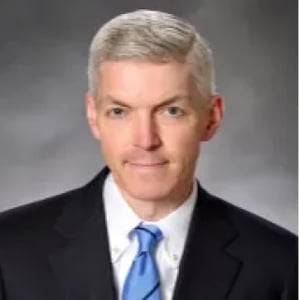
Executive Vice President, Chief Legal Officer, Gates Corporation
Matthew R. A. Heiman joined the Company in May 2026 and has served as the Company’s Chief Legal Officer and Corporate Secretary since June 2026. As Chief Legal Officer, Mr. Heiman is responsible for all legal functions for Gates, including securities and corporate governance, M&A, litigation, commercial, regulatory, compliance, patents and trademarks, real estate, employment and labor, sustainability and environmental matters. Prior to joining Gates, Mr. Heiman held senior legal leadership roles at Waystar, where he served as Chief Legal & Administrative Officer from 2023 to 2025 and as General Counsel and Corporate Secretary from 2020 to 2023. Prior to that, he was with Johnson Controls, where he served as Vice President, Corporate Secretary, and Associate General Counsel. Mr. Heiman has been a Senior Fellow for the National Security Institute at George Mason University’s Antonin Scalia School of Law since 2018.

Professor Emeritus of Law, Antonin Scalia Law School, George Mason University
Jeremy A. Rabkin is a Professor Emeritus of Law at the Antonin Scalia Law School, George Mason University. Before joining the faculty in June 2007, he was for over two decades a professor in the Department of Government at Cornell University. Professor Rabkin serves on the board of directors of the Center for Individual Rights, a public interest law firm based in Washington, D.C. Previously he was a board member of the U.S. Institute of Peace and the board of academic advisors of the American Enterprise Institute.
Professor Rabkin’s books include Law Without Nations? (Princeton University Press, 2005). He authored “If You Need a Friend, Don’t Call a Cosmopolitan,” a chapter in Varieties of Sovereignty and Citizenship (Sigal R. Ben-Porath & Rogers M. Smith eds., University of Pennsylvania Press, 2012). His articles have appeared in major law reviews and political science journals and his journalistic contributions in a range of magazines and newspapers, including the Washington Post and the Wall Street Journal.
Assistant Professor of Law, American University Washington College of Law
Jennifer Daskal joined American University Washington College of Law (WCL) in 2013 as an Assistant Professor of Law. She teaches and writes in the fields of criminal law, national security law, and constitutional law. From 2009-2011, Prof. Daskal was counsel to the Assistant Attorney General for National Security at the Department of Justice and, among other things, served on the Secretary of Defense and Attorney General-led Detention Policy Task Force. Prior to joining DOJ, she was the senior counterterrorism counsel at Human Rights Watch, worked as a staff attorney for the Public Defender Service for the District of Columbia, and clerked for the Honorable Jed S. Rakoff. She spent two years before joining WCL’s faculty as a national security law fellow and adjunct professor at Georgetown Law Center.
Prof. Daskal is a graduate of Brown University, Harvard Law School, and Cambridge University, where she was a Marshall Scholar. Recent publications include The Un-Territoriality of Data, 326 Yale L.J. 326 (2015); Pre-Crime Restraints: The Explosion of Targeted, Non-Custodial Prevention, 99 Cornell L. Rev. 327 (2014); After the AUMF, 5 Harvard Nat'l Sec. L. J. 115 (2014) (co-authored with Steve Vladeck); and The Geography of the Battlefield: A Framework for Detention and Targeting Outside the ‘Hot’ Conflict Zone, 171 Penn. L. Rev. 1165 (2013). Prof. Daskal has published op-eds in the New York Times, Washington Post, International Herald Tribune, L.A. Times, and Salon.com, and she has appeared on BBC, C-Span, CNN, MSNBC, and NPR, among other media outlets. She is an Executive Editor of and regular contributor to the Just Security blog.
Professor of the Practice of Law and Executive Director, Center on Law, Ethics and National Security, Duke University Law School
Charles J. Dunlap Jr. joined the Duke Law faculty in July 2010 where he is currently a professor of the practice of law and Executive Director of the Center on Law, Ethics and National Security. His teaching and scholarly writing focus on national security, law of armed conflict, the use of force under international law, civil-military relations, cyberwar, airpower, military justice, and ethical issues related to the practice of national security law.
Dunlap retired from the Air Force in June 2010, having attained the rank of major general during a 34-year career in the Judge Advocate General Corps. In his capacity as Deputy Judge Advocate General spanning from May 2006 to March 2010, he assisted the Judge Advocate General in the professional supervision of more than 2,200 judge advocates, 350 civilian lawyers, 1,400 enlisted paralegals, and 500 civilians around the world. In addition to overseeing an array of military justice, operational, international, and civil law functions, he provided legal advice to commanders and civilian leaders at all levels.
In the course of his career, Dunlap has been involved in various high-profile interagency and policy matters, including his testimony before the U.S. House of Representatives concerning the Military Commissions Act of 2006.
Dunlap previously served as the senior lawyer (staff judge advocate) at Air Combat Command Headquarters at Langley Air Force Base in Virginia, at Air Education and Training Command Headquarters at Randolph Air Force Base in Texas, and at U.S. Strategic Command, Omaha, Nebraska, among other leadership posts. Additionally, he served on the faculty of the Air Force Judge Advocate General School where he taught various civil and criminal law topics. An experienced trial lawyer, he also spent two years as a military trial judge for a 22-state circuit. He served tours in the United Kingdom and Korea, and deployed for operations in the Middle East and Africa. He also led military-to-military delegations to Colombia, Uruguay, South Africa, and the Czech Republic.
A prolific author and accomplished public speaker, Dunlap’s commentary on a wide variety of national security topics has been published in leading newspapers and military journals. His 2001 essay written for Harvard University’s Carr Center on “lawfare,” a concept he defines as “the use or misuse of law as a substitute for traditional military means to accomplish an operational objective,” has been highly influential among military scholars and in the broader legal academy.
Dunlap is also the author of the prize-winning essay, “The Origins of the Military Coup of 2012”, originally published in 1992, which was selected for the 40th Anniversary Edition of Parameters (Winter 2010-2011).
Dunlap’s legal scholarship has been published in the Stanford Law Review, the Yale Journal of International Affairs, the Harvard Law’s National Security Journal, the Wake Forest Law Review, the Fletcher Forum of World Affairs, the University of Nebraska Law Review, the Texas Tech Law Review, Temple Law’s Journal of International & Comparative Law, the University of North Carolina’s Journal of International Law, the Connecticut Law Review, the Tennessee Law Review, and the Vanderbilt Journal of Transnational Law, among others.
He’s also authored numerous articles and opinion pieces in a range of publications including The Atlantic, the New York Times, the Washington Post, the Washington Times, the Air Force Times, Strategic Studies Quarterly, the Georgetown Journal of International Affairs, Business Insider, the Journal of Genocide Research, The Hill, Small Wars Journal, and the blogs, Lawfare and Just Security.
Maj Gen Dunlap founded his blog Lawfire in 2015 and has since written over 300 posts on a wide variety of subjects.
Dunlap's wife, Joy, was a vice president of the National Association of Broadcasters, and later a deputy director of Government Relations for the Military Officers Association of America. She served as the elected president of Duke Campus Club, and is a recipient of the prestigious Order of the Emerald by Kappa Delta sorority. Her blog, Speaking Joyfully, won 3rd place in the blog category at the 2021 Blue Ridge Mountains Christian Writers Conference. They reside in Durham.
Executive Vice President, Chief Legal Officer, Gates Corporation
Matthew R. A. Heiman joined the Company in May 2026 and has served as the Company’s Chief Legal Officer and Corporate Secretary since June 2026. As Chief Legal Officer, Mr. Heiman is responsible for all legal functions for Gates, including securities and corporate governance, M&A, litigation, commercial, regulatory, compliance, patents and trademarks, real estate, employment and labor, sustainability and environmental matters. Prior to joining Gates, Mr. Heiman held senior legal leadership roles at Waystar, where he served as Chief Legal & Administrative Officer from 2023 to 2025 and as General Counsel and Corporate Secretary from 2020 to 2023. Prior to that, he was with Johnson Controls, where he served as Vice President, Corporate Secretary, and Associate General Counsel. Mr. Heiman has been a Senior Fellow for the National Security Institute at George Mason University’s Antonin Scalia School of Law since 2018.
Professor Emeritus of Law, Antonin Scalia Law School, George Mason University
Jeremy A. Rabkin is a Professor Emeritus of Law at the Antonin Scalia Law School, George Mason University. Before joining the faculty in June 2007, he was for over two decades a professor in the Department of Government at Cornell University. Professor Rabkin serves on the board of directors of the Center for Individual Rights, a public interest law firm based in Washington, D.C. Previously he was a board member of the U.S. Institute of Peace and the board of academic advisors of the American Enterprise Institute.
Professor Rabkin’s books include Law Without Nations? (Princeton University Press, 2005). He authored “If You Need a Friend, Don’t Call a Cosmopolitan,” a chapter in Varieties of Sovereignty and Citizenship (Sigal R. Ben-Porath & Rogers M. Smith eds., University of Pennsylvania Press, 2012). His articles have appeared in major law reviews and political science journals and his journalistic contributions in a range of magazines and newspapers, including the Washington Post and the Wall Street Journal.
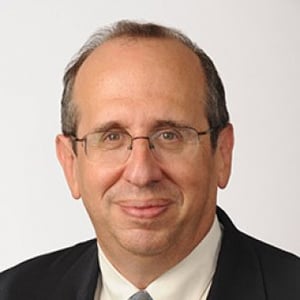
Director and Senior Fellow, Berkeley Center for Law and Technology, University of California at Berkeley
Mark Cohen heads the Asia IP Project at the Berkeley Center for Law and Technology at Berkeley Law School. He is also responsible for teaching international trade law and research and writing on IP issues. Previously, Cohen was Senior Counsel, China in the Office of Policy and International Affairs at the U.S. Patent and Trademark Office, after serving as a visiting professor at Fordham Law School (2011-2012). Prior to that time, he served in such functions as: Director, International Intellectual Property at Microsoft Corporation; Of Counsel to Jones Day’s Beijing office; and Senior Intellectual Property Attaché at the U.S. Embassy in Beijing (2004- 2008). In total, he has over 30 years private, public sector, in-house and academic experience in China and transition economies, with a focus on technology trade and intellectual property.
Cohen was the first IPR Attaché posted by USPTO to handle IPR issues in a foreign country. In addition, he launched the annual “Ambassador’s IPR Roundtable” which he co-chaired for five years, devised IPR “toolkits”, “road shows”, pro-bono programs, internal training programs for the US government and external training programs, and worked with USPTO and other US agencies to engage China and Chinese IP agencies. Cohen led a China team at USPTO consisting of 21 individuals in DC, Beijing, Shanghai and Guangzhou, China on all aspects of USPTO’s activities in China. Among his book-length publications are Antimonopoly Law and Practice in China (Oxford University Press 2011, with Steve Harris et al.). He was also the editor of Chinese Intellectual Property Law and Practice (Kluwer Law International 1999) and has edited or published a number of on-line publications, including the blog www.chinaipr.com.
Mr. Cohen has taught and lectured at numerous universities in the United States, Asia and Europe. Amongst other honors, he was the recipient of the US Chamber of Commerce’s “IP Champion” award in 2014. Mr. Cohen holds a J.D. degree from Columbia University (1984), an M.A. from the University of Wisconsin in Chinese Language and Literature (1979) and a B.A. from the State University of New York at Albany in Chinese Studies (1977).
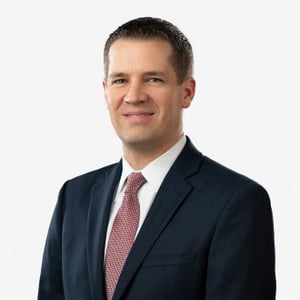
Partner, Arent Fox LLP
Dave Hanke is a go-to national security lawyer for domestic and foreign companies navigating the Committee on Foreign Investment in the United States (CFIUS) and its implementation of the Foreign Investment Risk Review Modernization Act (FIRRMA) – the most sweeping overhaul of CFIUS in 40 years – as well as new export controls on emerging and foundational technologies under the Export Control Reform Act of 2018.
He has assisted large multinational corporations, early-stage technology companies, and venture capital firms on various CFIUS issues, ranging from advising on the CFIUS implications of various transactions to preparing CFIUS filings. In addition, he helps U.S. companies prepare informal submissions to CFIUS to identify problematic foreign investments in their domestic competitors that may raise U.S. national security concerns and that have not already been filed with CFIUS.
Hanke also advises defense contractors and other companies on issues of foreign ownership, control, or influence (FOCI) in accordance with the government’s National Industrial Security Program Operating Manual (NISPOM). He has experience advising clients on security clearance issues, and he helps companies ensure they have in place policies, procedures, training, and systems relevant for access to classified information. Hanke also provides cybersecurity advice and representation to companies that contract with federal agencies.

Principal, Navigators Global
Andy Keiser served 14 years on Capitol Hill for former House Intelligence Committee Chairman Mike Rogers - as Senior Advisor to the Committee, Chief of Staff, and Legislative Director handling all national security policy issues.
As Deputy National Security Senior Advisor to the pre-election phase of the Trump for America transition team, Mr. Keiser prepared and advised the transition's policy, personnel and agency action teams on all aspects of the national security portfolio. This included work in the Departments of Defense, State, Justice, Homeland Security, the Intelligence Community, and the National Security Council.
He was also the head writer for a nationally-syndicated radio program and assisted in the production of the CNN series “Declassified.”
Mr. Keiser has written extensively on intelligence, space and cyber policy, missile defense, Afghanistan, China, Iran, ISIS, North Korea, and Russia. He also helped shepherd six Intelligence Authorization Acts into law and managed Chairman Rogers’ cyber threat sharing legislation, which passed the House twice and the core of which was later signed into law by President Obama.
He has a Bachelor of Arts from Michigan State University and a Master of Arts from the United States Naval War College. He is active on various national security-focused policy projects at the Center for the Study of the Presidency and Congress, where he serves as a Senior Advisor, and at the National Security Institute at George Mason University’s Antonin Scalia Law School, where he serves as a Fellow. He also is a member of the OSS Society and serves on the Meridian International Center’s Global Leadership Council.
Mr. Keiser is currently a Principal at Navigators Global, where he focuses on cybersecurity and other national security priorities. Dubbed a “national security expert” by the Washington Post, Andy is a regular media commentator on national security issues.

Professor of Law, Southern Illinois University School of Law
Professor Mark F. Schultz joined the faculty in 2003. He teaches and writes primarily in the area of intellectual property.
Professor Schultz is a frequent author and speaker known for his work on the law and economics of the global intellectual property system. In one of his most influential projects, he worked with the Organization for Economic Cooperation and Development (OECD) to construct a groundbreaking global trade secret protection index (the TSPI). The TSPI is influencing policy discussions on this cutting-edge topic in capitals around the world. Other recent projects have included an empirical study that quantified for the first time the backlogs in patent offices worldwide, a report on how patented innovation is meeting global health challenges, and the construction of a new global index of copyright strength.
Professor Schultz is an influential voice in public policy debates regarding intellectual property. He has testified before the U.S. Congress on copyright law at the invitation of the House Judiciary Committee and has briefed the staff of the U.S. Senate Judiciary Committee on trade secret legislation. He speaks frequently around the world about the connection between secure and effective intellectual property rights and flourishing national economies and individual lives, with invitations from the U.S. Patent and Trademark Office, the U.S. Trade Representative, and the U.S. Copyright Office, as well as numerous academic institutions, think tanks, and industry groups. He served as an NGO delegate to the World Intellectual Property Organization (WIPO) for several years during the WIPO Development Agenda talks. He is also one of the organizers of an ongoing multilateral diplomatic dialogue on best practices in national trade secret laws, and is co-founder of the Center for Protection of Intellectual Property (CPIP) at George Mason University in Washington, D.C.
Among the awards and recognition he has received for his scholarship was the School of Law's Outstanding Scholar of the Year award in 2008. He has been a distinguished visiting scholar at the University of Botswana and a visiting professor at DePaul University College of Law.
Professor Schultz graduated with honors from the George Washington University School of Law. Following law school, he was a judicial clerk for the Hon. Daniel M. Friedman of the United States Court of Appeals for the Federal Circuit in Washington, D.C., and the Hon. Eric G. Bruggink of the United States Court of Federal Claims. Prior to joining academia, he practiced law for a decade, serving as outside general counsel to several tech startups and helping technology companies to expand their businesses and commercialize their intellectual property in dozens of countries. He holds a B.A. in International Economics from George Washington University and has done PhD level coursework in development economics at Southern Illinois University.
He is active in leadership roles in local and national organizations. He has served as chair of the Federalist Society's Intellectual Property Practice Group and the AALS Section on Internet and Computer Law. He is an officer of the American Bar Association's International IP Committee of the International Law Section and the American Intellectual Property Law Association’s Trade Secret Law Committee. He currently is chair of the Academic Advisory Board of the Copyright Alliance.
Professor Schultz teaches Copyright Law, Trade Secret Law, Trademark Law, and a senior seminar on Intellectual Property and Global Development. He established and directs both the Specialization in Intellectual Property Law and the IP Semester in Practice Externship Program. He also co-founded a Legal Globalization Class, offered every other year, that takes students to South Africa and Botswana after spending a semester learning about the legal system, culture, history, and politics of southern Africa. The popular course is a once-in-a-lifetime experience that introduces students to leading lawyers, judges, government officials, and human rights advocates, taking them from Cape Town to Johannesburg to Gaborone as well as many popular destinations including game reserves, national parks, the Cape of Good Hope, and the Cradle of Humankind.
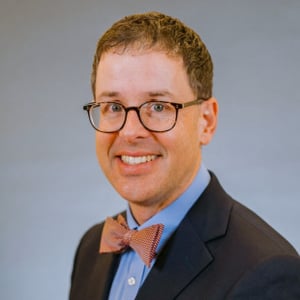
Senior Counsel and VP, Appellate Advocacy, Alliance Defending Freedom
John Bursch is senior counsel and vice president of appellate advocacy with Alliance Defending Freedom. Bursch has argued 12 U.S. Supreme Court cases and more than 30 state supreme court cases since 2011, and a recent study concluded that among all frequent Supreme Court advocates who did not work for the federal government, he had the 3rd highest success rate for persuading justices to adopt his legal position.
Bursch served as solicitor general for the state of Michigan from 2011-2013. He has argued multiple Michigan Supreme Court cases in eight of the last ten terms and has successfully litigated hundreds of matters nationwide, including six with at least $1 billion at stake. As part of his private firm, Bursch Law PLLC, he has represented Fortune 500 companies, foreign and domestic governments, top public officials, and industry associations in high-profile cases, primarily on appeal. He was inducted into the American Academy of Appellate Lawyers and serves as a member of the American Law Institute. His work has resulted in repeated listings in Michigan Super Lawyers and Best Lawyers.
Before entering private practice, Bursch served as a law clerk to the Honorable James B. Loken on the U.S. Court of Appeals for the 8th Circuit. He received his J.D. magna cum laude in 1997 from the University of Minnesota Law School, where he served as Chief Note & Comment Editor for the Minnesota Law Review. Prior to that, he attended Western Michigan University, where he received degrees in mathematics and music performance summa cum laude.
Wallace Stevens Professor of Law, University of Connecticut School of Law
Professor Bethany Berger is a widely read scholar of Property Law and Legal History and one of the leading federal Indian Law scholars in the country. She is a co-author and member of the Editorial Board of Felix S. Cohen's Handbook of Federal Indian Law, the foundational treatise in the field, and co-author of leading casebooks in both Property Law and American Indian Law. Her articles have appeared in the Michigan Law Review, California Law Review, UCLA Law Review, and the Duke Law Journal, among other publications, and have been excerpted and discussed in many casebooks and edited collections as well as in briefs to the Supreme Court and testimony before Congress.
Professor Berger graduated with honors from Wesleyan University, where she was elected to phi beta kappa, and from Yale Law School. After law school, Professor Berger went to the Navajo and Hopi Nations to serve as the Director of the Native American Youth Law Project of DNA-People's Legal Services. There, she conducted litigation challenging discrimination against Indian children, drafted and secured the passage of tribal laws affecting children, and helped to create a Navajo alternative to detention program. She then became Managing Attorney of Advocates for Children of New York, where she worked on impact litigation and policy reform concerning the rights of children in public education.
At the University of Connecticut School of Law, Professor Berger teaches American Indian Law, Property, Tribal Law, and Conflict of Laws. She is also the Wallace Stevens Professor of Law, a chair named for one of America’s greatest poets, a lawyer who lived and worked in Hartford for most of his life. She has served as a judge for the Southwest Intertribal Court of Appeals and as a visiting professor at Harvard Law School and the University of Michigan Law School.

Book Review: Lessons of Tragedy: Statecraft and World Order
Charles Edel
As Thucydides recorded Pericles’ famous funeral oration, the mayor of Athens exhorted citizens: “[J]udging happiness...
Topics
South Dakota Lawyers To Vote Next Week on a Proposed Rule 8.4(g)
At the South Dakota Bar Annual Meeting on Friday, June 21, in Rapid City, South...
Deep Dive Episode 59 – Cedar Point Nursery v. Shiroma
Bethany Berger
Regulatory Transparency Project's Fourth Branch Podcast
On May 8, 2019, the Ninth Circuit issued a 2-1 decision in Cedar Point Nursery...
Panel 2: US Policy in Syria: Stay In, Get Out, or Triple Down?
Jamil N. Jaffer, Norman Roule, Dana Stroul, Katherine Zimmerman
The U.S. Role in Syria: Legal and Policy Questions in a Challenging Conflict
On May 23, 2019, the National Security Institute and the Federalist Society co-hosted an event...
Panel 2: US Policy in Syria: Stay In, Get Out, or Triple Down?
Jamil N. Jaffer, Norman Roule, Dana Stroul, Katherine Zimmerman
The U.S. Role in Syria: Legal and Policy Questions in a Challenging Conflict
On May 23, 2019, the National Security Institute and the Federalist Society co-hosted an event...
Panel 1: Legal Authorities for the U.S. Role in Syria: Does Congress Need to Weigh In?
Jennifer Daskal, Charles J. Dunlap, Matthew R. A. Heiman, Jeremy A. Rabkin
The U.S. Role in Syria: Legal and Policy Questions in a Challenging Conflict
On May 23, 2019, the National Security Institute and the Federalist Society co-hosted an event...
Panel 1: Legal Authorities for the U.S. Role in Syria: Does Congress Need to Weigh In?
Jennifer Daskal, Charles J. Dunlap, Matthew R. A. Heiman, Jeremy A. Rabkin
The U.S. Role in Syria: Legal and Policy Questions in a Challenging Conflict
On May 23, 2019, the National Security Institute and the Federalist Society co-hosted an event...
Chinese Misappropriation of U.S. Technology: Assessing the U.S. Response
Mark Cohen, David Hanke, Andy Keiser, Mark F. Schultz
Chinese targeting and misappropriation of U.S. technology has increasingly been identified as a threat to...
Litigation Update: Title VII Cases
John J. Bursch
RG & GR Harris Funeral Homes has been serving the Detroit area for more than...
Litigation Update: Cedar Point Nursery v. Shiroma
Bethany Berger
On May 8, 2019, the Ninth Circuit issued a 2-1 decision in Cedar Point Nursery...