
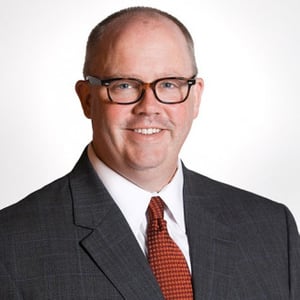
Professor of Law and Assistant Director, Criminal Justice Center, University of Florida Levin College of Law
Professor Stinneford teaches and writes about legal ethics, criminal law, criminal procedure, and constitutional law. His work has been cited by the United States Supreme Court, several state supreme courts and federal courts of appeal, and numerous scholars. It has published in numerous scholarly journals including the Georgetown Law Journal, the Northwestern University Law Review, the Virginia Law Review, the Notre Dame Law Review, and the William & Mary Law Review. The Stanford-Yale Junior faculty forum selected one of his articles as the best paper in the category of Constitutional History, and the AALS Criminal Justice Section named another article as the best paper in its Junior Scholars Paper Competition. In the fall of 2015, he was a Visiting Scholar at the Georgetown Law Center, Center for the Constitution.
Before joining the Florida faculty in 2009, Stinneford clerked for the Hon. James Moran of the United States District Court for the Northern District of Illinois, served as an Assistant United States Attorney, and practiced law with Winston & Strawn in Chicago. Stinneford teaches first-year courses in Criminal Law and Constitutional Law, and upper-level courses in Professional Responsibility, Criminal Procedure, Federal Criminal Law, Law & Literature, and White Collar Crime.
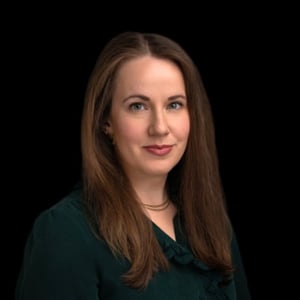
Partner, Cooper & Kirk
Megan M. Wold focuses her practice on legal issues and brief-writing in complex commercial matters, constitutional litigation, and administrative law disputes. She has argued cases in both state and federal court, drafted briefs at all levels of state and federal litigation, and regularly practices before the U.S. Supreme Court. She has represented Fortune 500 clients in international arbitrations, complex tort and fraud litigation, class actions, commercial property disputes, and complex multi-district litigation. She has frequently represented clients in regulatory disputes with state and federal agencies.
Ms. Wold previously served as a Simon Karas Fellow and Deputy Solicitor General in the Ohio Attorney General’s Office. Ms. Wold has practiced as an associate at Bancroft PLLC and as a partner in the Washington, D.C. office of Kirkland & Ellis LLP.
Ms. Wold served as a law clerk to Justice Samuel A. Alito of the U.S. Supreme Court and to Judge Jeffrey Sutton of the U.S. Court of Appeals for the Sixth Circuit. She graduated from the University of Notre Dame School of Law in 2011 and is a member of the bars of Ohio and the District of Columbia. Ms. Wold graduated summa cum laude from Ohio Wesleyan University in 2008 with an undergraduate degree in international studies and religion. She was a member of Phi Beta Kappa and a recipient of the Meek Family Service Leadership Prize.
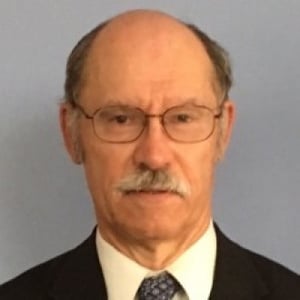
Professorial Lecturer in Law, George Washington University Law School
Theodore C. (Ted) Hirt was an attorney in the Department of Justice's Civil Division from August 1979 to March 2016. He was in its Federal Programs Branch from 1979 to 2008 (trial attorney, senior trial counsel, assistant director), and then in its Office of Immigration Litigation from 2008 to 2016 (trial attorney and senior litigation counsel). Among his responsibilities (September 2001 to March 2016) was being an advisor to the Assistant Attorneys General for the Civil Division, who serve ex officio on the Civil Rules Advisory Committee. Mr. Hirt’s areas of specialization include First Amendment issues, internet and telecommunications law, and electronic discovery. From 1976 to 1979, he was an associate at Fried, Frank, Harris, Shriver & Kampelman. From 1975 to 1976 he was an attorney in the Prehearing Division of the Michigan Court of Appeals.
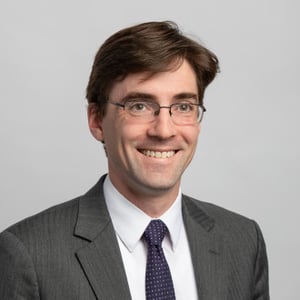
Deputy Litigation Director, Institute for Justice
Robert McNamara serves as Deputy Litigation Director with the Institute for Justice. He joined the Institute in August 2006 and litigates cutting-edge constitutional cases protecting free speech, property rights, economic liberty and other individual liberties in both federal and state courts.
Robert’s work has resulted in court victories for property owners fighting eminent domain abuse, tour guides fighting unconstitutional restrictions on their speech, taxi drivers seeking the right to own their own business, and many others. Robert also litigates in defense of innovation and entrepreneurship in medical care and was co-counsel in Flynn v. Holder, IJ’s landmark challenge to the federal prohibition on compensating bone marrow donors.
Robert’s writing has been published by outlets including The New York Times, The Wall Street Journal, The Washington Post and dozens more nationwide. His opinions and views on legal issues have been featured in radio and television programs ranging from National Public Radio’s All Things Considered to Fox News Channel’s Hannity & Colmes.
Robert is a graduate of Boston University and the New York University School of Law, where he was a founding member and eventual editor-in-chief of the NYU Journal of Law & Liberty. He currently lives in Virginia with his wife and children.
Robert McNamara is a member of the Virginia bar.
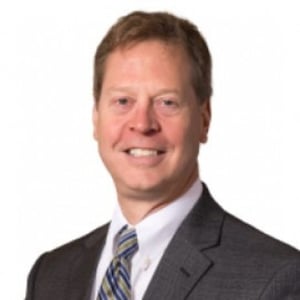
Partner, Conner & Winters
Donn C. Meindertsma is a partner in the Washington, DC office of Conner & Winters.
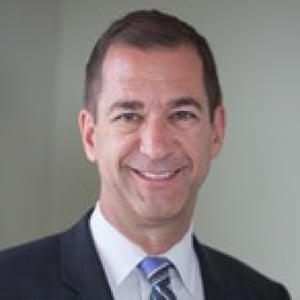
Partner, Crowell & Moring
Mr. Lorenzen is a partner in Crowell & Moring's Washington, D.C. office and is a member of the Environment & Natural Resources and Government Affairs groups. He works with clients seeking to successfully navigate the federal environmental rulemaking process.
With a decade of Justice Department experience managing the legal defense of all EPA rules, Mr. Lorenzen has a unique ability to help clients shape environmental policy, provide vital input on proposed federal environmental regulations through written comment and direct interaction with regulators, and mount effective judicial challenges to EPA actions that adversely affect his clients' interests. He also helps clients ensure compliance with existing environmental regulations. In addition, he is a noted appellate lawyer who has briefed, argued, or supervised hundreds of petitions for review of EPA regulations and other final EPA actions.
While he was at the Department of Justice, Mr. Lorenzen oversaw many of the seminal environmental cases of the last decade. These include Massachusetts v. EPA, in which the Supreme Court affirmed EPA's authority to regulate greenhouse gases under the Clean Air Act, and Entergy v. Riverkeeper, in which the Court held that EPA has discretion under the Clean Water Act to consider or decline to consider costs in determining how to regulate cooling water intake structures. In the D.C. Circuit and the other federal courts of appeals, he oversaw the government's defense in Coalition for Responsible Regulation v. EPA, in which the court upheld EPA's first suite of greenhouse gas regulations (largely upheld by the Supreme Court in Utility Air Regulatory Group v. EPA); EME Homer City Generation, L.P. v. EPA and North Carolina v. EPA, in which the court reviewed EPA's various attempts to address interstate transport of air pollutants; numerous cases challenging EPA regulations governing emissions of hazardous air pollutants; and National Cotton Council v. EPA, in which the Sixth Circuit reviewed EPA's Clean Water Act regulations governing the application of pesticides over waters of the United States.
Mr. Lorenzen is a frequent lecturer and commentator in print, on the internet, and on television regarding federal environmental law, climate change regulation, administrative law, federal policymaking, and effective appellate brief-writing and argument.
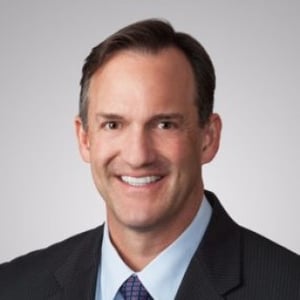
Partner (Austin), Jackson Walker
Mike Nasi is a partner with Jackson Walker LLP where he practices environmental and energy law. He has been practicing before state and federal environmental and energy agencies and appellate courts for 24 years.
Nasi’s compliance counseling, permitting, and enforcement defense work spans the following federal (and related state) programs: Clean Air Act, Clean Water Act, Solid Waste Disposal Act, Endangered Species Act, and National Environmental Policy Act. He is often asked to play a strategic planning role on behalf of his clients in the midst of large, complex project developments.
Nasi is counsel for parties in ongoing EPA regulatory proceedings relating to carbon dioxide, interstate air quality, regional haze, and coal combustion residuals, including appeals pending before the United States Courts of Appeals for the Fifth, Eighth, Tenth, and D.C. Circuits, as well as the Supreme Court of the United States. He helps coordinate multi-state outreach efforts regarding these and other regulations impacting the electric power and mining sectors, appears at hearings and energy policy events across the country, and is published in several trade, law, and business journals on environmental law and energy policy topics.
Nasi is a past Chairman of the State Bar of Texas Environmental and Natural Resources Law Section and serves on the faculty for Rice University’s “Leadership & Decision Making in the Energy Industry” course and as a guest lecturer in the “Energy Law & Policy” course at the University of Texas Law School.
Nasi is consistently recognized on several “Who’s Who” and “Best Lawyer” lists and was recently awarded the “Energy and Environmental Trailblazer Award.” He is the Chairman of the Central Texas Salvation Army Advisory Board and is a Board Member for the West Austin Youth Association (WAYA).
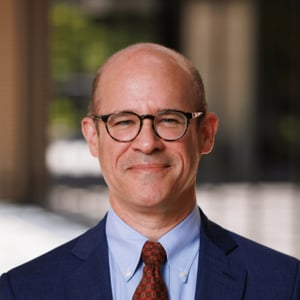
Professor of Law, Stanford Law School
Orin S. Kerr is a Professor of Law at Stanford Law School, where he teaches and writes in the areas of criminal procedure and computer crime law. Kerr earned mechanical engineering degrees from Princeton University and Stanford University before graduating with a J.D. from Harvard Law School. He is a former law clerk to Justice Anthony M. Kennedy at the United States Supreme Court and Judge Leonard I. Garth of the U.S. Court of Appeals for the Third Circuit.
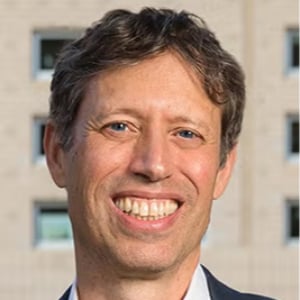
Professor of Law, Sturm College of Law - University of Denver
Laurent Sacharoff’s research focuses on criminal procedure, especially the history of the Fourth and Fifth Amendments. He has a particular interest in the history of pre-trial criminal procedure including search and arrest warrants, preliminary examinations, and pre-trial commitment. He also writes on computer law and crime, including the Computer Fraud and Abuse Act, and the Fourth and Fifth Amendments as applied to digital searches.
His work has appeared or will appear in the Stanford Law Review, the University of Chicago Law Review, the Texas Law Review, the Iowa Law Review, and the Fordham Law Review, as well as popular press articles in Politico and The Washington Post. His work has been regularly cited by courts, particularly on the issue of compelled passwords for digital devices and encryption.
Professor Sacharoff joined the Denver faculty in fall 2022, where he teaches or will teach criminal law, criminal procedure, and cybercrime. Before that, he was a professor at the University of Arkansas School of Law for 12 years, where he was named outstanding professor of the year in 2015, and the University-wide Rising Teacher of the year in 2016.
Before academia, Prof. Sacharoff clerked for the Honorable John S. Martin, Jr. in the Southern District of New York and then joined the law firm of Sullivan & Cromwell, where he was the pro-bono fellow handling prison litigation, as well as a litigation associate. Professor Sacharoff also worked as a public defender at the Legal Aid Society in Brooklyn, New York.

Professor of Law and Executive Director, Law and Economics Center, Antonin Scalia Law School, George Mason University
Donald Kochan is Professor of Law and Executive Director of the Law & Economics Center (LEC). Professor Kochan is an elected member of the American Law Institute (ALI) and serves as an Adviser to ALI's Restatement of the Law Fourth, Property project. Professor Kochan is a Nonresident Scholar at the Center for the Constitution at Georgetown University Law Center, where he was a Visiting Scholar in residence during Fall 2018. Before joining the Antonin Scalia Law School faculty, he was the Parker S. Kennedy Professor in Law at Chapman University’s Dale E. Fowler School of Law from 2004 to 2020. From 2003 to 2004, Professor Kochan was an Olin Fellow at the University of Virginia School of Law. During 2002-2003, he was a Visiting Assistant Professor of Law at George Mason’s Scalia Law School.
Professor Kochan’s scholarship focuses on areas of property law, constitutional law, administrative law, local government law, natural resources and environmental law, and law & economics. He has published several books and more than 50 scholarly articles and essays in well-regarded law journals. His work has been cited in more than a dozen state and federal court opinions, in more than 75 briefs filed in state and federal courts including more than 25 filed in the U.S. Supreme Court, in dozens of books and treatises, and in more than 800 scholarly articles.
Professor Kochan received his JD from Cornell Law School, where he was a John M. Olin Scholar in Law and Economics and managing editor of the Cornell International Law Journal. During law school, he also served as editor and executive editor of the Harvard Journal of Law & Public Policy symposium issues in 1997 and 1998. He received his BA from Western Michigan University, magna cum laude, with majors in both political science and philosophy, where he studied as the John W. Gill Medallion Scholar and was honored as the Presidential Scholar (awarded to the top graduate in the political science department).
After graduating from law school, Professor Kochan was a law clerk to The Honorable Richard F. Suhrheinrich of the United States Court of Appeals for the Sixth Circuit. Following his clerkship, Professor Kochan was an associate with the firm of Crowell & Moring LLP in Washington, D.C., where he specialized in natural resources & environmental law as well as tort, products, and consumer civil litigation & legislative affairs.
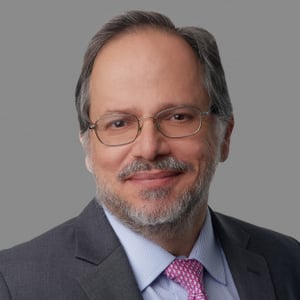
Director of Law & Policy, Environmental Integrity Project
Following Princeton and the University of Chicago Law School, David began practicing law at Paul, Weiss, Rifkind, Wharton & Garrison. Eventually tiring of litigation where the result was a wire transfer from Entity A to Entity B, in the early 1990’s David began his environmental law career at the Massachusetts Attorney General’s Office. Since then, he has litigated dozens of cases under all of the major environmental statutes including, as Sierra Club’s Chief Climate Counsel, initiating and managing Massachusetts v. EPA. Most recently, he has been busy challenging FERC’s permitting of natural gas pipelines and LNG export terminals. Apart from litigation, David has helped lead efforts on both greenhouse gas regulation and global warming legislation (and may be the only person ever invited to testify by both Barbara Boxer and James Inhofe).
He has drafted a range of federal climate legislation, advised states as to their greenhouse gas regulatory authority (and for many years has represented environmental groups defending state GHG regulations from dormant Commerce Clause challenges). David has designed and taught courses on “Environmental Litigation” at Georgetown University Law Center and “Environmental Law and Science” at the William and Mary Law School/Virginia Institute of Marine Science.

Bucklew v. Precythe: The Decision [SCOTUSbrief]
John F. Stinneford
Short video featuring John Stinneford
In 2014, Russell Bucklew asserted that the lethal injection protocol in Missouri was cruel and...
Topics
Money and the Constitution: What About Inflation?
Happy to see that my colleague, Bert Ely, has started a conversation about “Money and...
Litigation Update: Archdiocese of Washington v. Washington Metropolitan Area Transit Authority (WMATA)
Megan M. Wold
The Washington Metropolitan Area Transit Authority (WMATA) prohibits religious advertisements on Metro buses, including the...
Have the American People Irrevocably Ceded Control of Their Government to the Modern Administrative State?
Ted Hirt
Federalist Society Review, Volume 20
A review of Unmasking the Administrative State: The Crisis of American Politics in the Twenty-First...
Compulsory Evictions and Crime-Free Housing: Crime Prevention or Collective Punishment?
Robert J. McNamara
Fifteen years ago, the Supreme Court upheld "one-strike" policies that allowed public-housing authorities to evict...
Whistling in Chevronland: Why Department of Labor Interpretations of the Sarbanes-Oxley Act Whistleblower Provisions Do Not Deserve Judicial Deference
Donn C. Meindertsma
Federalist Society Review, Volume 20
Note from the Editor: The Federalist Society takes no positions on particular legal and public...
The Affordable Clean Energy (ACE) Rule
Thomas A. Lorenzen, Michael J. Nasi
The EPA released the final Affordable Clean Energy (ACE) Rule in June 2019. The ACE...
Topics
Powers Reserved to the States
Below are the first three paragraphs to the newly published article in the Federalist Society...
Compelled Decryption
Orin S. Kerr, Laurent Sacharoff
Criminal Law & Procedure Practice Group Teleforum
Encryption, once the domain of intelligence operatives, is now ubiquitous. Nearly every personal electronic device can now be...
Can Cities Sue Oil Companies for Climate Change? [POLICYbrief]
Donald J. Kochan, David Bookbinder
Short video featuring Donald Kochan and David Bookbinder
Are oil companies liable for damages to cities that result from climate change? Professor Donald...