
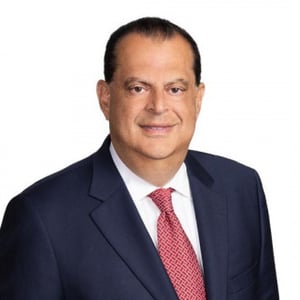
Chairman & CEO, The Abraham Group
Secretary Spencer Abraham is Chairman & CEO of The Abraham Group.
He served as the tenth Secretary of Energy of United States from 2001-2005. He helped President George W. Bush devise America’s first national energy plan in over a decade and oversaw its implementation. As part of this plan, he led efforts to broaden America’s international energy partnerships as well as forge closer ties to key oil producing nations.
Secretary Abraham has been a close observer of world energy markets, and under his leadership the Department of Energy conducted a number of important short and long-term studies of world oil, gas, electricity and other markets.
According to the Presidential Management Agenda scorecard, the Department of Energy went from “worst to first” of well-run agencies under Secretary Abraham’s leadership.
Prior to being a Cabinet Member, Secretary Abraham served as an effective and highly productive U.S. Senator from Michigan for six years. In the Senate, he was a member of the Senate Commerce, Judiciary and Budget Committees and served as chairman of the Senate Immigration Subcommittee and the Senate Commerce Subcommittee on Manufacturing and Competitiveness. He was also a senior official in the Administration of former President George H.W. Bush as Deputy Chief of Staff to the Vice President.
Secretary Abraham is a member of the Board of Directors of Occidental Petroleum, NRG Energy, PBF Energy, Uranium Energy Corp and Two Harbors Investment Corporation.
In addition, he is a frequent commentator on FOX News, CNN and Bloomberg TV as well as a periodic contributor of op-ed articles to the Financial Times, The Wall Street Journal, The Washington Post, The Weekly Standard and other publications.
Spencer Abraham and his wife, Jane, are the parents of adult children. He holds a law degree from Harvard University, where he co-founded the Federalist Society, and is a native of East Lansing, Michigan.
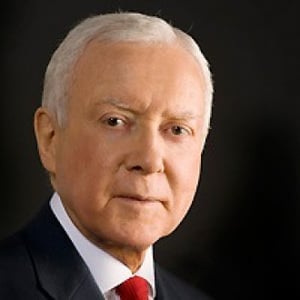
Former United States Senator, Utah
Over nearly four decades of public service, Senator Orrin Hatch established himself as a leading conservative voice in the United States Senate. As the upper chamber’s most senior Republican, he served as President Pro Tempore and as Chairman of the Senate Finance Committee. In this capacity, he fought to create jobs and strengthen the economy by repealing and replacing Obamacare, reforming the tax code, and opening up overseas markets to American exports.
As a long-time member and former Chairman of the Senate Judiciary Committee, Senator Hatch also fought to check judicial activism and protect our liberties. He was instrumental in confirming conservative judges to the federal bench and played an indispensable role in confirming Supreme Court Justices Antonin Scalia, Clarence Thomas, and Samuel Alito as well as scores of district and circuit court judges.
One of Senator Hatch’s particularly noteworthy achievements on the Judiciary Committee is the Religious Freedom Restoration Act of 1993—a bill he co-authored with the late Senator Ted Kennedy. This landmark legislation prohibits substantial government burdens on the free exercise of religion, allowing all Americans to live, work, and worship in accordance with their beliefs.
In addition to protecting our individual liberties, Senator Hatch was on the front lines of legislative battles to protect our free-market economy and system of limited government under the Constitution. His reputation as a statesman and his record of fiscal responsibility earned him the nickname “Mr. Balanced Budget” from President Reagan.
By virtually all measures, Senator Hatch was among the most effective and consequential legislators in history. Since he first came to Congress in 1977, no legislator alive today has authored more bills that have become law than Senator Hatch.
Of all Senator Hatch’s achievements, he is proudest of his family, and he credits the love of his wife and children as the key to his success. He and Elaine have been married for more than fifty years. Together, they are the parents of six children, twenty-three grandchildren, and sixteen great-grandchildren.
Chairman & CEO, The Abraham Group
Secretary Spencer Abraham is Chairman & CEO of The Abraham Group.
He served as the tenth Secretary of Energy of United States from 2001-2005. He helped President George W. Bush devise America’s first national energy plan in over a decade and oversaw its implementation. As part of this plan, he led efforts to broaden America’s international energy partnerships as well as forge closer ties to key oil producing nations.
Secretary Abraham has been a close observer of world energy markets, and under his leadership the Department of Energy conducted a number of important short and long-term studies of world oil, gas, electricity and other markets.
According to the Presidential Management Agenda scorecard, the Department of Energy went from “worst to first” of well-run agencies under Secretary Abraham’s leadership.
Prior to being a Cabinet Member, Secretary Abraham served as an effective and highly productive U.S. Senator from Michigan for six years. In the Senate, he was a member of the Senate Commerce, Judiciary and Budget Committees and served as chairman of the Senate Immigration Subcommittee and the Senate Commerce Subcommittee on Manufacturing and Competitiveness. He was also a senior official in the Administration of former President George H.W. Bush as Deputy Chief of Staff to the Vice President.
Secretary Abraham is a member of the Board of Directors of Occidental Petroleum, NRG Energy, PBF Energy, Uranium Energy Corp and Two Harbors Investment Corporation.
In addition, he is a frequent commentator on FOX News, CNN and Bloomberg TV as well as a periodic contributor of op-ed articles to the Financial Times, The Wall Street Journal, The Washington Post, The Weekly Standard and other publications.
Spencer Abraham and his wife, Jane, are the parents of adult children. He holds a law degree from Harvard University, where he co-founded the Federalist Society, and is a native of East Lansing, Michigan.
Former United States Senator, Utah
Over nearly four decades of public service, Senator Orrin Hatch established himself as a leading conservative voice in the United States Senate. As the upper chamber’s most senior Republican, he served as President Pro Tempore and as Chairman of the Senate Finance Committee. In this capacity, he fought to create jobs and strengthen the economy by repealing and replacing Obamacare, reforming the tax code, and opening up overseas markets to American exports.
As a long-time member and former Chairman of the Senate Judiciary Committee, Senator Hatch also fought to check judicial activism and protect our liberties. He was instrumental in confirming conservative judges to the federal bench and played an indispensable role in confirming Supreme Court Justices Antonin Scalia, Clarence Thomas, and Samuel Alito as well as scores of district and circuit court judges.
One of Senator Hatch’s particularly noteworthy achievements on the Judiciary Committee is the Religious Freedom Restoration Act of 1993—a bill he co-authored with the late Senator Ted Kennedy. This landmark legislation prohibits substantial government burdens on the free exercise of religion, allowing all Americans to live, work, and worship in accordance with their beliefs.
In addition to protecting our individual liberties, Senator Hatch was on the front lines of legislative battles to protect our free-market economy and system of limited government under the Constitution. His reputation as a statesman and his record of fiscal responsibility earned him the nickname “Mr. Balanced Budget” from President Reagan.
By virtually all measures, Senator Hatch was among the most effective and consequential legislators in history. Since he first came to Congress in 1977, no legislator alive today has authored more bills that have become law than Senator Hatch.
Of all Senator Hatch’s achievements, he is proudest of his family, and he credits the love of his wife and children as the key to his success. He and Elaine have been married for more than fifty years. Together, they are the parents of six children, twenty-three grandchildren, and sixteen great-grandchildren.
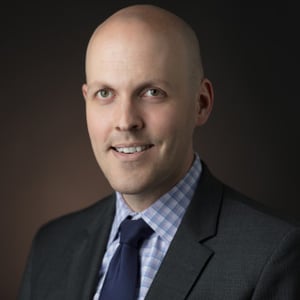
Partner, Barr & Klein PLLC
Steve Klein, a partner at Barr & Klein PLLC, is an experienced free speech attorney who has successfully fought for the First Amendment rights of his clients against local, state and federal regulators. As a lobbyist, Steve’s advocacy has led to the successful amendment of state laws to respect political engagement and prevented the enactment of laws that burden it. Steve has published articles in several legal journals, and his commentary has appeared in The Wall Street Journal, The Washington Times, The Detroit News, and other outlets. Steve earned a bachelors degree in politics at Hillsdale College and a law degree from Ave Maria School of Law, where he served as Managing Editor of the Ave Maria Law Review. He is licensed to practice law in the District of Columbia, Illinois and Michigan.
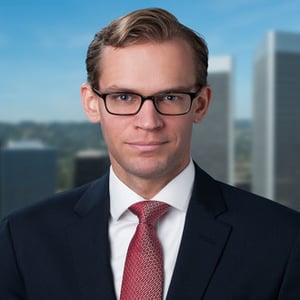
Internet Policy Counsel and Director of Appellate Litigation, TechFreedom
Corbin Barthold is TechFreedom's Internet Policy Counsel and Director of Appellate Litigation.
Corbin clerked for the Hon. Steven D. Merryday (M.D. Fla.) and the Hon. Robert H. Cleland (E.D. Mich.). After his clerkships, he became an associate, and later a partner, in the Los Angeles office of Browne George Ross LLP, where he engaged in high-stakes complex litigation. He then served as Senior Litigation Counsel at Washington Legal Foundation, a D.C. public-interest firm, where his practice focused on appeals involving administrative law, the separation of powers, antitrust, and tech policy.
Corbin received his J.D. from the University of California, Berkeley, School of Law. He also holds a B.A., magna cum laude and Phi Beta Kappa, from the University of California, San Diego, and an Msc., with distinction, from the London School of Economics.
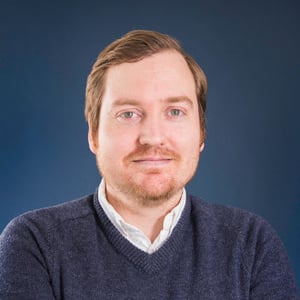
Vice President of Law & Policy, Property and Environment Research Center
Jonathan Wood is vice president of law and policy at the Property and Environment Research Center (PERC). An attorney, Jonathan has litigated environmental and property-rights cases in the Supreme Court of the United States, federal and state appellate courts, and trial courts across the country. His writing has appeared in the Wall Street Journal, Washington Post, National Review, Reason, and other outlets. And his research has been published in journals such as Environmental Law Reporter, Yale Journal on Regulation Notice & Comment, Pace Environmental Law Review, and California Western Law Review.
Prior to coming to PERC, Jonathan was a senior attorney at Pacific Legal Foundation, where he litigated cases concerning the Endangered Species Act, Clean Water Act, and other federal environmental laws. He was co-counsel for forest landowners in Weyerhaeuser Co. v. U.S. Fish and Wildlife Service, in which the Supreme Court ruled unanimously that private land could not be arbitrarily regulated as critical habitat under the ESA. He also led a successful effort to reform regulation of threatened species to better align the incentives of private landowners with the interests of rare species.
Jonathan has testified before several congressional committees on wildlife conservation and endangered species topics. He has also appeared on national television and radio, including NPR’s All Things Considered, C-Span’s Washington Journal, Stossel, Fox News, and Hill.TV.
Jonathan has a law degree from the New York University School of Law, a masters degree in economic policy from the London School of Economics, and a bachelor’s degree in economics from the University of Texas. He is on the executive committee for the Federalist Society’s Environmental Law and Property Rights Practice Group and a steering committee member for the Environmental Law Institute’s Emerging Leaders Initiative.
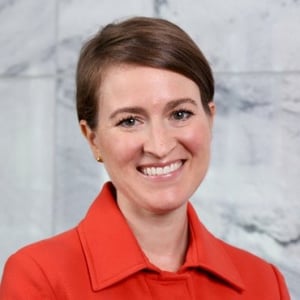
Fuller E. Callaway Chair of Law, University of Georgia School of Law
Elizabeth Chamblee Burch joined the School of Law faculty in 2011. She was promoted to the rank of full professor in 2015 and served a visiting professor at Harvard Law School in 2017. After holding the Charles H. Kirbo Chair of Law for two years, she assumed the Fuller E. Callaway Chair of Law in 2019. She is the author of Mass Tort Deals: Backroom Bargaining in Multidistrict Litigation (Cambridge University Press 2019) and her teaching and research interests include civil procedure, class actions and mass torts.
Burch is an award-winning scholar whose groundbreaking work on multidistrict litigation and class actions won the American Law Institute’s Early Career Scholars Medal in 2015, the Fred C. Zacharias Memorial Prize for Professional Responsibility Scholarship in 2016 and the Mangano Dispute Resolution Advancement Award in 2019.
Burch has published over 30 articles and essays in respected journals such as the New York University Law Review, Yale Law Journal, Cornell Law Review, Virginia Law Review, Vanderbilt Law Review, Washington University Law Review, Boston University Law Review and George Washington Law Review, among others. She co-authors a casebook titled The Law of Class Actions and Other Aggregate Litigation with the late Richard A. Nagareda, Robert G. Bone, Charles Silver, and Patrick Woolley.
Burch has delivered over 70 lectures at research institutions across the United States and abroad to diverse audiences—from law professors at their annual meeting to federal judges at their judicial retreats, lawyers and jurists at the American Law Institute and the American Bar Association, and psychologists at the International Congress on the Psychology of Law. She was elected as a member of the American Law Institute in 2013, and she is a frequent commentator in various international and national news media such as National Public Radio’s Marketplace, BBC World News, The New York Times, The Wall Street Journal, USA Today and The L.A. Times.
Before joining the School of Law's faculty, she was an assistant professor at Florida State University College of Law, where she received the university-wide Graduate Teaching Award and was voted “Professor of the Year” by second- and third-year students. Burch began her academic career in 2006 at Cumberland School of Law, part of Samford University, where she received the Harvey S. Jackson Excellence in Teaching Award and the Lightfoot, Franklin & White Faculty Scholarship Award. In 2014, she received the School of Law’s John C. O’Byrne Memorial Award for Significant Contributions Furthering Student-Faculty Relations.
Before entering the legal academy, Burch worked as an associate at Holland & Knight in Atlanta, where she practiced in the area of complex litigation, including securities class actions. She has served as the mass torts subcommittee chair for the American Bar Association's Class Action and Derivative Suits Committee, on the executive board for the Association of American Law Schools’ Scholarship Committee and as a co-editor of the Mass Tort Litigation Blog.
She earned her bachelor's degree cum laude from Vanderbilt University and her Juris Doctor cum laude from Florida State University, where she served as the writing and research editor for the Florida State University Law Review.
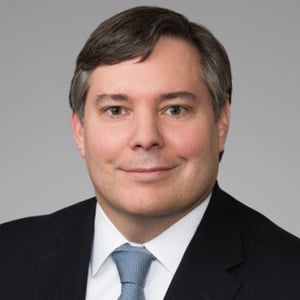
Partner, Kirkland & Ellis LLP
Mr. Doug Smith has litigated cases at both the trial and appellate stage in state and federal courts throughout the country, including commercial, mass tort, product liability, securities, bankruptcy, environmental, and intellectual property cases. He is a member of the American Law Institute and has published on a wide variety of legal topics.
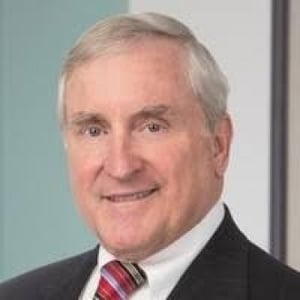
Senior Counsel, Caplin & Drysdale; Adjunct Professor of Law, Georgetown Law
Professor Carney is a Senior Counsel with Caplin & Drysdale, Cht’d. in Washington, D.C. He served as a Trial Attorney for the Tax Division of the U.S. Department of Justice for six years, and was in private (law firm) tax practice for many years, specializing in IRS administrative practice, tax controversies (audit and IRS Appeals Office), and tax litigation. He also advised clients in a similar capacity as a partner in the National Tax Office of Ernst & Young LLP in Washington. He is a member of the District of Columbia bar, as well as the bars of the U.S. Tax Court, U.S. Court of Federal Claims, U.S. District Court for the District of Columbia, and the U.S. Courts of Appeals for the Federal Circuit, D.C Circuit, and Eleventh Circuit.
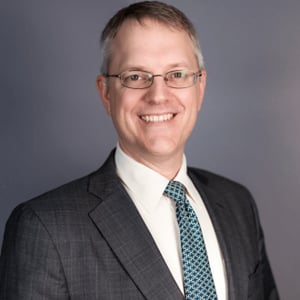
President and General Counsel, New Civil Liberties Alliance
NCLA’s President and General Counsel, Mark Chenoweth, has observed the administrative state up close and personal from perches in all four branches of the federal government. Mark served as the first chief of staff to Congressman Mike Pompeo, as legal counsel to Commissioner Anne Northup at the U.S. Consumer Product Safety Commission, as an attorney advisor in the Office of Legal Policy at the U.S. Department of Justice, and as a law clerk to the Hon. Danny J. Boggs on the U.S. Court of Appeals for the Sixth Circuit.
Mark has worked in several different roles in the private sector as well. He began his legal career in D.C. as a regulatory associate at Wilmer, Cutler & Pickering. He then returned to his home state of Kansas to serve as in-house counsel for Koch Industries. Most recently he spent over four years as general counsel of the Washington Legal Foundation.
Mark is a graduate of Yale College and the University of Chicago Law School, where he co-founded the Institute for Justice Clinic on Entrepreneurship and became a Tony Patiño Fellow. Mark has been widely quoted and/or published in newspapers and websites including the New York Times, San Francisco Chronicle, New Hampshire Union Leader, and Metropolitan Corporate Counsel. He has also had recurring op-eds in the Los Angeles Daily Journal, and at Forbes.com.
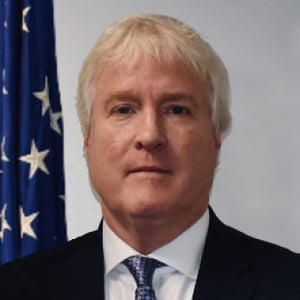
Associate Administrator, Office of Telecommunications and Information Applications, performing the non-exclusive functions and duties of the Assistant Secretary of Commerce for Communications and Information, National Telecommunications and Information Administration, Department of Commerce
Doug Kinkoph is Associate Administrator of NTIA’s Office of Telecommunications and Applications, performing the non-exclusive functions and duties of the Assistant Secretary of Commerce for Communications and Information. Kinkoph joined the Department of Commerce in 2010 and has served in a number of roles, most recently as Acting Deputy Assistant Secretary where he worked on issues including spectrum management, broadband, and public safety communications.
While serving as head of the Office of Telecommunications and Applications, Kinkoph created the agency’s BroadbandUSA program, which works to promote broadband deployment and adoption across communities nationwide. He also oversaw a $4 billion broadband grant program that funded the deployment of broadband infrastructure, public computer centers, sustainable adoption of broadband service, and statewide broadband planning.
Before joining the Department of Commerce, Kinkoph held multiple executive roles in the communications industry as well as in the public and private sectors as a telecommunications policy expert. He served as Vice President of Operations at Soundpath Conferencing where he was responsible for all sales, marketing, and customer service operations. His private sector experience also includes serving in senior regulatory and policy roles at XO Communications, Nextlink, and LCI.
Kinkoph earned his M.A. in Administration from Central Michigan University and his B.S. in Telecommunication Management from Ohio University.
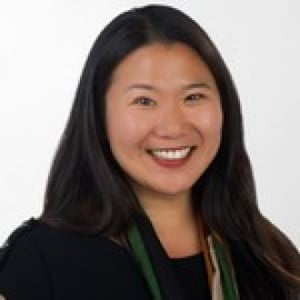
U.S. Amb. and Head of Delegation to the International Telecommunication Union (ITU) World Radiocommunication Conference 2019
Ambassador Grace Koh is the U.S. Ambassador and Head of Delegation to the International Telecommunication Union (ITU) World Radiocommunication Conference 2019 (WRC -19). She also serves as a Special Advisor for International Communications and Information Policy in the Bureau of Economic and Business Affairs.
Prior to joining the State Department in 2019, Ambassador Koh was a partner in DLA Piper LLP’s telecommunications group, where she represented technology and telecommunications companies before Congress and government agencies.
Before joining DLA Piper, she served as Special Assistant to the President for Technology, Telecom, and Cybersecurity Policy at the National Economic Council, coordinating policy and advising the White House on these matters. Ambassador Koh also previously served as Deputy Chief Counsel to the Subcommittee on Communications and Technology in the U.S. House of Representatives. In this role, she advised the chair and committee members on policy and legal issues arising in the telecommunications and technology sectors.
Ambassador Koh was previously Policy Counsel at Cox Enterprises, Inc.’s Public Policy Office, working on technology policies affecting the Cox Enterprise’s Internet, cable, and broadcast properties. Ambassador Koh began at Cox Enterprises after working in the communications group at Willkie Farr & Gallagher LLP.
Ambassador Koh received a Bachelor of Arts degree in Humanities from Yale University and a Juris Doctorate from the University of Pennsylvania Law School.
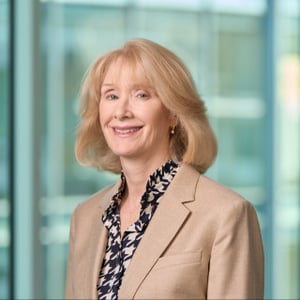
Partner, HWG LLP
Patricia Paoletta is a partner with the law firm of HWG LLP, where she specializes in telecommunications, trade and technology policy. Ms. Paoletta provides advice on regulatory, trade and legislative policy to clients before the FCC, Congress and the Administration. Her clients include providers of content, cloud, mobile broadband, VoIP, international telecommunications, small cells, cognitive radio, public safety and homeland security solutions. She serves on Advisory Boards for several entities engaged in information services, communications and technology.
Ms. Paoletta has accrued considerable experience with telecommunications trade and policy in the public sector. From 1990 to 1995, she was senior advisor to the International Bureau Chief and Office Director at the Federal Communications Commission. In the mid 1990s, Ms. Paoletta served as Director of Telecommunications Trade Policy in the Office of the U.S. Trade Representative, Executive Office of the President, where she worked on the WTO Information Technology Agreement (ITA) and the Basic Telecommunications Agreement. After USTR, Ms. Paoletta served as Majority Counsel to the House Energy and Commerce Committee. She then moved to Level 3 Communications, as Vice President, Government Relations.
Ms. Paoletta is on the Steering Committee of the Transatlantic Roundtable on Telecommunications and Information Technology of the European Institute. She is a member of the USTR Alumni Association, Washington International Trade Association, the Federal Communications Bar Association (FCBA), and Women in Technology. Ms. Paoletta has served on the Board of Advisors for the Inter-American Dialogue's Latin America Telecom Advisor, Co-Chairman of the American Bar Association International Communications Committee, and as a member of the U.S. Chamber of Commerce's Technology Policy Committee.
Ms. Paoletta served as a delegate in 2012 to the ITU-R's Study Group 6 Working Party 6A Meeting and in 2009 and 2010 to the ITU-R's Study Group I Working Party IB Meetings; the 2009 meetings of CITEL (the Committee on International Telecommunications at the Organization of American States) PCC-II; the International Telecommunication Union (ITU) World Telecommunications Standards Assembly (2000); the ITU Internet Protocol Telephony Experts Group and the ITU World Telecommunications Policy Forum in 2001; as Chairman of the National Reliability and Interoperability Council (NRIC) Steering Committee (2000-2001); as Board Member for the Voice on the Net Coalition (2001); as Co-Chairman of the FCBA's Annual Seminar Committee (2009-2011); as a member of the FCBA's Ad Hoc Speakers Committee (2006-2007); as Co-Chairman for the FCBA International Practice Committee (2001-2002 and 2005-2006); and as a Co-Chairman of the FCBA Legislative Practice Committee (1999-2000).
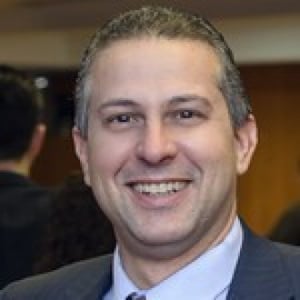
Chief, International Bureau, Federal Communications Commission
Thomas Sullivan is Chief of the Federal Communications Commission’s (FCC) International Bureau, which represents the FCC in international meetings and oversees the licensing and policy activities for international telecommunications services and satellite services.
From March 2010 to January 2017, Mr Sullivan served as the Chief of Staff for the International Bureau, where he coordinated International activities within the FCC and advanced the FCC’s international representation within the US Government and at international events.
He joined the FCC in 1991 after receiving his Master’s Degree in Public Policy from the University of Michigan.
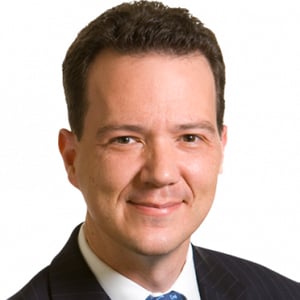
Senior Research Fellow in Anglo-American Relations, Margaret Thatcher Center for Freedom, The Heritage Foundation
Theodore "Ted" R. Bromund studies and writes on Anglo-American relations, U.S. and British relations with Europe and the European Union, America’s leadership role in the world, and international organizations and treaties as senior research fellow in The Heritage Foundation’s Margaret Thatcher Center for Freedom.
Bromund, who joined Heritage in 2008, previously served nine years as associate director of International Security Studies at Yale University, a center dedicated to the study and teaching of diplomatic history and grand strategy. He was a lecturer in history beginning in 1999, and in international affairs for the master of arts program beginning in 2004.
A columnist for Newsday, Forbes, and Great Britain’s Yorkshire Post, Bromund also writes regularly for National Review, The Weekly Standard, and FoxNews.com, and, in Britain, CapX. He has been interviewed or cited by BBC News, CBS News, Fox News Channel, CNN, Fox Business, Politifact, Radio Free Europe, The Christian Science Monitor, Time, and Financial Times, among others.
Besides contributing articles to scholarly journals, Bromund is the author of a chapter on former British Prime Minister Tony Blair and the fall of Iraqi dictator Saddam Hussein in the book The Blair Legacy: Politics, Policy, Governance, and Foreign Affairs (Palgrave Macmillan, 2009).
In 2013, Bromund was recognized by the Second Amendment Foundation as its Scholar of the Year for his analysis of the Arms Trade Treaty.
Bromund received his doctorate in history in 1999 from Yale. His thesis on Britain’s first application to the European Economic Community won the Samuel H. Beer Dissertation Prize from the American Political Science Association’s British Politics Group. In 2016, he received Heritage’s Joseph Shattan Award in recognition of the quality of his writing.
He is an adjunct professor of strategic studies in the Strategic Studies Program at the Johns Hopkins University School of Advanced International Studies, where he teaches courses on grand strategy. He also holds two master’s degrees in history from Yale as well as a bachelor of arts degree from Iowa’s Grinnell College.
A native of Wooster, Ohio, he currently resides in Washington, D.C.
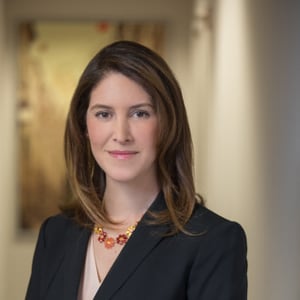
Partner, Grossman Young & Hammond
Sandra Grossman is a partner at Grossman Young & Hammond, LLC, located in Bethesda, Maryland. She is a skilled immigration litigator with over a decade of experience in all matters related to the practice of immigration law. She is known for providing top-notch, personalized service to both individual and corporate clients with complex immigration cases and highly specialized needs. Her pragmatic and creative approach to immigration challenges has earned her an international reputation as a lawyer who can get the job done for the most discriminating of clients.
Sandra has developed a unique practice that addresses complex inadmissibility issues, often involving matters before INTERPOL, high-profile clients, politically sensitive matters, and diplomatic issues with foreign policy implications, and requiring knowledge and expertise on a range of issues involving public international law and U.S. domestic law. Sandra is fiercely dedicated to guiding her clients through the complex maze of U.S. immigration laws in order to find workable solutions to achieve their goals.
Sandra has successfully represented individuals in diverse aspects of immigration law before the immigration courts, the Board of Immigration Appeals, and the Federal District Courts. She also represents clients in the areas of deportation defense, detention and bond issues, the immigration consequences of criminal convictions, requests under the Freedom of Information Act (FOIA), waivers of inadmissibility, asylum, and adjustment of status and naturalization applications, among other matters. Her experience includes representation of clients in lawsuits to prompt U.S. Citizenship and Immigration Service (USCIS) action on long-delayed applications, including applications for naturalization, adjustment of status, waivers, and replacement green cards.
The Washingtonian Magazine recognized Sandra as one of “Washington’s Top Lawyers.” She is an active member of the American Immigration Lawyers Association (AILA), a former adjunct professor in immigration law at the Washington College of Law at American University, and a member of the Editorial Board of Bender’s Immigration Bulletin. Sandra regularly handles pro-bono client matters and offers reduced rate services for such organizations as the Maryland Immigrant Rights Coalition (MIRC), CASA de Maryland, Catholic Charities, and Identity.
Sandra is a native Spanish and English speaker and is conversant in French.
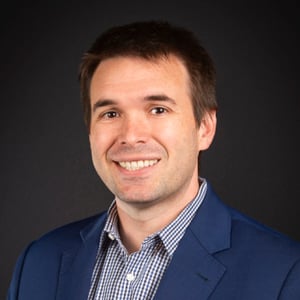
Executive Director, International Center for Law & Economics
Ian Adams joined ICLE as Executive Director in April 2020. He is responsible for ICLE’s strategic planning, programmatic implementation, and organizational growth. Ian’s substantive policy work focuses on the disruptive impact of burgeoning technologies on law and regulation, with a particular concentration on automation and the future of work, privacy and insurance.
Earlier in his career, Ian was Vice President of Policy at TechFreedom. Before that, he worked as Associate Vice President of Government Affairs at the R Street Institute and held staff roles in the California and Oregon state legislatures. Ian is also a public policy attorney at the international law firm of Orrick, Herrington & Sutcliffe LLP.
Ian is a graduate of Seattle University, with bachelor’s degrees in history and philosophy, and received his juris doctor from the University of Oregon. He is a member of the California, District of Columbia, and Illinois bars.
Senior Fellow, Technology Policy, Cato Institute
Jennifer’s research focuses on the intersection of emerging technology and law with a particular interest in the interactions between technology and the administrative state. Her work covers topics including judicial deference, liability protection for Internet platforms, autonomous vehicles and other disruptive transportation technologies, the regulation of data privacy, and the benefits of technology and innovation. Her work has appeared in USA Today, the Chicago Tribune, the New York Daily News, the Sacramento Bee, the Washington Times, Real Clear Policy, and U.S. News and World Report. Jennifer has a JD from the University of Alabama School of Law and a BA in political science at Wellesley College.

Opening Remarks and Keynote Address by Senator Orrin Hatch [Archive Collection]
E. Spencer Abraham, Orrin Hatch
1991 Annual Lawyers Convention
On September 13-14, 1991, the Federalist Society held its Fifth Annual National Lawyers Convention on...
Opening Remarks and Keynote Address by Senator Orrin Hatch [Archive Collection]
E. Spencer Abraham, Orrin Hatch
1991 Annual Lawyers Convention
On September 13-14, 1991, the Federalist Society held its Fifth Annual National Lawyers Convention on...
Courthouse Steps Oral Argument: Wire and Federal Program Fraud: A ‘Bridgegate’ Too Far?
Stephen R. Klein
Bridget Anne Kelly and William Baroni were convicted of wire fraud, federal program fraud and...
Atlantic Richfield Co. v. Christian - Post-Argument SCOTUScast
Corbin K. Barthold, Jonathan Wood
featuring Jonathan Wood and Corbin Barthold
In Atlantic Richfield Co. v. Christian, the Supreme Court will determine whether the Comprehensive Environmental...
Mass Tort Deals: Backroom Bargaining in Multidistrict Litigation?
Elizabeth Chamblee Burch, Douglas Geoffrey Smith
Multidistrict litigation has been the subject of much controversy in recent years. Defendants lament the...
Is Another Brand of Judicial Deference on the Chopping Block?
Robert T. Carney, Mark Chenoweth
This teleforum will focus on the sundry problems with so-called "Brand X deference," whose name...
The Race to 5G and the World Radio Conference
Doug Kinkoph, Grace Koh, Patricia J. Paoletta, Thomas Sullivan
Heard about the “Race to 5G”? Wonder who are the U.S.’ leading rivals, and when...
The TRAP Act’s Contribution to Preventing Transnational Repression Through Interpol
Ted R. Bromund, Sandra Grossman
Federalist Society Review, Volume 21
Note from the Editor: The Federalist Society takes no positions on particular legal and public...
Tech Roundup Episode 6 – Constitutional Concerns about State Privacy Regulation
Ian David Adams, Jennifer Huddleston
Regulatory Transparency Project's Fourth Branch Podcast
Do recent state privacy rules, like California's CCPA, impinge on free speech, violate the dormant...
Topics
Klein Case Goes Back to Oregon Court
Today, the Oregon Court of Appeals is once again hearing oral argument in Melissa Klein...