

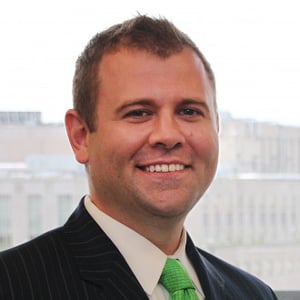
Partner, McCarter & English, LLP
Daniel Kelly brings over thirty years of experience to the firm’s government contracts group. His practice combines both counseling and acting as an advocate on behalf of clients doing business in the government marketplace. Dan has knowledge of the government contracting process both on a federal and state level, and the specific laws, regulations, contract clauses and dispute resolution mechanisms in this specialized area. He provides advice and guidance to clients who are in the government supply chain, either as prime contractors, subcontractors or vendors. He reviews government solicitations with clients, prepares proposals, and negotiates teaming arrangements and subcontracts with other suppliers. He helps clients build and enhance their compliance programs. He assists clients in protecting their intellectual property and proprietary information concerning their businesses when doing business with the government. He advocates for clients who wrongfully were passed over for a contract award. He prepares claims arising under government contracts as a result of change orders, delays, and terminations for default or convenience. Dan’s practice extends to a broad spectrum of industries and federal and state authorities for whom they supply research, products and services, including emerging and established biomedical, intelligence, pharma, security, and textile R&D, manufacturing and production houses working under prime and subcontracts, SBIRs, CRADAs, OTAs, and grants for DoD and civilian agencies; Medicare and Medicaid audit and investigation service providers; commercial software developers who modify their software for military applications; professional services providers; and raw materials and component suppliers to large military prime contractors.
Dan is the author of the August 2018 edition Thomson Reuters’ Briefing Papers, which provides a comprehensive review of patent rights under “Other Transaction Agreements” (OTAs) with DoD and NASA. Heavily promoted by Congress, and only partially understood by industry, OTAs are quickly becoming DoD’s and NASA’s contractual vehicle of choice to lure commercial companies to sell the Government their latest and greatest technologies. However, OTAs are not governed by standard government contracts laws and regulations, meaning there are significant changes to the common provisions of ownership and license rights incident to government contracts and grants. The Briefing Paper should be required reading before entities enter into an OTA as a vehicle for developing new technologies for NASA and DoD to ensure their company’s intellectual property efforts are properly protected
In the matters, AdvanceMed Corporation, B-415360,B-415360.2,B-415360.3 (Dec 19, 2017), and AdvanceMed Corporation, B-414373.3 (Jan 10, 2018) Dan and the Government Contracts team at McCarter successfully defended its client Health Integrity, LLC (now Qlarant) against protests launched at the Government Accountability Office challenging awards by the Centers for Medicare and Medicaid Services (CMS) for Medicare and Medicaid audit and program integrity services.
Dan serves on the Board of Directors for NCMA Boston (National Contract Management Association) and NDIA New England (National Defense Industrial Association), and is a frequent speaker at NCMA and NDIA events.
Dan serves as an adjunct member of the faculty at Suffolk University Law School where he has taught Government Contracts.
Dan receives Mentor of the Year Award in recognition of his contributions and support to NCMA Boston Chapter’s 2017-2018 Program Year.

Partner, McCarter & English, LLP
Alexander Major is a partner and co-leader of the firm’s Government Contracts & Export Controls Practice Group. Mr. Major focuses his practice on federal procurement, cybersecurity liability and risk management, and litigation. A prolific author and thought leader in the area of cybersecurity, his professional experience involves a wide variety of litigation and counseling matters dealing with procurement laws and federal regulations and standards. His diverse experience includes complex litigation in federal court under the qui tam provisions of the False Claims Act and bid protest actions. He counsels all sizes of companies on issues relating to compliance with government regulations including, among other things, cybersecurity (NIST, FIPS, FedRAMP, and DFARS) requirements, multiple award schedule compliance, Section 508 issues, country of origin requirements under the Buy American and Trade Agreements Acts, cost accounting, and small business requirements. He also regularly conducts internal investigations to assist companies ensure that they are in full compliance with the law.
Mr. Major is a contributing author to Computer Software Protection-Liability-Law-Forms, “Chapter 21 - Cloud Computing” (Thomson Reuters), 2018-present. He was also a founding editor and contributing author to the Cloud Computing Legal Deskbook (Thomson Reuters), an annual publication addressing cloud computing issues and solutions for commercial and government end users and suppliers.
Mr. Major is a retired U.S. Air Force intelligence officer who most recently served as a U.S. Air Force Academy Admissions Liaison Officer for the state of Maryland in the Air Force Reserves.
Mr. Major has experience handling commercial and government contract compliance and litigation matters, including cases involving False Claims Act, fraud, embezzlement, and RICO. Mr. Major has also managed complex electronic discovery and pre-trial civil matters on behalf of Fortune 500 companies and individuals in diverse state and federal civil and criminal proceedings.
Partner, McCarter & English, LLP
Franklin Turner is a Partner and Co-Leader of the Government Contracts & Export Controls Practice Group. He is an innovative business lawyer with significant experience resolving complex government contracts issues for a broad array of companies – ranging from multinational Fortune 100 corporations to mid‑market and small businesses. Mr. Turner routinely represents clients in the aerospace, defense, information technology, health care and industrial supply sectors.
Mr. Turner’s multifaceted practice includes assisting companies with comprehensive claims for payment, prosecuting and defending bid protests, counseling companies regarding small business regulations and related issues, conducting internal investigations to ensure his clients’ compliance with federal procurement regulations and related statutes, preparing and submitting mandatory and voluntary disclosures, counseling prime contractors and subcontractors regarding disputes, defending companies against False Claims Act allegations, counseling companies regarding issues of cost allowability, allocability and reasonableness, designing and implementing comprehensive regulatory compliance programs, and assisting government contractors in connection with mergers and acquisitions due diligence.
Mr. Turner is a prolific author and lecturer and is routinely called upon by national and international news organizations to offer his insight regarding developments in the federal procurement industry.
Over the course of his career, Mr. Turner has represented clients in connection with disputes involving a multitude of federal government entities, including the: General Services Administration, Department of Homeland Security, Department of the Navy, Department of the Air Force, Department of the Army, Department of State, Department of Health and Human Services, Department of Justice, Department of the Interior, Department of the Coast Guard, National Aeronautics and Space Administration, Defense Information Systems Agency, National Reconnaissance Office, United States Postal Service, Defense Contract Audit Agency and Defense Contract Management Agency.

Professor of Law, Indiana University Robert H. McKinney School of Law
Margaret Ryznar is an Associate Professor of Law at Indiana University Robert H. McKinney School of Law. She teaches and researches in the areas of family law, tax, trusts & estates, property, and juvenile law. Her scholarship focuses on the rights of family members under federal and state law, with particular emphasis on how family members hold and transfer property among themselves. Professor Ryznar edits the Family Law Prof Blog and has published over twenty law journal articles. Her work has been featured in the media and cited in law journals and judicial materials.
Prior to joining the faculty in 2012, Professor Ryznar served as a law clerk to the Honorable Myron H. Bright of the United States Court of Appeals for the Eighth Circuit and practiced law with Cadwalader, Wickersham & Taft LLP in Washington, DC.
Professor Ryznar is a graduate of Notre Dame Law School, where she served as a Note Editor of the Notre Dame Law Review, competed in the Philip C. Jessup International Law Moot Court, and received the Bainbridge Fellowship for the Study of International and Comparative Law. She holds a master’s degree in European Studies from Jagiellonian University and a bachelor’s degree from the University of Chicago with majors in Economics; English Language & Literature; Political Science; and Law, Letters, & Society.

Senior Attorney, Institute for Justice
Erica Smith is a senior attorney with the Institute for Justice. She joined IJ in August 2011 and litigates cutting-edge constitutional cases protecting economic liberty, school choice, and free speech in federal and state courts.
Erica’s economic liberty work has a special focus on “food freedom.” Erica won Wisconsin home bakers the constitutional right to legally sell their goods in Kivirist v. Wisconsin Department of Agriculture. As a result, hundreds of home bakers across the state can now sell their cookies, cakes, and muffins without fear of fines or jail time. Erica also successfully defended the rights of home bakers and canners to fight against Minnesota’s arbitrary restrictions on selling their goods in Astramecki v. Minnesota Department of Agriculture. Erica is currently suing New Jersey—the last state to have a ban on selling homemade food. Erica’s legislative activities have also helped change the homemade food laws of several states.
Erica’s educational choice work gives parents the opportunity to guide the education of their children. She was the lead attorney representing families in Asociación de Maestros v. Departamento de Educación, where she persuaded the Puerto Rico Supreme Court to reject a teachers union’s challenge to the Commonwealth’s new voucher program. Erica was also part of the winning teams that protected both Georgia and New Hampshire’s tax-credit scholarship programs at the state supreme courts in Gaddy v. Georgia Department of Revenue and Duncan v. State of New Hampshire. She is currently fighting to protect Montana’s school choice program at the U.S. Supreme Court. In addition, Erica testifies as to the constitutionality of other educational choice programs across the country.
Erica’s free speech work includes her successful defense of a family’s right to use signs to advertise its gym in Fears v. City of Sacramento. She was part of the team that successfully defended Central Radio Company’s right to protest the illegal taking of its land in Central Radio Co. v. City of Norfolk. Most recently, Erica won the right of a family-owned video game store to advertise using a 9-foot inflatable Mario in Fisher v. Town of Orange Park.
Erica has appeared on CBS Sunday Morning, CBS This Morning, and Fox & Friends, and her writing has been published in the Washington Times, New York Post, Times-Free Press, The Virginian-Pilot, National Law Journal, and Federalist Society Review. She has also been quoted in media outlets across the nation, including the New York Times and Washington Post.
Before joining IJ, Erica served as a law clerk for the Honorable Terrence Boyle of the U.S. District Court for the Eastern District of North Carolina.
Erica received her law degree cum laude from the University of Pennsylvania Law School in 2010. Erica received her undergraduate degree summa cum laude from Stony Brook University’s Honors College in 2007, where she studied literature and journalism.

Laurence A. Tisch Professor of Law and Director, Classical Liberal Institute, New York University School of Law; Director, Classical Liberal Institute, Civitas Institute University of Texas at Austin
Richard A. Epstein is the Laurence A. Tisch Professor of Law, at New York University, a senior research fellow at the Civitas Institute at the University of Texas Austin, and a senior Lecturer, the University of Chicago. He received an LL.D., h.c . from the University of Ghent, 2003 , and an LLD h.c . from the University of Siegen in 2018 and the Bradley Prize in 2011. He has been a member of the American Academy of Arts and Sciences since 1985. He has edited both the Journal of Legal Studies (1981-1991) and the Journal of Law and Economics (1991-2001). He is also a founder and director of the Classical Liberal Institute at NYU Law School. His most recent book is The Classical Liberal Constitution: The Uncertain Quest for Limited Government (2014). His other books include Takings: Private Property and the Power of Eminent Domain ( 1985); Bargaining with the State (1993); Simple Rules for a Complex World (1995); Principles for a Free Society: Reconciling Individual Liberty and the Common Good (1998); Skepticism and Freedom: A Modern Theory of Classical Liberalism (2003); Design for Liberty: Private Property, Public Administration and the Rule of Law (2011), and most recently, The Myth of Birthright citizenship—and Beyond (2026). He has taught courses in , administrative law, antitrust, constitutional, contracts, environmental law, land use planning; real property, torts and water law. He has written and spoken extensively on a wide range of topics, and is writes a regular column for Defining Ideas.
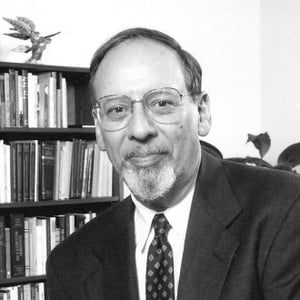
Dean Emeritus, George Mason School of Law
Lauded as a cultural laureate of the Commonwealth of Virginia, former Mason dean Henry G. Manne was the driving force behind the many innovations in legal education implemented at George Mason.
Professor Manne was designated one of the "founders" of the field of law and economics by the American Law and Economics Association. He launched the Law and Economics Center at Emory University and the University of Miami before bringing it to George Mason.
His monograph, An Intellectual History of the School of Law, George Mason University, traces the development of the law and economics movement and highlights the special contributions made by George Mason University School of Law to the movement. Professor Manne's other writings include such seminal works as Insider Trading and the Stock Market; Wall Street in Transition (with E. Solomon); and "Mergers and the Market for Corporate Control", Journal of Political Economy, April 1965. Professor Manne also designed and implemented at George Mason the nation's first system of fully integrated law school specialty track programs.
In August 2012, Dean Manne gave an oral history of his life, including his time at the Law and Economics Center, to the Securities and Exchange Commission Historical Society. An audio recording of the interview and transcript are available on the Society's website: audio (mp3); edited transcript (pdf).
He received a B.A. from Vanderbilt University (1950), J.D. from the University of Chicago (1952), J.S.D. from Yale University (1966), LL.D. from Seattle University (1987), and LL.D. from the Universidad Francesco Marroquin in Guatemala (1987).
Laurence A. Tisch Professor of Law and Director, Classical Liberal Institute, New York University School of Law; Director, Classical Liberal Institute, Civitas Institute University of Texas at Austin
Richard A. Epstein is the Laurence A. Tisch Professor of Law, at New York University, a senior research fellow at the Civitas Institute at the University of Texas Austin, and a senior Lecturer, the University of Chicago. He received an LL.D., h.c . from the University of Ghent, 2003 , and an LLD h.c . from the University of Siegen in 2018 and the Bradley Prize in 2011. He has been a member of the American Academy of Arts and Sciences since 1985. He has edited both the Journal of Legal Studies (1981-1991) and the Journal of Law and Economics (1991-2001). He is also a founder and director of the Classical Liberal Institute at NYU Law School. His most recent book is The Classical Liberal Constitution: The Uncertain Quest for Limited Government (2014). His other books include Takings: Private Property and the Power of Eminent Domain ( 1985); Bargaining with the State (1993); Simple Rules for a Complex World (1995); Principles for a Free Society: Reconciling Individual Liberty and the Common Good (1998); Skepticism and Freedom: A Modern Theory of Classical Liberalism (2003); Design for Liberty: Private Property, Public Administration and the Rule of Law (2011), and most recently, The Myth of Birthright citizenship—and Beyond (2026). He has taught courses in , administrative law, antitrust, constitutional, contracts, environmental law, land use planning; real property, torts and water law. He has written and spoken extensively on a wide range of topics, and is writes a regular column for Defining Ideas.
Dean Emeritus, George Mason School of Law
Lauded as a cultural laureate of the Commonwealth of Virginia, former Mason dean Henry G. Manne was the driving force behind the many innovations in legal education implemented at George Mason.
Professor Manne was designated one of the "founders" of the field of law and economics by the American Law and Economics Association. He launched the Law and Economics Center at Emory University and the University of Miami before bringing it to George Mason.
His monograph, An Intellectual History of the School of Law, George Mason University, traces the development of the law and economics movement and highlights the special contributions made by George Mason University School of Law to the movement. Professor Manne's other writings include such seminal works as Insider Trading and the Stock Market; Wall Street in Transition (with E. Solomon); and "Mergers and the Market for Corporate Control", Journal of Political Economy, April 1965. Professor Manne also designed and implemented at George Mason the nation's first system of fully integrated law school specialty track programs.
In August 2012, Dean Manne gave an oral history of his life, including his time at the Law and Economics Center, to the Securities and Exchange Commission Historical Society. An audio recording of the interview and transcript are available on the Society's website: audio (mp3); edited transcript (pdf).
He received a B.A. from Vanderbilt University (1950), J.D. from the University of Chicago (1952), J.S.D. from Yale University (1966), LL.D. from Seattle University (1987), and LL.D. from the Universidad Francesco Marroquin in Guatemala (1987).

Professor of Law, Antonin Scalia Law School, George Mason University
Helen Alvaré is a Professor of Law at Antonin Scalia Law School, George Mason University, where she teaches Family Law, Law and Religion, and Property Law. She publishes on matters concerning marriage, parenting, non-marital households, and the First Amendment religion clauses. She is faculty advisor to the law school’s Civil Rights Law Journal, and the Latino/a Law Student Association, a Member of the Holy See’s Dicastery for Laity, Family and Life (Vatican City), a board member of Catholic Relief Services, a member of the Executive Committee of the AALS’ Section on Law and Religion, and an ABC news consultant. She cooperates with the Permanent Observer Mission of the Holy See to the United Nations as a speaker and a delegate to various United Nations conferences concerning women and the family.
In addition to her books, and her publications in law reviews and other academic journals, Professor Alvaré publishes regularly in news outlets including the New York Times, the Washington Post, the Huffington Post, and CNN.com. She also speaks at academic and professional conferences in the United States, Europe, Latin America and Australia.
Prior to joining the faculty of Scalia Law, Professor Alvaré taught at the Columbus School of Law at the Catholic University of America; represented the U.S. Conference of Catholic Bishops before legislative bodies, academic audiences and the media; and was a litigation attorney for the Philadelphia law firm of Stradley, Ronon, Stevens & Young.
Professor Alvaré received her law degree from Cornell University School of Law and her master’s degree in Systematic Theology from the Catholic University of America.

Senior Research Scholar in Law, Yale Law School
Linda Greenhouse is Senior Research Scholar in Law at Yale Law School. She covered the Supreme Court for The New York Times between 1978 and 2008 and writes a biweekly op-ed column on law as a contributing columnist. Ms. Greenhouse received several major journalism awards during her 40-year career at the Times, including the Pulitzer Prize (1998) and the Goldsmith Career Award for Excellence in Journalism from Harvard University’s Kennedy School (2004). In 2002, the American Political Science Association gave her its Carey McWilliams Award for “a major journalistic contribution to our understanding of politics.” Her books include a biography of Justice Harry A. Blackmun, Becoming Justice Blackmun; Before Roe v. Wade: Voices That Shaped the Abortion Debate Before the Supreme Court's Ruling (with Reva B. Siegel); The U.S. Supreme Court, A Very Short Introduction, published by Oxford University Press in 2012; and The Burger Court and the Rise of the Judicial Right, with Michael J. Graetz, published in 2016. Her latest book is Just a Journalist: Reflections on the Press, Life, and the Spaces Between, published by Harvard University Press in 2017. In her extracurricular life, Ms. Greenhouse is president of the American Philosophical Society, the country's oldest learned society, which in 2005 awarded her its Henry Allen Moe Prize for writing in jurisprudence and the humanities. She also serves on the council of the American Academy of Arts and Sciences, the national Senate of Phi Beta Kappa, and is one of two non-lawyer honorary members elected to the American Law Institute, which in 2002 awarded her its Henry J. Friendly Medal. She has been awarded thirteen honorary degrees. She is a 1968 graduate of Radcliffe College (Harvard) and earned a Master of Studies in Law degree from Yale Law School (1978), which she attended on a Ford Foundation fellowship. She is married to Eugene R. Fidell, Florence Rogatz Lecturer in Law at Yale. Their daughter, Hannah, is a filmmaker in Los Angeles.
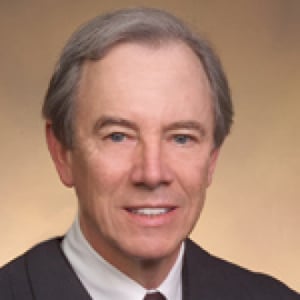
Judge, United States Court of Appeals, D.C. Circuit
Judge Randolph was confirmed by the Senate and appointed to the United States Court of Appeals for the District of Columbia Circuit by President George H. W. Bush in July 1990.
Judge Randolph received his B.S. degree in 1966 from Drexel University, majoring in economics and basic engineering. At Drexel, he was president of the debate society, vice president of the Student Senate, and a member of the varsity wrestling squad. In 1969, he received his J.D. from the University of Pennsylvania, summa cum laude. Judge Randolph ranked first in his law school class all three years and was managing editor of the Law Review.
After graduation, Judge Randolph served as a law clerk to Judge Henry J. Friendly of the United States Court of Appeals for the Second Circuit in New York.
Admitted to the California Bar in 1970 (and to the District of Columbia bar in 1973), Judge Randolph worked as Assistant to the Solicitor General, U.S. Department of Justice, in Washington, D.C., 1970-1973.
After two years in private practice, Judge Randolph was named Deputy Solicitor General of the United States, a position he held from 1975-1977.
In 1979, Judge Randolph was appointed Special Counsel to the Committee on Standards of Official Conduct (the Ethics Committee) of the United States House of Representatives, remaining in this position until 1980.
In the 1980s, Judge Randolph held a number of positions while in private practice, including Special Assistant Attorney General for the states of New Mexico (1985 90), Utah (1986-1990) and Montana (1983-1990). He also served as a Member of the Advisory Panel of the Federal Courts Study Committee.
From 1971-1990, Judge Randolph argued 23 times in the United States Supreme Court, winning 20 of his cases.
As an Adjunct Professor of Law at Georgetown University Law Center from 1974-1978 he taught courses in civil procedure and injunctions. In 1992 he taught a course in constitutional law. He is a Distinguished Adjunct Professor of Law at George Mason School of Law and for the past ten years has been teaching First Amendment law. He also serves on the Judicial Advisory Board of the George Mason University Law and Economics Center.
From 1993 through 1995 Judge Randolph was a member of the Committee on Codes of Conduct of the Judicial Conference of the United States, and from 1995 to 1998 served as the Committee's chairman. He also served as the judicial liaison to the American Bar Association’s Administrative Law Section.
Judge Randolph is a member of the Board of Visitors at Drexel University Law School and was named to the “Drexel One Hundred” as a leading alumnus. In 2002 he was presented the James Wilson Award by the University of Pennsylvania Law School. In November 2005 he delivered the Fifth Annual Barbara K. Olson Memorial Lecture at the Annual Lawyers Convention of the Federalist Society. He has published numerous articles, the most recent of which is in the June 2006 issue of the Harvard Journal of Law and Public Policy.
Judge Randolph is married to the Honorable Eileen J. O’Connor, formerly Assistant Attorney General, Tax Division, U.S. Department of Justice. His son John Trevor Randolph is an investment banker in New York. His daughter Cynthia Lee Randolph is an artist living in San Francisco.
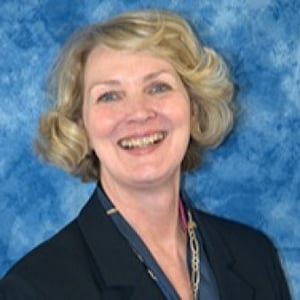
Professor and Director, Prolife Center, University of St. Thomas School of Law
Teresa Collett, J.D., is professor at the University of St. Thomas School of Law, where she serves as director of the school's Prolife Center. Collett received her doctorate at the University of Oklahoma College of Law. As a well-known advocate for the protection of human life and the family, Collett specializes in the subjects of marriage, religion and bioethics in her research.
Collett has published numerous legal articles and is the co-author of a law casebook on professional responsibility and co-editor of a collection of essays exploring “catholic” and “Catholic” perspectives on American law. She is an elected member of the American Law Institute, and has testified before committees of the U.S. Senate and House of Representatives, as well as before legislative committees in several states.
In 2009, Pope Benedict XVI appointed Collett to a five-year term on the Pontifical Council for the Family. Her appointment was renewed by His Holiness Pope Francis until 2016 when the responsibilities of the Council were assumed by the Dicastery for the Laity, Family and Life. In 2013, she served as a delegate to the International Conference on Population and Development (ICPD) for the Mission of the Holy See to the United Nations.
She represented Congressman Ron Paul and various medical groups in the defense of the U.S. federal ban of partial-birth abortion, and the governors of Minnesota and North Dakota defending the N.H. requirement of state parental involvement prior to performance of an abortion on a minor before the U.S. Supreme Court. Collett is often asked to represent the interests of government officials before federal appellate courts. She has served as special attorney general for the states of Oklahoma and Kansas, as well as assisting other state attorneys general in defending laws protecting human life and marriage. Prior to joining St. Thomas in 2003, Collett taught at the South Texas College of Law, where she established the nation's first annual symposium on legal ethics.
Laurence A. Tisch Professor of Law and Director, Classical Liberal Institute, New York University School of Law; Director, Classical Liberal Institute, Civitas Institute University of Texas at Austin
Richard A. Epstein is the Laurence A. Tisch Professor of Law, at New York University, a senior research fellow at the Civitas Institute at the University of Texas Austin, and a senior Lecturer, the University of Chicago. He received an LL.D., h.c . from the University of Ghent, 2003 , and an LLD h.c . from the University of Siegen in 2018 and the Bradley Prize in 2011. He has been a member of the American Academy of Arts and Sciences since 1985. He has edited both the Journal of Legal Studies (1981-1991) and the Journal of Law and Economics (1991-2001). He is also a founder and director of the Classical Liberal Institute at NYU Law School. His most recent book is The Classical Liberal Constitution: The Uncertain Quest for Limited Government (2014). His other books include Takings: Private Property and the Power of Eminent Domain ( 1985); Bargaining with the State (1993); Simple Rules for a Complex World (1995); Principles for a Free Society: Reconciling Individual Liberty and the Common Good (1998); Skepticism and Freedom: A Modern Theory of Classical Liberalism (2003); Design for Liberty: Private Property, Public Administration and the Rule of Law (2011), and most recently, The Myth of Birthright citizenship—and Beyond (2026). He has taught courses in , administrative law, antitrust, constitutional, contracts, environmental law, land use planning; real property, torts and water law. He has written and spoken extensively on a wide range of topics, and is writes a regular column for Defining Ideas.

Partner, Patrick Doerr
Mr. Rando has represented clients in matters involving computer hardware and software, silicon chip manufacturing, biotechnology, medical devices, pharmaceuticals, chemical compounds, food additives, alternative energy, AI, autonomous vehicles, blockchain, consumer electronics, communications, internet, and e-commerce. He has appeared in courts across the country, including the Southern and Eastern Districts of New York and multiple U.S. Courts of Appeals.
As appellate counsel, Mr. Rando has served as counsel of record or co-counsel in more than 30 amicus briefs filed before the U.S. Supreme Court and Federal Circuit on issues of patent law, statutory interpretation, separation of powers, and constitutional law. Noteworthy filings include eBay Inc. v. MercExchange (2006), Oil States v. Greene’s Energy (2017), American Axle v. Neapco (2021), Amgen v. Sanofi (2023), and Cellect v. Vidal (2024).
Mr. Rando is a Fellow of the Academy of Court-Appointed Masters, having served by judicial appointment as Special Master in numerous complex patent cases, including multi-day Markman hearings and post-discovery proceedings. He also serves as a court-appointed Mediator and Neutral in both patent and commercial disputes.
He has played an active role in judicial and legislative engagement. Mr. Rando co-developed and conducted lecture series for the SDNY and EDNY Patent Pilot Program Judges and Clerks, covering the America Invents Act and Section 101 eligibility post-Alice and Mayo. He represented both the Federal Bar Association (FBA) and New York Intellectual Property Law Association (NYIPLA) at the Tillis/Coons Section 101 Patent Reform Roundtable, and submitted written testimony to the U.S. Senate Judiciary Committee in 2019.
Mr. Rando is a former president of the NYIPLA (2023–2024) and has held nearly every leadership position in the organization. He also served as Chair of the FBA’s Intellectual Property Law Section and was a founding member and president of the FBA’s EDNY Chapter. He is a founding member of the Association of Amicus Counsel, and an active contributor to the Federalist Society IP Practice Group Executive Committee.
He frequently lectures at CLE programs, universities, and legal associations on IP, constitutional law, and appellate advocacy. He has been quoted extensively in publications such as Law360, Bloomberg Law, WIPR, and National Law Journal. His scholarly publications include articles in The Federal Lawyer, Touro Law Review, and IPWatchdog.

Co-Founder and Co-CEO, Institute for Progress
Caleb Watney is the co-founder and co-CEO of the Institute for Progress.
Caleb manages the metascience and immigration policy teams at IFP. His research focuses on policy levers the U.S. could use to rebuild state capacity and increase long-term rates of innovation.
Previously, Caleb worked as the director of innovation policy at the Progressive Policy Insitute, a technology policy fellow at the R Street Institute, and a graduate research fellow at the Mercatus Center. His commentary has been published in The Washington Post, The Atlantic, Politico, Lawfare, and the National Review. He has also been cited in the New York Times, The Economist, Vox, Ars Technica, and the National Journal. He received his master’s in economics from George Mason University and a bachelor of business administration from Sterling College.

Senior Fellow, R Street Institute
Prior to R Street, Adam spent 12 years as a senior fellow at the Mercatus Center at George Mason University. Before the Mercatus Center, he served as the president of the Progress and Freedom Foundation. Adam has also worked for the Adam Smith Institute, the Heritage Foundation and the Cato Institute.
Adam has published 10 books on a wide range of topics, including online child safety, internet governance, intellectual property, telecommunications policy, media regulation and federalism.
In 2008, Adam received the Family Online Safety Institute’s “Award for Outstanding Achievement.”

Amazon’s Case Against President Trump: Did DoD Unfairly give Microsoft the Right to be the JEDI Master?
Daniel J. Kelly, Alexander Major, Franklin Turner
Amazon Web Services, Inc. (Amazon) has claimed in a lawsuit in the United States Court...
Deep Dive Episode 85 – State Regulators and the Gig Economy
Regulatory Transparency Project and Labor & Employment Law Practice Group Teleforum
Gig-economy companies like Uber, Lyft, DoorDash, and others have disrupted sectors across the economy. They’ve...
Monasky v. Taglieri - Post-Argument SCOTUScast
Margaret Ryznar
featuring Margaret Ryznar
On Dec. 11, 2019, the U.S. Supreme Court heard argument in Monasky v. Taglieri, a...
Courthouse Steps Oral Argument Teleforum: Espinoza v. Montana Department of Revenue
Erica Smith
This teleforum addresses the January 22 Supreme Court argument in Espinoza v. Montana Department of...
Keynote Address by Richard Epstein [Archive Collection]
Richard A. Epstein, Henry G. Manne
A Symposium in Celebration of the Bicentennial of the Constitution
On October 16, 1987, The Federalist Society hosted a symposium in celebration of the bicentennial...
Keynote Address by Richard Epstein [Archive Collection]
Richard A. Epstein, Henry G. Manne
A Symposium in Celebration of the Bicentennial of the Constitution
On October 16, 1987, The Federalist Society hosted a symposium in celebration of the bicentennial...
Roe v. Wade: The Power of a Law Review [Short Film]
Helen Alvaré, Linda Greenhouse, A. Raymond Randolph, Teresa Stanton Collett
Documentary short from Coronation Media and FedSoc Films
How did a law review article impact one of the most famous cases in Supreme...
The Dubious Morality of Modern Administrative Law
Richard A. Epstein
California-Berkeley Student Chapter
Event Audio: The Dubious Morality of Modern Administrative Law
Peter v. NantKwest Inc. Post-Decision SCOTUScast
Robert J. Rando
featuring Robert Rando
On Dec 11, 2019 the Supreme Court decided Peter v. NantKwest Inc., a case considering...
Tech Roundup Episode 7 – Driverless Cars and Artificial Intelligence
Caleb Watney, Adam Thierer
Regulatory Transparency Project's Fourth Branch Podcast
In this episode, Adam Thierer and Caleb Watney discuss the emerging questions surrounding the progress...