

Cardinal Francis George Fellow, EPPC, Catholic Women's Forum
EPPC Cardinal Francis George Fellow Mary Hallan FioRito is an attorney, public speaker, and commentator on issues involving women’s leadership in the Catholic Church, work/life balance for mothers, and Catholic Church administration. Her interests also include human life issues, primarily abortion, post-abortion aftermath, and contraception. After she received her Juris Doctor degree from Loyola University School of Law in 1993, the late Joseph Cardinal Bernardin selected her as Director of Pro-life Activities for the Archdiocese of Chicago, the third largest Catholic diocese in the United States, home to more than 2.5 million Catholics. She was responsible for all activities related to abortion, post-abortion counseling, assisted suicide and euthanasia. Ms. FioRito worked in various capacities for the Catholic Church for more than 28 years, including serving as the Archdiocese of Chicago’s first female Vice-Chancellor. In 2003, she was promoted to the position of Executive Assistant to the late Francis Cardinal George, O.M.I., a role she held until the time of the Cardinal’s death in April 2015.
Ms. FioRito’s professional experiences give her a wealth of knowledge and insight into issues affecting the Catholic faith and its impact on women and the family. She is the contributor to two books: Breaking Through: Catholic Women Speak for Themselves,edited by Helen M. Alvare, and Promise and Challenge: Catholic Women Reflect on Complementarity, Feminism, and the Church, a selection of essays by Catholic women scholars called together by the Ethics and Public Policy Center. She is a regular contributor to A Closer Look With Sheila Liaugminas, a national Catholic radio program. In 2000, Newsweek magazine selected her as one of the “Women of the New Century,” highlighting her contribution to the nation’s conversation about abortion law and policy.
Ms. FioRito serves on the Board of Directors of numerous pro-life and charitable organizations, including Aid for Women, a pregnancy resource center and maternity home, and the National Office for Post-Abortion Reconciliation and Healing. She and her husband are the parents of three daughters.

Partner, Schaerr | Jaffe LLP
Erik Jaffe has been involved in appeals on a broad range of legal issues, including First Amendment challenges to campaign finance reform, Commerce Clause challenges to Health Care Reform and other federal legislation, Equal Protection Clause challenges to affirmative action in education, First Amendment challenges to school vouchers, Fifth Amendment challenges to takings of property, Second Amendment challenges to restrictions on gun ownership, and a wide variety of cases involving patents, copyrights, ERISA, securities fraud, federal preemption, environmental regulation, and other state and federal constitutional and statutory matters. He has represented businesses and non-profit groups, Judges, Senators, former government officials, Nobel Prize winners, and a broad cross-section of private individuals. Mr. Jaffe has been involved in over 120 Supreme Court matters, including filing over 30 cert. petitions, representing half-a-dozen parties on the merits, and filing over 70 amicus briefs at both the cert. and merits stages.
A 1990 graduate of the Columbia University School of Law, Mr. Jaffe was a law clerk to Judge Douglas H. Ginsburg of the United States Court of Appeals for the District of Columbia Circuit from 1990 to 1991. Following that clerkship he spent five years in litigation practice with the Washington, D.C. law firm of Williams & Connolly. In the summer of 1996 he left Williams & Connolly to clerk for Supreme Court Justice Clarence Thomas. At the end of that clerkship he started his own practice, and he was a sole practitioner from 1997 to 2018. He joined the firm of Schaerr | Jaffe LLP in 2018.

Partner, Holtzman Vogel Josefiak Torchinsky PLLC
Matt Petersen is a former Chairman of the Federal Election Commission (FEC) with two decades of high-level legal experience in political and administrative law. Matt—who also previously served in senior staff positions in both houses of Congress—is recognized nationally for his expertise in campaign finance, elections, lobbying, free speech, and government ethics.
Matt was nominated to the FEC by President George W. Bush in 2008 and served as its Chairman in 2010 and 2016 and its Vice Chairman in 2009, 2015, and 2019. His FEC tenure coincided with several court cases that significantly changed campaign finance law, most notably the Supreme Court’s opinion in Citizens United v. FEC. Consequently, Matt played a large role in shaping the post-Citizens United legal framework governing Super PACs (and candidate involvement in their fundraising activities) and corporate and union political speech.
Matt was also a strong advocate for protecting the Internet as a tool for political speech and democratic participation and ensuring that emerging technologies can continue to flourish without being stymied by unnecessary regulation. Finally, Matt helped draft new procedures affording enhanced rights and protections for individuals and organizations involved in FEC enforcement matters, audits, and advisory opinion requests.
Prior to joining the FEC, Matt served as Republican chief counsel to the Senate Committee on Rules and Administration (2005-08) and as counsel to the U.S. House of Representatives Committee on House Administration (2002-05). He was extensively involved in the crafting of the Help America Vote Act of 2002—the sweeping election reform bill passed in the wake of the 2000 presidential recount—and was chief adviser to the Republican floor manager during the Senate debate on the Honest Leadership and Open Government Act of 2007, the most recent comprehensive revision of federal lobbying and government ethics laws.
Matt received his J.D. in 1999 from the University of Virginia School of Law, where he was a member of the Virginia Law Review, and graduated magna cum laude with a B.A. in philosophy from Brigham Young University in 1996. He also received an A.S. with high honors from Utah Valley University.

Associate Professor, UNH Franklin Pierce School of Law
Zvi S. Rosen is an Associate Professor at UNH Franklin Pierce School of Law and the Faculty Director of the Franklin Pierce Society for Intellectual Property. He has served as a Assistant Professor at the Southern Illinois University School of Law, as a Visiting Assistant Professor at the Maurice A. Deane School of Law at Hofstra University, and as a Visiting Scholar and Professorial Lecturer in Law at George Washington University School of Law.
In 2015-2016, he was the Abraham L. Kaminstein Scholar in Residence at the U.S. Copyright Office. Mr. Rosen received his J.D. from Northwestern University School of Law in 2005 and LLM in Intellectual Property in 2006 from the George Washington University Law School. He has practiced at Fried, Frank, Harris, Shriver & Jacobson LLP as well as smaller firms and his own practice, and clerked for the Hon. Thomas B. Bennett of the U.S. Bankruptcy Court for the Northern District of Alabama. He has written extensively on the development of modern copyright and trademark law, as well as on bankruptcy law.
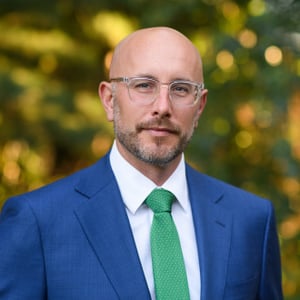
Professor; Associate Dean of Faculty Development and Curriculum, School of Civic Life and Leadership, The University of North Carolina at Chapel Hill
DiSalvo’s research focuses on American political parties, elections, labor unions, state government, and public policy. He is the author of Engines of Change: Party Factions in American Politics, 1868–2010 (Oxford) and Government Against Itself: Public Union Power and Its Consequences (Oxford). His scholarly work has appeared in Political Science Quarterly, Policy Studies Journal, Political Research Quarterly, and American Political Thought.
DiSalvo also writes for popular outlets including The New York Times, The Wall Street Journal, The Atlantic Monthly, National Affairs, City Journal, The Los Angeles Times, and The New York Daily News. He previously co-edited The Forum: A Journal of Applied Research in Contemporary Politics and serves on the editorial board of the Journal of Policy History. He has held visiting appointments at Princeton University’s James Madison Program, the CUNY Graduate Center, and Universidad de Los Andes.
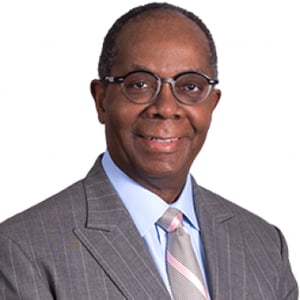
Managing Partner, Crabbe Brown & James LLP
Larry James has been at the heart of the Columbus business, legal, civic, and political scene for the last thirty years. He is a respected litigator, as well as an advisor to local and national leaders. In recognition of his many achievements, the law firm changed its name from Crabbe, Brown, Jones, Potts & Schmidt to Crabbe, Brown & James in January 2001.
In 2011, The Ohio State University selected Mr. James as lead counsel to represent its student athletes in NCAA investigations. In 2013, Armen Keteyian published his book The System: The Glory and Scandal of Big-Time College Football, a chapter of which is dedicated to Larry’s work in representing the OSU football players.
In 2012, Mr. James and his wife, Donna, were awarded the American Red Cross of Greater Columbus’ Humanitarians of the Year Award. In 2015, noted journalist Wil Haygood published his award-winning book Showdown: Thurgood Marshall and the Supreme Court Nomination That Changed America, which he dedicated to Mr. James.
Mr. James is a life member of the Sixth Circuit Judicial Conference, and he has served as General Counsel of the National Fraternal Order of Police since 2001.

Laurence A. Tisch Professor of Law and Director, Classical Liberal Institute, New York University School of Law; Senior Fellow, The Civitas Institute, University of Texas at Austin
Richard A. Epstein is the inaugural Laurence A. Tisch Professor of Law at NYU School of Law. Prior to his joining the faculty, he was a visiting law professor at NYU from 2007 through 2009. He served as the Peter and Kirstin Bedford Senior Fellow at the Hoover Institution from 2000 to 2024. Since 2024 to the present he is a senior lecturer at the Civitas Institute at the University of Texas—Austin. Epstein is also the James Parker Hall Distinguished Service Professor of Law Emeritus and a senior lecturer at the University of Chicago. His initial law school appointment was at the University of Southern California from 1968 to 1972. Epstein received an LL.D., h.c. from the University of Ghent, 2003. He has been a member of the American Academy of Arts and Sciences since 1985 and was a Senior Fellow of the Center for Clinical Medical Ethics at the University of Chicago Division of Biological Sciences, also from 1983. to 2022 He served as editor of the Journal of Legal Studies from 1981 to 1991, and of the Journal of Law and Economics from 1991-2001. From 2001 to 2010 he was a director of the John M. Olin Program in Law and Economics at the University of Chicago.
His newest book, The Myth of Birthright Citizenship: What the Fourteenth Amendment Really Says was published in 2026 (Encounter Books). Prior to that he has published many books including, The Dubious Morality of the Modern Administrative State (Roman & Littlefield 2020).Earlier he published th Classical Liberal Constitution: The Uncertain Quest for Limited Government (Harvard 2014) iHis previous books include Design for Liberty: Private Property, Public Administration and the Rule of Law (Harvard 2011); The Case Against the Employee Free Choice Act (Hoover 2009); Supreme Neglect: How to Revive the Constitutional Protection of Property Rights (Oxford 2008); Antitrust Decrees in Theory and Practice: Why Less is More (AEI 2007); Overdose: How Excessive Government Regulation Stifles Pharmaceutical Innovation (Yale University Press. 2006); How Progressives Rewrote the Constitution (Cato 2006); Cases and Materials on Torts (Aspen Law & Business; 8th ed. 2004); Skepticism and Freedom: A Modern Case for Classical Liberalism (University of Chicago, 2003); Torts (Aspen Law & Business 1999); Principles for a Free Society: Reconciling Individual Liberty with the Common Good (Perseus Books, 1998): Mortal Peril: Our Inalienable Rights to Health Care (Addison-Wesley, 1997); Simple Rules for a Complex World (Harvard, 1995); Bargaining With the State (Princeton, 1993); Forbidden Grounds: The Case Against Employment Discrimination Laws (Harvard , 1992); Takings: Private Property and the Power of Eminent Domain (Harvard, 1985); and Modern Products Liability Law (Greenwood Press, 1980). He has also edited(with Catherine M. Sharkey) Cases and Materials on the Law of Torts (10th edition 2012).
Professor Epstein has written numerous articles on a wide range of legal and interdisciplinary subjects. He has taught courses in administrative law, antitrust law, civil procedure, communications, constitutional law, contracts, corporations, criminal law, employment discrimination law, environmental law, food and drug law health law and policy, legal history, labor law, property, real estate development and finance, jurisprudence, labor law; land use planning, patents, individual, estate and corporate taxation, Roman Law; torts, and workers' compensation.
Professor Epstein also writes a regular column for Civitas Institute, which also sponsors his podcast, The Libertarian with Charles C.W. Cooke, and Law Talk, with Cooke and John Yoo. He also does a podcast with John Batchelor. And appears regularly on the Freedom File with Judge Andrew Napolitano.

Laurence H. Silberman Chair in Constitutional Governance, American Enterprise Institute; Executive Director, Antonin Scalia Law School’s C. Boyden Gray Center for the Study of the Administrative State
Adam J. White is the Laurence H. Silberman Chair in Constitutional Governance and senior fellow at the American Enterprise Institute, where he focuses on the Supreme Court and the administrative state. He also directs the Antonin Scalia Law School’s C. Boyden Gray Center for the Study of the Administrative State.
He writes on regulation and constitutional government for a variety of publications. He practiced law in Washington, D.C., after clerking for the D.C. Circuit's Judge David Sentelle. He also has been chairman of the ABA's Administrative Law Section.
In 2021, he served on the Presidential Commission on the Supreme Court of the United States, where he criticized “Court packing” and other efforts to restructure the Supreme Court.

Professor of Law, Notre Dame Law School
Professor Derek Muller is a nationally-recognized scholar in the field of election law. His research focuses on the role of states in the administration of federal elections, the constitutional contours of voting rights and election administration, the limits of judicial power in the domain of elections, and the Electoral College.
He has published more than two dozen academic works, and his op-eds have appeared in the New York Times, the Los Angeles Times, and the Wall Street Journal. He has testified before Congress, and he is a contributor at the Election Law Blog. He is a co-author on a Federal Courts casebook published by Carolina Academic Press. He is also the co-reporter on a new Restatement of the Law, Election Litigation, an effort led by the American Law Institute.
Professor Muller teaches Election Law, Civil Procedure, and Evidence.

Executive Director, Alliance For Consumers; President & CEO, American Juris Link
O.H. Skinner is the President & CEO of American Juris Link, a nonprofit dedicated to accelerating nonprofit litigation to advance freedom, liberty, and the rule of law. O.H. has a long track record in facilitating strategic nonprofit litigation in his role as the Executive Director at Alliance For Consumers as well as from his time serving Arizona Attorney General Mark Brnovich in senior positions, including as Arizona Solicitor General. O.H. is a graduate of the University of Pennsylvania and Harvard Law School. Prior to joining the Arizona Attorney General's Office, O.H. practiced at WilmerHale and Ropes & Gray in Boston, and clerked for the Hon. J.L. Edmondson of the United States Court of Appeals for the Eleventh Circuit. In 2023, O.H. was a Wasserstein Public Interest Fellow at Harvard Law School, where he counseled students as a Harvard-identified “outstanding public interest attorney.”

Is Social Justice Just? The Origins of Social Justice [POLICYbrief]
Mary Hallan FioRito
The term “social justice” has varying modern connotations, both good and bad. But where did...
Federalization of Elections
Erik S. Jaffe, Matthew Spencer Petersen
Election Law Teleforum Series
The United States, a constitutional republic, employs a decentralized election regulation system with decision making...
Courthouse Steps Decision: United States Patent and Trademark Office v. Booking.com B.V.
Zvi Rosen
On June 30, the Supreme Court released its decision in United States Patent and Trademark...
Police Unions, Practically Speaking
Daniel DiSalvo, Larry H. James
In the current scholarship surrounding law enforcement issues, there are two diverging sides in which...
Legislative Impotence—An Existential Threat
The changes proposed by the House Select Committee on Modernization would be constructive steps in...
Deep Dive Episode 121 – Book Review: The Dubious Morality of Modern Administrative Law
Richard A. Epstein, Adam White
Regulatory Transparency Project's Fourth Branch Podcast
Prof. Richard Epstein’s The Dubious Morality of Modern Administrative Law examines how the growth of the administrative...
CO Dept. of State v. Baca and Chiafalo v. WA - Post-Decision SCOTUscast
Derek T. Muller
feat Derek T. Muller
On July 6, 2020, the Supreme Court affirmed the power of the states to regulate...
Topics
National Labor Relations Board and the “Contract Bar” Doctrine
In Mountaire Farms, Inc., the National Labor Relations Board issued a public Notice and Invitation...
The Michigan Supreme Court Protects the Rights of Property Owners
On July 17, 2020, the Michigan Supreme Court unanimously held in Rafaeli v. Oakland County...
Department of Homeland Security v. Thuraissigiam - Post-Decision SCOTUScast
O.H. Skinner
featuring Oramel H. Skinner
On June 25, in a 7-2 decision, the Supreme Court issued the opinion, penned by...