
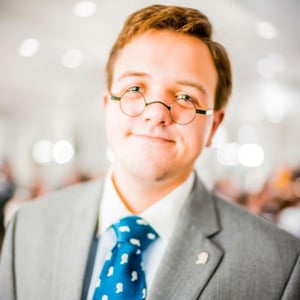
Adam Griffin is a graduate of the University of North Carolina School of Law. During law school, he served as a research assistant to Professor Stephen E. Sachs and UNC Law Dean Martin Brinkley. After law school, Adam spent two years litigating for liberty at the Institute for Justice as an inaugural Law and Liberty Fellow. He then served as a law clerk to Chief Judge Richard E. Myers in the United States District Court for the Eastern District of North Carolina, and previously worked at Pacific Legal Foundation and the Civil Rights Division of the Department of Justice.

Richard and Frances Mallery Professor of Law and Faculty Director, Constitutional Law Center, Stanford Law School
Michael W. McConnell is the Richard and Frances Mallery Professor and Faculty Director of the Constitutional Law Center at Stanford Law School, and a Senior Fellow at the Hoover Institution. From 2002 to 2009, he served as a Circuit Judge on the United States Court of Appeals for the Tenth Circuit. He was nominated by President George W. Bush, a Republican, and confirmed by a Democratic Senate by unanimous consent. McConnell has previously held chaired professorships at the University of Chicago and the University of Utah, and visiting professorships at Harvard and NYU. He teaches courses on constitutional law, constitutional history, First Amendment, and interpretive theory. He has published widely in the fields of constitutional law and theory, especially church and state, equal protection, and separation of powers. His book, “The President Who Would Not Be King: Executive Power Under the Constitution,” was published by Princeton University Press in 2020, based on the Tanner Lectures in Human Values, which he delivered at Princeton in 2019. His latest book, co-authored with Nathan Chapman, “Agreeing to Disagree: How the Establishment Clause Protects Religious Diversity and Freedom of Conscience,” was published by Oxford University Press in mid-2023. McConnell has argued sixteen cases in the United States Supreme Court, most recently Carney v. Adams (2020). defending a provision of the Delaware Constitution requiring political balance on that state’s courts. More recently, he was co-counsel in Gonzalez v. Google. He earned his B.A. from Michigan State University and his J.D. from the University of Chicago, and has received honorary degrees from Notre Dame University and Michigan State. He served as law clerk to Supreme Court Justice William J. Brennan, Jr. and D.C. Circuit Chief Judge J. Skelly Wright. He has been Assistant General Counsel of the Office of Management & Budget, Assistant to the Solicitor General of the Department of Justice, and a member of the President’s Intelligence Oversight Board. He is Senior of Counsel to the law firm Wilson, Sonsini, Goodrich & Rosati, and is co-chair of Meta’s Oversight Review Board.
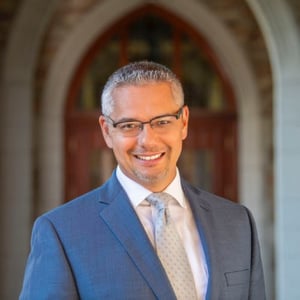
Tocqueville Associate Professor Department of Political Science and Concurrent Associate Professor of Law, University of Notre Dame Law School
Vincent Phillip Muñoz is the Tocqueville Associate Professor of Religion & Public Life in the Department of Political Science at the University of Notre Dame. He is the founding director of Notre Dame's undergraduate minor in Constitutional Studies and directs Notre Dame's Tocqueville Program for Inquiry into Religion and Public Life.
Muñoz writes and teaches across the fields of constitutional law, American politics, and political philosophy with a focus on religious liberty and the American Founding. His first book, God and the Founders: Madison, Washington, and Jefferson (Cambridge University Press, 2009) won the Hubert Morken Award from the American Political Science Association for the best publication on religion and politics in 2009 and 2010. His First Amendment church-state case reader, Religious Liberty and the American Supreme Court: The Essential Cases and Documents (Rowman & Littlefield) was first published in 2013 (revised edition, 2015) and is being used at Notre Dame and other leading universities.
Muñoz's current project is a scholarly monograph on the natural right of religious liberty and the original meaning of the First Amendment's Religion Clauses. Articles from that project have appeared in American Political Science Review, The Harvard Journal of Law and Public Policy, Notre Dame Law Review, American Political Thought, and the University of Pennsylvania's Journal of Constitutional Law.
Adam Griffin is a graduate of the University of North Carolina School of Law. During law school, he served as a research assistant to Professor Stephen E. Sachs and UNC Law Dean Martin Brinkley. After law school, Adam spent two years litigating for liberty at the Institute for Justice as an inaugural Law and Liberty Fellow. He then served as a law clerk to Chief Judge Richard E. Myers in the United States District Court for the Eastern District of North Carolina, and previously worked at Pacific Legal Foundation and the Civil Rights Division of the Department of Justice.
Richard and Frances Mallery Professor of Law and Faculty Director, Constitutional Law Center, Stanford Law School
Michael W. McConnell is the Richard and Frances Mallery Professor and Faculty Director of the Constitutional Law Center at Stanford Law School, and a Senior Fellow at the Hoover Institution. From 2002 to 2009, he served as a Circuit Judge on the United States Court of Appeals for the Tenth Circuit. He was nominated by President George W. Bush, a Republican, and confirmed by a Democratic Senate by unanimous consent. McConnell has previously held chaired professorships at the University of Chicago and the University of Utah, and visiting professorships at Harvard and NYU. He teaches courses on constitutional law, constitutional history, First Amendment, and interpretive theory. He has published widely in the fields of constitutional law and theory, especially church and state, equal protection, and separation of powers. His book, “The President Who Would Not Be King: Executive Power Under the Constitution,” was published by Princeton University Press in 2020, based on the Tanner Lectures in Human Values, which he delivered at Princeton in 2019. His latest book, co-authored with Nathan Chapman, “Agreeing to Disagree: How the Establishment Clause Protects Religious Diversity and Freedom of Conscience,” was published by Oxford University Press in mid-2023. McConnell has argued sixteen cases in the United States Supreme Court, most recently Carney v. Adams (2020). defending a provision of the Delaware Constitution requiring political balance on that state’s courts. More recently, he was co-counsel in Gonzalez v. Google. He earned his B.A. from Michigan State University and his J.D. from the University of Chicago, and has received honorary degrees from Notre Dame University and Michigan State. He served as law clerk to Supreme Court Justice William J. Brennan, Jr. and D.C. Circuit Chief Judge J. Skelly Wright. He has been Assistant General Counsel of the Office of Management & Budget, Assistant to the Solicitor General of the Department of Justice, and a member of the President’s Intelligence Oversight Board. He is Senior of Counsel to the law firm Wilson, Sonsini, Goodrich & Rosati, and is co-chair of Meta’s Oversight Review Board.
Tocqueville Associate Professor Department of Political Science and Concurrent Associate Professor of Law, University of Notre Dame Law School
Vincent Phillip Muñoz is the Tocqueville Associate Professor of Religion & Public Life in the Department of Political Science at the University of Notre Dame. He is the founding director of Notre Dame's undergraduate minor in Constitutional Studies and directs Notre Dame's Tocqueville Program for Inquiry into Religion and Public Life.
Muñoz writes and teaches across the fields of constitutional law, American politics, and political philosophy with a focus on religious liberty and the American Founding. His first book, God and the Founders: Madison, Washington, and Jefferson (Cambridge University Press, 2009) won the Hubert Morken Award from the American Political Science Association for the best publication on religion and politics in 2009 and 2010. His First Amendment church-state case reader, Religious Liberty and the American Supreme Court: The Essential Cases and Documents (Rowman & Littlefield) was first published in 2013 (revised edition, 2015) and is being used at Notre Dame and other leading universities.
Muñoz's current project is a scholarly monograph on the natural right of religious liberty and the original meaning of the First Amendment's Religion Clauses. Articles from that project have appeared in American Political Science Review, The Harvard Journal of Law and Public Policy, Notre Dame Law Review, American Political Thought, and the University of Pennsylvania's Journal of Constitutional Law.
Richard and Frances Mallery Professor of Law and Faculty Director, Constitutional Law Center, Stanford Law School
Michael W. McConnell is the Richard and Frances Mallery Professor and Faculty Director of the Constitutional Law Center at Stanford Law School, and a Senior Fellow at the Hoover Institution. From 2002 to 2009, he served as a Circuit Judge on the United States Court of Appeals for the Tenth Circuit. He was nominated by President George W. Bush, a Republican, and confirmed by a Democratic Senate by unanimous consent. McConnell has previously held chaired professorships at the University of Chicago and the University of Utah, and visiting professorships at Harvard and NYU. He teaches courses on constitutional law, constitutional history, First Amendment, and interpretive theory. He has published widely in the fields of constitutional law and theory, especially church and state, equal protection, and separation of powers. His book, “The President Who Would Not Be King: Executive Power Under the Constitution,” was published by Princeton University Press in 2020, based on the Tanner Lectures in Human Values, which he delivered at Princeton in 2019. His latest book, co-authored with Nathan Chapman, “Agreeing to Disagree: How the Establishment Clause Protects Religious Diversity and Freedom of Conscience,” was published by Oxford University Press in mid-2023. McConnell has argued sixteen cases in the United States Supreme Court, most recently Carney v. Adams (2020). defending a provision of the Delaware Constitution requiring political balance on that state’s courts. More recently, he was co-counsel in Gonzalez v. Google. He earned his B.A. from Michigan State University and his J.D. from the University of Chicago, and has received honorary degrees from Notre Dame University and Michigan State. He served as law clerk to Supreme Court Justice William J. Brennan, Jr. and D.C. Circuit Chief Judge J. Skelly Wright. He has been Assistant General Counsel of the Office of Management & Budget, Assistant to the Solicitor General of the Department of Justice, and a member of the President’s Intelligence Oversight Board. He is Senior of Counsel to the law firm Wilson, Sonsini, Goodrich & Rosati, and is co-chair of Meta’s Oversight Review Board.
Tocqueville Associate Professor Department of Political Science and Concurrent Associate Professor of Law, University of Notre Dame Law School
Vincent Phillip Muñoz is the Tocqueville Associate Professor of Religion & Public Life in the Department of Political Science at the University of Notre Dame. He is the founding director of Notre Dame's undergraduate minor in Constitutional Studies and directs Notre Dame's Tocqueville Program for Inquiry into Religion and Public Life.
Muñoz writes and teaches across the fields of constitutional law, American politics, and political philosophy with a focus on religious liberty and the American Founding. His first book, God and the Founders: Madison, Washington, and Jefferson (Cambridge University Press, 2009) won the Hubert Morken Award from the American Political Science Association for the best publication on religion and politics in 2009 and 2010. His First Amendment church-state case reader, Religious Liberty and the American Supreme Court: The Essential Cases and Documents (Rowman & Littlefield) was first published in 2013 (revised edition, 2015) and is being used at Notre Dame and other leading universities.
Muñoz's current project is a scholarly monograph on the natural right of religious liberty and the original meaning of the First Amendment's Religion Clauses. Articles from that project have appeared in American Political Science Review, The Harvard Journal of Law and Public Policy, Notre Dame Law Review, American Political Thought, and the University of Pennsylvania's Journal of Constitutional Law.
Richard and Frances Mallery Professor of Law and Faculty Director, Constitutional Law Center, Stanford Law School
Michael W. McConnell is the Richard and Frances Mallery Professor and Faculty Director of the Constitutional Law Center at Stanford Law School, and a Senior Fellow at the Hoover Institution. From 2002 to 2009, he served as a Circuit Judge on the United States Court of Appeals for the Tenth Circuit. He was nominated by President George W. Bush, a Republican, and confirmed by a Democratic Senate by unanimous consent. McConnell has previously held chaired professorships at the University of Chicago and the University of Utah, and visiting professorships at Harvard and NYU. He teaches courses on constitutional law, constitutional history, First Amendment, and interpretive theory. He has published widely in the fields of constitutional law and theory, especially church and state, equal protection, and separation of powers. His book, “The President Who Would Not Be King: Executive Power Under the Constitution,” was published by Princeton University Press in 2020, based on the Tanner Lectures in Human Values, which he delivered at Princeton in 2019. His latest book, co-authored with Nathan Chapman, “Agreeing to Disagree: How the Establishment Clause Protects Religious Diversity and Freedom of Conscience,” was published by Oxford University Press in mid-2023. McConnell has argued sixteen cases in the United States Supreme Court, most recently Carney v. Adams (2020). defending a provision of the Delaware Constitution requiring political balance on that state’s courts. More recently, he was co-counsel in Gonzalez v. Google. He earned his B.A. from Michigan State University and his J.D. from the University of Chicago, and has received honorary degrees from Notre Dame University and Michigan State. He served as law clerk to Supreme Court Justice William J. Brennan, Jr. and D.C. Circuit Chief Judge J. Skelly Wright. He has been Assistant General Counsel of the Office of Management & Budget, Assistant to the Solicitor General of the Department of Justice, and a member of the President’s Intelligence Oversight Board. He is Senior of Counsel to the law firm Wilson, Sonsini, Goodrich & Rosati, and is co-chair of Meta’s Oversight Review Board.
Tocqueville Associate Professor Department of Political Science and Concurrent Associate Professor of Law, University of Notre Dame Law School
Vincent Phillip Muñoz is the Tocqueville Associate Professor of Religion & Public Life in the Department of Political Science at the University of Notre Dame. He is the founding director of Notre Dame's undergraduate minor in Constitutional Studies and directs Notre Dame's Tocqueville Program for Inquiry into Religion and Public Life.
Muñoz writes and teaches across the fields of constitutional law, American politics, and political philosophy with a focus on religious liberty and the American Founding. His first book, God and the Founders: Madison, Washington, and Jefferson (Cambridge University Press, 2009) won the Hubert Morken Award from the American Political Science Association for the best publication on religion and politics in 2009 and 2010. His First Amendment church-state case reader, Religious Liberty and the American Supreme Court: The Essential Cases and Documents (Rowman & Littlefield) was first published in 2013 (revised edition, 2015) and is being used at Notre Dame and other leading universities.
Muñoz's current project is a scholarly monograph on the natural right of religious liberty and the original meaning of the First Amendment's Religion Clauses. Articles from that project have appeared in American Political Science Review, The Harvard Journal of Law and Public Policy, Notre Dame Law Review, American Political Thought, and the University of Pennsylvania's Journal of Constitutional Law.

United States District Judge, United States District Court for the Middle District of Florida
In November 2020, the Senate confirmed Kathryn Kimball Mizelle as a United States District Judge for the Middle District of Florida. At age 33, she became the youngest Article III judge in the country. Prior to her confirmation, Judge Mizelle was in private practice at Jones Day, where she focused on complex civil and criminal litigation and appeals. Judge Mizelle previously served at the United States Department of Justice in the Office of the Associate Attorney General, in the Southern Criminal Enforcement Section of the Tax Division, and in the United States Attorney’s Office for the Eastern District of Virginia. Judge Mizelle has also taught as an adjunct professor of law at the University of Florida Levin College of Law and at George Mason University’s Antonin Scalia Law School.
Judge Mizelle earned her B.A., summa cum laude, from Covenant College, and her J.D., summa cum laude, from the University of Florida Levin College of Law. After graduation, Judge Mizelle served as a law clerk at every level of the federal judiciary: at the Supreme Court for Justice Clarence Thomas, at the D.C. Circuit for Judge Gregory G. Katsas, at the Eleventh Circuit for Chief Judge William H. Pryor Jr., and at the Middle District of Florida for Judge James S. Moody Jr.
Tocqueville Associate Professor Department of Political Science and Concurrent Associate Professor of Law, University of Notre Dame Law School
Vincent Phillip Muñoz is the Tocqueville Associate Professor of Religion & Public Life in the Department of Political Science at the University of Notre Dame. He is the founding director of Notre Dame's undergraduate minor in Constitutional Studies and directs Notre Dame's Tocqueville Program for Inquiry into Religion and Public Life.
Muñoz writes and teaches across the fields of constitutional law, American politics, and political philosophy with a focus on religious liberty and the American Founding. His first book, God and the Founders: Madison, Washington, and Jefferson (Cambridge University Press, 2009) won the Hubert Morken Award from the American Political Science Association for the best publication on religion and politics in 2009 and 2010. His First Amendment church-state case reader, Religious Liberty and the American Supreme Court: The Essential Cases and Documents (Rowman & Littlefield) was first published in 2013 (revised edition, 2015) and is being used at Notre Dame and other leading universities.
Muñoz's current project is a scholarly monograph on the natural right of religious liberty and the original meaning of the First Amendment's Religion Clauses. Articles from that project have appeared in American Political Science Review, The Harvard Journal of Law and Public Policy, Notre Dame Law Review, American Political Thought, and the University of Pennsylvania's Journal of Constitutional Law.
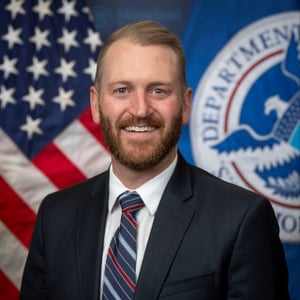
General Counsel, U.S. Department of Homeland Security
James H. Percival graduated from the University of California, Santa Barbara and the University of Virginia School of Law. Before his work at the Department of Homeland Security, he was Chief of Staff to then Florida Attorney General Ashley Moody. James previously served in a number of other roles for Attorney General Moody and as Senior Counsel at the U.S. Department of Justice. Before beginning his public service, James worked for a global law firm and clerked for Judge Emmett Ripley Cox of the U.S. Court of Appeals for the Eleventh Circuit. In between college and law school, James worked as a substitute teacher and as a missionary in South America.
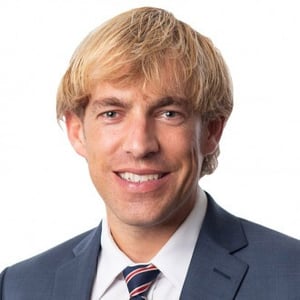
Principal, Spero Law LLC
Christopher Mills is the founder of Spero Law LLC. He was previously a partner at a national law firm and a Constitutional Law Fellow at the Becket Fund for Religious Liberty. He served as a law clerk to Justice Clarence Thomas on the U.S. Supreme Court during October Term 2018. He also clerked for the Honorable David B. Sentelle, then-Chief Judge of the U.S. Court of Appeals for the D.C. Circuit. He has authored briefs and motions in the Supreme Court, courts of appeals, and trial courts, and successfully argued before the D.C. Circuit. He has served as special counsel to South Carolina Governor Henry McMaster, and is an Adjunct Professor at the Charleston School of Law.
A 2012 magna cum laude graduate of Harvard Law School, Christopher was a senior editor of the Harvard Law Review, an editor of the Harvard Journal of Law and Public Policy, and served on the Executive Board of the Harvard Federalist Society. In 2009, he graduated Phi Beta Kappa and summa cum laude with a degree in economics from Furman University.
Christopher lives in Charleston, South Carolina with his wife, children, and golden retriever.
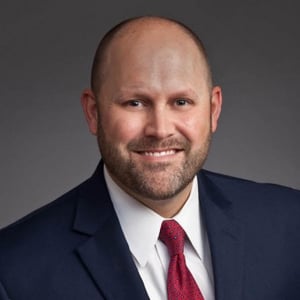
Vice President & General Counsel, Paligen Technologies
Eliot Peace is Vice President and General Counsel at Paligen Technologies, a worldwide leader in the manufacture of energetic materials; the design and production of munitions, aerospace, and naval products; and the production of metal components for defense and commercial operations. In this role, he leads the Legal and Compliance departments and provides full-spectrum legal support to the company.
Previously, he was the Deputy General Counsel for General Dynamics Ordnance and Tactical Systems. In this role, he served as legal advisor to a multi-billion-dollar global aerospace/defense business unit, where he was responsible for government and commercial contracts; litigation and disputes; government enforcement and investigations; and regulatory, international, and trade compliance.
Prior to joining GD-OTS in 2020, he worked as an attorney for an AmLaw 100 law firm in Tampa, FL, handling commercial litigation and government enforcement/investigations in the aerospace/defense, manufacturing, and firearms industries. From 2012-2017, he served as a member of the US Air Force Judge Advocate General’s Corps. He remains a major in the US Air Force Reserve.
Prior to accepting his commission, he clerked for Justice John W. Kittredge at the South Carolina Supreme Court and Judge Timothy M. Cain on the United States District Court for the District of South Carolina. He is Chair of the Second District Court of Appeal Judicial Nominating Commission, a member of the Florida Polytechnic University Board of Trustees, and a previous member of the Executive Committee of the Florida Defense Contractors Association. A graduate of the University of Georgia and the University of South Carolina School of Law, he and his wife have five children and live in Dunedin, FL.
Principal, Spero Law LLC
Christopher Mills is the founder of Spero Law LLC. He was previously a partner at a national law firm and a Constitutional Law Fellow at the Becket Fund for Religious Liberty. He served as a law clerk to Justice Clarence Thomas on the U.S. Supreme Court during October Term 2018. He also clerked for the Honorable David B. Sentelle, then-Chief Judge of the U.S. Court of Appeals for the D.C. Circuit. He has authored briefs and motions in the Supreme Court, courts of appeals, and trial courts, and successfully argued before the D.C. Circuit. He has served as special counsel to South Carolina Governor Henry McMaster, and is an Adjunct Professor at the Charleston School of Law.
A 2012 magna cum laude graduate of Harvard Law School, Christopher was a senior editor of the Harvard Law Review, an editor of the Harvard Journal of Law and Public Policy, and served on the Executive Board of the Harvard Federalist Society. In 2009, he graduated Phi Beta Kappa and summa cum laude with a degree in economics from Furman University.
Christopher lives in Charleston, South Carolina with his wife, children, and golden retriever.
United States District Judge, United States District Court for the Middle District of Florida
In November 2020, the Senate confirmed Kathryn Kimball Mizelle as a United States District Judge for the Middle District of Florida. At age 33, she became the youngest Article III judge in the country. Prior to her confirmation, Judge Mizelle was in private practice at Jones Day, where she focused on complex civil and criminal litigation and appeals. Judge Mizelle previously served at the United States Department of Justice in the Office of the Associate Attorney General, in the Southern Criminal Enforcement Section of the Tax Division, and in the United States Attorney’s Office for the Eastern District of Virginia. Judge Mizelle has also taught as an adjunct professor of law at the University of Florida Levin College of Law and at George Mason University’s Antonin Scalia Law School.
Judge Mizelle earned her B.A., summa cum laude, from Covenant College, and her J.D., summa cum laude, from the University of Florida Levin College of Law. After graduation, Judge Mizelle served as a law clerk at every level of the federal judiciary: at the Supreme Court for Justice Clarence Thomas, at the D.C. Circuit for Judge Gregory G. Katsas, at the Eleventh Circuit for Chief Judge William H. Pryor Jr., and at the Middle District of Florida for Judge James S. Moody Jr.
Tocqueville Associate Professor Department of Political Science and Concurrent Associate Professor of Law, University of Notre Dame Law School
Vincent Phillip Muñoz is the Tocqueville Associate Professor of Religion & Public Life in the Department of Political Science at the University of Notre Dame. He is the founding director of Notre Dame's undergraduate minor in Constitutional Studies and directs Notre Dame's Tocqueville Program for Inquiry into Religion and Public Life.
Muñoz writes and teaches across the fields of constitutional law, American politics, and political philosophy with a focus on religious liberty and the American Founding. His first book, God and the Founders: Madison, Washington, and Jefferson (Cambridge University Press, 2009) won the Hubert Morken Award from the American Political Science Association for the best publication on religion and politics in 2009 and 2010. His First Amendment church-state case reader, Religious Liberty and the American Supreme Court: The Essential Cases and Documents (Rowman & Littlefield) was first published in 2013 (revised edition, 2015) and is being used at Notre Dame and other leading universities.
Muñoz's current project is a scholarly monograph on the natural right of religious liberty and the original meaning of the First Amendment's Religion Clauses. Articles from that project have appeared in American Political Science Review, The Harvard Journal of Law and Public Policy, Notre Dame Law Review, American Political Thought, and the University of Pennsylvania's Journal of Constitutional Law.
Vice President & General Counsel, Paligen Technologies
Eliot Peace is Vice President and General Counsel at Paligen Technologies, a worldwide leader in the manufacture of energetic materials; the design and production of munitions, aerospace, and naval products; and the production of metal components for defense and commercial operations. In this role, he leads the Legal and Compliance departments and provides full-spectrum legal support to the company.
Previously, he was the Deputy General Counsel for General Dynamics Ordnance and Tactical Systems. In this role, he served as legal advisor to a multi-billion-dollar global aerospace/defense business unit, where he was responsible for government and commercial contracts; litigation and disputes; government enforcement and investigations; and regulatory, international, and trade compliance.
Prior to joining GD-OTS in 2020, he worked as an attorney for an AmLaw 100 law firm in Tampa, FL, handling commercial litigation and government enforcement/investigations in the aerospace/defense, manufacturing, and firearms industries. From 2012-2017, he served as a member of the US Air Force Judge Advocate General’s Corps. He remains a major in the US Air Force Reserve.
Prior to accepting his commission, he clerked for Justice John W. Kittredge at the South Carolina Supreme Court and Judge Timothy M. Cain on the United States District Court for the District of South Carolina. He is Chair of the Second District Court of Appeal Judicial Nominating Commission, a member of the Florida Polytechnic University Board of Trustees, and a previous member of the Executive Committee of the Florida Defense Contractors Association. A graduate of the University of Georgia and the University of South Carolina School of Law, he and his wife have five children and live in Dunedin, FL.
General Counsel, U.S. Department of Homeland Security
James H. Percival graduated from the University of California, Santa Barbara and the University of Virginia School of Law. Before his work at the Department of Homeland Security, he was Chief of Staff to then Florida Attorney General Ashley Moody. James previously served in a number of other roles for Attorney General Moody and as Senior Counsel at the U.S. Department of Justice. Before beginning his public service, James worked for a global law firm and clerked for Judge Emmett Ripley Cox of the U.S. Court of Appeals for the Eleventh Circuit. In between college and law school, James worked as a substitute teacher and as a missionary in South America.
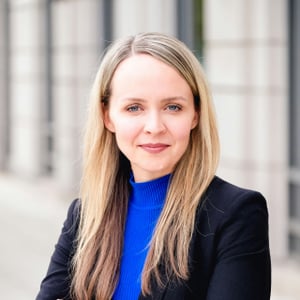
Professor of Law and Faculty Director for the Georgetown Center for the Constitution, Georgetown University Law Center
Stephanie Barclay is a Professor of Law at Georgetown Law School, and the Faculty Director of the Georgetown Center for the Constitution. Her research focuses on the role our different democratic institutions play in protecting minority rights, particularly at the intersection of free speech and religious exercise. Barclay‘s work is published or is forthcoming in leading journals such as the Harvard Law Review, the Chicago Law Review, the University of Pennsylvania Law Review, and the Yale Law Journal Forum. One of her articles was also selected for the 2020 Stanford/Harvard/Yale Junior Faculty Forum. Her work has been featured in many media outlets, including The New York Times, The Wall Street Journal, The Washington Post, USA Today, Bloomberg BNA, The Hill, and Law 360. And her work has also been cited by the U.S. Supreme Court.
Prior to joining Georgetown, Barclay was twice voted Professor of the Year. Barclay has also litigated constitutional cases at both the trial and appellate level, including before the U.S. Supreme Court. Barclay served as a law clerk to Judge N. Randy Smith on the U.S. Court of Appeals for the Ninth Circuit, and to Justice Neil M. Gorsuch of the U.S. Supreme Court.
Barclay is a Faculty Affiliate at the Constitutional Law Center at Stanford Law School; and she is a Nootbaar Fellow at the Nootbaar Institute on Law, Religion, and Ethics at Pepperdine University. She currently serves as the Chair for the AALS Law and Religion Section and as a Member of the Executive Committee for the AALS Constitutional Law Section. She graduated summa cum laude from BYU Law School, where she was elected to the Order of the Coif. She is completing a Ph.D. in Law at Oxford University as a Clarendon Scholar and a Tang Scholar.
Transfer Pricing Senior Associate, PricewaterhouseCoopers LLP
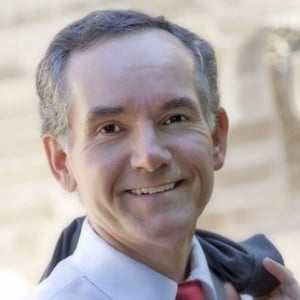
Robert H. McKinney Professor of Law Emeritus and Adjunct Professor of Religious Studies, Indiana University Bloomington - Maurer School of Law
Professor Conkle has been a member of the Maurer School of Law faculty since 1983, Professor Conkle teaches Constitutional Law, the First Amendment, and Law and Religion. His research addresses constitutional law and theory, religious liberty, and the role of religion in American law, politics, and public life. His most recent book is Religion, Law, and the Constitution, Second Edition (Foundation Press, 2022).
Conkle has been honored for his achievements both within and beyond the classroom. He is a two-time recipient of the Leon H. Wallace Teaching Award and has twice won the Gavel Award for outstanding contribution to the graduating class. He has received six faculty fellowships for outstanding scholarship, and in 1999 he was named the Robert H. McKinney Professor of Law. He retired from full-time teaching in December 2017 but continues to be involved in the Law School community.
Tocqueville Associate Professor Department of Political Science and Concurrent Associate Professor of Law, University of Notre Dame Law School
Vincent Phillip Muñoz is the Tocqueville Associate Professor of Religion & Public Life in the Department of Political Science at the University of Notre Dame. He is the founding director of Notre Dame's undergraduate minor in Constitutional Studies and directs Notre Dame's Tocqueville Program for Inquiry into Religion and Public Life.
Muñoz writes and teaches across the fields of constitutional law, American politics, and political philosophy with a focus on religious liberty and the American Founding. His first book, God and the Founders: Madison, Washington, and Jefferson (Cambridge University Press, 2009) won the Hubert Morken Award from the American Political Science Association for the best publication on religion and politics in 2009 and 2010. His First Amendment church-state case reader, Religious Liberty and the American Supreme Court: The Essential Cases and Documents (Rowman & Littlefield) was first published in 2013 (revised edition, 2015) and is being used at Notre Dame and other leading universities.
Muñoz's current project is a scholarly monograph on the natural right of religious liberty and the original meaning of the First Amendment's Religion Clauses. Articles from that project have appeared in American Political Science Review, The Harvard Journal of Law and Public Policy, Notre Dame Law Review, American Political Thought, and the University of Pennsylvania's Journal of Constitutional Law.
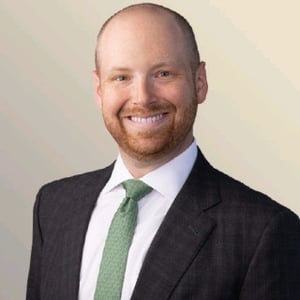
Solicitor General, Iowa Office of the Attorney General
Eric Wessan serves as Iowa’s Solicitor General in the Iowa Attorney General’s Office. In that role, Wessan leads Iowa’s litigation before State and federal appellate courts, including the Iowa and U.S. Supreme Courts. Before that role, Wessan worked on complex commercial litigation at two large law firms in Chicago. Wessan also served as a law clerk for the Honorable James C. Ho on the U.S. Court of Appeals for the Fifth Circuit and for the Honorable John F. Kness on the U.S. District Court for the Northern District of Illinois. Wessan is a graduate of the University of Chicago Law School, with honors, and of the University of Chicago.
Professor of Law and Faculty Director for the Georgetown Center for the Constitution, Georgetown University Law Center
Stephanie Barclay is a Professor of Law at Georgetown Law School, and the Faculty Director of the Georgetown Center for the Constitution. Her research focuses on the role our different democratic institutions play in protecting minority rights, particularly at the intersection of free speech and religious exercise. Barclay‘s work is published or is forthcoming in leading journals such as the Harvard Law Review, the Chicago Law Review, the University of Pennsylvania Law Review, and the Yale Law Journal Forum. One of her articles was also selected for the 2020 Stanford/Harvard/Yale Junior Faculty Forum. Her work has been featured in many media outlets, including The New York Times, The Wall Street Journal, The Washington Post, USA Today, Bloomberg BNA, The Hill, and Law 360. And her work has also been cited by the U.S. Supreme Court.
Prior to joining Georgetown, Barclay was twice voted Professor of the Year. Barclay has also litigated constitutional cases at both the trial and appellate level, including before the U.S. Supreme Court. Barclay served as a law clerk to Judge N. Randy Smith on the U.S. Court of Appeals for the Ninth Circuit, and to Justice Neil M. Gorsuch of the U.S. Supreme Court.
Barclay is a Faculty Affiliate at the Constitutional Law Center at Stanford Law School; and she is a Nootbaar Fellow at the Nootbaar Institute on Law, Religion, and Ethics at Pepperdine University. She currently serves as the Chair for the AALS Law and Religion Section and as a Member of the Executive Committee for the AALS Constitutional Law Section. She graduated summa cum laude from BYU Law School, where she was elected to the Order of the Coif. She is completing a Ph.D. in Law at Oxford University as a Clarendon Scholar and a Tang Scholar.
Transfer Pricing Senior Associate, PricewaterhouseCoopers LLP
Robert H. McKinney Professor of Law Emeritus and Adjunct Professor of Religious Studies, Indiana University Bloomington - Maurer School of Law
Professor Conkle has been a member of the Maurer School of Law faculty since 1983, Professor Conkle teaches Constitutional Law, the First Amendment, and Law and Religion. His research addresses constitutional law and theory, religious liberty, and the role of religion in American law, politics, and public life. His most recent book is Religion, Law, and the Constitution, Second Edition (Foundation Press, 2022).
Conkle has been honored for his achievements both within and beyond the classroom. He is a two-time recipient of the Leon H. Wallace Teaching Award and has twice won the Gavel Award for outstanding contribution to the graduating class. He has received six faculty fellowships for outstanding scholarship, and in 1999 he was named the Robert H. McKinney Professor of Law. He retired from full-time teaching in December 2017 but continues to be involved in the Law School community.
Tocqueville Associate Professor Department of Political Science and Concurrent Associate Professor of Law, University of Notre Dame Law School
Vincent Phillip Muñoz is the Tocqueville Associate Professor of Religion & Public Life in the Department of Political Science at the University of Notre Dame. He is the founding director of Notre Dame's undergraduate minor in Constitutional Studies and directs Notre Dame's Tocqueville Program for Inquiry into Religion and Public Life.
Muñoz writes and teaches across the fields of constitutional law, American politics, and political philosophy with a focus on religious liberty and the American Founding. His first book, God and the Founders: Madison, Washington, and Jefferson (Cambridge University Press, 2009) won the Hubert Morken Award from the American Political Science Association for the best publication on religion and politics in 2009 and 2010. His First Amendment church-state case reader, Religious Liberty and the American Supreme Court: The Essential Cases and Documents (Rowman & Littlefield) was first published in 2013 (revised edition, 2015) and is being used at Notre Dame and other leading universities.
Muñoz's current project is a scholarly monograph on the natural right of religious liberty and the original meaning of the First Amendment's Religion Clauses. Articles from that project have appeared in American Political Science Review, The Harvard Journal of Law and Public Policy, Notre Dame Law Review, American Political Thought, and the University of Pennsylvania's Journal of Constitutional Law.
Solicitor General, Iowa Office of the Attorney General
Eric Wessan serves as Iowa’s Solicitor General in the Iowa Attorney General’s Office. In that role, Wessan leads Iowa’s litigation before State and federal appellate courts, including the Iowa and U.S. Supreme Courts. Before that role, Wessan worked on complex commercial litigation at two large law firms in Chicago. Wessan also served as a law clerk for the Honorable James C. Ho on the U.S. Court of Appeals for the Fifth Circuit and for the Honorable John F. Kness on the U.S. District Court for the Northern District of Illinois. Wessan is a graduate of the University of Chicago Law School, with honors, and of the University of Chicago.

Dr. John Eastman is the former Henry Salvatori Professor of Law & Community Service and former Dean at Chapman University's Dale E. Fowler School of Law, where he had been a member of the faculty since 1999, specializing in Constitutional Law, Legal History, and Property. He is a founding director of the Center for Constitutional Jurisprudence, a public interest law firm affiliated with the Claremont Institute that he founded in 1999. He has a Ph.D. in Government from the Claremont Graduate School and a J.D. from the University of Chicago Law School, and a B.A. in Politics and Economics from the University of Dallas. He serves as the Chairman of the Board of the National Organization for Marriage.
Prior to joining the Chapman law faculty, Dr. Eastman served as a law clerk to the Honorable Clarence Thomas, Associate Justice, Supreme Court of the United States, and to the Honorable J. Michael Luttig, Judge, United States Court of Appeals for the Fourth Circuit and practiced law with the national law firm of Kirkland & Ellis. Dr. Eastman has also represented numerous clients in important constitutional law matters and has argued before the Supreme Court. On behalf of the Claremont Institute Center for Constitutional Jurisprudence, he has participated as amicus curiae before the Supreme Court of the United States, U.S. Courts of Appeals, and State Supreme Courts in more than one hundred cases of constitutional significance, including Boy Scouts of America v. Dale, Zelman v. Simmons-Harris (the school vouchers case), Kelo v. New London, Ct. (eminent domain), and Van Orden v. Perry (the 10 Commandments case). He has also appeared as an expert legal commentator on numerous television and radio programs, including C-SPAN, Fox News, PBS, NewsHour, and The O'Reilly Factor.
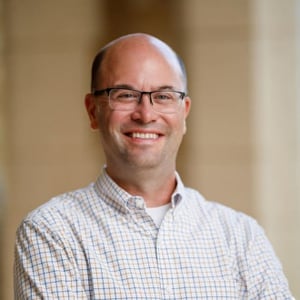
Paul J. Schierl Professor of Law, University of Notre Dame Law School
Professor Richard W. Garnett teaches and writes in the areas of constitutional law, criminal law, the First Amendment, and law and religion. He is a leading authority on questions and debates regarding religious freedom and church-state relations, and is the founding director of Notre Dame Law School’s Program on Church, State, and Society.
Garnett clerked for the late Chief Justice of the United States, William H. Rehnquist, and also for the late Chief Judge of the United States Court of Appeals for the Eighth Circuit, Richard S. Arnold. He earned his J.D. from Yale Law School in 1995 and his B.A., summa cum laude, from Duke University in 1990. He joined the faculty in 1999 after practicing law in Washington, D.C. with Miller, Cassidy, Larroca & Lewin.
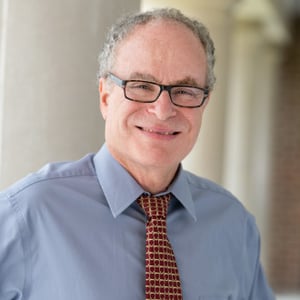
William Rand Kenan, Jr. Distinguished Professor of Law, University of North Carolina School of Law
William (Bill) Marshall joined the Carolina Law faculty in 2001 and serves as the William R. Kenan Jr. Distinguished Professor of Law. His teaching and research interests include the first amendment, presidential power, election law, federal jurisdiction, federal judicial selection, civil procedure, and media law. Marshall is the author of numerous book chapters, articles, and essays on free speech, separation of powers, the Establishment Clause, and the Free Exercise Clause. His work has appeared in the Harvard Law Review, the Yale Law Journal, the Supreme Court Review, and the University of Chicago Law Review, among others.
Marshall received his law degree from the University of Chicago and his undergraduate degree from the University of Pennsylvania. Marshall was Deputy Counsel to the President and Deputy Assistant to the President during the Clinton Administration and also served as the Solicitor General for the State of Ohio. He has taught at the Northwestern, Boston University, Vanderbilt, Ohio State, DePaul, Case Western Reserve, William and Mary, and the University Connecticut law schools. Prior to beginning his teaching career, Marshall was a Special Assistant Attorney General for the State of Minnesota.
Tocqueville Associate Professor Department of Political Science and Concurrent Associate Professor of Law, University of Notre Dame Law School
Vincent Phillip Muñoz is the Tocqueville Associate Professor of Religion & Public Life in the Department of Political Science at the University of Notre Dame. He is the founding director of Notre Dame's undergraduate minor in Constitutional Studies and directs Notre Dame's Tocqueville Program for Inquiry into Religion and Public Life.
Muñoz writes and teaches across the fields of constitutional law, American politics, and political philosophy with a focus on religious liberty and the American Founding. His first book, God and the Founders: Madison, Washington, and Jefferson (Cambridge University Press, 2009) won the Hubert Morken Award from the American Political Science Association for the best publication on religion and politics in 2009 and 2010. His First Amendment church-state case reader, Religious Liberty and the American Supreme Court: The Essential Cases and Documents (Rowman & Littlefield) was first published in 2013 (revised edition, 2015) and is being used at Notre Dame and other leading universities.
Muñoz's current project is a scholarly monograph on the natural right of religious liberty and the original meaning of the First Amendment's Religion Clauses. Articles from that project have appeared in American Political Science Review, The Harvard Journal of Law and Public Policy, Notre Dame Law Review, American Political Thought, and the University of Pennsylvania's Journal of Constitutional Law.
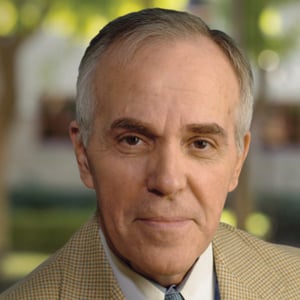
Professor of Government, Claremont Graduate University
Michael Uhlmann has been a professor in the Division of Politics & Economics at Claremont Graduate University since 2002. His research specializations include American presidency, executive–congressional relations, and the federal judiciary—namely, the federal administrative process and national security decision making. In addition to his regular coursework at CGU, Uhlmann teaches in and directs CGU’s Tribal Administration Certificate Program, made possible through a generous grant from the San Manuel Band of Mission Indians.
Uhlmann received his PhD in Government from Claremont Graduate University after receiving his BA in History from Yale University and his LLB from the University of Virginia Law School. Immediately prior to joining the CGU faculty, Uhlmann served as a senior vice president of the Lynde and Harry Bradley Foundation in Milwaukee, Wisconsin. Before that, he was a senior fellow at the Ethics and Public Policy Center in Washington, D.C. He had also served for many years as a partner in the Washington office of Pepper, Hamilton, & Scheetz, a large international law firm, where he specialized in federal antitrust and administrative law. Concurrently held alongside his position at CGU, Uhlmann is an adjunct professor at Claremont McKenna College, teaching a variety of courses in the Department of Government.
In addition to his academic career, private legal practice, and philanthropic work, Uhlmann has had a distinguished career in government, beginning with service as a staff and committee counsel in the U.S. Senate and as assistant general counsel of the Federal Trade Commission. In 1974, following Senate confirmation, he was appointed by President Gerald Ford to be assistant attorney general for Legislative Affairs in the Department of Justice. From 1981 to 1984, he served as special assistant to President Ronald Reagan and associate director of the White House Office of Policy Development. He directed legal and administrative policy for the Reagan presidential transition in 1980–1981 and chaired the Department of Justice transition team for President-Elect George H. W. Bush in 1988–1989.
Uhlmann has written for many leading newspapers and journals of opinion, including National Review, Weekly Standard, Philadelphia Inquirer, Los Angeles Times, Washington Post, First Things, and Claremont Review of Books.
Dr. John Eastman is the former Henry Salvatori Professor of Law & Community Service and former Dean at Chapman University's Dale E. Fowler School of Law, where he had been a member of the faculty since 1999, specializing in Constitutional Law, Legal History, and Property. He is a founding director of the Center for Constitutional Jurisprudence, a public interest law firm affiliated with the Claremont Institute that he founded in 1999. He has a Ph.D. in Government from the Claremont Graduate School and a J.D. from the University of Chicago Law School, and a B.A. in Politics and Economics from the University of Dallas. He serves as the Chairman of the Board of the National Organization for Marriage.
Prior to joining the Chapman law faculty, Dr. Eastman served as a law clerk to the Honorable Clarence Thomas, Associate Justice, Supreme Court of the United States, and to the Honorable J. Michael Luttig, Judge, United States Court of Appeals for the Fourth Circuit and practiced law with the national law firm of Kirkland & Ellis. Dr. Eastman has also represented numerous clients in important constitutional law matters and has argued before the Supreme Court. On behalf of the Claremont Institute Center for Constitutional Jurisprudence, he has participated as amicus curiae before the Supreme Court of the United States, U.S. Courts of Appeals, and State Supreme Courts in more than one hundred cases of constitutional significance, including Boy Scouts of America v. Dale, Zelman v. Simmons-Harris (the school vouchers case), Kelo v. New London, Ct. (eminent domain), and Van Orden v. Perry (the 10 Commandments case). He has also appeared as an expert legal commentator on numerous television and radio programs, including C-SPAN, Fox News, PBS, NewsHour, and The O'Reilly Factor.
Paul J. Schierl Professor of Law, University of Notre Dame Law School
Professor Richard W. Garnett teaches and writes in the areas of constitutional law, criminal law, the First Amendment, and law and religion. He is a leading authority on questions and debates regarding religious freedom and church-state relations, and is the founding director of Notre Dame Law School’s Program on Church, State, and Society.
Garnett clerked for the late Chief Justice of the United States, William H. Rehnquist, and also for the late Chief Judge of the United States Court of Appeals for the Eighth Circuit, Richard S. Arnold. He earned his J.D. from Yale Law School in 1995 and his B.A., summa cum laude, from Duke University in 1990. He joined the faculty in 1999 after practicing law in Washington, D.C. with Miller, Cassidy, Larroca & Lewin.
William Rand Kenan, Jr. Distinguished Professor of Law, University of North Carolina School of Law
William (Bill) Marshall joined the Carolina Law faculty in 2001 and serves as the William R. Kenan Jr. Distinguished Professor of Law. His teaching and research interests include the first amendment, presidential power, election law, federal jurisdiction, federal judicial selection, civil procedure, and media law. Marshall is the author of numerous book chapters, articles, and essays on free speech, separation of powers, the Establishment Clause, and the Free Exercise Clause. His work has appeared in the Harvard Law Review, the Yale Law Journal, the Supreme Court Review, and the University of Chicago Law Review, among others.
Marshall received his law degree from the University of Chicago and his undergraduate degree from the University of Pennsylvania. Marshall was Deputy Counsel to the President and Deputy Assistant to the President during the Clinton Administration and also served as the Solicitor General for the State of Ohio. He has taught at the Northwestern, Boston University, Vanderbilt, Ohio State, DePaul, Case Western Reserve, William and Mary, and the University Connecticut law schools. Prior to beginning his teaching career, Marshall was a Special Assistant Attorney General for the State of Minnesota.
Tocqueville Associate Professor Department of Political Science and Concurrent Associate Professor of Law, University of Notre Dame Law School
Vincent Phillip Muñoz is the Tocqueville Associate Professor of Religion & Public Life in the Department of Political Science at the University of Notre Dame. He is the founding director of Notre Dame's undergraduate minor in Constitutional Studies and directs Notre Dame's Tocqueville Program for Inquiry into Religion and Public Life.
Muñoz writes and teaches across the fields of constitutional law, American politics, and political philosophy with a focus on religious liberty and the American Founding. His first book, God and the Founders: Madison, Washington, and Jefferson (Cambridge University Press, 2009) won the Hubert Morken Award from the American Political Science Association for the best publication on religion and politics in 2009 and 2010. His First Amendment church-state case reader, Religious Liberty and the American Supreme Court: The Essential Cases and Documents (Rowman & Littlefield) was first published in 2013 (revised edition, 2015) and is being used at Notre Dame and other leading universities.
Muñoz's current project is a scholarly monograph on the natural right of religious liberty and the original meaning of the First Amendment's Religion Clauses. Articles from that project have appeared in American Political Science Review, The Harvard Journal of Law and Public Policy, Notre Dame Law Review, American Political Thought, and the University of Pennsylvania's Journal of Constitutional Law.
Professor of Government, Claremont Graduate University
Michael Uhlmann has been a professor in the Division of Politics & Economics at Claremont Graduate University since 2002. His research specializations include American presidency, executive–congressional relations, and the federal judiciary—namely, the federal administrative process and national security decision making. In addition to his regular coursework at CGU, Uhlmann teaches in and directs CGU’s Tribal Administration Certificate Program, made possible through a generous grant from the San Manuel Band of Mission Indians.
Uhlmann received his PhD in Government from Claremont Graduate University after receiving his BA in History from Yale University and his LLB from the University of Virginia Law School. Immediately prior to joining the CGU faculty, Uhlmann served as a senior vice president of the Lynde and Harry Bradley Foundation in Milwaukee, Wisconsin. Before that, he was a senior fellow at the Ethics and Public Policy Center in Washington, D.C. He had also served for many years as a partner in the Washington office of Pepper, Hamilton, & Scheetz, a large international law firm, where he specialized in federal antitrust and administrative law. Concurrently held alongside his position at CGU, Uhlmann is an adjunct professor at Claremont McKenna College, teaching a variety of courses in the Department of Government.
In addition to his academic career, private legal practice, and philanthropic work, Uhlmann has had a distinguished career in government, beginning with service as a staff and committee counsel in the U.S. Senate and as assistant general counsel of the Federal Trade Commission. In 1974, following Senate confirmation, he was appointed by President Gerald Ford to be assistant attorney general for Legislative Affairs in the Department of Justice. From 1981 to 1984, he served as special assistant to President Ronald Reagan and associate director of the White House Office of Policy Development. He directed legal and administrative policy for the Reagan presidential transition in 1980–1981 and chaired the Department of Justice transition team for President-Elect George H. W. Bush in 1988–1989.
Uhlmann has written for many leading newspapers and journals of opinion, including National Review, Weekly Standard, Philadelphia Inquirer, Los Angeles Times, Washington Post, First Things, and Claremont Review of Books.

Talks with Authors: Agreeing to Disagree: How the Establishment Clause Protects Religious Diversity and Freedom of Conscience
Adam F. Griffin, Michael W. McConnell, Vincent Phillip Munoz
Agreeing to Disagree: How the Establishment Clause Protects Religious Diversity and Freedom of Conscience investigates...
Talks with Authors: Agreeing to Disagree: How the Establishment Clause Protects Religious Diversity and Freedom of Conscience
Adam F. Griffin, Michael W. McConnell, Vincent Phillip Munoz
Agreeing to Disagree: How the Establishment Clause Protects Religious Diversity and Freedom of Conscience investigates...
Talks with Authors: Vincent Phillip Munoz on Religious Liberty and the American Founding
Michael W. McConnell, Vincent Phillip Munoz
What did the American Founders mean when they declared religious liberty to be an “inherent,”...
Talks with Authors: Vincent Phillip Munoz on Religious Liberty and the American Founding
Michael W. McConnell, Vincent Phillip Munoz
What did the American Founders mean when they declared religious liberty to be an “inherent,”...
Session II: SCOTUS after the Barrett Confirmation
Kathryn Kimball Mizelle, Vincent Phillip Munoz, James Hamilton Percival, Christopher E. Mills, Eliot Bradford Peace
2021 Annual Florida Chapters Conference
On January 30, 2021, The Federalist Society's Florida lawyers chapters hosted their annual Florida Chapters...
Session II: SCOTUS after the Barrett Confirmation
Christopher E. Mills, Kathryn Kimball Mizelle, Vincent Phillip Munoz, Eliot Bradford Peace, James Hamilton Percival
2021 Annual Florida Chapters Conference
On January 30, 2021, The Federalist Society's Florida lawyers chapters hosted their annual Florida Chapters...
Balancing Religious Freedoms in a Pluralistic Society
Stephanie Barclay, Richard Benson, Daniel O. Conkle, Vincent Phillip Munoz, Eric Wessan
Chicago Lawyers Chapter - Online Event
What should the nature of religious liberty look like in a pluralistic society? The Supreme...
Balancing Religious Freedoms in a Pluralistic Society
Stephanie Barclay, Richard Benson, Daniel O. Conkle, Vincent Phillip Munoz, Eric Wessan
Chicago Lawyers Chapter - Online Event
What should the nature of religious liberty look like in a pluralistic society? The Supreme...
Religious Liberties: Is the Religious Freedom Restoration Act (RFRA) the Future of Religious Liberty?
John C. Eastman, Richard W. Garnett, William P. Marshall, Vincent Phillip Munoz, Michael Uhlmann
2016 National Lawyers Convention
In his seminal decision in Employment Division v. Smith in 1990, Justice Antonin Scalia held...
Religious Liberties: Is the Religious Freedom Restoration Act (RFRA) the Future of Religious Liberty?
John C. Eastman, Richard W. Garnett, William P. Marshall, Vincent Phillip Munoz, Michael Uhlmann
2016 National Lawyers Convention
In his seminal decision in Employment Division v. Smith in 1990, Justice Antonin Scalia held...