
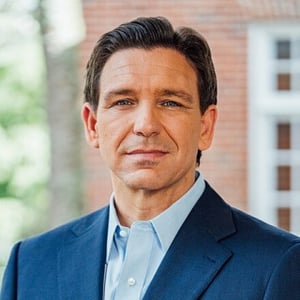
Governor, Florida
Ron DeSantis is the 46th Governor of the State of Florida. Since taking office in January 2019, he has worked hard to expand education opportunities, improve Florida’s water resources and Everglades, champion vocational training, bolster public safety, foster innovation in health care, assist with hurricane recovery, promote infrastructure development and support veterans – all while lowering taxes and being fiscally responsible.
A native Floridian, Governor DeSantis worked his way through Yale University, where he captained the university baseball team and graduated magna cum laude. He also gradated with honors from Harvard Law School. While at Harvard, he earned a commission in the U.S. Navy as a JAG Officer. During his active duty service, then- Lieutenant DeSantis deployed to Iraq as an advisor to a U.S. Navy SEAL Commander in support of the SEAL mission in Iraq. His military decorations include the Iraq Campaign Medal of the Bronze Star Medal (meritorious service).
Prior to serving as Governor, DeSantis served as the U.S. Congressman for Florida’s 6th District. As Chairman of the National Security Subcommittee, DeSantis spearheaded efforts to reform the UA, combat terrorism, identify government waste and relocate the American Embassy in Israel to Jerusalem. As a Congressman, DeSantis championed term limits, fiscal responsibility with a strong national defense.
Governor DeSantis is married to First Lady Casey DeSantis, a former Emmy Award winning television host. They are the proud parents of two children, Madison and Mason. They are the youngest family living in the Florida Governor’s Mansion in nearly fifty years.
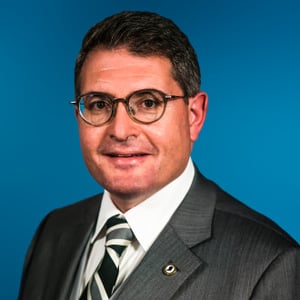
Co-Chairman, The Federalist Society for Law and Public Policy Studies
Leonard is Co-Chairman and former Executive Vice President of the Federalist Society, joining the organization over 25 years ago. Since that time he has been instrumental in helping the organization top 70,000, focusing on the growth of lawyers membership, operations and activities advancing limited, constitutional government. In addition to his work at the Society, Leonard has advised President Trump on judicial selection, assisted with the Gorsuch and Kavanaugh Supreme Court selection and confirmation process, and served as a member of the transition team. He also organized the outside coalition efforts in support of the Roberts and Alito U.S. Supreme Court confirmations. Leonard was appointed by President George W. Bush to three terms to the U.S. Commission on International Religious Freedom as chairman. He was also a U.S. Delegate to the UN Council and UN Commission on Human Rights during the Bush Administration. Leonard was the recipient of the 2009 Bradley Prize, along with the other founders and directors of the Federalist Society, for his work in advancing freedom and the rule of law. He is the coeditor of Presidential Leadership: Rating the Best and the Worst in the White House, as well as the author of opinion editorials in the New York Times,The Wall Street Journal, and Washington Post. Leonard holds degrees from Cornell University and Cornell Law School. He presently resides in Northern Virginia, where he and his wife Sally have raised their seven children.
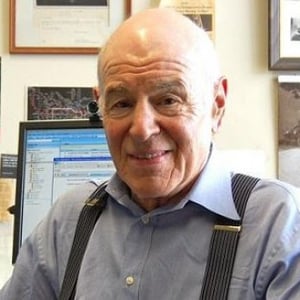
Professor of Law, Elisabeth Haub School of Law at Pace University
Professor Ben Gershman is one of the original faculty members at Pace Law and has taught as a visiting professor at Cornell Law School and Syracuse Law School. While in private practice he specialized in criminal defense litigation. A former prosecutor with the Manhattan District Attorney’s office for six years, he is the author of numerous articles as well as two books on prosecutorial and judicial ethics. He served for four years with the Special State Prosecutor investigating corruption in the judicial system. He is one of the nation’s leading experts on prosecutorial misconduct. He is active on several Bar Association committees, and is a frequent pro bono litigator. Professor Gershman has taught in the London Law Program, and was named James D. Hopkins Professor for the 2007–2009 academic years.
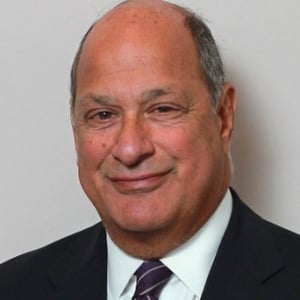
Senior Counsel, Stroock & Stroock & Lavan LLP
Joel Cohen, an experienced white-collar criminal lawyer, joined the firm in 1985 after ten years as a prosecutor, first with the New York State Special Prosecutor’s Office and, second, as an Assistant Attorney-in-Charge with the U.S. Justice Department’s Organized Crime & Racketeering Section (E.D.N.Y.). In those positions, he concentrated in the investigation, prosecution and trial of organized crime figures and corruption cases involving high-ranking public officials in New York, including the top leadership of the Colombo crime family, many members of the elite narcotics division of the New York Police Department, and the first ever prosecution of a sitting FBI agent.
Since arriving at Stroock, Mr. Cohen has represented and actively counseled individuals and corporations that have been investigated and/or prosecuted for alleged federal racketeering, securities violations, tax evasion, bribery, fraud, corruption, obstruction of justice, money laundering, environmental offenses, and customs violations involving alleged international frauds. He has also represented attorneys on ethical issues and in disciplinary proceedings in a number of jurisdictions in the New York area.

Professor of Law, South Texas College of Law Houston
Josh Blackman is a national thought leader on constitutional law and the United States Supreme Court. Josh’s work was quoted during two presidential impeachment trials. He has testified before Congress and advises federal and state lawmakers. Josh regularly appears on TV, including NBC, CBS, ABC, Fox, and the BBC. Josh is also a frequent guest on NPR and other syndicated radio programs. He has published commentaries in the New York Times, Wall Street Journal, Washington Post, and leading national publications.
Since 2012, Josh has served as a professor at the South Texas College of Law Houston. He holds the Centennial Chair of Constitutional Law. Josh is an Adjunct Fellow at the Manhattan Institute. Josh has written more than seven dozen law review articles that have been cited more than a thousand times. Josh was selected as the Jurist of the Year by the Texas Journal of Law & Public Policy, received the inaugural Meese III Originalism Award, and was awarded the Inaugural Joseph Story Award. Josh was selected by Forbes Magazine for the “30 Under 30” in Law and Policy. Josh is the President of the Harlan Institute, and founded FantasySCOTUS, the Internet’s Premier Supreme Court Fantasy League. He blogs at the Volokh Conspiracyand posts@JoshMBlackman.
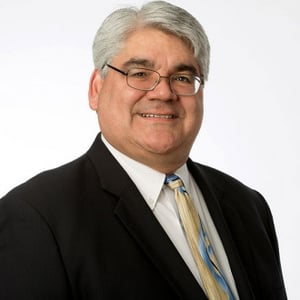
Abner J. Mikva Professor of Law and Director, Business Law Center, Loyola University Chicago School of Law
Steven Ramirez joined the law faculty at Loyola University Chicago in July 2006. Ramirez comes to Loyola from Washburn University School of Law, Topeka, Kansas, where he was the founding director of the Business and Transactional Law Center. Prior to joining the Washburn law faculty, he was a partner with Robinson Curley & Clayton, a Chicago litigation firm, specializing in corporate, securities and banking litigation. He also served as a Senior Attorney for the Federal Deposit Insurance Corporation and as an Enforcement Attorney with the Securities and Exchange Commission. Professor Ramirez teaches Business Organizations, Securities Litigation Seminar, and other business related classes. He has published extensively in the areas of law and economics, corporate governance and financial regulation.
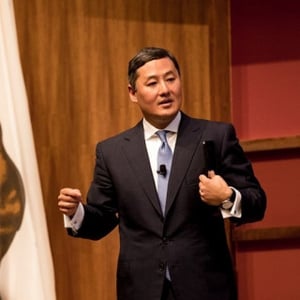
Emanuel S. Heller Professor of Law, University of California at Berkeley; Thomas Smith Senior Research Fellow, Civitas Institute, University of Texas at Austin
John Yoo is the Emanuel Heller Professor of Law at the University of California at Berkeley. He is also the Thomas Smith Senior Research Fellow, Civitas Institute, at the University of Texas at Austin. He is also a Nonresident Senior Fellow at the American Enterprise Institute.
His most recent book, The Politically Incorrect Guide to the Supreme Court, co-authored with Robert Delahunty, was published in 2023. Professor Yoo’s other books include Defender-in-Chief: Trump’s Fight for Presidential Power; Striking Power: How Cyber, Robots, and Space Weapons Change the Rules for War; Point of Attack: Preventive War, International Law, and Global Welfare; and Crisis and Command: A History of Executive Power from George Washington to George Bush.
He is a co-author of volumes 1 and 2 of R. Rossum, G. Tarr, V. Munoz & J. Yoo American Constitution Law (Routledge, 2026), and a co-editor of the eight-volume series on the 250th anniversary of the American Revolution, We Hold These Truths, with Yuval Levin and Adam White of the American Enterprise Institute.
Professor Yoo has published more than 100 articles in academic journals on subjects including national security, constitutional law, international law, and the Supreme Court. He also regularly contributes to the editorial pages of the Wall Street Journal, New York Times, Washington Post, Los Angeles Times, and National Review, among others.
Professor Yoo has served in all three branches of government. He was an official in the U.S. Department of Justice, where he worked on national security and terrorism issues after the 9/11 attacks. He served as general counsel of the U.S. Senate Judiciary Committee. He has been a law clerk for Supreme Court Justice Clarence Thomas and federal appeals Judge Laurence Silberman. He has been a visiting professor at the University of Texas at Austin’s School of Civic Leadership, Seoul National University, the Interdisciplinary Center Herzliya, Keio University, Trento University, the University of Chicago, and the Free University of Amsterdam.
Professor Yoo supervises the Public Law and Policy Program and the California Constitution Center. He also serves on the boards of Founding Forward, the Washington Legal Foundation, the Pacific Legal Foundation, the Ulysses Grant Institute, the Federalist Society’s Separation of Powers and Federalism Division, the Universidad Cientifica del Sur Law School, and the Asia-Pacific Law Institute at Seoul National University. He is a winner of the Federalist Society’s Paul Bator award and the Heritage Foundation’s Edwin Meese III Originalism Lectureship.
Professor Yoo graduated from Yale Law School and summa cum laude from Harvard College.

Dr. John Eastman is the former Henry Salvatori Professor of Law & Community Service and former Dean at Chapman University's Dale E. Fowler School of Law, where he had been a member of the faculty since 1999, specializing in Constitutional Law, Legal History, and Property. He is a founding director of the Center for Constitutional Jurisprudence, a public interest law firm affiliated with the Claremont Institute that he founded in 1999. He has a Ph.D. in Government from the Claremont Graduate School and a J.D. from the University of Chicago Law School, and a B.A. in Politics and Economics from the University of Dallas. He serves as the Chairman of the Board of the National Organization for Marriage.
Prior to joining the Chapman law faculty, Dr. Eastman served as a law clerk to the Honorable Clarence Thomas, Associate Justice, Supreme Court of the United States, and to the Honorable J. Michael Luttig, Judge, United States Court of Appeals for the Fourth Circuit and practiced law with the national law firm of Kirkland & Ellis. Dr. Eastman has also represented numerous clients in important constitutional law matters and has argued before the Supreme Court. On behalf of the Claremont Institute Center for Constitutional Jurisprudence, he has participated as amicus curiae before the Supreme Court of the United States, U.S. Courts of Appeals, and State Supreme Courts in more than one hundred cases of constitutional significance, including Boy Scouts of America v. Dale, Zelman v. Simmons-Harris (the school vouchers case), Kelo v. New London, Ct. (eminent domain), and Van Orden v. Perry (the 10 Commandments case). He has also appeared as an expert legal commentator on numerous television and radio programs, including C-SPAN, Fox News, PBS, NewsHour, and The O'Reilly Factor.
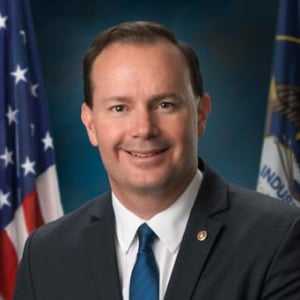
United States Senator, Utah
Elected in 2010 as Utah's 16th Senator, Mike Lee has spent his career defending the basic liberties of Americans and Utahns as a tireless advocate for our founding constitutional principles.
Senator Lee acquired a deep respect for the Constitution early on. His father, Rex Lee, who served as the Solicitor General under President Ronald Reagan, would often discuss varied aspects of judicial and constitutional doctrine around the kitchen table, from Due Process to the uses of Executive Plenary Power. He attended most of his father's arguments before the U.S. Supreme Court, giving him a unique, hands-on experience and understanding of government up close.
Lee graduated from Brigham Young University with a Bachelor of Science in Political Science, and served as BYU's Student Body President in his senior year. He graduated from BYU's Law School in 1997 and went on to serve as law clerk to Judge Dee Benson of the U.S. District Court for the District of Utah, and then with future Supreme Court Justice Judge Samuel A. Alito, Jr. on the U.S. Court of Appeals for the Third Circuit.
Lee spent several years as an attorney with the law firm Sidley & Austin specializing in appellate and Supreme Court litigation, and then served as an Assistant U.S. Attorney in Salt Lake City arguing cases before the U.S. Court of Appeals for the Tenth Circuit.
Lee served the state of Utah as Governor Jon Huntsman's General Counsel and was later honored to reunite with Justice Alito, now on the Supreme Court, for a one-year clerkship. He returned to private practice in 2007.
Throughout his career, Lee earned a reputation as an outstanding practitioner of the law based on his sound judgment, abilities in the courtroom, and thorough understanding of the Constitution.
Today, Lee fights to preserve America's proud founding document in the United States Senate. He advocates efforts to support constitutionally limited government, fiscal responsibility, individual liberty, and economic prosperity.
Lee is a member of the Judiciary Committee, and serves as Chairman of the Antitrust, Competition Policy and Consumer Rights Subcommittee protecting business competition and personal freedom.
He also oversees issues critical to Utah as the Chairman of the Water and Power Subcommittee of the Energy and Natural Resources Committee. He serves on the Commerce Committee and the Joint Economic Committee, as well.
In the 114th Congress, Lee also began his tenure as Chairman of the Senate Steering Committee, where he works with his Republican colleagues in the Senate to introduce bold and innovative solutions to issues facing the American people.
Lee and his wife Sharon live in Alpine, Utah, with their three children. He is a member of The Church of Jesus Christ of Latter-day Saints and served a two-year mission for the Church in the Texas Rio Grande Valley.
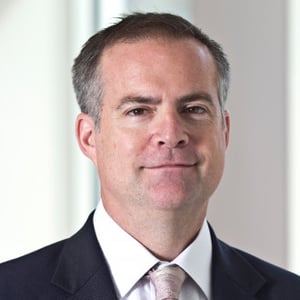
Director, Herbert A. Stiefel Center for Trade Policy Studies, Cato Institute
Dan Ikenson is director of Cato's Herbert A. Stiefel Center for Trade Policy Studies, where he coordinates and conducts research on all manner of international trade and investment policy. Since joining Cato in 2000, Ikenson has authored dozens of papers on various aspects of trade policy, focusing his research on U.S.-China trade relations; bilateral and multilateral trade agreements and institutions; globalization; U.S. manufacturing issues; trade politics; and trade remedies, such as the antidumping regime.
Ikenson has been involved in international trade since 1990. Before joining the Cato Institute in 2000, he was director of international trade planning for an international accounting and business advisory firm. In 1997 he cofounded and was a principal at an international trade consulting firm in Washington,.and from 1990 to 1997 he was a trade policy and antidumping analyst at a few international trade law practices. In addition to his many studies and articles, Ikenson is coauthor of the book Antidumping Exposed: The Devilish Details of Unfair Trade Law. He has testified before congressional committees on a variety of policy matter and has appeared on numerous television news programs and networks, including PBS, CNN, CNBC, Bloomberg TV, MSNBC, ABC News, Fox News, Fox Business News, and NPR. His articles have been published in widely circulated newspapers and magazines, including the Wall Street Journal, the Los Angeles Times, USA Today, the Chicago Tribune, the Washington Times, the Detroit News, Forbes, and National Review.
Ikenson holds a MA in economics from George Washington University.
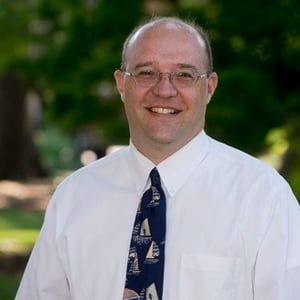
Associate Professor of History, Campbell University
Courses Taught: Western Civilization, U.S. History, Civil War, American Military Experience, and World Maritime History
Fields of Interest: Military and Maritime History; Maritime Industry Policy, and World History
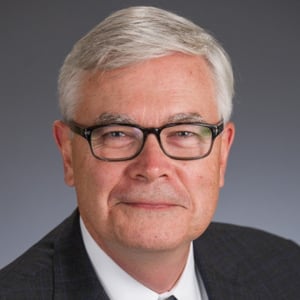
Senior Fellow, The Claremont Institute
Charles Kesler is a Senior Fellow of the Claremont Institute, Editor of the Claremont Review of Books, host of Claremont’s The American Mind video series, and the Dengler-Dykema Distinguished Professor of Government at Claremont McKenna College.
Dr. Kesler also teaches in the Claremont Institute’s Publius Fellows Program and Lincoln Fellows Program. He received his B.A. in Social Studies and his M.A. and Ph.D. in Government from Harvard University. From 1989 to 2008, Dr. Kesler was director of CMC’s Henry Salvatori Center for the Study of Individual Freedom in the Modern World.
He is the recipient of the prestigious 2018 Bradley Prize, a high honor bestowed upon distinguished individuals who have influenced American scholarship and debate.
From September 2000 to March 2001, he served as vice chairman of the Advisory Committee to the U.S. Congress's James Madison Commemoration Commission.
He was selected in June 2000 as a member of the Scholars Commission on the Jefferson-Hemings Issue sponsored by the Thomas Jefferson Heritage Society.
Dr. Kesler is the author of I Am the Change: Barack Obama and the Crisis of Liberalism (Broadside Books); the editor of Saving the Revolution: The Federalist Papers and the American Founding (Free Press); co-editor, with John B. Kienker, of Life, Liberty, and the Pursuit of Happiness: Ten Years of the Claremont Review of Books (Rowman & Littlefield); and co-editor, with William F. Buckley, Jr., of Keeping the Tablets: Modern American Conservative Thought (HarperCollins). He has written extensively on American constitutionalism and political thought, and his edition of The Federalist Papers (Signet Classics) is the best-selling edition in the country.
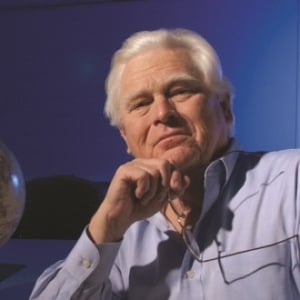
Robert and Katheryn Dockson Professor of Public Policy and Professor Emeritus, Pepperdine University School of Public Policy
Gordon Lloyd is the Robert and Katheryn Dockson Professor of Public Policy at Pepperdine University. He earned his bachelor of arts degree in economics and political science at McGill University. He completed all the course work toward a doctorate in economics at the University of Chicago before receiving his master of arts and PhD degrees in government at Claremont Graduate School. The coauthor of three books on the American founding and sole author of a book on the political economy of the New Deal, he also has numerous articles, reviews, and opinion-editorials to his credit. His latest coauthored book, The New Deal & Modern American Conservatism: A Defining Rivalry, was published in 2013, and he most recently released as editor, Debates in the Federal Convention of 1787, in September 2014. He is the creator, with the help of the Ashbrook Center, of four highly regarded websites on the origin of the Constitution. He has received many teaching, scholarly, and leadership awards including admission to Phi Beta Kappa and the Howard White Award for Teaching Excellence at Pepperdine University. He currently serves on the National Advisory Council for the Walter and Leonore Annenberg Presidential Learning Center through the Ronald Reagan Presidential Foundation.
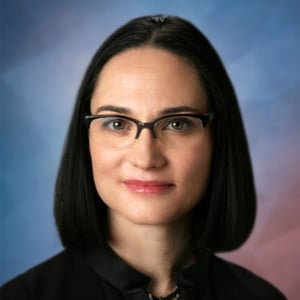
Alida graduated from Duke University with a degree in history and earned her J.D. from the Georgetown University Law Center.
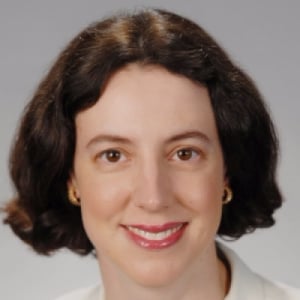
Donald Phillip Rothschild Research Professor, George Washington University Law School
Renée Lettow Lerner is Donald Phillip Rothschild Research Professor of Law at George Washington University Law School.
Professor Lerner works in the fields of U.S. and English legal history, civil and criminal procedure, and comparative law. She advises judges, lawyers, and government officials from the United States and countries in Europe, Latin America, and Asia about the differences between adversarial and nonadversarial legal systems.
She writes extensively about the history of American juries. Her work includes not only scholarly articles, but also online publications intended for a broader audience of legal professionals and the public. In many different settings, she has debated the role of juries with other academics and with lawyers. She has a book forthcoming with Oxford University Press in the Very Short Introduction Series entitled “The Jury.” She is also working on a book about the American civil jury, from the colonial period to the present.
She is the author, with John Langbein and Bruce Smith, of the book History of the Common Law: The Development of Anglo-American Legal Institutions (2009).
Her recent writings include a book review of Amalia D. Kessler’s Inventing American Exceptionalism: The Origins of American Adversarial Legal Culture, 1800-1877, 67 J. Legal Ed. 888 (2018); “How the Creation of Appellate Courts in England and the United States Limited Judicial Comment on Evidence to the Jury,” 40 Journal of the Legal Profession 215 (2016); “The Troublesome Inheritance of Americans in Magna Carta and Trial by Jury,” in Magna Carta and its Modern Legacy 77-98 (Robert Hazell and James Melton eds., Cambridge University Press 2015); and “The Failure of Originalism in Preserving Constitutional Rights to Civil Jury Trial,” 22 William & Mary Bill of Rights Journal 811 (2014).
Professor Lerner received an A.B. summa cum laude in history from Princeton University. She was a Rhodes Scholar at Oxford University, where she studied English legal history. At Yale Law School, she was Articles Editor of the Yale Law Journal. She served as a law clerk to Justice Anthony M. Kennedy of the U.S. Supreme Court and to Judge Stephen F. Williams of the U.S. Court of Appeals for the District of Columbia Circuit. From 2003 to 2005, she served as Deputy Assistant Attorney General in the Office of Legal Counsel at the U.S. Department of Justice.
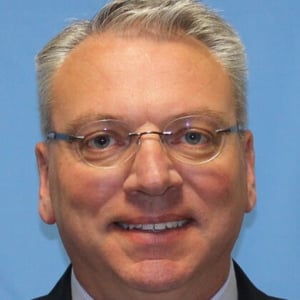
Judge, United States Court of Appeals, Third Circuit
David J. Porter is a judge on the United States Court of Appeals for the Third Circuit. He was nominated by President Donald Trump and confirmed on October 11, 2018. Before his appointment, he was a shareholder at Buchanan Ingersoll & Rooney PC, where he practiced commercial and civil litigation. Porter received his bachelor’s degree from Grove City College and his J.D. from the George Mason University School of Law. He clerked for Judge D. Brooks Smith on the United States District Court for the Western District of Pennsylvania.
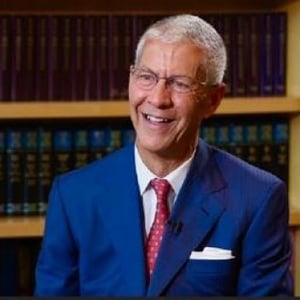
Irving Segal Distinguished Adjunct Professor of Law, University of Pennsylvania Law School
Shanin Specter is a preeminent American trial lawyer. He is a founding partner of Kline & Specter, one of the leading catastrophic injury firms in the United States.
Specter has obtained more than 200 jury verdicts and settlements in excess of $1 million and more than 50 case resolutions greater than $10 million, including jury verdicts of $153 million against a major automaker and $109 million against a Pennsylvania power company. In all, he has achieved 16 eight- or nine-figure verdicts, among them news-making cases involving medical malpractice, defective products, medical devices, premises liability, auto accidents and general negligence.
Beyond winning substantial monetary compensation for his clients, many of Specter's cases have prompted changes that provide a societal benefit, including improvements to vehicle safety, nursing and hospital procedures, the safe operation of police cars, training for the use of CPR at public institutions, and inspections, installation and maintenance of utility power lines. One case spurred the Pennsylvania Public Utility Commission to create a new Electric Safety Division to investigate reported electrical injuries. Most recently, Specter’s lawsuit on behalf of the victims of a fire escape collapse helped move the City of Philadelphia in 2016 to enact an ordinance requiring all fire escapes to be regularly inspected.
Specter earned his undergraduate degree with honors from Haverford College, his law degree from the University of Pennsylvania and an LL.M. with First Honors from Cambridge University.
Since 2000, Specter has served as an Adjunct Professor of Law at the University of Pennsylvania Law School. Since 2015, Specter has also taught at UC Hastings College of Law, UC Berkeley School of Law and Stanford Law School.
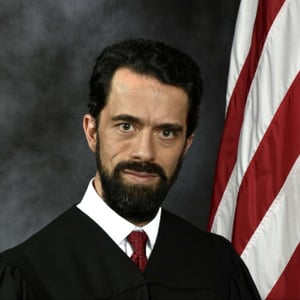
Judge, United States Court of Appeals, Third Circuit
Stephanos Bibas is a judge on the U.S. Court of Appeals for the Third Circuit. Judge Bibas was previously a professor of law and criminology at the University of Pennsylvania Law School. As director of the Penn Law Supreme Court Clinic, he argued six cases before the Supreme Court of the United States and filed briefs in dozens of others. He graduated summa cum laude and Phi Beta Kappa from Columbia University in 1989 with a B.A. in political theory and from Oxford University in 1991 with a B.A. in jurisprudence. He then earned his J.D. from Yale Law School in 1994.
After graduating from Yale Law, Judge Bibas clerked for Judge Patrick Higginbotham of the U.S. Court of Appeals for the Fifth Circuit and Justice Anthony Kennedy on the Supreme Court and was a litigation associate at Covington & Burling LLP in Washington, D.C. Thereafter, Judge Bibas served as an Assistant U.S. Attorney in the Southern District of New York, where he successfully prosecuted the world’s leading expert in Tiffany stained glass for hiring a grave robber to steal priceless Tiffany windows from cemeteries. Before his tenure at Penn Law, Judge Bibas taught at the University of Chicago Law School and the University of Iowa College of Law and was a research fellow at Yale Law School. He has published two books and seventy scholarly articles.
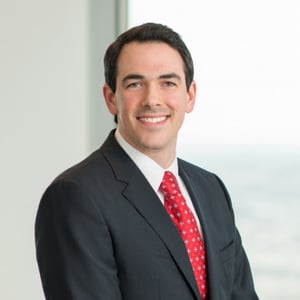
Assistant Unit Head, Defensive Litigation Unit, Delaware Department of Justice
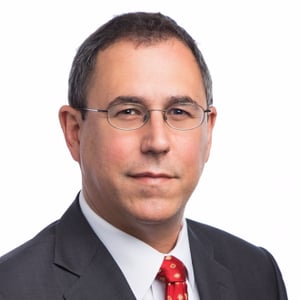
Executive Director, Open Markets Institute
Barry Lynn directs the Open Markets Institute. Previously, he spent 15 years at the New America Foundation researching and writing about monopoly power. He is author of Cornered: The New Monopoly Capitalism and the Economics of Destruction (Wiley 2010) and End of the Line: The Rise and Coming Fall of the Global Corporation (Doubleday 2005).
Lynn's writings on the political and economic effects of the extreme consolidation of power in the United States have influenced the thinking of policymakers and antitrust professionals on both sides of the Atlantic. His work has been profiled on CBS and in the New York Times, and his articles have appeared in publications including Harper's, the Financial Times, Harvard Business Review, and Foreign Policy. He has appeared on CBS, PBS, CNN, the BBC, NPR, MSNBC, C-Span, and the Christian Broadcasting Network, among others. Prior to joining New America, Lynn was executive editor of Global Business Magazine for seven years, and worked as a correspondent in Peru, Venezuela, and the Caribbean for the Associated Press and Agence France Presse.
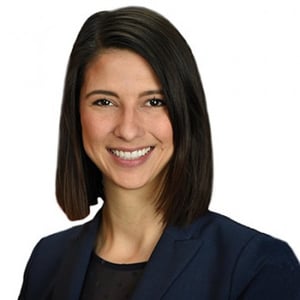
Partner, Baker Botts L.L.P.
Taylor Owings is a partner in the Antitrust and Competition Practice Group of Baker Botts L.L.P. She represents clients in civil merger and non-merger matters both in front of government agencies and in private litigation. She also counsels clients on the application of antitrust law to their business activities, with special experience in issues related to the digital economy.
Prior to joining the firm, Ms. Owings served as Senior Counsel and Chief of Staff in the Antitrust Division of the U.S. Department of Justice from 2018 to 2021. In that role, Ms. Owings was a key advisor to the Assistant Attorney General on the application of antitrust law to technology industries, including in the Department of Justice’s review of the business practices of market-leading online platforms and in the application of antitrust law to the exercise of intellectual property rights and standard setting organizations. As Chief of Staff of the Antitrust Division, Ms. Owings was responsible for ensuring the high quality of all public advocacy issued by the Division, including court filings, policy statements, and speeches.
Ms. Owings has experience crafting both trial and appellate strategy in headline-making antitrust litigations. She has argued in the First and Fourth Circuits. Earlier in her career, she clerked for the Honorable Douglas H. Ginsburg on the U.S. Court of Appeals for the D.C. Circuit, and for the Honorable Richard J. Leon on the U.S. District Court for the District of Columbia.
Ms. Owings handles all aspects of merger review. She draws on her first-hand experience investigating and reviewing mergers at the Antitrust Division to advise clients and to represent them in front of the agencies. She has special experience in merger matters with complex legal questions, for instance vertical mergers, the acquisition of a nascent or potential competitor, and the implications of a merger on innovation and data accumulation.
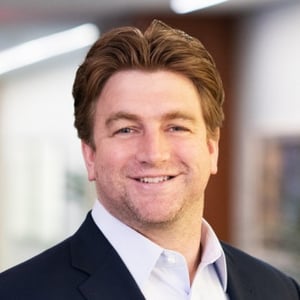
Founding Partner, Lodestar Law and Economics PLLC
Josh is the founder of Lodestar Law and Economics, PLLC. On January 1, 2013, the U.S. Senate unanimously confirmed Wright as a Commissioner of the Federal Trade Commission (FTC). He is a leading scholar in antitrust law, economics, intellectual property, regulation, and consumer protection, and has published more than 100 articles and book chapters, co-authored a leading antitrust casebook, and edited several book volumes focusing on these issues. Commentators have recognized Wright as “widely considered his generation’s greatest mind on antitrust law,” and his academic work ranks him as one of the most cited antitrust academics in the world. Wright was also awarded the Paul M. Bator Award by the Federalist Society in 2014 to “an academic who demonstrated excellence in legal scholarship, a commitment to teaching, a concern for students, and who has made a significant public impact.” Wright also served as the Executive Director of the Global Antitrust Institute, the world’s premiere academic institute focused upon antitrust education for judges and regulators and has taught hundreds of judges and thousands of regulators from dozens of countries.
Wright’s practice focuses upon helping clients solve complex competition, consumer protection, and regulatory problems by providing legal and economic analysis, strategic advice and counseling, and economic expert testimony.

Opening Remarks with Governor Ron DeSantis
Ron DeSantis, Leonard A. Leo
2019 National Lawyers Convention
On November 14, 2019, The Federalist Society opened its 2019 National Lawyers Convention at the...
The Grand Jury: A Bulwark Against the State? [POLICYbrief]
Bennett L. Gershman, Joel Cohen
Short video featuring Joel Cohen and Bennett Gershman
The grand jury has been called a sword and shield for the people, but is...
New York State Rifle & Pistol Association, Inc. v. City of New York, New York [SCOTUSbrief]
Josh Blackman
Short video featuring Josh Blackman
For the first time in nearly a decade, the Supreme Court is taking another look...
Is Social Justice Just? The Justice of Economic Opportunity [POLICYbrief]
Steven A. Ramirez
Short video featuring Steven Ramirez
Is there an economic cost to injustice? Does economic opportunity contribute to social justice? In...
Does the Fourteenth Amendment Guarantee Birthright Citizenship? [POLICYbrief]
John C. Yoo, John C. Eastman
Short video featuring John Yoo and John Eastman
What does the text of the Constitution say about United States citizenship? Does the Fourteenth...
A Conversation with Senator Mike Lee
Mike S. Lee
George Washington Student Chapter
On October 28, 2019, the George Washington Student Chapter presented A Conversation with Senator Mike...
Is It Time to Repeal the Jones Act? [POLICYbrief]
Daniel J. Ikenson, Sal Mercogliano
Short video featuring Daniel J. Ikenson and Salvatore Mercogliano
The Merchant Marine Act of 1920, also known as the Jones Act, has governed the...
Brutus v. Publius: The Fight Over the Judiciary
Charles R. Kesler, Gordon Lloyd
Documentary short featuring Charles Kesler and Gordon Lloyd
Before the United States Constitution was ratified, the Founding Fathers famously debated the merits and...
Panel Three: The Civil Jury: Constitutional Liberty or Unhealthy Romance?
Alida Kass, Renée Lettow Lerner, David James Porter, Shanin Specter
Third Circuit Chapters Conference
On October 24, 2019, The Federalist Society held its annual Third Circuit Chapters Conference. This...
Panel Two: Regulation of Big Tech
Stephanos Bibas, Ryan Costa, Barry C. Lynn, Taylor Owings, Joshua D. Wright
Third Circuit Chapters Conference
On October 24, 2019, The Federalist Society held its annual Third Circuit Chapters Conference. This...