
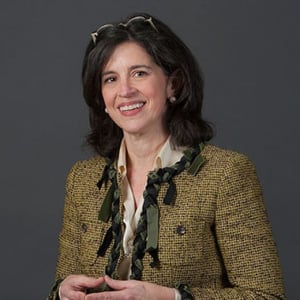
Professor of Law, Antonin Scalia Law School, George Mason University
Helen Alvaré is a Professor of Law at Antonin Scalia Law School, George Mason University, where she teaches Family Law, Law and Religion, and Property Law. She publishes on matters concerning marriage, parenting, non-marital households, and the First Amendment religion clauses. She is faculty advisor to the law school’s Civil Rights Law Journal, and the Latino/a Law Student Association, a Member of the Holy See’s Dicastery for Laity, Family and Life (Vatican City), a board member of Catholic Relief Services, a member of the Executive Committee of the AALS’ Section on Law and Religion, and an ABC news consultant. She cooperates with the Permanent Observer Mission of the Holy See to the United Nations as a speaker and a delegate to various United Nations conferences concerning women and the family.
In addition to her books, and her publications in law reviews and other academic journals, Professor Alvaré publishes regularly in news outlets including the New York Times, the Washington Post, the Huffington Post, and CNN.com. She also speaks at academic and professional conferences in the United States, Europe, Latin America and Australia.
Prior to joining the faculty of Scalia Law, Professor Alvaré taught at the Columbus School of Law at the Catholic University of America; represented the U.S. Conference of Catholic Bishops before legislative bodies, academic audiences and the media; and was a litigation attorney for the Philadelphia law firm of Stradley, Ronon, Stevens & Young.
Professor Alvaré received her law degree from Cornell University School of Law and her master’s degree in Systematic Theology from the Catholic University of America.
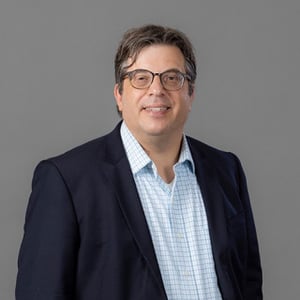
University Professor of Law and Executive Director, Liberty & Law Center, Antonin Scalia Law School, George Mason University
David Bernstein holds a University Professorship chair at the Antonin Scalia Law School, where he has been teaching since 1995. He has also been a visiting professor at the University of Michigan, Georgetown University, William & Mary, Brooklyn Law School, the University of Turin, and Hebrew University. Professor Bernstein teaches Constitutional Law, Evidence, and Products Liability.
A prolific author, Professor Bernstein often challenges the conventional wisdom with prodigious research and sharp, original analysis. He is the author of five books, and coauthor of two more. Professor Bernstein’s book Rehabilitating Lochner was praised across the political spectrum as “intellectual history in its highest form,” a “fresh perspective and a cogent analysis,” “delightful and informative,” “sharp and iconoclastic,” and “a terrific work of historical revisionism.” Columnist George Will praised Bernstein’s most recent book, Classified, The Untold Story of Racial Classification in America, as “perhaps the most consequential American book of 2022.”
Professor Bernstein has also written dozens of articles and essays published in major law reviews, including the California Law Review, Columbia Law Review, Michigan Law Review, and Yale Law Journal. An article he coauthored, Defending Daubert: It’s Time to Amend Federal Rule of Evidence 702, directly inspired a pending amendment to Rule 702.
Professor Bernstein blogs at the Instapundit.com, the Times of Israel, and the Volokh Conspiracy. He is a graduate of the Yale Law School, where he was senior editor of the Yale Law Journal and a John M. Olin Fellow in Law, Economics, and Public Policy.
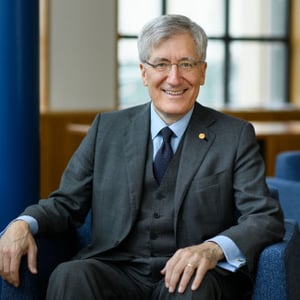
McCormick Professor of Jurisprudence; Director, James Madison Program, Princeton University
Robert P. George is McCormick Professor of Jurisprudence and Director of the James Madison Program in American Ideals and Institutions at Princeton University. He has several times been a Visiting Professor at Harvard Law School. He has served as Chairman of the U.S. Commission on International Religious Freedom and on the U.S. Commission on Civil Rights and the President’s Council on Bioethics. He has also served as the U.S. member of UNESCO’s World Commission on the Ethics of Scientific Knowledge and Technology. He was a Judicial Fellow at the Supreme Court of the United States, where he received the Justice Tom C. Clark Award. A Phi Beta Kappa graduate of Swarthmore, he holds the degrees of J.D. and M.T.S. from Harvard University and the degrees of D.Phil., B.C.L., D.C.L., and D.Litt. from Oxford University, in addition to twenty-one honorary doctorates. He is a recipient of the U.S. Presidential Citizens Medal, the Honorific Medal for the Defense of Human Rights of the Republic of Poland, the Canterbury Medal of the Becket Fund for Religious Liberty, the Bradley Prize, the Irving Kristol Award of the American Enterprise Institute, and Princeton University’s President’s Award for Distinguished Teaching. His books include Making Men Moral: Civil Liberties and Public Morality and In Defense of Natural Law (both published by Oxford University Press), as well as The Clash of Orthodoxies and Conscience and Its Enemies (both published by ISI Books).
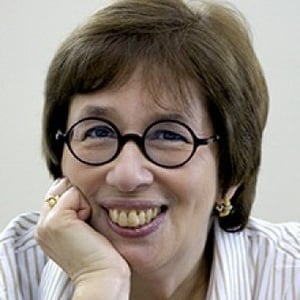
Senior Research Scholar in Law, Yale Law School
Linda Greenhouse is Senior Research Scholar in Law at Yale Law School. She covered the Supreme Court for The New York Times between 1978 and 2008 and writes a biweekly op-ed column on law as a contributing columnist. Ms. Greenhouse received several major journalism awards during her 40-year career at the Times, including the Pulitzer Prize (1998) and the Goldsmith Career Award for Excellence in Journalism from Harvard University’s Kennedy School (2004). In 2002, the American Political Science Association gave her its Carey McWilliams Award for “a major journalistic contribution to our understanding of politics.” Her books include a biography of Justice Harry A. Blackmun, Becoming Justice Blackmun; Before Roe v. Wade: Voices That Shaped the Abortion Debate Before the Supreme Court's Ruling (with Reva B. Siegel); The U.S. Supreme Court, A Very Short Introduction, published by Oxford University Press in 2012; and The Burger Court and the Rise of the Judicial Right, with Michael J. Graetz, published in 2016. Her latest book is Just a Journalist: Reflections on the Press, Life, and the Spaces Between, published by Harvard University Press in 2017. In her extracurricular life, Ms. Greenhouse is president of the American Philosophical Society, the country's oldest learned society, which in 2005 awarded her its Henry Allen Moe Prize for writing in jurisprudence and the humanities. She also serves on the council of the American Academy of Arts and Sciences, the national Senate of Phi Beta Kappa, and is one of two non-lawyer honorary members elected to the American Law Institute, which in 2002 awarded her its Henry J. Friendly Medal. She has been awarded thirteen honorary degrees. She is a 1968 graduate of Radcliffe College (Harvard) and earned a Master of Studies in Law degree from Yale Law School (1978), which she attended on a Ford Foundation fellowship. She is married to Eugene R. Fidell, Florence Rogatz Lecturer in Law at Yale. Their daughter, Hannah, is a filmmaker in Los Angeles.
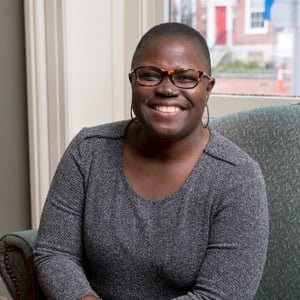
Co-Dean and Professor of Law, Rutgers Law School in Camden
Kimberly Mutcherson is Co-Dean and Professor of Law at Rutgers Law School in Camden. Her scholarly work is at the intersection of family law, health law, and bioethics. She writes on issues related to reproductive justice, with a focus on assisted reproduction, abortion, and maternal-fetal decision-making.
Professor Mutcherson teaches Family Law, Torts, South African Constitutional Law, and Bioethics, Babies, & Babymaking. She has served as a Senior Fellow/Sabbatical Visitor at the Center for Gender and Sexuality Law at Columbia Law School, a Visiting Scholar at the Center for Bioethics at the University of Pennsylvania, and as a fellow at the Institute for Research on Women at Rutgers University. She won a Center for Reproductive Rights Innovation in Scholarship Award in 2013 and a Chancellor’s Teaching Excellence Award in 2011.
She received her B.A. in history from the University of Pennsylvania and her J.D. from Columbia Law School where she was a Stone Scholar. At Columbia, she received the Samuel I. Rosenman Prize for excellence in public law courses and outstanding qualities of citizenship and leadership in the law school. She also received the Kirkland and Ellis Fellowship for post-graduate public interest work. Prior to joining the faculty at Rutgers School of Law in 2002, Professor Mutcherson was an Acting Assistant Professor of Lawyering at the New York University School of Law, a consulting attorney at the Center for Reproductive Law and Policy (now the Center for Reproductive Rights), and a Staff Attorney at the HIV Law Project.
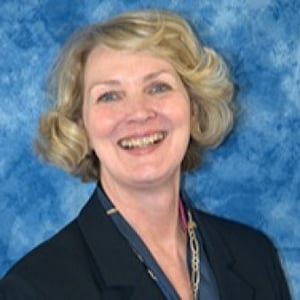
Professor and Director, Prolife Center, University of St. Thomas School of Law
Teresa Collett, J.D., is professor at the University of St. Thomas School of Law, where she serves as director of the school's Prolife Center. Collett received her doctorate at the University of Oklahoma College of Law. As a well-known advocate for the protection of human life and the family, Collett specializes in the subjects of marriage, religion and bioethics in her research.
Collett has published numerous legal articles and is the co-author of a law casebook on professional responsibility and co-editor of a collection of essays exploring “catholic” and “Catholic” perspectives on American law. She is an elected member of the American Law Institute, and has testified before committees of the U.S. Senate and House of Representatives, as well as before legislative committees in several states.
In 2009, Pope Benedict XVI appointed Collett to a five-year term on the Pontifical Council for the Family. Her appointment was renewed by His Holiness Pope Francis until 2016 when the responsibilities of the Council were assumed by the Dicastery for the Laity, Family and Life. In 2013, she served as a delegate to the International Conference on Population and Development (ICPD) for the Mission of the Holy See to the United Nations.
She represented Congressman Ron Paul and various medical groups in the defense of the U.S. federal ban of partial-birth abortion, and the governors of Minnesota and North Dakota defending the N.H. requirement of state parental involvement prior to performance of an abortion on a minor before the U.S. Supreme Court. Collett is often asked to represent the interests of government officials before federal appellate courts. She has served as special attorney general for the states of Oklahoma and Kansas, as well as assisting other state attorneys general in defending laws protecting human life and marriage. Prior to joining St. Thomas in 2003, Collett taught at the South Texas College of Law, where she established the nation's first annual symposium on legal ethics.
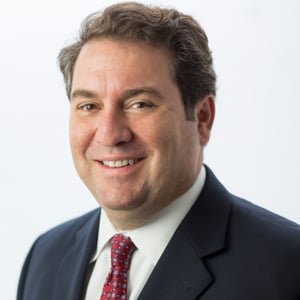
Former Attorney General, State of Arizona
Mark Brnovich served as Arizona's 26th Attorney General from 2015 to 2023. He was first inaugurated in 2015, and again in 2019 after winning re-election. Mark has spent most of his professional life serving as a prosecutor at the local, state, and federal levels. Mark met his wife Susan while they both worked as prosecutors for the Maricopa County Attorney's office. Mark worked in the Gang/Repeat Offender Unit and prosecuted many difficult and high profile cases from 1992 to 1998. He then went on to work as an Assistant Attorney General with the Arizona Attorney General's Office from 1998 to 2003, where he developed an expertise in gambling law. Brnovich later went on to serve as an Assistant United States Attorney for the District of Arizona where he prosecuted public integrity crimes, as well as crimes occurring in Indian Country.
Brnovich has also been a Judge Pro Tem of Maricopa County Superior Court, a Command Staff Judge Advocate in the U.S. Army National Guard, the Director for Constitutional Government at the Goldwater Institute, and the Director of the Arizona Department of Gaming, a law enforcement agency that investigates illegal gambling activity, as well as working with tribal regulators to ensure the integrity of tribal gaming.
Brnovich is known for restoring public confidence in the office of "Arizona's Top Cop" and for assembling some of the nation's most talented public servants for his administration. Mark argued at the United States Supreme Court in defense of the "one-person, one-vote" principle, was featured on 60 Minutes in defense of capital punishment, and has initiated national public education efforts to combat human sex trafficking.
Brnovich has been recognized by the National Federation of Independent Business as a "Champion of Small Business." and was elected by his bi-partisan colleagues to serve as the Chairman of the Conference of Western Attorneys General.
Mark's wife Susan was recently appointed by the United States Senate to serve as a U.S. District Judge for the District of Arizona. He has two teenage daughters and lives in Phoenix.
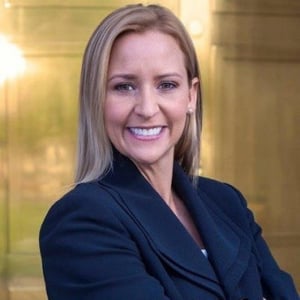
Attorney General, State of Arkansas
Leslie Carol Rutledge is the 56th Attorney General of Arkansas. She was sworn into office in 2015 and is the first woman and first Republican in Arkansas history to be elected to the office. She was re-elected to a second term in 2018.
An Arkansas lawyer who has spent her entire career in public service, Rutledge is a former prosecutor, and her law practice focused on administrative law, state and local government and election law.
A seventh generation Arkansan, Rutledge grew up on a cattle farm and attended school at the Southside School District in Independence County. From her mother, an elementary school teacher, and her father, a lawyer and a judge, Rutledge learned the importance of hard work and service.
She graduated from the University of Arkansas and the University of Arkansas at Little Rock William H. Bowen School of Law. Rutledge is admitted to practice law in Arkansas, Washington D.C. and before the U.S. Supreme Court.
Rutledge began work in the Arkansas Court of Appeals clerking for Judge Josephine Hart, now Associate Justice on the Arkansas Supreme Court. Rutledge served as Deputy Counsel in the Office of Governor Mike Huckabee advising state agencies including: Oil and Gas Commission, Public Service Commission, Insurance Department, Real Estate Commission, Bank Department, and dozens of smaller state agencies and departments. She served as Deputy Prosecuting Attorney in Lonoke County handling felony cases and as Attorney for Arkansas's Division of Children and Family Services advocating for the best interest of our most vulnerable.
During her time in Washington, D.C., Rutledge was Deputy Counsel for the Mike Huckabee for President campaign, Deputy Counsel at the National Republican Congressional Committee and Counsel for the Republican National Committee including the 2012 Presidential campaign.
Her service has extended to community organizations including the Junior League, Alpha Delta Pi Alumni, National Rifle Association and Women in Networking in Central Arkansas. Rutledge is a member of the Arkansas Bar Association, UALR Bowen School of Law Alumni Board, Federalist Society and Republican National Lawyers Association.
Attorney General Rutledge believes face-to-face conversations lead to real solutions. To make the office more accessible, she hosts Mobile Offices in all 75 counties.
Her priorities have included educating Arkansans on consumer protection, internet safety and dating violence; leading efforts to combat the opioid epidemic; supporting military and veteran families; and making the office a top law firm in the state.
She also created Metal Theft Prevention and Cooperative Disability Investigations programs to stop fraud.
Rutledge leads multi-state issues to include serving on the Republican Attorneys General Association Executive Committee, as Chair of the National Association of Attorneys General Southern Region, and as Co-chair of the National Association of Attorneys General Committee on Agriculture.
Rutledge and her husband, Boyce, have one daughter. The family has a home in Pulaski County and a farm in Crittenden County.

Partner, Ballard Partners
Pam Bondi, elected twice to serve as Florida’s Attorney General from 2011 – 2019, chairs the firm’s Corporate Regulatory Compliance practice. This national practice area focuses on serving Fortune 500 companies to implement best practices that proactively address public policy challenges such as human trafficking, opioid abuse and personal data privacy. As chair of the Corporate Regulatory Compliance practice, Pam works with clients to design and implement publicly conscious initiatives that will elevate their corporate responsibility reputation as well as address their critical regulatory challenges.
Bondi was one of Florida’s most accomplished Attorneys General and earned a reputation among her colleagues as one of the toughest law enforcement officials in the country. During her tenure as Attorney General of Florida, Bondi undertook dozens of major state and national initiatives, including filing the most comprehensive state litigation regarding the national opioid crisis. She played a leading role in achieving the National Mortgage Settlement that ultimately resulted in $56 billion in total relief nationally. In a tremendous victory for Florida, Bondi sued BP and other responsible parties in the Deepwater Horizon Oil Spill case and settled for more than $2 billion in economic relief for Florida alone.
Since 2011, Bondi worked aggressively to shut down pill mills, combat opioid abuse, ban synthetic drugs, end human trafficking, test previously unprocessed sexual assault kits, develop a school safety app to prevent school shootings, recover more than $1 billion in consumer protection, antitrust, and false claims matters (not counting the National Mortgage Settlement and BP), obtain more than $870 million in settlements and judgments through the Medicaid Fraud Control Unit, supervise the prosecution of hundreds of multi-judicial circuit criminal cases, defend Florida’s laws and constitution, and guard against federal overreach.
She has served on numerous boards, including: President’s Commission on Combatting Drug Addiction and the Opioid Crisis; Chair, Florida Statewide Council on Human Trafficking; Co-chair of the Substance Abuse Committee for the National Association of Attorneys General; and the Florida Constitutional Revision Commission.
Pam has also received numerous awards and accolades, including: the 2017 U.S. Department of Health and Human Services Award for Excellence in Fighting Fraud, Waste, and Abuse; the
2018 Florida Prosecuting Attorneys Association Furtherance of Justice Award; 2018 Drug Free America Lifetime Achievement Award; 2013 Independent Colleges and Universities of Florida Champion of Independent Education in Florida; and the 2012 National Association of Attorneys General President’s Award.
Bondi is a fourth-generation Floridian who spent more than 18 years as a prosecutor, trying cases ranging from domestic violence to capital murder. With her successful first-time run for office in 2010, Bondi became the first female Attorney General in Florida’s history.
Professor of Law, Antonin Scalia Law School, George Mason University
Helen Alvaré is a Professor of Law at Antonin Scalia Law School, George Mason University, where she teaches Family Law, Law and Religion, and Property Law. She publishes on matters concerning marriage, parenting, non-marital households, and the First Amendment religion clauses. She is faculty advisor to the law school’s Civil Rights Law Journal, and the Latino/a Law Student Association, a Member of the Holy See’s Dicastery for Laity, Family and Life (Vatican City), a board member of Catholic Relief Services, a member of the Executive Committee of the AALS’ Section on Law and Religion, and an ABC news consultant. She cooperates with the Permanent Observer Mission of the Holy See to the United Nations as a speaker and a delegate to various United Nations conferences concerning women and the family.
In addition to her books, and her publications in law reviews and other academic journals, Professor Alvaré publishes regularly in news outlets including the New York Times, the Washington Post, the Huffington Post, and CNN.com. She also speaks at academic and professional conferences in the United States, Europe, Latin America and Australia.
Prior to joining the faculty of Scalia Law, Professor Alvaré taught at the Columbus School of Law at the Catholic University of America; represented the U.S. Conference of Catholic Bishops before legislative bodies, academic audiences and the media; and was a litigation attorney for the Philadelphia law firm of Stradley, Ronon, Stevens & Young.
Professor Alvaré received her law degree from Cornell University School of Law and her master’s degree in Systematic Theology from the Catholic University of America.
University Professor of Law and Executive Director, Liberty & Law Center, Antonin Scalia Law School, George Mason University
David Bernstein holds a University Professorship chair at the Antonin Scalia Law School, where he has been teaching since 1995. He has also been a visiting professor at the University of Michigan, Georgetown University, William & Mary, Brooklyn Law School, the University of Turin, and Hebrew University. Professor Bernstein teaches Constitutional Law, Evidence, and Products Liability.
A prolific author, Professor Bernstein often challenges the conventional wisdom with prodigious research and sharp, original analysis. He is the author of five books, and coauthor of two more. Professor Bernstein’s book Rehabilitating Lochner was praised across the political spectrum as “intellectual history in its highest form,” a “fresh perspective and a cogent analysis,” “delightful and informative,” “sharp and iconoclastic,” and “a terrific work of historical revisionism.” Columnist George Will praised Bernstein’s most recent book, Classified, The Untold Story of Racial Classification in America, as “perhaps the most consequential American book of 2022.”
Professor Bernstein has also written dozens of articles and essays published in major law reviews, including the California Law Review, Columbia Law Review, Michigan Law Review, and Yale Law Journal. An article he coauthored, Defending Daubert: It’s Time to Amend Federal Rule of Evidence 702, directly inspired a pending amendment to Rule 702.
Professor Bernstein blogs at the Instapundit.com, the Times of Israel, and the Volokh Conspiracy. He is a graduate of the Yale Law School, where he was senior editor of the Yale Law Journal and a John M. Olin Fellow in Law, Economics, and Public Policy.
McCormick Professor of Jurisprudence; Director, James Madison Program, Princeton University
Robert P. George is McCormick Professor of Jurisprudence and Director of the James Madison Program in American Ideals and Institutions at Princeton University. He has several times been a Visiting Professor at Harvard Law School. He has served as Chairman of the U.S. Commission on International Religious Freedom and on the U.S. Commission on Civil Rights and the President’s Council on Bioethics. He has also served as the U.S. member of UNESCO’s World Commission on the Ethics of Scientific Knowledge and Technology. He was a Judicial Fellow at the Supreme Court of the United States, where he received the Justice Tom C. Clark Award. A Phi Beta Kappa graduate of Swarthmore, he holds the degrees of J.D. and M.T.S. from Harvard University and the degrees of D.Phil., B.C.L., D.C.L., and D.Litt. from Oxford University, in addition to twenty-one honorary doctorates. He is a recipient of the U.S. Presidential Citizens Medal, the Honorific Medal for the Defense of Human Rights of the Republic of Poland, the Canterbury Medal of the Becket Fund for Religious Liberty, the Bradley Prize, the Irving Kristol Award of the American Enterprise Institute, and Princeton University’s President’s Award for Distinguished Teaching. His books include Making Men Moral: Civil Liberties and Public Morality and In Defense of Natural Law (both published by Oxford University Press), as well as The Clash of Orthodoxies and Conscience and Its Enemies (both published by ISI Books).
Senior Research Scholar in Law, Yale Law School
Linda Greenhouse is Senior Research Scholar in Law at Yale Law School. She covered the Supreme Court for The New York Times between 1978 and 2008 and writes a biweekly op-ed column on law as a contributing columnist. Ms. Greenhouse received several major journalism awards during her 40-year career at the Times, including the Pulitzer Prize (1998) and the Goldsmith Career Award for Excellence in Journalism from Harvard University’s Kennedy School (2004). In 2002, the American Political Science Association gave her its Carey McWilliams Award for “a major journalistic contribution to our understanding of politics.” Her books include a biography of Justice Harry A. Blackmun, Becoming Justice Blackmun; Before Roe v. Wade: Voices That Shaped the Abortion Debate Before the Supreme Court's Ruling (with Reva B. Siegel); The U.S. Supreme Court, A Very Short Introduction, published by Oxford University Press in 2012; and The Burger Court and the Rise of the Judicial Right, with Michael J. Graetz, published in 2016. Her latest book is Just a Journalist: Reflections on the Press, Life, and the Spaces Between, published by Harvard University Press in 2017. In her extracurricular life, Ms. Greenhouse is president of the American Philosophical Society, the country's oldest learned society, which in 2005 awarded her its Henry Allen Moe Prize for writing in jurisprudence and the humanities. She also serves on the council of the American Academy of Arts and Sciences, the national Senate of Phi Beta Kappa, and is one of two non-lawyer honorary members elected to the American Law Institute, which in 2002 awarded her its Henry J. Friendly Medal. She has been awarded thirteen honorary degrees. She is a 1968 graduate of Radcliffe College (Harvard) and earned a Master of Studies in Law degree from Yale Law School (1978), which she attended on a Ford Foundation fellowship. She is married to Eugene R. Fidell, Florence Rogatz Lecturer in Law at Yale. Their daughter, Hannah, is a filmmaker in Los Angeles.
Co-Dean and Professor of Law, Rutgers Law School in Camden
Kimberly Mutcherson is Co-Dean and Professor of Law at Rutgers Law School in Camden. Her scholarly work is at the intersection of family law, health law, and bioethics. She writes on issues related to reproductive justice, with a focus on assisted reproduction, abortion, and maternal-fetal decision-making.
Professor Mutcherson teaches Family Law, Torts, South African Constitutional Law, and Bioethics, Babies, & Babymaking. She has served as a Senior Fellow/Sabbatical Visitor at the Center for Gender and Sexuality Law at Columbia Law School, a Visiting Scholar at the Center for Bioethics at the University of Pennsylvania, and as a fellow at the Institute for Research on Women at Rutgers University. She won a Center for Reproductive Rights Innovation in Scholarship Award in 2013 and a Chancellor’s Teaching Excellence Award in 2011.
She received her B.A. in history from the University of Pennsylvania and her J.D. from Columbia Law School where she was a Stone Scholar. At Columbia, she received the Samuel I. Rosenman Prize for excellence in public law courses and outstanding qualities of citizenship and leadership in the law school. She also received the Kirkland and Ellis Fellowship for post-graduate public interest work. Prior to joining the faculty at Rutgers School of Law in 2002, Professor Mutcherson was an Acting Assistant Professor of Lawyering at the New York University School of Law, a consulting attorney at the Center for Reproductive Law and Policy (now the Center for Reproductive Rights), and a Staff Attorney at the HIV Law Project.
Professor and Director, Prolife Center, University of St. Thomas School of Law
Teresa Collett, J.D., is professor at the University of St. Thomas School of Law, where she serves as director of the school's Prolife Center. Collett received her doctorate at the University of Oklahoma College of Law. As a well-known advocate for the protection of human life and the family, Collett specializes in the subjects of marriage, religion and bioethics in her research.
Collett has published numerous legal articles and is the co-author of a law casebook on professional responsibility and co-editor of a collection of essays exploring “catholic” and “Catholic” perspectives on American law. She is an elected member of the American Law Institute, and has testified before committees of the U.S. Senate and House of Representatives, as well as before legislative committees in several states.
In 2009, Pope Benedict XVI appointed Collett to a five-year term on the Pontifical Council for the Family. Her appointment was renewed by His Holiness Pope Francis until 2016 when the responsibilities of the Council were assumed by the Dicastery for the Laity, Family and Life. In 2013, she served as a delegate to the International Conference on Population and Development (ICPD) for the Mission of the Holy See to the United Nations.
She represented Congressman Ron Paul and various medical groups in the defense of the U.S. federal ban of partial-birth abortion, and the governors of Minnesota and North Dakota defending the N.H. requirement of state parental involvement prior to performance of an abortion on a minor before the U.S. Supreme Court. Collett is often asked to represent the interests of government officials before federal appellate courts. She has served as special attorney general for the states of Oklahoma and Kansas, as well as assisting other state attorneys general in defending laws protecting human life and marriage. Prior to joining St. Thomas in 2003, Collett taught at the South Texas College of Law, where she established the nation's first annual symposium on legal ethics.
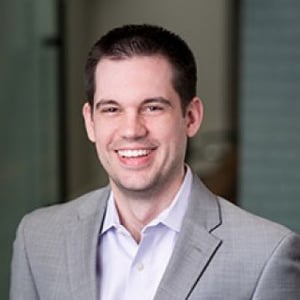
Executive Director, Consumers’ Research
Will Hild is the Executive Director of Consumers’ Research. Will has a decade of non-profit, legal and public policy experience. Prior to joining CR, Will served as the Deputy Director of the Regulatory Transparency Project. Before that, he worked at the Philanthropy Roundtable as the Director of External Affairs for the Culture of Freedom Initiative, and as the Chief Operating Officer of that Initiative when it grew to become a separate organization. He helped co-found the public interest law firm, Cause of Action, and served as the firm’s acting communications director for nearly a year.
Will received his J.D. from Georgetown University Law Center, and a B.A. in Political Science from the University of Florida. He is licensed to practice law in the Commonwealth of Virginia.
Will resides in Bethesda, MD, with his wife Cheryl, a practicing OB/GYN, and their son Liam.
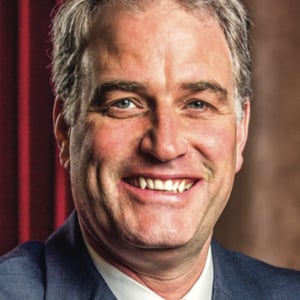
Former Congressman, VP and Dir., Center for Law and Government, Liberty University
Former Congressman Hurt is the Vice President and Director of the Center for Law and Government at Liberty University. From 2011 to 2017 he represented Virginia’s 5th Congressional District in the U.S. House of Representatives and served on the House Financial Services Committee.
Congressman Hurt began his time in public service in 2001 as a member of the Chatham Town Council. From 2002 to 2007, Hurt served in the Virginia House of Delegates, and from 2008 to 2010, he represented the 19th District in the Senate of Virginia for two years.
Congressman Hurt lives in Chatham, Virginia with his wife, Kathy, and their three sons, Charles, Clement and John.
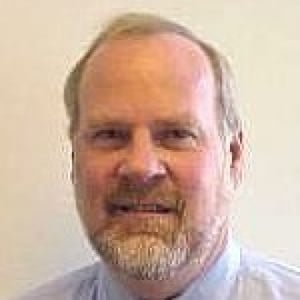
Principal, Legis Matters
Karl T. Kurtz is principal of Legis Matters, a consulting firm that focuses on strengthening democratic institutions, especially legislatures, at home and abroad. He previously worked for the National Conference of State Legislatures (NCSL) from its founding in 1975 until his retirement in 2014.
Karl has written, consulted and lectured widely on American state legislatures, elections and public opinion. He is coauthor of Republic on Trial: The Case for Representative Democracy and coeditor of Institutional Change in American Politics: The Case of Term Limits. He has provided advice and assistance in the development of democratic institutions to legislators and legislative staff throughout the world. As a consultant to NCSL, Karl is currently leading a national study of how legislatures can overcome problems of political polarization and effectively reach settlements and negotiate differences on critical issues.
Before joining NCSL, Karl taught political science at the University of Georgia. He worked on the staff of the United States Congress as a Congressional Fellow of the American Political Science Association. He holds an AB degree from Oberlin College and a Ph.D. from Washington University (St. Louis).
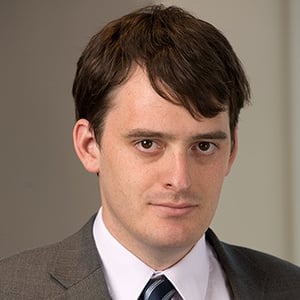
Head of Tech & Innovation, Centre for Policy Studies
Matthew Feeney is Head of Tech & Innovation at Centre for Policy Studies. Before joining CPS, Matthew was the director of Cato Institute’s Project on Emerging Technologies. His writing has appeared in The New York Times, The Washington Post, City A.M., and others. He received both his BA and MA in philosophy from the University of Reading.
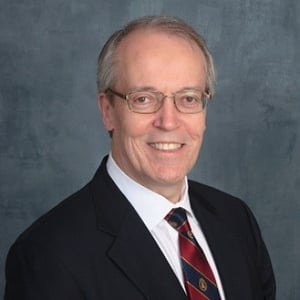
Professor of History, Western Connecticut State University
Kevin R. C. Gutzman is the New York Times best-selling author of five books, including the new Thomas Jefferson—Revolutionary: A Radical’s Struggle to Remake America, a History Book Club Selection. Gutzman is Professor and former Chairman in the Department of History at Western Connecticut State University and a faculty member at LibertyClassroom.com . He holds a bachelor's degree (With Honors and With Special Honors in History), a master of public affairs degree, and a law degree from the University of Texas at Austin, as well as an MA and a PhD in American history from the University of Virginia.
Dr. Gutzman's first book was the New York Times best-seller The Politically Incorrect Guide to the Constitution, which was a Main Selection of the Conservative Book Club. It is the only Jeffersonian account of American constitutional history. His second book, Virginia’s American Revolution: From Dominion to Republic, 1776-1840, explores the issue what the Revolutionaries made of the Revolution in Thomas Jefferson’s home state. After that, he co-authored Who Killed the Constitution? The Federal Government vs. American Liberty from World War I to Barack Obama with New York Times best-selling author Thomas E. Woods, Jr. His fourth book, James Madison and the Making of America, a Main Selection of the History Book Club, received positive reviews from The Wall Street Journal, The Journal of Southern History, The Washington Times, and numerous other publications. His latest book, Thomas Jefferson—Revolutionary: A Radical’s Struggle to Remake America, published on January 31, 2017, was a Selection of the History Book Club.
Gutzman's essay “Lincoln as Jeffersonian: The Colonization Chimera” appeared in Lincoln Emancipated: The President and the Politics of Race, and his “James Madison and Ratification: A Triumph Over Adversity” appeared in A Companion to James Madison and James Monroe. His scholarly articles have appeared in The Journal of Southern History, The Journal of the Early Republic, The Virginia Magazine of History and Biography, The Review of Politics, and The Journal of the Historical Society, among other publications. He has written a hundred book reviews for outlets scholarly and popular, and he has contributed three dozen essays to historical encyclopedias. Gutzman has written for numerous popular magazines and newspapers, including Canada’s National Post, the San Antonio Express-News, and the Richmond Times-Dispatch, among others.
Kevin R. C. Gutzman has appeared on hundreds of radio programs, such as NPR’s “Backstory With the American History Guys” and many of the most prominent commercial programs, terrestrial and satellite, as well as on national television programs including C-SPAN 2's “BookTV,” CNN's “Lou Dobbs Tonight,” Fox News's “The Glenn Beck Program” (both with Beck and with Judge Andrew Napolitano), and NewsMax TV, besides on the BBC and several local television broadcasts. He has been interviewed by reporters from major outlets such as the AP, The Washington Times, The Philadelphia Enquirer, The Washington Post, The Hartford Business Journal, The Houston Chronicle online, Investor's Business Daily, Money Magazine, Connecticut Magazine, and The New York Times, among others.
Gutzman was a featured expert in the documentary movies “John Marshall: Citizen, Statesman, Jurist” and “Nullification: The Rightful Remedy.”
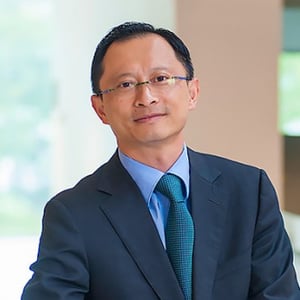
Professor of Law, American University Washington College of Law
Robert L. Tsai is Professor of Law at American University and a prize-winning essayist in constitutional law and history. Though he was born in Taiwan, he has always considered America his home. In fact, one of the proudest moments of his life was the day he was sworn in as a U.S. citizen. Tsai spent his formative years in the Pacific Northwest, working in his parents’ cafe in charming Port Townsend, Washington, and dreaming about the world beyond his small town. He left the area for college and earned a B.A. magna cum laude in History and Political Science from the University of California, Los Angeles, where he was elected to Phi Beta Kappa and received the Carey McWilliams Prize for his honors thesis on the political significance of early Christian teachings.
He then headed to Yale Law School, where he helped edit the Yale Law Journal, served on the Board of the Morris Tyler Moot Court, and was awarded Honorable Mention for Oral Advocacy as a Harlan Fiske Stone Prize Finalist. After graduating from law school, he learned the intricacies of America’s justice system by working as a law clerk for federal judges in New York and Boston: U.S. District Judge Denny Chin (later appointed by President Obama to the U.S. Court of Appeals for the Second Circuit) and U.S. Court of Appeals Judge Hugh H. Bownes (a Carter appointee who passed away in 2003).
After two years of judicial tutelage, Tsai relocated to the South to become a civil rights lawyer in Georgia. Those exhilarating years working with students, clergy, protesters, prisoners, and the homeless left a lasting impression. His first teaching gig was at the University of Oregon Law School, where he earned tenure, along with awards for teaching and research from the law school and the university.
Tsai is the author of three books, Practical Equality: Forging Justice in a Divided Nation (W.W. Norton Feb. 19, 2019), America’s Forgotten Constitutions: Defiant Visions of Power and Community (Harvard 2014), and Eloquence and Reason: Creating a First Amendment Culture (Yale 2008). Practical Equality, which will be published by W.W. Norton in February 2019, is a call to arms to do the hard work of equality, brimming with historical lessons for how to make social progress in tough times. America’s Forgotten Constitutions, which explores how citizens have written a wide range of alternative constitutions to resist mainstream constitutional law, has been called “captivating,” “magisterial,” and “a remarkable feat of excavation.” Eloquence and Reason, his book on the development of America’s free speech values, has been described as “fresh,” “sophisticated,” and “compelling.”
Tsai’s research spans constitutional law, legal history, democratic theory, American political culture, social movements, criminal procedure, presidential leadership, and radical constitutionalism. He has written about the legal obstacles placed in the way of black civil rights activists, President Franklin Roosevelt and freedom of religion, the philosophy of John Brown and his followers, modern white supremacy and the militia movement, the Republic of New Afrika’s ideas about the Constitution, the historical treatment of migrants, early socialism in America, the rise and fall of the “one world” movement, President Obama’s reversal on same-sex marriage, and ideas of equality in the poetry and fiction of Langston Hughes.
His work has been published by the Journal of American History, Contemporary Political Theory, Constitutional Commentary, Perspectives on Politics, Yale Law Journal, Michigan Law Review, Georgetown Law Journal, Washington University Law Review, and Boston University Law Review. His popular essays have appeared in Los Angeles Review of Books, Boston Globe, Washington Post, Politico, Boston Review, and Slate. He has been interviewed by the New York Times, NPR, and CNN. He lives with his family in Washington, D.C.
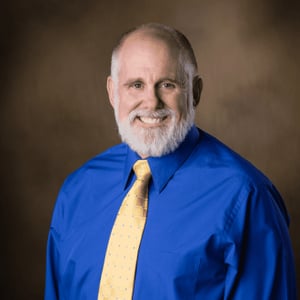
Communications Director, Tenth Amendment Center
Michael Maharrey serves as the national communications director for the Tenth Amendment Center and the managing editor of the SchiffGold blog. He hosts his own podcast, Thoughts from Maharrey Head, as well as the Friday Gold Wrap podcast and the It’s Your Dime interview series for SchiffGold.
Michael is the author of three books. Our Last Hope – Rediscovering the Lost Path to Liberty, makes the historical, philosophical and moral case for nullification. Smashing Myths: Understanding Madison’s Notes on Nullification digs deep into James Madison’s views on nullification, focusing on his writing’s later in life. Finally, Michael joined Tenth Amendment Center executive director Michael Boldin in penning Nullification Objections: Dismantling the Opposition, a book that takes apart the common objections to nullification one at a time. He’s also penned several e-books, including The Power of No: The Historical and Constitutional Basis for State Nullification to Limit Federal Powe and Its Practical Application, The Constitution and the Report of 1800, and The Jefferson Letters, Vol. 1: Kentucky and Virginia Resolutions.
Michael earned a degree in Mass Communications and Media Studies from the University of South Florida St. Petersburg. As a non-traditional student, he won several academic awards and was a member of the school’s ethics bowl team that placed eighth in the nation. Mike played for the USF ice hockey team at the ripe old age of 40, earning American Collegiate Hockey Association Academic All-American honors. He also holds a B.S. degree in Accounting from the University of Kentucky. Along with his formal schooling, he’s had the opportunity to associate with and study under some of the top academics in constitutional history and our founding principles.
Michael speaks at events across the United States, and frequently appears as a guest on local, national and international radio shows advancing constitutional fidelity and liberty through decentralization.
As a working journalist, Michael has written and reported for several newspapers, including the St. Petersburg Times and the Kentucky Gazette, covering local and state politics, and sports. Mike won a pair of 2009 Kentucky Press Association awards while serving as the sports editor for the Woodford Sun in 2009. He also worked for a local television news outlet writing web content for the station’s award-winning website.
Michael lives in Lexington, Ky., with his beautiful wife Cynthia, and has two daughters and a son. Although a native Kentuckian, he spent much of his adult life in Florida and considers the Sunshine state his adopted home. In his spare time, he still plays ice hockey and is equally passionate about defending the Constitution and his crease.
Head of Tech & Innovation, Centre for Policy Studies
Matthew Feeney is Head of Tech & Innovation at Centre for Policy Studies. Before joining CPS, Matthew was the director of Cato Institute’s Project on Emerging Technologies. His writing has appeared in The New York Times, The Washington Post, City A.M., and others. He received both his BA and MA in philosophy from the University of Reading.
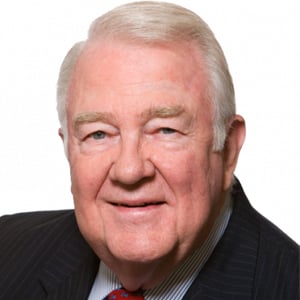
Ronald Reagan Distinguished Fellow Emeritus, The Heritage Foundation
Edwin Meese III, the prominent conservative leader, thinker and elder statesman, continues a quarter-century formal association with The Heritage Foundation as the leading think tank’s Ronald Reagan Distinguished Fellow Emeritus.
In that capacity, Meese oversees special projects and acts as an ambassador for Heritage within the conservative movement.
Meese was chairman of Heritage’s Center for Legal and Judicial Studies from its founding in 2001 until what he calls his “semi-retirement” on Feb. 1, 2013.
He joined Heritage in 1988 as the think tank's first Ronald Reagan Distinguished Fellow -- the only policy chair in the country to be officially named for the 40th president. His work focused on keeping President Reagan’s legacy of conservative principles alive in public debate and discourse.
The legal center now bears his name, in recognition of Meese’s contributions to the rule of law and the nation’s understanding of constitutional law. Its mission is to educate government officials, the media and the public about the Constitution and legal principles -- and how they affect public policy.
Perhaps best known as U.S. attorney general during Reagan’s second term, Meese’s service to the conservative icon stretched from the California governor’s mansion in 1966 to the White House in 1981 before he went to the Department of Justice four years later.
His Heritage “hats” kept Meese among the major conservative voices in national policy debates at an age when most men and women enjoyed quiet retirements.
In 2006, for example, Meese was named to the Iraq Study Group, a special presidential commission dedicated to examining the best resolutions for America's involvement in Iraq. In the past few years he wrote and spoke about constitutional topics ranging from religious liberty to the responsibility of Supreme Court justices.
Immediately after Reagan's death in 2004, and in the years since, Meese often agreed to major media appearances to discuss the lasting impact of his old friend, mentor and boss. He has summarized the Reagan legacy in three accomplishments: Reagan cut taxes and kept them low. He worked to defeat and end the Soviet Union and its worldwide push for communism. And he restored America's faith in itself after years of failure and "malaise."
"I admired him as a leader and cherish his friendship," Meese wrote in a 2004 essay for Heritage members and supporters. "Ronald Reagan had strong convictions. He was committed to the principles that had led to the founding of our nation. And he had the courage to follow his convictions against all odds." <[>Edwin Meese III was born Dec. 2, 1931, to Edwin Jr. and Leone Meese in Oakland, Calif. He graduated from Yale University in 1953 and holds a law degree from the University of California-Berkeley.
Meese spent much of his adult life working for Reagan, first after the former actor, sports announcer and athlete was elected as California’s governor in 1966 and then when he sought and won the presidency in 1980.
Reagan never forgot Meese's loyalty and hard work. During a press conference at which reporters questioned Meese's actions at the Justice Department, Reagan replied: "If Ed Meese is not a good man, there are no good men."
During the Reagan governorship, Meese served as executive assistant and chief of staff from 1969 through 1974 and as legal affairs secretary from 1967 through 1968. He previously was deputy district attorney in Alameda County, Calif.
From January 1981 to February 1985, Meese held the position of counsellor to the president -- the senior job on the White House staff -- and functioned as Reagan's chief policy adviser. In 1985, he received Government Executive magazine's annual award for excellence in management.
Meese served as the 75th attorney general of the United States from February 1985 to August 1988. As the nation's chief law enforcement officer, he directed the Justice Department and led international efforts to combat terrorism, drug trafficking and organized crime.
Meese’s relationship with Heritage began when he met with senior management to discuss the think tank's landmark policy guide, Mandate for Leadership, prepared for the incoming administration. Meese later recalled that Reagan personally handed out copies of the 1,093-page book to members of his Cabinet and asked them to read it. Nearly two-thirds of Mandate's 2,000 recommendations would be adopted or attempted by the Reagan administration.
More than a decade after joining Heritage, Meese assumed the chairmanship of its Center for Legal and Judicial Studies. Under his guidance, the center counseled White House staffers, Justice Department officials and Senate Judiciary Committee members on the importance of filling judicial vacancies with qualified men and women who are committed to interpreting the Constitution according to the founding document's original meaning.
The center became known for hosting "moot court" practice sessions to sharpen the arguments of attorneys slated to bring important cases before the Supreme Court. Those cases addressed constitutional issues ranging from property rights to racial preferences in primary and secondary schools to restrictions on free speech in campaign finance law.
Meese headed the legal center's Advisory Board for the writing and editing of the best-selling book, The Heritage Guide to the Constitution (Regnery, 2005). In it, 109 experts walked readers through a clause-by-clause analysis of the Constitution. Sen. Tom Coburn (R-Okla.) was among those keeping the reference work handy during Judiciary Committee hearings on Supreme Court nominees.
Meese's other books include “Leadership, Ethics and Policing” (Prentice Hall, 2004); “Making America Safer” (Heritage, 1997); and “With Reagan: The Inside Story” (Regnery Gateway, 1992).He wrote the Introduction to a well-received 2010 book on the “overcriminalization” trend, “One Nation Under Arrest,” by Heritage veterans Paul Rosenzweig and Brian W. Walsh.
He also is a distinguished visiting fellow at the Hoover Institution at Stanford University in California and lectures, writes and consults throughout the United States on a variety of subjects.
As both attorney general and counsellor to Reagan, Meese was a member of the Cabinet and the National Security Council. He served as chairman of the Domestic Policy Council and the National Drug Policy Board. After Reagan won the White House in the 1980 election, Meese headed the transition team. During the campaign, he was the Reagan-Bush Committee's senior official.
Meese had a career outside government and politics. From 1977 to 1981, he was a law professor at the University of San Diego, where he also directed the Center for Criminal Justice Policy and Management.
He was an executive in the aerospace and transportation industry as vice president for administration of Rohr Industries Inc. in Chula Vista, Calif. He left Rohr to return to the practice of law, doing corporate and general work in San Diego County.
A retired colonel in the Army Reserve, Meese remains active in numerous civic and educational organizations.
He and his wife, Ursula, have two grown children and reside in McLean, Va.
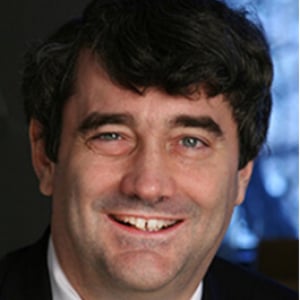
Clayton J. and Henry R. Barber Professor of Law, Northwestern University Pritzker School of Law and Co-Chairman, Board of Directors, The Federalist Society
STEVEN GOW CALABRESI is the Clayton J. & Henry R. Barber Professor at Northwestern Pritzker School of Law. He has also co-taught in the Fall semester at Yale Law School from 2013 to the present. Calabresi clerked for Justice Antonin Scalia and Judges Robert H. Bork and Ralph K. Winter. He was a Special Assistant to Attorney General Meese from 1985 to 1987 and worked with Ken Cribb as his deputy in 1987 on the second floor of the West Wing of the Reagan White House. Calabresi has written books on presidential power and comparative constitutional law and the origins of judicial review. He and Gary Lawson are the co-editors of a casebook on U.S. Constitutional Law, and Calabresi is also the co-editor of a casebook on comparative constitutional law. He has written over seventy law review articles since 1990.
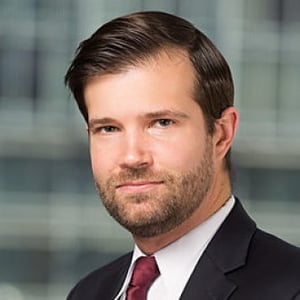
Research Fellow, CATO Institute
Jay Schweikert is a research fellow with the Cato Institute’s Project on Criminal Justice. His research and advocacy focuses on accountability for prosecutors and law enforcement, plea bargaining, Sixth Amendment trial rights, and the provision and structuring of indigent defense.
Before joining Cato, Schweikert spent four years doing civil and criminal litigation at Williams & Connolly LLP. He holds a JD from Harvard Law School, where he was an articles editor for the Harvard Law Review, and chaired the Harvard Federalist Society’s student colloquium program. Following law school, Schweikert clerked for Judge Diane Sykes of the U.S. Court of Appeals for the Seventh Circuit and Judge Laurence Silberman of the U.S. Court of Appeals for the DC Circuit.
He holds a BA in political science and economics from Yale University.
Executive Director, State and Local Legal Center
Lisa Soronen is the Executive Director of the SLLC. Prior to joining the SLLC, Lisa worked for the National School Boards Association, the Wisconsin Association of School Boards, and clerked for the Wisconsin Court of Appeals. She earned her J.D. at the University of Wisconsin Law School and is a graduate of Central Michigan University.

Roe v. Wade: A Legal History | Part Two: The Right to Privacy
Helen Alvaré, David Bernstein, Robert P. George, Linda Greenhouse, Kimberly Mutcherson, Teresa Stanton Collett
Documentary short from Coronation Media and FedSoc Films
Though it is not explicitly mentioned in the Constitution, the concept of a fundamental right...
The Role of the State Attorney General [POLICYbrief]
Mark Brnovich, Leslie C. Rutledge, Pam Bondi
Short video featuring Mark Brnovich, Leslie Rutledge, and Pam Bondi
What is the role of the state attorney general? How has it changed in recent...
Roe v. Wade: A Legal History | Part One: To the Court
Helen Alvaré, David Bernstein, Robert P. George, Linda Greenhouse, Kimberly Mutcherson, Teresa Stanton Collett
Documentary short from Coronation Media and FedSoc Films
As one of the most consequential decisions in the history of the Supreme Court, Roe...
Laboratories of Democracy, Part 2: Can Congress learn from State Legislatures?
Will Hild, Robert Hurt, Karl Kurtz
Article I Initiative
The concept of states serving as important test cases for national governance dates to the...
Martinez-Fuerte: 40 Years Later [Landmark Edition]
Matthew Feeney
Short video featuring Matthew Feeney
In 1976, the Supreme Court decided United States v. Martinez-Fuerte, a case that examined “fixed,...
What Is a Constitutional Crisis? Would You Know it if We Were in One?
Kevin R.C Gutzman, Robert L. Tsai, Michael Maharrey
Documentary short featuring Robert Tsai, Kevin Gutzman, and Mike Maharrey
Is the United States experiencing a constitutional crisis--or multiple crises? How would we even know...
Can Border Patrol Search Your Phone Without a Warrant? [POLICYbrief]
Matthew Feeney
Short video featuring Matthew Feeney
The long-standing “Border Search Exception” to the Fourth Amendment allows Customs and Border Protection to...
Excerpts from an Interview with Hon. Edwin Meese III
Edwin Meese, Steven G. Calabresi
Short video featuring Edwin Meese
Congratulations to Hon. Edwin Meese III, 75th United States Attorney General and member of the...
Ramos v. Louisiana [SCOTUSbrief]
Jay R. Schweikert
Short video featuring Jay Schweikert
Does the Constitution guarantee the right to a unanimous jury verdict in criminal trials? Policy...
Kahler v. Kansas [SCOTUSbrief]
Lisa Soronen
Short video featuring Lisa Soronen
In November 2009, James Kahler shot and killed his wife, his two daughters, and their...