Regulation and Red Tape: Boucher v. USDA: Navigating the Swampbuster Provisions
A Regulatory Transparency Project Fourth Branch Video

A Regulatory Transparency Project Fourth Branch Video
Have you ever received a notice from the government that you violated a rule that you didn’t know about?
In the 1990’s, the Boucher family removed nine trees from their property as an attempt to mitigate the buildup of trash and dumping on their land. This action triggered a United States Department of Agriculture (USDA) investigation suspecting environmental damage. Consequently, the Bouchers lost eligibility for USDA benefits, including “Swampbuster” provisions. In Boucher vs. USDA, the government grapples with balancing natural resource protection and individual liberties. This case underscores the long and painstaking nature of government processes, emphasizing the time and diligence often required for justice and good governance.
In the third episode of “Regulation and Red Tape,” experts highlight the broader implications of Boucher vs. USDA and consider the balance between regulatory enforcement and individual rights.
Featuring:
*******
As always, the Federalist Society takes no position on particular legal or public policy issues; all expressions of opinion are those of the speaker.

Managing Partner, Allen Wellman McNew Harvey, LLP
Michael has been an attorney with Allen Wellman McNew Harvey, LLP in Greenfield, Indiana, since 2006 and currently serves as the firm’s managing partner. He concentrates his practice in the areas of business and commercial law, and complex litigation in state and federal court. Michael regularly advises clients in the areas of business planning, contracts, employment law, prelitigation planning, dispute resolution and workouts. He also advises farmers in business and succession planning, and government regulation including disputes arising under the Food and Security Act of 1985. While Michael’s practice is focused in central Indiana, he regularly represents clients throughout the state and regionally.
Michael has significant appellate practice experience, and regularly represents clients in appellate matters in both administrative and judicial reviews over a wide range of legal areas. He has briefed and argued cases as lead and sole counsel before the Indiana Court of Appeals and the United States Court of Appeals for the Seventh Circuit and served as lead counsel on Petitions to Transfer to the Indiana Supreme Court. Michael successfully obtained reversal of a United States Department of Agriculture wetland determination before the Seventh Circuit in Boucher v. USDA, 934 F.3d 530 (7th Cir. 2019), an important decision addressing the requirements of a wetland under the Swampbuster provisions of the Food and Security Act.
Michael also oversees the firm’s bankruptcy and insolvency work, representing debtors and creditors in cases and litigation arising under Chapter 7, Chapter 12, Chapter 13, and Chapter 11 of the United States Bankruptcy Code. Michael also represents debtors, financial institutions, and receivers in foreclosure and receivership cases arising under state law.
Michael grew up in Rush County, Indiana, and obtained his undergraduate degree from Franklin College in Franklin, Indiana, and his law degree from the Indiana University Robert H. McKinney School of Law. He resides in the Meridian Kessler neighborhood of Indianapolis with his wife Michele, and their sons, Evan and Ryan.
Senior Agriculture Policy Specialist, National Wildlife Federation
Duane Hovorka is a Senior Agriculture Policy Specialist at the National Wildlife Federation. Prior to this role, he directed the Izaak Walton League’s Agriculture Program, where he provided analysis and outreach on federal Farm Bill programs to deliver healthy soil, clean water and wildlife habitat benefits, and oversight of agricultural policy issues in key states.
Partner, Luther Strange & Associates
Annie Donaldson Talley is Partner at Luther Strange and Associates. She recently departed the White House after serving as Deputy Assistant to the President and Deputy Counsel to the President. Over the past four years, she provided outside counsel to the Donald J. Trump for President campaign; helped stand up and manage the White House Counsel’s Office; interfaced with agencies across the federal government; and advised the President of the United States, White House Counsel, Chief of Staff and other senior staff across the Executive Office of the President on a broad range of issues from regulatory reform to executive nominations to the day-to-day issues facing the Administration.
Prior to her White House service, Annie Donaldson Talley counseled clients in the non-profit, for-profit, political, and government sectors, as well as high-profile individuals in private practice at Jones Day and Patton Boggs. She provided strategic counseling to clients structuring their affairs to ensure compliance with a web of state and federal laws and represented clients in complex, multi-faceted investigations, leading teams navigating issues of intense public scrutiny.
Annie Donaldson Talley is also a veteran of three presidential campaigns and served in state government. She holds a B.A., summa cum laude, from the University of Alabama and a J.D. from Harvard Law School, where she served on the Harvard Law Review. She lives in Montgomery, Alabama with her husband, Brett.
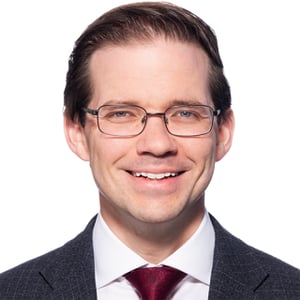
Of Counsel, Covington & Burling LLP
The Honorable Paul J. Ray is currently Of Counsel at Covington & Burling LLP where he advises clients on regulatory opportunities and challenges and helps them formulate and execute advocacy strategies for their regulatory policy priorities before the executive branch and Congress.
During the first Trump Administration, Paul held various senior positions at the Office of Information and Regulatory Affairs (OIRA) within the White House’s Office of Management and Budget, including as acting, and then Senate-confirmed, head of the office. As OIRA Administrator (the "regulations czar"), Paul supervised the review of hundreds of regulations from across the government, drafted numerous executive orders governing the regulatory process, and led the Administration’s regulatory reform effort. As a result of this experience, Paul is well-positioned to help clients understand and achieve regulatory policy priorities in the context of the government’s regulatory agenda and ongoing reform efforts.
Most recently, Paul was also the Director of the Roe Institute for Economic Policy Studies at The Heritage Foundation. In that role, he supervised the formulation of the Foundation’s economic and regulatory policy recommendations and provided technical assistance to congressional committees and staff regarding legislative changes to the regulatory process. In addition to his role at The Heritage Foundation, Paul also served as a Senior Advisor at a strategic advisory firm. Before his time in government, Paul practiced law at a law firm in Washington, specializing in administrative law matters.
Prior to his role at the White House, Paul was Counselor to the Secretary at the U.S. Department of Labor. There he led departmental efforts in high-profile rulemakings and helped formulate the Department’s legal positions and strategy.
Paul served as a law clerk to Supreme Court Justice Samuel Alito and as a law clerk to the Honorable Debra Livingston of the U.S. Court of Appeals for the Second Circuit.
Paul is a thought leader in the conservative legal movement and is a frequent commentator and speaker on regulatory policy and reform matters, including at law schools, professional gatherings, and other venues. He is the Chairman of Innovations in Peacebuilding International and the Regulatory Process Working Group of the Federalist Society’s Regulatory Transparency Project and a public member of the Administrative Conference of the United States. Paul is also an adjunct lecturer at the Hillsdale College School of Government.