The Washington Hilton
1919 Connecticut Ave NW
Washington, DC 20009
1919 Connecticut Ave NW
Washington, DC 20009


New Legal Frontiers
November 6 — 8, 2025The National Lawyers Convention is now sold out.
Over three days, the Federalist Society's 2025 National Lawyers Convention will feature four showcase sessions discussing the Convention theme "New Legal Frontiers," breakout panel discussions sponsored by the Practice Groups, the Seventeenth Annual Rosenkranz Debate, the Twenty-Fourth Olson Memorial Lecture, and the 2025 Antonin Scalia Memorial Dinner.
This year will also feature plenary session live recordings of Soc! Sidebars, our series which features a judge being interviewed by a Student Chapter President about the judge’s passion, hobby, or interest and how it interrelates with the law.
All events this year will be held at the Washington Hilton.
Convention Dates:
Thursday, November 6 (9:00 a.m. ET) –
Saturday, November 8 (7:00 p.m. ET)
Registration Dates:
The National Lawyers Convention is now sold out.
IMPORTANT NLC ATTENDEE INFORMATION
2025 Antonin Scalia Memorial Dinner
The Washington Hilton
1919 Connecticut Ave NW
Thursday, November 6, 2025
Reception - 6:00 p.m.
Dinner - 7:00 p.m.
(ticketed event) BLACK TIE OPTIONAL
SOLD OUT
Olson Memorial Lecture
The Washington Hilton
1919 Connecticut Ave NW
Friday, November 7, 2025
5:00 p.m.
SOLD OUT
Seventeenth Annual Rosenkranz Debate
The Washington Hilton
1919 Connecticut Ave NW
Saturday, November 8, 2025
12:30 p.m.
SOLD OUT
Annual Hon. Robert H. Bork Memorial Lecture
The Washington Hilton
1919 Connecticut Ave NW
SOLD OUT
Showcase Sessions & Convention Theme:
Theme
"New Legal Frontiers"
Showcases
Landmark SCOTUS Decisions of the 2020s
Immigration & Originalism
A.I. for the Law, and Law for A.I.
Science in the Courts After COVID & Skrmetti
The National Lawyers Convention is now sold out.
Waitlists are now enabled and you may add yourself to any of the waitlists on the Registration page.
Thursday Schedule:
Friday Schedule:
Saturday Schedule:
Lodging
Washington, D.C. hotels become booked very quickly for the fall convention season. To reserve overnight accommodations for the Convention, please contact the Washington Hilton directly or reserve your room online.
The special rate for attendees is $261 per night. Please click the link below to book your stay with our roomblock now:
Guests can also call 1-800-HILTONS or 202-483-3000.
CLE
Click below for full CLE credit information:
Guests can also call 1-800-HILTONS or 202-483-3000.
Convention Fees
| Individual Day** | SOLD OUT |
| Non-Member | $300.00 |
| Active Member | $200.00 |
| Student Non-Member | $75.00 |
| Student Active Member | $35.00 |
**Individual day purchase includes that day’s sessions, CLE, and lunch. It does not include social events. CLE materials will be available electronically. A hardcopy of materials can be provided upon request after the Convention, make sure to request CLE Materials in hardcopy form on the CLE sign-in form during the Convention.
| Social Events | SOLD OUT |
| Antonin Scalia Memorial Dinner Non-Member | $350.00 |
| Antonin Scalia Memorial Dinner Active Member | $250.00 |
CANCELLATION FEE OF $100 AFTER MONDAY, OCTOBER 28.
NO REFUNDS WILL BE GIVEN AFTER TUESDAY, NOVEMBER 4.*
*For inquiries and requests, contact NLCregistration@fedsoc.org
The National Lawyers Convention is now sold out.
Waitlists are now enabled and you may add yourself to any of the waitlists on the Registration page.
Check back periodically for more information. We can't wait to see you!
Back to top2025 National Lawyers Convention
Featuring:
2025 National Lawyers Convention
| Topics: | Supreme Court |
|---|
CLE credit for this event is available at On-Demand CLE.
This year marks the 20th anniversary of the Roberts Court. Many of the Court's most high-profile rulings have occurred this decade—and the decade is only half over. The advocates who argued and won five of the most high-profile rulings of the Roberts Court discuss trends of the Roberts Court; the path to victory in their respective cases; and what is on the horizon for the Roberts Court. Cases discussed include Dobbs, Students for Fair Admissions, Loper Bright, Skrmetti, and Bruen.
Featuring:
2025 National Lawyers Convention
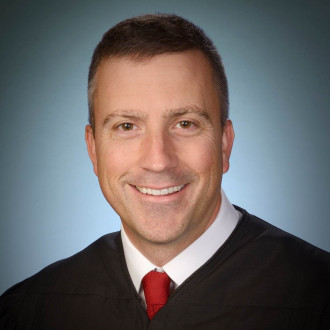
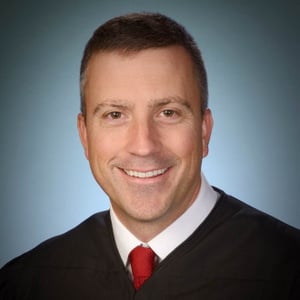
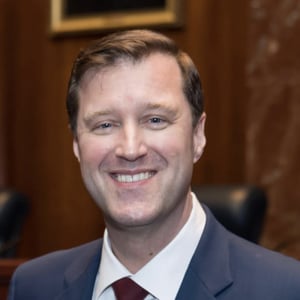
The Student Division and a rotating Student Chapter President will host a live event called SOC! Sidebar, featuring a judge being interviewed about the judge’s passion, hobby, or interest and how it interrelates with the law. Our first Sidebar will feature Judge Paul Matey who will discuss “Baseball Cards.”
Featuring:
2025 National Lawyers Convention
In-House Counsel Network
Sponsors: In-House Counsel Network
| Topics: | Administrative Law & Regulation |
|---|
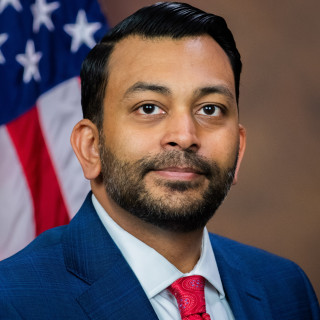
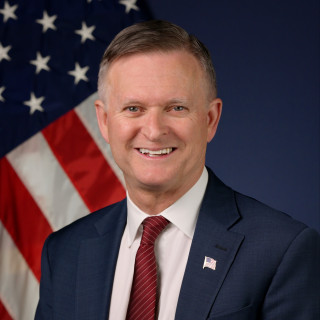
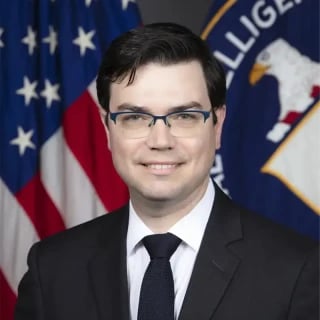
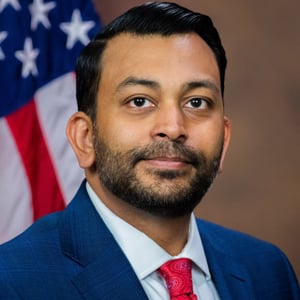
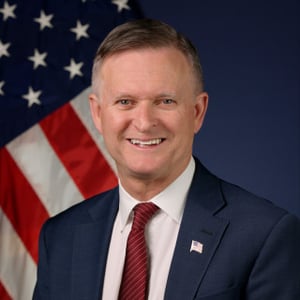
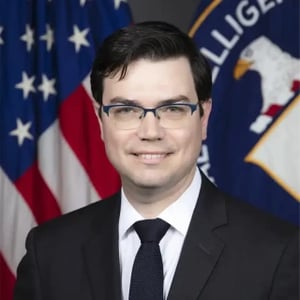
This panel will offer a high-level examination of the legal developments driving the Trump Administration and their potential effect on business. Featuring Senior Administration officials from the Department of Justice (DOJ), the Central Intelligence Agency (CIA), the Department of Agriculture (USDA), and the Department of Transportation (DOT), this discussion will focus on the Administration's policy agenda across four critical areas: redefining the federal government's role in the economy, business regulation and enforcement, national security oversight, and domestic affairs. Panelists will share their insights to outline the road ahead.
Featuring:
International Chapters
| Topics: | International Law & Trade • International & National Security Law |
|---|
Are international authorities, in the name of “global governance,” encroaching on national sovereignty? Three recent international cases highlight that tension: the International Criminal Court’s arrest warrants for Israeli leaders Benjamin Netanyahu and Yoav Gallant, the Advisory Opinion by the International Court of Justice declaring climate change an "existential threat” in the name of international law, and the signing of a Memorandum of Understanding between the United Nations Development Programme and Open Government Partnership in 2019 to advance the Sustainable Development Goals ("SDGs"). Some view these cases as necessary for international accountability, while others argue they seek to undermine States’ authority. This panel explores those looming questions.
Featuring:
Financial Services Practice Group
Sponsors: Financial Services Practice Group
| Topics: | Financial Services |
|---|
CLE credit for this event is available at On-Demand CLE.
This panel will consider the legal and policy significance of payment stablecoins as a privately issued dollar instrument, with particular attention to questions of federal authority, market structure, and comparison to central bank digital currencies. The discussion will address how stablecoins function in practice, the scope of the 2025 GENIUS Act in authorizing issuance, and the objections raised by banks. Panelists will examine whether stablecoin issuance is properly viewed as within the traditional business of banking or as a novel activity requiring distinct treatment, and will assess the implications for US monetary primacy, the role of the Office of the Comptroller of the Currency, and the balance between federal innovation mandates and state banking prerogatives.
Featuring:
Free Speech Practice Group
Sponsors: Free Speech Practice Group
| Topics: | Free Speech |
|---|
It is well-established that the First Amendment protects speech on U.S. soil, whether undertaken by a foreign national or a U.S. corporation. But what degree of First Amendment protection exists? Do resident foreign nationals enjoy the same liberties as citizens? How about American corporations with significant foreign ownership? Does the appropriate level of judicial scrutiny vary by context, such as whether a foreign national is present on a particular visa? And does the type of speech—electoral, political, or commercial—matter?
Recent debates in Congress, the Supreme Court, and the White House have questioned the government's power to regulate foreign speech. The issue remains live as the Trump administration cracks down on universities' receipt of foreign research funding and admission of foreign students while simultaneously withholding funding from cities and states that boycott U.S. allies. Meanwhile, multiple states have sought to limit political participation by corporations and non-profits with foreign entanglements. Join us for this panel, as we explore the evolving contours of First Amendment rights at the water's edge.
Featuring:
2025 National Lawyers Convention
Corporations & Securities Practice Group
Sponsors: Corporations & Securities Practice Group
| Topics: | Corporations & Securities |
|---|
CLE credit for this event is available at On-Demand CLE.
The status quo shows signs of disturbance in corporate law: Some Fortune 500 companies have reincorporated outside of Delaware or have contemplated doing so. Meanwhile, Texas is attracting companies by promoting its pro-job and pro-business environment, a strategy that includes the recent changes to the Texas Business Court. What is the future of corporate law? Will Delaware remain the preferred home for America’s corporations or are we witnessing the rise of other corporate capitals?
Featuring:
Federalism & Separation of Powers Practice Group
| Topics: | Federalism & Separation of Powers |
|---|
CLE credit for this event is available at On-Demand CLE.
In recent years, leaders of both parties have invoked emergency powers to address issues from the COVID-19 pandemic, immigration and drug trafficking, trade deficits, and more. President Trump has faced legal challenges to his executive orders and emergency powers in the form of universal injunctions and temporary restraining orders. In Trump v. CASA, the Supreme Court held under the Judiciary Act of 1789, it is beyond the scope of the judicial power for federal courts to issue “universal” injunctions. The Court made this holding in the context of lower courts granting universal injunctions against President Trump's executive order on birthright citizenship under the Fourteenth Amendment, and the Court’s decision only returns cases to the district courts.
Some argue that courts should defer to executive assertions of emergency powers. Others contend courts should engage in strong judicial review to forestall threats to civil liberties and the separation of powers. This panel will discuss the scope of judicial power, conflict between the executive and judicial branches, and CASA’s broader impact on federalism and individual rights.
Featuring:
Professional Responsibility Practice Group
Sponsors: Professional Responsibility & Legal Education Practice Group
| Topics: | Professional Responsibility & Legal Education |
|---|
CLE credit for this event is available at On-Demand CLE.
Legal Education stands at a decision point. Texas, Florida, Ohio, and other states are reconsidering the American Bar Association’s accreditation role. The Trump Administration is scrutinizing how the ABA has imposed DEI mandates on law schools. And Artificial Intelligence is fundamentally transforming the skillset that law students need to learn. This panel will examine the future of legal education as it confronts changes involving the ABA, DEI, and AI.
Featuring:
Second Amendment Practice Group
Sponsors: Second Amendment Practice Group
| Topics: | Second Amendment |
|---|
The Second Amendment sits at the heart of ongoing debates about originalism, tradition, and individual rights. With limited precedent, the Supreme Court is shaping its Second Amendment jurisprudence in real time, creating important questions: How should lower courts apply NYSRPA v. Bruen—especially in cases involving felons, young adults, and AR-15 bans? Is the Heller/Bruen methodology reconcilable with the Court's decision in United States v. Rahimi? How might the Court resolve United States v. Hemani, regarding firearm possession by illegal drug users? This panel will examine both theoretical and practical questions surrounding the Supreme Court's Second Amendment jurisprudence.
Featuring:
2025 National Lawyers Convention
Religious Liberties Practice Group
Sponsors: Religious Liberties Practice Group
| Topics: | Religious Liberties |
|---|
CLE credit for this event is available at On-Demand CLE.
The First Amendment’s "church autonomy" doctrine protects religious institutions' independence in matters of faith and governance, a principle recently thrust under intense scrutiny and pressure. The doctrine has come to newfound prominence in recent ministerial exception cases such as Our Lady of Guadalupe v. Morrissey-Berru and Justice Thomas’s concurrence in Catholic Charities v. Wisconsin. Furthermore, a surge of new lawsuits includes challenges over religious employment qualifications, official attempts to probe internal communications, and class actions alleging financial fraud. This activity has led to sharp divisions among appellate judges regarding the doctrine's scope and protection. This panel will explore these emerging issues.
Featuring:
Criminal Law & Procedure Practice Group
Sponsors: Criminal Law & Procedure Practice Group
| Topics: | Criminal Law & Procedure |
|---|
In recent years, policymakers have used the National Guard to respond to spikes in urban crime and public disorder, raising questions about legality and prudence. What is the legal framework governing the National Guard's use in domestic contexts? How do federal and state authorities share or clash over control? Does troop deployment meaningfully address the long-term challenges posed by persistently high crime rates; or does it risk eroding civil-military boundaries and civil liberties? Are the deployments an effective tool for public safety or a troubling expansion of military involvement in civilian life? This panel will explore the legal authority, historical precedents, and policy tradeoffs surrounding the Guard’s domestic use.
Featuring:
Intellectual Property Practice Group
Sponsors: Intellectual Property Practice Group
| Topics: | Intellectual Property |
|---|
Rapid changes in law, international trade, and national security are colliding with technological changes. As innovation reshapes industries from biotech to defense and semi-conductors, legal and business professionals are racing to adapt. From cross-border corporate deals and multilateral treaties to unilateral efforts like anti-suit injunctions and global royalty standards, these legal developments are reshaping industries affecting pricing, competition, and the very structure of our global markets.
Featuring:
Litigation Practice Group
Sponsors: Litigation Practice Group
| Topics: | Litigation |
|---|
CLE credit for this event is available at On-Demand CLE.
The office of the State Attorney General has evolved into one of the most significant in American law and politics. Traditionally viewed as the state’s chief law enforcement officer, today’s AGs play a central role in shaping policy through litigation, regulatory enforcement, and multistate coordination. They are active participants in national legal debates, from federalism disputes to corporate accountability, and often serve as leading voices on questions of constitutional structure and the separation of powers.
This panel will explore how the role of state AGs has developed, what responsibilities and opportunities the modern office entails, and how AGs influence both state governance and the broader national legal landscape.
Featuring:
2025 National Lawyers Convention
Ticketed Event
(Black Tie Optional)
2025 National Lawyers Convention
Ticketed Event
(Black Tie Optional)
2025 National Lawyers Convention
2025 National Lawyers Convention
| Topics: | Constitution • Due Process |
|---|
CLE credit for this event is available at On-Demand CLE.
What do the tools of originalism teach us about significant immigration legal issues? For example, what was the President’s authority to remove aliens at the time of the Founding? How much of immigration is left to the President versus Congress? What can originalism tell us about immigration and due process? Experts discuss cutting edge issues in immigration law and ask how and whether originalism can help provide answers.
Featuring:
2025 National Lawyers Convention
| Topics: | Civil Rights • First Amendment • Religious Liberty • Free Speech |
|---|
CLE credit for this event is available at On-Demand CLE.
In 1987, Howard G. Crane — then-Managing Partner of Kirkland & Ellis and a self-described "liberal Democrat" — testified in support of Judge Robert Bork's nomination to the U.S. Supreme Court, describing Judge Bork as "a person without prejudice against any group." Crane, who was Jewish, explained that Judge Bork, as a young law firm associate, persuaded his firm to eliminate its ban on Jewish attorneys, resulting in Bork's firm hiring Crane.
In memory of Judge Bork's commitment to religious respect and his rejection of anti-Semitism, Hon. Judge Roy Altman (U.S. District Court for the Southern District of Florida) will moderate a discussion with judges from different faith traditions about the crucial importance of the American tradition of religious respect and tolerance in the U.S. constitutional order, including their personal experiences with interfaith dialogue.
The judges will discuss how First Amendment values — such as respect for free speech and for free exercise of religion — can provide a roadmap for preserving Western values under assault by anti-Semitism and other forms of religious intolerance.
Featuring:
2025 National Lawyers Convention
2025 National Lawyers Convention
Born Equal: Remaking America’s Constitution, 1840–1920
Rogue Justice: The Rise of Judicial Supremacy in Israel
The Meese Revolution: The Making of a Constitutional Moment
Administrative Law Practice Group
| Topics: | Administrative Law & Regulation |
|---|
CLE credit for this event is available at On-Demand CLE.
Recent Supreme Court decisions—often via the interim, or emergency, docket—are redefining administrative law’s boundaries and remedies. This panel considers the post-Loper Bright landscape, the continuing force and potential abrogation of Humphrey’s Executor as implicated in the Court's Trump v. Wilcox order, and State Farm’s enduring arbitrary-and-capricious baseline. On the remedial front, Trump v. CASA limits sweeping universal injunctions, redirecting litigants seeking system-wide relief to use tools like class actions, targeted stays, or the Administrative Procedure Act's "set aside" authority. What do these shifts mean for agency discretion, independence, and accountability—and for litigants’ strategy on timing, fora, and forms of relief? Leading legal minds will map trajectories for doctrine, agency design, and practical enforcement in coming Terms.
Featuring:
Election Law Practice Group
Sponsors: Election Law Practice Group
| Topics: | Election Law • Civil Rights |
|---|
The Voting Rights Act (VRA) is at a crossroads. Section Two of the VRA forbids voting procedures that "result in" members of minority groups having "less opportunity than other members of the electorate to participate in the political process and to elect representatives of their choice." The Supreme Court has interpreted the VRA to require states to pay attention to race when drawing district lines, creating tension with the Equal Protection Clause's demand that race not predominate construction of electoral districts. Louisiana v. Callais provides the Court with an opportunity to address whether Section Two should continue to mandate race-conscious districting, and whether such an interpretation conflicts with the Equal Protection Clause.
It is also unclear whether VRA Section Two may be enforced in private lawsuits. Several decisions have assumed that the VRA could be enforced by private litigants. However, the Supreme Court has greatly limited the ability to enforce federal law through a private right of action; especially where, as with VRA Section Two, federal law does not explicitly create an individual right. There is currently a circuit split on this question.
This panel will explore these questions and the future of race-conscious redistricting in the United States.
Featuring:
Antitrust & Consumer Protection Practice Group
| Topics: | Corporations & Securities |
|---|
CLE credit for this event is available at On-Demand CLE.
The next chapter in U.S. antitrust and consumer protection enforcement is already being written. Regulated parties and government enforcement authorities face a rapidly evolving landscape shaped by technological disruption, shifting global supply chains, and new threats to consumer welfare.
State attorneys general have become increasingly active in the antitrust - launching investigations and lawsuits under their own antitrust and consumer protection laws, and often partnering with federal counterparts at DOJ and FTC.
Join us for a fireside chat with state AGs as they discuss how their offices are approaching antitrust enforcement and competition.
Featuring:
Energy & Environment Practice Group
Sponsors: Energy & Environment Practice Group
| Topics: | Environmental & Energy Law |
|---|
Climate-related litigation is front and center in a multi-layered campaign against fossil fuels and the products that use them. In the past year, public nuisance lawsuits in multiple states have failed; other states launched climate “superfund” programs imposing new limitations on production and use; and youth climate lawsuits, which sought to establish constitutional climate rights, have been litigated. The Trump Administration recently filed new lawsuits to preempt state climate laws and curb state climate lawsuits, and it’s also expected to finalize the repeal of the 2009 Endangerment Finding. This panel asks what’s next for climate litigation and what does it mean for the law, economy, and energy policy?
Featuring:
2025 National Lawyers Convention
Featuring:
2025 National Lawyers Convention
Born Equal: Remaking America's Constitution, 1840-1920
Lawless: The Miseducation of America's Elite
Rogue Justice: The Rise of Judicial Supremacy in Israel
Communications & Technology Practice Group
| Topics: | Administrative Law & Regulation • Communications & Technology • International & National Security Law |
|---|
America’s technological leadership faces growing challenges from international rivals, especially from China, in critical areas like space and satellite innovation. What role should the Federal Communications Commission play in the federal government's space agenda?
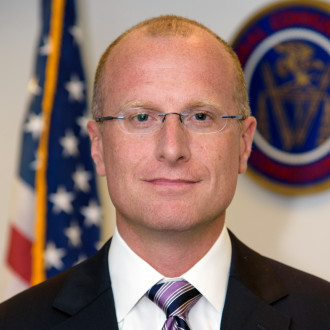
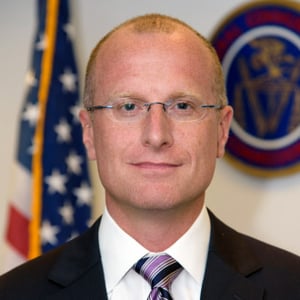
Please join us for a keynote by FCC Chairman Brendan Carr, followed by a panel discussion of commercial and government space leaders to explore the issues shaping this next frontier.
Featuring:
International & National Security Law Group
Sponsors: International & National Security Law Practice Group
| Topics: | International & National Security Law • International Law & Trade |
|---|
China’s grip on critical supply chains poses a serious threat to America’s economic and national security. From human rights abuses to intellectual property theft, America has responded with sanctions, export controls, and investment restrictions in an effort to reduce reliance on Chinese goods. This panel examines how the courts and the regulators are navigating the challenge of curbing China’s dominance while balancing economic integration with strategic competition.
Featuring:
| Topics: | Civil Rights |
|---|
CLE credit for this event is available at On-Demand CLE.
The second Trump administration is aggressively prosecuting civil rights violations, with new priorities scrutinizing universities that fail to protect students from antisemitism, companies that engage in DEI programs, and school districts that allow biological males to play in girls’ sports. The administration also created a Religious Liberty Commission and is policing employers who infringe on employees’ religious liberties. Is this new emphasis a response to new challenges, or a new definition of American civil rights?
Featuring:
Young Lawyers Chapters
Sponsors: Loyola - Chicago Student Chapter
| Topics: | Litigation |
|---|
The rapid growth of strategic litigation vehicles has changed the professional landscape dramatically, most notably for those setting out in their careers. Indeed, the strategic litigation ecosystem now in many ways bears little resemblance to the landscape of twenty years ago. This new strategic litigation ecosystem is driven by non-profit and for-profit enterprises that take very different approaches to their cause-based work. How these groups operate, from the way that they recruit lawyers to how they work collaboratively, has a greater effect on the overall conservative and libertarian legal movement than is often acknowledged. This panel will include practitioners from the for-profit, non-profit, and government-service segments of this ecosystem and the differences with the traditional large-firm economy and its approaches to litigation.
Featuring:
2025 National Lawyers Convention
2025 National Lawyers Convention
Featuring:
2025 National Lawyers Convention
Join us for a short screening of an excerpt from the We Hold These Truths film, titled Living Up To Our Declaration of Independence (approximately 14 minutes). At the conclusion of the screening, Judge Douglas H. Ginsburg will welcome questions from the audience.
Featuring:
2025 National Lawyers Convention
CLE credit for this event is available at On-Demand CLE.
The advent and rise of AI over the past several years poses radical questions for lawyers and the law. How will AI change the practice of law, including the work of law firms and inside judges’ chambers (“AI for the Law”)? And how should courts respond to the myriad legal issues implicating AI – copyright and beyond (“The Law of AI”)? Do the last five years of legal cases against social media companies tell us anything about the future of AI companies in the courts? Will there be a “techlash” against AI similar to the “techlash” against social media? How might national security concerns inform the AI legal and regulatory landscape?
Featuring:
2025 National Lawyers Convention
Featuring:
Education Practice Group & Family and Parental Rights Network
Sponsors: Education Practice Group · Family & Parental Rights Network
| Topics: | Family Law • Education Policy |
|---|
With Mahmoud v. Taylor setting new boundaries on parental rights, the future of family law is in flux. This panel will consider how the decision may shape parental authority in education, healthcare, and other contexts; and will explore the broader implications for the relationship between families, the state, and the courts.
Featuring:
Health Practice Group
Sponsors: Health Practice Group
| Topics: | Healthcare |
|---|
CLE credit for this event is available at On-Demand CLE.
Breakthroughs in biotechnology are reshaping medicine at a breathtaking pace. From CRISPR and other forms of gene editing, to novel mRNA vaccines, to synthetic biology and regenerative medicine, advances once thought science fiction are rapidly moving into clinical practice. These developments raise profound legal and policy questions: How should intellectual property law incentivize innovation while ensuring access? What role should federal agencies play in regulating cutting-edge therapies, and where do constitutional limits lie? How do courts balance public health, individual autonomy, and religious liberty in disputes over vaccines or gene therapies? And as therapies move beyond treatment into enhancement, what ethical boundaries should the law enforce?
Featuring:
Property Rights Practice Group
Sponsors: Property Rights Practice Group
| Topics: | Property Rights |
|---|
CLE credit for this event is available at On-Demand CLE.
From Zohran Mamdani's mayoral campaign promise to remake New York housing and California Governor Gavin Newsom's recent attempts to stimulate housing development, housing issues like rent control, zoning laws, and environmental regulations are in the spotlight. This panel considers whether regulations like exclusionary zoning and rent control worsen the housing crisis, and if stronger judicial enforcement of property rights offers a solution.
Featuring:
Labor & Employment Law Practice Group
Sponsors: Labor & Employment Law Practice Group
| Topics: | Labor & Employment Law |
|---|
Much of federal labor and employment law is shaped by the policy-making choices of agency lawyers. The Department of Labor Solicitor, along with the General Counsels of the Equal Employment Opportunity Commission and the National Labor Relations Board, exercise significant influence over enforcement priorities, litigation strategy, and the development of substantive law. Their interpretations can shift the direction of federal labor and employment policy even before regulations or judicial decisions are issued.
This panel will explore the scope and legitimacy of policymaking authority vested in these positions. Should agency lawyers play such an outsized role in determining the law’s application? Are they acting as neutral legal advisors or as quasi-policymakers advancing partisan agendas? We will also examine proposals to formally shift the NLRB’s policymaking role from the Board itself to the General Counsel, assessing how such a change might alter the balance of power between enforcement staff, adjudicators, and courts.
Featuring:
2025 National Lawyers Convention
RESOLVED: Parents have a constitutional right to know and consent to public school facilitation of their children's gender-identity transition
Featuring:
2025 National Lawyers Convention
Featuring:
2025 National Lawyers Convention
2025 National Lawyers Convention
| Topics: | Federal Courts • Healthcare • State Courts • Supreme Court |
|---|
CLE credit for this event is available at On-Demand CLE.
From litigation challenging COVID regulations to the recent legal challenges to state laws regulating transgender surgery and medications to recent actions to reassess the EPA's "Endangerment Finding," important questions have emerged about how courts should evaluate scientific claims. What are the challenges “with appealing and deferring to the authority of the expert class,” as Justice Thomas wrote in his Skrmetti concurrence? What is the role of the judge and the jury in evaluating scientific claims made by the parties?
Featuring:
2025 National Lawyers Convention