
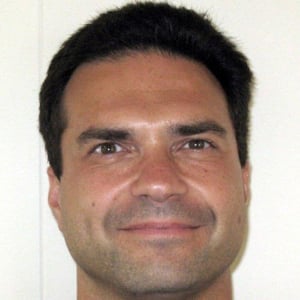
Assistant Attorney General & Senior Trial Counsel to the Criminal Bureau, Massachusetts Attorney General
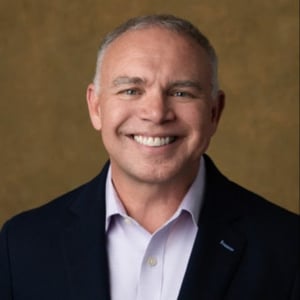
Vice President for Litigation & Strategy, Pacific Legal Foundation
Larry Salzman leads PLF’s litigation program and is responsible for shaping the organization’s overall legal strategy to advance the principles of individual rights and limited government. He oversees the Supreme Court docket at PLF and helps its nearly 75 litigating attorneys and support staff bring cases to secure enduring legal change for liberty.
Larry has been a public interest litigator for nearly two decades, focusing on property rights and economic freedom. Recent highlights include Sheetz v. County of El Dorado and Tyler v. Hennepin County at the Supreme Court. He has been with PLF for more than a decade. Previously, he was a judicial clerk at the U.S. Court of Federal Claims and a litigator at the Institute for Justice.
Between 2007 and 2011, Larry took a hiatus from litigation to work as CEO of an e-commerce company he had co-founded and built while attending law school at night. He loves his current role at PLF because it provides the rare opportunity to continue expressing dual passions for litigation and entrepreneurial management.
Larry’s commitment to liberty crystallized during college by studying philosophy and free-market economics. He experienced the importance of property rights in a very personal way in the 1990s when his family’s auto-repair business was taken by eminent domain and turned over by the city to a private developer on the promise that a big-box store would generate more tax revenue.
He graduated from the University of San Diego School of Law (J.D. 2002), where he was assistant editor of the San Diego Law Review. Larry was inspired in law school to pursue a career in public interest litigation while working as a research assistant to the late Bernard Siegan, a pioneer in the movement to revive constitutional protection for property rights and economic liberty. He also serves on the Board of Directors for the Ayn Rand Institute. When not working, he enjoys travel, an annual pass to Disneyland with family, and learning and growing alongside his daughter.
Larry is a member of the bar only in the state of California.
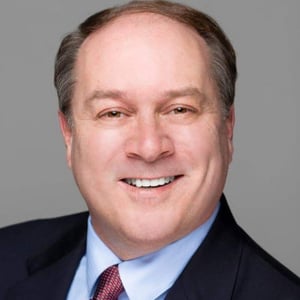
Of Counsel, Fisher & Phillips, LLP
Greg Grisham has over 25 years of successful experience counseling and representing employers in all aspects of workplace law in Tennessee and across the United States.
He has helped employers avoid claims, charges and lawsuits with a focus on preventative practices. Preventative practices include counseling in situations involving discipline, termination, demotion, promotion and other workplace changes in the terms and conditions of employment, harassment investigations, wage and hour compliance, FMLA Compliance, Reasonable Accommodation assessment, supervisor training and the review of employment policies and procedures. In addition, Greg's practice includes the representation of business entities subject to Title III of the Americans with Disabilities Act in Public Accommodation cases.
Greg has successfully litigated hundreds of administrative charges, employment lawsuits, and arbitration demands on behalf of employers, including federal and state law claims alleging discrimination, harassment, retaliation, wrongful termination, defamation, invasion of privacy, breach of contract, wage and hour violations and ERISA violations, among others. He also represents employers before the National Labor Relations Board in unfair labor practice proceedings. He represents employers in the enforcement of post-employment restrictive covenants such as non-compete, non-solicitation and non-disclosure agreements and related trade secret litigation. Greg's practice also includes the defense of property owners and property management companies in federal and state Housing Discrimination charges and litigation. He also advises Tennessee Public Charter Schools on education law and workplace compliance matters.
Greg has extensive experience working with insurance carriers and their insureds in the defense of EPLI claims. He is a regular speaker at public seminars on workplace law issues and has authored numerous articles on a variety of labor and employment law related topics.
Greg holds an AV Preeminent Peer Review rating from Martindale-Hubbell and has been selected for inclusion in Mid-South Super Lawyers and Best Lawyers in America for Employment Litigation-Management side. Greg was elected as a 2016 Fellow to the College of Labor and Employment Lawyers and has been selected to the “Top 20 Lawyers in Traditional Labor & Employment Law” list in conjunction with Human Resource Executive Magazine and LawDragon’s 2017 and 2018 “Most Powerful Employment Attorneys” lists and specialty guides. Greg was also named a Fellow in the American Bar Foundation in 2017.
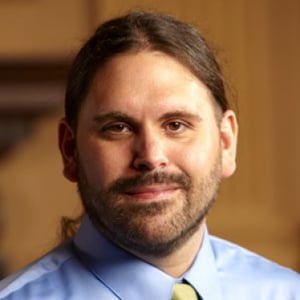
University of Pennsylvania Law School
Jonathan Klick’s work focuses on identifying the causal effects of laws and regulations on individual behavior using cutting-edge econometric tools. Specific topics addressed by Klick’s work include the relationship between abortion access and risky sex, the health behaviors of diabetics, the effect of police on crime, addiction as rational choice, how liability exposure affects the labor market for physicians, as well as a host of other issues. His scholarship has been published in numerous peer-reviewed economics journals, including The Journal of Economic Perspectives, The Journal of Law & Economics, The Journal of Law, Economics, and Organization, and The Journal of Legal Studies. He has also published papers in The Stanford Law Review, The Columbia Law Review, and The University of Chicago Law Review.
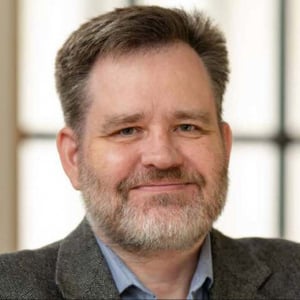
David Boies Professor of Law, Yale Law School

Former President & CEO, The Federalist Society for Law and Public Policy Studies
Eugene B. Meyer, former President and CEO of the Federalist Society, has served as Executive Director, CEO, and/or President of the organization for more than 40 years. He is responsible for shepherding the organization from a small group of law students to a community of 90,000 lawyers, law students, academics, judges, and others interested in the rule of law. The Society now includes a Student Chapter at nearly every ABA-accredited law school in the country and Lawyers Chapters in 220 major cities across the nation. Gene earned his B.A. in history at Yale in 1975 and his M.A. in political science from the London School of Economics in 1976. Gene currently serves on the boards of the U.S. Chess Center, the Holman Foundation, the Sarah Scaife Foundation, and the advisory board of the Adam Smith Society. He holds the title of International Chess Master.
District Judge, United States District Court for the Eastern District of New York
Senior Judge, United States District Court for the Southern District of New York
Loretta A. Preska is a senior judge for the United States District Court for the Southern District of New York. She joined the court in 1992 after being nominated by President George H.W. Bush. Preska became the chief judge of the court in May of 2009 when Kimba Wood assumed senior status. She served as chief judge of the court for a seven-year term from 2009 to 2016, and took senior status in 2017.
Preska graduated from the College of St. Rose with her Bachelor's degree in 1970 and also graduated from Fordham Law with her Juris Doctor Degree in 1973. She graduated from NYU Law with her Master of Laws degree in 1978.
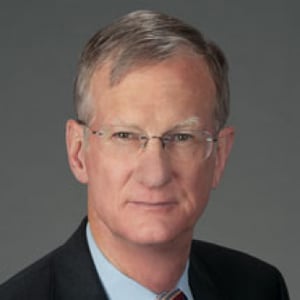
Legal Scholar and Solo Practitioner
Jack received his B.A. in History from the University of Virginia in 1977, graduating with Highest Distinction. After graduating Yale Law School in 1980, he served active duty in the U.S. Army's JAG Corps, rising to the rank of Major, where he represented the United States in more than 250 cases.
He practiced for a decade as an Associate for Bradley Arant in Birmingham, Alabama. He proudly served the State of Alabama in the Office of the Attorney General, both as Deputy and Assistant Attorney General, handling complex civil and criminal litigation cases for the people of Alabama. In 2000, he won the "Best Brief Award" from the National Association of Attorneys General for his brief in a case decided by the U.S. Supreme Court, James Alexander v. Martha Sandoval – a case he won. He was Special Assistant to the Inspector General for the Corporation for National and Community Service, Visiting Legal Fellow for the Center for Judicial and Legal Studies for the Heritage Foundation, Of Counsel at Strickland Brockington Lewis, a solo practitioner, and General Counsel for Indigo Energy.
Most recently, he "re-upped" for military service, volunteering his legal services to the Georgia State Defense Force where twice each month he provided legal services for National Guardsmen who were being deployed. He wore his military uniform for the last time in October 2024.
Jack Park passed away on March 16, 2026.

Luis v. United States: The Distinction That Makes All the Difference
Dean A. Mazzone
Federalist Society Review, Volume 18
Note from the Editor: This article discusses the Supreme Court’s 2016 decision in Luis v. United...
PA Supreme Court Reinvigorates State's 1971 Environmental Rights Amendment
Andrew T. Bockis, Joel Burcat
In Pennsylvania Environmental Defense Foundation v. Commonwealth,[1] the Pennsylvania Supreme Court overturned the standard that had been...
Lynch et al., v. California Coastal Commission
Larry Salzman
In Lynch et al., v. California Coastal Commission, the California Supreme Court this month raised a...
Bottleneckers: The Origins of Occupational Licensing and What Can Be Done About Its Excesses
Dick M. Carpenter
Federalist Society Review, Volume 18
Note from the Editor: This article critically discusses economic regulation in general and occupational licensing in...
Beyond the Red-Blue Divide: An Overview of Current Trends in State Non-Compete Law
J. Gregory Grisham
Federalist Society Review, Volume 18
Introduction Covenants not to compete (“non-competes”)[1] have a long history dating back to the medieval...
The Wealth of Congress
Jonathan Klick
Professor Jonathan Klick’s paper is an empirical inquiry into the impact of congressional service on...
The Place of Congress in the Constitutional Order
Keith E. Whittington
Professor Keith Whittington argues in favor of the centrality of Congress in the American constitutional...
The Purpose of the Article I Initiative
Eugene B. Meyer
Federalist Society President Eugene Meyer summarizes the mission of the Society's Article I Initiative as...
A Modest Proposal for the Reduction of the Size of the Federal Judiciary by Two-Thirds
Brian M. Cogan
Federalist Society Review, Volume 18
Note from the Editor: This is the first article in a new Commentary section in...
The Georgia Supreme Court Delivers a Victory for School Choice
Loretta Preska, John J. Park
On Monday, June 26, while the legal world was watching for decisions from the U.S....