
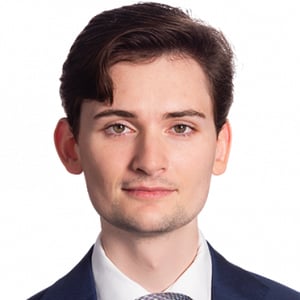
Deputy Assistant Attorney General, Office of Legal Policy, Department of Justice
GianCarlo Canaparo serves as Deputy Assistant Attorney General in the Office of Legal Policy at the Department of Justice. There, he oversees the Office's regulatory work and is the Department's liaison to the Office of Information and Regulatory Affairs. He also assists the White House in the process of selecting nominees for federal judgeships and advises Department leadership on policy and legal matters.
Before joining the Department, Canaparo was a senior legal fellow at The Heritage Foundation’s Edwin Meese III Center for Legal and Judicial Studies where he researched constitutional law, administrative law, and civil rights.
Canaparo’s scholarship has appeared in various law reviews including the Harvard Journal of Law and Public Policy, the Notre Dame Law Review, the Georgetown Journal of Law and Public Policy, the Texas Review of Law and Politics, and the Administrative Law Review. His research has been cited by Justice Neil Gorsuch and featured in the Wall Street Journal and Washington Post. His analysis has appeared in Law & Liberty, Civitas, Fox News, The National Review, Law 360, FedSoc Blog, and other outlets.
Canaparo co-hosted The Heritage Foundation’s SCOTUS 101 podcast, which follows the Supreme Court’s arguments and opinions and features interviews with judges, advocates, and scholars.
After graduating Georgetown law, Canaparo spent three years at the law firm of Skadden, Arps, Slate, Meagher & Flom and two years as a federal law clerk. He earned his bachelor’s degree in economics from the University of California at Davis.
Canaparo is a classical pianist and organist.
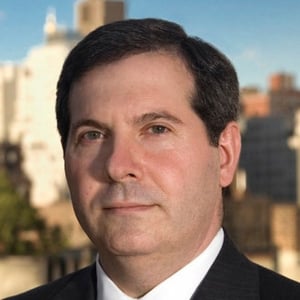
Partner, DeMarco Law, PLLC
Joseph V. DeMarco is a partner at DeMarco Law, PLLC where he focuses on counseling clients on complex issues involving information privacy and security, theft of intellectual property, computer intrusions, on-line fraud, and the lawful use of new technology. His years of experience in private practice and in government handling the most difficult cybercrime investigations handled by the United States Attorney’s Office have made him one of the nation’s most sought-after lawyers on Internet crime and the law relating to emerging technologies. In addition to his counsel practice, Mr. DeMarco serves as an Arbitrator, resolving complex commercial and high-technology disputes between businesses. He is on the National Panel of Neutrals of the American Arbitration Association (AAA) and Federal Arbitration, Inc. (FedArb).
From 1997 to 2007, Mr. DeMarco served an Assistant United States Attorney for the Southern District of New York, where he founded and headed the Computer Hacking and Intellectual Property (CHIPs) Program, a group of five prosecutors dedicated to investigating and prosecuting violations of federal cybercrime laws and intellectual property offenses. Under his leadership, CHIPs prosecutions grew from a trickle in 1997 to a top priority of the United States Attorney’s Office, encompassing all forms of criminal activity affecting e-commerce and critical infrastructures including computer hacking crimes; transmission of Internet worms and viruses; electronic theft of trade secrets; illegal use of “spyware”; web-based frauds; unlawful Internet gambling; and criminal copyright and trademark infringement offenses. As a recognized thought leader in the field, Mr. DeMarco was frequently asked to counsel prosecutors and law enforcement agents regarding novel investigative and surveillance techniques and methodologies, and regularly provided advice to the United States Attorney concerning the Office’s most sensitive computer-related investigations. In 2001, Mr. DeMarco also served as a visiting Trial Attorney at the Department of Justice Computer Crimes and Intellectual Property Section in Washington, D.C., where he focused his work on Internet privacy, gaming, and theft of intellectual property.
Since 2002, Mr. DeMarco has served as an Adjunct Professor at Columbia Law School, where he teaches the upper-class Internet and Computer Crimes seminar. He has been invited to speak throughout the world on cybercrime, e-commerce, and IP enforcement. He has lectured on the subject of cybercrime at Harvard Law School, the Practicing Law Institute, the National Advocacy Center, and at the FBI Academy in Quantico, Virginia, and has served as an instructor on cybercrime to judges attending the New York State Judicial Institute.
Prior to joining the United States Attorney’s Office, Mr. DeMarco was a litigation associate at Cravath, Swaine & Moore in New York City, where he concentrated his work on intellectual property, antitrust, and securities law issues for various high-technology clients. Prior to that, Mr. DeMarco served as law clerk to the Honorable J. Daniel Mahoney, United States Circuit Judge for the Second Circuit Court of Appeals.
Mr. DeMarco holds a J.D. magna cum laude from New York University School of Law. At NYU he was a member of the NYU Law Review. He received his B.S.F.S. summa cum laude from the Edmund A. Walsh School of Foreign Service at Georgetown University.

Emanuel S. Heller Professor of Law, University of California at Berkeley; Senior Research Fellow, School of Civic Leadership, Civitas Institute, University of Texas at Austin; Nonresident Senior Fellow, American Enterprise Institute
John Yoo is the Emanuel Heller Professor of Law. He is also Distinguished Visiting Scholar, School of Civic Leadership and Senior Research Fellow, Civitas Institute, at the University of Texas at Austin. He is also a Nonresident Senior Fellow at the American Enterprise Institute.
His most recent book, The Politically Incorrect Guide to the Supreme Court, co-authored with Robert Delahunty, was published in 2023. Professor Yoo’s other books include Defender-in-Chief: Trump’s Fight for Presidential Power; Striking Power: How Cyber, Robots, and Space Weapons Change the Rules for War, Point of Attack: Preventive War, International Law, and Global Welfare, and Crisis and Command: A History of Executive Power from George Washington to George Bush.
Professor Yoo has published more than 100 articles in academic journals on subjects including national security, constitutional law, international law, and the Supreme Court. He also regularly contributes to the editorial pages of the Wall Street Journal, New York Times, Washington Post, Los Angeles Times, and National Review, among others.
Professor Yoo has served in all three branches of government. He was an official in the U.S. Department of Justice, where he worked on national security and terrorism issues after the 9/11 attacks. He served as general counsel of the U.S. Senate Judiciary Committee. He has been a law clerk for Supreme Court Justice Clarence Thomas and federal appeals Judge Laurence Silberman. He has been a visiting professor at Seoul National University in South Korea, the Interdisciplinary Center in Israel, Keio University in Japan, Trento University in Italy, the University of Chicago, and the Free University of Amsterdam.
Professor Yoo supervises the Public Law and Policy Program and the California Constitution Center. He also serves on the boards of the Pacific Legal Foundation, the Federalist Society’s Separation of Powers and Federalism Division, the Universidad Cientifica del Sur Law School, and the Asia-Pacific Law Institute at Seoul National University. He is a winner of the Federalist Society’s Paul Bator award and been the Edwin Meese III Originalism Lecturer at the Heritage Foundation.
Professor Yoo graduated from Yale Law School and summa cum laude from Harvard College.
Garwood Visiting Professor and Visiting Fellow, James Madison Pr, Cleveland-Marshall College of Law
David F. Forte is Professor of Law at Cleveland State University, where he was the inaugural holder of the Charles R. Emrick, Jr.- Calfee Halter & Griswold Endowed Chair. This fall, Professor Forte will be the Garwood Visiting Professor at Princeton University in the Department of Politics, and Visiting Fellow at the James Madison Program in American Ideals and Institutions. He holds degrees from Harvard College, Manchester University, England, the University of Toronto and Columbia University.
During the Reagan administration, Professor Forte served as chief counsel to the United States delegation to the United Nations and alternate delegate to the Security Council. He has authored a number of briefs before the United States Supreme Court, and has frequently testified before the United States Congress and consulted with the Department of State on human rights and international affairs issues. His advice was specifically sought on the approval of the Genocide Convention, on world-wide religious persecution, and Islamic extremism. He has appeared and spoken frequently on radio and television, both nationally and internationally. In 2002, the Department of State sponsored a speaking tour for Professor Forte in Amman, Jordan, and he was also a featured speaker to the Meeting of Peoples in Rimini, Italy, a meeting which gathers over 500,000 people from all over Europe. He has also been called to testify before the state legislatures of Ohio, Kansas, and Idaho as well as the New York City Council. He has assisted in drafting a number of pieces of legislation for the Ohio General Assembly dealing with abortion, international trade, and federalism. He has sat as acting judge on the municipal court of Lakewood Ohio and was chairman of Professional Ethics Committee of the Cleveland Bar Association. He has received a number of awards for his public service, including the Cleveland Bar Association’s President’s Award, the Cleveland State University Award for Distinguished Service, the Cleveland State University Distinguished Teaching Award, and the Cleveland-Marshall College of Law Alumni Award for Faculty Excellence. He served as Consultor to the Pontifical Council for the Family under Pope St. John Paul II and Pope Benedict XVI. In 2003, Dr. Forte was a Distinguished Fulbright Chair at the University of Trento and returned there in 2004 as a Visiting Professor. For the academic year, 2008-2009, Professor Forte was Senior Visiting Scholar at the Center for the Study of Religion and the Constitution in at the Witherspoon Institute in Princeton, New Jersey. He was the Robert E. Henderson Constitution Day Lecturer at the Ashbrook Center at Ashland University, and he has given over 300 invited addresses and papers at more than 100 academic institutions. His work has been cited by the U.S. Supreme Court.
Professor Forte was a Bradley Scholar at the Heritage Foundation, and Visiting Scholar at the Liberty Fund. He has been President of the Ohio Association of Scholars, was on the Board of Directors of the Philadelphia Society, and is also adjunct Scholar at the Ashbrook Center. He has been appointed to the Ohio State Advisory Committee to the U.S. Commission on Civil Rights. He has also been a Civil War re-enactor and a Merit Badge Counselor for the Boy Scouts.
He writes and speaks nationally on topics such as constitutional law, religious liberty, Islamic law, the rights of families, and international affairs. He served as book review editor for the American Journal of Jurisprudence and has edited a volume entitled, Natural Law and Contemporary Public Policy, published by Georgetown University Press. His book, Islamic Law Studies: Classical and Contemporary Applications, has been published by Austin & Winfield. He is Senior Editor of The Heritage Guide to the Constitution (2006), 2d edition (2014), published by Regnery & Co, a clause by clause analysis of the Constitution of the United States.
His teaching competencies include Constitutional Law, the First Amendment, Islamic Law, Jurisprudence, Natural Law, International Law, International Human Rights, the Presidency, and Constitutional History.
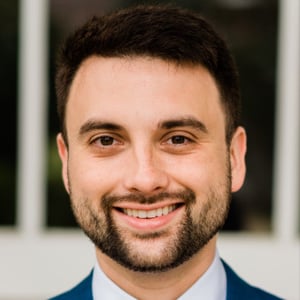
Roberto is a 2018 graduate of the University of Chicago Law School.
Senior Counsel, Litigation, Defense of Freedom Institute
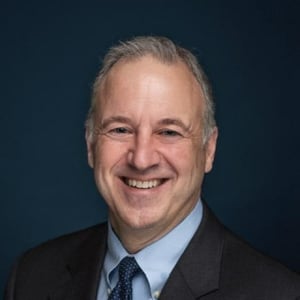
Don Daugherty is Senior Counsel, Litigation, at the Defense of Freedom Institute for Policy Studies. He previously served as a Senior Counsel at the Institute for Free Speech and the Wisconsin Institute for Law & Liberty. Before that, he was a partner at three of Wisconsin’s largest firms, with nearly 30 years of trial and appellate litigation experience. He has been consistently recognized as among the “Best Lawyers in America,” as well as Wisconsin’s “Super Lawyers.” He received his B.A. from the University of Virginia and his J.D. from Northwestern University Law School. After law school, he served as a clerk to the Honorable Roger J. Miner of the United States Court of Appeals for the Second Circuit.
Don is on the Board of Advisors for the Milwaukee Lawyers’ Chapter of the Federalist Society, and on the Executive Committee of the Federalist Society’s Litigation Practice Group.
Vice President for the Program on Technology, Criminal Justice and Civil Liberties, Lincoln Network
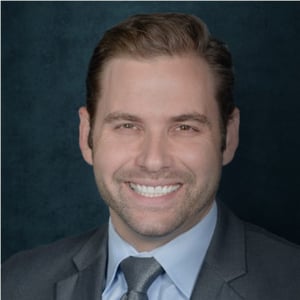
Arthur Rizer is the Vice President for the Program on Technology, Criminal Justice and Civil Liberties at Lincoln Network. In addition to his work at Lincoln, Arthur is a visiting lecturer at University College London, and an adjunct professor at George Mason University’s Antonin Scalia Law School. Arthur is also a member of Columbia University Justice Lab’s Executive Session for the Future of Justice Policy, the Federalist Society’s Executive Committee of the Criminal Law Practice Group, the Virginia Advisory Committee to the U.S. Commission on Civil Rights, and other advisory bodies.
Before joining Lincoln, Arthur was founding director of the R Street Institute’s program on criminal justice and civil liberties. Prior to that, Arthur taught at West Virginia University’s College of Law, and was a visiting professor at Georgetown University Law Center. He also served as a trial attorney with the U.S. Justice Department, primarily as a federal prosecutor in the Criminal Division, where he targeted command-and-control drug cartel leaders and narco-terrorists. He also served as a prosecutor in the U.S. Attorney’s Office for the Southern District of California and in the civil division. Earlier in his career, Arthur served in the U.S. Army, originally enlisting as a private before later receiving a commission. He served as an armor officer, later becoming the commander of a military police company and a Reserve Officers’ Training Corps assistant professor. He deployed to Fallujah, Iraq, with the mission to train the Iraqi Infantry and served as an MP acting battalion commander and executive officer. He retired as a lieutenant colonel from the U.S. Army (WVNG). During his Army career, Arthur received the Bronze Star, Purple Heart, Meritorious Service and Iraq Campaign medals.
Arthur is the author of three books: Lincoln’s Counsel (2010); The National Security Implications of Immigration Law (2013); and Jefferson’s Pen: The Art of Persuasion (2016).
Arthur earned his bachelor’s degree in political science from Pacific Lutheran University; a master of laws, with distinction, from Georgetown University’s Law Center; and his JD, magna cum laude, from Gonzaga University School of Law. He is also a graduate of the U.S. Marine Corps’ Command Staff College. He is in the final stages of a doctorate at the University of Oxford, Faculty of Law, Centre of Criminology that focuses on policing.
Shareholder, Lawson Huck Gonzalez, PLLC
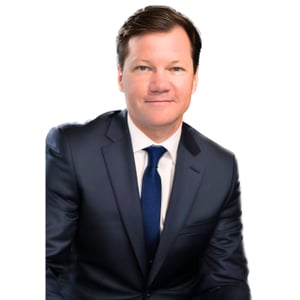
Jason Gonzalez is an experienced appellate and litigation attorney and regularly consults on executive branch government affairs. He represents businesses and state agencies in state and federal courts in contracts, government procurements, insurance disputes, class actions, tort defense, banking, finance, professional licenses, and elections matters.
Recently, Jason advocated for business association clients in two amicus briefs filed before the Florida Supreme Court, supporting the adoption of the federal summary judgment standard, a development widely viewed as the most significant Florida civil justice system reform in the modern era. In 2019, Florida Politics reported that Jason was representing parties in more pending civil cases at the Florida Supreme Court than any other attorney in the State.
Over the course of his career, Jason has been at the forefront of emerging legal developments, helping to shape Florida’s justice system.
Jason has served on the Florida Supreme Court Nominating Commission, as Chairman of the First District Court of Appeal Judicial Nominating Commission and Chairman of the Second Judicial Circuit Judicial Nominating Commission, as well as two terms as General Counsel and former Executive Board Member of the Republican Party of Florida. Prior to co-founding Lawson Huck Gonzalez, Jason served as General Counsel to the Florida Governor.
In 2010, Jason served as lead counsel for Transocean Ltd. in its Florida Panhandle litigation and regulatory matters immediately following the explosion and sinking of the Deepwater Horizon. Over a two-year period, Jason successfully obtained orders dismissing or removing every one of the more than 70 individual and class action lawsuits filed against Transocean in Florida.
Counsel for the Consumer Advocate Unit, Office of the Tennessee Attorney General
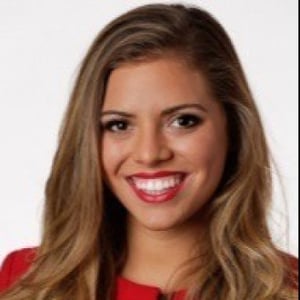
Rachel earned her Juris Doctor from the University of North Carolina School of Law, where she was Vice President of Communications for the UNC Law student chapter of the Federalist Society. Upon graduating, Rachel served as a law clerk to the Honorable David A. Faber, Senior United States District Court Judge of the United States District Court for the Southern District of West Virginia. Rachel then went on to practice appellate litigation and political law at a law firm in Florida. Rachel currently serves as Counsel for the Consumer Advocate Unit within the Office of the Tennessee Attorney General.
Professor of Law, University of San Diego School of Law (Retired)
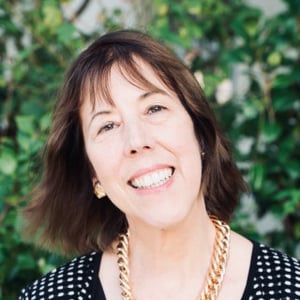
Gail Heriot is a recently retired law professor from the University of San Diego. She also served as a member of the U.S. Commission on Civil Rights from 2007 to 2025. She is also the chairman of the board of the American Civil Rights Project and the chair emerita of the Civil Rights practice group at the Federalist Society for Law & Public Policy.
Professor Heriot is a prolific writer in the area of civil rights. She is the author of many law review articles. She is also the editor (along with Maimon Schwarzschild) of the 2021 anthology, A Dubious Expediency: How Race Preferences Damage Higher Education. Her upcoming book is entitled, Why We Walk on Eggshell: How Our Civil Rights Laws Helped Bring About the Woke Era—And the Trump Era, Too.
Her writings for a general audience have appeared in the Wall Street Journal, the San Diego Union-Tribune, the National Review and many other newspapers and magazines.
In 1996, she co-chaired the successful “Yes on Proposition 209” campaign, which amended the California Constitution to prohibit state-sponsored discrimination or preferential treatment based on race, sex, color, ethnicity or national origin. In 2020, she co-chaired the “No on Proposition 16” campaign, which successfully prevented Proposition 209’s repeal.
Special Assistant/Counsel, United States Commission on Civil Rights
Alexander Heideman is Special Assistant/Counsel at the United States Commission on Civil Rights.

State Court Docket Watch: Grisham v. Romero
GianCarlo Canaparo
Note from the Editor: The Federalist Society takes no positions on particular legal and public policy...
State Court Docket Watch: State of Oregon v. Pittman
Joseph V. DeMarco
Note from the Editor: The Federalist Society takes no positions on particular legal and public policy...
Originalism as King
John C. Yoo
Federalist Society Review, Volume 22
A review of The President Who Would Not Be King: Executive Power under the Constitution,...
We Are Free for a Reason
David F. Forte
Federalist Society Review, Volume 22
A review of Free to Believe: The Battle Over Religious Liberty in America, by Luke...
State Court Docket Watch: State of Wisconsin v. Roundtree
Note from the Editor: The Federalist Society takes no positions on particular legal and public policy...
Negative Legislation
Roberto J. Borgert
Federalist Society Review, Volume 22
Modern commentators have spilled much ink on the undemocratic nature of congressional delegations to executive...
Last Hurrah for the Minimalist Court?
Donald A. Daugherty
Federalist Society Review, Volume 22
A review of SCOTUS 2020: Major Decisions and Developments of the U.S. Supreme Court, edited...
State Court Docket Watch: State of Montana v. Mercier
Arthur Rizer
Presently, there is much uncertainty in Sixth Amendment Confrontation Clause jurisprudence in light of differences in tone...
State Court Docket Watch: In Re: Amendments to Florida Rule of Civil Procedure 1.510
Jason B. Gonzalez, Rachel Procaccini
On December 31, 2020, the Florida Supreme Court prospectively amended Florida Rule of Civil Procedure...
Should the Supreme Court Take Note of “Th’ Iliction Returns” Next Time It Addresses Race-Preferential Admissions Policies?
Gail L. Heriot, Alexander M. Heideman
Federalist Society Review, Volume 22
“[N]o matter whether th’ constitution follows th’ flag or not, th’ Supreme Court follows th’...