
Bell, McAndrews & Hiltachk, LLP
Partner, Willkie Farr & Gallagher LLP
Francis J. Menton, Jr. is a partner in the Litigation Department and Co-Chair of the Business Litigation Practice Group of Willkie Farr & Gallagher LLP in New York. Mr. Menton specializes in complex and technical commercial litigation, principally contract and securities claims. He has a nationwide trial practice, and has tried cases in state and federal courts including Colorado, Kansas, Massachusetts, Michigan, New York, Puerto Rico, Texas, Virginia, and Washington.
Mr. Menton is the author of "New Opportunities for Defendants in Securities Class Actions," Engage (Fall 2007), "Can You Protect Yourself Against Identity Theft?" New York Law Journal (April 29, 2002), and "Top Ten Federal Government Efforts to Suppress Free Speech," Federalist Society Free Speech and Election Law News (Summer 2000, 1999, 1998). He also authored "Evaluating Claims Under The Securities Litigation Reform Act of 1995," New York Law Journal (January 6, 1996).
Independent Analyst, None
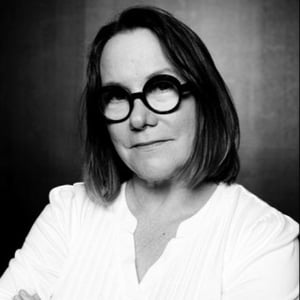
Allison Hayward most recently served as the Head of Case Selection at the Oversight Board. Previously, she was a Commissioner at the California Fair Political Practices Commission, a Board Member at the Office of Congressional Ethics, and an Assistant Professor of Law at George Mason University School of Law. She also previously worked as Chief of Staff and Counsel in the office of Federal Election Commission Commissioner Bradley A. Smith and practiced election law in California and in Washington DC.
In 1994-1995, Professor Hayward was a judicial clerk for the Honorable Danny J. Boggs, United States Court of Appeal for the Sixth Circuit.
She is a member of the State Bar of California and the District of Columbia Bar.
Former Assistant Attorney General, U.S. Department of Justice, Civil Division
During the Reagan Administration, Richard Willard served as Assistant Attorney General in charge of the Civil Division, the largest litigation division of the US Department of Justice. There, he chaired the Reagan Administration's Tort Policy Working Group and developed its proposals for reforming civil litigation, workplace drug testing, and preventing unauthorized disclosure of classified information.
More recently, he served as senior vice president and general counsel for Bristol-Myers Squibb Co. and Gillette Company, where he led large worldwide legal departments, advised on strategic transactions, and enabled launch of new products with strong intellectual property protection.
Mr. Willard's private practice involved corporate counseling and litigation of cases raising public policy concerns. He served as lead counsel in complex litigation involving multiple claims, parties, and jurisdictions. He frequently appeared in trial and appellate courts around the country, including six arguments in the Supreme Court.
Ronald Reagan Distinguished Fellow Emeritus, The Heritage Foundation
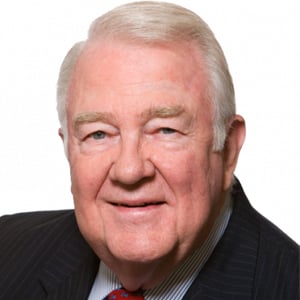
Edwin Meese III, the prominent conservative leader, thinker and elder statesman, continues a quarter-century formal association with The Heritage Foundation as the leading think tank’s Ronald Reagan Distinguished Fellow Emeritus.
In that capacity, Meese oversees special projects and acts as an ambassador for Heritage within the conservative movement.
Meese was chairman of Heritage’s Center for Legal and Judicial Studies from its founding in 2001 until what he calls his “semi-retirement” on Feb. 1, 2013.
He joined Heritage in 1988 as the think tank's first Ronald Reagan Distinguished Fellow -- the only policy chair in the country to be officially named for the 40th president. His work focused on keeping President Reagan’s legacy of conservative principles alive in public debate and discourse.
The legal center now bears his name, in recognition of Meese’s contributions to the rule of law and the nation’s understanding of constitutional law. Its mission is to educate government officials, the media and the public about the Constitution and legal principles -- and how they affect public policy.
Perhaps best known as U.S. attorney general during Reagan’s second term, Meese’s service to the conservative icon stretched from the California governor’s mansion in 1966 to the White House in 1981 before he went to the Department of Justice four years later.
His Heritage “hats” kept Meese among the major conservative voices in national policy debates at an age when most men and women enjoyed quiet retirements.
In 2006, for example, Meese was named to the Iraq Study Group, a special presidential commission dedicated to examining the best resolutions for America's involvement in Iraq. In the past few years he wrote and spoke about constitutional topics ranging from religious liberty to the responsibility of Supreme Court justices.
Immediately after Reagan's death in 2004, and in the years since, Meese often agreed to major media appearances to discuss the lasting impact of his old friend, mentor and boss. He has summarized the Reagan legacy in three accomplishments: Reagan cut taxes and kept them low. He worked to defeat and end the Soviet Union and its worldwide push for communism. And he restored America's faith in itself after years of failure and "malaise."
"I admired him as a leader and cherish his friendship," Meese wrote in a 2004 essay for Heritage members and supporters. "Ronald Reagan had strong convictions. He was committed to the principles that had led to the founding of our nation. And he had the courage to follow his convictions against all odds." <[>Edwin Meese III was born Dec. 2, 1931, to Edwin Jr. and Leone Meese in Oakland, Calif. He graduated from Yale University in 1953 and holds a law degree from the University of California-Berkeley.
Meese spent much of his adult life working for Reagan, first after the former actor, sports announcer and athlete was elected as California’s governor in 1966 and then when he sought and won the presidency in 1980.
Reagan never forgot Meese's loyalty and hard work. During a press conference at which reporters questioned Meese's actions at the Justice Department, Reagan replied: "If Ed Meese is not a good man, there are no good men."
During the Reagan governorship, Meese served as executive assistant and chief of staff from 1969 through 1974 and as legal affairs secretary from 1967 through 1968. He previously was deputy district attorney in Alameda County, Calif.
From January 1981 to February 1985, Meese held the position of counsellor to the president -- the senior job on the White House staff -- and functioned as Reagan's chief policy adviser. In 1985, he received Government Executive magazine's annual award for excellence in management.
Meese served as the 75th attorney general of the United States from February 1985 to August 1988. As the nation's chief law enforcement officer, he directed the Justice Department and led international efforts to combat terrorism, drug trafficking and organized crime.
Meese’s relationship with Heritage began when he met with senior management to discuss the think tank's landmark policy guide, Mandate for Leadership, prepared for the incoming administration. Meese later recalled that Reagan personally handed out copies of the 1,093-page book to members of his Cabinet and asked them to read it. Nearly two-thirds of Mandate's 2,000 recommendations would be adopted or attempted by the Reagan administration.
More than a decade after joining Heritage, Meese assumed the chairmanship of its Center for Legal and Judicial Studies. Under his guidance, the center counseled White House staffers, Justice Department officials and Senate Judiciary Committee members on the importance of filling judicial vacancies with qualified men and women who are committed to interpreting the Constitution according to the founding document's original meaning.
The center became known for hosting "moot court" practice sessions to sharpen the arguments of attorneys slated to bring important cases before the Supreme Court. Those cases addressed constitutional issues ranging from property rights to racial preferences in primary and secondary schools to restrictions on free speech in campaign finance law.
Meese headed the legal center's Advisory Board for the writing and editing of the best-selling book, The Heritage Guide to the Constitution (Regnery, 2005). In it, 109 experts walked readers through a clause-by-clause analysis of the Constitution. Sen. Tom Coburn (R-Okla.) was among those keeping the reference work handy during Judiciary Committee hearings on Supreme Court nominees.
Meese's other books include “Leadership, Ethics and Policing” (Prentice Hall, 2004); “Making America Safer” (Heritage, 1997); and “With Reagan: The Inside Story” (Regnery Gateway, 1992).He wrote the Introduction to a well-received 2010 book on the “overcriminalization” trend, “One Nation Under Arrest,” by Heritage veterans Paul Rosenzweig and Brian W. Walsh.
He also is a distinguished visiting fellow at the Hoover Institution at Stanford University in California and lectures, writes and consults throughout the United States on a variety of subjects.
As both attorney general and counsellor to Reagan, Meese was a member of the Cabinet and the National Security Council. He served as chairman of the Domestic Policy Council and the National Drug Policy Board. After Reagan won the White House in the 1980 election, Meese headed the transition team. During the campaign, he was the Reagan-Bush Committee's senior official.
Meese had a career outside government and politics. From 1977 to 1981, he was a law professor at the University of San Diego, where he also directed the Center for Criminal Justice Policy and Management.
He was an executive in the aerospace and transportation industry as vice president for administration of Rohr Industries Inc. in Chula Vista, Calif. He left Rohr to return to the practice of law, doing corporate and general work in San Diego County.
A retired colonel in the Army Reserve, Meese remains active in numerous civic and educational organizations.
He and his wife, Ursula, have two grown children and reside in McLean, Va.

Proposition 226 Paycheck Protection: the California Experience
Charles H. Bell
Free Speech & Election Law Practice Group Newsletter - Volume 2, Issue 2, Summer 1998
"Paycheck Protection" legislation has been introduced in nearly a dozen states and in Congress in...
Top Ten Government Efforts to Suppress Free Speech, 1997-1998
Francis J. Menton, Matthew Peterson
Free Speech & Election Law Practice Group Newsletter - Volume 2, Issue 2, Summer 1998
We Americans may think we have an inalienable right to free speech: the right to...
Election Law Observer
Allison R. Hayward
Free Speech & Election Law Practice Group Newsletter - Volume 2, Issue 2, Summer 1998
Cases, cases, casesSeveral recent court decisions should be of interest to activists and campaign finance...
Critical Infrastructure Protection: A New Era of National Security
Walter Gary Sharp
International & National Security Law Practice Group Newsletter - Volume 2, Issue 2, Summer 1998
Computers and computer-dependent systems permeate everyone's daily life. From local, state, and federal government decision...
Anti-Ballistic Missle Treaty: A Letter from the White House
International & National Security Law Practice Group Newsletter - Volume 2, Issue 2, Summer 1998
The following letter was written to The Honorable Benjamin Gilman, Chairman of the House of...
The Collapse of the Soviet Union and the End of the 1972 Anti-Missle Ballistic Missile Treaty
International & National Security Law Practice Group Newsletter - Volume 2, Issue 2, Summer 1998
The following is the Executive Summary of a legal memorandum from the law firm of...
Crime is an Important Federal Issue
Richard K. Willard
Criminal Law & Procedure Practice Group Newsletter - Volume 2, Issue 1, Spring 1998
It is an honor to be here today, to see many old friends and my...
Federalism in Law Enforcement
Edwin Meese
Criminal Law & Procedure Practice Group Newsletter - Volume 2, Issue 1, Spring 1998
It is a very rare day when I disagree with my good friend, Richard Willard,...
The Federalization of Criminal Law
D Smith
Criminal Law & Procedure Practice Group Newsletter - Volume 2, Issue 1, Spring 1998
It is a real honor to be invited as a participant in a Practice Group...
Debate: The Federalization of Criminal Law
William H. Jordan
Criminal Law & Procedure Practice Group Newsletter - Volume 2, Issue 1, Spring 1998
At the 1997 National Lawyers Convention, the Criminal Law and Procedure Practice Group hosted a...