
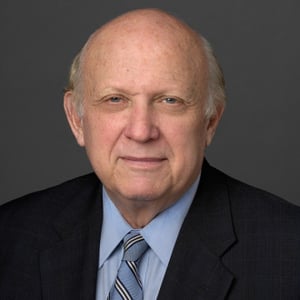
Senior Counsel, Cahill Gordon & Reindel LLP
Floyd Abrams is Senior Counsel in Cahill Gordon & Reindel LLP's litigation practice group.
Floyd has a national trial and appellate practice and extensive experience in high-visibility matters, often involving First Amendment, securities litigation, intellectual property, public policy and regulatory issues. He has argued frequently in the Supreme Court in cases raising issues as diverse as the scope of the First Amendment, the interpretation of ERISA, the nature of broadcast regulation, the impact of copyright law and the continuing viability of the Miranda rule. Most recently, Floyd prevailed in his argument before the Supreme Court on behalf of Senator Mitch McConnell as amicus curiae, defending the rights of corporations and unions to speak publicly about politics and elections in Citizens United v. Federal Election Commission. Floyd's clients have included The McGraw-Hill Companies in a large number of litigations around the country involving claims against its subsidiary, Standard & Poor’s Financial Services LLC, The New York Times in the Pentagon Papers case and others, ABC, NBC, CBS, CNN, Time Magazine, Business Week, The Nation, Reader's Digest, Hearst, AIG, and others in trials, appeals and investigations.
Floyd has represented Standard & Poor’s in litigations about its ratings; he defended the Brooklyn Museum of Art in its legal battles with Mayor Rudolph Giuliani; he represented two of the nation’s largest insurers in litigation under Section 17200 in California and he has frequently testified before congressional committees and prepared clients to do so. In 1998, he represented CNN in investigating and issuing a report on its broadcast accusing the United States of using nerve gas on a military mission in Laos in 1970, and again in 1999 in seeking to persuade the United States Senate to permit the public to view its deliberations as it determined whether or not to convict President Clinton of alleged high crimes and misdemeanors. He represented Nina Totenberg and National Public Radio in the 1992 "leak" investigation conducted by the United States Senate arising out of the confirmation hearing of Justice Clarence Thomas and, in 2004 and 2005, Judith Miller and Matthew Cooper in their efforts to avoid revealing their confidential sources.
In 2006, Floyd was elected to the American Academy of Arts & Sciences, an independent research center that conducts multidisciplinary studies of complex and emerging problems advanced by its 4,600 elected members, who are leaders in the academic disciplines, the arts, business and public affairs from around the world. In 2015, Floyd was honored by Yale Law School with its prestigious Award of Merit. Also in 2015, Floyd received the Walter Cronkite Freedom of Information Award presented by the Connecticut Foundation for Open Government. In 2011, Floyd was awarded the CUNY Graduate School of Journalism's Lifetime Achievement Award. In 1998, Floyd was the recipient of the William J. Brennan, Jr. Award for outstanding contribution to public discourse; the Learned Hand Award of the American Jewish Committee; and the Thurgood Marshall Award of the Association of the Bar of the City of New York. In November, 1999, he received the William J. Brennan, Jr. award of the Libel Defense Resource Center. Floyd was awarded, in 1997, the Milton S. Gould Award for outstanding appellate advocacy by the Office of the Appellate Defender in New York. Previously he had been awarded the Ross Essay Prize of the American Bar Association for his study of the Ninth Amendment of the United States Constitution. He has also received awards from, among others, the American Jewish Congress, Catholic University, the New York and Philadelphia Chapters of the Society of Professional Journalists, Sigma Delta Chi, the New York Civil Liberties Union, the Association for Education in Journalism and Mass Communication, and the National Broadcast Editorial Association.
In November, 2011, Yale Law School announced the formation of The Floyd Abrams Institute for Freedom of Expression, whose mission is to promote free speech, scholarship and law reform on emerging questions concerning traditional and new media. Developed in cooperation with Floyd, the Institute includes a clinic for Yale Law students to engage in litigation, draft model legislation, and advise lawmakers and policy makers on issues of media freedom and informational access.
The American Bar Association awarded Floyd its Certificate of Merit for his article published in The New York Times Magazine entitled "The New Effort to Control Information," which was described by the ABA as a "noteworthy contribution to public understanding of the American system of law and justice."
Described by Senator Daniel Patrick Moynihan as "the most significant First Amendment lawyer of our age," Floyd is top-ranked by Chambers USA. He is listed in Who’s Who Legal, Who’s Who in American Law, and has been awarded with Lifetime Achievement Awards by The New York Law Journal and The American Lawyer (2013).
Floyd, who served as chairman of Mayor Edward Koch's Committee on Appointments, New York City, served as the Chairman of the New York State Zenger Commemoration Planning Committee. Previously, he served as the Chairman of the Communications Committee of the Association of the Bar of the City of New York, as well as Chairman of the Committee on Freedom of Speech and of the Press of the Individual Rights Section of the American Bar Association and of the Committee on Freedom of Expression of the Litigation Section of the American Bar Association.
He has appeared frequently on television on Nightline, the News Hour with Jim Lehrer, Charlie Rose and other programs and has published articles and reviews in The New York Times, The Washington Post, The Yale Law Journal, The Harvard Law Review, and elsewhere.
Floyd served on the Technology and Privacy Advisory Committee of the U.S. Department of Defense in 2003-4 and as the Chair of the New York State Commission on Public Access to Court Records in 2004.
For fifteen years, Floyd was the William J. Brennan, Jr. Visiting Professor of First Amendment Law at the Columbia Graduate School of Journalism. He has, as well, been a Visiting Lecturer at Yale Law School and Columbia Law School and he is author of Friend of the Court: On the Front Lines with the First Amendment, published by Yale University Press (2013) and Speaking Freely: Trials of the First Amendment, published by Viking Press (2005).
General Counsel, Tikvah Fund
Suzanne Garment is an American scholar, writer, editor and attorney.
Garment is best known for her book, Scandal: The Culture of Mistrust in American Politics, and for her work as a aide to Ambassador Daniel Patrick Moynihan working to block the 1975 United Nations General Assembly Resolution 3379 of the United Nations that "Zionism is a form of racism and racial discrimination."
Garment holds the A.B. from Radcliffe College, the M.A. from the University of Sussex in the United Kingdom, the PhD in political science from Harvard University, the J.D. and a master of laws degree in taxation from Georgetown University
She has served as a visiting scholar at the Indiana University Center on Philanthropy at Indiana University; special counsel to Richard Ravitch, New York Lieutenant Governor and as counsel to the Task Force on the State Budget Crisis, co-chaired by Ravitch and former Federal Reserve chairman Paul Volcker. Before earning the J.D., she was a scholar at the American Enterprise Institute; associate editorial page editor of the Wall Street Journal; author of the "Capital Chronicle" column at the Wall Street Journal; and special assistant to Daniel Patrick Moynihan, U.S. ambassador to the United Nations. Garment has taught politics and public policy at Yale and Harvard Universities. She was the executive editor of Jewish Ideas Daily.
Professor of Law Emeritus, Brooklyn Law
Henry Mark Holzer received his B.A. degree from New York University where he studied Russian and political science. After graduation in 1954 he served in South Korea with United States Army intelligence, holding top secret clearance as chief order of battle analyst (Chinese Communist Forces) at Eighth Army Headquarters in Seoul. Following Professor Holzer’s military service he earned his Juris Doctor degree at New York University School of Law. After his admission to the New York bar in December 1959 he practiced constitutional and appellate law.
From 1972 to 1993 he taught full time at Brooklyn Law School, and for two years was an associate dean. His courses included Constitutional Law, Administrative Law, Civil Liberties, First Amendment and Appellate Advocacy. In the fall of 1993, he taught as a visiting professor at the University of New Mexico School of Law in Albuquerque.
He is author of approximately 300 articles, essays, and reviews. He has published legal and political commentary on current issues in print and electronic media, and has often been interviewed on radio and television.
Several of his out-of-print books are The Gold Clause: Government’s Money Monopoly; Sweet Land of Liberty? The Supreme Court and Individual Rights; Speaking Freely: The Case Against Speech Codes; Why Not Call it Treason? Korea, Vietnam, Afghanistan and Today. With his wife, Erika Holzer, he is co-author of “Aid and Comfort”: Jane Fonda in North Vietnam; and Fake Warriors: Identifying, Exposing, and Punishing Those Who Falsify Their Military Service.
His book The Supreme Court Opinions of Clarence Thomas, 1919-2006, was published in 2007. The second edition, covering the years 1991-2011 was published in 2012. Also published in 2012, in a print edition and eBook, was Professor Holzer’s book The American Constitution and Ayn Rand’s “Inner Contradiction.”
Journalist, Professor, and Author
Donald "Don" Oberdorfer Jr. (May 28, 1931 – July 23, 2015) was an American professor at the Paul H. Nitze School of Advanced International Studies (SAIS) at Johns Hopkins University with a specialty in Korea, and was a journalist for 38 years, 25 of them with The Washington Post. He is the author of five books and several academic papers. His book, Senator Mansfield: The Extraordinary Life of a Great American Statesman and Diplomat, won the D.B. Hardeman Prize in 2003.
Oberdorfer graduated from Princeton University and went to South Korea as a U.S. Army lieutenant after the signing of the armistice that ended the Korean War. In 1955 he joined The Charlotte Observer, and eventually found a job with The Washington Post. During the next 25 years, he worked for The Post, serving as White House correspondent, Northeast Asia correspondent, and diplomatic correspondent. He retired from the paper in 1993.
At the Nitze school, beyond his teaching position, Oberdorfer served as chairman of the U.S.-Korea Institute from its inauguration in 2006 and was named chairman emeritus in 2013.
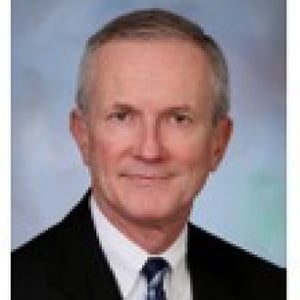
Former Assistant Attorney General, U.S. Department of Justice, Civil Division
During the Reagan Administration, Richard Willard served as Assistant Attorney General in charge of the Civil Division, the largest litigation division of the US Department of Justice. There, he chaired the Reagan Administration's Tort Policy Working Group and developed its proposals for reforming civil litigation, workplace drug testing, and preventing unauthorized disclosure of classified information.
More recently, he served as senior vice president and general counsel for Bristol-Myers Squibb Co. and Gillette Company, where he led large worldwide legal departments, advised on strategic transactions, and enabled launch of new products with strong intellectual property protection.
Mr. Willard's private practice involved corporate counseling and litigation of cases raising public policy concerns. He served as lead counsel in complex litigation involving multiple claims, parties, and jurisdictions. He frequently appeared in trial and appellate courts around the country, including six arguments in the Supreme Court.
Senior Counsel, Cahill Gordon & Reindel LLP
Floyd Abrams is Senior Counsel in Cahill Gordon & Reindel LLP's litigation practice group.
Floyd has a national trial and appellate practice and extensive experience in high-visibility matters, often involving First Amendment, securities litigation, intellectual property, public policy and regulatory issues. He has argued frequently in the Supreme Court in cases raising issues as diverse as the scope of the First Amendment, the interpretation of ERISA, the nature of broadcast regulation, the impact of copyright law and the continuing viability of the Miranda rule. Most recently, Floyd prevailed in his argument before the Supreme Court on behalf of Senator Mitch McConnell as amicus curiae, defending the rights of corporations and unions to speak publicly about politics and elections in Citizens United v. Federal Election Commission. Floyd's clients have included The McGraw-Hill Companies in a large number of litigations around the country involving claims against its subsidiary, Standard & Poor’s Financial Services LLC, The New York Times in the Pentagon Papers case and others, ABC, NBC, CBS, CNN, Time Magazine, Business Week, The Nation, Reader's Digest, Hearst, AIG, and others in trials, appeals and investigations.
Floyd has represented Standard & Poor’s in litigations about its ratings; he defended the Brooklyn Museum of Art in its legal battles with Mayor Rudolph Giuliani; he represented two of the nation’s largest insurers in litigation under Section 17200 in California and he has frequently testified before congressional committees and prepared clients to do so. In 1998, he represented CNN in investigating and issuing a report on its broadcast accusing the United States of using nerve gas on a military mission in Laos in 1970, and again in 1999 in seeking to persuade the United States Senate to permit the public to view its deliberations as it determined whether or not to convict President Clinton of alleged high crimes and misdemeanors. He represented Nina Totenberg and National Public Radio in the 1992 "leak" investigation conducted by the United States Senate arising out of the confirmation hearing of Justice Clarence Thomas and, in 2004 and 2005, Judith Miller and Matthew Cooper in their efforts to avoid revealing their confidential sources.
In 2006, Floyd was elected to the American Academy of Arts & Sciences, an independent research center that conducts multidisciplinary studies of complex and emerging problems advanced by its 4,600 elected members, who are leaders in the academic disciplines, the arts, business and public affairs from around the world. In 2015, Floyd was honored by Yale Law School with its prestigious Award of Merit. Also in 2015, Floyd received the Walter Cronkite Freedom of Information Award presented by the Connecticut Foundation for Open Government. In 2011, Floyd was awarded the CUNY Graduate School of Journalism's Lifetime Achievement Award. In 1998, Floyd was the recipient of the William J. Brennan, Jr. Award for outstanding contribution to public discourse; the Learned Hand Award of the American Jewish Committee; and the Thurgood Marshall Award of the Association of the Bar of the City of New York. In November, 1999, he received the William J. Brennan, Jr. award of the Libel Defense Resource Center. Floyd was awarded, in 1997, the Milton S. Gould Award for outstanding appellate advocacy by the Office of the Appellate Defender in New York. Previously he had been awarded the Ross Essay Prize of the American Bar Association for his study of the Ninth Amendment of the United States Constitution. He has also received awards from, among others, the American Jewish Congress, Catholic University, the New York and Philadelphia Chapters of the Society of Professional Journalists, Sigma Delta Chi, the New York Civil Liberties Union, the Association for Education in Journalism and Mass Communication, and the National Broadcast Editorial Association.
In November, 2011, Yale Law School announced the formation of The Floyd Abrams Institute for Freedom of Expression, whose mission is to promote free speech, scholarship and law reform on emerging questions concerning traditional and new media. Developed in cooperation with Floyd, the Institute includes a clinic for Yale Law students to engage in litigation, draft model legislation, and advise lawmakers and policy makers on issues of media freedom and informational access.
The American Bar Association awarded Floyd its Certificate of Merit for his article published in The New York Times Magazine entitled "The New Effort to Control Information," which was described by the ABA as a "noteworthy contribution to public understanding of the American system of law and justice."
Described by Senator Daniel Patrick Moynihan as "the most significant First Amendment lawyer of our age," Floyd is top-ranked by Chambers USA. He is listed in Who’s Who Legal, Who’s Who in American Law, and has been awarded with Lifetime Achievement Awards by The New York Law Journal and The American Lawyer (2013).
Floyd, who served as chairman of Mayor Edward Koch's Committee on Appointments, New York City, served as the Chairman of the New York State Zenger Commemoration Planning Committee. Previously, he served as the Chairman of the Communications Committee of the Association of the Bar of the City of New York, as well as Chairman of the Committee on Freedom of Speech and of the Press of the Individual Rights Section of the American Bar Association and of the Committee on Freedom of Expression of the Litigation Section of the American Bar Association.
He has appeared frequently on television on Nightline, the News Hour with Jim Lehrer, Charlie Rose and other programs and has published articles and reviews in The New York Times, The Washington Post, The Yale Law Journal, The Harvard Law Review, and elsewhere.
Floyd served on the Technology and Privacy Advisory Committee of the U.S. Department of Defense in 2003-4 and as the Chair of the New York State Commission on Public Access to Court Records in 2004.
For fifteen years, Floyd was the William J. Brennan, Jr. Visiting Professor of First Amendment Law at the Columbia Graduate School of Journalism. He has, as well, been a Visiting Lecturer at Yale Law School and Columbia Law School and he is author of Friend of the Court: On the Front Lines with the First Amendment, published by Yale University Press (2013) and Speaking Freely: Trials of the First Amendment, published by Viking Press (2005).
General Counsel, Tikvah Fund
Suzanne Garment is an American scholar, writer, editor and attorney.
Garment is best known for her book, Scandal: The Culture of Mistrust in American Politics, and for her work as a aide to Ambassador Daniel Patrick Moynihan working to block the 1975 United Nations General Assembly Resolution 3379 of the United Nations that "Zionism is a form of racism and racial discrimination."
Garment holds the A.B. from Radcliffe College, the M.A. from the University of Sussex in the United Kingdom, the PhD in political science from Harvard University, the J.D. and a master of laws degree in taxation from Georgetown University
She has served as a visiting scholar at the Indiana University Center on Philanthropy at Indiana University; special counsel to Richard Ravitch, New York Lieutenant Governor and as counsel to the Task Force on the State Budget Crisis, co-chaired by Ravitch and former Federal Reserve chairman Paul Volcker. Before earning the J.D., she was a scholar at the American Enterprise Institute; associate editorial page editor of the Wall Street Journal; author of the "Capital Chronicle" column at the Wall Street Journal; and special assistant to Daniel Patrick Moynihan, U.S. ambassador to the United Nations. Garment has taught politics and public policy at Yale and Harvard Universities. She was the executive editor of Jewish Ideas Daily.
Professor of Law Emeritus, Brooklyn Law
Henry Mark Holzer received his B.A. degree from New York University where he studied Russian and political science. After graduation in 1954 he served in South Korea with United States Army intelligence, holding top secret clearance as chief order of battle analyst (Chinese Communist Forces) at Eighth Army Headquarters in Seoul. Following Professor Holzer’s military service he earned his Juris Doctor degree at New York University School of Law. After his admission to the New York bar in December 1959 he practiced constitutional and appellate law.
From 1972 to 1993 he taught full time at Brooklyn Law School, and for two years was an associate dean. His courses included Constitutional Law, Administrative Law, Civil Liberties, First Amendment and Appellate Advocacy. In the fall of 1993, he taught as a visiting professor at the University of New Mexico School of Law in Albuquerque.
He is author of approximately 300 articles, essays, and reviews. He has published legal and political commentary on current issues in print and electronic media, and has often been interviewed on radio and television.
Several of his out-of-print books are The Gold Clause: Government’s Money Monopoly; Sweet Land of Liberty? The Supreme Court and Individual Rights; Speaking Freely: The Case Against Speech Codes; Why Not Call it Treason? Korea, Vietnam, Afghanistan and Today. With his wife, Erika Holzer, he is co-author of “Aid and Comfort”: Jane Fonda in North Vietnam; and Fake Warriors: Identifying, Exposing, and Punishing Those Who Falsify Their Military Service.
His book The Supreme Court Opinions of Clarence Thomas, 1919-2006, was published in 2007. The second edition, covering the years 1991-2011 was published in 2012. Also published in 2012, in a print edition and eBook, was Professor Holzer’s book The American Constitution and Ayn Rand’s “Inner Contradiction.”
Journalist, Professor, and Author
Donald "Don" Oberdorfer Jr. (May 28, 1931 – July 23, 2015) was an American professor at the Paul H. Nitze School of Advanced International Studies (SAIS) at Johns Hopkins University with a specialty in Korea, and was a journalist for 38 years, 25 of them with The Washington Post. He is the author of five books and several academic papers. His book, Senator Mansfield: The Extraordinary Life of a Great American Statesman and Diplomat, won the D.B. Hardeman Prize in 2003.
Oberdorfer graduated from Princeton University and went to South Korea as a U.S. Army lieutenant after the signing of the armistice that ended the Korean War. In 1955 he joined The Charlotte Observer, and eventually found a job with The Washington Post. During the next 25 years, he worked for The Post, serving as White House correspondent, Northeast Asia correspondent, and diplomatic correspondent. He retired from the paper in 1993.
At the Nitze school, beyond his teaching position, Oberdorfer served as chairman of the U.S.-Korea Institute from its inauguration in 2006 and was named chairman emeritus in 2013.
Former Assistant Attorney General, U.S. Department of Justice, Civil Division
During the Reagan Administration, Richard Willard served as Assistant Attorney General in charge of the Civil Division, the largest litigation division of the US Department of Justice. There, he chaired the Reagan Administration's Tort Policy Working Group and developed its proposals for reforming civil litigation, workplace drug testing, and preventing unauthorized disclosure of classified information.
More recently, he served as senior vice president and general counsel for Bristol-Myers Squibb Co. and Gillette Company, where he led large worldwide legal departments, advised on strategic transactions, and enabled launch of new products with strong intellectual property protection.
Mr. Willard's private practice involved corporate counseling and litigation of cases raising public policy concerns. He served as lead counsel in complex litigation involving multiple claims, parties, and jurisdictions. He frequently appeared in trial and appellate courts around the country, including six arguments in the Supreme Court.
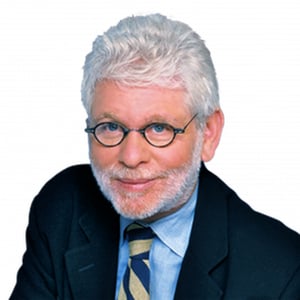
Columnist, The Washington Post
Richard Cohen writes a weekly political column for The Washington Post. He also contributes to the PostPartisan blog. Cohen joined The Post in 1968 as a reporter and covered night police, city hall, education, state government and national politics. As the paper’s chief Maryland correspondent, he was one of two reporters who broke the story of the investigation of former Vice President Agnew. In 1976, he began writing a column that ran on the front of the Metro section. His columns have appeared on the op-ed page of The Post since 1984. He is the author, with Jules Witcover, of “A Heartbeat Away: The Investigation and Resignation of Spiro T. Agnew ” (1974). He has received the Sigma Delta Chi and Washington-Baltimore Newspaper Guild Awards for his investigative reporting.
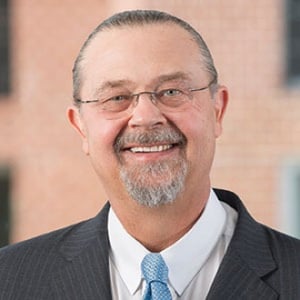
Managing Director and Co-Chair, Communications, Media, and Internet Practice, NERA Economic Consulting
Dr. Eisenach is a Managing Director and Co-Chair of NERA's Communications, Media, and Internet Practice, and also serves on the firm’s Board of Directors. He is also an Adjunct Professor at George Mason University Law School, where he teaches Regulated Industries, and a Visiting Scholar at the American Enterprise Institute. Previously, Dr. Eisenach has served in senior policy positions at the US Federal Trade Commission and the White House Office of Management and Budget, and taught at Harvard University's Kennedy School of Government and Virginia Polytechnic Institute and State University.
Dr. Eisenach's consulting practice focuses on economic analysis of competition, regulatory, intellectual property and consumer protection issues. He has submitted expert reports and testified in US federal court as well before the Antitrust Division of the U.S. Department of Justice, the Federal Trade Commission, the Copyright Royalty Board, the Federal Communications Commission, the International Trade Commission, US Tax Court, several state public utility commissions, and courts and regulatory bodies in Australia, Canada, the United Kingdom, the Caribbean, and South America. He has also advised clients in some of the world’s largest information technology sector mergers.
He has written or edited 19 books and monographs, including Broadband Competition in the Internet Ecosystem and Competition, Innovation and the Microsoft Monopoly: Antitrust in the Digital Marketplace. His writings have also appeared in scholarly journals such as The Review of Network Economics, as well as in popular outlets like Forbes, The New York Times, and The Wall Street Journal.
Prior to joining NERA, Dr. Eisenach was a managing director and principal at Navigant Economics, and before that he served as Chairman of Empiris LLC, Criterion Economics, and CapAnalysis, LLC. Among his other previous affiliations, Dr. Eisenach has served as President and Senior Fellow at The Progress & Freedom Foundation; as a scholar the Heritage Foundation, and the Hudson Institute; as a member of the 1980-81 Reagan-Bush Transition Team on the Federal Trade Commission, the 2000-2001 Bush-Cheney Transition Team on the Federal Communications Commission, the Virginia Governor's Commission on E-Communities, and the Virginia Attorney General's Task Force on Identity Theft. In 2016-2017 he led the Trump-Pence Transition Team for the Federal Communications Commission.
Dr. Eisenach received his PhD in economics from the University of Virginia and his BA in economics from Claremont McKenna College.
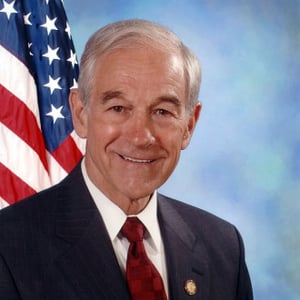
Former United States Representative, 14th Congressional District of Texas
PAUL, Ronald Ernest, (father of Rand Paul), a Representative from Texas; born in Pittsburgh, Allegheny County, Pa., August 20, 1935; graduated from Dormont High School, Dormont, Pa., 1953; B.A., Gettysburg College, Gettysburg, Pa., 1957; M.D., Duke University Medical Center, Durham, N.C., 1961; internship and residency training, Henry Ford Hospital, Detroit, Mich., 1961 and 1962; obstetrics and gynecology training, University of Pittsburgh, Pittsburgh, Pa., 1965-1968; medical doctor; United States Air Force, 1963-1965; United States Air National Guard, 1965-1968; delegate, Texas state Republican convention, 1974; unsuccessful candidate for election to the Ninety-fourth Congress in 1974; elected as a Republican to the Ninety-fourth Congress, by special election to fill the vacancy created by the resignation of United States Representative Robert R. Casey (April 3, 1976-January 3, 1977); unsuccessful candidate for reelection to the Ninety-fifth Congress in 1976; elected to the Ninety-sixth and to the two succeeding Congresses (January 3, 1979-January 3, 1985); was not a candidate for reelection to the House of Representatives in 1984, but was an unsuccessful candidate for nomination to the United States Senate; author; unsuccessful Libertarian Party candidate for election for President of the United States in 1988; elected as a Republican to the One Hundred Fifth and to the seven succeeding Congresses (January 3, 1997-January 3, 2013); unsuccessful candidate for the Republican presidential nomination in 2008; unsuccessful candidate for the Republican presidential nomination in 2012; was not a candidate for reelection to the One Hundred Thirteenth Congress in 2012.
Former Assistant Attorney General, U.S. Department of Justice, Civil Division
During the Reagan Administration, Richard Willard served as Assistant Attorney General in charge of the Civil Division, the largest litigation division of the US Department of Justice. There, he chaired the Reagan Administration's Tort Policy Working Group and developed its proposals for reforming civil litigation, workplace drug testing, and preventing unauthorized disclosure of classified information.
More recently, he served as senior vice president and general counsel for Bristol-Myers Squibb Co. and Gillette Company, where he led large worldwide legal departments, advised on strategic transactions, and enabled launch of new products with strong intellectual property protection.
Mr. Willard's private practice involved corporate counseling and litigation of cases raising public policy concerns. He served as lead counsel in complex litigation involving multiple claims, parties, and jurisdictions. He frequently appeared in trial and appellate courts around the country, including six arguments in the Supreme Court.
Columnist, The Washington Post
Richard Cohen writes a weekly political column for The Washington Post. He also contributes to the PostPartisan blog. Cohen joined The Post in 1968 as a reporter and covered night police, city hall, education, state government and national politics. As the paper’s chief Maryland correspondent, he was one of two reporters who broke the story of the investigation of former Vice President Agnew. In 1976, he began writing a column that ran on the front of the Metro section. His columns have appeared on the op-ed page of The Post since 1984. He is the author, with Jules Witcover, of “A Heartbeat Away: The Investigation and Resignation of Spiro T. Agnew ” (1974). He has received the Sigma Delta Chi and Washington-Baltimore Newspaper Guild Awards for his investigative reporting.
Managing Director and Co-Chair, Communications, Media, and Internet Practice, NERA Economic Consulting
Dr. Eisenach is a Managing Director and Co-Chair of NERA's Communications, Media, and Internet Practice, and also serves on the firm’s Board of Directors. He is also an Adjunct Professor at George Mason University Law School, where he teaches Regulated Industries, and a Visiting Scholar at the American Enterprise Institute. Previously, Dr. Eisenach has served in senior policy positions at the US Federal Trade Commission and the White House Office of Management and Budget, and taught at Harvard University's Kennedy School of Government and Virginia Polytechnic Institute and State University.
Dr. Eisenach's consulting practice focuses on economic analysis of competition, regulatory, intellectual property and consumer protection issues. He has submitted expert reports and testified in US federal court as well before the Antitrust Division of the U.S. Department of Justice, the Federal Trade Commission, the Copyright Royalty Board, the Federal Communications Commission, the International Trade Commission, US Tax Court, several state public utility commissions, and courts and regulatory bodies in Australia, Canada, the United Kingdom, the Caribbean, and South America. He has also advised clients in some of the world’s largest information technology sector mergers.
He has written or edited 19 books and monographs, including Broadband Competition in the Internet Ecosystem and Competition, Innovation and the Microsoft Monopoly: Antitrust in the Digital Marketplace. His writings have also appeared in scholarly journals such as The Review of Network Economics, as well as in popular outlets like Forbes, The New York Times, and The Wall Street Journal.
Prior to joining NERA, Dr. Eisenach was a managing director and principal at Navigant Economics, and before that he served as Chairman of Empiris LLC, Criterion Economics, and CapAnalysis, LLC. Among his other previous affiliations, Dr. Eisenach has served as President and Senior Fellow at The Progress & Freedom Foundation; as a scholar the Heritage Foundation, and the Hudson Institute; as a member of the 1980-81 Reagan-Bush Transition Team on the Federal Trade Commission, the 2000-2001 Bush-Cheney Transition Team on the Federal Communications Commission, the Virginia Governor's Commission on E-Communities, and the Virginia Attorney General's Task Force on Identity Theft. In 2016-2017 he led the Trump-Pence Transition Team for the Federal Communications Commission.
Dr. Eisenach received his PhD in economics from the University of Virginia and his BA in economics from Claremont McKenna College.
Former United States Representative, 14th Congressional District of Texas
PAUL, Ronald Ernest, (father of Rand Paul), a Representative from Texas; born in Pittsburgh, Allegheny County, Pa., August 20, 1935; graduated from Dormont High School, Dormont, Pa., 1953; B.A., Gettysburg College, Gettysburg, Pa., 1957; M.D., Duke University Medical Center, Durham, N.C., 1961; internship and residency training, Henry Ford Hospital, Detroit, Mich., 1961 and 1962; obstetrics and gynecology training, University of Pittsburgh, Pittsburgh, Pa., 1965-1968; medical doctor; United States Air Force, 1963-1965; United States Air National Guard, 1965-1968; delegate, Texas state Republican convention, 1974; unsuccessful candidate for election to the Ninety-fourth Congress in 1974; elected as a Republican to the Ninety-fourth Congress, by special election to fill the vacancy created by the resignation of United States Representative Robert R. Casey (April 3, 1976-January 3, 1977); unsuccessful candidate for reelection to the Ninety-fifth Congress in 1976; elected to the Ninety-sixth and to the two succeeding Congresses (January 3, 1979-January 3, 1985); was not a candidate for reelection to the House of Representatives in 1984, but was an unsuccessful candidate for nomination to the United States Senate; author; unsuccessful Libertarian Party candidate for election for President of the United States in 1988; elected as a Republican to the One Hundred Fifth and to the seven succeeding Congresses (January 3, 1997-January 3, 2013); unsuccessful candidate for the Republican presidential nomination in 2008; unsuccessful candidate for the Republican presidential nomination in 2012; was not a candidate for reelection to the One Hundred Thirteenth Congress in 2012.
Former Assistant Attorney General, U.S. Department of Justice, Civil Division
During the Reagan Administration, Richard Willard served as Assistant Attorney General in charge of the Civil Division, the largest litigation division of the US Department of Justice. There, he chaired the Reagan Administration's Tort Policy Working Group and developed its proposals for reforming civil litigation, workplace drug testing, and preventing unauthorized disclosure of classified information.
More recently, he served as senior vice president and general counsel for Bristol-Myers Squibb Co. and Gillette Company, where he led large worldwide legal departments, advised on strategic transactions, and enabled launch of new products with strong intellectual property protection.
Mr. Willard's private practice involved corporate counseling and litigation of cases raising public policy concerns. He served as lead counsel in complex litigation involving multiple claims, parties, and jurisdictions. He frequently appeared in trial and appellate courts around the country, including six arguments in the Supreme Court.
Former Assistant Attorney General, U.S. Department of Justice, Civil Division
During the Reagan Administration, Richard Willard served as Assistant Attorney General in charge of the Civil Division, the largest litigation division of the US Department of Justice. There, he chaired the Reagan Administration's Tort Policy Working Group and developed its proposals for reforming civil litigation, workplace drug testing, and preventing unauthorized disclosure of classified information.
More recently, he served as senior vice president and general counsel for Bristol-Myers Squibb Co. and Gillette Company, where he led large worldwide legal departments, advised on strategic transactions, and enabled launch of new products with strong intellectual property protection.
Mr. Willard's private practice involved corporate counseling and litigation of cases raising public policy concerns. He served as lead counsel in complex litigation involving multiple claims, parties, and jurisdictions. He frequently appeared in trial and appellate courts around the country, including six arguments in the Supreme Court.

Panel II: The First Amendment and National Security [Archive Collection]
Floyd Abrams, Suzanne Garment, Henry Mark Holzer, Don Oberdorfer, Richard K. Willard
Foreign Affairs and the Constitution
On November 6-7, 1987, The Federalist Society held a symposium at the Grand Hyatt Hotel...
Panel II: The First Amendment and National Security [Archive Collection]
Floyd Abrams, Suzanne Garment, Henry Mark Holzer, Don Oberdorfer, Richard K. Willard
Foreign Affairs and the Constitution
On November 6-7, 1987, The Federalist Society held a symposium at the Grand Hyatt Hotel...
Improving National Drug Policy [Archive Collection]
Richard Cohen, Jeffrey Eisenach, Ron Paul, Richard K. Willard
Second Annual National Lawyers Convention
On September 9, 1988, then-presidential candidate Ron Paul spoke on a panel at the Federalist...
Improving National Drug Policy [Archive Collection]
Richard Cohen, Jeffrey Eisenach, Ron Paul, Richard K. Willard
Second Annual National Lawyers Convention
On September 9, 1988, then-presidential candidate Ron Paul spoke on a panel at the Federalist...
Crime is an Important Federal Issue
Richard K. Willard
Criminal Law & Procedure Practice Group Newsletter - Volume 2, Issue 1, Spring 1998
It is an honor to be here today, to see many old friends and my...