

Program Director and Faculty, National Institute for Trial Advocacy
Henry Su is a seasoned trial lawyer, teacher, and thought leader whose legal work has focused on what he calls the “three A’s”—Antitrust, Advocacy, and Access to Justice.
Based in Washington, DC, he has spent the bulk of his career practicing in the fields of antitrust, consumer protection, intellectual property, and technology law, which are critical to ensuring that we all continue to enjoy the benefits of competition and innovation. He provides a unique combination of experience and expertise in (1) law enforcement, regulation, legislation, and policymaking—as a former senior official with the U.S. Federal Trade Commission (FTC) for nearly seven years, and (2) technology, innovation, business strategy, and startup activity—as a Silicon Valley-based senior litigator for nearly ten years.
His government service at the FTC included two stints as a senior trial lawyer in the agency’s Bureau of Competition (January 2013 to February 2015, February 2017 to August 2017), litigating merger and conduct cases (e.g., St. Luke’s/Saltzer, 1-800 Contacts) and participating in the investigation of several others. Additionally, he served as an attorney advisor to Commissioner J. Thomas Rosch (January 2011 to January 2013) and Chairwoman Edith Ramirez (February 2015 to February 2017), providing advice and counsel to each Commissioner on a wide range of antitrust and competition matters, topics, and issues.
A veteran member of the American Bar Association (ABA) Antitrust Law Section’s leadership, he currently serves as a member of the governing Council and as co-chair of the Antitrust Fall Forum. He is also a member of the U.S. Advisory Board of the Institute for Consumer Antitrust Studies at the Loyola University Chicago School of Law.
He is a longtime program director and faculty member with the National Institute for Trial Advocacy (NITA), a nonprofit organization that has been dedicated since 1971 to the training and development of effective and ethical courtroom advocates, who are essential to preserving and improving our adversarial system of justice. His teaching runs the gamut of NITA’s programming—from trainings on trial, motion, and deposition practice to webcasts and podcasts on topics like evidentiary foundations and lawyer well-being. In 2021 he was recognized by NITA for his outstanding service as faculty with the 2020 Hon. Robert E. Keeton Award. He is also a Senior Fellow of the Litigation Counsel of America.
When it comes to trial and appellate work, he deeply appreciates the value of “learning by doing.” Some skills cannot be effectively acquired or developed except through practice, as he found out when he cut his teeth handling criminal and civil cases pending in the United States District Court for the Eastern District of Virginia—the original “Rocket Docket.” He wishes he had known some of the NITA techniques and drills when he was a junior lawyer. That is a big reason why nowadays he does his part to make NITA training widely available to upcoming generations of lawyers through programs, including public service courses, offered around the country.
Last but not least, he chairs the ABA Standing Committee on Pro Bono and Public Service, whose mission is to ensure access to justice through the expansion and enhancement of the delivery of legal and other law-related services to the underserved through volunteer efforts of legal professionals nationwide. He strives to lead by example, participating for instance as a volunteer attorney with ABA Free Legal Answers. In 2021 he was recognized as an ABA Free Legal Answers 2020 Pro Bono Leader for his pro bono service. He also serves on the Virginia State Bar’s Access to Legal Services Committee, and he is a Patron Fellow of the American Bar Foundation.
He graduated cum laude from Yale University with a B.S. degree in Biology, and then attended the University of Virginia School of Law, where he earned a J.D. degree and received the John M. Olin Prize in Law and Economics. He is a member of the California, District of Columbia, and Virginia bars.

President, Cass & Associates, PC
Ronald A. Cass is Dean Emeritus of Boston University School of Law (where he was Dean from 1990-2004), President of Cass & Associates, PC, former Vice-Chairman and Commissioner of the U.S. International Trade Commission, former faculty member at Boston University School of Law and the University of Virginia Law School, and Distinguished Senior Fellow at the C. Boyden Gray Center for the Study of the Administrative State. Dean Cass also sits as an arbitrator for commercial, international, and intellectual property rights disputes, and is a former United States member of the Panel of Conciliators of the International Centre for Settlement of Investment Disputes. He is a member of the Council of the Administrative Conference of the United States and has received seven presidential appointments, spanning Presidents Ronald Reagan to Donald J. Trump.
As a law professor, lecturer, and scholar, Dean Cass has been teaching and writing about a wide array of legal issues on topics such as administrative law and regulation, antitrust, constitutional law, communications, intellectual property, international trade, separation of powers, and legal process. He has published more than 160 scholarly books, chapters, articles, and papers, including a leading casebook on administrative law. Dean Cass has taught judges as well as students in schools of law, economics, business, and public policy and has held academic appointments in the United States, Europe, and Latin America.
In addition to his academic work, Dean Cass has participated in numerous important legal cases as an amicus, consultant, or expert, and has advised businesses, law firms, investment funds, and government agencies on a range of trade, antitrust, intellectual property, and regulatory issues. He has a broad range of affiliations with professional groups, and has received numerous honors, fellowships and awards.
Dean Cass is a graduate of the University of Virginia and the University of Chicago Law School.
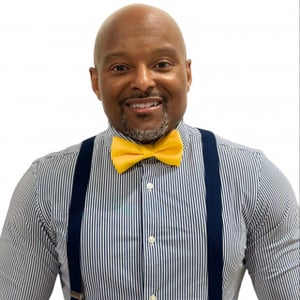
Dean, Delaware Law School
Dean Todd Clark is Dean of Delaware Law School. He joins Delaware Law School after serving as Associate Dean of Academic Affairs & Professor of Law at St. Thomas University Benjamin L. Crump College of Law. Before St. Thomas, Dean Clark was Professor of Law at North Carolina Central University School of Law where he taught Business Associations, Contracts, Corporate Justice, Employment Discrimination, and Hip Hop, Law & Justice. At NCCU, he also served on the ABA Compliance team and was the Director of the Justice in the Practice of Law Certificate Program and the Director of New Initiatives. Before that, Dean Clark was a Lecturer in Law at West Virginia University College of Law, where he taught Legal Writing and Appellate Advocacy.
Dean Clark earned his B.A. in Political Science from Wittenberg University, his M.B.A. from West Virginia University College of Business and Economics, and his J.D. from University of Pittsburgh School of Law. Following his graduation from law school, he practiced law at the law firm of Steptoe & Johnson.
His scholarship includes a book, CORPORATE JUSTICE (Carolina Academic Press), as well as numerous law review articles and other scholarship on social justice, corporate discretion, and sexual harassment. He is currently working on a casebook on Sports Law.

Senior Fellow and Director of Constitutional Studies, Manhattan Institute
Ilya Shapiro is a senior fellow and director of constitutional studies at the Manhattan Institute and a contributing editor of City Journal. Previously he was executive director and senior lecturer at the Georgetown Center for the Constitution, and before that a vice president of the Cato Institute.
Shapiro is the author of Lawless: The Miseducation of America’s Elites (2025) and Supreme Disorder: Judicial Nominations and the Politics of America’s Highest Court (2020), coauthor of Religious Liberties for Corporations? (2014), and editor of 11 volumes of the Cato Supreme Court Review (2008-18). He has contributed to a variety of academic, popular, and professional publications, including the Wall Street Journal, Harvard Journal of Law & Public Policy, Washington Post, Los Angeles Times, USA Today, National Review, and Newsweek. He also regularly provides commentary for various media outlets, writes the Shapiro’s Gavel newsletter on Substack, and once appeared on the Colbert Report.
Shapiro has testified many times before Congress and state legislatures and has filed more than 500 amicus curiae “friend of the court” briefs in the Supreme Court. He lectures regularly on behalf of the Federalist Society, is a member of the board of fellows of the Jewish Policy Center, was an inaugural Washington Fellow at the National Review Institute, and has been an adjunct law professor at the George Washington University and University of Mississippi. He is also the chairman of the board of advisers of the Mississippi Justice Institute, a barrister in the Edward Coke Appellate Inn of Court, and a former member of the Virginia Advisory Committee to the U.S. Commission on Civil Rights.
Earlier in his career, Shapiro was a special assistant/adviser to the Multi-National Force in Iraq on rule-of-law issues and practiced at Patton Boggs and Cleary Gottlieb. Before entering private practice, he clerked for Judge E. Grady Jolly of the U.S. Court of Appeals for the Fifth Circuit. He holds an AB from Princeton University, an MSc from the London School of Economics, and a JD from the University of Chicago Law School.
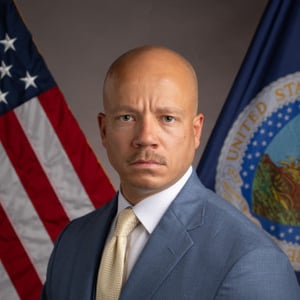
Assistant Secretary for Civil Rights, U.S. Department of Agriculture
Devon Westhill is the Assistant Secretary for Civil Rights at the U.S. Department of Agriculture. The U.S. Senate confirmed President Donald Trump’s nomination of Westhill on October 7, 2025.
Westhill returns to the USDA where he previously headed the civil rights office as Deputy Assistant Secretary in President Trump’s first term. His previous government appointments also include service at the U.S. Department of Labor, liaison to the Administrative Conference of the U.S., and liaison to the White House Initiative on Historically Black Colleges and Universities. Prior to returning to government service, Westhill was President and General Counsel of a nonprofit civil rights organization.
Westhill has testified on civil rights matters before Congress, federal agencies, and as an expert witness in federal court. He has spoken hundreds of times at college campuses, conferences, and on radio and TV programs, and he is frequently quoted in print publications, and his writing has appeared in numerous national outlets. A U.S. Navy veteran, Westhill earned his BA from the University of North Carolina at Chapel Hill and his JD from the University of Florida.
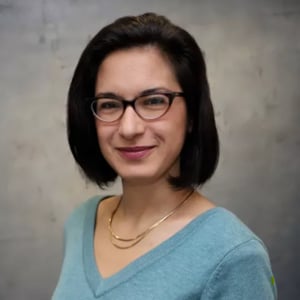
Co-Director of Research, The Sentencing Project
Nazgol Ghandnoosh, Ph.D., is the Co-Director of Research at The Sentencing Project, where she conducts and synthesizes research on criminal justice policies. She has written about racial disparities, lengthy sentences, and the scope of reform efforts.
She regularly presents to academic, practitioner, and general audiences and her work has been featured in outlets including The Washington Post, The New York Times, and WNYC’s On the Media. She also edits The Sentencing Project’s Race and Justice Newsletter.
Dr. Ghandnoosh earned an undergraduate degree from the University of Pennsylvania and a doctorate in sociology from the University of California, Los Angeles. Her dissertation, “Challenging Mass Incarceration: A California Group’s Advocacy for the Parole Release of Term-to-Life Prisoners,” was an in-depth study of a South Los Angeles-based group challenging extreme sentences.
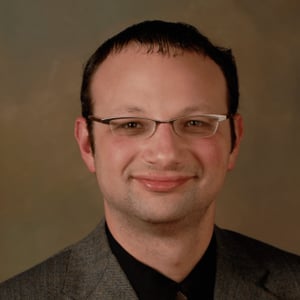
Chief Policy Counsel, Council on Criminal Justice and Senior Advisor, Right on Crime
Marc A. Levin is the Chief Policy Counsel for the Council on Criminal Justice (counciloncj.org) and Senior Advisor for Right on Crime.
An attorney and accomplished author on legal and public policy issues, Marc began the Foundation’s criminal justice program in 2005. This work contributed to nationally praised policy changes that have been followed by dramatic declines in crime and incarceration in Texas. Building on this success, in 2010, Levin developed the concept for the Right on Crime initiative, a TPPF project in partnership with Prison Fellowship and the American Conservative Union Foundation. Right on Crime has become the national clearinghouse for conservative criminal justice reforms and has contributed to the adoption of policies in dozens of states that fight crime, support victims, and protect taxpayers.
In 2014, Levin was named one of the “Politico 50” in the magazine’s annual “list of thinkers, doers, and dreamers who really matter in this age of gridlock and dysfunction.”
Marc has testified on criminal justice policy on four occasions before Congress and has testified before legislatures in states including Texas, Nevada, Kansas, Wisconsin, and California. He also has met personally with leaders such as U.S. Presidents, Speakers of the House, and the Justice Commtitee of the United Kingdom Parliament to share his ideas on criminal justice reform. In 2007, he was honored in a resolution unanimously passed by the Texas House of Representatives that stated, “Mr. Levin’s intellect is unparalleled and his research is impeccable.”
Since 2005, Marc has published dozens of policy papers on topics such as sentencing, probation, parole, reentry, and overcriminalization which are available on the TPPF website. Levin’s articles on law and public policy have been featured in publications such as the Wall Street Journal, USA Today, Texas Review of Law & Politics, National Law Journal, New York Daily News, Jerusalem Post, Toronto Star, Atlanta Journal-Constitution, Philadelphia Inquirer, San Francisco Chronicle, Washington Times, Los Angeles Daily Journal, Charlotte Observer, Dallas Morning News, Houston Chronicle, Austin American-Statesman, San Antonio Express-News and Reason Magazine.
In 1999, Marc graduated with honors from the University of Texas with a B.A. in Plan II Honors and Government. In 2002, Marc received his J.D. with honors from the University of Texas School of Law. Marc was a Charles G. Koch Summer Fellow in 1996. He served as a law clerk to Judge Will Garwood on the U.S. Court of Appeals for the Fifth Circuit and Staff Attorney at the Texas Supreme Court.
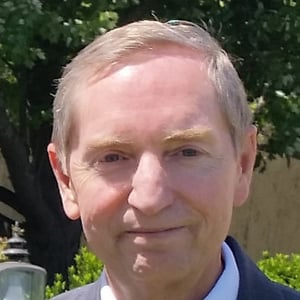
Legal Director & General Counsel, Criminal Justice Legal Foundation
Kent S. Scheidegger has been the Legal Director of the Criminal Justice Legal Foundation since December 1986. He also served as Chairman of the Criminal Law Practice Group of the Federalist Society 2003 to 2005. His articles on criminal and constitutional law have been published in law reviews, national legal publications, and congressional reports. Legal arguments authored by Mr. Scheidegger have been cited and incorporated in several precedent-setting United States Supreme Court decisions.
After receiving a degree in physics with honors from New Mexico State University in 1976, Mr. Scheidegger served for six years in the United States Air Force as a Nuclear Research Officer. He took his law degree with distinction from the University of the Pacific, McGeorge School of Law in 1982 and practiced civil law in Northern California. He was general counsel of California Cooler, Inc. from 1984 until 1986, when he joined the Foundation.
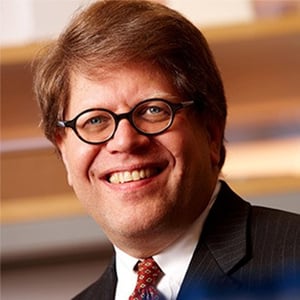
Faculty Fellow, Center for Law, Science & Innovation, Sandra Day O'Connor College of Law, Arizona State University
Dr. Klein is a Faculty Fellow at the Center for Law, Science & Innovation at the Sandra Day O'Connor College of Law at Arizona State University. He is also Principal at Roger D. Klein, MD JD Consulting and Klein & Klein Co., L.P.A. He was formerly Chief Medical Officer at OmniSeq, an oncology focused genomic profiling company that was recently acquired by LabCorp. Previously, Roger was the Medical Director at the Molecular Oncology division at the Cleveland Clinic. He was also the Chair of the Professional Relations Committee at the Association for Molecular Pathology. Prior to joining the Cleveland Clinic, he served as Medical Director of Molecular Oncology at the BloodCenter of Wisconsin where he led the center’s Diagnostic Laboratories’ initiative focused on DNA- and RNA-based testing for evaluation of cancer patients.
Dr. Klein has been an advisor to the Department of Health and Human Services (HHS), the Food and Drug Administration (FDA), the Centers for Medicare and Medicaid Services (CMS), and the Centers for Disease Control and Prevention (CDC). He has participated in and assumed leadership roles in many professional society committees and corporate advisory boards and is a policy advisor to the Heartland Institute.
Dr. Klein is licensed to practice medicine in Ohio, Florida, and Wisconsin. Additionally, he is licensed to practice law in the District of Columbia and Ohio. Roger obtained his Molecular Genetic Pathology certification at Mayo Medical School following completion of his M.D. Yale University School of Medicine. He obtained his J.D. from Yale Law School.
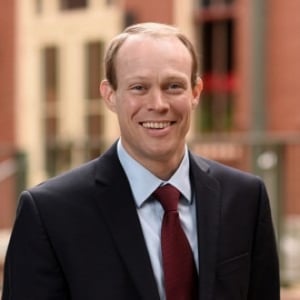
Professor of Law, St. Mary's University Law School
Adam MacLeod is a Professor at St. Mary's University School of Law. He has been a visiting fellow in the James Madison Program in American Ideals and Institutions at Princeton University, a fellow of the Center for Religion, Culture and Democracy, and a Senior Scholar and Thomas Edison Fellow in the Center for Intellectual Property x Innovation Policy at George Mason University. He is co-editor of Christie & Martin's Jurisprudence (4th ed. West 2020) and author of Property and Practical Reason (Cambridge University Press 2015). He has written two other books, dozens of scholarly articles, and more than one hundred essays and book reviews.
Professor MacLeod received his B.A., summa cum laude, from Gordon College and his J.D., magna cum laude, from the University of Notre Dame Law School. After law school, he served as law clerk to Chief Justice Christopher Armstrong and Justice Benjamin Kaplan of the Massachusetts Appeals Court and to Chief Judge Lewis Babcock of the United States District Court for the District of Colorado. He practiced law in the Boston area and has held appointment as a special Deputy Attorney General of Alabama and a lecturer in the Alabama Judicial College. He also serves as an Operational Auxiliarist in the U.S. Coast Guard, advising and providing operational training to Auxiliary and active-duty personnel.
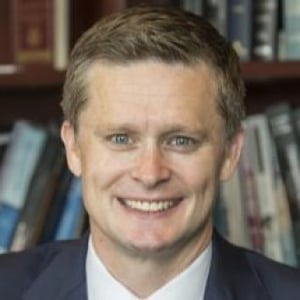
Donald M. Ephraim Professor of Law and Economics, University of Chicago Law School
Tony Casey is an expert on business law, finance, and corporate bankruptcy. His research—which has been published in the Yale Law Journal, the Columbia Law Review, the Supreme Court Review, and the University of Chicago Law Review—examines the intersection of finance and law. He has also written about the role of intellectual property law in the organization and financing of creative projects and about how technological innovation is changing the foundations of our legal system more generally.
Before entering academics, Professor Casey was a partner at Kirkland and Ellis, LLP. Before joining Kirkland & Ellis, he was an associate at Wachtell, Lipton, Rosen & Katz. His legal practice focused on corporate bankruptcy, merger litigation, white-collar investigations, securities litigation, and complex class actions. Casey also served as a law clerk for Chief Judge Joel M. Flaum of the United States Court of Appeals for the Seventh Circuit.
Professor Casey received his JD with High Honors in 2002 from the University of Chicago Law School. He received the John M. Olin Prize for the outstanding student of law and economics.
Professor Casey teaches courses and seminars in corporate governance, business law, bankruptcy and reorganization, finance, litigation strategy, civil procedure, and law and technology.
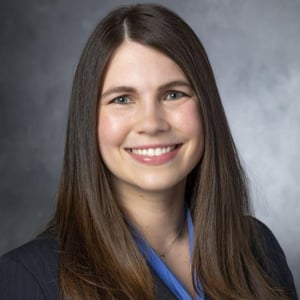
Associate Professor of Law, Emory University School of Law
Lindsey Simon is an associate professor at the Emory University School of Law.
Her research focuses on the bankruptcy system, drawing concepts from bankruptcy structure and procedure to address broader institutional design challenges. Simon’s articles have been published in the Administrative Law Review, the Cardozo Law Review, the Indiana Law Journal and the North Carolina Law Review. Simon’s most recent scholarship addresses the intersection between mass torts and bankruptcy, including an article on non-debtor relief in Chapter 11 forthcoming in the Yale Law Journal. She has assisted academics, judges, members of Congress and many other stakeholders on the subject of mass tort bankruptcies, and her commentary in connection with the Purdue Pharma, Boy Scouts of America and USA Gymnastics bankruptcies has appeared in various media outlets, including The Wall Street Journal, The New York Times, Forbes, The Economist, NPR and Reuters.
Before joining the Emory Law faculty in 2023, Professor Simon served as the Robert Cotten Alston Associate Chair in Corporate Law at the University of Georgia School of Law. Prior to becoming a professor, Simon was an associate at Kilpatrick Townsend & Stockton, where her practice involved a mix of commercial litigation and corporate restructuring matters. She represented corporations, committees and individuals in state and federal litigation, both in and out of the bankruptcy context. Simon also practiced at a litigation boutique in Chicago, Illinois, and served as a judicial clerk for Judge Beverly B. Martin on the U.S. Court of Appeals for the Eleventh Circuit. Additionally, she taught as an adjunct professor at the Georgia State University College of Law.
Simon earned her law degree magna cum laude from the Northwestern University Pritzker School of Law and obtained her Bachelor of Music magna cum laude and her Master of Education from Vanderbilt University.
She is an active member of the American Bankruptcy Institute, where she serves as a member of the ABI Diversity Working Group. She previously served as vice chair and community service co-chair for the Georgia Network of the International Women's Insolvency & Restructuring Confederation and as vice president of the board of directors of the Georgia Latino Law Foundation.
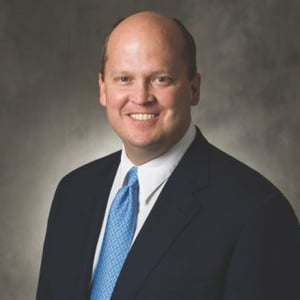
Co-Founder & Partner, Watts Guerra LLP
Born July 17, 1967, in Corpus Christi, Texas, Mikal C. Watts earned his undergraduate degree from the University of Texas in 1987, receiving a Bachelor of Arts with high honors after just two years of study. He graduated with honors from the University of Texas School of Law in 1989 at the age of twenty-one.
In 1989-1990, Mr. Watts worked as a briefing attorney for Hon. Thomas R. Phillips, Chief Justice of the Supreme Court of Texas. In September 1990, he became an associate at David L. Perry & Associates in Corpus Christi, Texas, and was named a partner in December 1991. Until March 31, 1997, he served as a partner in the law firm of Perry & Haas, L.L.P. On April 1, 1997, Mr. Watts formed his own firm, Harris & Watts, P.C. After 4 highly successful years, the law firm reorganized, with Mr. Watts and Denman H. Heard joining together to form Watts & Heard, L.L.P. in March of 2001. During that time, Mr. Watts expanded the law firm to 29 lawyers, with offices in 5 Texas cities and a support staff of over 100.
In August of 2002, Mikal Watts formed Watts Law Firm, L.L.P. In 2009, Mikal Watts joined forces with Francisco Guerra IV to form Watts Guerra LLP which handles catastrophic personal injury, toxic torts, product liability, automotive defects, refinery negligence, commercial trucking negligence, medical device, pharmaceutical, and commercial litigation.
Mr. Watts has been admitted to practice pro hoc vice in New, York, Alabama, Florida, New York, Minnesota, Mississippi, and California. Mr. Watts has defended punitive damages obtained in federal court by oral argument before the United States Court of Appeals for the Fifth Circuit.
Mr. Watts’ litigation against Bridgestone/Firestone, Inc. and Ford Motor Company resulted in resolving the most significant product liability case in the country. The terms of the settlement in the Bailey case were unprecedented in American history for a case of this type; not only monetarily, but by virtue of what the companies agreed to do with respect to the disclosure of information relating to their own investigations into the alleged defects with their products and their corporate safety policies and practices.
Watts Guerra LLP is nationally recognized as one of two firms leading in the pursuit of hundreds of claims brought nationwide against Bridgestone/Firestone, Inc. and Ford Motor Company.
Mr. Watts was instrumental in bringing to light Ford’s quiet efforts to recall these defective tires in foreign countries while consumers in the United States continued to be injured or killed riding on the same tires. This litigation and settlement has been chronicled on the ABC World News Tonight, CBS Evening News, Dateline NBC, and CNBC, and in the Wall Street Journal, USA Today, Washington Post, Associated Press, and all other major news sources in this country and around the world.
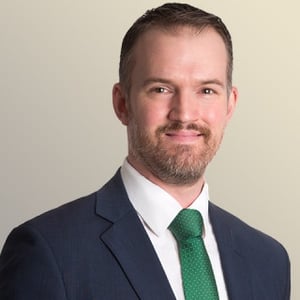
Partner, King & Spalding
Jamieson Greer is a partner in King & Spalding's International Trade practice group where he specializes in trade remedy litigation, export / import compliance, and international trade policy and negotiations. Prior to joining King & Spalding, he served as the Chief of Staff to the U.S. Trade Representative, Ambassador Robert Lighthizer. At USTR, he oversaw the development and implementation of U.S. trade policy for the executive branch. He also was deeply involved in the negotiations of the Phase One trade deal with China and the United-States-Mexico-Canada Agreement. Before working at USTR, Jamieson spent several years in private practice working on trade-related matters and served in the U.S. Air Force Judge Advocate General's Corps.
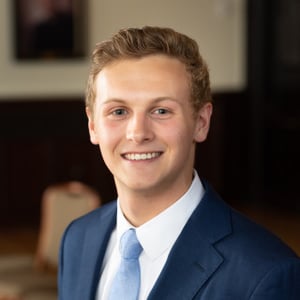
JD Candidate, Harvard Law School
Trevor is a second-year law student at Harvard Law School. Prior to starting law school, he lived in Taiwan as a Fulbright Scholar studying Taiwanese industrial policy, and he worked as a research assistant at a Washington think tank focused on strategic trade controls where he investigated companies involved in the Chinese defense industry.
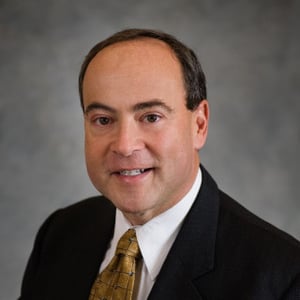
Justice, Supreme Court of Arizona
Clint Bolick was appointed by Governor Doug Ducey in January 2016 to serve on the Arizona Supreme Court and was retained by the voters in 2018 and 2024.
Prior to joining the Court, Justice Bolick litigated constitutional cases in state and federal courts from coast to coast, including the U.S. Supreme Court. Among other positions, he served as Vice President for Litigation at the Goldwater Institute and as Co-founder and Vice President for Litigation at the Institute for Justice. He has litigated in support of school choice, freedom of enterprise, private property rights, freedom of speech, and federalism, and against racial classifications and government subsidies.
Justice Bolick received his Juris Doctor degree from the University of California at Davis, where he has been recognized as a distinguished alumnus, and his Bachelor of Arts degree magna cum laude from Drew University. He serves as a research fellow with the Hoover Institution. Among other honors, he was named one of the 90 Greatest DC Lawyers in the Last 30 Years by Legal Times in 2008, received a Bradley Prize in 2006, and was recognized as one of the nation’s three lawyers of the year by American Lawyer in 2002 for his successful defense of school vouchers in Zelman v. Simmons-Harris.
Justice Bolick is a prolific author of a dozen books and hundreds of articles. Among his most recent books are Unshackled: Freeing America’s K-12 Education System: Immigration Wars: Forging an American Solution, co-authored with former Florida Governor Jeb Bush; and David’s Hammer: The Case for an Activist Judiciary. Bolick serves as an adjunct professor of constitutional law at Arizona State University’s Sandra Day O’Connor School of Law and has served as a lecturer at Harvard University’s John F. Kennedy School of Government.
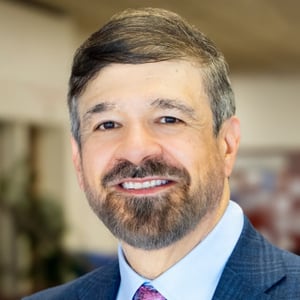
Hugh and Hazel Darling Foundation Professor of Law; Director, Center for the Study of Constitutional Originalism, University of San Diego School of Law
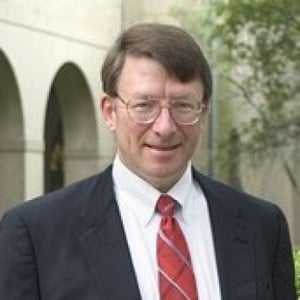
Hermann Moyse, Jr., Professor and Director of the Eric Voegelin Institute in the Department of Political Science, Louisiana State University
Professor James R. Stoner, Jr. (Ph.D., Harvard University, 1987) has teaching and research interests in political theory, English common law, and American constitutionalism. He is the author of Common-Law Liberty: Rethinking American Constitutionalism (Kansas, 2003) and Common Law and Liberal Theory: Coke, Hobbes, and the Origins of American Constitutionalism (Kansas, 1992), as well as a number of articles and essays. In 2009 he was named a Senior Fellow of the Witherspoon Institute of Princeton, New Jersey; he has co-edited two books published by Witherspoon, The Social Costs of Pornography: A Collection of Papers (with Donna M. Hughes, 2010), and Rethinking Business Management: Examining the Foundations of Business Education (with Samuel Gregg, 2007). He was the 2010 recipient of the Honors College Sternberg Professorship at LSU.
He has taught at LSU since 1988, chaired the Department of Political Science from 2007 to 2013, and served as Acting Dean of the Honors College in fall 2010. He was a member of the National Council on the Humanities from 2002 to 2006. In 2002-03 he was a visiting fellow in the James Madison Program in American Ideals and Institutions at Princeton University, where he will return in the 2013-14 academic year as Garwood Visiting Professor in the fall and Visiting Fellow in the spring.
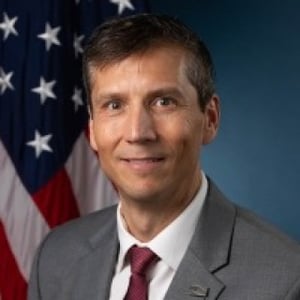
U.S. Attorney, Middle District of Tennessee, U.S. Department of Justice
Braden Boucek was sworn in on December 24, 2025, as the United States Attorney for the Middle District of Tennessee. Prior to becoming United States Attorney, Mr. Boucek served as the senior vice president of litigation at the Southeastern Legal Foundation having previously served as the vice president of legal affairs at the Beacon Center. Mr. Boucek has extensive experience as a prosecutor, starting his career at the Tennessee Attorney General’s Office before serving for two years as an Assistant District Attorney General in Williamson County. He was a federal prosecutor for ten years, first serving as an Assistant United States Attorney in the Western District of Tennessee from 2005 to 2011. From 2011 to 2015, Mr. Boucek was an Assistant United States Attorney in the Middle District of Tennessee, the district he now leads as the United States Attorney.
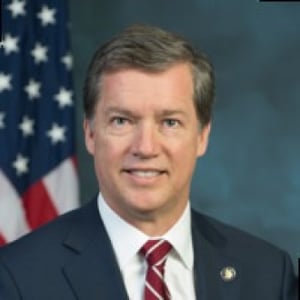
Founding Partner, Compton Jones Dresher LLP
Paul Compton is a founding partner of Compton Jones Dresher, a law practice based in Birmingham, Alabama that focuses on transactional and regulatory matters for clients in the real estate, financial services and community bank industries. Paul’s practice especially involves affordable housing and tax credit supported community development projects. He is currently a member of the Housing Advisory Council of the Bipartisan Policy Center. He is an adjunct Professor at the University of Alabama School of Law and a member of the Board of Directors of the Alabama Affordable Housing Association.
From 2018 to 2020 Paul served as General Counsel of the United States Department of Housing and Urban Development, Washington, D.C. In that capacity he also served on the Federal Housing Administration Mortgagee Review Board and Mortgage Risk Review Council.
Before Paul’s service at HUD he was a partner and member of the managing board of Bradley Arant Boult Cummings LLP in its Birmingham office.
Paul is a graduate of the University of Virginia School of Law and the University of Alabama. He attended the London School of Economics and Political Science and is a Truman Scholar.

Associate Director, Fair Housing & Community Development Project, Lawyers’ Committee for Civil Rights Under Law
Thomas Silverstein is the Associate Director of the Fair Housing & Community Development Project at the Lawyers’ Committee for Civil Rights Under Law. He oversees the Project’s impact litigation docket, using the Fair Housing Act to foster the development of inclusive communities, expand access to opportunity, and fight displacement. He also provides technical assistance to states, local governments, and public housing authorities seeking to comply with the duty to affirmatively further fair housing. He is a national leader in the provision of legal and policy support to grassroots housing justice organizers. He has written extensively on the intersection of civil rights law and land use law and frequently participates in conference panels and webinars addressing a range of topics in civil rights and housing law and policy.
Prior to serving as Associate Director, Thomas was Counsel in the Fair Housing & Community Development Project. He began his legal career as the Lawyers’ Committee’s 2013-2014 George N. Lindsay Civil Rights Legal Fellow after earning his juris doctorate from the University of Virginia School of Law in 2013.

Head of U.S. Policy and Strategic Advocacy, Electric Coin Company
Paul Brigner is the Head of U.S. Policy and Strategic Advocacy at the Electric Coin Company. He has served in senior level technology policy and government relations roles for the last eighteen years with another ten years of hands-on technical experience at the beginning his career after serving in the United States Army.
He holds an MBA from the McDonough School of Business at Georgetown University and a JD from the Georgetown University Law Center. He received a Bachelors degree from Stephen F. Austin State University where he was named the Outstanding Computer Science Graduate.
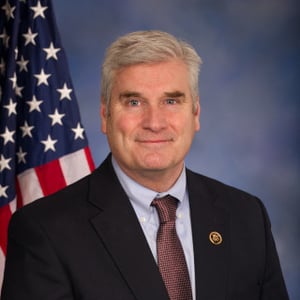
Congressman, U.S. House of Representatives
Congressman Tom Emmer was sworn in for his first term in the U.S. House of Representatives on January 6, 2015. He is currently serving his fifth term.
After serving as the Chairman of the National Republican Congressional Committee for the 116th Congress and again for the 117th Congress, Tom was elected by his fellow Republican colleagues to be the House Majority Whip. Currently, he sits on the House Financial Services Committee.
Born in 1961, Tom grew up in Minnesota and attended St. Thomas Academy. He received his BA in Political Science from the University of Alaska-Fairbanks and his JD from William Mitchell College of Law.
After practicing law for several years, he opened his own law firm. The next 20 years were spent balancing family, business, coaching hockey, and serving on the city councils in Independence and Delano.
Before coming to Congress, he served in the Minnesota House of Representatives from 2004-2008.
He and his wife Jacquie have been married for over 30 years and have seven children. They reside in Delano.
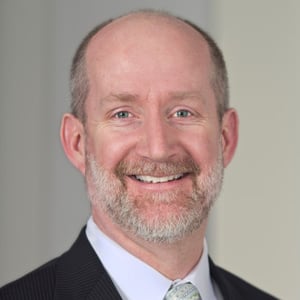
Nonresident Senior Fellow, American Enterprise Institute
Jim Harper is a nonresident senior fellow at the American Enterprise Institute (AEI), where he focuses on privacy issues, and select legal and constitutional law issues.
A lawyer by training, Mr. Harper has served as counsel for the Subcommittee on Commercial, and Administrative Law of the US House Committee on the Judiciary and as counsel for the Senate Committee on Government Affairs. More recently, he worked at the Competitive Enterprise Institute and the Cato Institute, where he wrote on the intersection of business, technology, and public policy, including privacy, surveillance, data security, telecommunications, and cryptocurrencies. He also served as global policy counsel for the Bitcoin Foundation. Mr. Harper was a founding member of the Department of Homeland Security’s Data Privacy and Integrity Advisory Committee. Early in his post-Hill career, he represented companies such as PayPal and Verisign before Congress.
Mr. Harper is the co-editor of “Terrorizing Ourselves: Why U.S. Counterterrorism Policy Is Failing and How to Fix It” (Cato Institute, 2010) and the author of “Identity Crisis: How Identification Is Overused and Misunderstood” (Cato Institute, 2006). He has written several amicus briefs in Fourth Amendment cases before the U.S. Supreme Court and has published scholarly articles in a variety of law journals. In the popular press, Mr. Harper has been published in The New York Times and The Wall Street Journal, among many other publications.
Mr. Harper has a law degree from the U.C. Hastings College of the Law, where he was editor-in-chief of the Hastings Constitutional Law Quarterly, and a BA from the University of California, Santa Barbara.

General Counsel, Espresso Systems
Michael Mosier is General Counsel at Espresso Systems, which is developing configurable privacy for digital assets with decentralized private computation. He served as Acting Director, Deputy Director, and the first Digital Innovation Officer of the U.S. Treasury’s Financial Crimes Enforcement Network (FinCEN). He also was Counselor (for Cybersecurity & Emerging Technology) to the Deputy Secretary of the Treasury.
Previously, Michael was Chief Technical Counsel at Chainalysis; an Associate Director of Treasury’s Office of Foreign Assets Control; a Deputy Chief at the Department of Justice’s Money Laundering Section; and White House National Security Council Director for Transnational Organized Crime. He began his public service with the Manhattan District Attorney’s Office and has been an adjunct professor at Georgetown University Law Center.
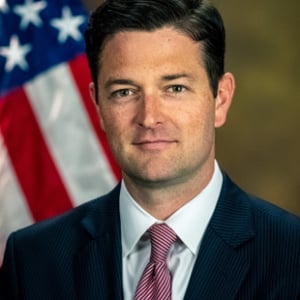
Senior Counsel and Director of Global Regulatory Matters, ConsenSys Software
Bill Hughes is senior counsel and director of global regulatory matters for ConsenSys Software, the leading Ethereum blockchain software company. Bill focuses on the diverse and ever evolving crypto global regulatory landscape, and the legal and public policy issues with which ConsenSys and the broader crypto ecosystem is grappling.
Bill joined ConsenSys after serving as an Associate Deputy Attorney General at the Department of Justice, where he managed, among other things, the Department’s work on prospective regulations, legislative proposals, and policies across a broad spectrum of legal and operational issues. He worked closely with the White House and other federal agencies on regulatory and policy initiatives and coordinated DOJ’s law enforcement response to COVID-19-related consumer fraud and money laundering. Bill also has served at the White House, where he oversaw various operational components. Bill began his career by clerking for a federal judge in New York and litigating with the firm of Sullivan & Cromwell LLP. Bill received his JD from the University of Virginia School of Law and his BA from Vanderbilt University.
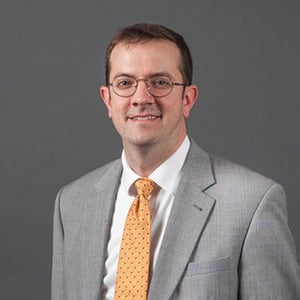
Associate Professor of Law, Antonin Scalia Law School, George Mason University
Associate Professor of Law J.W. Verret joined the Antonin Scalia Law School, George Mason University faculty in 2008. In 2013, he took leave for two years to serve as the Chief Economist and Senior Counsel for the U.S. House Committee on Financial Services. He received his JD and MA in Public Policy from Harvard Law School and the Harvard Kennedy School of Government, respectively, in 2006. While in law school, Professor Verret served an Olin Fellowship in Law and Economics at the Harvard Program on Corporate Governance under the guidance of Prof. Lucian Bebchuk.
Professor Verret then served as a law clerk for Vice-Chancellor John W. Noble of the Delaware Court of Chancery. Prior to joining the faculty at Scalia Law, Professor Verret was an associate in the SEC Enforcement Defense Practice Group at Skadden, Arps in Washington, D.C. He has written extensively on corporate law topics, including Delaware's Guidance, co-written with Chief Justice Myron T. Steele of the Delaware Supreme Court. His academic work has been featured in the Yale Journal on Regulation, The Business Lawyer, the Delaware Journal of Corporate Law, the Stanford Law Review, the University of Pennsylvania Journal of Business Law, and the Virginia Law and Business Review. Professor Verret was selected by the Northwestern Law School Searle Center on Law, Regulation, and Economic Growth for a 2009-2010 Searle-Kaufmann Research Fellowship.
Professor Verret is also a Senior Scholar at the Mercatus Center Working Group on Financial Markets, where he regularly briefs Congressional staff, members of Congress, SEC Commissioners and other financial regulatory agencies on financial regulation topics. He also directs the Corporate Federalism Initiative, where he obtains research grants for a network of students and faculty scholars who study the division between states and the federal government as sources of corporate law. Professor Verret has been invited to testify before various House and Senate Committees four times during the financial crisis of 2009 regarding all of the central provisions of the Obama Administration's 2009 financial regulatory reform proposals. For a full list of Professor Verret's C-Span appearances, including testimony before the U.S. House of Representatives and the U.S. Senate, see http://www.c-spanvideo.org/jwverret.
Professor Verret has been an invited panelist for various television appearances, including an interview on The NewsHour with Jim Lehrer. Professor Verret has been quoted in various media on financial regulation and corporate law topics, including the New York Times, CNN Money, the CNN Political Ticker, CNBC, ABC News, Investor's Business Daily, ESPN.com, The American Banker, The American Lawyer, The Huffington Post, CBS.com, and AP News. Professor Verret's op-eds have been featured in Forbes, The Chicago Tribune, The Orange County Register, and The Wall Street Journal. Professor Verret is also a regular guest contributor to three of the most noted corporate law and financial regulation law blogs: the Harvard Law School Corporate Governance and Financial Regulation Forum, Deallawyers.com, and The Conglomerate.

Axon v. Federal Trade Commission - Post-Decision SCOTUScast
Henry Su, Ronald A. Cass
Ronald A. Cass, Henry Su
On April 14, 2023, the Supreme Court issued its ruling in Axon Enterprise, Inc. v....
Higher Ed & DEI
Todd Clark, Ilya Shapiro, Devon Westhill
In recent years, American organizations of all kinds have dedicated resources towards diversity, equity, and...
Debating State Sentences for Violent Crime: How Tough is Tough Enough?
Nazgol Ghandnoosh, Marc Levin, Kent Scheidegger
Following a surge in many types of violent crime in 2020 and 2021 that has...
Explainer Episode 53 - Biologics, Biosimilars, and the Two-fold U.S. Approval Framework’s Possible Impact on Prices
Roger D. Klein
Regulatory Transparency Project's Fourth Branch Podcast
Biosimilars, a category of biologic (medicine derived from a living organism), require approval, at least...
Delaware v. Pennsylvania and Wisconsin - Post-Decision SCOTUScast
Adam MacLeod
Adam MacLeod
On February 28, 2023, the Supreme Court issued its ruling in Delaware v. Pennsylvania and...
Litigation Update: LTL Management’s Chapter 11 Bankruptcy
Anthony J. Casey, Lindsey Simon, Mikal C. Watts
LTL Management LLC (LTL) is a subsidiary of Johnson & Johnson (J&J) that was established...
American Trade Law in a Post-WTO Appellate Body World
Jamieson Greer, Trevor R. Jones, David J. Ross
For decades, the WTO Appellate Body regularly ruled that American laws violated the various WTO...
Can the Legislative Power Be Delegated?
Clint Bolick, Michael B. Rappaport, James Stoner
Arizona State Student Chapter / Article I Initiative / Center for Constitutional Design at Arizona State University’s Sandra Day O’Connor College of Law
On March 23, 2023, the Center for Constitutional Design at Arizona State University’s Sandra Day...
The Evolution of HUD’s Affirmatively Furthering Fair Housing Rules: A Look at the Latest Proposed Regulation
Braden H. Boucek, Paul Compton, Thomas Silverstein
A Regulatory Transparency Project Webinar
The United States Department of Housing and Urban Development’s Affirmatively Furthering Fair Housing rules have...
A Discussion on Central Bank Digital Currencies and the Future of Financial Privacy
Paul Brigner, Tom Emmer, Jim Harper, Michael Mosier, William C. Hughes, J.W. Verret
A Regulatory Transparency Project Webinar
This webinar will explore central bank digital currencies (CBDCs) and the ongoing debates over financial...