
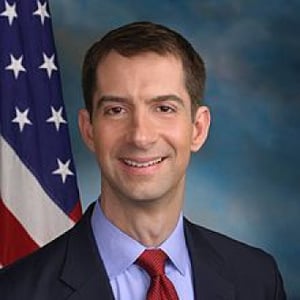
United States Senator, Arkansas
Tom Cotton is a United States Senator from Arkansas. Tom’s committees include the Banking Committee, where he chairs the Economic Policy Subcommittee, the Intelligence Committee, and the Armed Services Committee, where he chairs the Air Land Power Subcommittee.
Tom grew up on his family’s cattle farm in Yell County. He graduated from Dardanelle High School, Harvard, and Harvard Law School. After a clerkship with the U.S. Court of Appeals and private law practice, Tom left the law because of the September 11th attacks. Tom served nearly five years on active duty in the United States Army as an Infantry Officer.
Tom served in Iraq with the 101st Airborne and in Afghanistan with a Provincial Reconstruction Team. Between his two combat tours, Tom served with The Old Guard at Arlington National Cemetery. Tom’s military decorations include the Bronze Star Medal, Combat Infantry Badge, and Ranger Tab.
Between the Army and the Senate, Tom worked for McKinsey & Co. and served one term in the House of Representatives.
Tom and his wife Anna have two sons, Gabriel and Daniel.

Executive Vice President, The Federalist Society
Dean Reuter is Executive Vice President at the Federalist Society for Law and Public Policy Studies. He has served in two federal government agency Offices of the Inspector General, as Counsel to the Inspector General and Deputy Inspector General, responsible for policing the use of federal funds granted and contracted through those agencies. As such, he helped conduct and oversee criminal investigations across the country. He is the principal author of the non-fiction book, The Hidden Nazi: The Untold Story of America's Deal with the Devil, and editor of Liberty’s Nemesis: The Unchecked Expansion of the State and Confronting Terror: 9/11 and the Future of American National Security. He was appointed by the President and served as Vice-Chairman of the Board of Directors of the Corporation for National and Community Service, and recently served as an appointee on the U.S. Commission on Presidential Scholars. He is a graduate of Hood College (BA with Honors) and the University of Maryland School of Law.
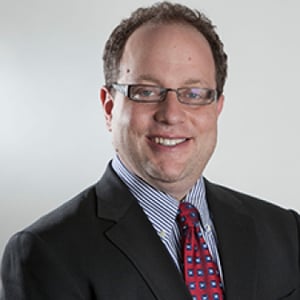
Director of Asian Studies and Resident Fellow, American Enterprise Institute
Dan Blumenthal is the director of Asian Studies at the American Enterprise Institute, where he focuses on East Asian security issues and Sino-American relations. Mr. Blumenthal has both served in and advised the U.S. government on China issues for over a decade. From 2001 to 2004, he served as senior director for China, Taiwan, and Mongolia at the Department of Defense. Additionally, he served as a commissioner on the congressionally-mandated U.S.-China Economic and Security Review Commission since 2006-2012, and held the position of vice chairman in 2007. He has also served on the Academic Advisory Board of the congressional U.S.-China Working Group. Mr. Blumenthal is the co-author of “An Awkward Embrace: The United States and China in the 21st Century” (AEI Press, November 2012).
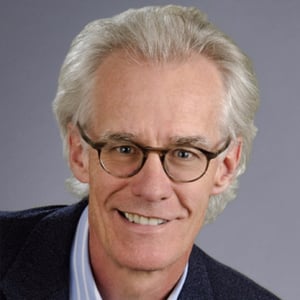
Lawrence and Sallye Krause Professor of Korea-Pacific Studies; Director, Korea-Pacific Program, School of Global Policy & Strategy, UC San Diego
Stephan Haggard is the Lawrence and Sallye Krause Professor of Korea-Pacific Studies, director of the Korea-Pacific Program, and distinguished professor of political science at GPS. He is a go-to expert on current developments in the Asia-Pacific region, particularly the Korean peninsula, and on the politics of economic reform and globalization.
Prof. Haggard has written extensively on the political economy of North Korea with Marcus Noland, including “Famine in North Korea: Markets, Aid, and Reform” (2007) and “Witness to Transformation: Refugee Insights into North Korea” (2011) and co-authors the "North Korea: Witness to Transformation" blog at the Peterson Institute for International Economics. Prof. Haggard is the current editor of the Journal of East Asian Studies and a member of the Council on Foreign Relations.
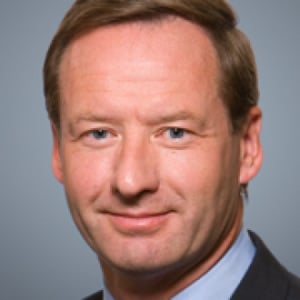
Senior Research Fellow, Northeast Asia, The Heritage Foundation
Bruce Klingner specializes in Korean and Japanese affairs as the senior research fellow for Northeast Asia at The Heritage Foundation's Asian Studies Center.
Mr. Klingner’s analysis and writing about North Korea, South Korea and Japan, as well as related issues, are informed by his 20 years of service at the Central Intelligence Agency and the Defense Intelligence Agency.
Mr. Klingner, who joined Heritage in 2007, has testified before the House Foreign Affairs Committee, the Senate Select Committee on Intelligence and the House Permanent Select Committee on Intelligence.
He is a frequent commentator in U.S. and foreign media. His articles and commentary have appeared in major American and foreign publications and he is a regular guest on broadcast and cable news outlets. He is a regular contributor to the international and security sections of The Daily Signal.
From 1996 to 2001, Mr. Klingner was CIA’s deputy division chief for Korea, responsible for the analysis of political, military, economic and leadership issues for the president of the United States and other senior U.S. policymakers. In 1993-1994, he was the chief of CIA's Korea branch, which analyzed military developments during a nuclear crisis with North Korea.
Mr. Klingner is a distinguished graduate of the National War College, where he received a master's degree in national security strategy in 2002. He also holds a master's degree in strategic intelligence from the Defense Intelligence College and a bachelor's degree in political science from Middlebury College in Vermont.
He is active in Korean martial arts, attaining third-degree black belt in taekwondo and first-degree black belt in hapkido and teuk kong moo sool.
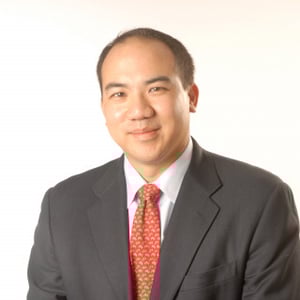
Maurice A. Deane Distinguished Professor of Constitutional Law and Faculty Director of International Programs, Hofstra University School of Law
Professor Ku’s primary research interest is the relationship of international law to constitutional law. He has also conducted academic research on a wide range of topics including international dispute resolution, international criminal law, and China’s relationship with international law. He teaches courses such as U.S. constitutional law, U.S. foreign affairs law, transnational law, and international trade and business law. Since 2014, he has served as the faculty director of international programs, overseeing Hofstra Law’s study abroad, exchange and LL.M. programs. Professor Ku also teaches Constitutional Law in our online degree programs: Master of Laws in American Law and Master of Arts in American Legal Studies. He has also been selected as the John DeWitt Gregory Research Scholar and as a Hofstra Law Research Fellow. He is a member of the American Law Institute.
He is the co-author, with John Yoo, of Taming Globalization: International Law, the U.S. Constitution, and the New World Order (Oxford University Press 2012). He also has published more than 40 law review articles, book chapters and symposia essays. He has given dozens of academic lectures and workshops at major universities and conferences in the United States, Europe and Asia.
He co-founded the leading international law weblog Opinio Juris, which is read daily by thousands worldwide. His essays and op-eds have been published in major news publications such as the Wall Street Journal, the Los Angeles Times, and the NYTimes.com. He has been frequently interviewed for television news programs and quoted in print and electronic media. He has also signed or submitted amicus briefs to national and international courts and served as an expert witness in both domestic and international proceedings.
Before joining the Hofstra Law faculty, Professor Ku served as a law clerk to the Honorable Jerry E. Smith of the U.S. Court of Appeals for the Fifth Circuit and as an Olin Fellow and Lecturer in Law at the University of Virginia Law School. Professor Ku also practiced as an associate at the New York City law firm of Debevoise & Plimpton, specializing in litigation and arbitration arising out of international disputes. He has been a visiting professor at the College of William & Mary Marshall- Wythe School of Law in Williamsburg, Virginia; a Fulbright Distinguished Lecturer in Law at East China University of Political Science and Law in Shanghai, China; and a Taiwan Fellow at National Taiwan University in Taipei, Taiwan. He is a member of the New York Bar and a graduate of Yale College and Yale Law School.
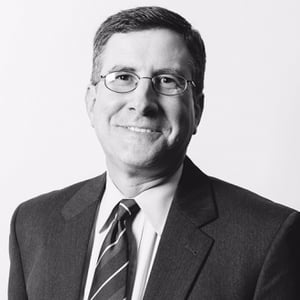
With a practice at the intersection of law, economics, domestic politics and international relations, John Herrmann represents clients before all U.S. trade agencies. He counsels U.S. producers of steel, metal, chemical and agricultural products in antidumping and countervailing duty proceedings, and represents clients in major litigation arising from such proceedings. Mr. Herrmann advises on customs-related matters such as classification, duty drawback and civil penalty issues. Mr. Herrmann also counsels clients regarding export control and sanctions-related issues, as well as the preparation and implementation of internal compliance policies and procedures.
Mr. Herrmann returned to Kelley Drye in 2009 following service in the administration of President George W. Bush, including work at the White House on the National Security Council staff. Mr. Herrmann worked as the Special Assistant to the President and Senior Director for International Trade, Energy and Environment. In that position, he was responsible for advising the President on international trade and investment issues and for the international aspects of energy and environmental policy.
At the White House, Mr. Herrmann’s work on key issues included the WTO Doha Round negotiations, efforts to conclude and secure Congressional approval of free trade agreements, overseeing activities of the President’s Interagency Working Group on Import Safety and representing the National Security Council at meetings of the Committee on Foreign Investment in the United States (CFIUS). Mr. Herrmann was also involved in export control and sanctions issues and preparing for meetings of the cabinet-level U.S.-E.U. Transatlantic Economic Council, the U.S.-India Economic Dialogue and CEO Forum, and the U.S.-China Strategic Economic Dialogue, including preparation for the November 2008 G-20 financial summit. Mr. Herrmann was one of only a handful of senior National Security Council staff asked to carryover with the administration of President Barack H. Obama to assist on transition activities.
In addition, Mr. Herrmann served as a senior advisor to the Assistant Secretary of Commerce for Import Administration at the U.S. Department of Commerce, where he advised the Assistant Secretary on issues raised in antidumping, countervailing duty and textile-related proceedings and policy matters before the agency. Mr. Herrmann also worked as a law clerk to former Chief Judge Gregory W. Carman at the United States Court of International Trade, as well as a legal intern to the Chairman of the U.S. International Trade Commission. He began his career at the White House as the Executive Assistant to the Assistant to the President for Economic and Domestic Policy.
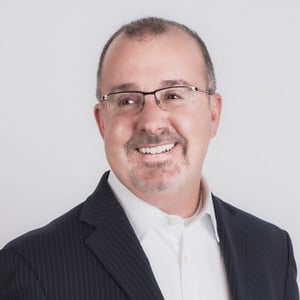
Chair, International Trade & National Security Practice Group, Buchanan Ingersoll & Rooney
Mr. Pickard counsels U.S. and international clients on the laws and regulations governing international trade, with particular emphasis on import remedy, anti-bribery, national security, and export control issues. He represents and advises clients in matters related to trade remedy investigations (including antidumping, countervailing duty, and safeguard cases), U.S. economic sanctions, export controls, anti-boycott measures, and the Foreign Corrupt Practices Act (FCPA). Mr. Pickard provides comprehensive international trade law compliance guidance, including assessing and resolving sensitive national security matters; developing corporate compliance programs; establishing compliance with the National Industrial Security Program (NISP) and mitigating Foreign Ownership, Control, or Influence (FOCI) issues; conducting internal investigations relating to potential violations; and appearing before the relevant agencies in connection with investigations, licensing, and enforcement actions. He also teams with the firm’s Election Law & Government Ethics Group to provide guidance pertaining to the Foreign Agents Registration Act (FARA).
Mr. Pickard represents clients before the U.S. International Trade Commission (ITC), the U.S. Department of the Treasury’s Office of Foreign Assets Control (OFAC), the U.S. Department of Justice (DOJ), the U.S. Department of State’s Directorate of Defense Trade Controls (DDTC), the U.S. Department of Commerce’s Bureau of Industry and Security (BIS) and International Trade Administration (ITA), the U.S. Department of Defense’s Defense Security Service (DSS), the Committee on Foreign Investment in the United States (CFIUS), the U.S. Court of International Trade, and the U.S. Court of Appeals for the Federal Circuit.
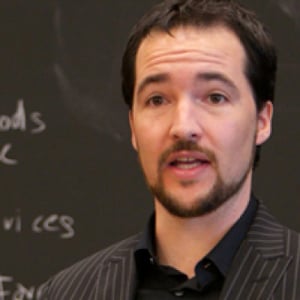
Professor of Law, Georgetown University Law Center
Alvaro Santos is Professor of Law and Director of the Center for the Advancement of the Rule of Law in the Americas (CAROLA) at Georgetown University. He teaches and writes in the areas of international trade, economic development, drug policy, transnational labor law and the future of NAFTA.
Professor Santos is co-editor of Law and the New Developmental State: The Brazilian Experience in Latin America (2013) and The New Law and Economic Development: A Critical Appraisal (2006). He is also the author of a number of articles and book chapters, including “Carving Out Policy Autonomy for Developing Countries in the World Trade Organization: The Experience of Brazil and Mexico” in the Virginia Journal of International Law (2012), and "Three Transnational Discourses of Labor Law in Domestic Reforms" in the University of Pennsylvania Journal of International Law (2010). In 2016, he contributed to a research manifesto authored by working group at the Harvard Institute for Global Law and Policy, examining the role of law in global value chains. Professor Santos serves on the editorial boards of the American Journal of Comparative Law, the Journal of International Economic Law, the Law and Development Review, and the Latin American Journal of International Trade Law. He regularly teaches at Georgetown's WTO Academy and Harvard's Institute for Global Law and Policy (IGLP) and has also taught at the University of Texas, Tufts University, Melbourne Law School, and the University of Turin. Santos received a JD with high honors from Universidad Nacional Autonóma de México and an LLM and SJD from Harvard Law School.

Laurence A. Tisch Professor of Law and Director, Classical Liberal Institute, New York University School of Law; Director, Classical Liberal Institute, Civitas Institute University of Texas at Austin
Richard A. Epstein is the Laurence A. Tisch Professor of Law, at New York University, a senior research fellow at the Civitas Institute at the University of Texas Austin, and a senior Lecturer, the University of Chicago. He received an LL.D., h.c . from the University of Ghent, 2003 , and an LLD h.c . from the University of Siegen in 2018 and the Bradley Prize in 2011. He has been a member of the American Academy of Arts and Sciences since 1985. He has edited both the Journal of Legal Studies (1981-1991) and the Journal of Law and Economics (1991-2001). He is also a founder and director of the Classical Liberal Institute at NYU Law School. His most recent book is The Classical Liberal Constitution: The Uncertain Quest for Limited Government (2014). His other books include Takings: Private Property and the Power of Eminent Domain ( 1985); Bargaining with the State (1993); Simple Rules for a Complex World (1995); Principles for a Free Society: Reconciling Individual Liberty and the Common Good (1998); Skepticism and Freedom: A Modern Theory of Classical Liberalism (2003); Design for Liberty: Private Property, Public Administration and the Rule of Law (2011), and most recently, The Myth of Birthright citizenship—and Beyond (2026). He has taught courses in , administrative law, antitrust, constitutional, contracts, environmental law, land use planning; real property, torts and water law. He has written and spoken extensively on a wide range of topics, and is writes a regular column for Defining Ideas.
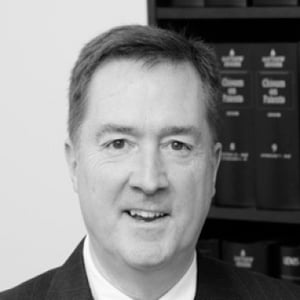
Partner, Kellogg, Hansen Todd, Figel & Frederick, P.L.L.C.
John Thorne represents innovators and individuals in commercial litigation including antitrust, patent, and copyright cases before federal courts at all levels, the USITC, the USPTO, the Copyright Royalty Board, ICANN’s Independent Review Process, and the competition agencies. He specializes in law reform to promote innovation and competition.
Prior to joining Kellogg Hansen he was Verizon’s SVP and Deputy GC in charge of intellectual property, competition, and privacy. Global Counsel Awards named his IP group one of the top five in the world in 2008 and 2010, and the world’s best in 2011. Global Counsel Awards named him the world’s best corporate competition lawyer in 2009.
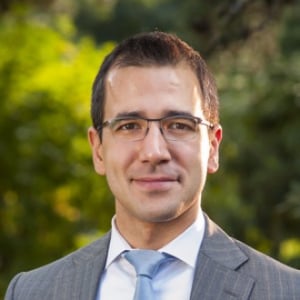
Associate Professor of Law, Lewis & Clark Law School
Ozan Varol is a rocket scientist turned award-winning law professor and author. He teaches in the areas of constitutional law, criminal law and procedure, comparative constitutional law, and Islamic law. His recent scholarship has focused on constitutional transitions and constitutional design. He also lectures and writes about civil-military relations and law and politics in the Middle East.
Professor Varol is the author of two forthcoming books with Oxford University: The Democratic Coup d’État (monograph) and Comparative Constitutional Law: A Global and Interdisciplinary Approach (co-authored textbook).
He has also authored more than a dozen book chapters or law review articles published or forthcoming in the California Law Review, Georgetown Law Journal, UC Davis Law Review, Iowa Law Review (twice), Harvard International Law Journal, Columbia Journal of Transnational Law, Virginia Journal of International Law, American Journal of Comparative Law (peer-reviewed), and the International Journal of Constitutional Law (peer-reviewed), among many other academic journals. His scholarship has been featured in various domestic and foreign media outlets, including BBC, CNN, Washington Post, Slate, and Foreign Policy.
Professor Varol’s articles have received numerous scholarly recognitions. He is the only scholar to twice win the American Society of Comparative Law’s paper competition for younger scholars. His 2014 article, Temporary Constitutions, was selected as one of the best three papers in the AALS Scholarly Papers Competition, which is widely considered the most prestigious in legal education, and awarded Honorable Mention. In 2014 and in 2016, his articles won the Federalist Society’s Young Legal Scholars Paper Competition. In addition, his article, The Democratic Coup d’État, was identified in a review by Professor Mark Tushnet (Harvard Law School) as “one of the best works of recent scholarship relating to constitutional law.”
To access Professor Varol’s personal website and download a free chapter from his forthcoming book, click here.
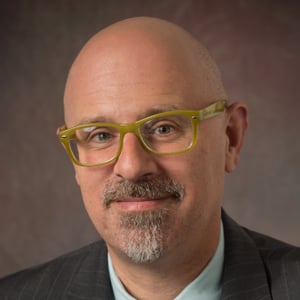
Leo Spitz Professor of International Law, Ludwig and Hilde Wolf Research Scholar, Professor of Political Science, The University of Chicago Law School
Prof. Tom Ginsburg is the Leo Spitz Professor of Law and Ludwig and Hilde Wolf Research Scholar at the University of Chicago Law School. His research focuses on comparative and international law from an interdisciplinary perspective. Currently he is the Co-Director of the Comparative Constitutions Project. His scholarship includes Judicial Review in New Democracies (2003); The Endurance of National Constitutions (2009); Constitutions in Authoritarian Regimes (2014); and Judicial Reputation (2015).
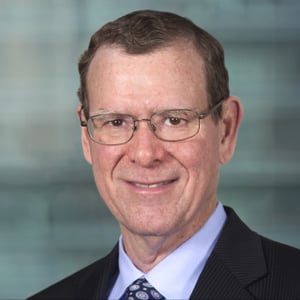
Executive in Residence, Wake Forest University School of Business
John Allison is an Executive in Residence at the Wake Forest School of Business. He is a member of the Cato Institute’s Board of Directors and Chairman of the Executive Advisory Council of the Cato Institute’s Center for Monetary and Financial Alternatives. Allison was president and CEO of the Cato Institute from October 2012 to April 2015. Prior to joining Cato, Allison was chairman and CEO of BB&T Corporation, the 10th-largest financial services holding company headquartered in the United States. During his tenure as CEO from 1989 to 2008, BB&T grew from $4.5 billion to $152 billion in assets. He was recognized by theHarvard Business Reviewas one of the top 100 most successful CEOs in the world over the last decade.
Allison has received the Corning Award for Distinguished Leadership, been inducted into the North Carolina Business Hall of Fame, and received the Lifetime Achievement Award from theAmerican Banker. He is the author of The Financial Crisis and the Free Market Cure: Why Pure Capitalism Is the World Economy’s Only Hope and The Leadership Crisis and the Free Market Cure: Why the Future of Business Depends on the Return to Life, Liberty, and the Pursuit of Happiness. In addition, he is a former Distinguished Professor of Practice at Wake Forest University School of Business, and serves on the Board of Visitors at the business schools at Wake Forest, Duke, and the University of North Carolina–Chapel Hill.
Allison is a Phi Beta Kappa graduate of the University of North Carolina–Chapel Hill. He received his master’s degree in management from Duke University and is also a graduate of the Stonier Graduate School of Banking. Allison is the recipient of six honorary doctorate degrees.

Maurice and Hilda Friedman Professor of Law, Columbia Law School; CEO, New Civil Liberties Alliance
Philip Hamburger is the Maurice and Hilda Friedman Professor of Law at Columbia Law School, and Chief Executive Officer at the New Civil Liberties Alliance. Before coming to Columbia, he was the John P. Wilson Professor at the University of Chicago Law School.
He writes on constitutional law and its history—with particular emphasis on religious liberty, freedom of speech and the press, judicial office, administrative power, and unconstitutional conditions.
His books are Separation of Church and State (Harvard 2002), Law and Judicial Duty (Harvard 2008), Is Administrative Law Unlawful? (Chicago 2014), The Administrative Threat (Encounter 2017), and Liberal Suppression: Section 501(c)(3) and the Taxation of Speech (Chicago 2018). A forthcoming book is Purchasing Submission: Conditions, Power, and Freedom (Harvard 2021).
He is a member of the American Academy of Arts and Sciences, and he has served on the board of directors of the American Society for Legal History. He has twice received the Sutherland Prize for the most significant contribution to English legal history, and has been awarded the Henry Paolucci - Walter Bagehot Book Award, the Hayek Book Prize, and the Bradley Prize.
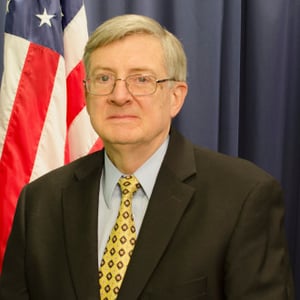
Senior Research Fellow, Mercatus Center, George Mason University; Former General Counsel at the Federal Trade Commission (FTC)
Alden Abbott is a Senior Research Fellow at the Mercatus Center. Prior to joining Mercatus, he served as the General Counsel of the Federal Trade Commission (FTC). As the Commission’s chief legal officer and adviser, he represented the agency in court and provides legal counsel to the Commission and its bureaus and offices.
Prior to rejoining the FTC in April 2018, Mr. Abbott served in executive positions at the Heritage Foundation (2014-2018) and BlackBerry (2012-2014). He also held a variety of senior positions in the U.S. federal government (in the FTC, the Commerce Department, and the Justice Department's Office of Legal Counsel and the Antitrust Division).
He speaks French, Spanish, and Italian.
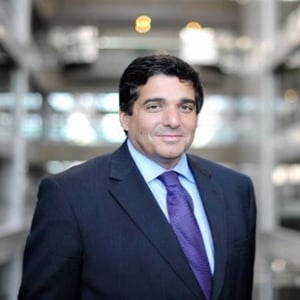
President and Founder, Bloom Strategic Counsel PLLC
Seth Bloom is the President and Founder of Bloom Strategic Counsel PLLC. Mr. Bloom, the former long-time General Counsel of the U.S. Senate Antitrust Subcommittee, is an attorney with extensive governmental and private sector experience in antitrust and competition law. He possesses substantial experience with the critical regulatory and competition issues facing key industries including telecommunications, media, Internet, and high tech; transportation and aviation; and health care.
Mr. Bloom has represented leading companies in these and other vital industries. These clients have included Comcast, Amazon, Aetna, MillerCoors LLC, Microsoft, Sprint, Masimo, Yelp, the American Association of Independent Music (A2IM), and the American Hotel and Lodging Association. Since founding his firm in 2013, Mr. Bloom has quickly become one of the leading Washington attorneys representing companies in large and complex merger transaction, particularly before Congress. He has represented MillerCoors LCC in connection with the AB InBev/SABMiller merger; Aetna in connection with its proposed merger with Humana; Pfizer in connection with its proposed merger with Allergan; and Comcast in connection with its proposed merger with Time Warner Cable. Beyond his work for major companies involved in mergers and acquisitions, Mr. Bloom has represented Yelp on Internet competition issues, the medical device manufacturer Masimo with respect to its efforts to bring greater competition to hospital purchasing of medical devices; Microsoft on competition, and patent reform issues; Sprint on competition and telecom regulatory issues; and A2IM on copyright reform, music licensing and competition issues, among other matters. In July 2013, Mr. Bloom was named to the Advisory Board of the American Antitrust Institute.
Prior to founding Bloom Strategic Counsel in March 2013, Mr. Bloom spent nearly 14 years working in the U.S. Senate on the Judiciary Committee’s Antitrust Subcommittee. He began as a counsel on the Antitrust Subcommittee staff of Sen. Kohl in 1999, who served as Chairman and Ranking Member of the Subcommittee during Mr. Bloom’s tenure. From 2008 to January 2013, Mr. Bloom served as General Counsel of the Senate Antitrust Subcommittee. In August 2012, Mr. Bloom was named to the “Hill Hot List” by National Law Journal/Legal Times as one of the top 15 lawyers working in Congress.
Mr. Bloom was responsible for numerous critical antitrust and competition issues that came before the Antitrust Subcommittee during his tenure, from the AOL/Time Warner merger in 2000 to the Comcast/NBC Universal merger in 2010 and the proposed AT&T/T-Mobile merger in 2011. Antitrust Subcommittee Chairman Kohl’s opposition to the proposed AT&T/T-Mobile merger was a key factor leading to the merger being blocked by the Justice Department and the FCC. Mr. Bloom was also the senior staffer on several landmark Antitrust Subcommittee investigations, including its 2011 investigation of allegations that Google was engaged in antitrust competitive conduct with respect to Internet search and its 2002-2004 of allegations of anticompetitive conduct in hospital purchasing of medical supplies. During his time on the antitrust subcommittee, Mr. Bloom investigated competitive conditions in numerous key industries, including telecom, high tech, media, aviation, health care, energy, and agriculture.
Mr. Bloom also was the staffer responsible for a number of significant legislative efforts sponsored by Senator Kohl, including the Railroad Antitrust Enforcement Act, the Preserve Affordable Access to Generic Drugs Act, the Discount Pricing Consumer Protection Act, and the No Oil Producing and Exporting Cartels Act (NOPEC). Each of these legislative efforts passed the Senate Judiciary Committee in several different Congresses.
Mr. Bloom has also been frequently been called on to serve as an expert speaker on critical issues of antitrust, competition, telecom, high tech, and health care policy to numerous trade, industry and legal groups, including the American Bar Association Antitrust Section, the American Antitrust Institute, the National Cable and Telecommunications Association, the Georgetown University Law Center, and the conference of Western Attorneys General, among other organizations. He has also been quoted frequently in the press regarding critical antitrust and competition policy issues, including in the Wall Street Journal, Washington Post, CNBC, Reuters, FTC Watch, and National Public Radio.
Prior to beginning his service at the Senate in 1999, Mr. Bloom spent three years as a trial attorney at the Justice Department’s Antitrust Division. During his time at the Justice Department, he investigated numerous corporate mergers, and participated in litigation directed at the enforcement of the antitrust laws. Prior to that, Mr. Bloom spent eleven years as an attorney with Washington, DC law firms, practicing in the area of complex commercial litigation. He holds a J.D. degree from the University of Pennsylvania Law School and a B.A. magna cum laude from the University of Rochester.
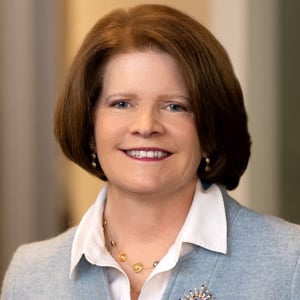
Partner, Antitrust and Competition, Wilson Sonsini Goodrich & Rosati
Maureen Ohlhausen is a partner in the Washington, D.C., office of Wilson Sonsini Goodrich & Rosati, where she advises industry-leading clients on complex antitrust and litigation matters, with a focus on high-profile cases. Sought after for her depth of experience on antitrust and Federal Trade Commission (FTC)-related issues, Maureen is known for her relationships with officials in the U.S. and abroad.
After finishing law school and clerking at the U.S. Court of Appeals for the D.C. Circuit, Maureen joined the FTC in 1997. She held a series of roles at the agency over the next 12 years, rising to the position of Director of the FTC Office of Policy Planning, where she led the agency’s work on e-commerce and headed the FTC’s Internet Access Task Force, which produced an influential report analyzing competition and consumer protection legal issues in the broadband and internet sectors. She then went into private practice at a leading telecommunications law firm, where she headed the FTC practice group.
In 2012, Maureen was confirmed by the Senate as a Commissioner of the FTC and was appointed Acting Chairman in January 2017, a role she held until May 2018. As Acting Chairman, Maureen directed all aspects of the agency’s antitrust work, including merger review, conduct enforcement, and all consumer protection enforcement, with an emphasis on privacy and technology issues. Under her leadership, the FTC won several influential merger challenges in court and reached a number of key digital privacy settlements.
To date, Maureen is the only FTC Commissioner to have received the Robert Pitofsky Lifetime Achievement Award in recognition of her contributions to the FTC.
Following the end of her term at the FTC, and immediately prior to joining Wilson Sonsini, Maureen was chair of the global antitrust and competition practice at Baker Botts, based in that firm’s Washington, D.C., office.
A recognized thought leader, Maureen is a frequent author and speaker, and is often quoted by leading print and broadcast media on antitrust, FTC, and privacy and data security matters. She has published dozens of articles on antitrust, privacy, intellectual property, regulation, FTC litigation, telecommunications, and international law issues in prestigious publications. During her tenure at the FTC and in private practice, she testified more than two dozen times before Congress, including before the Senate Commerce Committee and the House Energy and Commerce Antitrust Sub-Committee. She also testified before the Antitrust Modernization Commission.
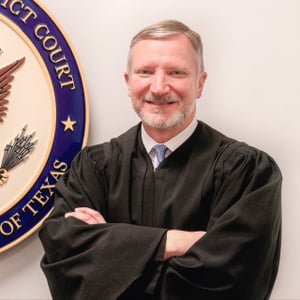
United States District Court, Southern District of Texas
Prior to joining TXSE, Jeff served as acting general counsel of Charles Schwab and led its Office of Legislative and Regulatory Affairs in Washington, D.C. for the past two decades, managing the company's response to public policy initiatives and advocating for policies that aid individual investors. He has over four decades of securities markets experience, starting his career as an options trader at the Philadelphia Stock Exchange, then founding his own trading firm, and later serving on the exchange's Board of Governors. He also served as senior counsel in the Division of Market Regulation at the U.S. Securities and Exchange Commission. Jeff's additional experience in the securities industry includes serving as vice president for regulation and general counsel at the Cincinnati Stock Exchange and as chairman of the Operating Committee of the National Market System Plan governing Nasdaq securities. Jeff holds degrees from the Wharton School of the University of Pennsylvania and Ohio Northern School of Law.
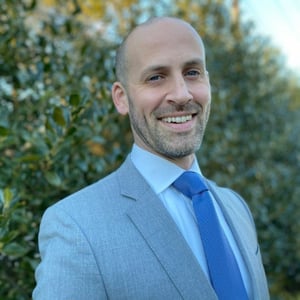
Partner, Lehotsky Keller LLP
The New York Times recognized Scott A. Keller as a “legal heavyweight,” who “is praised by opponents as a formidable advocate.”
Mr. Keller has argued 12 cases before the U.S. Supreme Court and 12 cases before the Texas Supreme Court. He is the only practicing lawyer to have argued at least 10 cases in both courts. Mr. Keller frequently represents parties in high stakes appeals, and he has argued many cases in federal courts of appeals throughout the nation. He has earned individual accolades from Lawdragon 500 Leading Litigators in America, Chambers, Legal 500, The American Lawyer, The National Law Journal, Law360, Super Lawyers, The Best Lawyers in America, and other publications.
Before founding Lehotsky Keller Cohn LLP, Mr. Keller headed Baker Botts LLP’s Supreme Court Practice. He also has significant experience at the highest levels in all three branches of government. Mr. Keller served as the Solicitor General of Texas, the State’s chief appellate litigator. He was U.S. Senator Ted Cruz’s chief counsel on the Senate Judiciary Committee. Mr. Keller was a law clerk for Justice Anthony Kennedy of the Supreme Court of the United States and Chief Judge Alex Kozinski of the U.S. Court of Appeals for the Ninth Circuit. He was also a Bristow Fellow in the U.S. Department of Justice’s Office of the Solicitor General.
Mr. Keller represents clients in cases where public communications strategy is crucial, and he has made numerous media appearances in major outlets such as The New York Times, The Wall Street Journal, BBC, Fox News, NPR, and Politico. As a sought after speaker and writer, Mr. Keller’s articles have appeared in the Stanford Law Review, Virginia Law Review, and Texas Law Review. He has also served as an adjunct professor of constitutional litigation, Supreme Court practice, and federal courts at the University of Texas School of Law.
Alston & Bird Professor of Law, Duke University School of Law
Professor Young teaches constitutional law, federal courts, and foreign relations law. He is one of the nation's leading authorities on the constitutional law of federalism, having written extensively on the Rehnquist Court's "Federalist Revival" and the difficulties confronting courts as they seek to draw lines between national and state authority. He also is an active commentator on foreign relations law, where he focuses on the interaction between domestic and supranational courts and the application of international law by domestic courts. Professor Young also writes on constitutional interpretation and constitutional theory. He has been known to dabble in maritime law and comparative constitutional law.
A native of Abilene, Texas, Professor Young joined the Duke Law faculty in 2008, after serving as the Charles Alan Wright Chair in Federal Courts at the University of Texas at Austin School of Law, where he had taught since 1999. He graduated from Dartmouth College in 1990 and Harvard Law School in 1993. After law school, he served as a law clerk to Judge Michael Boudin of the 1st U.S. Circuit Court of Appeals (1993-94) and to Justice David Souter of the U.S. Supreme Court (1995-96). Professor Young practiced law at Cohan, Simpson, Cowlishaw, & Wulff in Dallas, Texas (1994-95) and at Covington & Burling in Washington, D.C. (1996-98), where he specialized in appellate litigation. He has also been a visiting professor at Harvard Law School (2004-05) and Villanova University School of Law (1998-99), as well as an adjunct professor at Georgetown University Law Center (1997).
Elected to the American Law Institute in 2006, Professor Young is an active participant in both public and private litigation in his areas of interest. He has been the principal author of amicus briefs on behalf of leading constitutional scholars in several recent Supreme Court cases, including Medellin v. Texas(concerning presidential power and the authority of the International Court of Justice over domestic courts) and Gonzales v. Raich (concerning federal power to regulate medical marijuana).
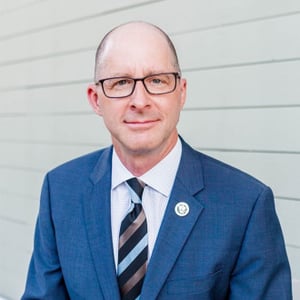
Judge, U.S. District Court for the Southern District of Texas
Hon. Charles Eskridge, Judge, United States District Court for the Southern District of Texas, Houston Division, was born in Cleveland, Ohio, and arrived in Houston, Texas, at the age of 11 with his parents in 1974.
Judge Eskridge received a B.S. from Trinity University and a J.D. from Pepperdine University School of Law. He served as a law clerk to Chief Judge Charles Clark of the United States Court of Appeals for the Fifth Circuit, as a law clerk to Justice Byron White of the Supreme Court of the United States, and as a special assistant to the Hon. Howard Holtzmann of the Iran/U.S. Claims Tribunal in The Hague.
From 1994 to 2019, Judge Eskridge was in private practice in Houston, Texas, litigating complex commercial disputes. He teaches Origins of the Federal Constitution at the University of Houston Law Center and has served as the Distinguished Visiting Practitioner of Law at the Pepperdine University School of Law.
President Donald J. Trump nominated him to the federal bench on May 3, 2019. Following confirmation by the Senate, Judge Eskridge took his seat on October 22, 2019.
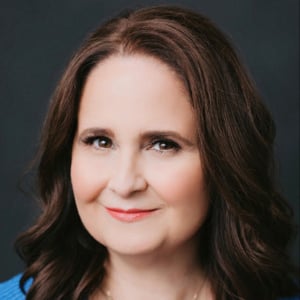
Chief Judge, United States Court of Appeals, Fifth Circuit
Jennifer Walker Elrod is the Chief Judge of the United States Court of Appeals for the Fifth Circuit. She was nominated to the Fifth Circuit in 2007, and she served as a Circuit Judge on the court until assuming the role of Chief Judge in October 2024. Prior to serving as a Circuit Judge, Chief Judge Elrod was appointed and then twice elected Judge of the 190th District Court of Harris County, Texas, where she spent over five years presiding over more than 200 jury and non-jury trials.
Chief Judge Elrod graduated cum laude from Harvard Law School, where she was an active member of the Harvard Federalist Society, an Ames Moot Court finalist, and a Senior Editor of the Harvard Journal of Law & Public Policy. She clerked for the Honorable Sim Lake in the Southern District of Texas. Before serving as a judge, Chief Judge Elrod worked in private practice, focusing on civil litigation, antitrust, and employment matters.
She has been repeatedly recognized for her work as a jurist, as well as for her pro bono work and contributions to the community. She has been named the 2022 Texas Review of Law & Politics’ Jurist of the Year, the 2018 Harvard Federalist Society’s Alumni of the Year, the 2016–17 Texas Association of Civil Trial and Appellate Specialists’ Appellate Judge of the Year, and the 2008 Mexican-American Bar Association of Texas’s Judge of the Year.
Chief Judge Elrod is actively engaged in the academic and legal communities. Chief Judge Elrod currently serves on the Board of Directors and as the Jurist-in-Residence at the South Texas College of Law, where she teaches civil procedure and First Amendment law. She is also a member of the American Law Institute and of the Board of Advisors for the Harvard Journal of Law & Public Policy, and she is a former member of the Board of Regents of her alma mater, Baylor University, and the Board of Visitors at Brigham Young University Law School. She previously served as the Chair of the Codes of Conduct Committee for the Judicial Conference of the United States. She has also served as the M.D. Anderson Visiting Public Service Professor at the Texas Tech University School of Law and as Jurist-in-Residence at Brigham Young University Law School, and she has taught legal writing at the University of Houston Law Center. She presented the Lewis F. Powell, Jr. Distinguished Lecture at the Washington and Lee University School of Law and is a frequent speaker on the topics of trial and appellate procedure, ethics, employment law, and constitutional law. Chief Judge Elrod also serves on the board of the Garland R. Walker Inn of Court, and co-produces an annual musical CLE, for which her pupilage group has won multiple national awards.
Chief Judge Elrod’s publications include: Trial by Siri: AI Comes to the Courtroom; Don’t Mess with Texas Judges: In Praise of the State Judiciary; For Good: Enriching Your Practice and Your Life Through Pro Bono and Community Service; Is the Jury Still Out?: A Case for the Continued Viability of the American Jury; and W(h)ither the Jury? The Diminishing Role of the Jury Trial in our Legal System.
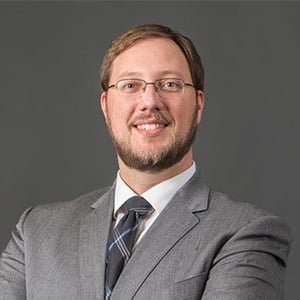
Laurence H. Silberman Chair in Constitutional Governance and Senior Fellow, American Enterprise Institute; Co-Director, Antonin Scalia Law School’s C. Boyden Gray Center for the Study of the Administrative State
Adam J. White is the Laurence H. Silberman Chair in Constitutional Governance and senior fellow at the American Enterprise Institute, where he focuses on the Supreme Court and the administrative state. Concurrently, he codirects the Antonin Scalia Law School’s C. Boyden Gray Center for the Study of the Administrative State.
Mr. White practiced constitutional and administrative law, particularly in the regulation of energy and financial markets. He started his legal career as a law clerk for Judge David B. Sentelle at the US Court of Appeals for the DC Circuit.
Mr. White has written for the Wall Street Journal, the New York Times, the Washington Post, National Affairs, Commentary, Harvard Journal of Law & Public Policy, and Notre Dame Law Review, among other publications. He is a regular contributor to the Yale Journal on Regulation’s Notice and Comment blog, and for many years, he was one of the Weekly Standard’s lead writers on constitutional law and the Supreme Court.
Mr. White has testified often before Congress, including before the Senate’s Committees on the Judiciary; Commerce, Science, and Transportation; and Homeland Security and Governmental Affairs and before the House’s Judiciary and Financial Services Committees. In 2018, the Senate Committee on the Judiciary called him to testify in Brett Kavanaugh’s Supreme Court confirmation hearings to advise senators on Kavanaugh’s approach to administrative law.
In 2021, he served on the Presidential Commission on the Supreme Court of the United States, where he criticized “Court packing” and other efforts to restructure the Supreme Court. In 2017, he was appointed to serve on the Administrative Conference of the United States. He also serves on the leadership council for the American Bar Association’s Administrative Law and Regulatory Practice Section, which he will chair in 2023–24. Before joining AEI, he was a research fellow at Stanford University’s Hoover Institution and an adjunct fellow at the Manhattan Institute.
Mr. White has a JD from Harvard Law School and a bachelor of business administration from the College of Business at the University of Iowa.

Opening Remarks by Senator Tom Cotton
Tom Cotton, Dean Reuter
2017 National Lawyers Convention
Senator Tom Cotton opened the 2017 National Lawyers Convention on November 16 at the Mayflower...
North Korea Conundrum: Sanctions, Leverage, Balancing Power and Rumors of War
Daniel Blumenthal, Stephen Haggard, Bruce Klingner, Julian Ku
International & National Security Law Practice Group Teleforum
President Trump is pivoting off of the prior administration's "strategic patience" approach to North Korea...
Re-Negotiating NAFTA: Non-National Tribunals and the Constitution
John M. Herrmann II, Daniel B. Pickard, Alvaro Santos
International & National Security Law Practice Group Teleforum
Chapters 11 and 19 of the North American Free Trade Agreement (NAFTA) provide for international...
Preview: Oil States Energy Services, LLC v. Greene’s Energy Group, LLC
Richard A. Epstein, John Thorne
Intellectual Property Practice Group and Regulatory Transparency Project Teleforum
Oil States Energy Services, LLC v. Greene’s Energy Group, LLC will be argued in the...
The Democratic Coup d'Etat - Faculty Division Bookshelf
Ozan Varol, Tom Ginsburg
Bookshelf featuring Prof. Ozan Varol and Prof. Tom Ginsburg
In The Democratic Coup d’Etat, Prof. Ozan Varol challenges the conventional public understanding of the...
The Administrative State and The Rule of Law: Are Rollbacks Really Reform?
John A. Allison, Philip A. Hamburger
Administrative Law & Regulation Practice Group and Regulatory Transparency Project Teleforum
The Trump administration has taken a number of significant steps to provide the regulatory relief...
Foreign Sovereigns and Innovation, Job Creation, and International Competition
Alden F. Abbott, Seth Bloom, Maureen K. Ohlhausen
Intellectual Property Practice Group
Many are noting an increased use of antitrust enforcement by foreign governments, particularly in Asia,...
Panel Three: Federalism as a Check on Executive Authority
Jeffrey Vincent Brown, Caitlin Halligan, Scott Allen Keller, Ernest Young
2017 Annual Texas Chapters Conference
EPA regulatory power, voting rights and redistricting, federal directives regarding transgender persons, the constitutionality of...
Keynote Address by Senator John Cornyn
John Cornyn, Charles R. Eskridge
2017 Annual Texas Chapters Conference
Keynote: Senator John Cornyn, U.S. Senator, TXIntroduction: Charles Eskridge, Partner, Quinn Emanuel
Panel Two: Ethics in the Executive Branch
Jennifer Walker Elrod, Adam White
2017 Annual Texas Chapters Conference
The greater the power of the Executive, the greater the imperative to adhere to the...