The Democratic Coup d'Etat - Faculty Division Bookshelf
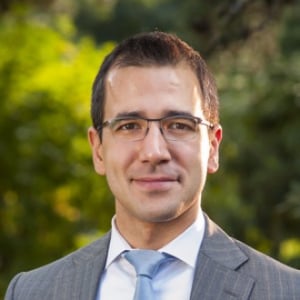
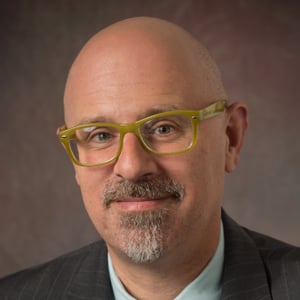
Bookshelf featuring Prof. Ozan Varol and Prof. Tom Ginsburg


In The Democratic Coup d’Etat, Prof. Ozan Varol challenges the conventional public understanding of the coup d’etat, which often evokes the image of a militarized group of elites who seek to overthrow an existing government in order to consolidate power. Often, we consider coups contrary--and even more a threat--to democracy. Prof. Varol argues that coups do not always match that public understanding, and often are used to establish a democracy or advance democratic principles. He traces democratic coups throughout history--from 5th century BC Athens, to actions in the American colonies against corrupt British officials, to the democracy-building revolts against military regimes in countries like Guinea-Bissau, Portugal, and Colombia in the 20th century. In his historical analysis, Prof. Varol explores questions regarding the political nature of coups and the differences in military powers which can lead to the fostering or suppressing of democratic societies.
In this episode, Prof. Ozan Varol of Lewis & Clark Law School and Prof. Tom Ginsburg of the University of Chicago Law School discuss The Democratic Coup d'Etat.
The Democratic Coup d'Etat is available here.

Associate Professor of Law, Lewis & Clark Law School
Ozan Varol is a rocket scientist turned award-winning law professor and author. He teaches in the areas of constitutional law, criminal law and procedure, comparative constitutional law, and Islamic law. His recent scholarship has focused on constitutional transitions and constitutional design. He also lectures and writes about civil-military relations and law and politics in the Middle East.
Professor Varol is the author of two forthcoming books with Oxford University: The Democratic Coup d’État (monograph) and Comparative Constitutional Law: A Global and Interdisciplinary Approach (co-authored textbook).
He has also authored more than a dozen book chapters or law review articles published or forthcoming in the California Law Review, Georgetown Law Journal, UC Davis Law Review, Iowa Law Review (twice), Harvard International Law Journal, Columbia Journal of Transnational Law, Virginia Journal of International Law, American Journal of Comparative Law (peer-reviewed), and the International Journal of Constitutional Law (peer-reviewed), among many other academic journals. His scholarship has been featured in various domestic and foreign media outlets, including BBC, CNN, Washington Post, Slate, and Foreign Policy.
Professor Varol’s articles have received numerous scholarly recognitions. He is the only scholar to twice win the American Society of Comparative Law’s paper competition for younger scholars. His 2014 article, Temporary Constitutions, was selected as one of the best three papers in the AALS Scholarly Papers Competition, which is widely considered the most prestigious in legal education, and awarded Honorable Mention. In 2014 and in 2016, his articles won the Federalist Society’s Young Legal Scholars Paper Competition. In addition, his article, The Democratic Coup d’État, was identified in a review by Professor Mark Tushnet (Harvard Law School) as “one of the best works of recent scholarship relating to constitutional law.”
To access Professor Varol’s personal website and download a free chapter from his forthcoming book, click here.
Leo Spitz Professor of International Law, Ludwig and Hilde Wolf Research Scholar, Professor of Political Science, The University of Chicago Law School
Prof. Tom Ginsburg is the Leo Spitz Professor of Law and Ludwig and Hilde Wolf Research Scholar at the University of Chicago Law School. His research focuses on comparative and international law from an interdisciplinary perspective. Currently he is the Co-Director of the Comparative Constitutions Project. His scholarship includes Judicial Review in New Democracies (2003); The Endurance of National Constitutions (2009); Constitutions in Authoritarian Regimes (2014); and Judicial Reputation (2015).