Explainer Episode 90 - Disparate Impact and the Future of Equal Opportunity
RTP's Fourth Branch Podcast
On April 23, President Trump signed E.O. 14281, Restoring Equality of Opportunity and Meritocracy, declaring that “disparate-impact liability is wholly inconsistent with the Constitution and threatens the commitment to merit and equality of opportunity that forms the foundation of the American Dream.”
In this episode, experts explore the origins, evolution, and controversy surrounding disparate impact law—from Section VII of the Civil Rights Act of 1964, to landmark Supreme Court decisions like Griggs v. Duke Power Co. (1971) and Wards Cove Packing Co., Inc. v. Atonio (1989), to the legislative response in the Civil Rights Act of 1991.
What is disparate impact liability? How has it shaped outcomes in employment, housing, and equal access to opportunity? Is it a justifiable basis for legal liability without evidence of disparate treatment?
Join us for a conversation on one of the most debated legal doctrines in American civil rights history and its role in shaping the future of equality and meritocracy.
Featuring:
Additional Reading:
Morenoff, Dan. "Disparate-Impact Liability: Unfounded, Unconstitutional, & Not Long For This World." Fedsoc.org. June 6, 2025. https://fedsoc.org/fedsoc-review/disparate-impact-liability-unfounded-unconstitutional-not-long-for-this-world
*******
As always, the Federalist Society takes no position on particular legal or public policy issues; all expressions of opinion are those of the speaker.
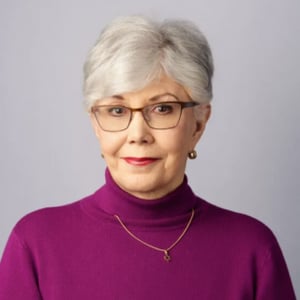
Chairman, Center for Equal Opportunity
Linda Chavez is Chairman of the Center for Equal Opportunity. She has published opinions and columns in newspapers across the country and appears regularly on cable news. Chavez is the author of the three books: Out of the Barrio: Toward a New Politics of Hispanic Assimilation, An Unlikely Conservative: The Transformation of an Ex-Liberal, and Betrayal: How Union Bosses Shake Down Their Members and Corrupt American Politics. She has been honored by the Library of Congress as a "Living Legend" and as nominee for Secretary of Labor by President George W. Bush.
Chavez has held many appointed positions and has served on numerous corporate and nonprofit boards. Among her appointed positions has been Chairman, National Commission on Migrant Education (1988-1992); White House Director of Public Liaison (1985); Staff Director of the U.S. Commission on Civil Rights (1983-1985); and member of the Administrative Conference of the United States (1984-1986). Chavez was also the Republican nominee for U.S. Senator from Maryland in 1986 and was elected by the United Nations' Human Rights Commission to serve a four-year term as U.S. Expert to the U.N. Sub-commission on the Prevention of Discrimination and Protection of Minorities.
Chavez earned her BA from the University of Colorado.
Professor of Law, University of San Diego School of Law (Retired)
Gail Heriot is a recently retired law professor from the University of San Diego. She also served as a member of the U.S. Commission on Civil Rights from 2007 to 2025. She is also the chairman of the board of the American Civil Rights Project and the chair emerita of the Civil Rights practice group at the Federalist Society for Law & Public Policy.
Professor Heriot is a prolific writer in the area of civil rights. She is the author of many law review articles. She is also the editor (along with Maimon Schwarzschild) of the 2021 anthology, A Dubious Expediency: How Race Preferences Damage Higher Education. Her upcoming book is entitled, Why We Walk on Eggshell: How Our Civil Rights Laws Helped Bring About the Woke Era—And the Trump Era, Too.
Her writings for a general audience have appeared in the Wall Street Journal, the San Diego Union-Tribune, the National Review and many other newspapers and magazines.
In 1996, she co-chaired the successful “Yes on Proposition 209” campaign, which amended the California Constitution to prohibit state-sponsored discrimination or preferential treatment based on race, sex, color, ethnicity or national origin. In 2020, she co-chaired the “No on Proposition 16” campaign, which successfully prevented Proposition 209’s repeal.
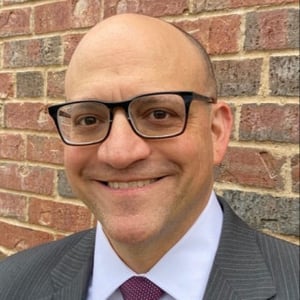
Executive Director & Secretary, American Civil Rights Project
Dan Morenoff is the executive director at the American Civil Rights Project and an adjunct fellow at the Manhattan Institute.
His work focuses on protecting and, where necessary, restoring the primacy of all Americans' shared civil rights against the identitarian alternative.
Before practicing law, Morenoff served on the legislative staff of Sen. Phil Gramm (R-TX). Morenoff holds a B.A. from Columbia College of Columbia University in the City of New York and a J.D. from the University of Chicago Law School. He has also served as an officer or director of several community organizations in Dallas, Texas.